
Poly bag consumption is a small detail that can create big problems in garment costing if it is not calculated correctly. Many merchandisers focus on fabric, trims, and carton usage, but overlook poly bags. In real production, that is a mistake. A wrong poly bag estimate can affect material planning, supplier orders, packaging cost, and even shipment readiness.
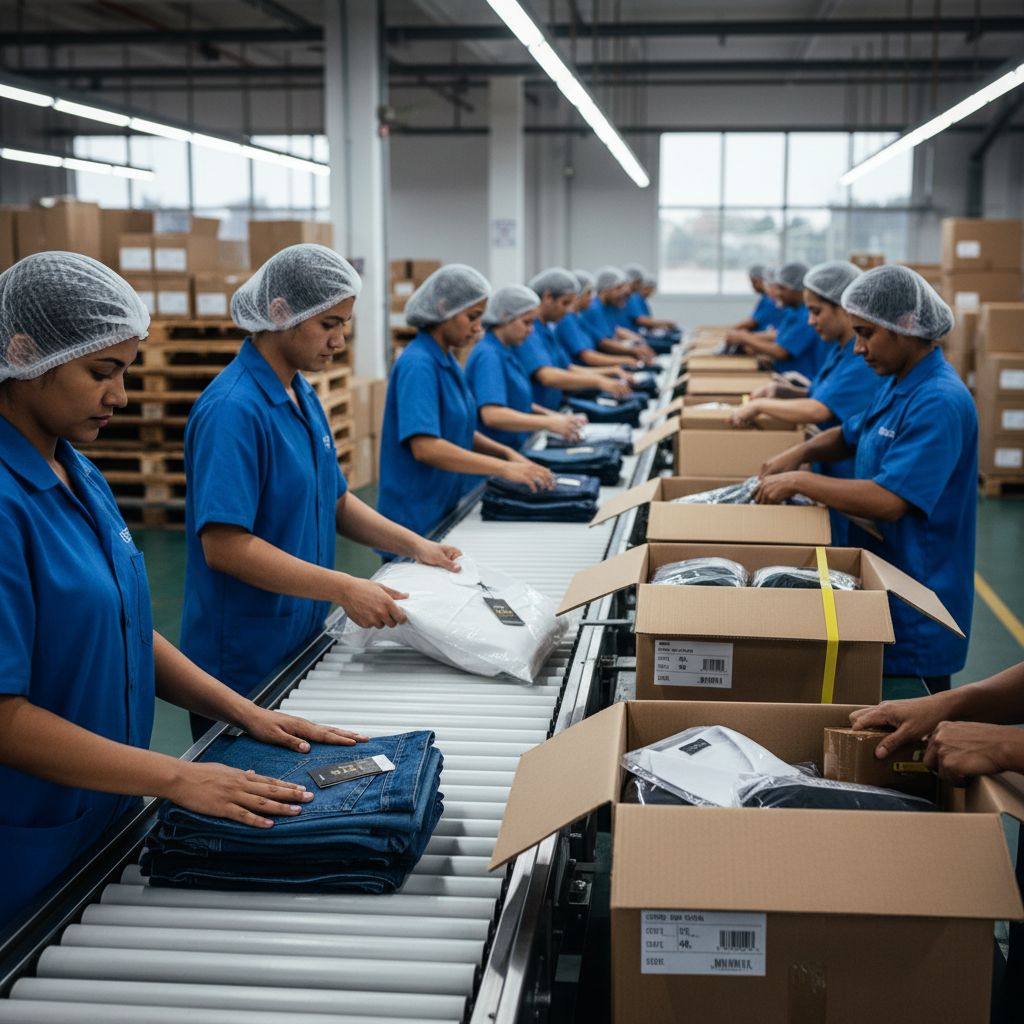
Poly bags are widely used in the apparel industry to protect finished garments from dust, moisture, and handling damage during packing, storage, and transportation. Because they are used in large quantities, even a small error in calculation can turn into a noticeable cost difference. This article explains a simple and practical way to calculate poly bag consumption in the apparel industry. It also includes a worked example so the method is easy to follow.
What Is Poly Bag Consumption in Apparel Industry?
Poly bag consumption means the amount of raw material needed to produce the required number of poly bags for a garment order. In most cases, this is calculated in kilograms per 1,000 pieces.
This calculation helps merchandisers and sourcing teams:
- estimate packaging material cost,
- plan purchase quantity,
- avoid shortages during packing,
- reduce excess stock,
- improve overall order budgeting.
Since poly bags are made from polymer, the consumption is usually estimated based on the bag’s size and thickness.
Why Accurate Poly Bag Calculation Matters
In garment manufacturing, packaging materials may look inexpensive compared with fabric, but they still affect the final product cost. If the calculation is wrong, the factory may face:
- material shortage during finishing,
- extra urgent purchases,
- higher packaging cost,
- production delay,
- inaccurate costing sheets.
That is why every merchandiser should know at least the basic formula for estimating poly bag consumption.
Information Needed Before Calculation
Before calculating poly bag consumption, you should confirm the following details from the buyer’s packing instruction or packaging specification.
- 1. Poly Bag Length: This is the full length of the poly bag, usually measured in inches.
- 2. Poly Bag Width: This is the width of the bag, also measured in inches.
- 3. Poly Bag Thickness: Thickness is commonly given in gauge. A thicker bag will always consume more raw material than a thinner one.
- 4. Half Flap: Many garment poly bags include a flap for sealing. In the formula, half flap is added to the bag length.
- 5. Poly Bag Type: In most standard calculations, the assumption is based on common plastic material such as LDPE. If the material type changes, the actual result may also vary slightly.
Poly Bag Consumption Formula
The standard quick formula used in garment merchandising is:
- Poly Bag Consumption for 1,000 Pieces (in kg)
- Poly bag consumption = ((Poly bag length + ½ flap) × Poly bag width × thickness of poly bag) / 3300
This formula gives the estimated poly bag consumption in kilograms for 1,000 pieces.
Understanding the Formula
Let’s break the formula down into simple terms:
- Poly bag length + ½ flap gives the effective length used in calculation.
- Width shows the size across the bag.
- Thickness increases or decreases the total material used.
- 3300 is the constant used in this common estimation formula to convert the size result into kilograms for 1,000 pieces.
This is a practical industry formula for quick planning. However, actual consumption may vary slightly depending on supplier tolerance, plastic density, sealing style, and production method. So it is best used for estimation and costing unless the packaging supplier gives a confirmed weight specification.
Example of Poly Bag Consumption Calculation
Now let’s use a simple example.
Suppose the poly bag specification is:
- Poly bag length = 30 inches
- Poly bag width = 25 inches
- Poly bag thickness = 160 gauge
- Half flap = 3 inches
Step 1: Put the values into the formula
- Poly bag consumption = ((30 + 3) × 25 × 160) / 3300
Step 2: Solve the calculation
- = (33 × 25 × 160) / 3300
- = 132000 / 3300
- = 40 kg
So, the poly bag consumption is: 40 kg per 1,000 pieces
Poly Bag Consumption for 10,000 Pieces
If the order quantity is 10,000 pieces, then the required polymer will be: 40 × 10 = 400 kg
So:
- Poly bag consumption for 1,000 pieces = 40 kg
- Poly bag consumption for 10,000 pieces = 400 kg
This means approximately 400 kg of LDPE polymer will be needed to produce 10,000 poly bags of that specification.
Simple Calculation Table
| Item | Value |
|---|---|
| Poly bag length | 30 inches |
| Half flap | 3 inches |
| Effective length | 33 inches |
| Poly bag width | 25 inches |
| Thickness | 160 gauge |
| Consumption per 1,000 pcs | 40 kg |
| Consumption for 10,000 pcs | 400 kg |
Important Notes for Merchandisers
The formula is helpful, but you should not use it blindly. Here are a few points to watch:
- 1. This Is an Estimated Calculation: It is useful for planning and costing, but actual bag weight may differ slightly from supplier to supplier.
- 2. Material Type Can Affect the Result: LDPE, HDPE, or other plastic types may not behave exactly the same in real production.
- 3. Thickness Tolerance Matters: A small change in gauge can create a noticeable difference in large orders.
- 4. Buyer Specification Must Be Confirmed: Always check the buyer’s approved poly bag size, flap, warning text, vent holes, and sealing method before placing the order.
- 5. Add Allowance if Needed: In real sourcing practice, many factories add a small allowance for wastage, testing, rejection, or packing loss.
Common Mistakes in Poly Bag Consumption Calculation
Many people make the same mistakes when calculating poly bag usage. Here are some common ones:
- forgetting to add the half flap,
- using the wrong unit,
- entering the wrong thickness,
- calculating for 1 piece instead of 1,000 pieces,
- ignoring order wastage,
- relying on estimate only without checking supplier data.
These mistakes may seem small, but they can lead to wrong purchase quantities and cost problems later.
Best Practice for Production Planning
A smart merchandiser should use the formula as the first estimation tool, then compare it with the actual supplier quotation or sample bag weight. That approach is safer because:
- the formula gives a fast estimate,
- the supplier confirms the real production weight,
- the factory can plan more accurately.
This is especially important for large-volume export orders, where packaging materials are ordered in bulk.
Final Thoughts / Conclusion
Poly bag consumption calculation is a basic but important skill in garment merchandising. It helps factories estimate packaging material needs, control cost, and avoid shortages during packing.
The quick formula below is widely used for estimation:
Poly bag consumption (kg per 1,000 pcs) = ((Length + ½ flap) × Width × Thickness) / 3300
Using the example of a 30-inch length, 25-inch width, 160-gauge thickness, and 3-inch half flap, the result is:
- 40 kg per 1,000 pieces
- 400 kg for 10,000 pieces
The formula is simple, practical, and useful for daily merchandising work. Still, for final purchase planning, it is always better to cross-check with the actual supplier specification.