
Garment manufacturing is a step-by-step process that turns fabric and other raw materials into finished clothing. A complete garment does not go directly from design to shipment in one move. Instead, it passes through a series of planned stages such as product development, pattern preparation, cutting, sewing, finishing, inspection, packing, and shipment.
That is why a flow chart is very important in the garment industry. It helps factories understand the correct sequence of work, improve production control, reduce mistakes, and complete orders on time. A clear garment manufacturing flow also helps buyers, merchandisers, production teams, and quality staff stay aligned throughout the order process. In this article, we will explain the basic flow chart of garments manufacturing process and describe each stage in simple and practical terms.
What Is Garments Manufacturing?
Garments manufacturing is the process of converting fabric into wearable garments through a series of technical and production operations. These operations usually begin after a style is developed and approved, and they continue until the finished garments are packed and shipped to the buyer.
The manufacturing process involves many departments, including design, pattern making, sampling, cutting, sewing, finishing, quality control, and packing. Each department has a direct effect on product quality, production efficiency, and delivery performance. A garment factory cannot run efficiently without a proper workflow. For that reason, most factories follow a production flow chart to control the order from beginning to end.
Why the Garments Manufacturing Flow Chart Is Important
A garments manufacturing flow chart is important because it gives a clear production roadmap. It shows how one stage connects to the next and helps avoid confusion during execution.
Some key benefits of using a garment manufacturing flow chart are:
- Helps organize the full production sequence
- Improves coordination between departments
- Reduces production mistakes and delays
- Makes planning and monitoring easier
- Supports better quality control
- Helps new staff understand the factory process
- Improves on-time shipment performance
Without a clear process flow, factories may face delays, poor communication, repeated mistakes, and quality problems.
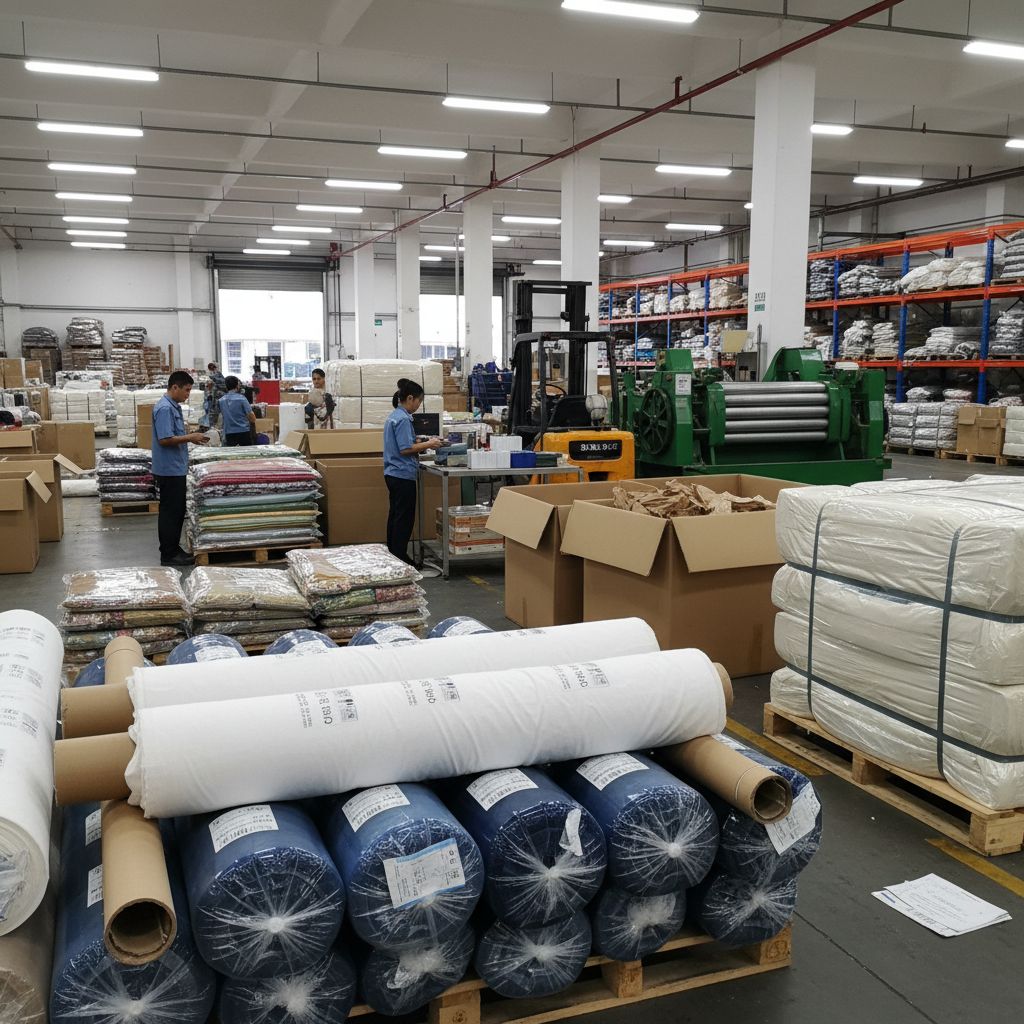
Basic Flow Chart of Garments Manufacturing Process
A basic garment manufacturing flow chart is shown below:
| S/L | Process Step | Main Purpose |
|---|---|---|
| 1 | Design | Create the garment style, artwork, and technical details based on buyer or brand requirements. |
| 2 | Pattern Making | Prepare pattern pieces for each garment part according to the approved design and measurements. |
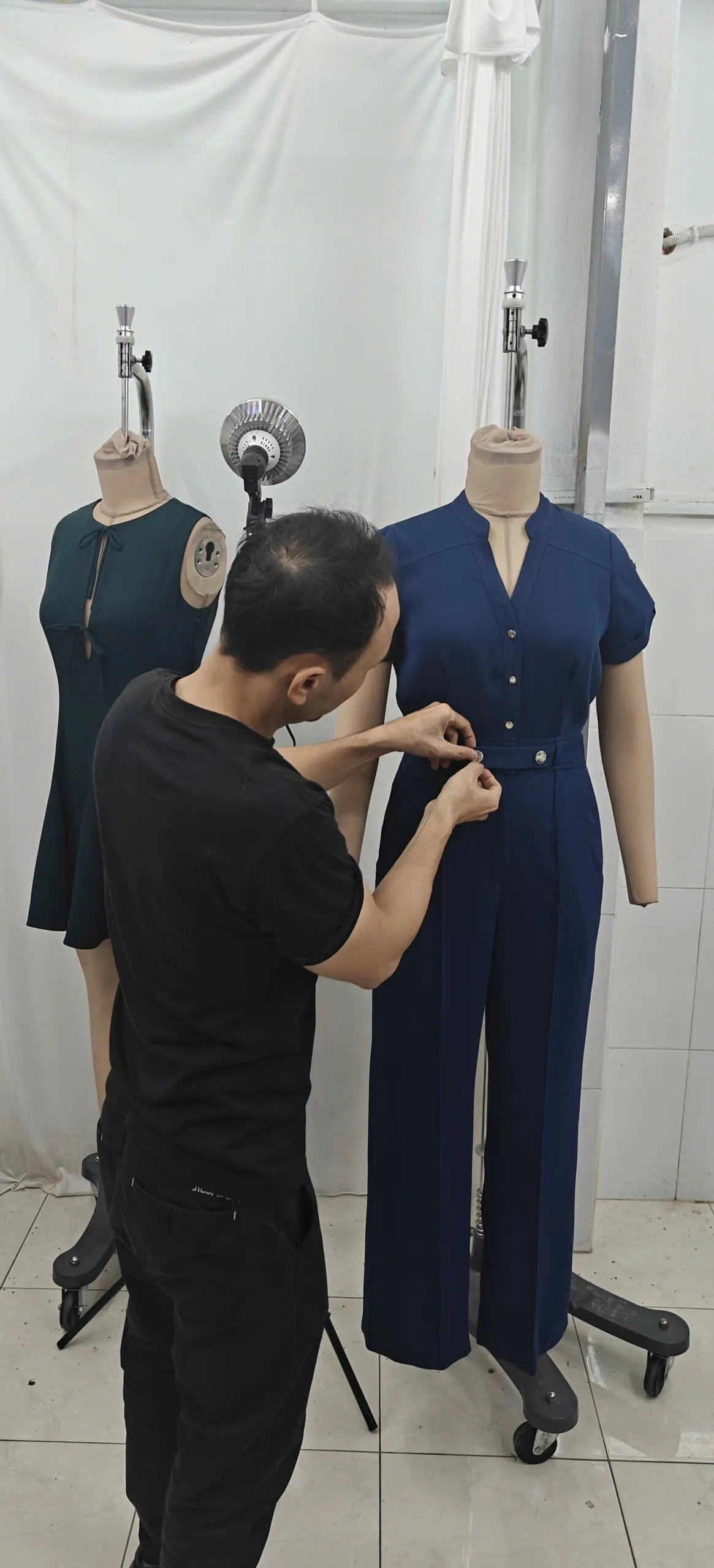
| 3 | Fit Sample Making | Make a sample garment to check fit, style, and construction before bulk production. |
| 4 | Production Pattern Making | Finalize patterns for bulk production by adding required allowances and technical adjustments. |
| 5 | Grading | Convert the base pattern into different sizes according to the size chart. |
| 6 | Marker Making | Arrange pattern pieces efficiently for fabric cutting to reduce waste and maintain accuracy. |
| 7 | Fabric Spreading | Lay fabric in layers properly before cutting. |
| 8 | Fabric Cutting | Cut the fabric according to the marker and required garment parts. |
| 9 | Cutting Parts Sorting or Bundling | Sort and bundle cut parts by size, color, shade, or order requirement for sewing. |
| 10 | Sewing | Join all cut parts together to make a complete garment. |
| 11 | Garments Inspection | Check sewn garments for defects, workmanship, and measurement problems. |
| 12 | Garments Ironing and Finishing | Remove wrinkles, improve appearance, trim threads, and complete finishing work. |
| 13 | Final Inspection | Inspect finished garments according to buyer requirements before packing. |
| 14 | Garments Packing | Fold and pack garments based on buyer instructions. |
| 15 | Cartoning | Place packed garments into cartons for storage and shipment. |
| 16 | Shipment | Send finished garments to the buyer or destination. |
1. Design
Design is the first step in the garment manufacturing process. At this stage, the garment style is created based on buyer requirements, fashion trends, brand concepts, or product development needs. The design may include sketches, artwork, technical details, construction features, measurement charts, color information, and trim details. In export garment production, the buyer often provides the technical sheet and artwork to the factory or merchandiser. A clear design is very important because all later processes depend on it.

2. Pattern Making
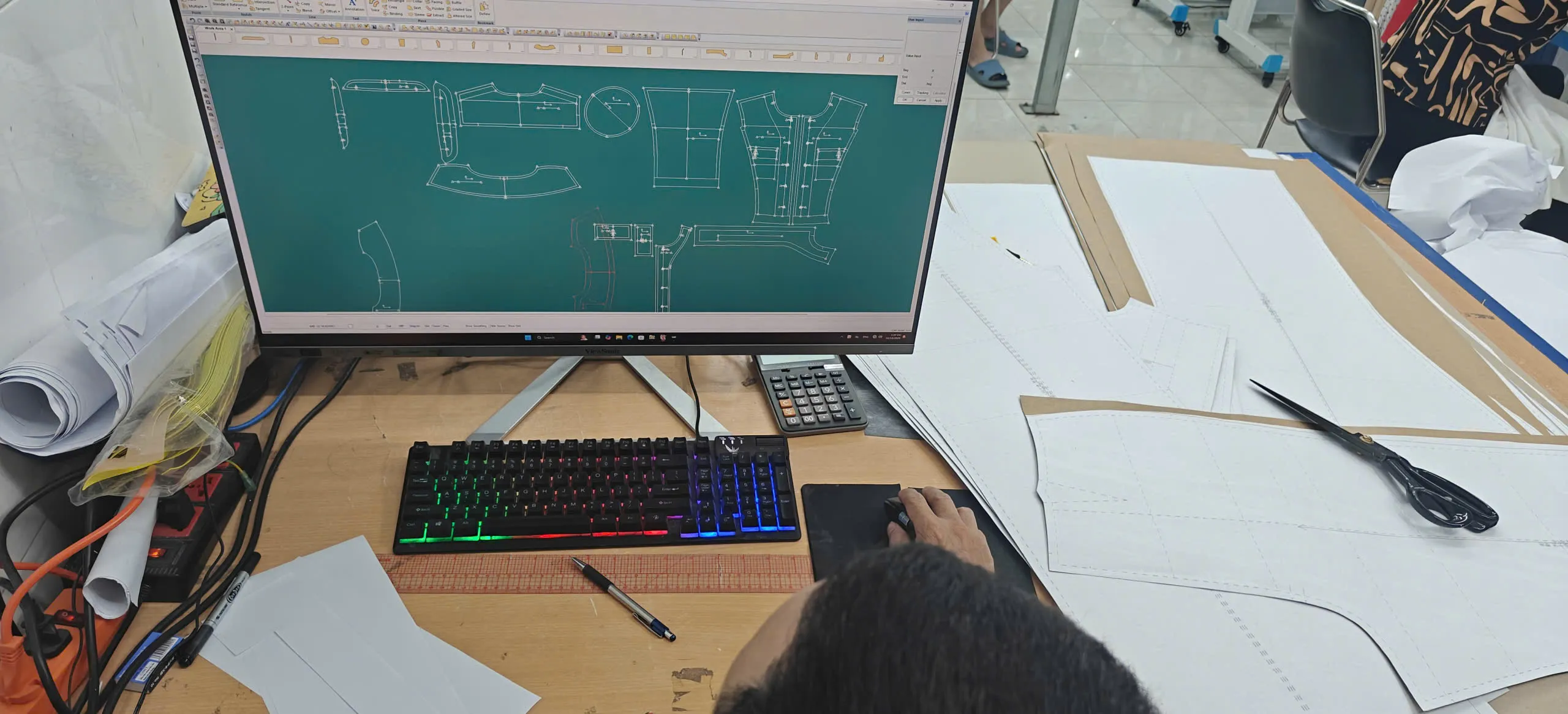
Pattern making is the process of creating paper or digital templates for each part of the garment. These pattern pieces are developed by following the approved design, measurement sheet, and technical specifications. Each garment part, such as front, back, sleeve, collar, cuff, placket, or pocket, needs its own pattern. Pattern making can be done manually or by using CAD software. Good pattern making is essential because it affects garment fit, shape, construction, and production accuracy.

3. Fit Sample Making
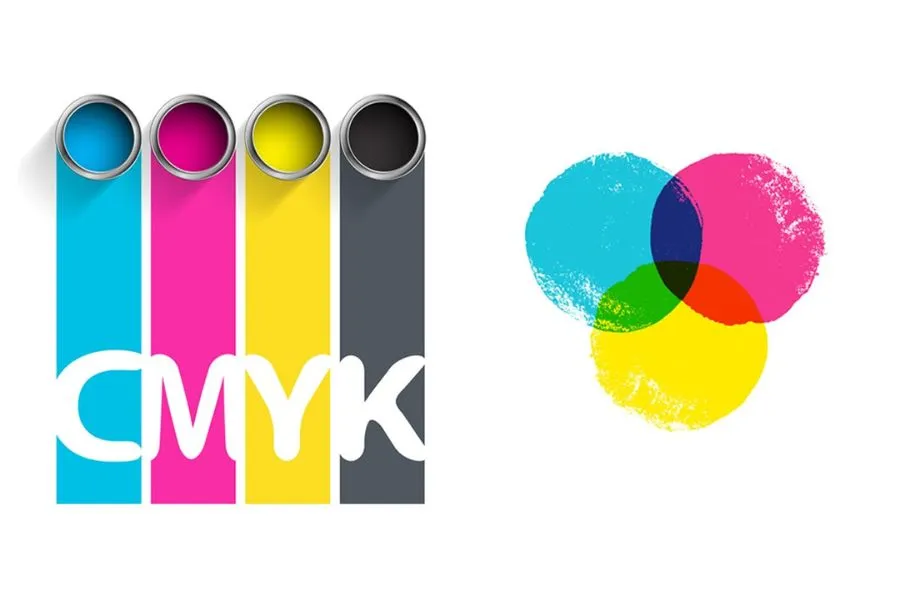
A fit sample is made to check whether the garment matches the required style, measurement, and fitting standard. This sample is usually prepared before bulk production and sent for buyer review or approval. The main purpose of a fit sample is to confirm the garment’s overall shape, balance, and fitting on the body. If any issue is found, corrections are made before moving to the next stage. This step is critical because poor fit approval can lead to bulk production problems later.

4. Production Pattern Making
Once the fit sample is approved, the production pattern is prepared for bulk manufacturing. At this stage, the final pattern includes all necessary allowances and technical adjustments required for production. These may include seam allowance, hemming allowance, shrinkage allowance, and other factory-related corrections. The production pattern must be technically correct because it will be used for the full manufacturing process.
5. Grading
Grading is the process of increasing or decreasing the base pattern into different garment sizes according to the buyer’s size chart. For example, if the approved base size is medium, the pattern will be graded to smaller and larger sizes such as small, large, and extra large. Grading can be done manually or by computer. Accurate grading is important because each size must maintain the correct proportion and fit.
6. Marker Making
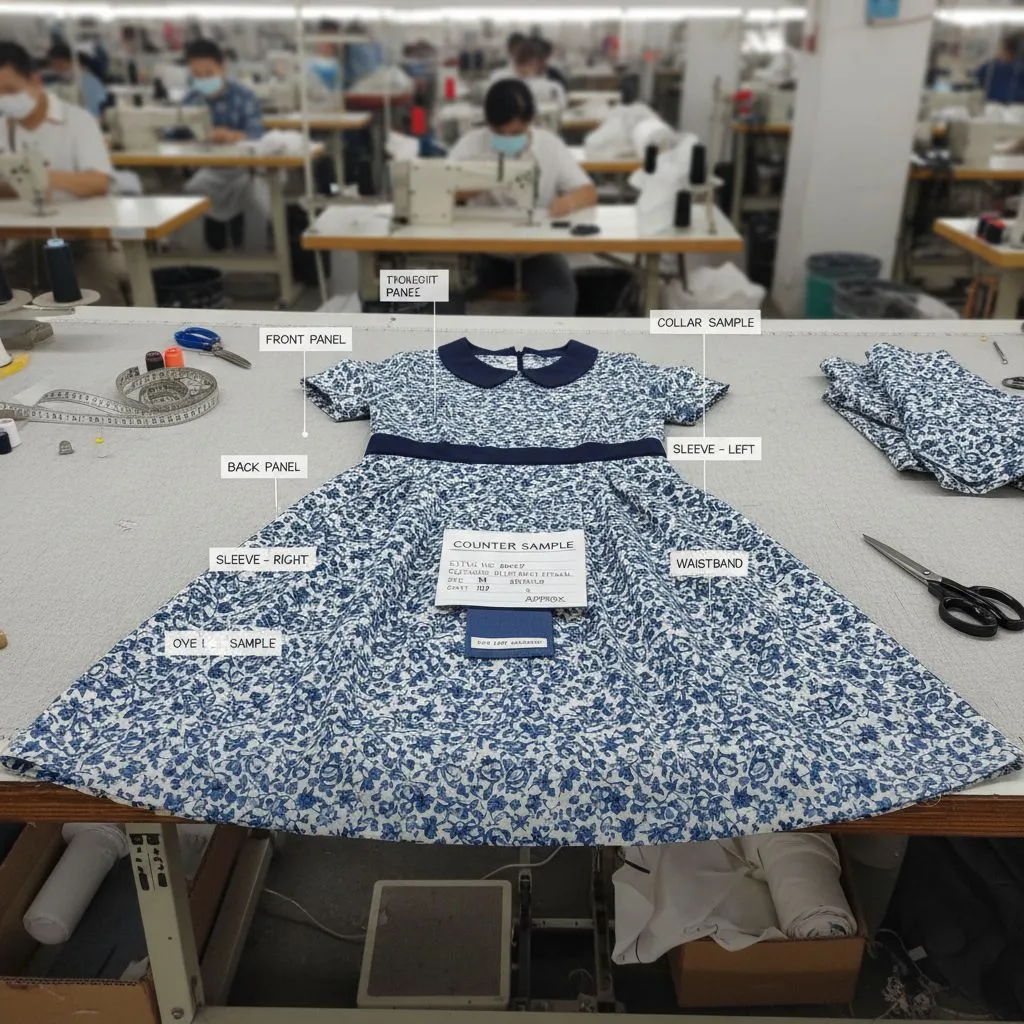
Marker making is the process of arranging all pattern pieces efficiently on a marker plan for fabric cutting. The main goal of marker making is to reduce fabric waste while maintaining correct grain direction, size ratio, and style layout. In the past, markers were often made on paper. Today, most factories use computerized marker making systems. A well-made marker improves fabric utilization and reduces material cost.
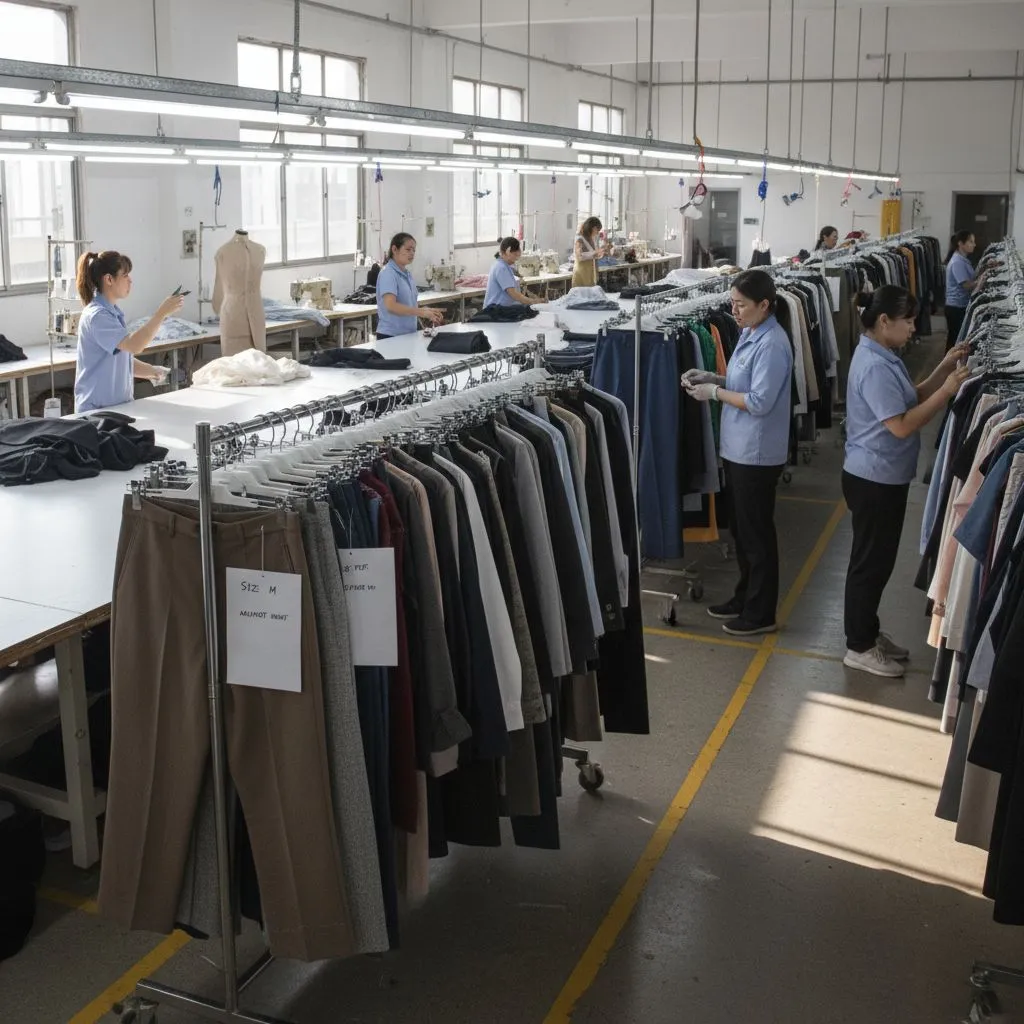
7. Fabric Spreading
Fabric spreading is the process of laying fabric layers one on top of another in a controlled way before cutting. The fabric is spread according to marker length, fabric width, size ratio, and order quantity. This step must be done carefully to avoid problems such as fabric tension, uneven edges, shade mixing, or misalignment. Spreading can be done manually or with automatic spreading machines. Proper spreading is necessary because poor spreading leads directly to cutting defects.

8. Fabric Cutting
Fabric cutting is the process of cutting the spread fabric according to the marker. The objective is to produce accurate garment parts with the correct shape and size. Cutting may be done by straight knife, round knife, band knife, die cutting, or computerized cutting machine, depending on factory setup and order size. Cutting accuracy is very important because any cutting mistake affects sewing quality and final garment measurement.
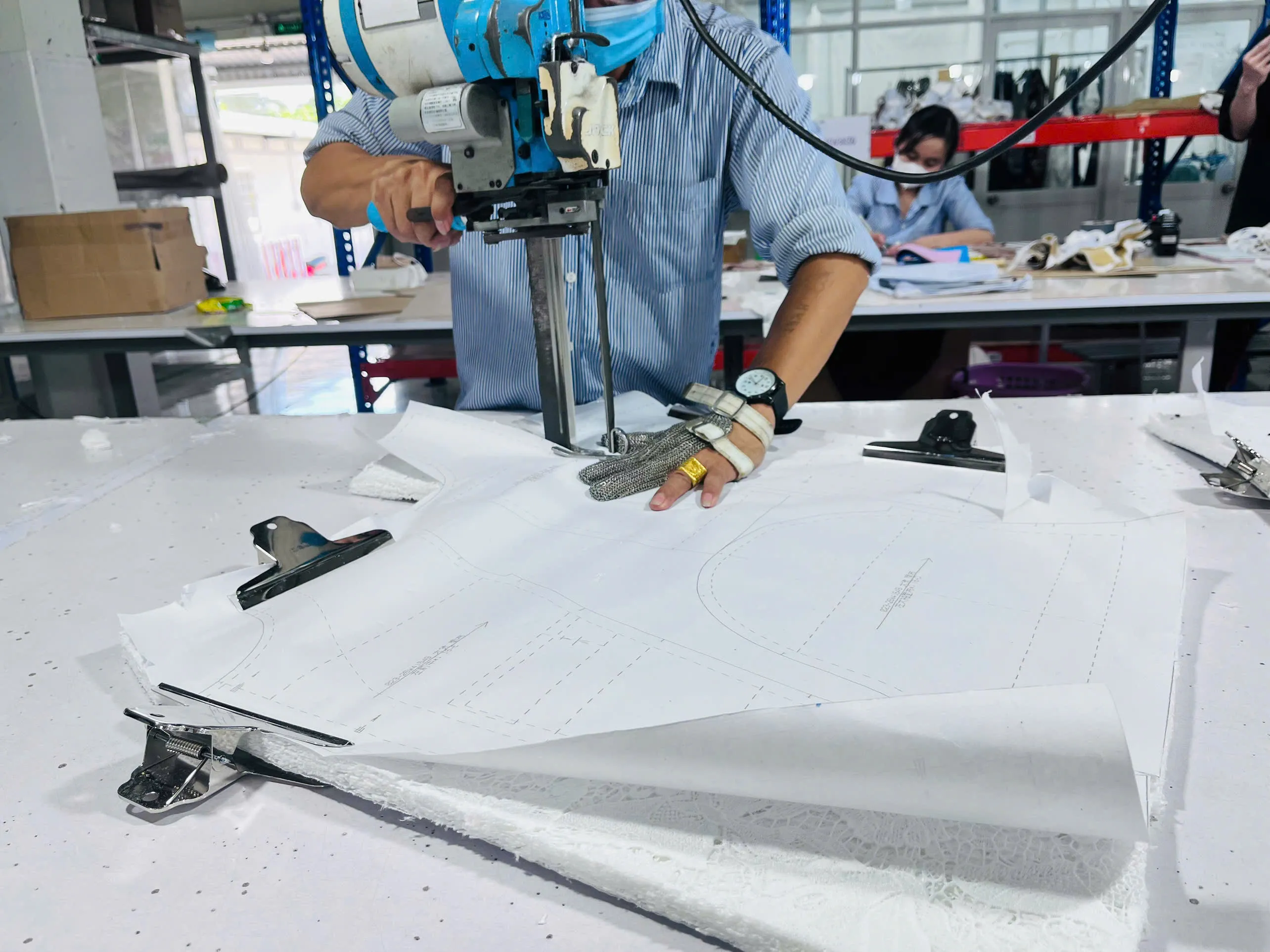
9. Cutting Parts Sorting or Bundling
After cutting, all garment parts are sorted and bundled according to size, color, shade, ply, or order requirement. This step helps maintain control over the cut components before they move to sewing. Proper bundling is important to avoid size mixing, shade variation, missing parts, and process confusion. In many factories, bundle tickets or identification tags are used for control.

10. Sewing
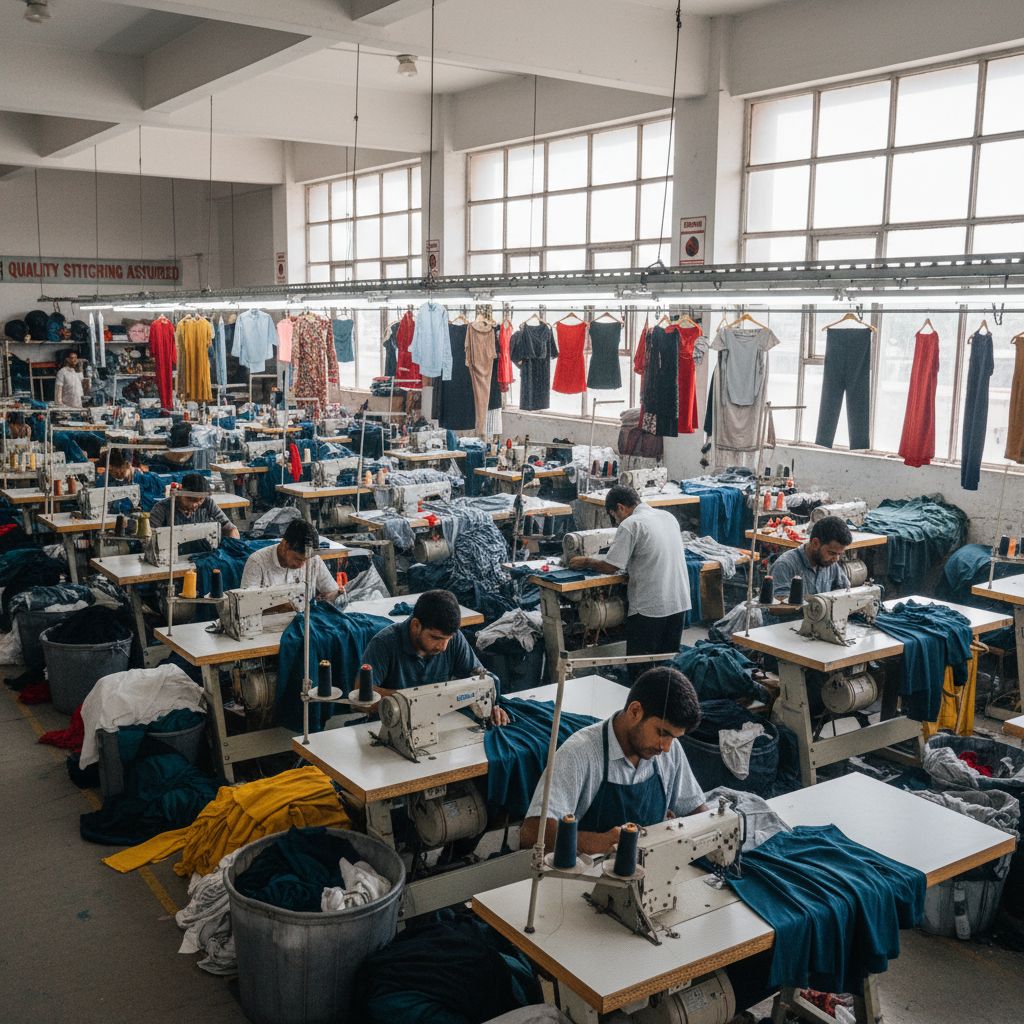
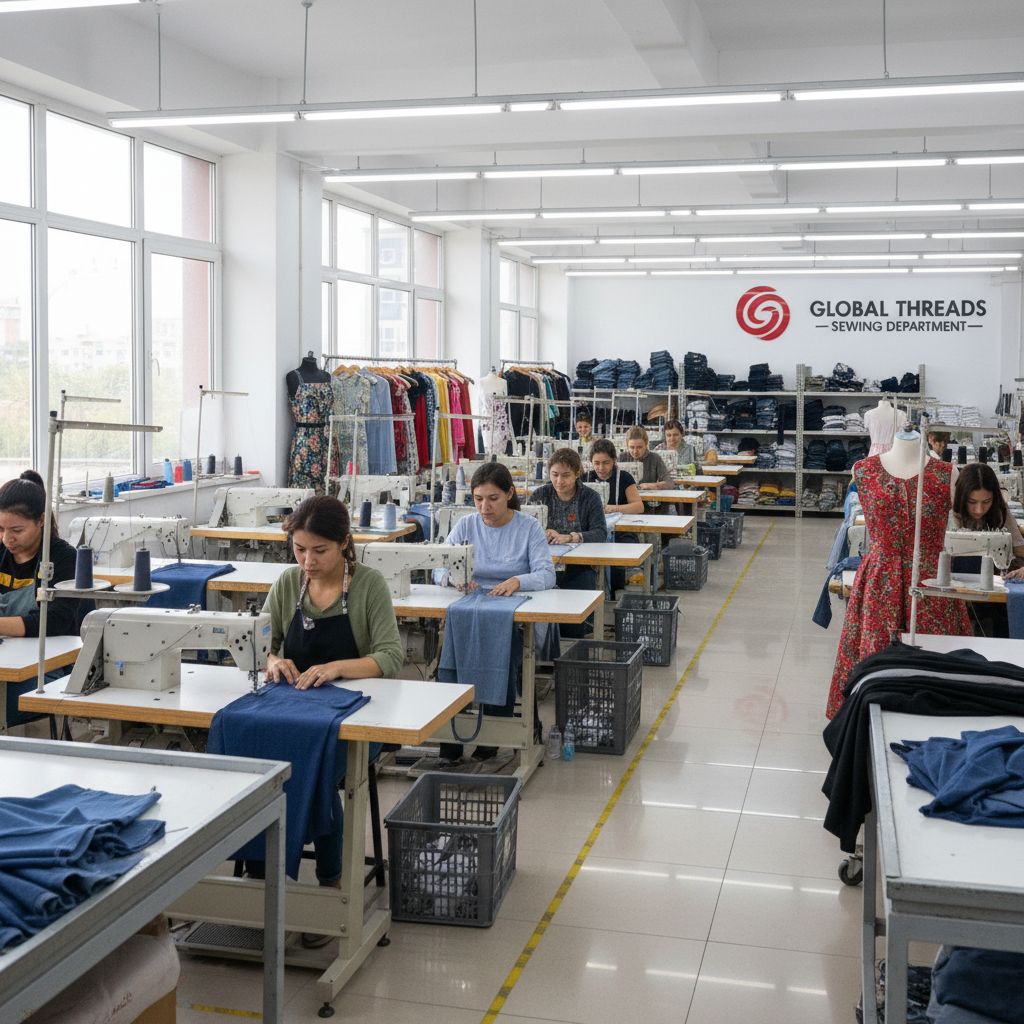
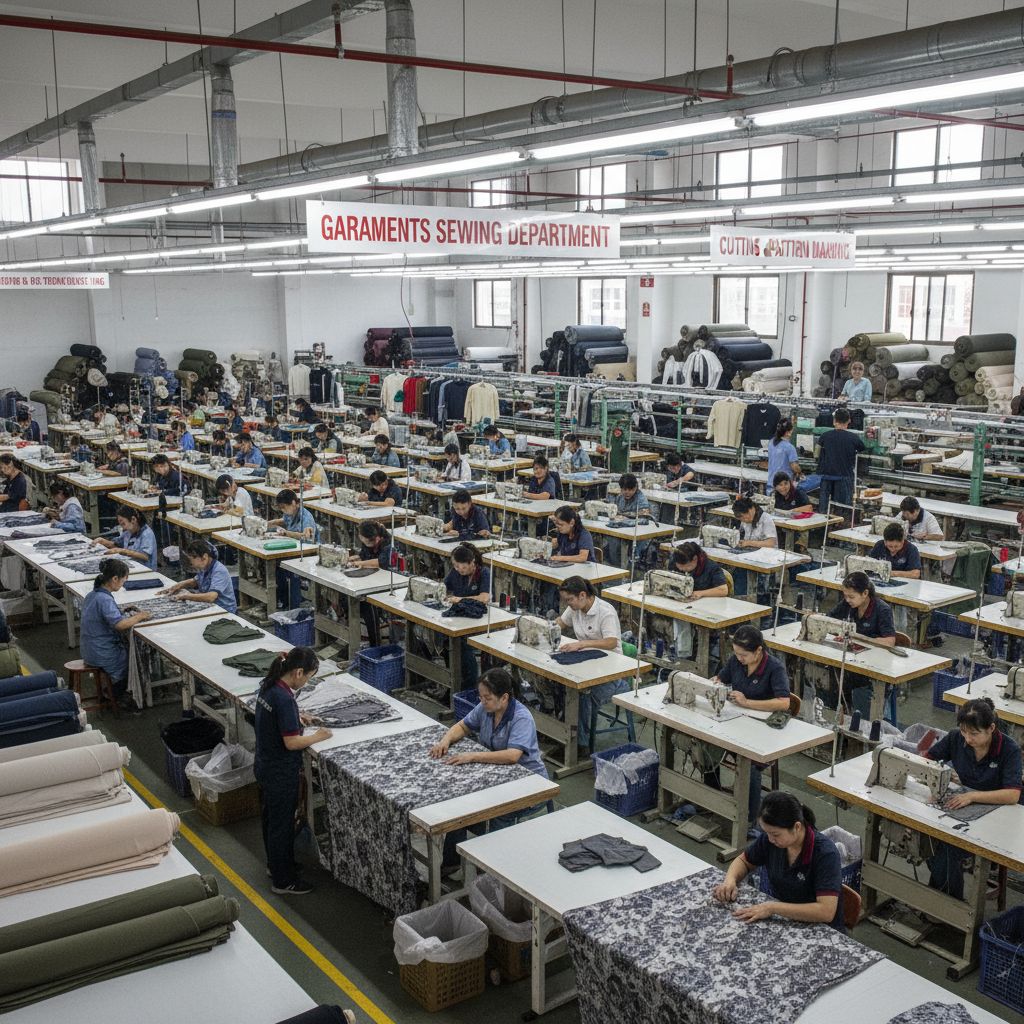
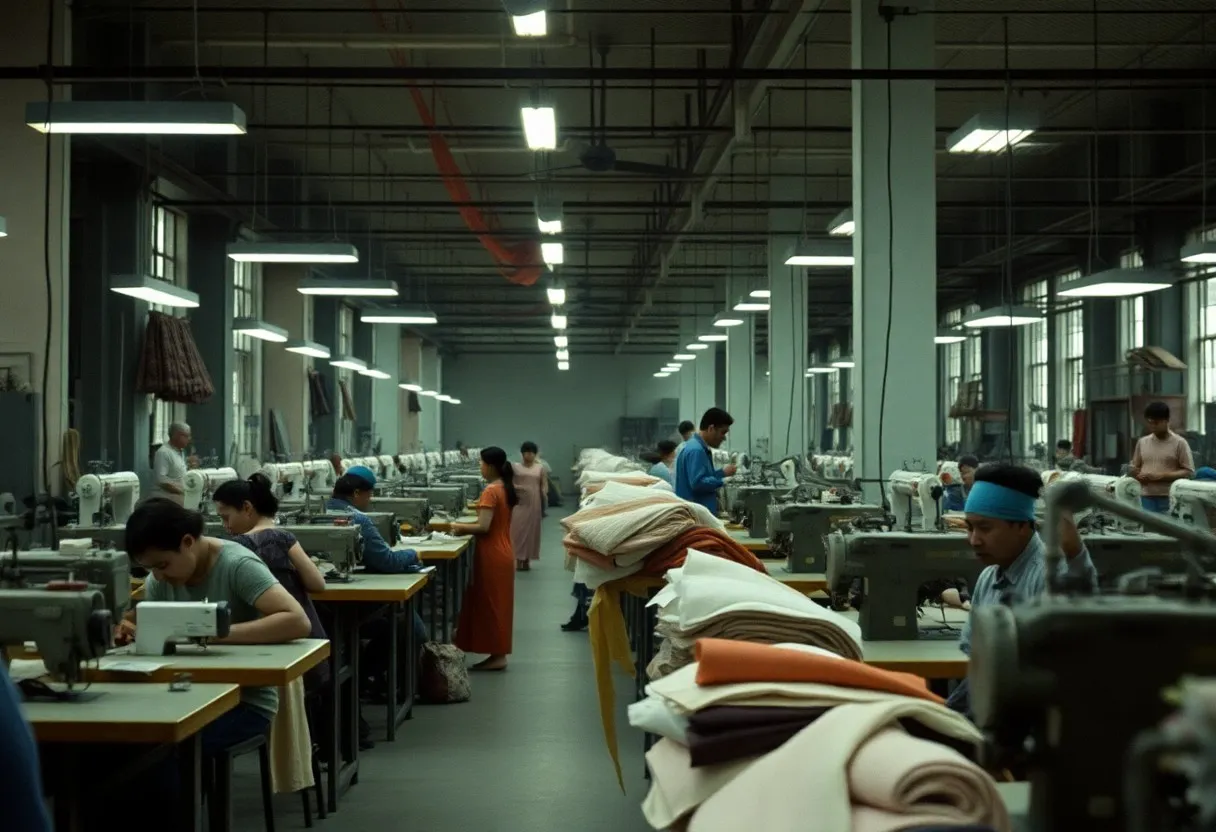
Sewing is the process where all cut garment parts are joined together to make a complete garment. This is one of the most important stages in garment manufacturing because it directly affects construction quality, appearance, and productivity. The sewing process is carried out with industrial sewing machines operated by trained workers. Depending on the garment style, sewing may involve many operations such as joining panels, attaching sleeves, sewing collars, making plackets, setting waistbands, and hemming. A well-organized sewing line helps improve output and reduce defects.

11. Garments Inspection
After sewing, garments are inspected to identify defects and confirm whether they meet the required workmanship standard. This inspection may include checking stitch quality, seam condition, measurement points, alignment, part matching, and visible defects. The purpose of garments inspection is not to create quality, but to detect and control quality problems before garments move to finishing.
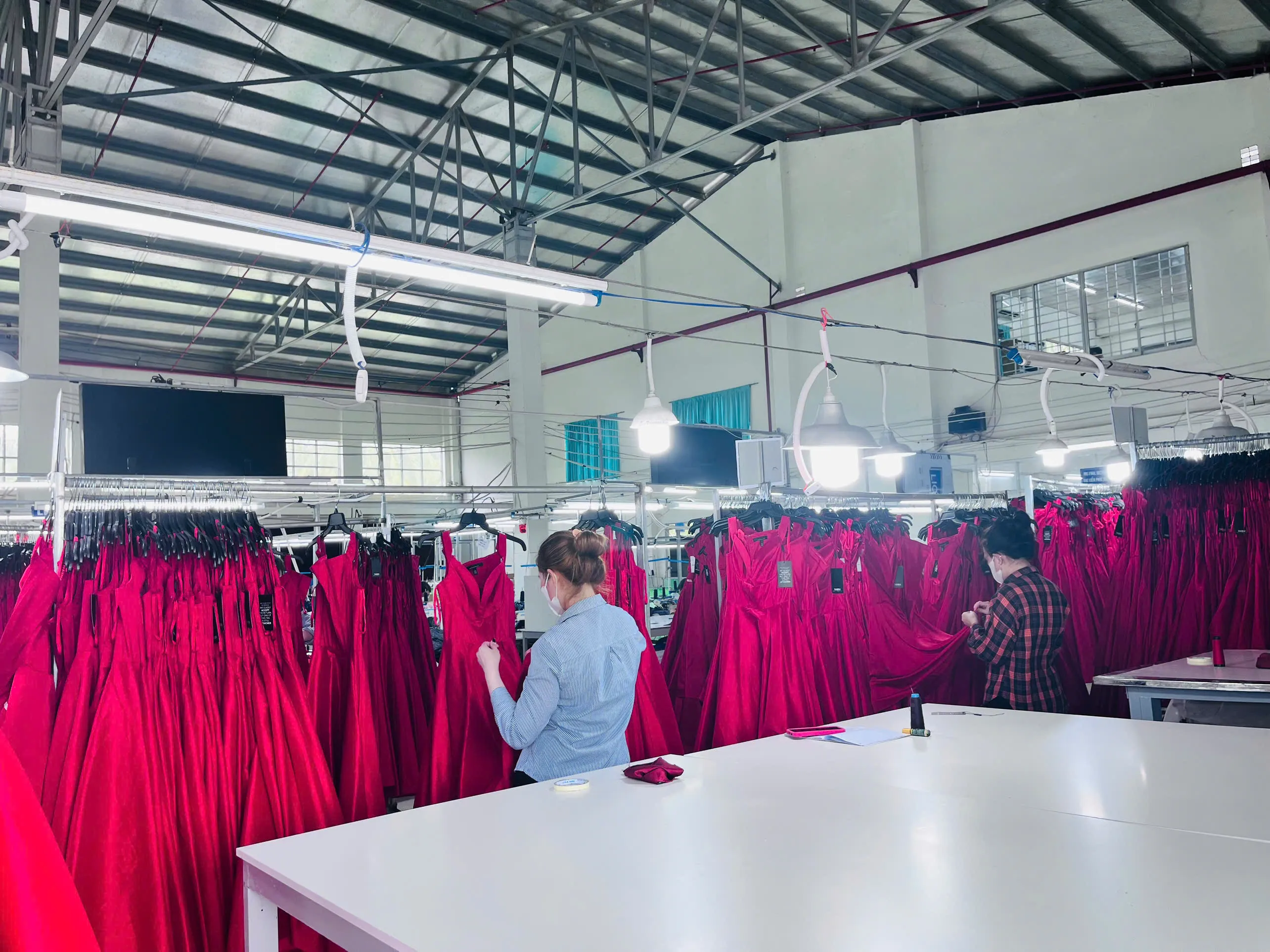
12. Garments Ironing and Finishing
After inspection, garments go through ironing and finishing. At this stage, wrinkles are removed, the garment shape is improved, and required finishing details are completed. Finishing may include thread trimming, spot cleaning, pressing, label checking, folding preparation, and appearance improvement. This process gives the garment a clean and presentable look before final inspection and packing.
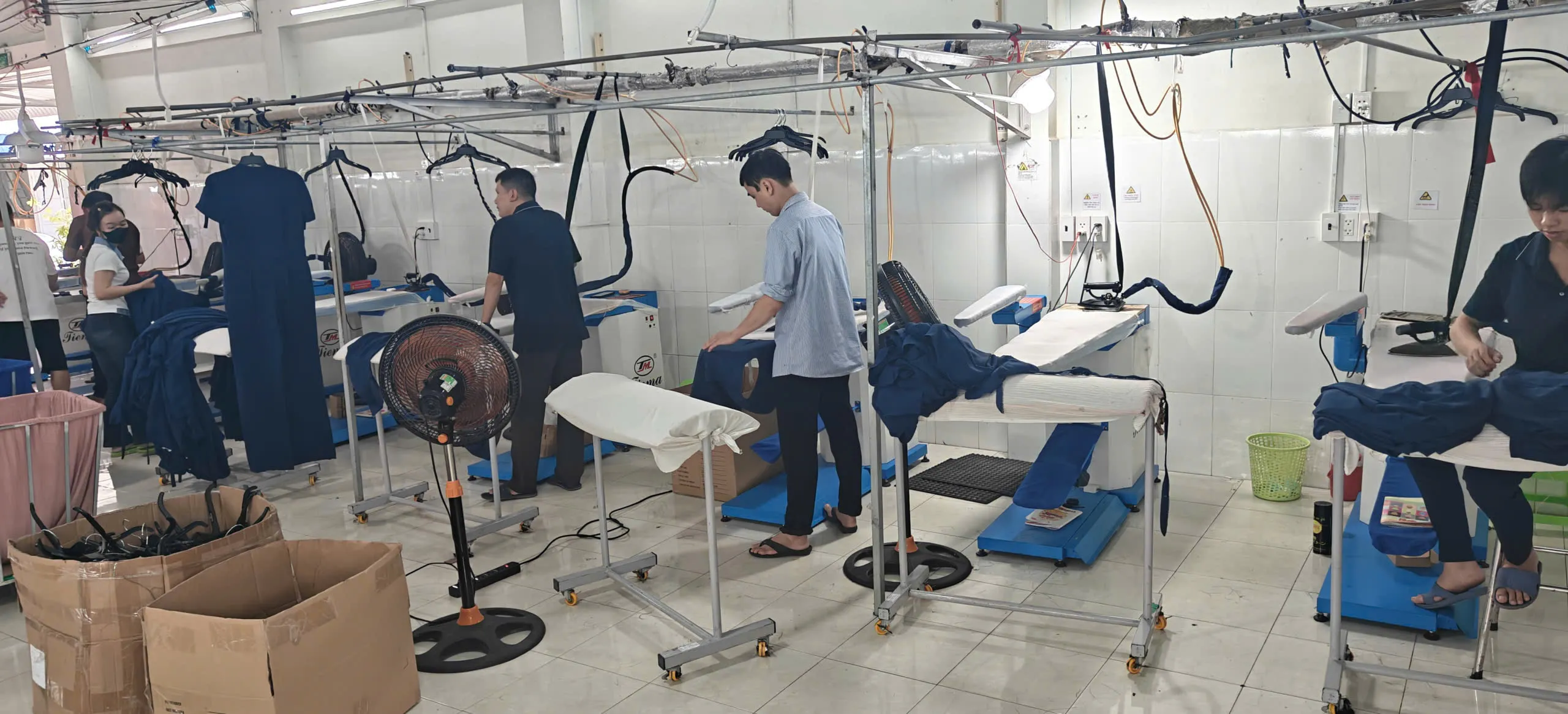
13. Final Inspection
Final inspection is done after finishing to confirm that the completed garments meet buyer requirements. This step is often carried out according to buyer specifications, AQL standards, or factory quality procedures. Inspectors check measurement, appearance, workmanship, labeling, packing details, and overall garment condition. Only garments that pass final inspection are approved for packing.
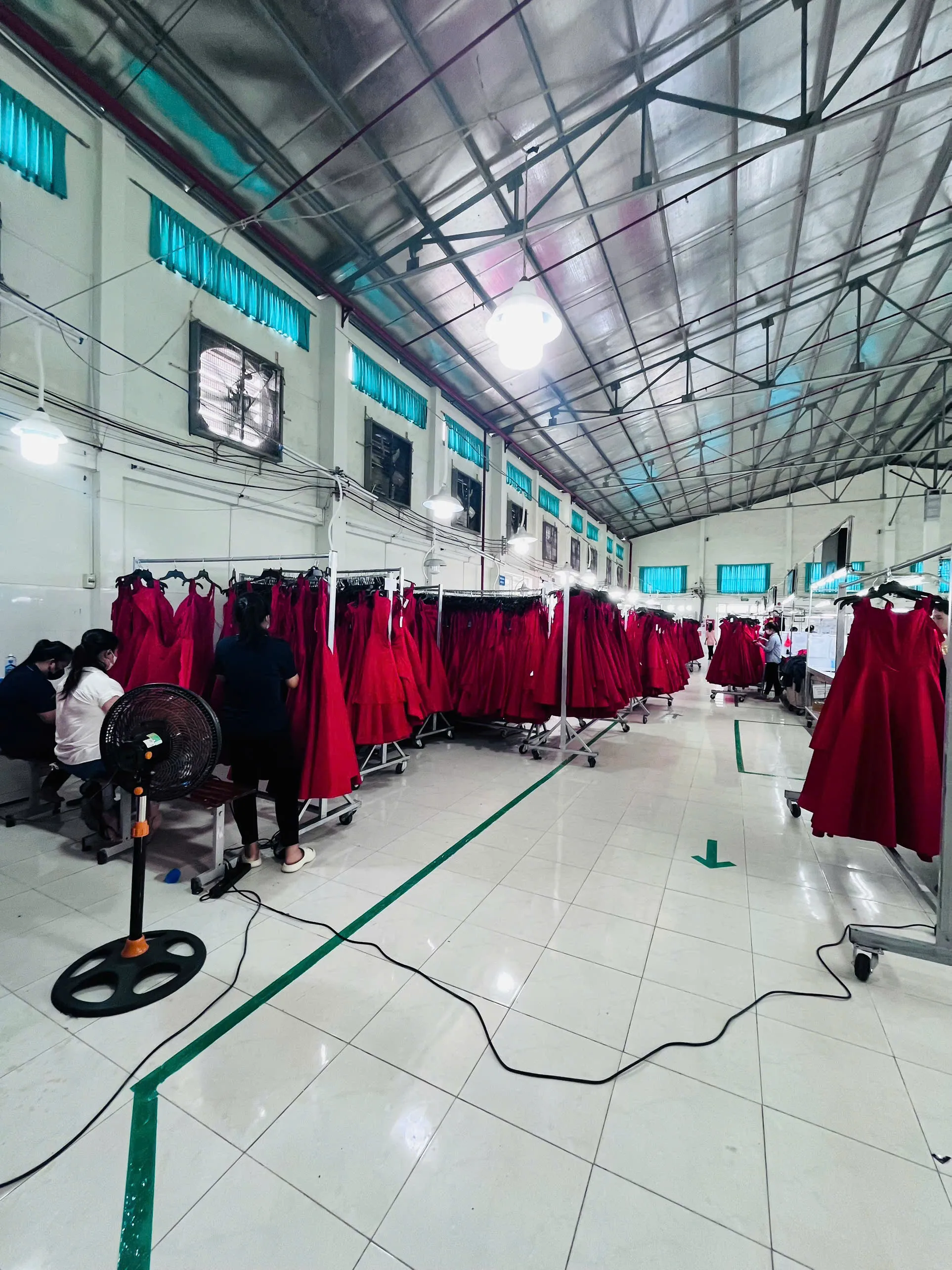
14. Garments Packing
Garments packing is the process of packing finished garments according to buyer instructions. This may include folding, inserting tissue paper, attaching tags, inserting size clips, placing garments into poly bags, and arranging them according to packing ratio. Packing accuracy is very important because mistakes in size, color, assortment, or labeling can create serious shipment issues.

15. Cartoning
Cartoning is the process of placing packed garments into export cartons according to buyer packing instructions. Cartons are prepared based on style, color, size breakdown, quantity per carton, and carton marking requirements. This stage protects the garments during storage and transportation. Proper cartoning also helps warehouse handling and shipment control.

16. Shipment
Shipment is the final stage of the garment manufacturing process. After completing all required production, inspection, and packing steps, the finished garments are dispatched to the buyer or destination port. Shipment may be by sea, air, or land depending on the delivery plan. Before shipment, the factory usually completes required documents such as packing list, invoice, carton details, and shipping marks.
Garment Manufacturing Process by Production Stage
To understand the flow more clearly, the garment manufacturing process can also be divided into major stages.
Product Development Stage – This stage includes:
- Design
- Pattern making
- Fit sample making
- Production pattern making
- Grading
- Marker making
This stage prepares the product for bulk production.
Cutting Stage – This stage includes:
- Fabric spreading
- Fabric cutting
- Cutting parts sorting or bundling
This stage converts fabric into cut garment components.

Sewing Stage – This stage includes:
- Sewing
- In-line or post-sewing inspection
This stage turns cut components into assembled garments.

Finishing and Packing Stage – This stage includes:
- Ironing and finishing
- Final inspection
- Packing
- Cartoning
This stage prepares garments for delivery in buyer-required condition.
Dispatch Stage – This stage includes:
- Shipment
This is the final handover stage of the order.
Common Problems in Garment Manufacturing Process
Even with a proper flow chart, garment manufacturing may still face many operational problems. Some common issues include:
- Incorrect pattern or grading
- Poor marker efficiency
- Fabric defects or spreading problems
- Cutting inaccuracy
- Size mixing during bundling
- Sewing defects
- Low productivity
- Finishing defects
- Packing mistakes
- Shipment delays
Factories need strong planning, quality control, and inter-department coordination to reduce these risks.
Conclusion / Final Words
The flow chart of garments manufacturing process shows how a garment moves from design to shipment through a series of planned production stages. It starts with product development steps such as design, pattern making, sampling, grading, and marker making. Then it continues through spreading, cutting, sewing, inspection, finishing, packing, cartoning, and shipment.
Every stage is important because each one affects the next. If one process is done poorly, it can create problems throughout the whole manufacturing chain. That is why garment factories need a clear process flow chart to manage quality, efficiency, and delivery performance. A good understanding of the garment manufacturing flow helps both beginners and industry professionals improve production control and build better systems for apparel manufacturing.