Are Swing Tags the Same as Clothing Labels And What Different?

No, swing tags and clothing labels are not the same thing. They may both carry information about a garment, but they are designed for different purposes, attached in different ways, used at different stages of the customer journey, and may have very different regulatory importance.
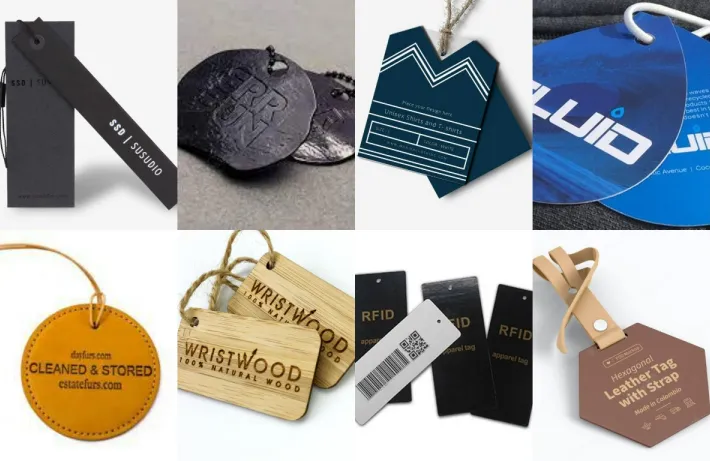
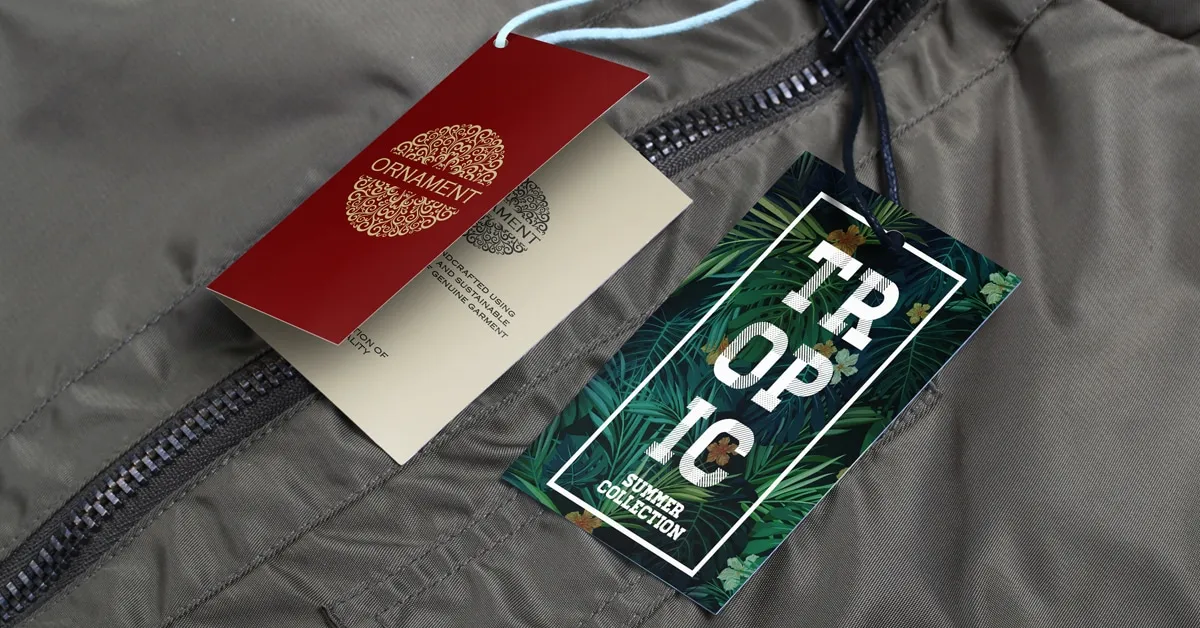
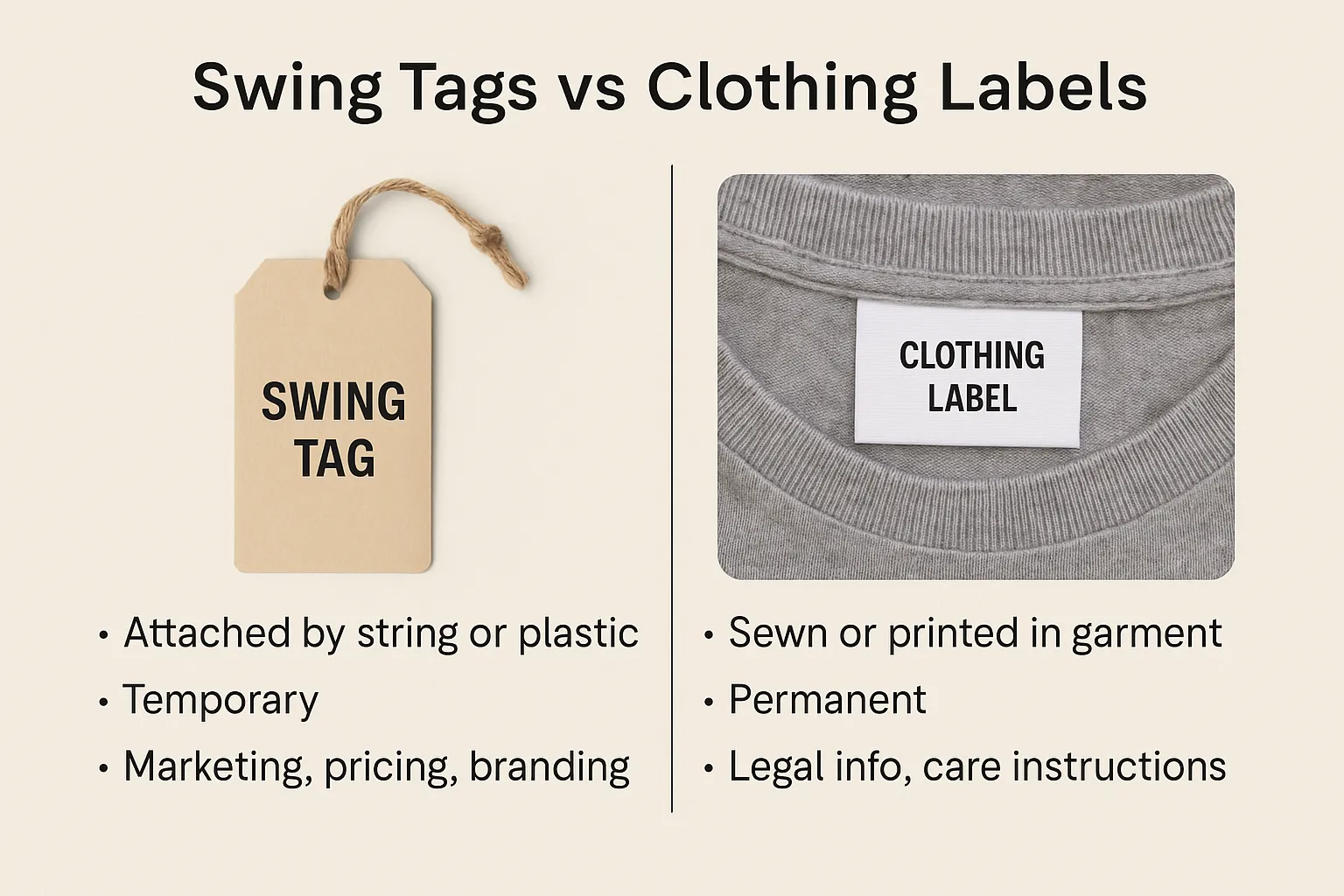
- A swing tag is usually a temporary external tag attached to the garment with a string, cord, ribbon, or plastic fastener. It is mainly used for branding, product presentation, pricing, barcodes, SKU information, and marketing messages.
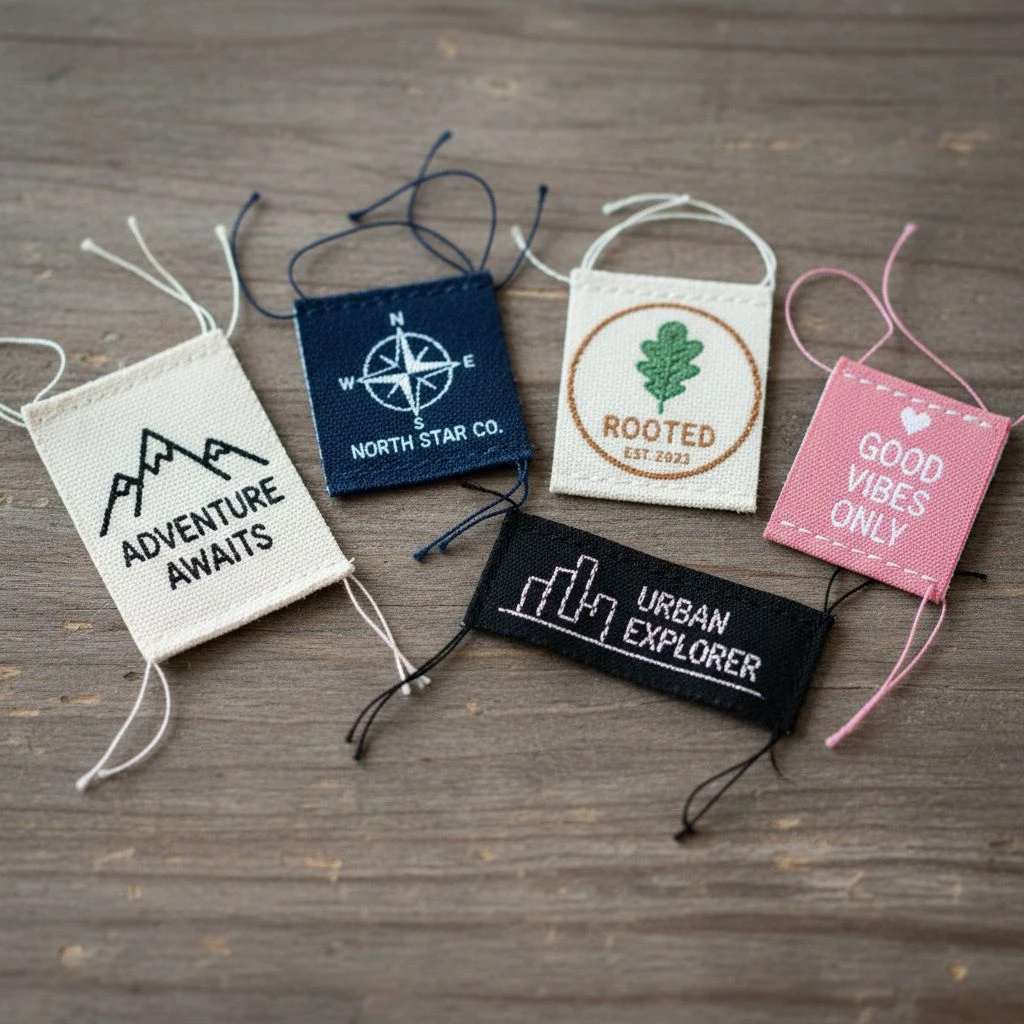
- A clothing label, by contrast, is normally a permanent or semi-permanent identifier sewn, heat-transferred, printed, or otherwise applied to the garment. It may provide information such as brand name, size, fiber composition, care instructions, and country of origin.
The easiest way to remember the difference is:
- Swing Tag = Retail Presentation and Marketing
- Clothing Label = Garment Identification, Care, and Compliance Information
Both can be important, but they should not be treated as interchangeable. For apparel brands, buyers, merchandisers, and garment factories, understanding this difference helps prevent production mistakes, labeling problems, retail confusion, and unnecessary rework. This guide explains what swing tags and clothing labels are, how they differ, what information they usually carry, how they are produced, where they are attached, and what brands should check before bulk production.
When you buy new clothes, you often notice two types of identifiers: a swing tag hanging from the garment and a clothing label sewn or printed inside. Although both provide product information, they serve very different purposes. Understanding the difference helps brands communicate better with customers and helps shoppers make smarter choices. – Comparison between swing tags and internal clothing labels
What are Swing Tags & Clothing Labels?
Swing Tags (Hang Tags)
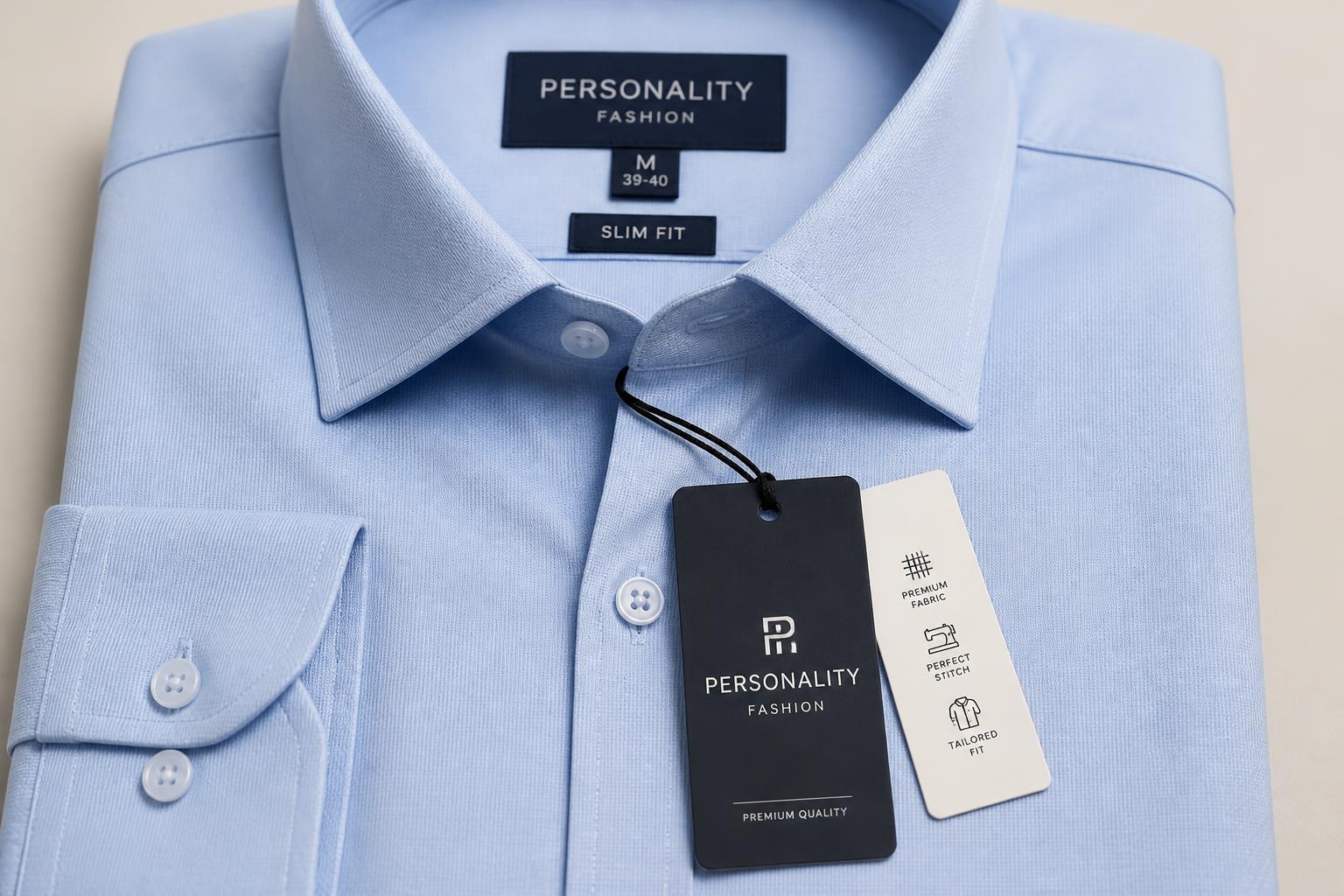
Before you even touch the fabric, the swing tag grabs your attention. It’s the brand’s first impression, combining design and material to influence product perception. Swing tags are temporary identifiers attached to garments with a string or plastic fastener.
Common elements include:
- Brand logo and marketing messages (e.g., “Eco-Friendly”).
- Price, barcode, and SKU for retail inventory.
- Size and color identifiers visible during shopping.

Purpose: They act as the first point of contact. They reinforce brand identity and help retailers manage stock. They are intended to be removed before wearing.
=> Read More: Swing Tags Explained: Purpose, Design, and Best Practices
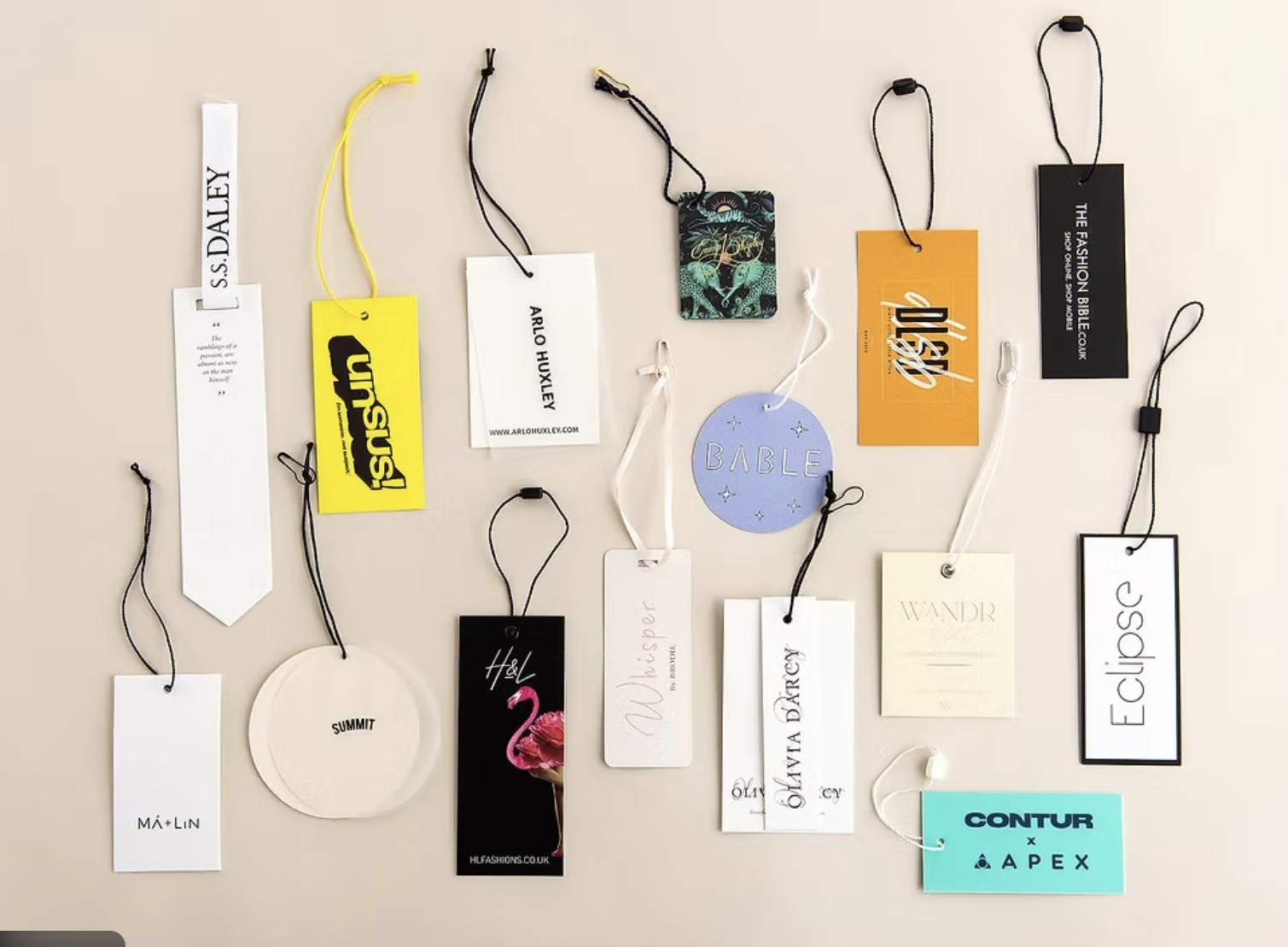
Common attachment methods include:
- String
- Cotton cord
- Polyester cord
- Ribbon
- Plastic loop
- Plastic fastener
- Safety pin
- Metal chain
- Custom branded attachment
The tag usually hangs freely from the garment, which is why it is called a “swing” tag.
=> Related Article: The Power of Custom Hem Tags for T-Shirts
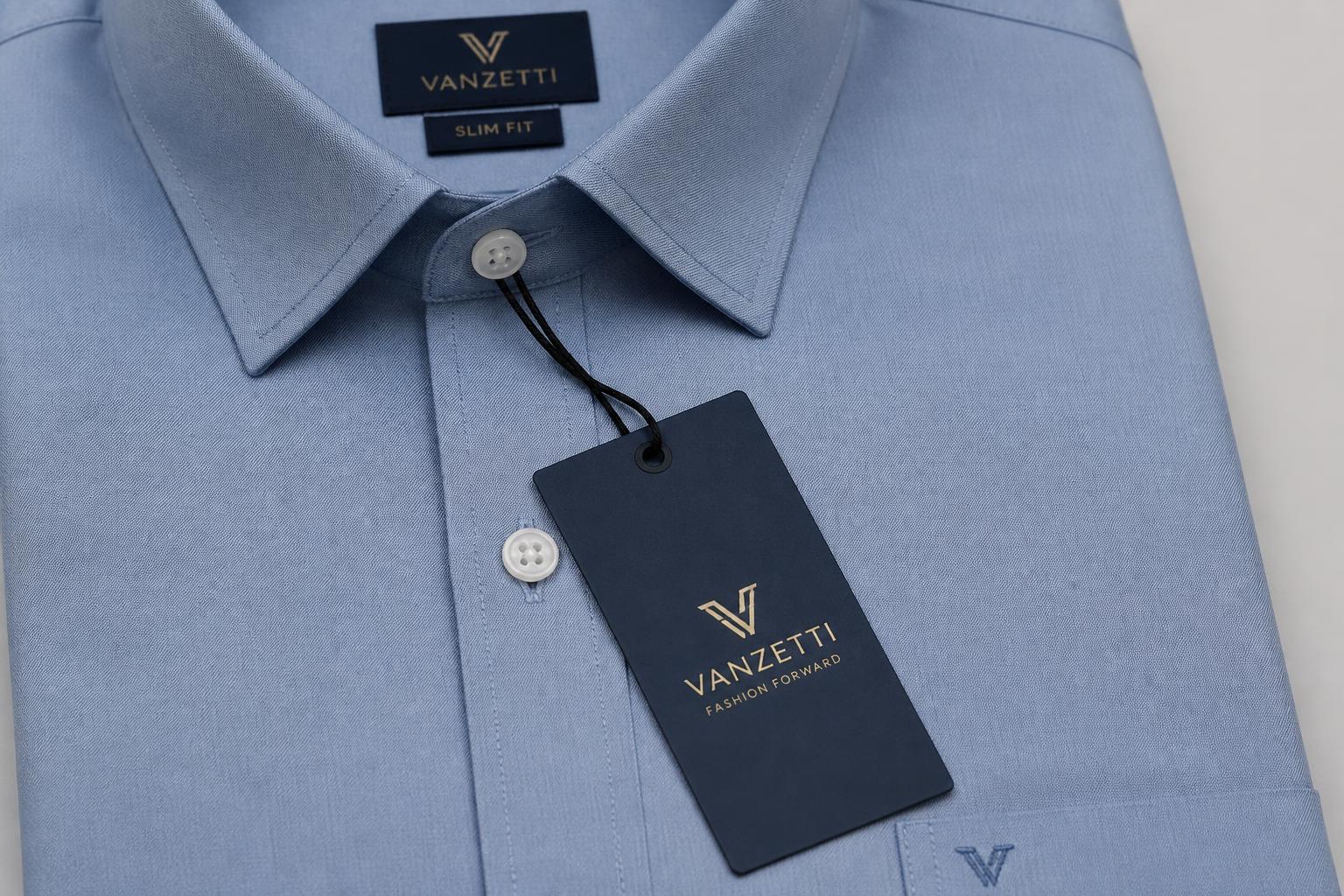

Where Is a Swing Tag Attached? Common positions include:
- Neckline
- Collar
- Placket
- Sleeve
- Side seam
- Waistband
- Belt loop
- Zipper pull
- Buttonhole
The exact position depends on the garment. For example, trousers may have a hang tag attached through a belt loop, while a T-shirt may have one attached near the collar or side seam.
=> Related Article: Are Swing Tags the Same as Clothing Labels And What Different?
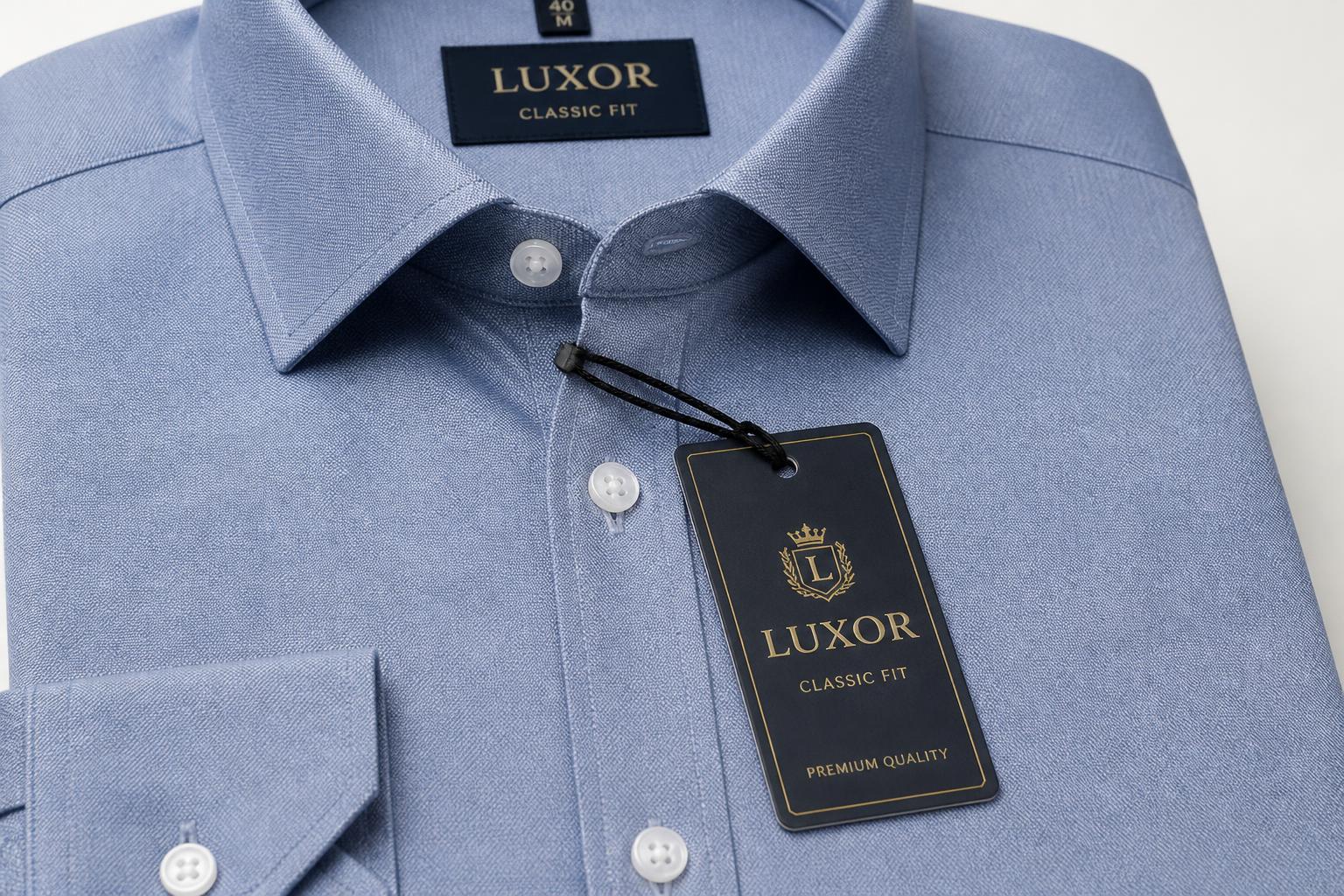
Clothing Labels (Internal Labels)
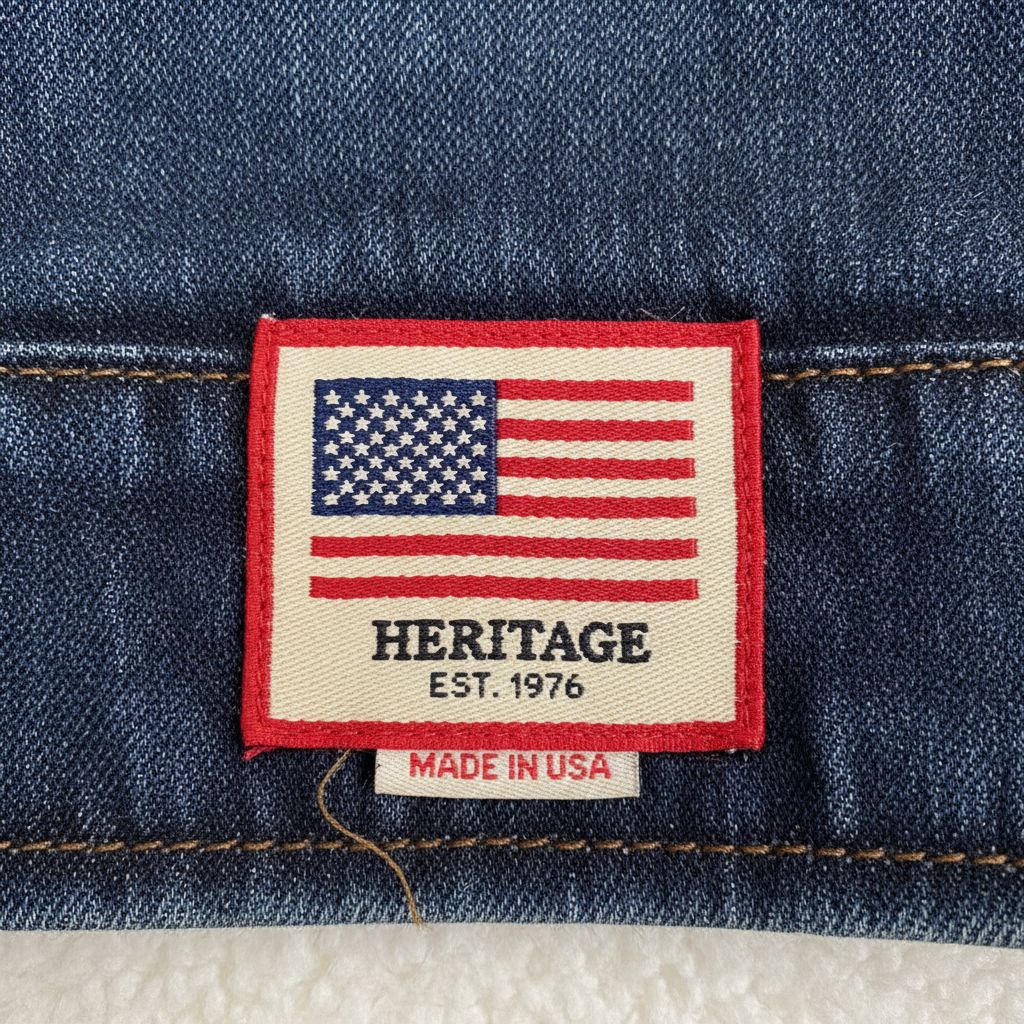
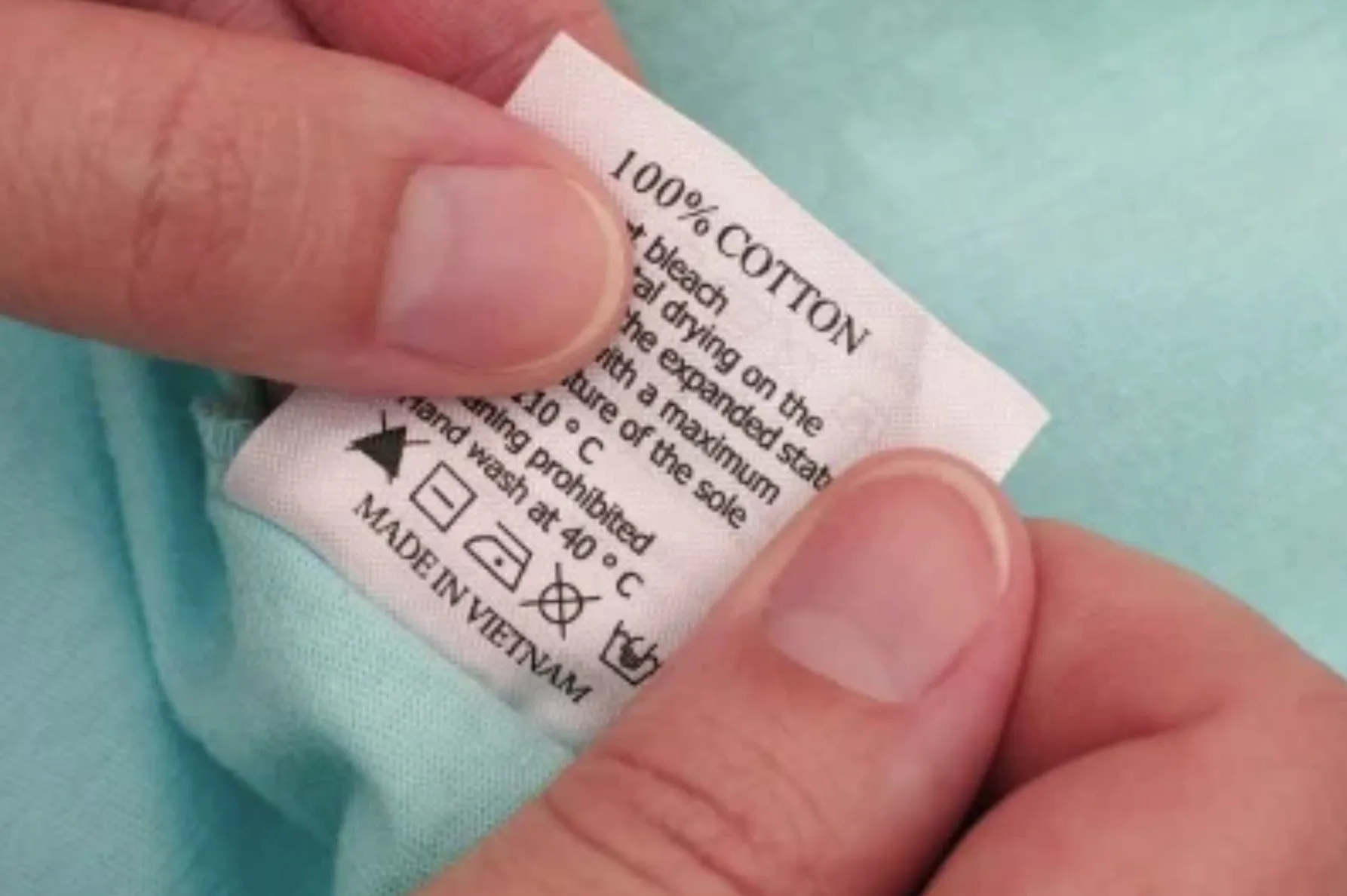
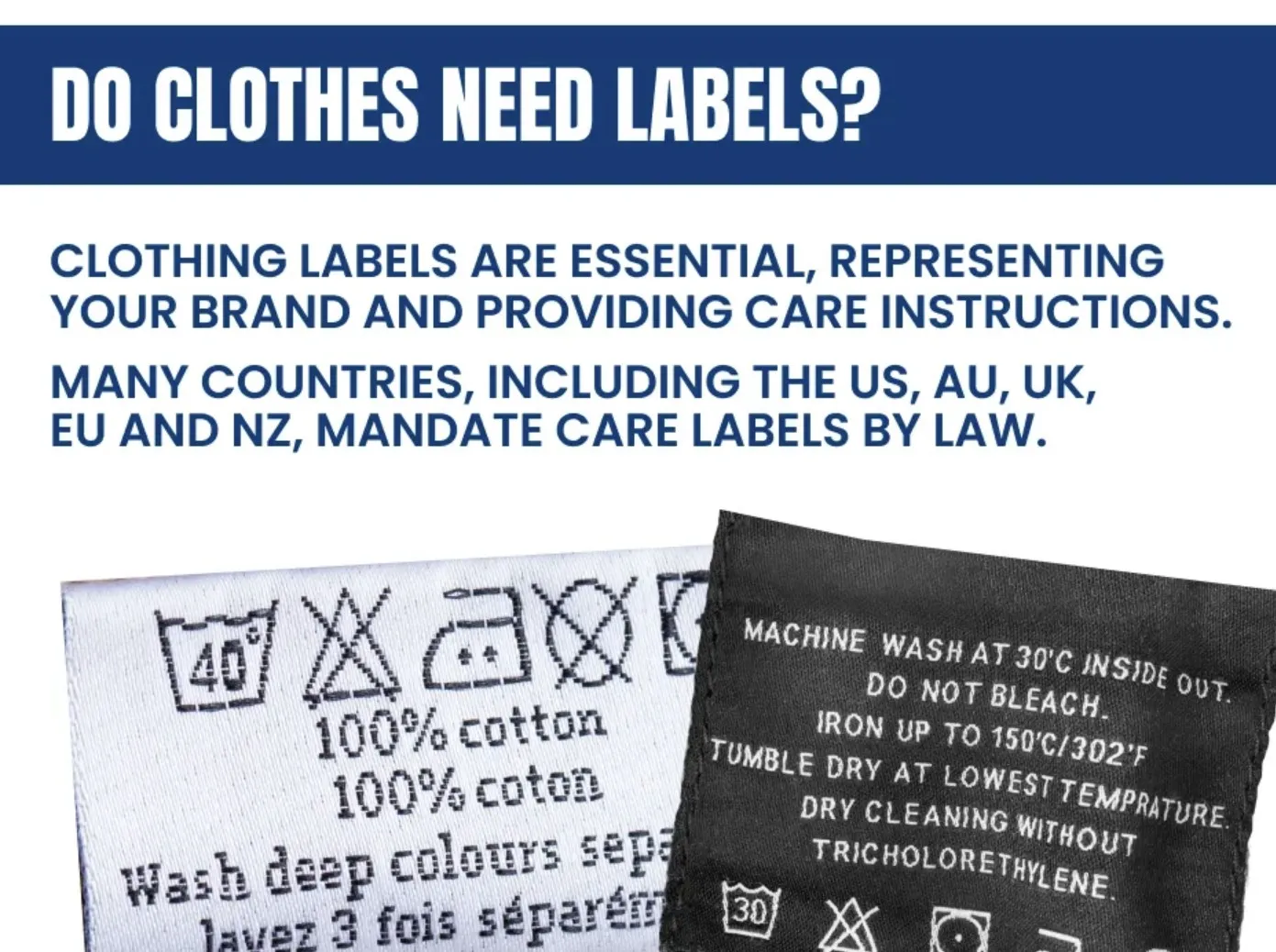
Once the swing tag is removed, the label remains with the garment throughout its life. These are permanent identifiers sewn or printed inside the neckline, side seam, or waistband.
=> Read More: Garment Labelling Requirements for Clothing
Common types include:
- Care labels: Mandatory instructions for washing and ironing.
- Content labels: Detailed fiber composition (e.g., 100% Cotton).
- Origin labels: Required legal information like “Made in Vietnam.”
Purpose: They serve a functional and regulatory role, ensuring the user knows how to maintain the garment and that the product complies with international textile laws.
=> Related Article: What Materials Are Commonly Used for Swing Tags?
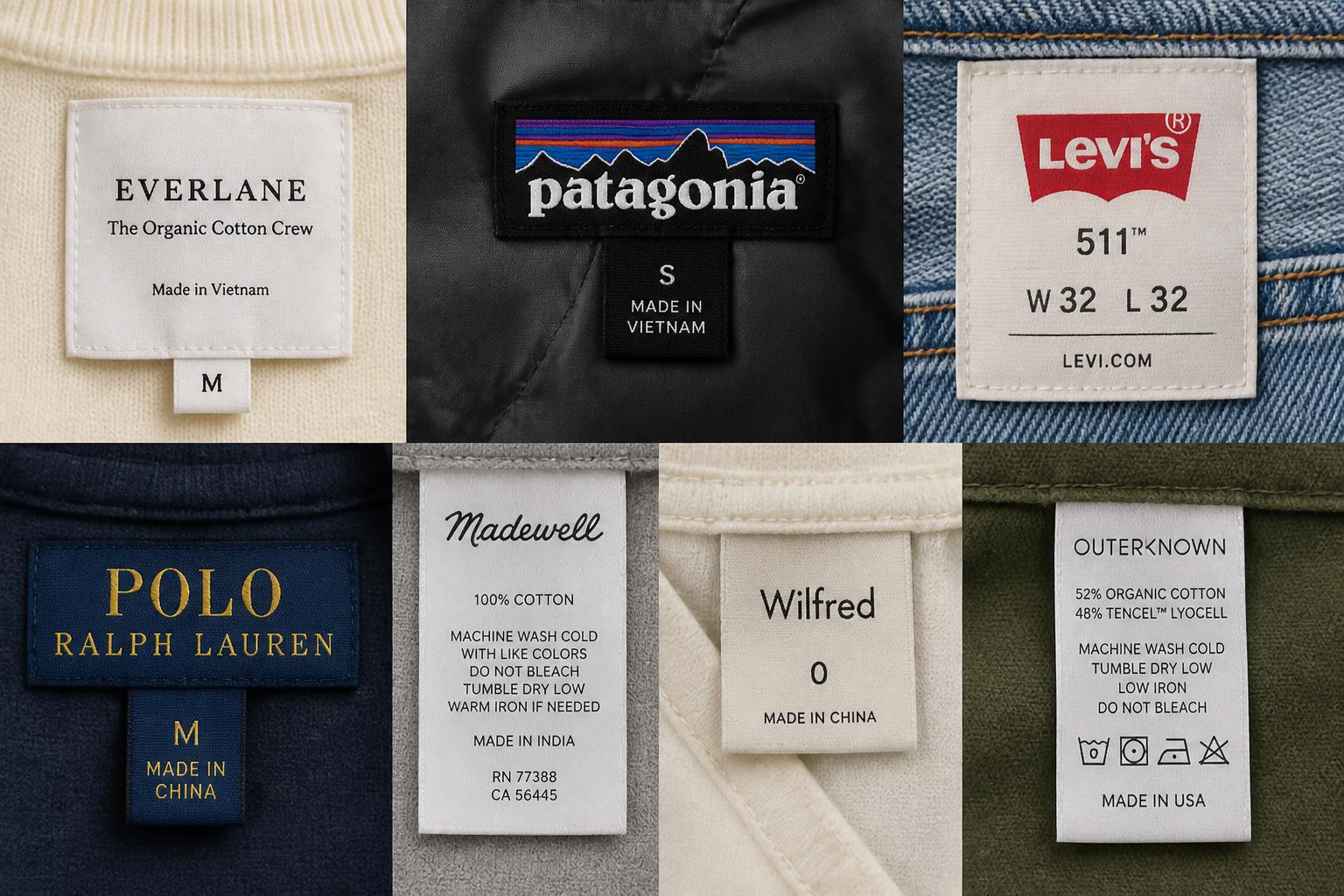
Common locations include:
- Back neck
- Side seam
- Waistband
- Center back
- Inside pocket
- Inner placket
Clothing labels can serve different purposes, and several labels may be used in the same garment.
=> Related Article: Swing Tags Explained: Purpose, Design, and Best Practices for Apparel Brands
Key Differences: Swing Tags vs. Clothing Labels
While both carry info, they are designed for different stages: one for attraction (shopping), the other for retention (usage).
| Feature | Swing Tag | Clothing Label |
|---|---|---|
| Main Purpose | Branding, marketing, pricing, retail information | Identification, care, composition, origin, compliance |
| Attachment | Temporary | Permanent or semi-permanent |
| Location | Usually outside garment | Usually inside garment |
| Visibility | Highly visible before purchase | Usually less visible during retail display |
| Removed After Purchase | Usually yes | Usually no |
| Material | Card, paper, recycled board, plastic, fabric, specialty materials | Woven, printed, satin, nylon, cotton, heat transfer, TPU, etc. |
| Marketing Role | High | Lower |
| Regulatory Role | Usually limited, but market-dependent | Often important depending on applicable law |
| Barcode/SKU | Common | Possible but less common |
| Care Instructions | Sometimes summarized | Commonly provided where required |
| Fiber Composition | Sometimes shown | Often used for required fiber information |
| Price | Common | Rare |
| Brand Story | Common | Usually limited |
| Must Survive Washing | No | Often yes |
Why Both Are Essential for Your Brand
Professional garment presentation doesn’t rely on one alone. Together, they form a complete branding system:
- The swing tag grabs attention and drives the buying decision.
- The internal label builds long-term trust and guides product care to prevent damage.

Swing Tag Supports Selling
It can communicate:
- Brand story
- Retail price
- Product benefits
- Collection information
Clothing Label Supports Product Use
It can communicate:
- Care
- Composition
- Size
- Origin
Together, they support the garment before and after purchase.
Conclusion / Final Words
No, swing tags are not the same as clothing labels. Swing tags are temporary storytellers that highlight your brand before purchase, while clothing labels are lasting messengers that ensure satisfaction after the sale. At Mekong Garment, we help you design and source both to ensure your collection looks professional from the retail shelf to the customer’s wardrobe.
FAQs: Swing Tags vs. Clothing Labels
In short, What is a swing tag?

A swing tag (also called a hang tag) is a temporary identifier attached to a garment usually by string, ribbon, or plastic fastener that sits externally and is visible before purchase. It typically includes information like brand name/logo, price, barcode, size, color, fabric composition or care symbols, and sometimes marketing messages (e.g., “Eco-Friendly”).
In short, What is a clothing label?
clothing label is the permanent tag sewn or printed inside a garment (in neck, side seam, waistband, etc.). It remains with the garment through its lifecycle. Common types include brand labels (brand name/logo), size labels (S, M, L, etc.), care labels (washing, drying, ironing instructions), content labels (fabric composition), and origin labels (“Made in…”).
Are swing tags and clothing labels the same thing?
No, they serve different purposes, have different placements, and follow different regulations. The article clearly states: So, no swing tags are not the same as clothing labels
Why are both swing tags and clothing labels important in apparel manufacturing and branding?
Because they play distinct but complementary roles: Swing tags capture the customer’s attention at point-of-sale, build brand identity, and influence buying decisions. Clothing labels build long-term trust, provide essential garment care and regulatory information, and support brand credibility after purchase. Together, they form a complete information and branding system: one handles attraction, the other retention.
For a garment manufacturer or brand, what should be the focus when designing swing tags versus labels?
Swing tags: Focus on creativity, brand alignment, visual appeal, and information that helps sell the garment (brand name/logo, size, color, price, marketing message). Clothing labels: Focus on accuracy, compliance (fabric composition, care instructions, origin), durability (labels must survive washes/wears), and integration into garment construction.
Can a garment have only one of the two (swing tag or clothing label)?
Technically, yes but it is not ideal. Without a swing tag, you lose a branding and retail selling opportunity. Without a proper clothing label, you risk non-compliance with textile regulations and reduce post-purchase consumer information. The article emphasizes investing in both for a professional finish.