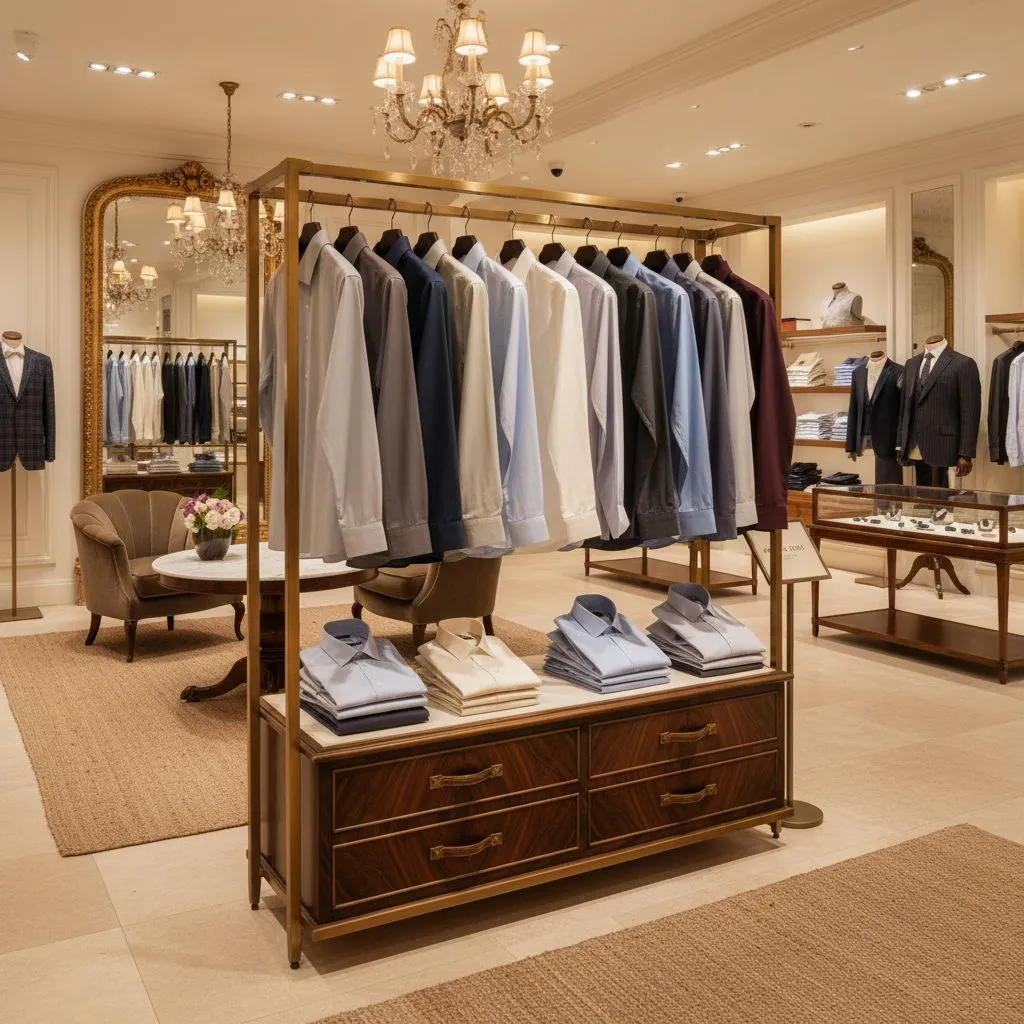

T-shirts never go out of style. They are high-turnover products that offer incredible flexibility for retailers. However, even the best design can be ignored if it is displayed poorly. A strategic T-shirt display catches attention, simplifies the shopping journey, and communicates the true value of your brand within the first few seconds.
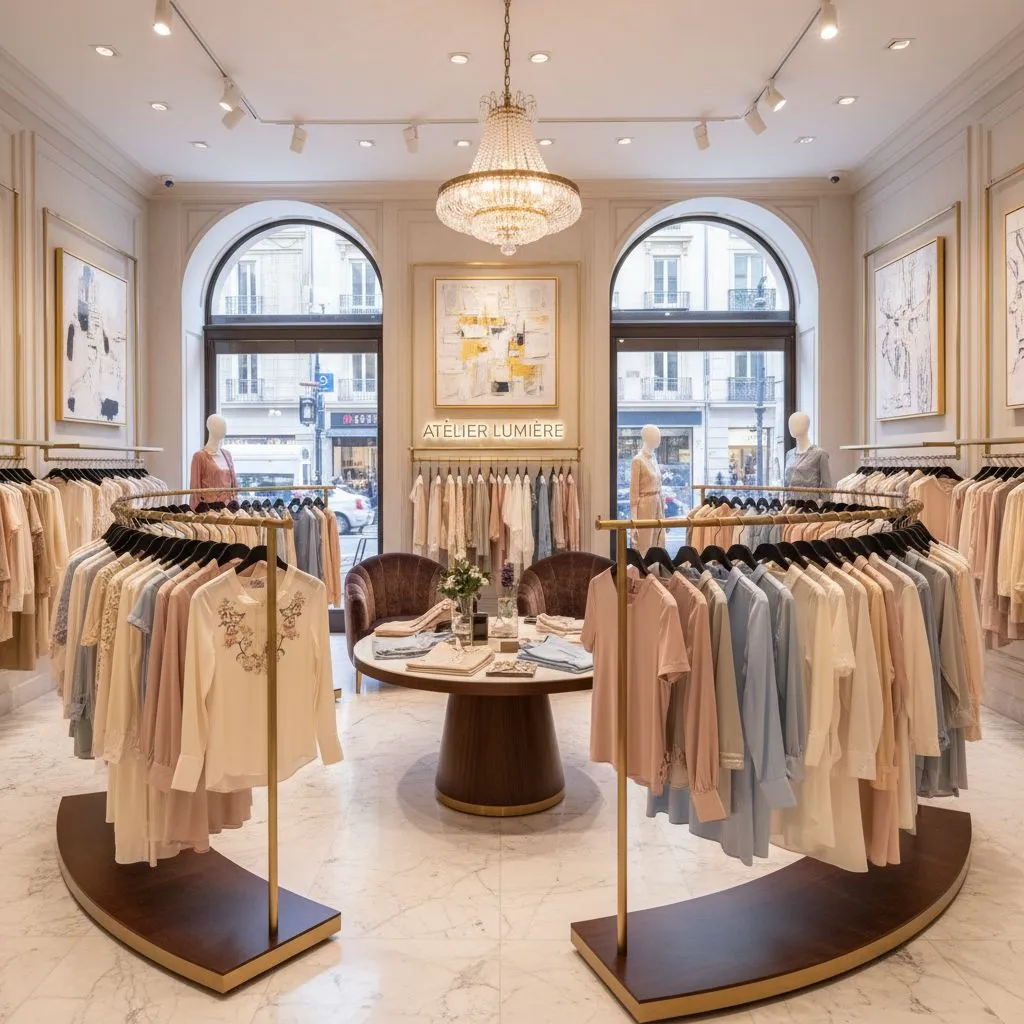
Why Retail Displays Matter More Than You Think
Shoppers often decide within 3–5 seconds whether to stop and touch a product or walk away. Organized, intentional displays reduce customer confusion and suggest styling ideas that increase your average order value. Effective visual merchandising doesn’t have to be expensive; it needs to be clear, clean, and consistent.
Innovative T-Shirt Display Ideas for Your Store
1. Hanging Displays: The Classic Efficiency
Hanging displays keep shirts neat, wrinkle-free, and easy to browse. They allow customers to quickly scan colors and sizes without disrupting the organization of the rack. This is the most floor-efficient method for daily basics and new arrivals. Best Practice: Group by color or collection rather than random styles. Visual Consistency: Use uniform hangers (same material and color) for a professional look.
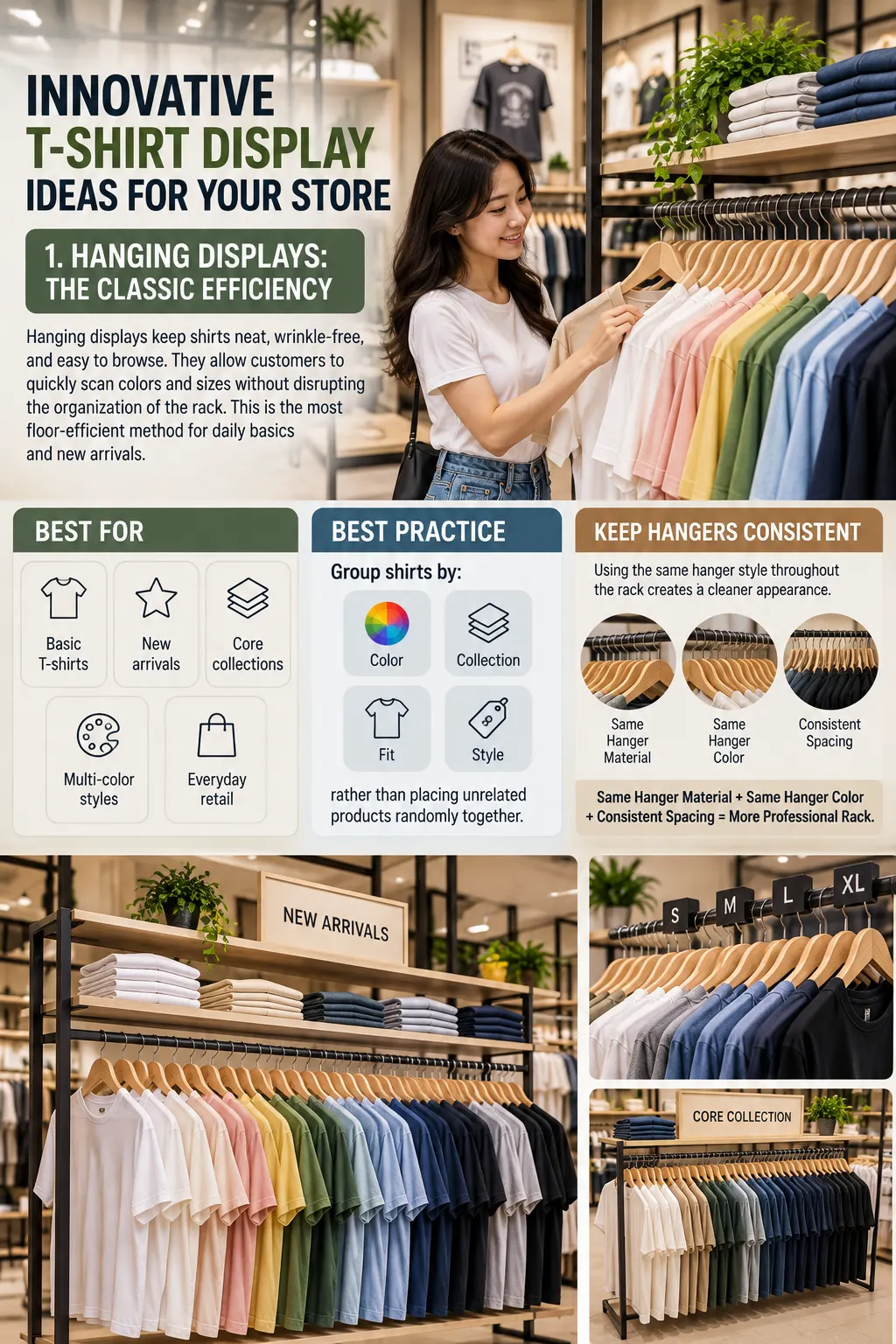
Best For:
- Basic T-shirts
- New arrivals
- Core collections
- Multi-color styles
- Everyday retail
Best Practice – Group shirts by:
- Color
- Collection
- Fit
- Style
rather than placing unrelated products randomly together.
Keep Hangers Consistent:
Using the same hanger style throughout the rack creates a cleaner appearance. For example: Same Hanger Material + Same Hanger Color + Consistent Spacing = More Professional Rack.
2. Mannequin Displays: Selling the Lifestyle
Mannequins allow customers to see the T-shirt as part of a complete outfit. Instead of displaying only one garment, retailers can combine the T-shirt with: Jeans, Chinos, Shorts, Jackets, Shoes, Bags, Accessories… This helps customers understand how the item can be styled.
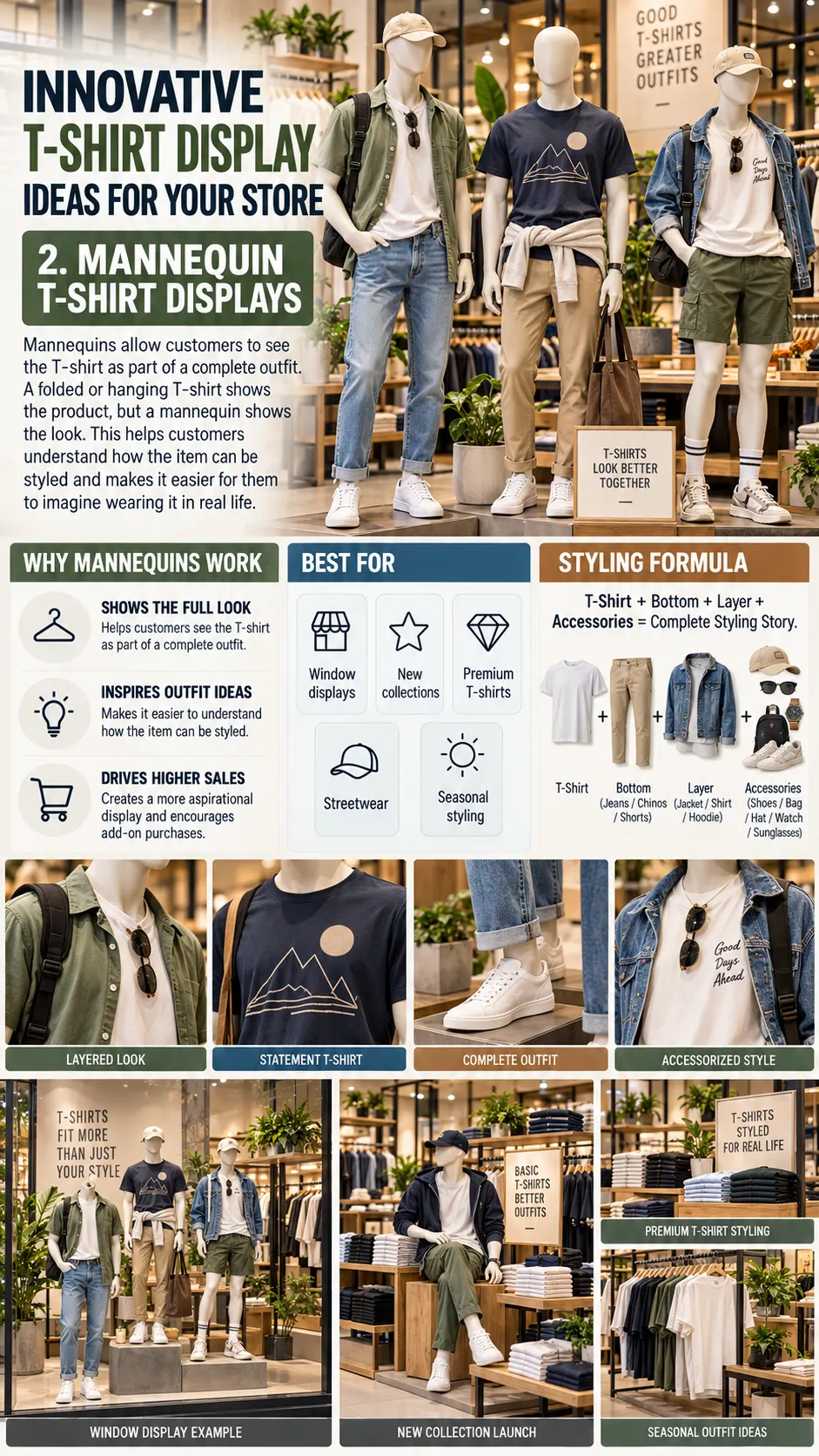
Why Mannequins Work:
A folded or hanging T-shirt shows the product. A mannequin shows the look. That difference matters because customers may be more interested in an outfit when they can imagine how the pieces work together.
Best For:
- Window displays
- New collections
- Premium T-shirts
- Streetwear
- Seasonal styling
T-Shirt + Bottom + Layer + Accessories = Complete Styling Story
3. T-Shirt Display Frames: Artistry on the Wall
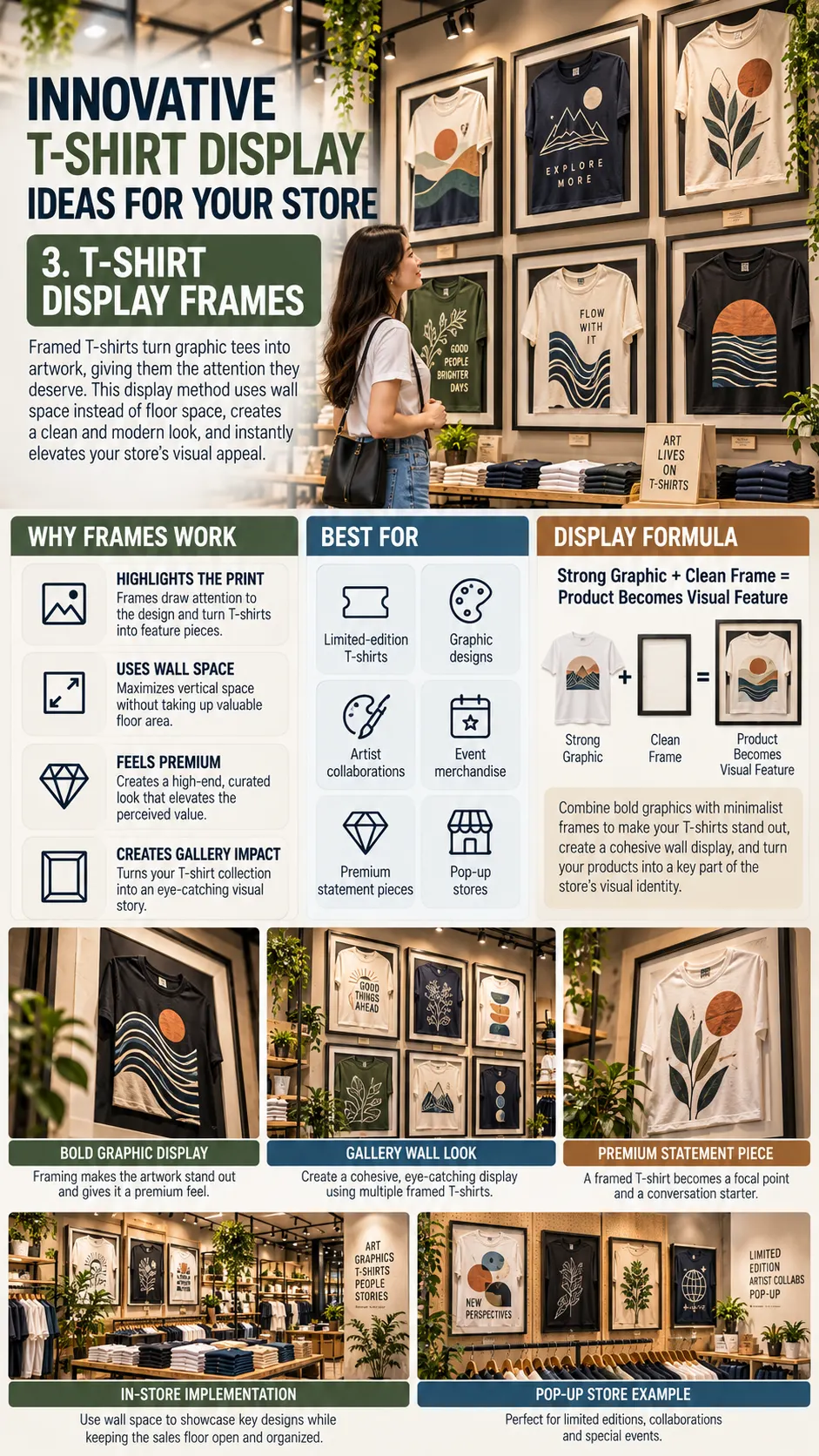
Treat your graphic or limited-edition tees like artwork. Framing T-shirts saves significant floor space and creates a modern, minimalist vibe. It directs 100% of the focus to the print design, making it ideal for pop-up stores or boutiques focusing on statement pieces.
Best For:
- Limited-edition T-shirts
- Graphic designs
- Artist collaborations
- Event merchandise
- Premium statement pieces
- Pop-up stores
Framing works particularly well when the artwork itself is the main reason customers are interested in the shirt. Strong Graphic + Clean Frame = Product Becomes Visual Feature.
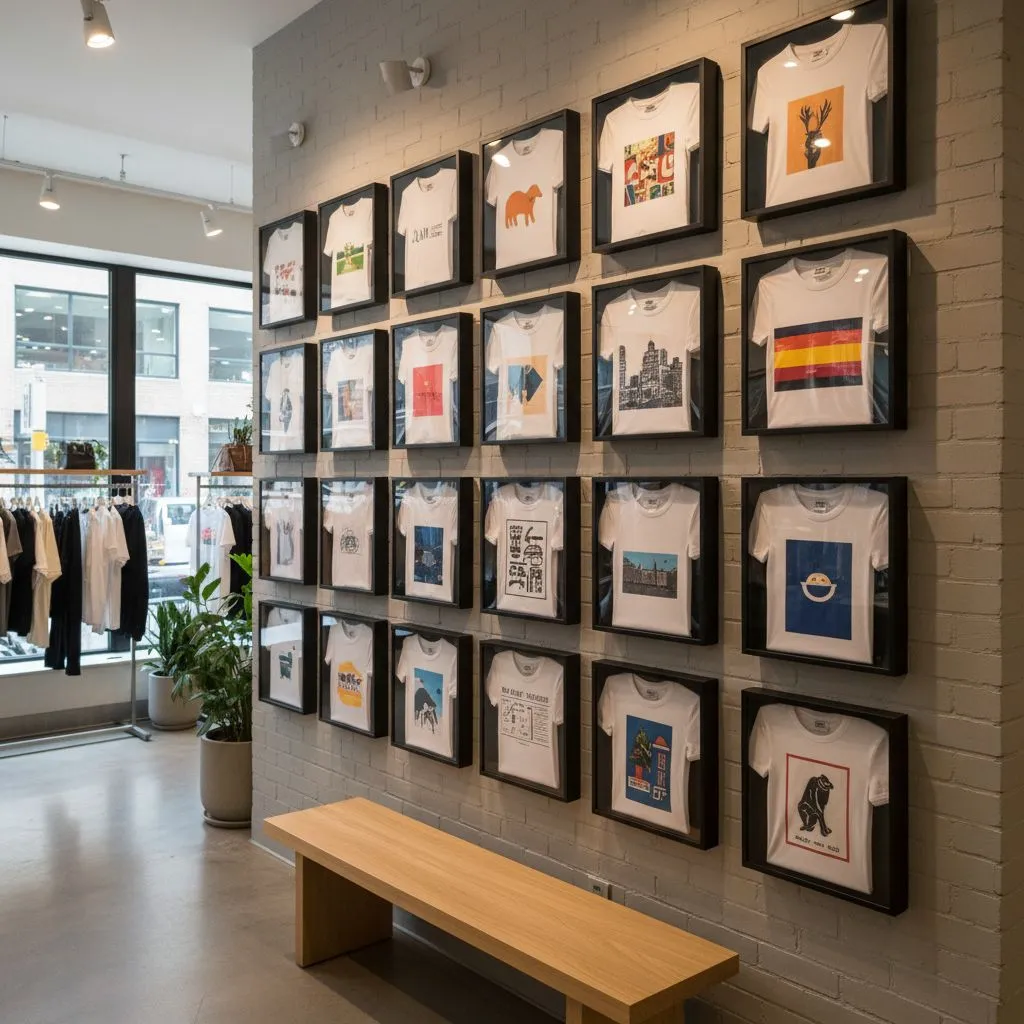
Graphic T-shirts can be treated almost like artwork. A framed T-shirt places attention directly on the print and can create a clean, modern presentation. This approach also uses wall space instead of valuable floor space.
4. Fold & Stack: High-Volume Browsing
Folding shirts on tables encourages customers to touch and feel the fabric quality—a critical step in the purchasing decision. Low stacks (5–7 pieces) look premium and are easier for staff to maintain during busy hours.
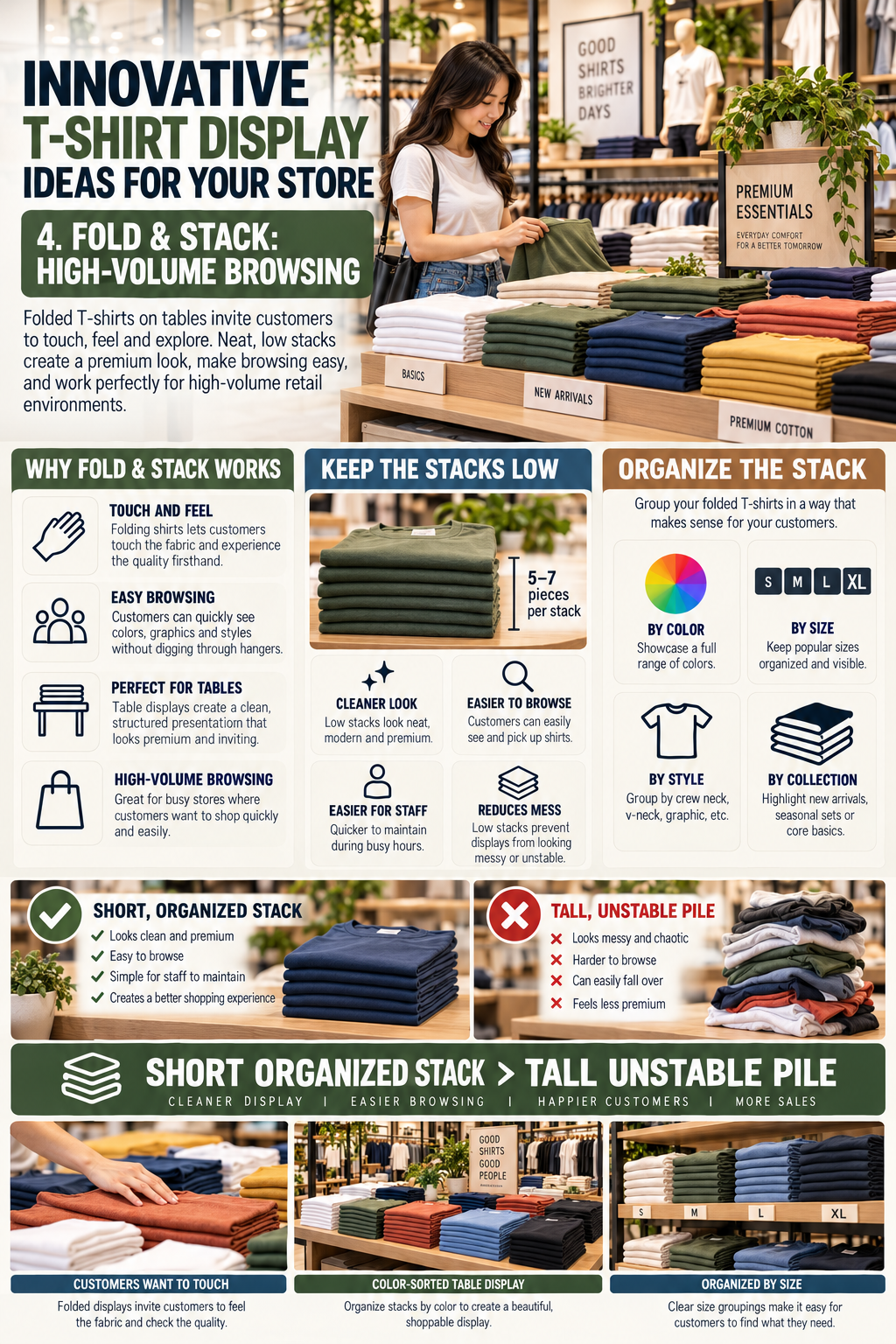
Keep the Stacks Low:
The source recommends relatively low stacks, such as around 5–7 pieces, because they:
- Look cleaner
- Are easier to browse
- Are easier for staff to maintain
- Reduce the messy appearance of very tall piles
Organize the Stack – Stacks can be grouped by:
- Color
- Size
- Style
- Collection
Short Organized Stack > Tall Unstable Pile
5. Wall-Mounted T-Shirt Displays
Wall displays are especially useful when floor space is limited.
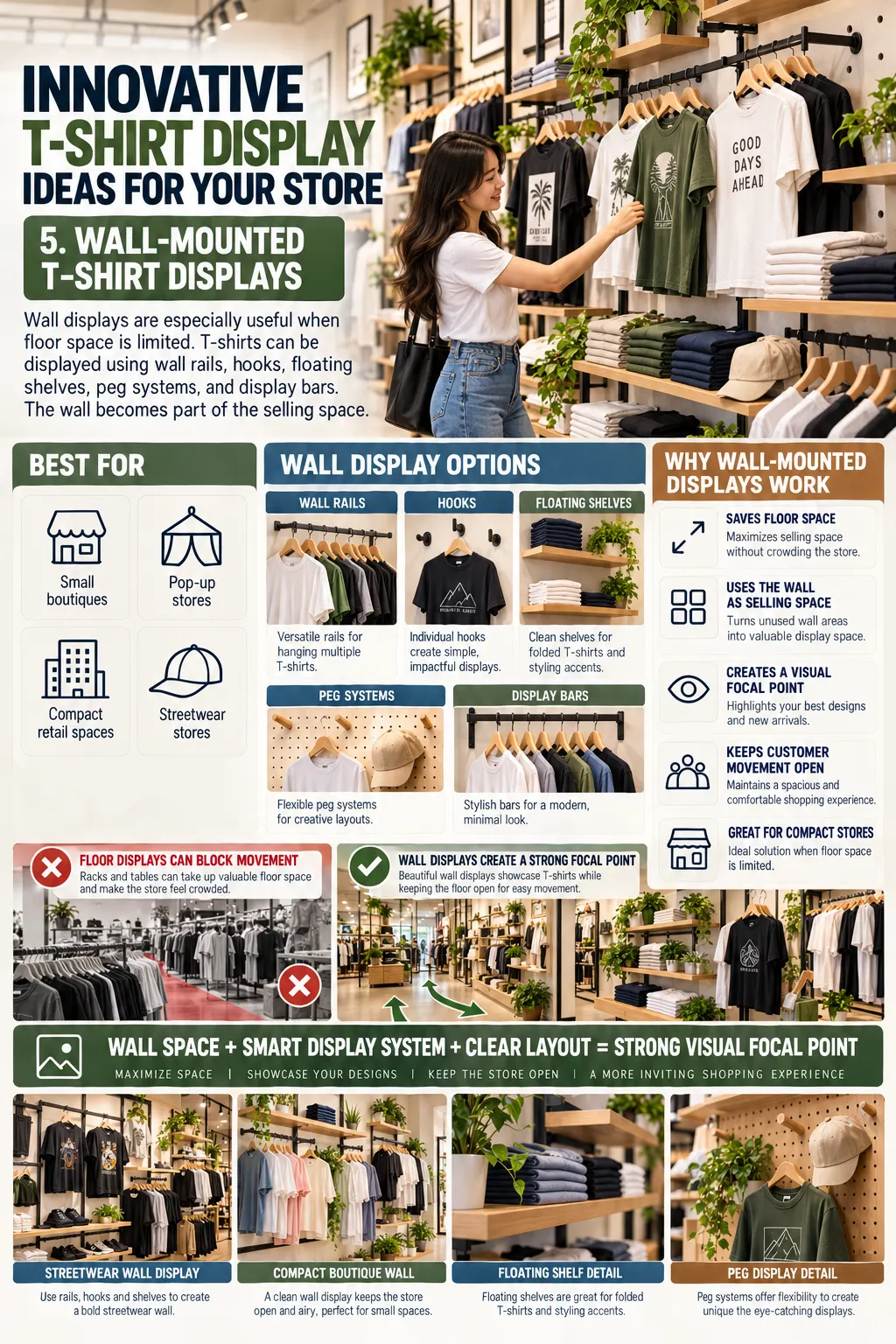
T-shirts can be displayed using:
- Wall rails
- Hooks
- Floating shelves
- Peg systems
- Display bars
The wall becomes part of the selling space.
Best For:
- Small boutiques
- Pop-up stores
- Compact retail spaces
- Streetwear stores
A wall display can also create a strong visual focal point without blocking customer movement.
6. Grid Wall Displays
A metal grid wall gives the store a flexible merchandising surface.
T-shirts can be:
- Hung
- Folded on small shelves
- Combined with accessories
- Positioned beside graphics or product information
Grid walls are useful because the layout can be changed without rebuilding the entire display.
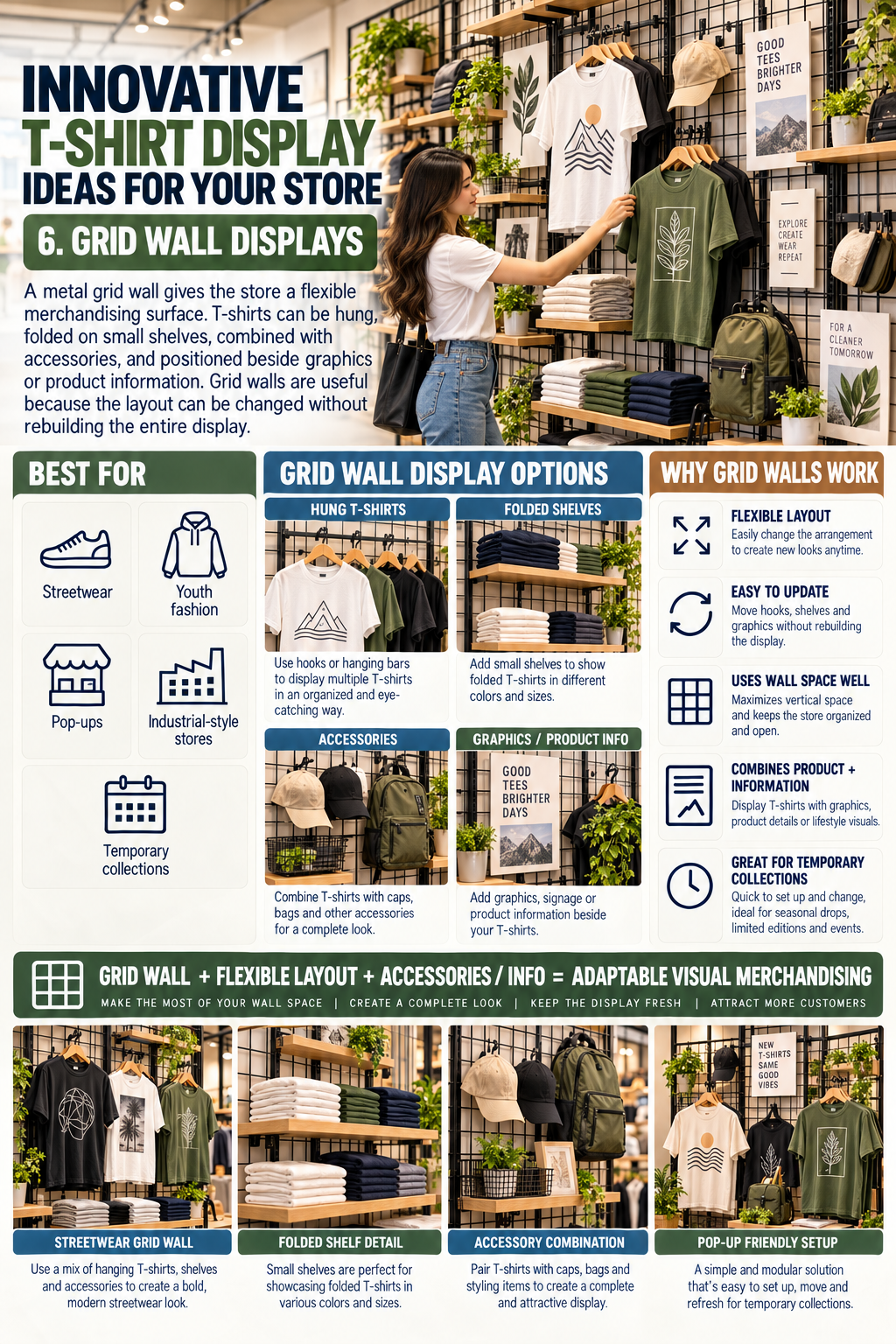
Best For:
- Streetwear
- Youth fashion
- Pop-ups
- Industrial-style stores
- Temporary collections
7. Ladder T-Shirt Displays
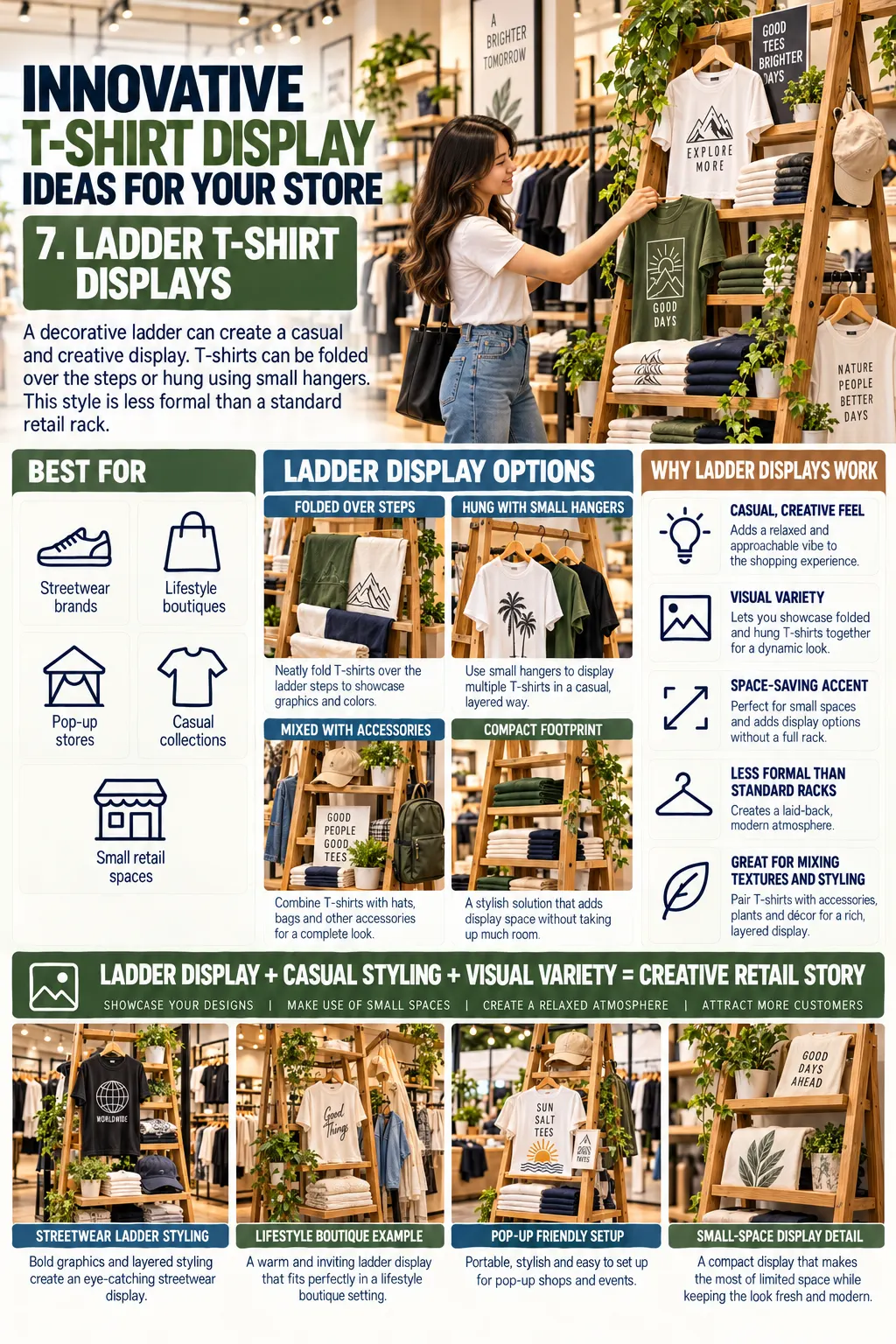
A decorative ladder can create a casual and creative display. T-shirts can be folded over the steps or hung using small hangers. This style is less formal than a standard retail rack.
Best For:
- Streetwear brands
- Lifestyle boutiques
- Pop-up stores
- Casual collections
- Small retail spaces
A ladder display can help create visual variety when the rest of the store uses conventional racks.
8. Open Shelf T-Shirt Displays
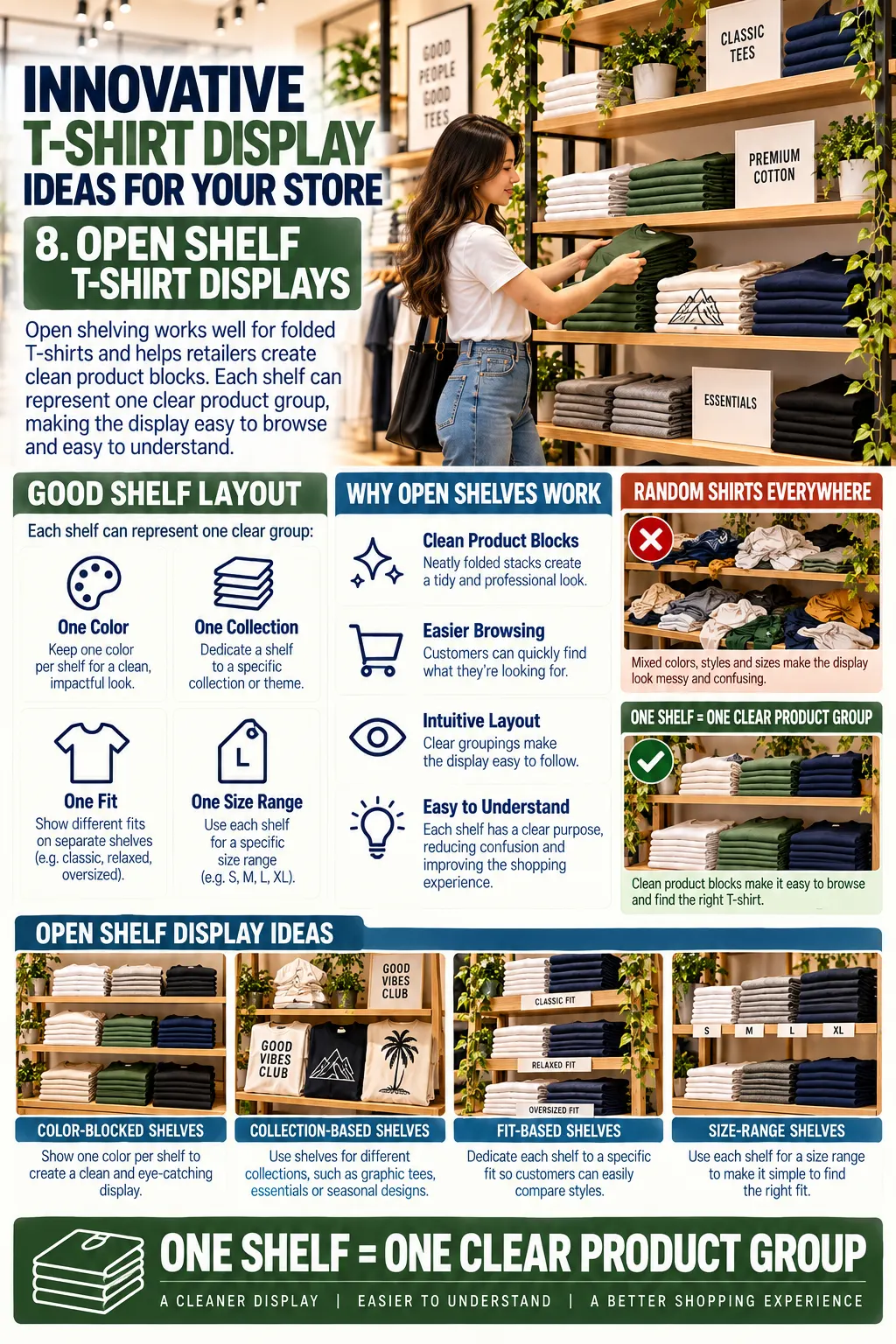
Open shelving works well for folded T-shirts and allows retailers to create clean product blocks.
For example, each shelf can represent:
- One color
- One collection
- One fit
- One size range
This makes browsing more intuitive.
Good Shelf Layout
- Instead of: Random Shirts Everywhere
- use: One Shelf => One Clear Product Group
That makes the display easier to understand.
9. Color-Gradient T-Shirt Displays
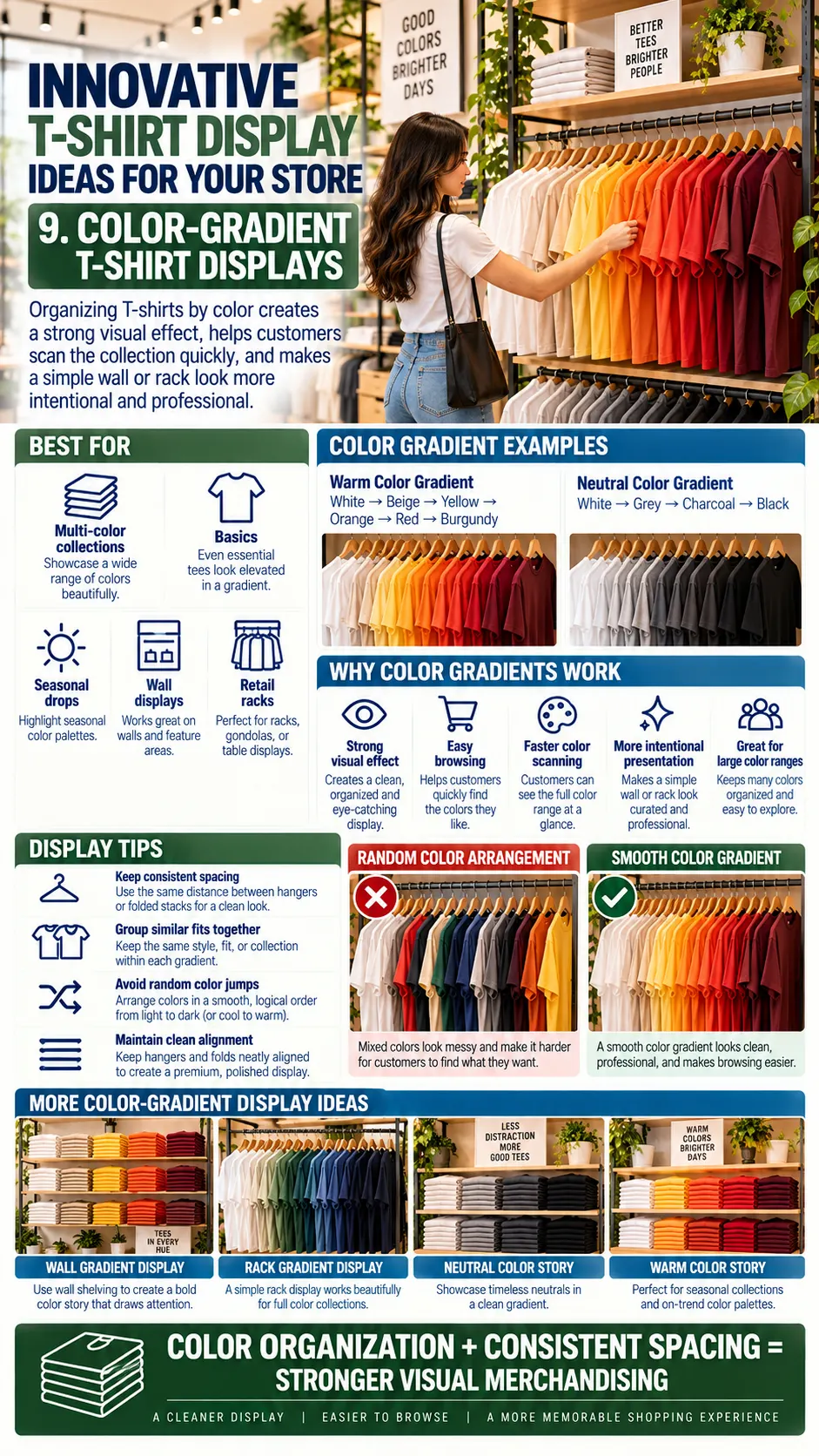
Organizing T-shirts by color creates a strong visual effect.
- You might arrange shirts from: White => Beige => Yellow => Orange => Red => Burgundy
- or: White => Grey => Charcoal => Black
This approach works especially well when a collection includes many colors.
=> Why It Works: Color grouping helps customers scan the collection quickly. It can also make a simple wall or rack look more intentional. Color Organization + Consistent Spacing = Stronger Visual Merchandising
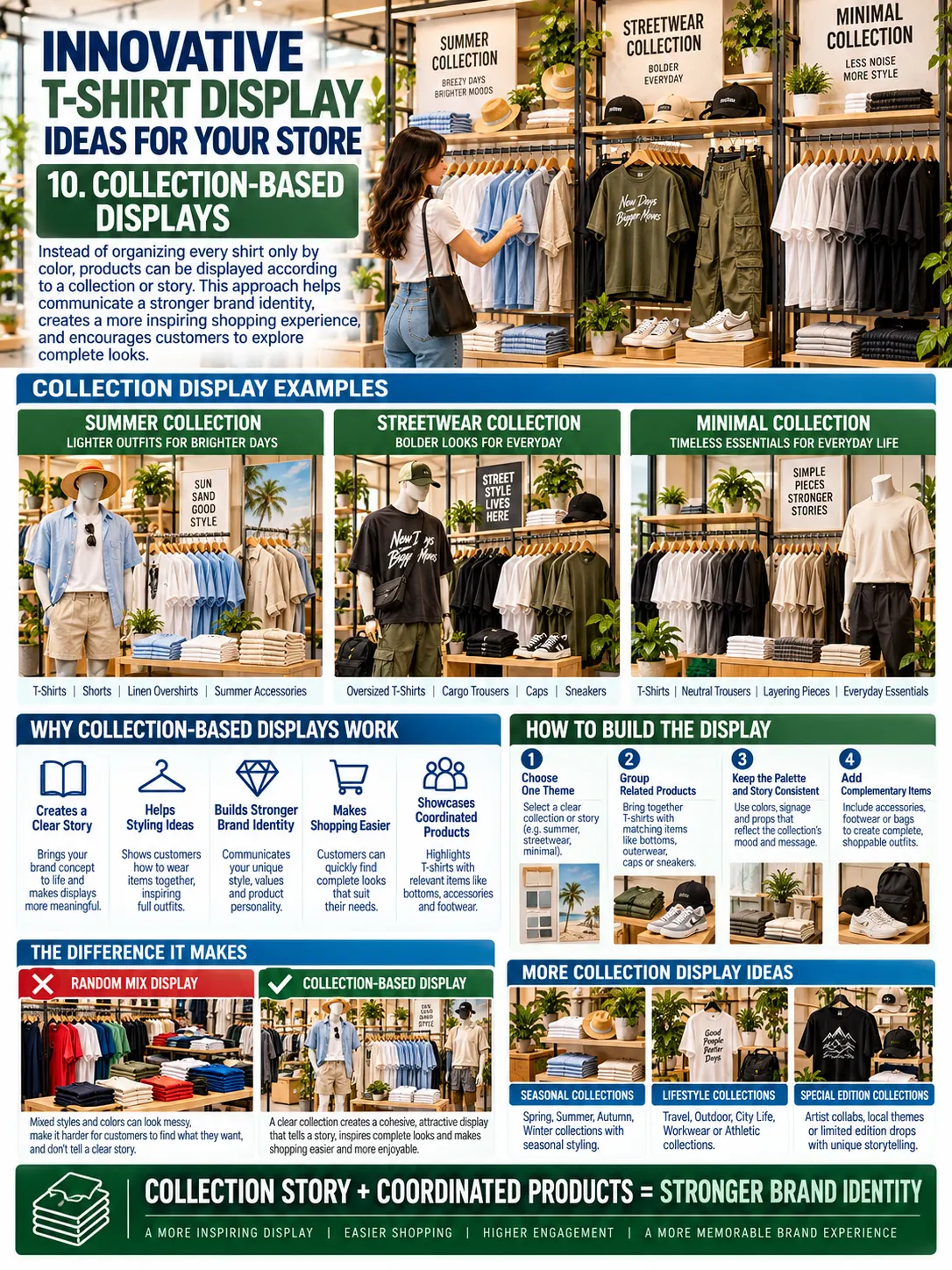
10. Collection-Based Displays
Instead of organizing every shirt only by color, display products according to a collection or story. For example:
Summer Collection:
- White tees
- Light blue tees
- Shorts
- Linen overshirts
Streetwear Collection:
- Oversized T-shirts
- Cargo trousers
- Caps
- Sneakers
Minimal Collection:
- Black
- White
- Grey
- Beige
This approach allows the display to communicate a stronger brand identity.
11. Best-Seller Displays
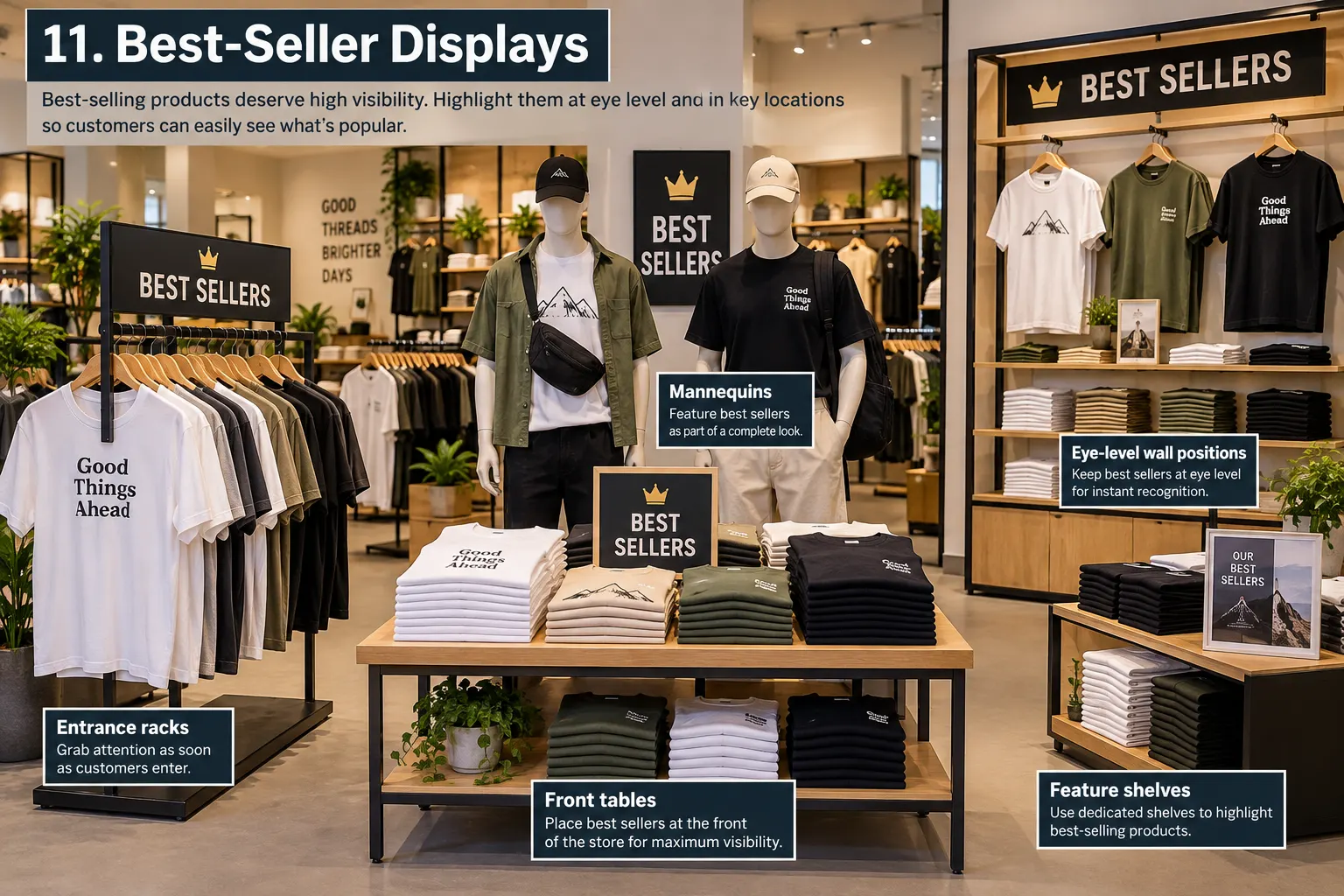
Best-selling products deserve high visibility. The source specifically recommends highlighting best sellers at eye level. This makes sense because customers can immediately see which products are important. Good Locations – Use:
- Eye-level wall positions
- Front tables
- Entrance racks
- Mannequins
- Feature shelves
Best sellers should be easy to notice without forcing customers to search.
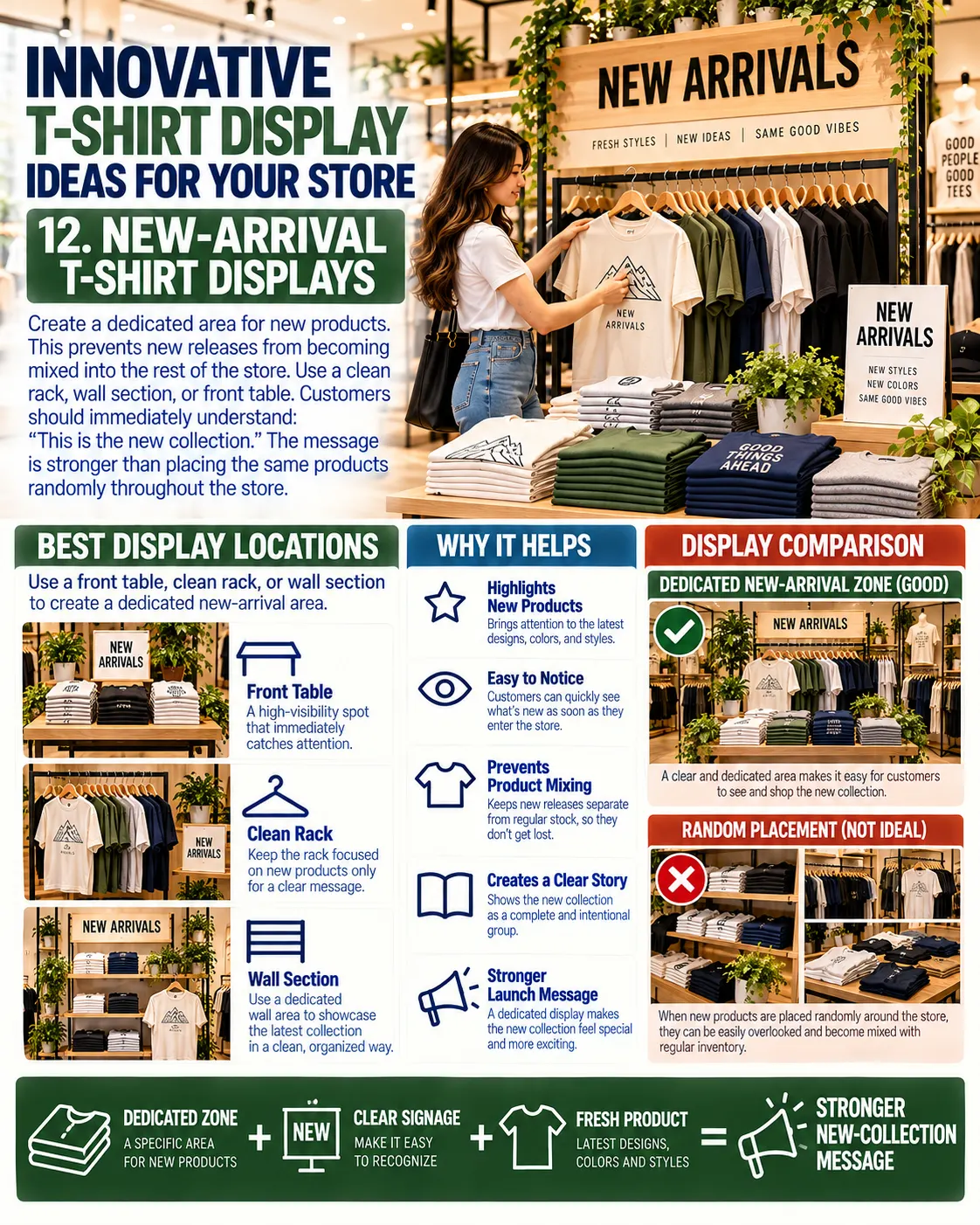
12. New-Arrival T-Shirt Displays
Create a dedicated area for new products. This prevents new releases from becoming mixed into the rest of the store. Use a clean rack, wall section, or front table. Why It Helps – Customers immediately understand: This Is the New Collection That message is stronger than placing the same products randomly throughout the store.
13. Graphic-First T-Shirt Displays
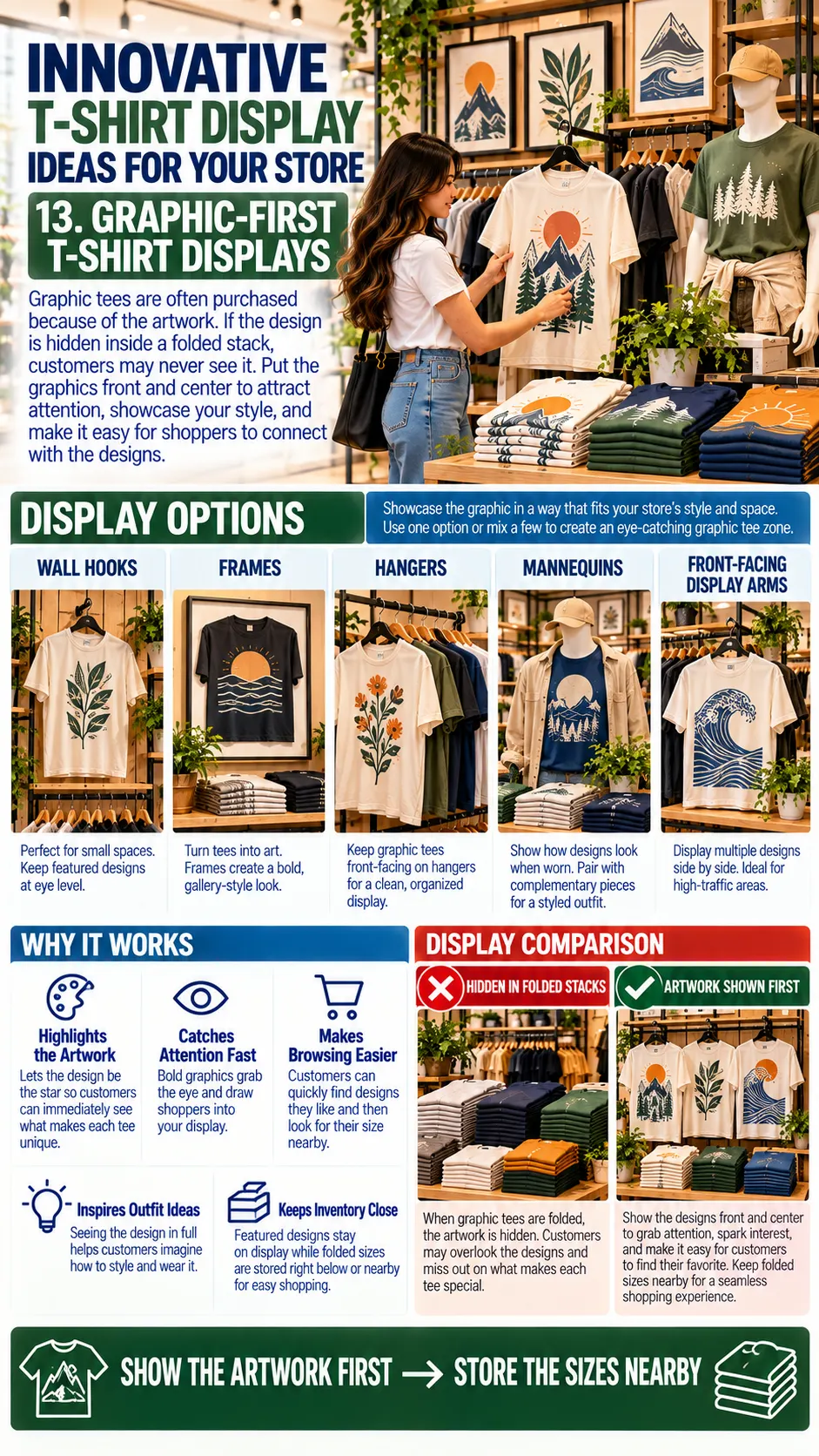
Graphic tees are often purchased because of the artwork. If the design is hidden inside a folded stack, customers may never see it. For graphic T-shirts, consider displaying at least one sample fully open. This can be done using:
- Wall hooks
- Frames
- Hangers
- Mannequins
- Front-facing display arms
Then keep the sellable inventory folded or hung nearby. Show the Artwork First => Store the Sizes Nearby.
14. Table Display With Complete Outfit Styling
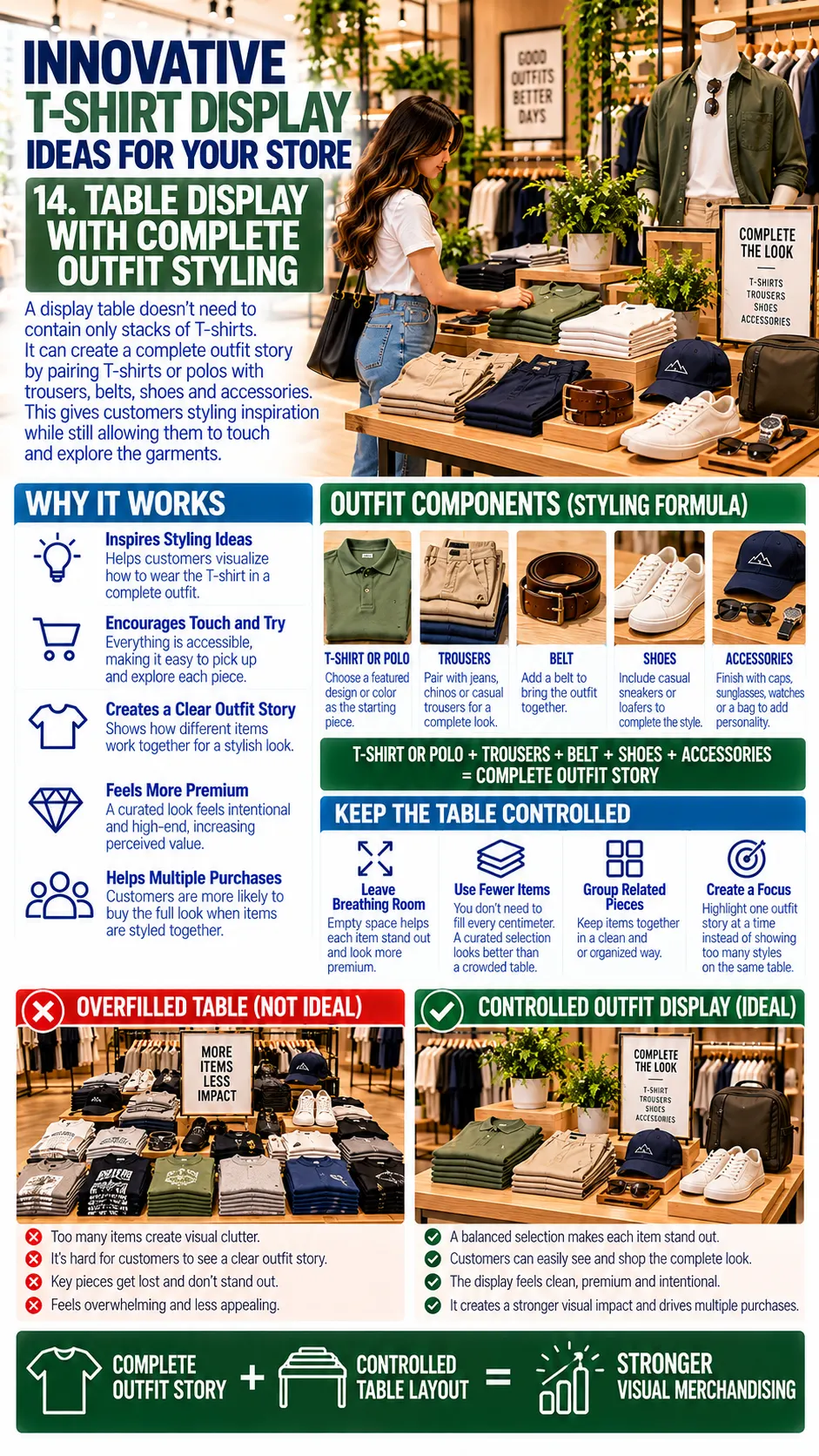
A display table does not need to contain only stacks of T-shirts. It can create a complete outfit story. For example: Folded Polo or T-Shirt + Trousers + Belt + Shoes + Accessories. This gives customers styling inspiration while still allowing them to touch the garments. Keep the Table Controlled Avoid filling every centimeter. Empty space can make individual products easier to notice. More Products isn’t Better Display. Sometimes fewer items create a stronger presentation.

15. Pegboard T-Shirt Displays
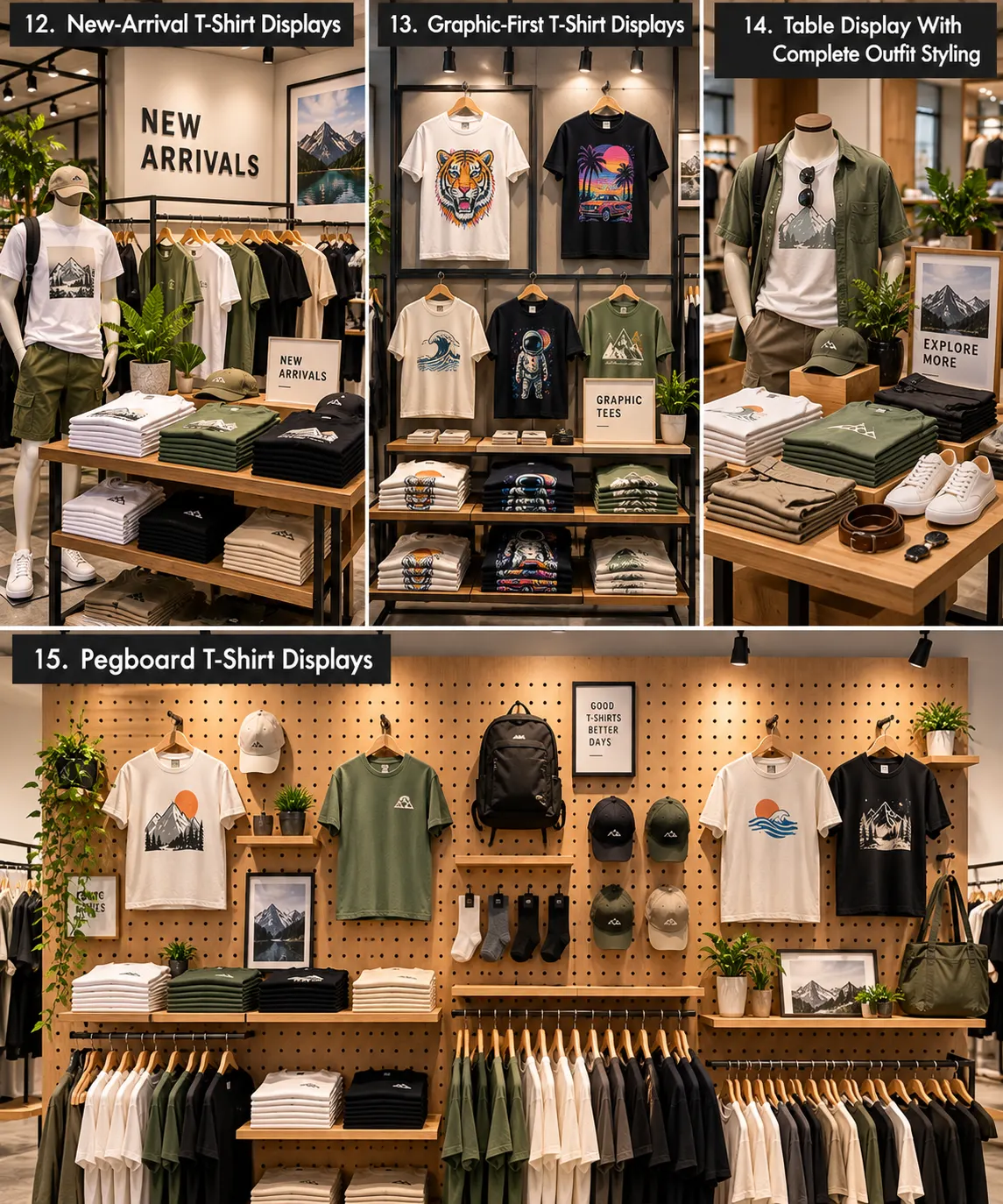
Pegboards offer another flexible wall-display system. Hooks and small shelves can be repositioned based on the collection. A pegboard can hold: T-shirts, Caps, Bags, Socks, Accessories. This allows retailers to create complete product stories while keeping the floor relatively open.
16. Rolling Rack Displays
A mobile garment rack is useful when layouts change frequently.
It can be moved:
- Near the entrance
- Beside a promotion
- Into a window area
- Between different departments
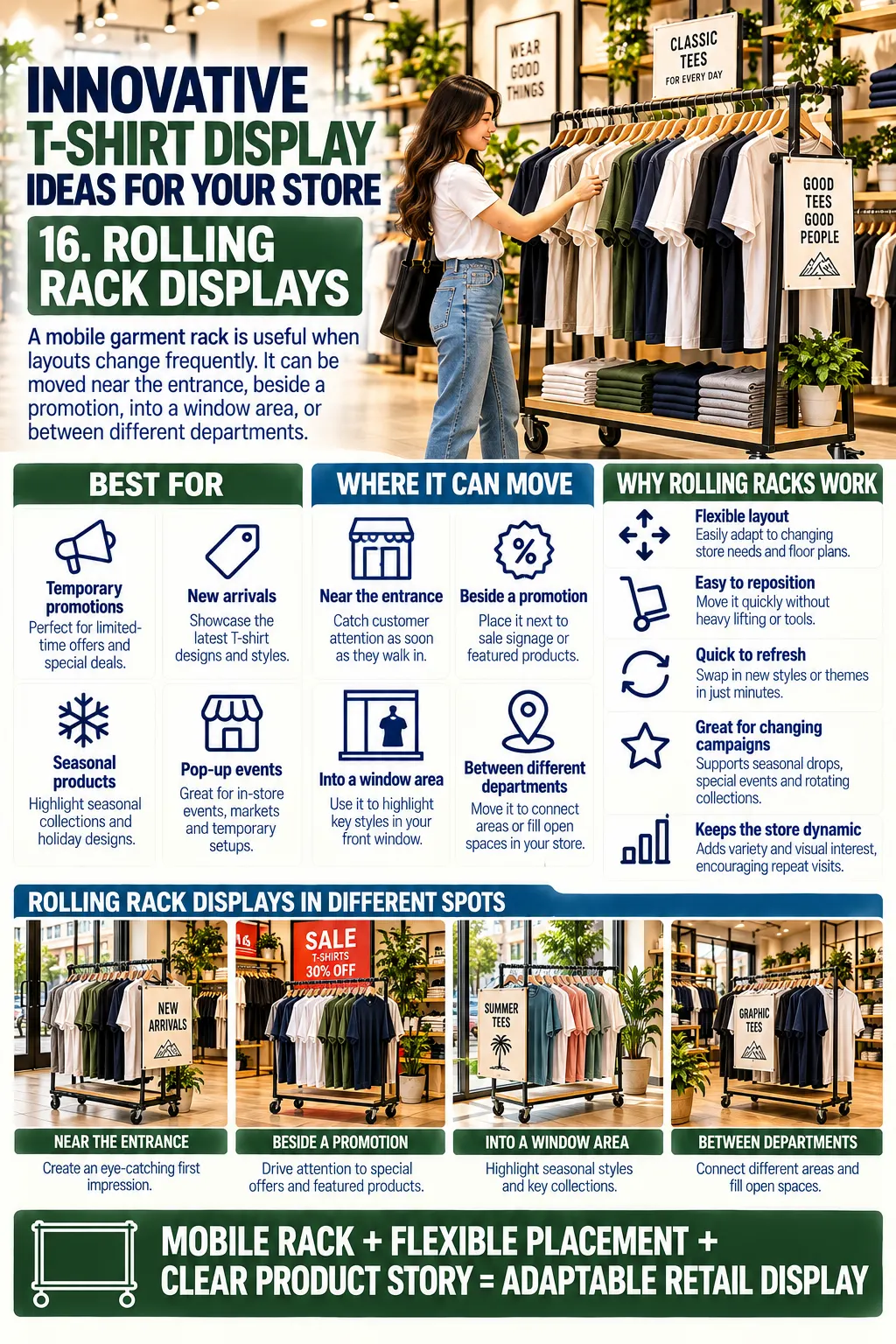
Rolling racks are especially useful for:
- Temporary promotions
- New arrivals
- Seasonal products
- Pop-up events
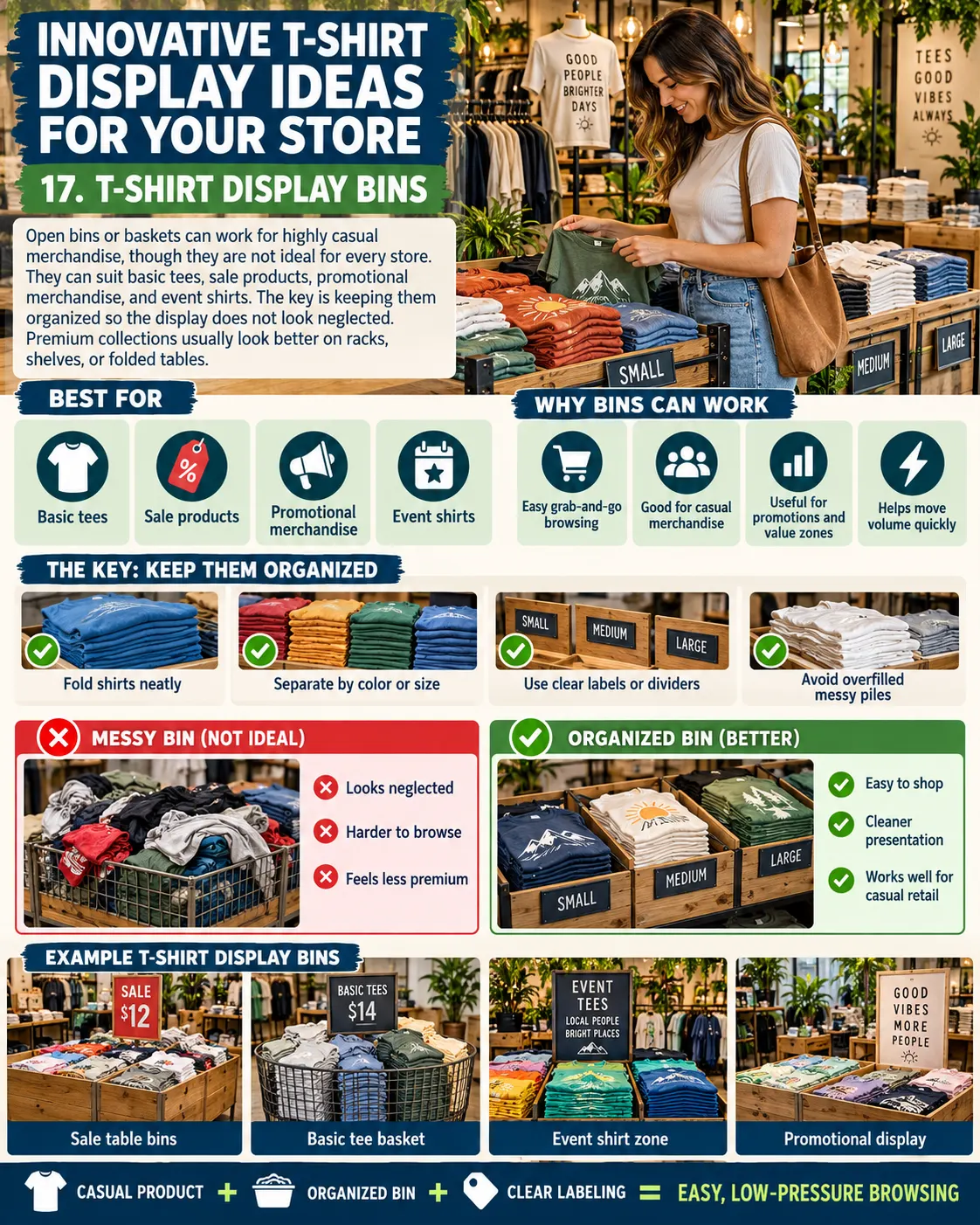
17. T-Shirt Display Bins
Open bins or baskets can work for highly casual merchandise. They are not ideal for every store, but they can suit:
- Basic tees
- Sale products
- Promotional merchandise
- Event shirts

The key is keeping them organized enough that the display does not look neglected. For premium collections, racks, shelves, or folded tables usually create a more controlled appearance.
Dos and Don’ts for High-Performance Displays
| DOs | DON’Ts |
|---|---|
| Highlight best sellers at eye level. | Overcrowd racks (leave room to breathe). |
| Show 3–4 pieces per style maximum. | Mix too many unrelated styles together. |
| Use directional lighting to pop colors. | Place shirts randomly on tables. |
How to Choose the Right Display Strategy
- Small Stores: Focus on Wall Displays and Frames to save floor space.
- Streetwear Brands: Utilize Ladder and Shelf displays for a trendy, industrial feel.
- Minimalist Labels: Lean on Clean Racks with high-quality uniform hangers.
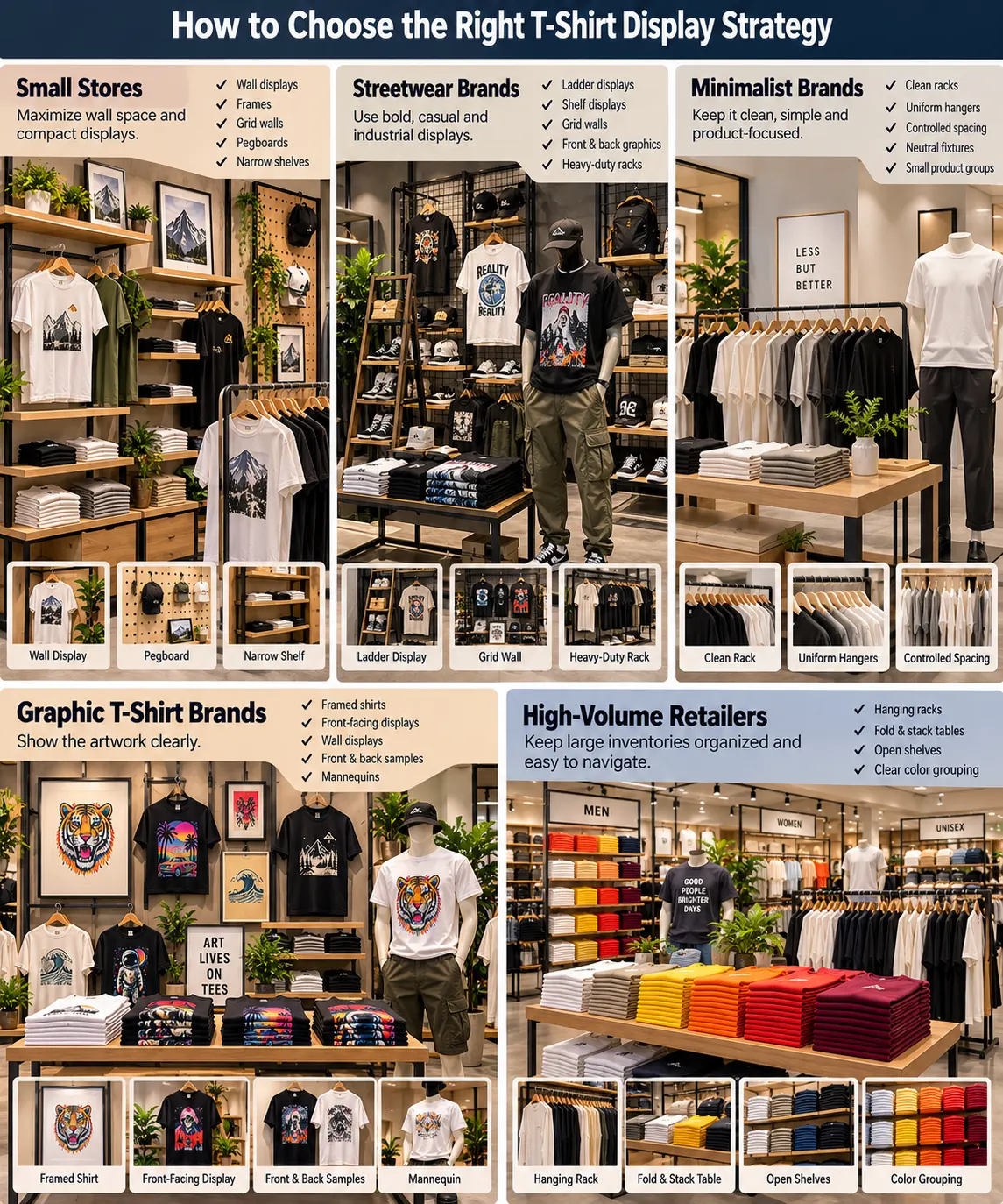
Small Stores
- The source recommends making greater use of: Wall displays, Frames. These help preserve floor space.
- You can also consider: Grid walls, Pegboards, Narrow shelves.
Streetwear Brands
- The source suggests: Ladder displays, Shelf displays.
- Other useful options include: Grid walls, Front-and-back graphic displays, Heavy-duty open racks. These can support a more casual or industrial visual direction.
Minimalist Brands
Minimal labels can focus on:
- Clean clothing racks
- Uniform hangers
- Controlled spacing
- Neutral fixtures
- Small product groups
The products themselves become the visual focus.
Graphic T-Shirt Brands
Prioritize visibility of the artwork. Useful methods include:
- Framed shirts
- Front-facing hanging displays
- Wall displays
- Front-and-back samples
- Mannequins
High-Volume Retailers
When many sizes and colors need to be sold, practical organization becomes especially important. Useful methods include:
- Hanging racks
- Fold-and-stack tables
- Open shelves
- Clear color grouping
The objective is to make large inventories easy to navigate.
Conclusion / Final Words
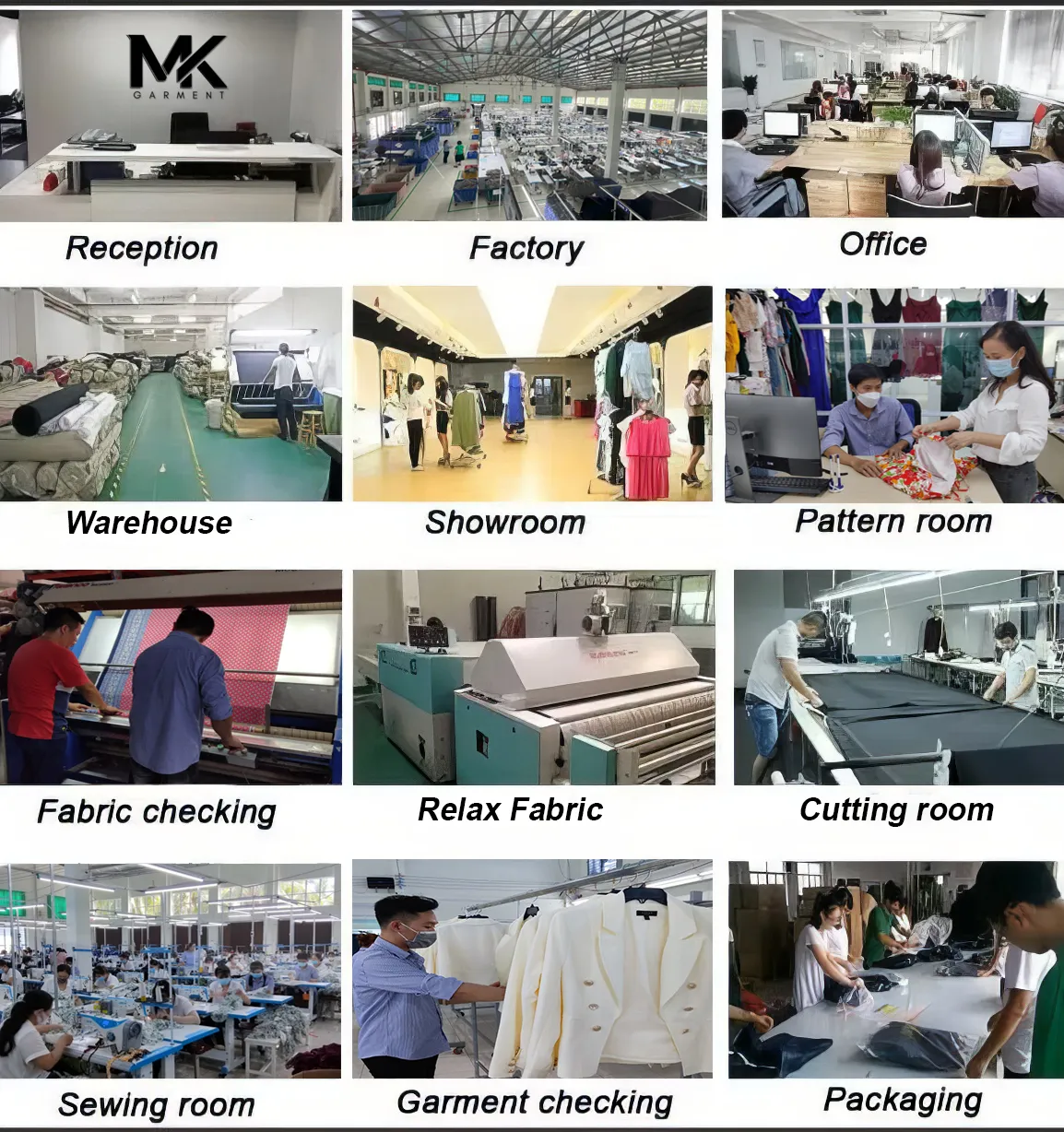
T-shirt displays are not just decoration; they are a critical sales tool that turns casual browsers into loyal customers. By mixing different display types and observing customer behavior, you can create a shopping experience that feels professional and effortless. At Mekong Garment, we believe that high-quality manufacturing deserves high-quality presentation. Choose the display that fits your brand identity, and watch your sales grow.
Contact Mekong Garment Factory
- VN Phone/WhatsApp/WeChat: +84 947 729 829
- Email: hanh@kimmy.vn