

4 Point Fabric Inspection System and How Does It Really Work?

Many factories claim to use the 4 Point Fabric Inspection System, yet far fewer understand its true scope. While it is the industry’s most trusted visual screening tool, it is not a complete quality guarantee. It turns subjective defects into objective numbers, allowing brands and factories to speak the same quality language. However, to truly protect your production, you must understand what this system measures and, more importantly, what it ignores. Let’s break down the technical reality of fabric inspection in real-world garment production.
What Exactly is the 4 Point System?
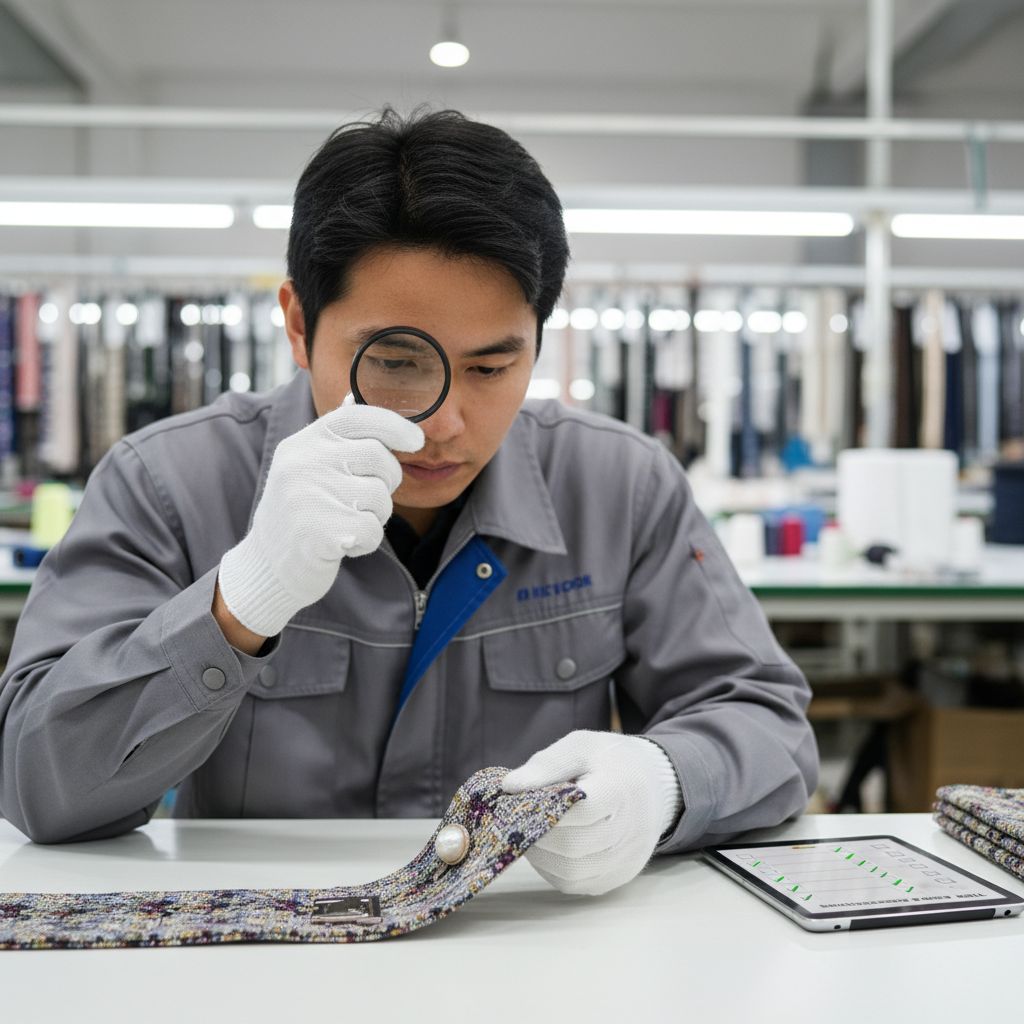
The 4 Point System is a standardized visual method used to evaluate fabric quality before the first cut is made. Instead of vague descriptions, inspectors assign penalty points based on the physical size of a defect. This allows for a measurable Acceptance Quality Limit (AQL). The primary focus is on visual appearance and cutting yield, ensuring the finished garment meets the brand’s aesthetic standards.
Why Manufacturers Prioritize This System:
- Standardization: It converts subjective “bad fabric” into hard data.
- Efficiency: It is fast and easy to train, allowing for high-volume screening without bottlenecking production.
- Risk Mitigation: It identifies disasters—like shade streaks or holes—before expensive labor is added during sewing.
The Scoring Rules: Turning Flaws into Numbers
In this system, defects are measured by their longest dimension. No matter how severe a single flaw looks, the maximum penalty points it can receive is four. This prevents a single large hole from mathematically “destroying” a roll that is otherwise perfect, while still signaling that the roll needs attention.
| Defect Size (Length) | Penalty Points Assigned |
|---|---|
| Up to 3 inches (75 mm) | 1 Point |
| 3 to 6 inches (75 – 150 mm) | 2 Points |
| 6 to 9 inches (150 – 230 mm) | 3 Points |
| Over 9 inches (230 mm) | 4 Points |
*Note: Holes and openings are often automatically assigned 2 to 4 points depending on size.

The Critical Limitation: Screening vs. Validation
This is where many brands make a dangerous assumption: Passing a 4 Point inspection does not mean the fabric is high quality. It only means the fabric looks good visually. The system cannot detect “invisible” failures that only surface after the product reaches the consumer.
What the 4 Point System DOES NOT Measure:
- Shrinkage: A roll can have 0 points but shrink 10% after washing.
- Colorfastness: It won’t tell you if the dye will bleed onto other garments.
- Fabric Strength: It cannot predict if seams will slip or fibers will tear under stress.
- Pilling Resistance: It doesn’t show how the surface will behave after 10 wear cycles.
The Professional Workflow: Inspection + Lab Testing
At Mekong Garment, we view the 4 Point System as a gatekeeper, not a final answer. For export-quality production, we recommend a dual-path approach:
- Visual Path: Use the 4 Point System to protect cutting yield and garment appearance.
- Scientific Path: Use lab testing (ISO/AATCC standards) to validate shrinkage, colorfastness, and durability.
Conclusion
The 4 Point Fabric Inspection System is an essential technical tool for any modern apparel factory. It provides the clarity needed to manage suppliers and protect production timelines. However, its effectiveness depends entirely on the training of the inspectors and its integration with performance testing. Don’t build your collection on a visual illusion—build it on tested data.
FAQs: Master the 4 Point Fabric Inspection System
Inshort, What is the 4 Point Fabric Inspection System?
It’s a visual fabric inspection method that turns fabric defects into penalty points. Inspectors score each defect from 1 to 4 points based on size. Then they calculate total points per 100 square yards. The roll passes or fails based on a set limit.
Why is it called the “4 Point” system?
Because the maximum penalty for any single defect is 4 points. Even if a defect looks terrible, it still cannot exceed 4. This keeps scoring consistent but can also hide how severe some defects really are.
What kinds of defects does it check?
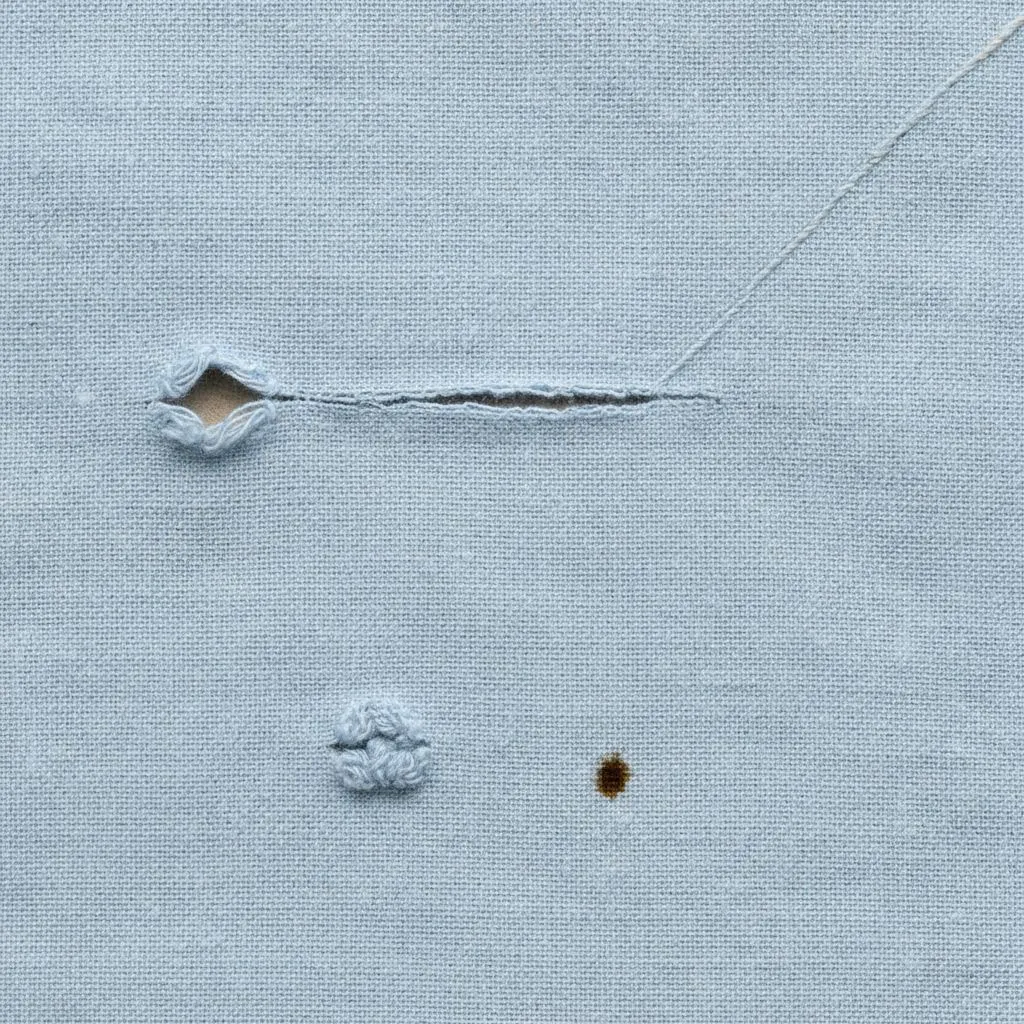
It checks visible defects, such as holes, stains, broken yarns, slubs, misweaves, needle lines, shade streaks, and print issues. If you can see it during inspection, it can be scored. If you cannot see it, the system will not catch it.
Does the 4 Point system check colorfastness or shrinkage?

No. This is one of the biggest misunderstandings. The 4 Point system is not a lab test and cannot predict wash results, fading, shrinkage, pilling, or strength.
How are defects scored (1 to 4 points)?
Defects are scored by length/size. Smaller defects get fewer points and larger defects get more. A common rule is: up to 3 inches = 1 point; 3–6 = 2; 6–9 = 3; over 9 = 4.
What does “points per 100 square yards” mean?
It means the defect score is standardized to a fixed fabric area. Rolls come in different lengths, so you convert the total points into a common unit. Without this, comparing rolls is unfair and misleading.
What is the common acceptance limit?
A very common limit is 40 points per 100 square yards. But don’t treat this like a law. Many buyers require stricter limits (like 25 or 30), or special rules for critical zones.
If fabric is under 40 points, is it always acceptable?
Not always. A roll can be under 40 points but still have defects in the worst places (like the center panel of a shirt). Placement matters. Also, buyers may have different limits or special rejection rules.
Can one large defect automatically reject a roll?
Sometimes yes—if the buyer’s rules say so. The basic 4 Point method limits defects to 4 points each, but buyers may add “automatic reject” rules for holes, continuous streaks, or repeat defects. Always follow the buyer manual.