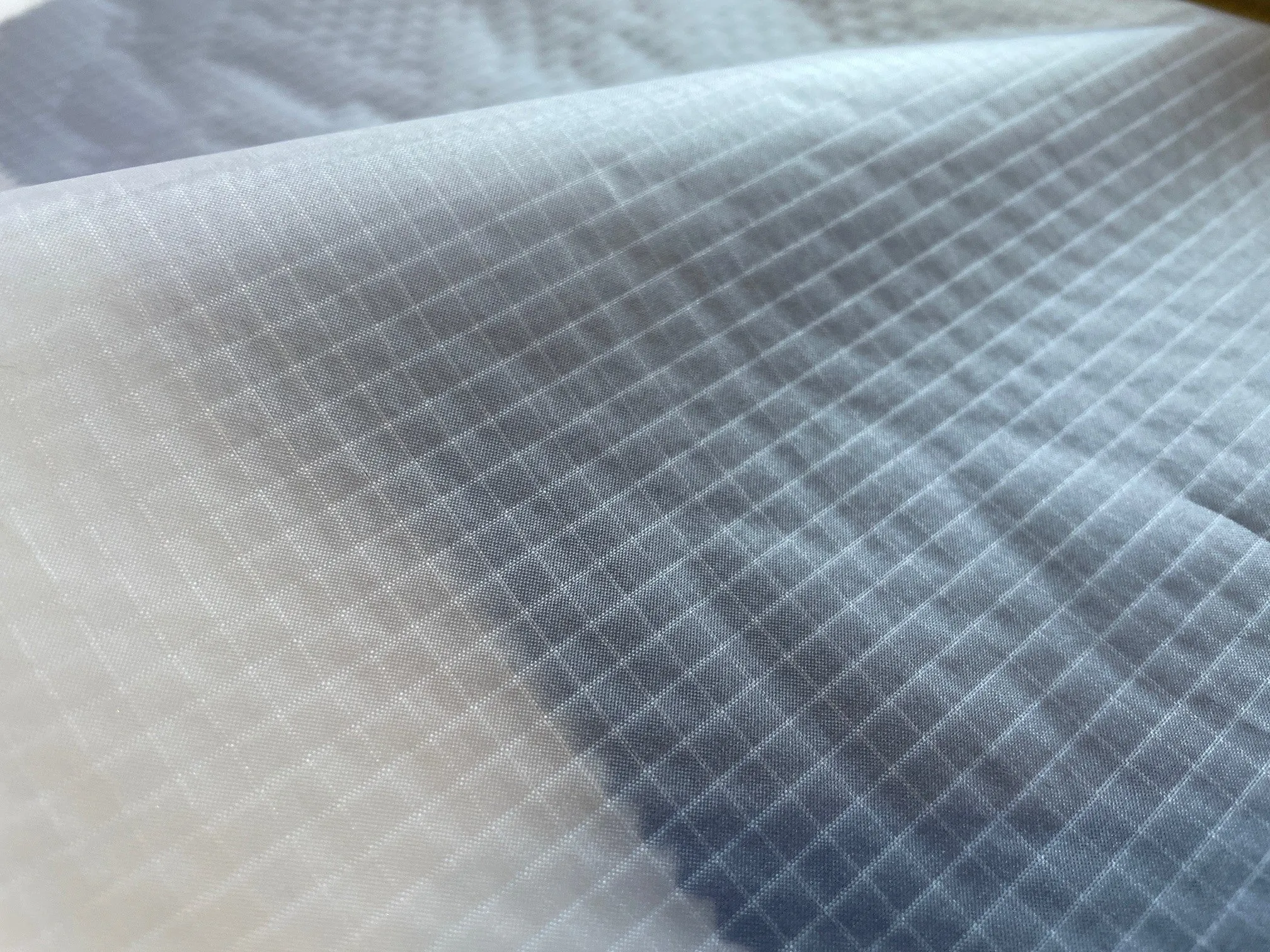

High-tenacity nylon might sound like a buzzword, but it is a critical material upgrade that determines whether a jacket lasts one season or five. Engineered to be significantly stronger than regular synthetic yarns, it allows fabrics to resist tearing and abrasion without becoming bulky. This is why professional brands prioritize it for commuter shells, travel jackets, and technical gear. In this guide, we break down how high-tenacity nylon is measured and help you decide when it is the right tool for your specific garment production.
What Exactly Is High-Tenacity Nylon?
High-tenacity nylon is a nylon filament yarn designed to provide higher breaking strength relative to its linear density. In simple terms, it is engineered to carry more load without needing to become proportionally heavier.
This is why it is commonly considered for products where manufacturers need:
- High strength
- Abrasion resistance
- Tear resistance
- Relatively low weight
- Long service life
Typical applications include:
- Technical jackets
- Utility outerwear
- Travel clothing
- Backpacks
- Workwear
- Outdoor equipment
- Reinforcement panels
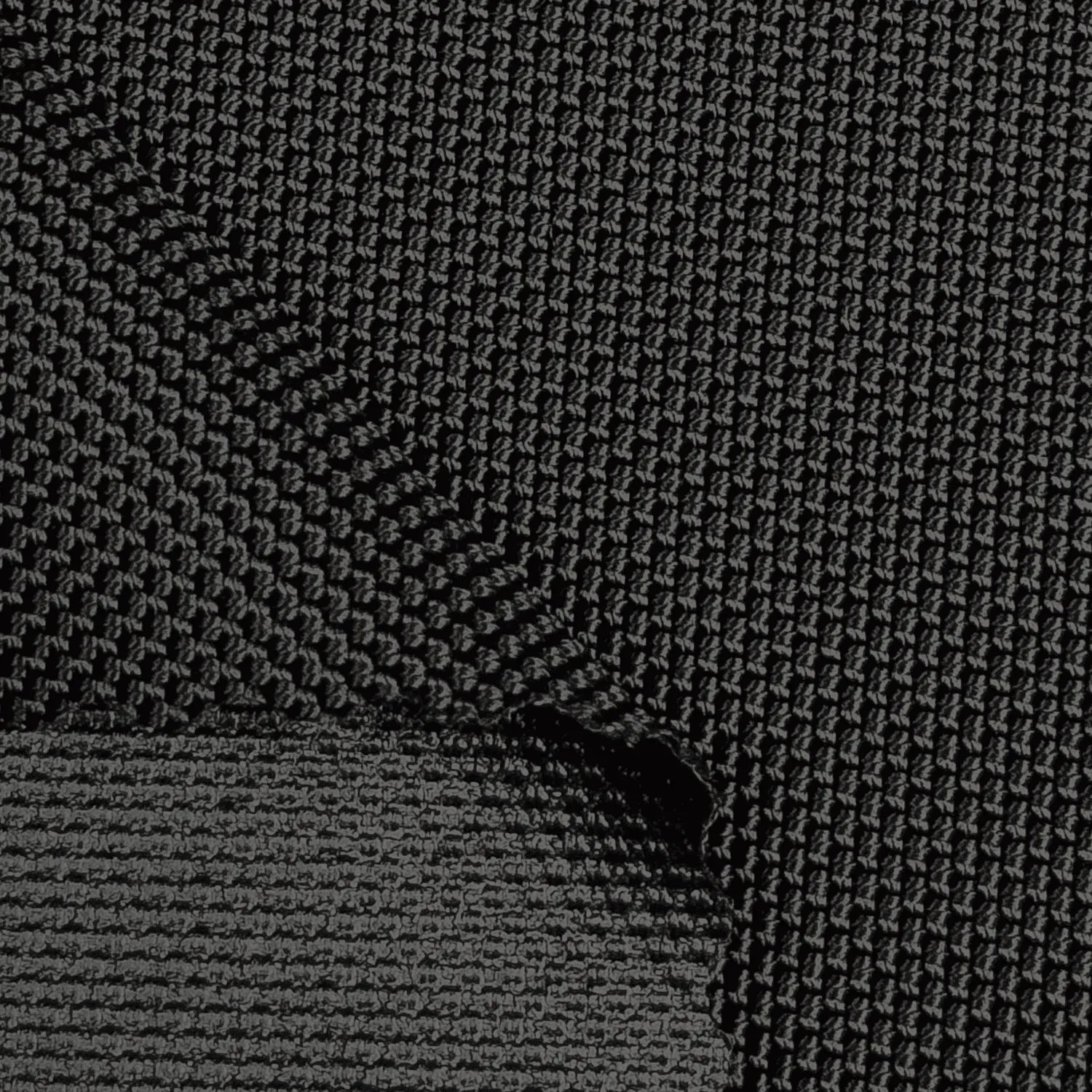
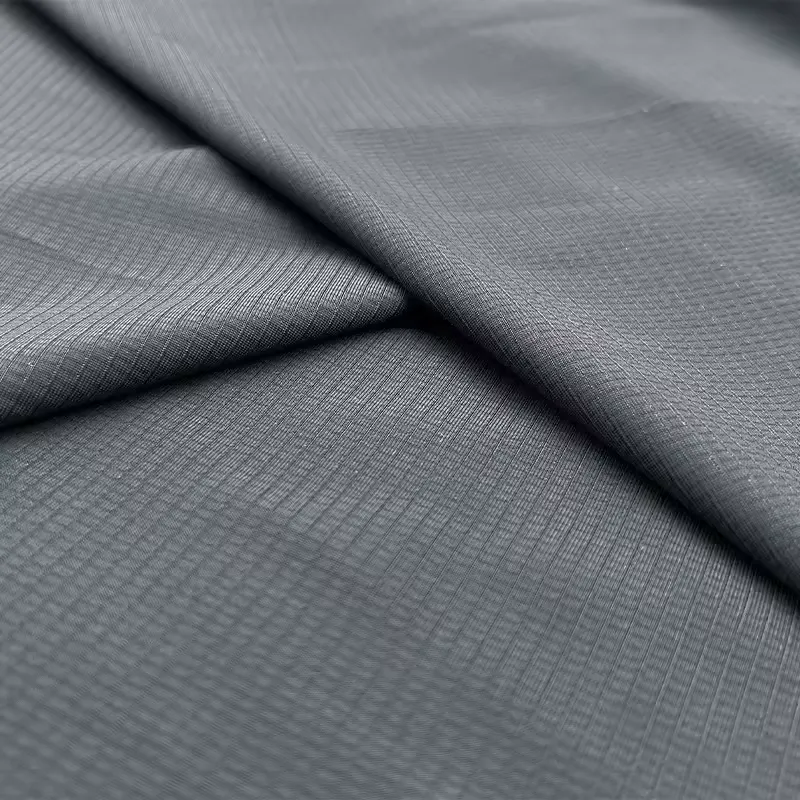
High-tenacity nylon is a filament yarn engineered to withstand much higher force than standard nylon. In technical terms, “Tenacity” measures the breaking force of a yarn relative to its linear density. While standard nylon is durable, high-tenacity versions (often based on Nylon 6,6) are the foundation of rugged “CORDURA-type” fabrics known for their extreme resistance to daily friction and mechanical stress.
What Does “Tenacity” Mean?
Tenacity measures the strength of a yarn relative to its size or linear density. A simplified concept is: Tenacity = Breaking Force ÷ Linear Density This is different from simply asking: “How strong is the yarn?” A thicker yarn may withstand more total force simply because it contains more material. Tenacity helps compare strength relative to yarn size.
Technical Measurement Units:
- Tenacity Formula: Breaking force divided by linear density.
- Standard Units: g/denier (g/d) or cN/tex.
- The Result: Fabrics that “punch above their weight,” providing armor-like strength in lightweight constructions.

The idea is: Higher Tenacity = More Breaking Force Relative to Yarn Mass
Pros & Cons: A Manufacturer’s Perspective
| Pros | Cons |
|---|---|
| High strength-to-weight ratio | Higher material cost |
| Strong abrasion resistance | Can absorb more moisture than polyester |
| Good tear-resistance potential | UV exposure can reduce performance over time |
| Durable without excessive weight | Some constructions may feel stiff |
| Suitable for high-stress areas | Can be noisier in tightly woven fabrics |
| Good for jackets, workwear, bags, and technical apparel | Dense or coated versions may be harder to sew |
| Can be combined with ripstop, coatings, and stretch constructions | High tenacity alone does not make fabric waterproof |
| Helps improve long-term durability | May be unnecessary for low-stress fashion garments |
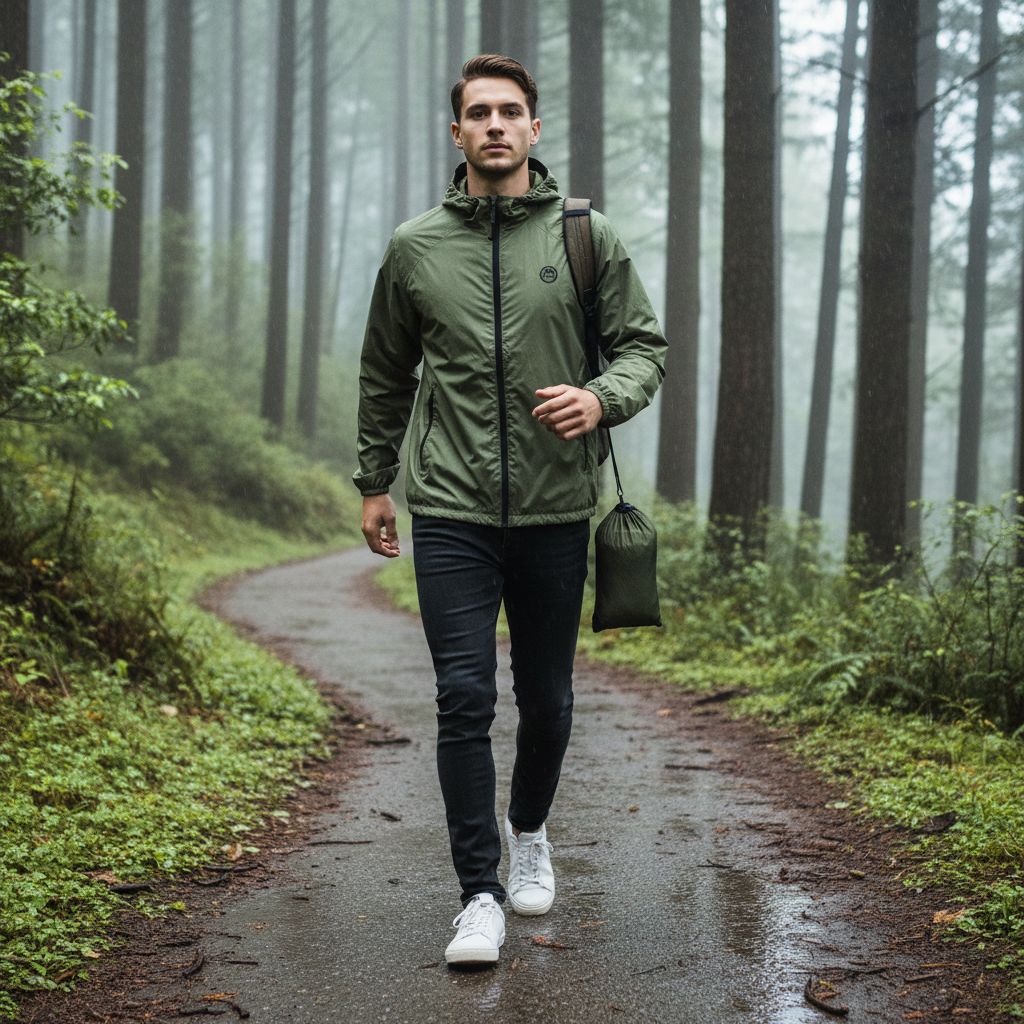
The Advantages (Why We Recommend It)
- Exceptional Strength-to-Weight Ratio: You achieve high tensile strength without the need for thick, heavy fabrics.
- Superior Abrasion Resistance: Ideal for areas prone to rubbing, such as shoulders (backpack straps) and cuffs.
- High Tear Resistance: The aligned molecular structure of the yarn prevents small snags from turning into large rips.
- Technical Aesthetics: Available in both smooth filament and textured finishes to match your brand’s look.
The Trade-offs (What to Watch Out For)
- Hygroscopic Nature: Like all nylon, it can absorb moisture, which may cause slight “wet stretch” or change the hand-feel in humid conditions.
- Cost Premium: High-tenacity yarns require more precise manufacturing steps, leading to a higher fabric cost per yard.
- Construction Sensitivity: A tough fabric cannot save poor sewing. These materials require high-quality thread and reinforced seams to prevent the product from failing at the construction points.
High-Tenacity Nylon Applications
For Jackets
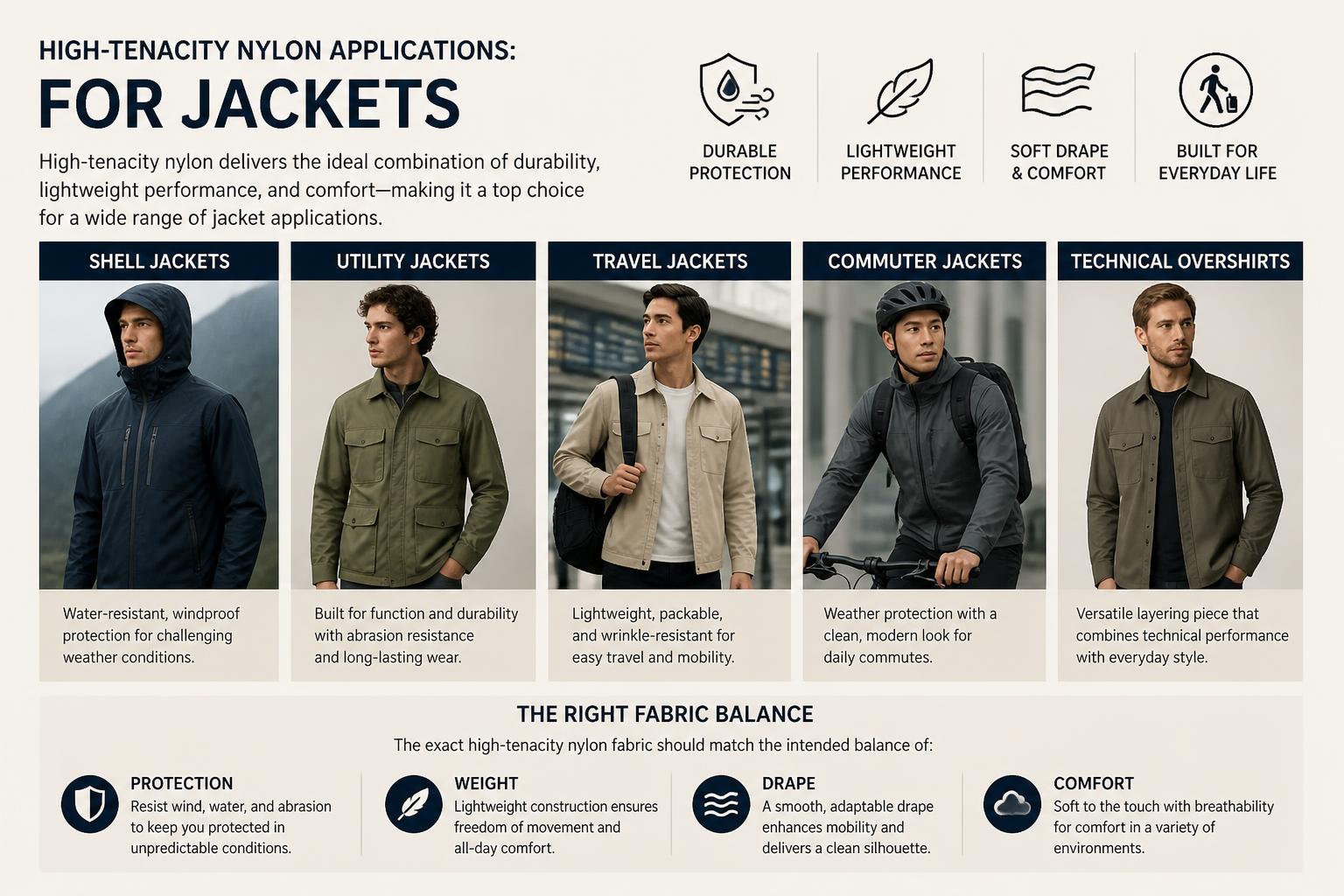
One of the most common apparel applications is outerwear. It can be useful for:
- Shell jackets
- Utility jackets
- Travel jackets
- Commuter jackets
- Technical overshirts
The exact fabric should match the intended balance of: Protection + Weight + Drape + Comfort
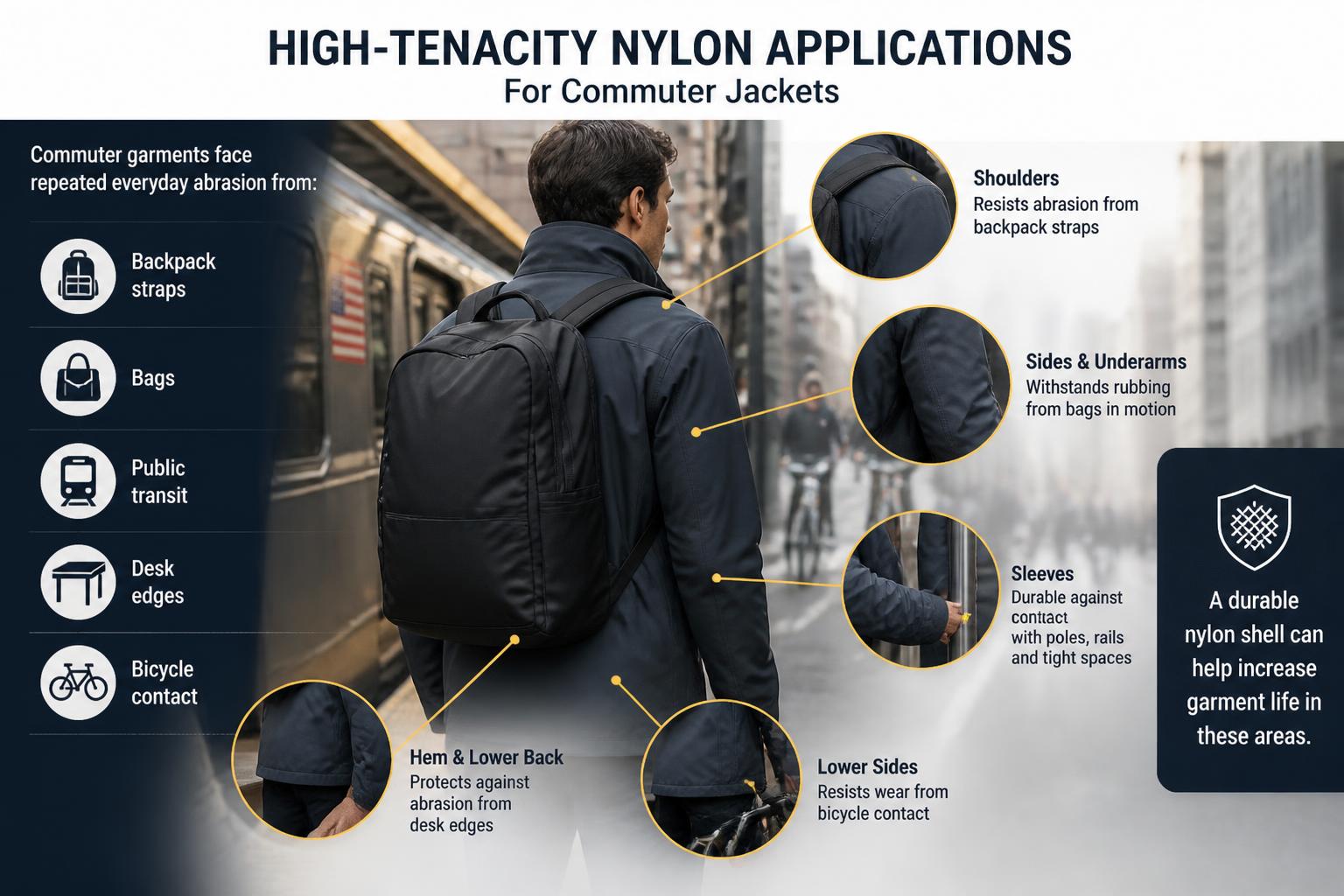
For Commuter Jackets
Commuter garments face repeated everyday abrasion from:
- Backpack straps
- Bags
- Public transit
- Desk edges
- Bicycle contact
A durable nylon shell can help increase garment life in these areas.
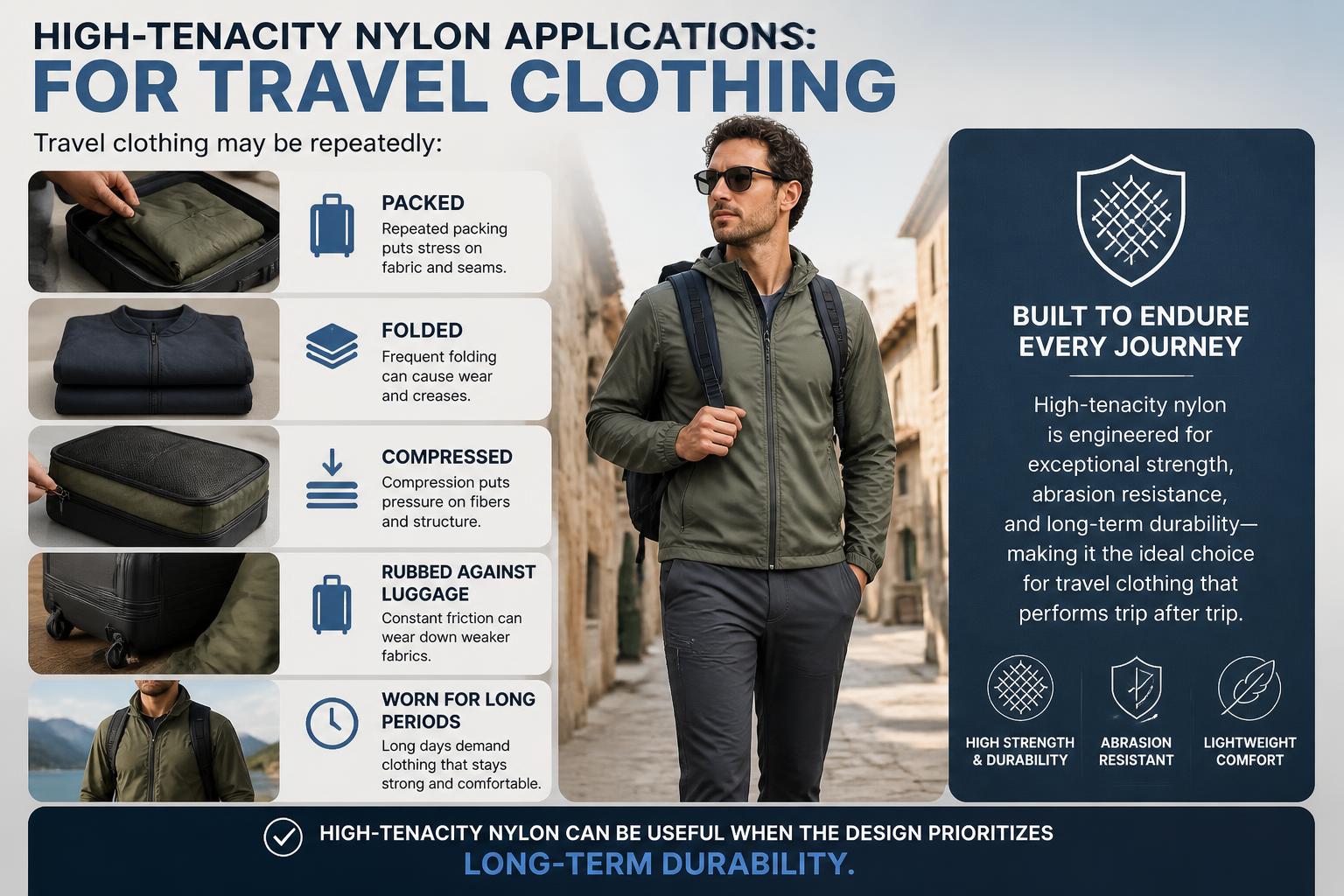
For Travel Clothing
Travel clothing may be repeatedly:
- Packed
- Folded
- Compressed
- Rubbed against luggage
- Worn for long periods
High-tenacity nylon can be useful when the design prioritizes long-term durability.
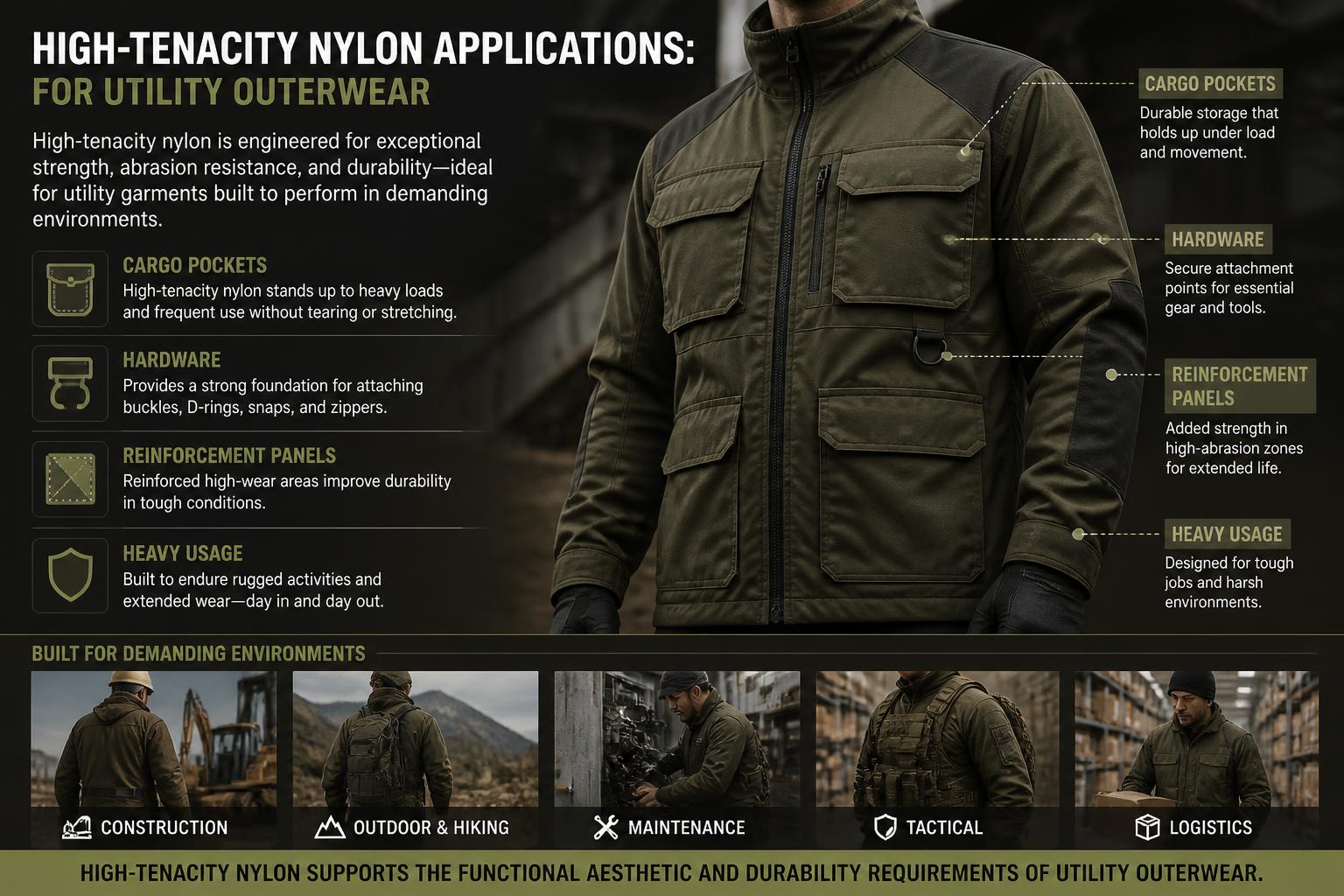
For Utility Outerwear
Utility garments often include:
- Cargo pockets
- Hardware
- Reinforcement panels
- Heavy usage
High-tenacity nylon can help support the product’s functional aesthetic and durability requirements.
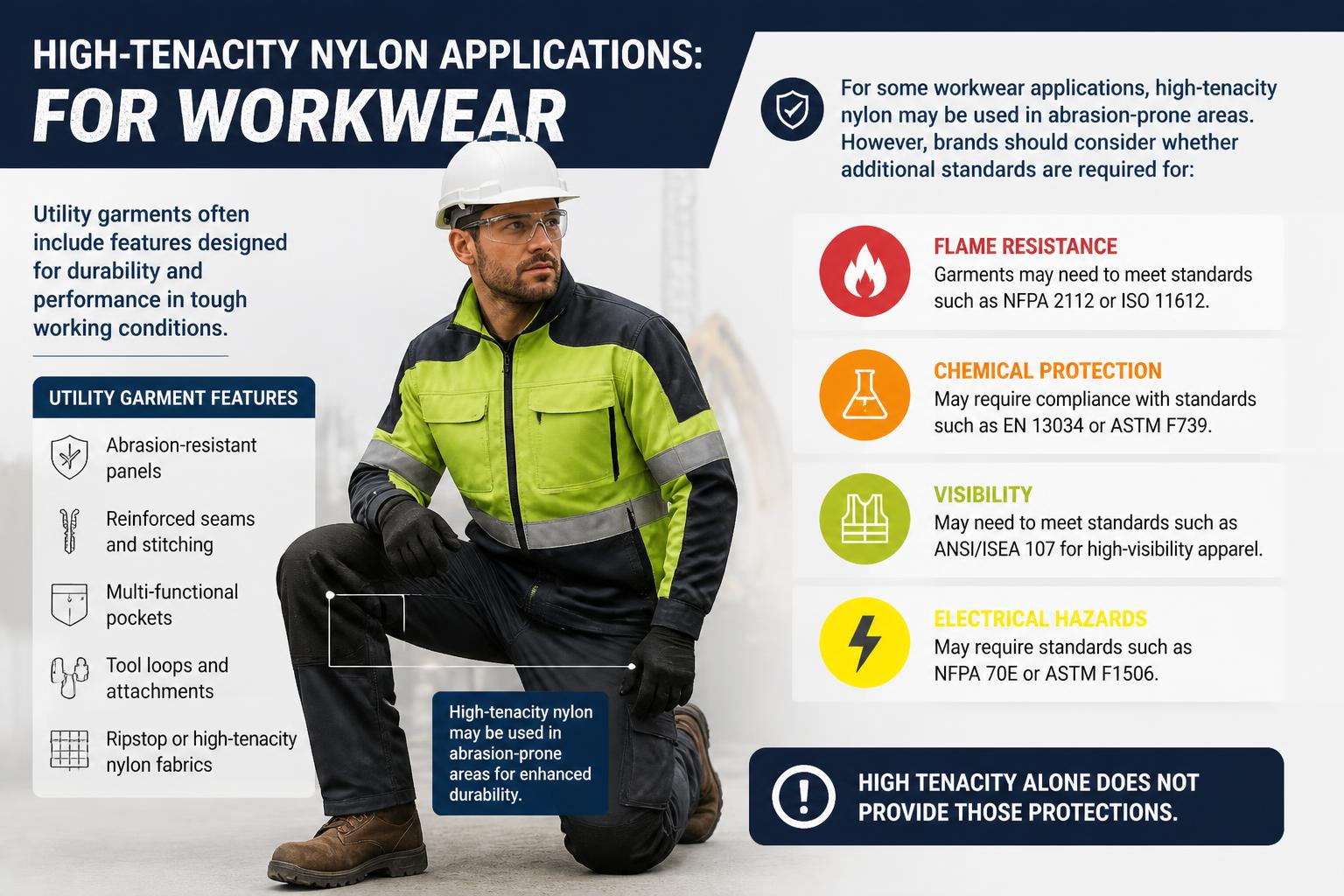
For Workwear
For some workwear applications, high-tenacity nylon may be used in abrasion-prone areas. However, brands should consider whether additional standards are required for:
- Flame resistance
- Chemical protection
- Visibility
- Electrical hazards
High tenacity alone does not provide those protections.
For Backpacks and Bags
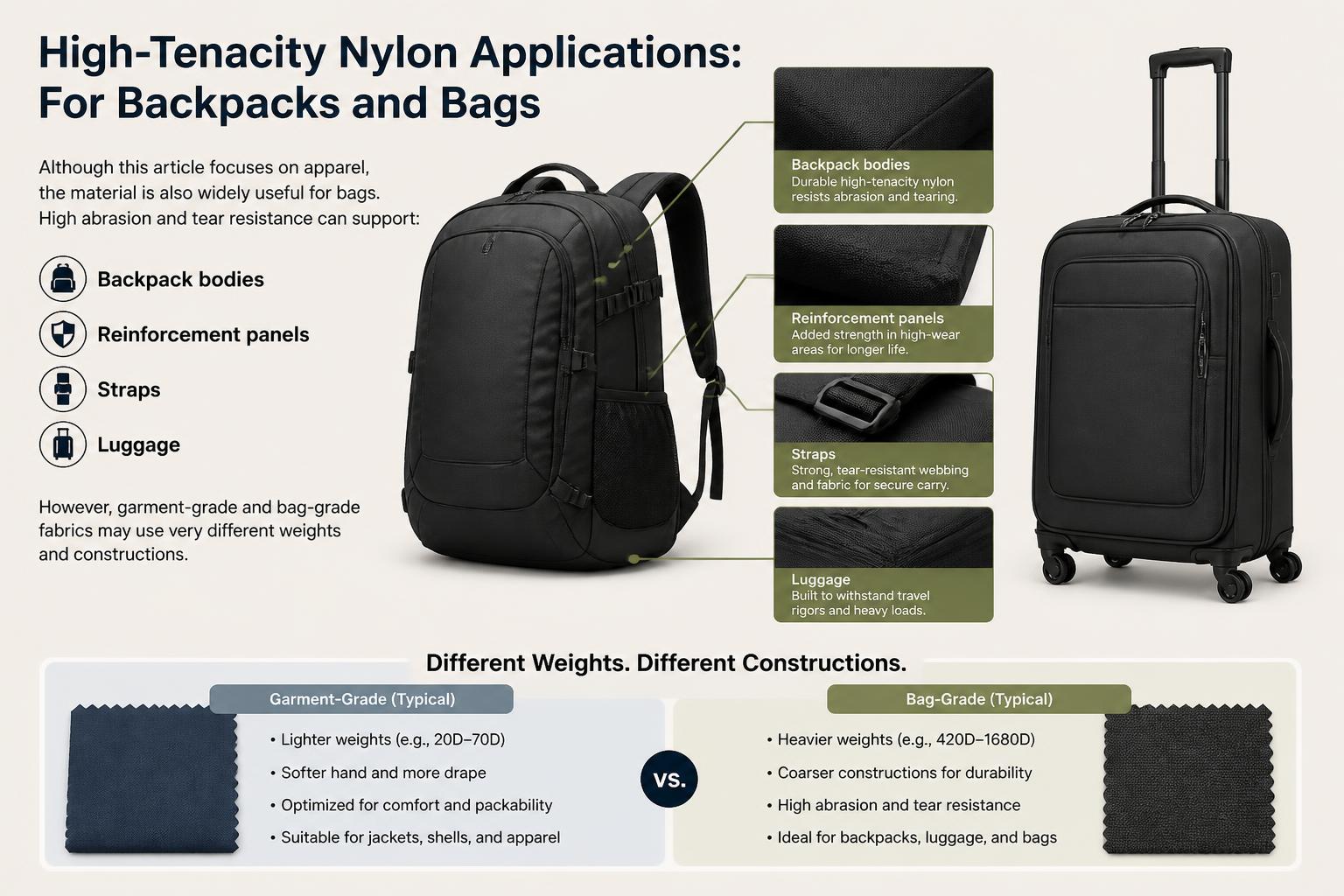
Although this article focuses on apparel, the material is also widely useful for bags. High abrasion and tear resistance can support:
- Backpack bodies
- Reinforcement panels
- Straps
- Luggage
However, garment-grade and bag-grade fabrics may use very different weights and constructions.
For Pants
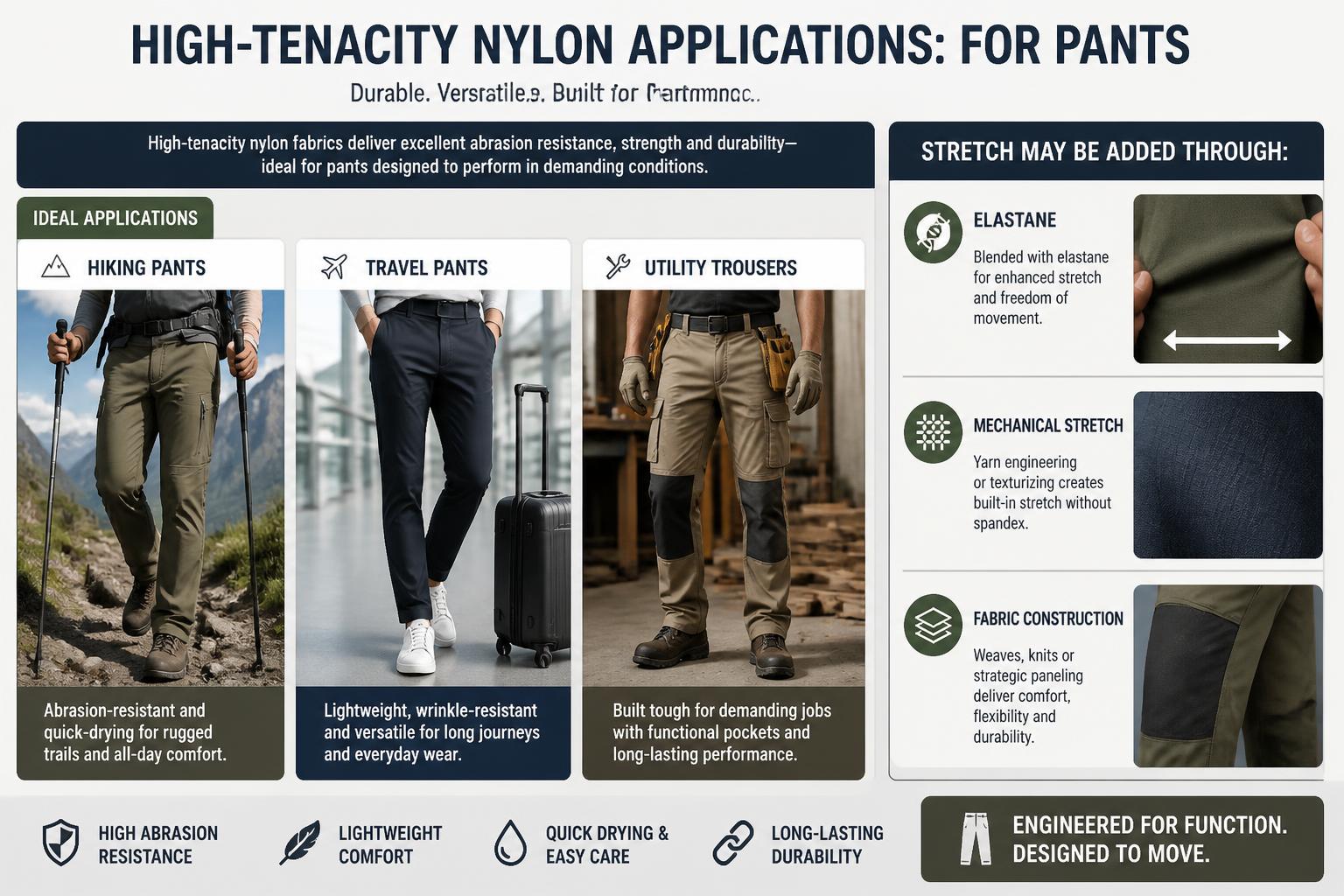
Durable nylon fabrics may also be useful in:
- Hiking pants
- Travel pants
- Utility trousers
Stretch may be added through:
- Elastane
- Mechanical stretch
- Fabric construction
depending on the design.
Strategic Application: When to Choose High-Tenacity Nylon
This material is the undisputed champion for environments where friction and rough handling are normal. At Mekong Garment, we recommend this for:
- Commuter Shells: Built to withstand daily contact with backpacks and public transit seats.
- Technical Travel Gear: Designed for constant packing, strapping, and long-term durability.
- Utility Outerwear: Garments that require a technical look without sacrificing structural integrity.
| Product Need | High-Tenacity Nylon Suitability |
|---|---|
| Lightweight fashion jacket | Maybe |
| Commuter shell | Very suitable |
| Technical travel jacket | Very suitable |
| Utility outerwear | Very suitable |
| Soft drapey fashion blouse | Usually unnecessary |
| Abrasion reinforcement | Very suitable |
| Swimwear | Depends on construction |
| Heavy workwear | Depends on required standards |
Conclusion / Final Words
High-tenacity nylon is a strategic investment in product longevity. It ensures your brand’s reputation remains intact by delivering jackets that survive real-world abuse. However, for fashion-only items where drape is the priority over toughness, standard polyester or nylon might be more cost-effective. At Mekong Garment, we help our partners balance these technical trade-offs to ensure the fabric choice perfectly matches the garment’s mission.
Contact Mekong Garment Factory
- VN Phone/WhatsApp/WeChat: +84 947 729 829
- Email: hanh@kimmy.vn