
Fabric consumption is one of the most important calculations in garment merchandising. A small mistake in consumption can affect costing, booking quantity, fabric sourcing, and final profit. That is why merchandisers, production planners, and sourcing teams need a clear and practical method to estimate fabric usage before production starts.
In knitwear production, a basic T-shirt is one of the most common styles. Even though the garment looks simple, the consumption must still be calculated carefully by using garment measurements, fabric GSM, sewing allowance, and wastage percentage. In this article, we will explain the knit fabric consumption formula for a basic T-shirt in a simple way. We will also show a worked example so the method is easy to follow and apply in real production.
What Is Knit Fabric Consumption?
Knit fabric consumption means the amount of fabric required to produce a garment or a group of garments. In merchandising, this calculation is usually done per piece, per dozen, or for the total order quantity. For a basic T-shirt, the consumption depends mainly on:
- Body length
- Sleeve length
- Chest width
- Fabric GSM
- Sewing allowance
- Wastage percentage
The purpose of this calculation is to estimate how many kilograms of knit fabric will be needed to complete the order.
Factors Required for Knit Fabric Consumption Calculation
Before starting the calculation, you need to confirm a few basic details.
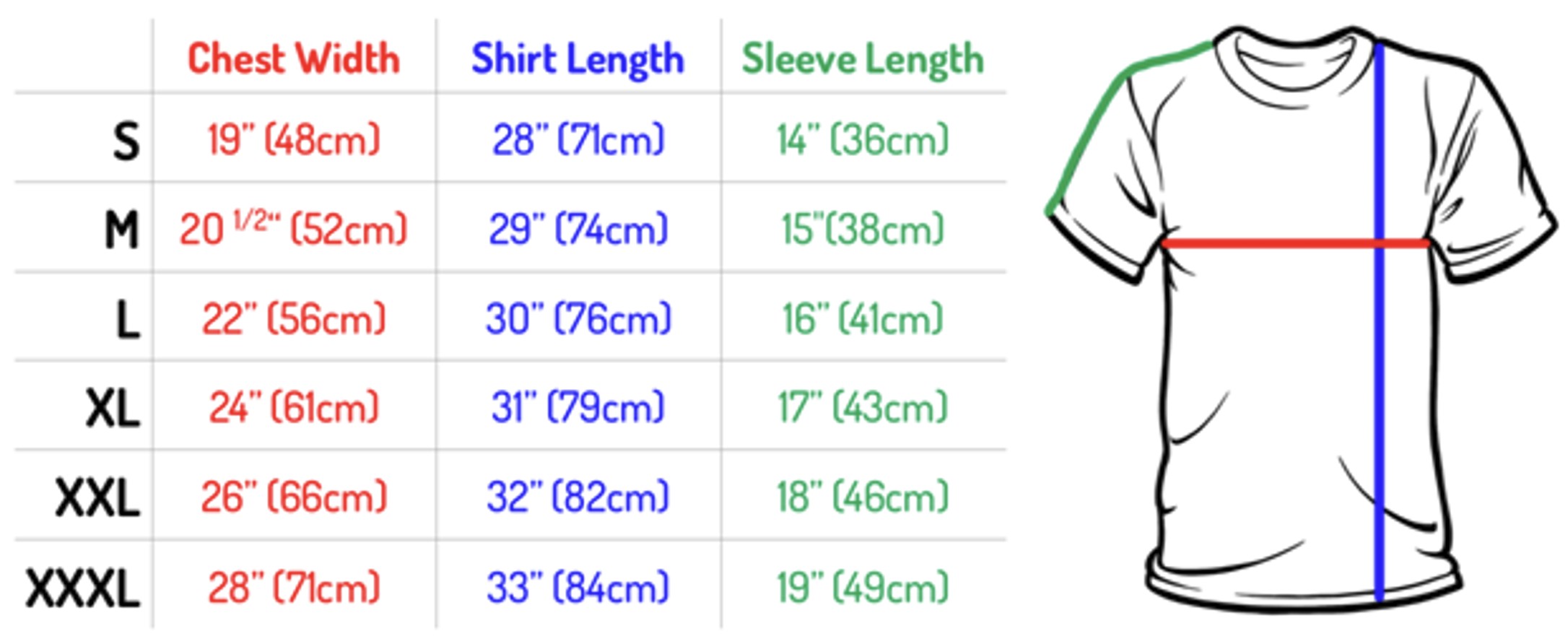
- 1. Garment Measurements: You need the measurement data of the selected size. In many cases, factories use the base size or the largest size for estimation, depending on buyer practice and internal costing method. For a basic T-shirt, the main measurements are: Body length or shirt length, Sleeve length, Half chest width
- 2. Fabric GSM: GSM means grams per square meter. This tells you the fabric weight. For example, a 160 GSM single jersey fabric weighs 160 grams per square meter.
- 3. Sewing Allowance: Extra fabric must be added to cover sewing, hemming, and joining points. Common allowance used in this formula: 12 cm for body length and sleeve length together, 6 cm for chest width. These allowances are only approximate and may vary depending on factory method, style details, and buyer requirements.
- 4. Wastage Percentage: Fabric wastage is added to cover losses during spreading, cutting, sewing, shade variation, end loss, rejection, and other production stages. For a basic T-shirt, a common estimate is: 10% wastage.

This is a general guideline. Actual wastage may be higher or lower depending on fabric type, marker efficiency, order size, and factory control.
Knit Fabric Consumption Formula for a Basic T-Shirt
The standard formula is:

Then add wastage percentage: Final Fabric Consumption = Calculated Consumption + Wastage
Meaning of the Formula:
Here is what each part means
- Body Length + Sleeve Length + 12 cm: This gives the total required garment length with sewing allowance.
- 1/2 Chest Width + 6 cm: This gives the total required width with side seam allowance.
- × 2: This is used because the garment has front and back panels.
- × GSM: This converts the garment area into fabric weight.
- × 12: This converts the result into consumption per dozen garments.
- ÷ 10,000,000: This converts square centimeter and gram values into kilograms.
Notes Before Using the Formula
Before applying the formula, keep these practical points in mind:
- Buyer Confirmation: The fabric type and GSM must be confirmed by the buyer or by the approved material specification.
- Approximate Allowance: The formula uses general sewing allowance. This is suitable for a basic T-shirt, but it may not be accurate enough for styles with special trims, panels, ribs, plackets, or complicated sewing construction.
- Wastage Is an Estimate: The 10% wastage is a common working assumption. In real production, the actual wastage may change depending on marker efficiency, fabric defects, shrinkage, and factory performance.
Example of Knit Fabric Consumption Calculation
Let us use a simple example to understand the calculation.
Suppose the buyer gives the following order details:
- Fabric: 100% cotton single jersey
- Fabric GSM: 160
- Order quantity: 10,000 pieces
And we use the XL size from the size chart:
- Body length = 79 cm
- Sleeve length = 43 cm
- 1/2 chest width = 61 cm
Now we apply the formula.
Step 1: Add Length Allowance
- 79 + 43 + 12 = 134
So, the adjusted total length is 134 cm.
Step 2: Add Width Allowance
- 61 + 6 = 67
So, the adjusted width is 67 cm.
Step 3: Apply the Main Formula
- (134 × 67 × 2 × 160 × 12) / 10,000,000
- 34,475,520 / 10,000,000
- = 3.447552
So, the fabric consumption is approximately: 3.45 kg per dozen
Step 4: Add 10% Wastage
- 3.45 + 10% = 3.795 kg per dozen
So, the final fabric consumption becomes: 3.795 kg per dozen
Fabric Required for 10,000 Pieces
Now let us calculate the total fabric needed for the whole order.
- First, convert pieces into dozens: 10,000 ÷ 12 = 833.33 dozen
- Then multiply by the final fabric consumption per dozen: 833.33 × 3.795 = 3162.5 kg
- So, the total fabric required for 10,000 basic T-shirts is: 3162.5 kg
Summary of the Example
For the given XL size and 160 GSM knit fabric:
- Body length = 79 cm
- Sleeve length = 43 cm
- 1/2 chest width = 61 cm
- Basic consumption = 3.45 kg/dozen
- Consumption with 10% wastage = 3.795 kg/dozen
- Total fabric for 10,000 pieces = 3162.5 kg
This method is easy to use and works well for preliminary costing and material planning of a basic knit T-shirt.
Practical Tips for More Accurate Fabric Consumption
The formula above is useful, but relying only on formula-based estimation is not always enough. In actual garment production, fabric consumption can be influenced by several additional factors.
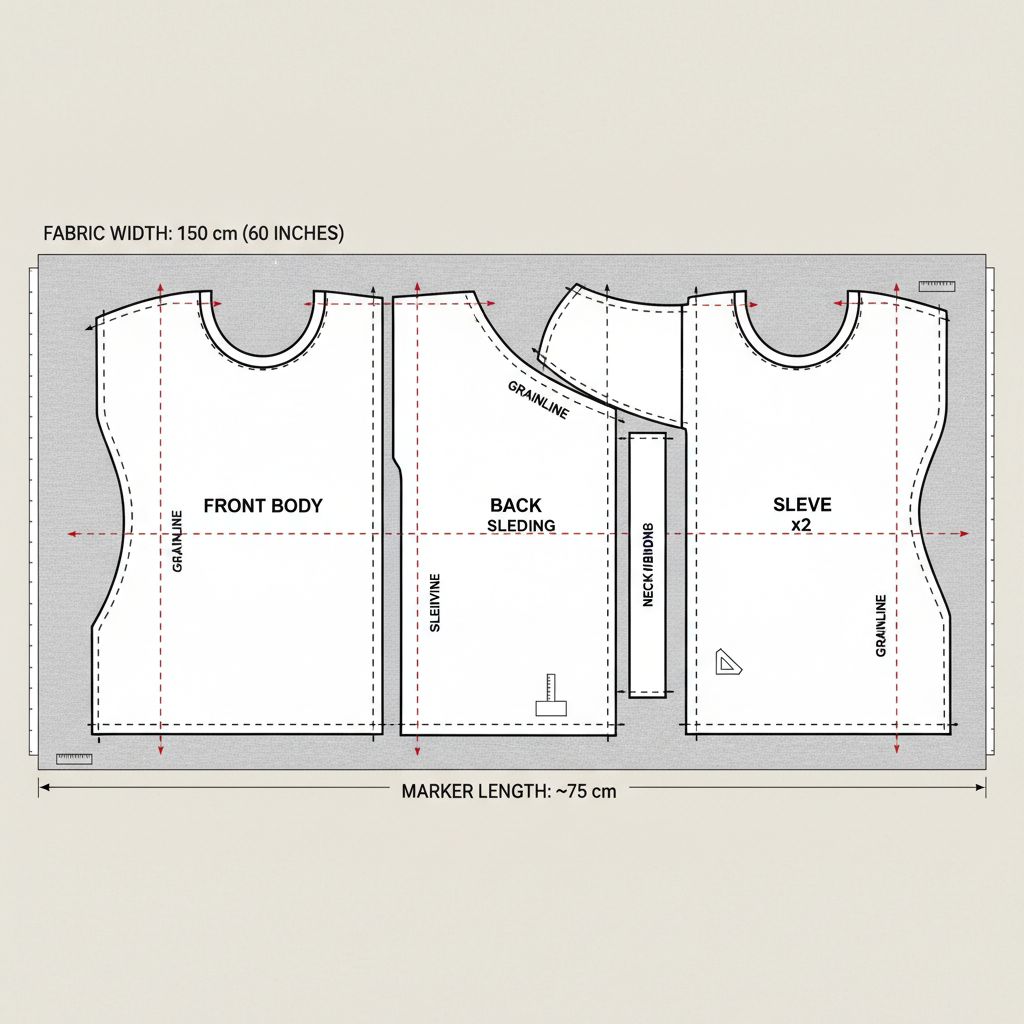
- 1. Marker Efficiency: Marker planning has a strong effect on actual fabric usage. A good marker can reduce waste and improve fabric utilization.
- 2. Fabric Shrinkage: If the fabric shrinks after washing or finishing, additional allowance may be needed.
- 3. Fabric Width: Usable fabric width affects marker layout. Wider or narrower fabric can change actual consumption.
- 4. Style Details: This formula is suitable for a basic T-shirt. If the style includes collars, cuffs, pockets, plackets, contrast panels, or special stitching, extra fabric may be required.
- 5. Size Ratio: For bulk orders with multiple sizes, the average consumption may differ from the single-size estimate. In those cases, merchandisers should calculate based on the full size ratio.
Final Thoughts / Conclusion
The knit fabric consumption formula for a basic T-shirt is one of the most useful tools in garment merchandising. It helps estimate fabric requirement quickly and gives a practical base for costing, sourcing, and production planning.
For simple styles, this formula is effective and easy to apply. However, merchandisers should still review fabric type, shrinkage, marker efficiency, and order size ratio before finalizing consumption. A formula gives a strong starting point, but real production data always makes the estimate more reliable. If you are working with basic knitwear orders, mastering this calculation will help you make faster and more accurate decisions in daily merchandising work.