
Cotton is one of the most loved fabrics in the world because it feels soft, cool, and comfortable. But many people often ask the same question: “Does cotton pill?” The short answer is: Yes, cotton can pill — but not all cotton pills the same way. To understand why, we need to look at a few things: the fiber length, the yarn twist, how the fabric is made, and even how we wear and wash our clothes.
=> Read More: Does Polyamide Pill on Clothes And How To Prevent It?
Cotton Fabric Pilling Comparison:
The image is a fabric pilling comparison chart. It compares four different fabric types across four levels of pilling.

Fabric Types (Rows):
- C = 100% Cotton
- C/V = Cotton / Viscose blend
- T/C = Polyester / Cotton blend
- T/V = Polyester / Viscose blend
Pilling Levels (Columns):
- (a) = No pilling / very slight pilling
- <strong”>(b) = Moderate pilling
- (c) = Heavy pilling
- (d) = Severe pilling
Each small square represents what the fabric surface looks like after increasing levels of abrasion (rubbing/friction).
Why Some Cotton Fabrics Pill More Easily?
Fiber Length Matters
Short cotton fibers tangle and break more easily, which leads to pilling. Long-staple fibers (like Pima or Egyptian cotton) stay smooth and strong. This is why high-quality cotton pills much less than regular cotton. Cotton fibers come in different lengths.
- Short fibers tangle easily → more pilling
- Long fibers (like Pima or Egyptian cotton) stay smoother → less pilling
This is why high-quality cotton pills less. When the fibers are long, they don’t escape from the fabric surface as easily.
Blended Fabrics Pill Faster
Cotton blends with synthetic fibers (like polyester) pill more than pure cotton. Why? Because synthetic fibers are strong, so when fuzz forms, these strong fibers hold the pills in place, making the pilling more visible. Pure cotton pills can fall off faster, so the pilling may look lighter.
Finer Fibers Pill More than Coarse Fibers
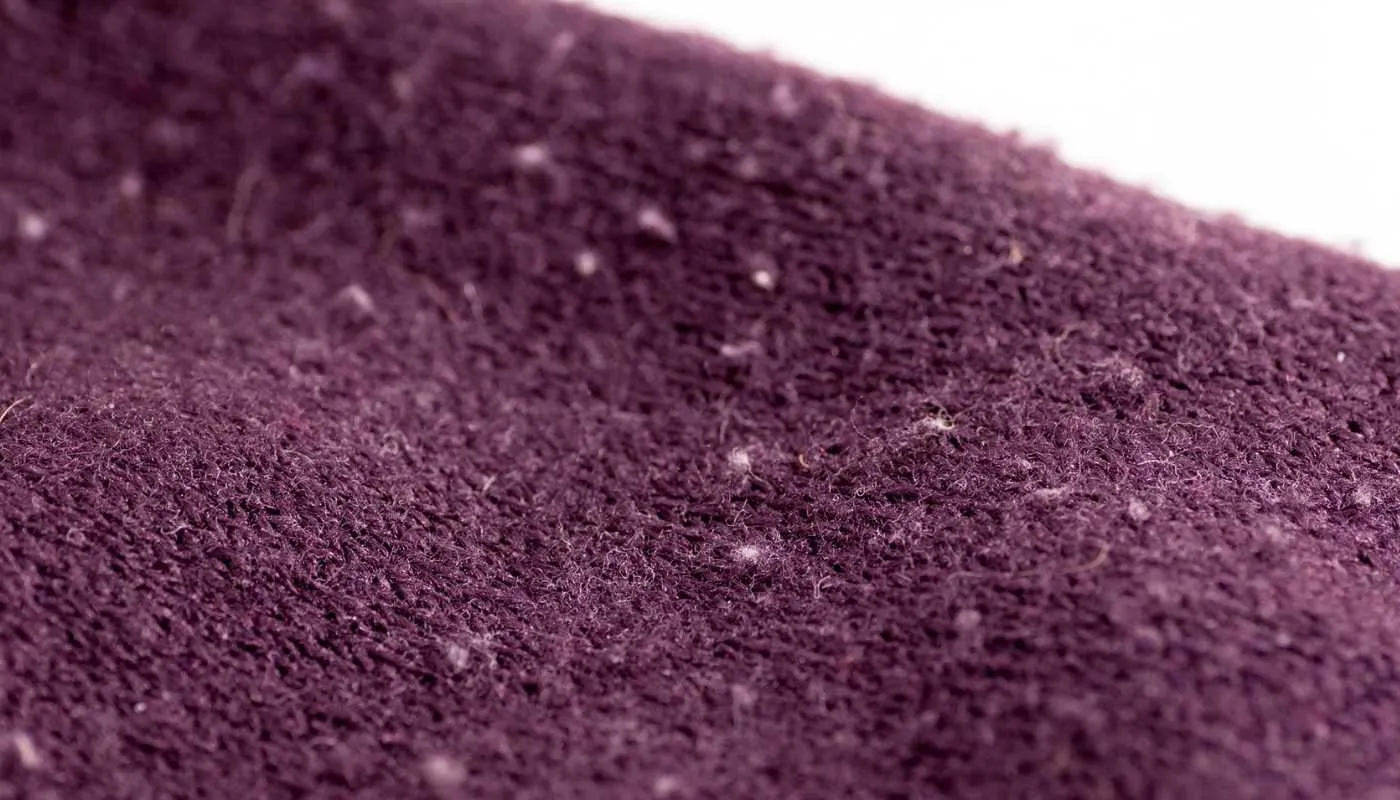
Fine fibers may feel very soft and smooth, but they are also more delicate and break more easily. When these tiny fibers loosen from the surface, they can tangle together and form pills. This is why fabrics made with very fine cotton often look nicer at first but may pill sooner with daily wear. In contrast, thicker fibers stay stronger and are less likely to slip out of the yarn. Because of this, fiber thickness plays a big role in how much pilling appears on cotton fabric. Fine fibers are softer but also more delicate. So while fine cotton feels nicer, it may pill sooner than thick, coarse cotton fibers.
Everyday Use Also Causes Pilling
Even excellent cotton can pill after long use. The most common spots are: cuffs, collars, underarms, areas where a bag or seatbelt rubs More friction = more pilling. So sometimes pilling is simply a sign of normal wear, not poor quality.
How Fabric Construction Affects Pilling?
Even when the fiber quality is high, how the fabric is made also changes how easily it pills.
Tight Fabric = Less Pilling
- A fabric with a tighter weave or knit keeps fibers locked inside. Less fiber movement → Less pilling
- Loose knits (like sweaters or stretchy tees) allow fibers to pop out → More pilling

A Flat Surface Pills Less
Smooth fabrics like poplin or sateen pill less because the surface is flat. But fabrics with a fluffy or brushed surface (like fleece or flannel) pill more because the fuzz is already outside.
Yarn Twist Influences Pilling
- More yarn twist = stronger yarn = less pilling, but too much twist makes the fabric feel stiff.
- Less yarn twist = softer and more comfortable, but it may pill more easily.
Manufacturers often choose lower twist to make cotton softer for daily wear.
How to Reduce Pilling on Cotton Clothes?
Even if cotton tends to pill, you can lower the chance by caring for your clothes the right way:
- Turn clothes inside out before washing: This reduces surface friction.
- Use gentle wash cycles: Harsh spinning breaks fibers loose.
- Avoid mixing cotton with harsh fabrics: Denim, towels, or items with zippers create friction.
- Air dry instead of using high-heat dryers: Heat weakens fibers and increases fuzz.
- Use a fabric shaver if pilling appears: This removes pills safely without harming the fabric.

Conclusion / Final Words
Cotton pilling is a normal fabric behavior, not a flaw. Good cotton can still pill because of comfort-focused design choices and natural fiber structure. The key is choosing long-staple cotton, well-made fabrics, and caring for your clothes properly. With the right handling, cotton garments stay smooth, soft, and long-lasting.
FAQs About Does Cotton Fabric Tend to Pill or Not?
What does “pilling” mean?
Pilling happens when loose fibers on the fabric surface roll into tiny balls due to rubbing or friction. These pills often appear in places that move or rub the most, such as cuffs, sleeves, underarms, or the sides of pants. It is a natural effect that occurs on many fabrics—especially those made from short fibers or soft, low-twist yarns. Even high-quality natural fibers can pill over time because friction slowly pulls fibers outward.
Does cotton fabric pill?
Yes, cotton can pill, but not all cotton behaves the same. Cotton made with long fibers, tight weaves, or high-twist yarns pills far less than cotton made with short fibers or loose structures. Soft or fluffy cotton fabrics, such as brushed cotton or flannel, pill more quickly because the surface has more loose fibers. So, cotton can pill, but the level of pilling depends on how the fabric is designed and what type of cotton is used.
Why do some cotton clothes pill more than others?
Some cotton clothes pill more because they use short-staple cotton, which has weaker and shorter fibers that easily slip out of the yarn. Others may use low-twist yarns to improve softness, but this reduces yarn stability and increases pilling. Fabrics with too much surface fuzz also pill more because exposed fibers can easily tangle. Even fabric finishing plays a role: materials that skip anti-pilling treatments tend to pill earlier.
Do cotton blends pill more than pure cotton?
Often they do. When cotton is blended with synthetic fibers like polyester, the pills cling to the strong synthetic surface and do not fall off. Pure cotton pills may break away naturally, making the pilling less noticeable. Cotton–poly blends also have mixed fiber lengths, which encourages pilling because short fibers wrap around longer fibers and stick together during friction.
Do fine fibers pill more easily?
Yes. Fine fibers are soft and comfortable, but they also break more easily. Once these tiny broken fibers appear on the surface, they twist into pills. Fabrics made with extra-fine yarns like superfine cotton jersey may feel luxurious but can pill sooner than fabrics made with thicker, sturdier fibers. Fiber fineness is one of the biggest factors affecting pilling in high-comfort cotton clothing.
Does fabric tightness affect pilling?
Absolutely. Tight weaves or knits (like poplin or twill) hold fibers tightly together, reducing friction between fibers and lowering pilling. Loose or stretchy knits (like rib knit, interlock, or jersey) give fibers more room to move and pop out of the yarn structure. This is why lightweight T-shirts often pill faster than tightly woven cotton shirts.
Does pilling mean the cotton is low quality?
Not necessarily. High-quality cotton with long fibers may still pill slightly because of friction or a soft yarn design. Conversely, cotton that never pills may feel stiff or rough because it has a high twist or heavy finishing. Pilling alone is not a perfect indicator of quality you must also consider fiber length, softness, and overall construction.