
Wool has been used for centuries because it’s warm, strong, and naturally beautiful. However, “wool” is not a single fabric; it is a diverse family of fibers, each with unique textures and performance characteristics. From ultra-soft luxury to rugged outdoor durability, understanding the most common types of wool fabric is essential for professional apparel sourcing and design.
Common Wool Fabrics at a Glance
| Wool / Fabric | Character | Common Products |
|---|---|---|
| Merino | Fine, soft | Base layers, sweaters |
| Cashmere | Luxury, lightweight | Sweaters, scarves |
| Lambswool | Warm, fuzzy | Winter knitwear |
| Shetland | Rustic, textured | Heritage sweaters |
| Mohair | Lustrous, resilient | Knitwear, suits |
| Alpaca | Warm, soft | Coats, sweaters |
| Worsted Wool | Smooth, clean | Suits, trousers |
| Wool Flannel | Soft, brushed | Trousers, blazers |
| Tweed | Textured, rugged | Jackets, coats |
| Melton | Dense, structured | Outerwear |
| Boiled Wool | Compact, warm | Jackets, cardigans |
| Wool Jersey | Stretchy, soft | Tops, base layers |
1. Merino Wool: The Everyday Luxury
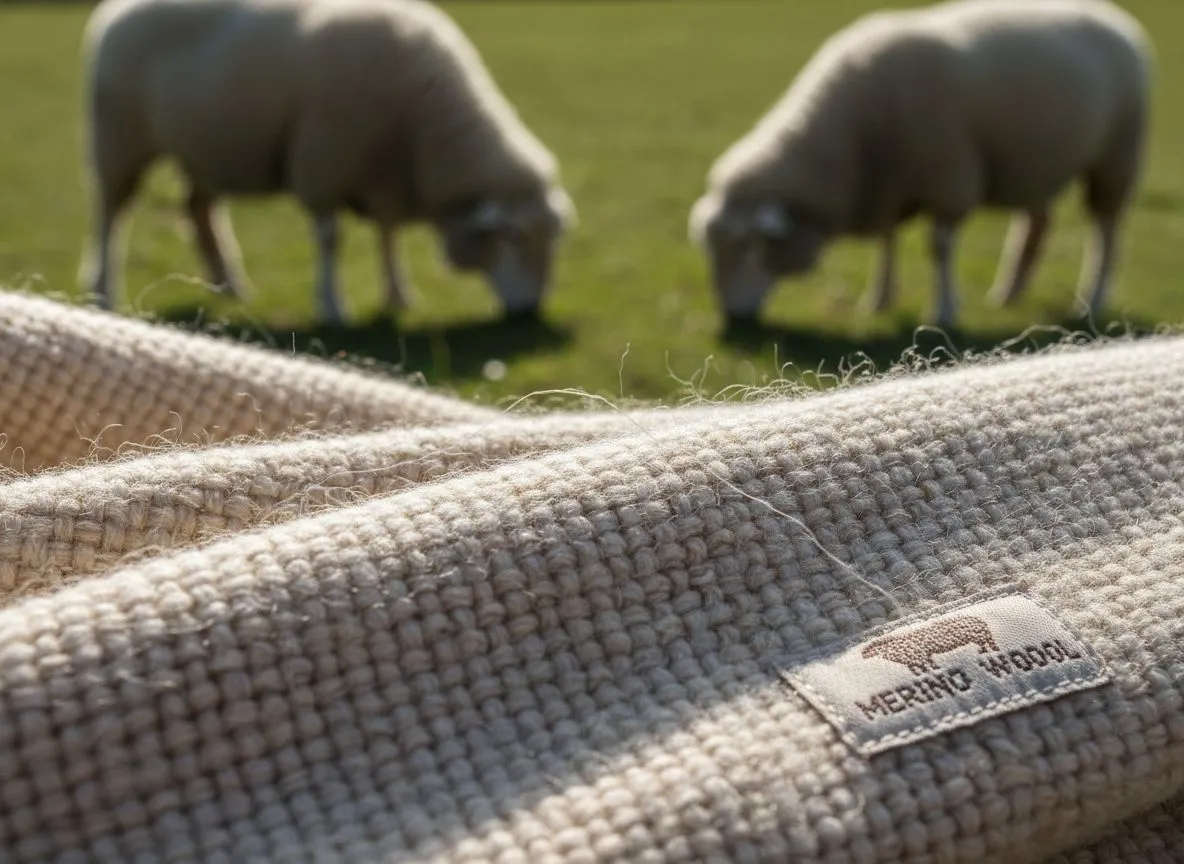
Merino wool is famous for its exceptionally fine fibers, making it one of the softest and most skin-friendly wool types available. Sourced primarily from Merino sheep in Australia and New Zealand, this wool offers superior warmth-to-weight ratios and natural moisture-wicking properties. It is the gold standard for high-end sweaters, base layers, and premium suiting.
- Technical Pro: High elasticity and odor resistance.
- Best For: Soft everyday wear, activewear, and polished knitwear.
- Common Items: Sweaters, scarves, lightweight suits.
Merino wool comes from Merino sheep, a breed known for producing relatively fine wool fibers. It is one of the most widely recognized wool types in premium apparel.
Merino can be used for:
- Fine knitwear
- Base layers
- T-shirts
- Sweaters
- Socks
- Scarves
- Lightweight suiting
Its appeal comes from the balance between:
- Warmth
- Softness
- Moisture absorption
- Elastic recovery
- Natural odor management
But not every Merino fabric feels equally soft.
2. Cashmere: The Ultimate Investment
Cashmere is sourced from the soft undercoat of Cashmere goats, found in Mongolia, Nepal, and India. It is prized for its “buttery” softness and extreme lightweight warmth. Because each goat produces a very small amount of fiber annually, cashmere is considered a luxury investment fabric.
- Technical Pro: Three times more insulating than sheep’s wool.
- Reality Check: Highly prone to pilling if the staple length of the fiber is short.
- Common Items: Luxury shawls, pashminas, and high-end cardigans.
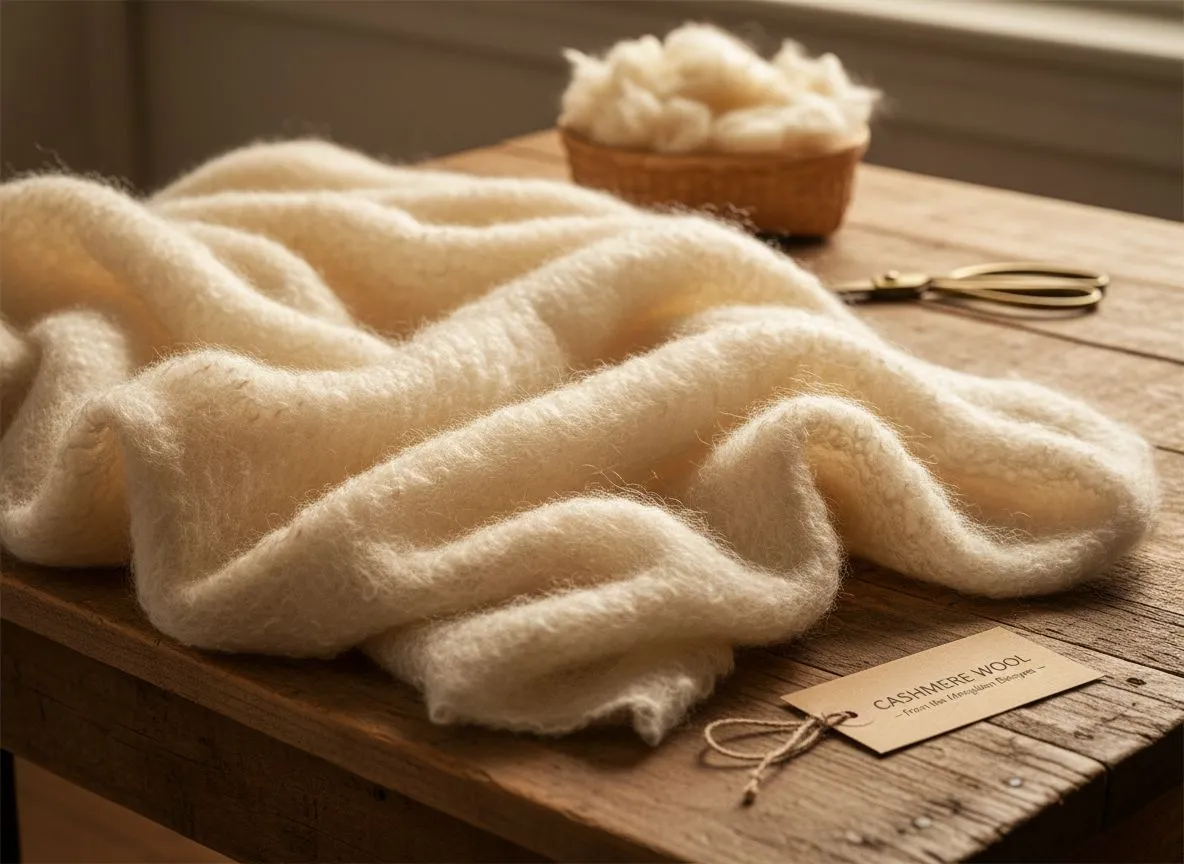

Cashmere comes from the soft undercoat of certain goats – Luxurious softness and sheen of Cashmere wool.
It is known for:
- Fine fibers
- Soft hand
- Lightweight warmth
- Luxury positioning
Cashmere is commonly used for:
- Sweaters
- Cardigans
- Scarves
- Shawls
- Gloves
- Luxury accessories
Its high price comes partly from limited usable fiber yield and the labor required for collection and processing.
3. Lambswool: Cozy and Resilient
Lambswool comes from the first shearing of a young sheep (under seven months). These “virgin” fibers are finer and smoother than wool from older sheep. It offers a classic, slightly fuzzy wool appearance that provides excellent insulation for winter basics.
- Technical Pro: High crimp levels, which create superior air pockets for warmth.
- Best For: Cozy winter blankets, cardigans, and mid-weight knitwear.
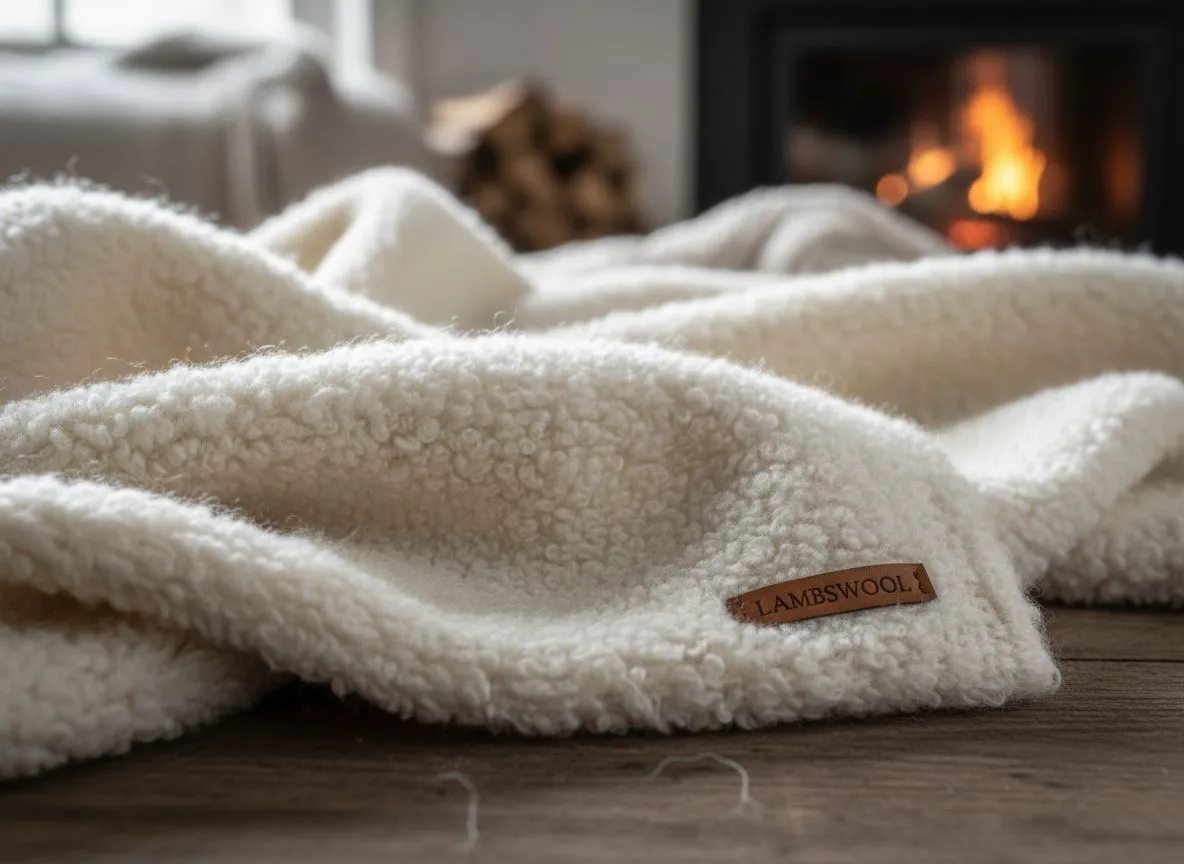
Lambswool generally refers to wool obtained from the first shearing of a young sheep. It is often valued for a softer and finer hand than coarser mature wool from the same type of sheep.
Typical uses include:
- Sweaters
- Cardigans
- Scarves
- Blankets
- Winter knitwear
It often has a comfortable, slightly fuzzy appearance associated with traditional knitwear.
4. Alpaca Wool: The Hypoallergenic Alternative
Sourced from South American alpacas, this wool is hollow-cored, making it incredibly light and warm. Unlike sheep’s wool, alpaca does not contain lanolin, making it a preferred choice for people with sensitive skin or wool allergies.
- Technical Pro: Naturally water-repellent and fire-resistant.
- Best For: Earthy, natural designs and high-warmth coats.
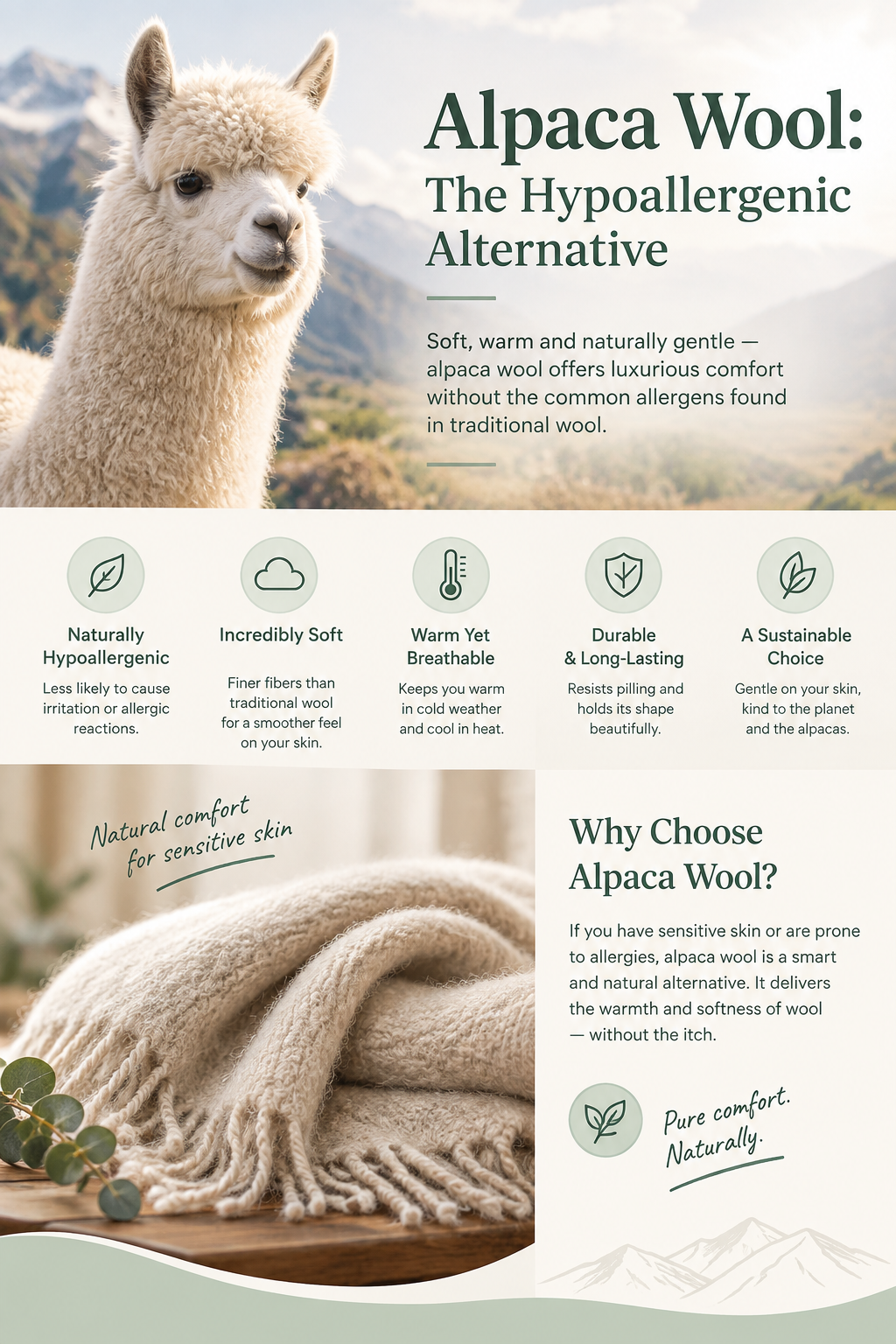
Alpaca fiber comes from alpacas raised primarily in South America.
It is valued for:
- Softness
- Warmth
- Drape
- Natural color range
It is used in:
- Sweaters
- Scarves
- Coats
- Shawls
- Luxury knitwear
Technically, alpaca is an animal hair fiber rather than sheep wool.
5. Mohair & Shetland: Texture and Durability
- Mohair (Angora Goat): Known for its high luster and sheen. It is often blended with other fibers to add strength and a silky finish to suits and upholstery.
- Shetland Wool: A rugged, hardwearing wool from Scotland. It is best for outdoor use and heritage-style “shaggy” sweaters. Its rustic texture is less suitable for direct skin contact.
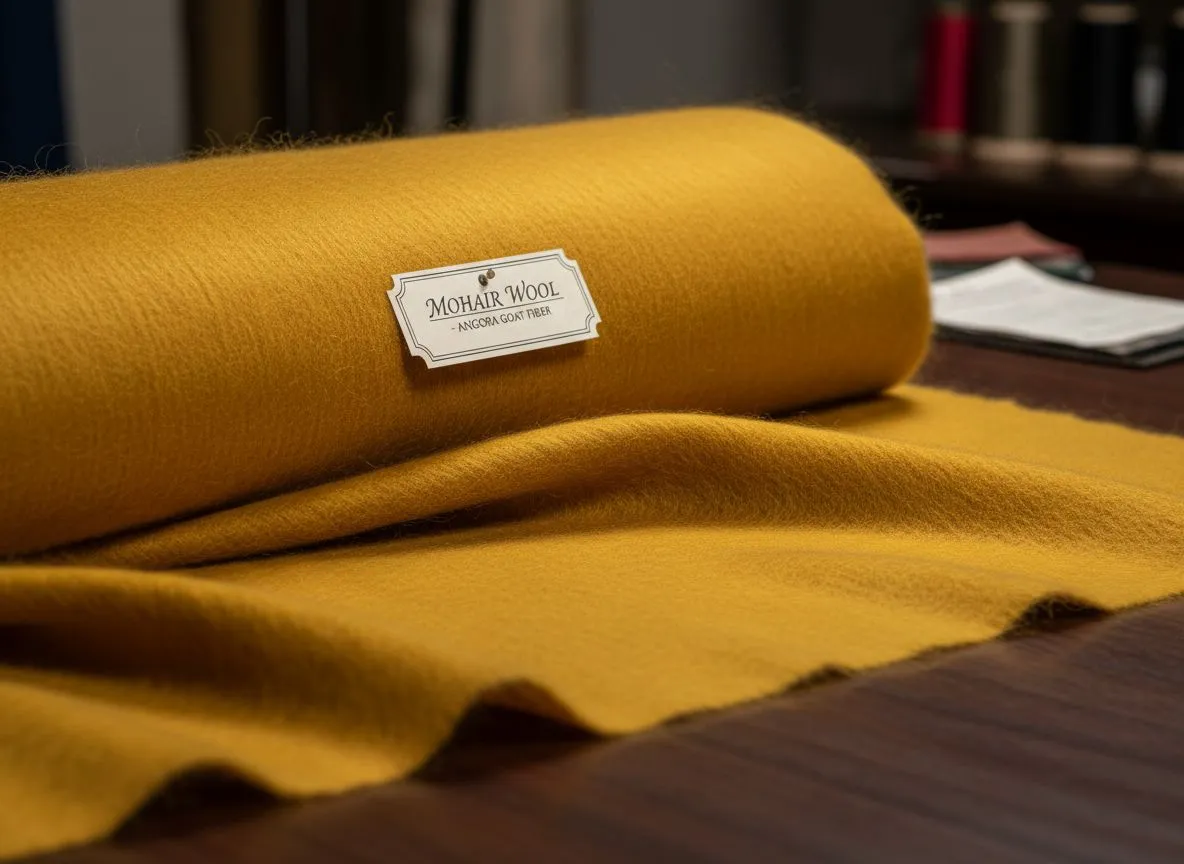
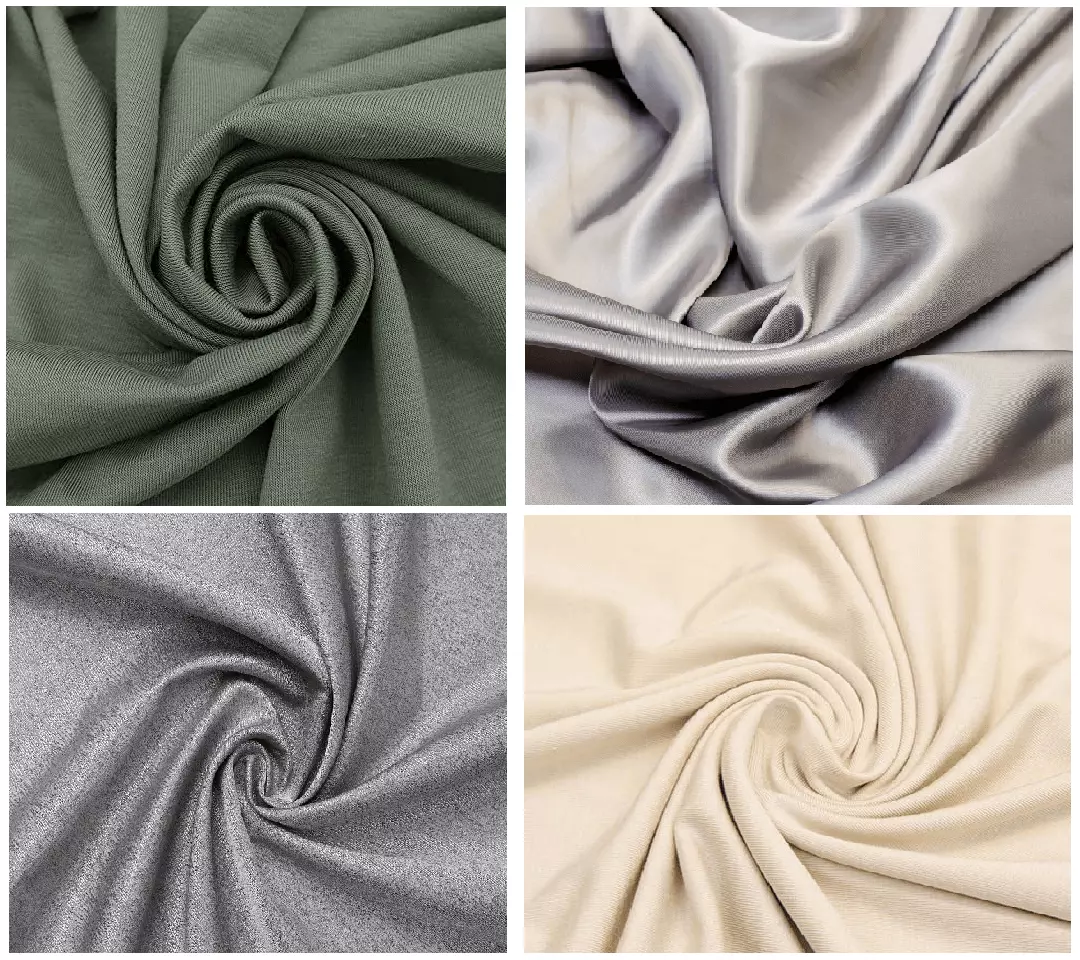
Mohair comes from the Angora goat. It should not be confused with Angora rabbit fiber – Silky sheen of Mohair wool blended fabric
Comparison of Common Wool and Animal Fibers
| Fiber Type | Typical Character | Best For |
|---|---|---|
| Merino Wool | Fine, soft, versatile | Base layers, knitwear, premium basics |
| Cashmere | Very soft, light, luxurious | Luxury sweaters, scarves, cardigans |
| Lambswool | Soft, warm, slightly fuzzy | Sweaters, scarves, winter knitwear |
| Shetland Wool | Rustic, resilient, textured | Heritage sweaters, outerwear |
| Mohair | Lustrous, resilient, distinctive | Knitwear, tailoring, blends |
| Alpaca | Soft, warm, drapey | Sweaters, coats, scarves |
| Virgin Wool | New wool fiber | Premium woven and knitted garments |
| Recycled Wool | Reprocessed wool fiber | Sustainable blends, coats, knitwear |
Conclusion / Final Words
There is no single best wool fabric. The right choice depends on the garment, target feel, warmth, durability, structure, and price point. Merino suits soft premium basics and base layers, cashmere focuses on luxury, lambswool gives classic warmth, Shetland adds rustic texture, while mohair and alpaca bring distinctive surface and drape. For brands, the key is to evaluate more than just the fiber name. Fiber + Yarn + Construction + Weight + Finishing + Testing = Final Wool Performance