

Cowl neck T-shirts look simple. Soft folds. Relaxed neckline. A quiet sense of “premium.” That surface impression is exactly why many brands get them wrong. A cowl neck does not behave like a normal neckline. It doesn’t hide mistakes. It reveals them. Fabric choice, pattern skill, sewing control, even photography quality all show up immediately. For brand owners, this neckline is less about decoration and more about discipline. This article breaks down what a cowl neck T-shirt really is, where it works, where it fails, and whether it deserves a place in your collection.
=> Read More: T Shirts Manufacturing Vietnam | Mekong Garment Factory
What Is a Cowl Neck T-Shirt?
A cowl neck uses extra fabric at the neckline to create soft, draped folds instead of a fixed collar shape. The neckline is intentionally loose and relies on gravity and fabric behavior to form its final look.
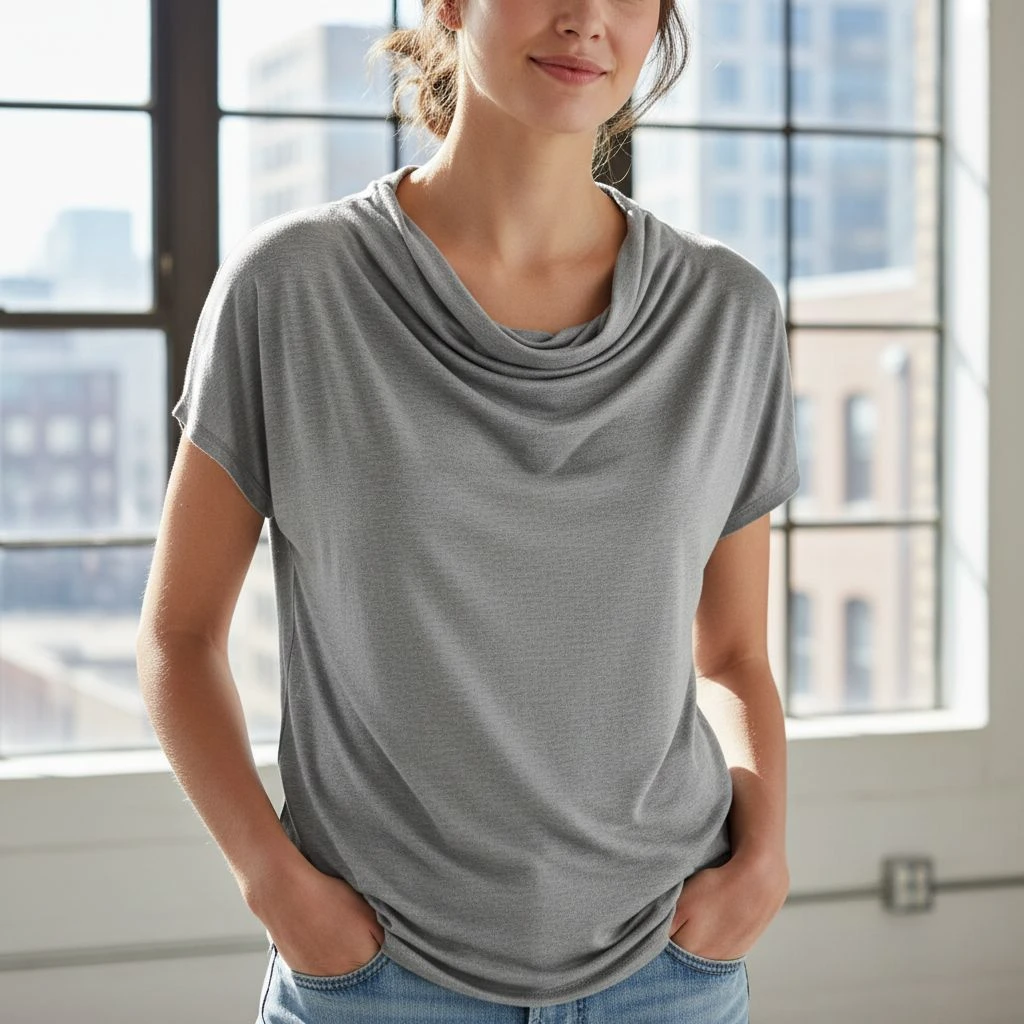
Unlike crew, V, or mock necks:
- The shape is not locked
- The drape changes with movement and body type
- No two wears look exactly the same
That variability is the appeal and the risk.
Fabric Matters More Than Design
If there’s one rule with cowl neck T-shirts, it’s this: Fabric behavior matters more than the sketch. With cowl neck T-shirts, the design sketch is the easy part. The real “design” happens when the fabric hangs on the body. A cowl neck relies on drape, weight, stretch, and most importantly recovery to form clean, soft folds. If the knit is too light, too stiff, or doesn’t bounce back after washing, the neckline can collapse, twist, or stretch out and look sloppy. That’s why fabric choice matters more than the pattern or silhouette. In this section, we’ll break down what fabric traits make a cowl neck look premium and which fabric mistakes turn the same style into a return problem.

What works well:
- Medium-weight knits (roughly 180–240 GSM)
- Fabrics with strong stretch and recovery
- Soft handfeel with some body
- Modal, bamboo, viscose blends with elastane
- Fine rib knits for controlled drape
What fails:
- Very lightweight jersey (collapses, clings)
- Stiff fabrics (bulky, awkward folds)
- Poor recovery knits (neckline stretches out after washing)
- Cheap viscose that loses shape when wet
If your fabric supplier only talks about “softness” and not recovery after wash, you’re gambling with returns.
Best Use Cases
Cowl neck T-shirts aren’t a “fits-every-brand” style. They work best when your product promise is comfort, softness, and an effortless look because the neckline drape will always have a little natural variation. If your brand needs sharp structure and consistent, repeatable visuals across every size and photo, a cowl neck can quickly become a headache. In this section, we’ll cover the best use cases for cowl neck T-shirts the collections, customer types, and brand positions where this neckline feels intentional, premium, and easy to sell (not just easy to design).
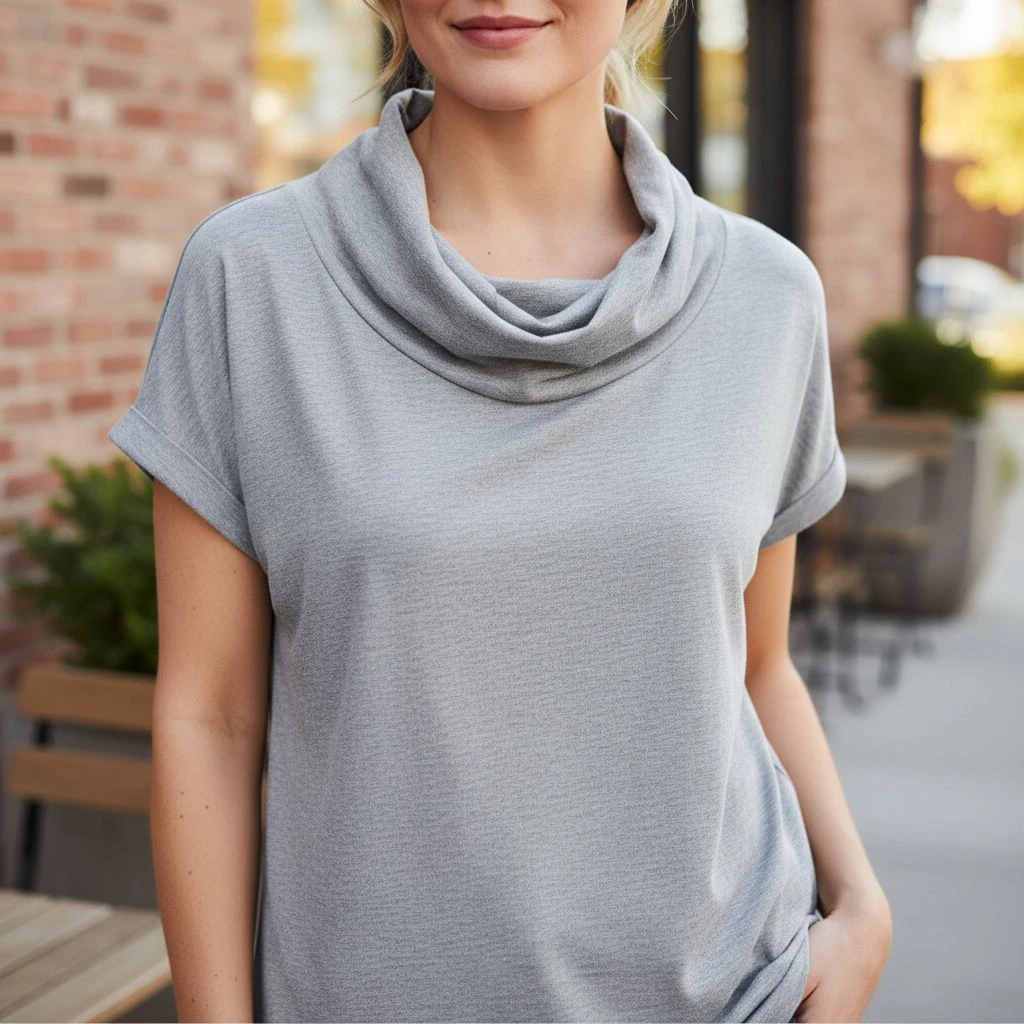
Cowl neck T-shirts work best for:
- Women’s fashion brands
- Loungewear and homewear lines
- Premium comfort basics
- Small-batch or capsule collections
- Brands selling feel and lifestyle, not structure

They are risky for:
- Mass-market basics
- Tight-spec, high-volume production
- Minimalist brands that promise uniformity
- Price-driven collections
Pros and Cons of Cowl Neck T-Shirts
A cowl neck T-shirt can look like an easy way to make a basic top feel more premium. That soft drape at the neckline adds movement, elegance, and a relaxed vibe without prints, buttons, or heavy details. But here’s the catch: cowl necks don’t “hide” problems. They show them. The same drape that looks expensive in a great fabric can look messy in the wrong jersey. Fit, recovery, sewing control, and even photography can change how the neckline falls. In this guide, we’ll break down the real pros and cons of cowl neck T-shirts, so you can decide if this style fits your brand, your customers, and your quality standards.
Pros:
When done correctly, cowl necks offer real advantages:
- Soft, relaxed, premium feel
- Comfortable neckline with no tight collar
- Visual interest without trims or hardware
- Ideal for lounge, lifestyle, and slow fashion
- Forgiving fit for casual wear
They shine in collections built around comfort, movement, and texture.
Cons:
There’s no way around these drawbacks:
- Extremely fabric-dependent
- Inconsistent appearance across sizes and bodies
- High risk of neckline stretching over time
- Harder to control QC visually
- Difficult to photograph consistently
- Not suitable for “clean and sharp” brand aesthetics
This is not a forgiving design for cost-cutting.
Final Thoughts for Brand Owners
A cowl neck T-shirt is not an easy upgrade. It’s a design that exposes everything underneath fabric quality, pattern skill, production control, and brand honesty. If your brand values softness, movement, and organic variation, a cowl neck can feel effortless and premium. If your brand values precision, consistency, and structure, this neckline will fight you at every step. Before adding a cowl neck to your line, ask one hard question: Are we ready to control fabric behavior or are we hoping the drape hides our shortcuts?