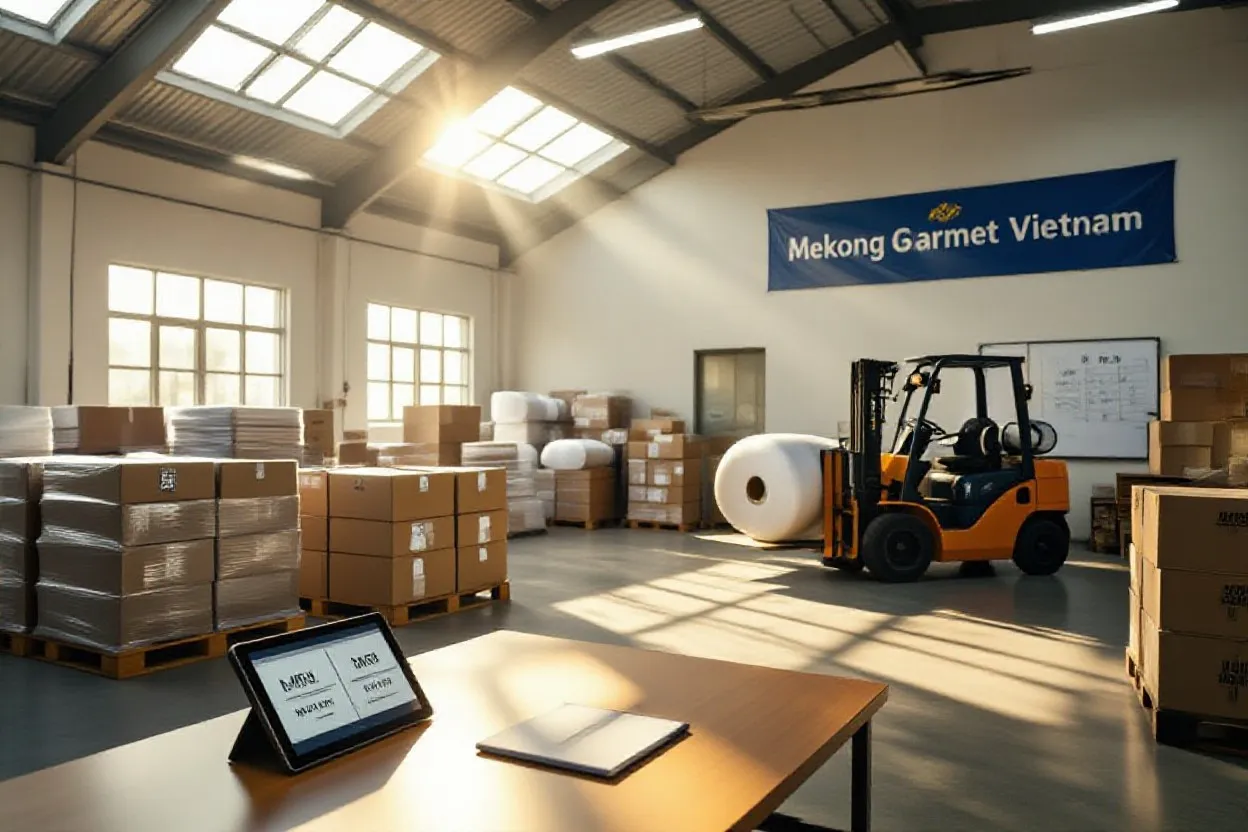
What Is the Difference Between Fabric MOQ and Garment MOQ?

When developing a new collection, apparel brands face Minimum Order Quantities (MOQs) at two distinct stages: the textile mill and the sewing factory. Understanding the difference between Fabric MOQ and Garment MOQ is critical for accurate costing and production planning. While mills optimize for material chemistry and machine setup, factories optimize for labor efficiency and line throughput.
Why Fabric MOQs Exist?
Fabric mills operate with high fixed costs that must be amortized over a specific yardage to remain profitable. Unlike sewing, which is labor-intensive, textile production is highly mechanical and chemical-dependent. Key drivers of Fabric MOQ include:
- Dye Kitchen Setup: Creating custom lab dips and chemical recipes for specific colors.
- Loom/Knit Calibration: Adjusting tension, gauge, and machine settings for a specific construction.
- Finishing Lines: Specialized treatments like brushing, coating, or DWR (Durable Water Repellent) require long continuous runs to stabilize.
Fabric Weight vs. Garment Yield
A common mistake is assuming a fixed conversion rate from weight to pieces. In reality, a 1,000kg fabric MOQ can result in vastly different garment quantities based on GSM (Gram per Square Meter), size range, and marker efficiency. Fabric MOQ sets the absolute floor for your production—you simply cannot sew garments if the mill refuses to produce the fabric.
How Garment MOQs Differ From Fabric MOQs
Garment MOQs focus on factory productivity. A factory must justify the time spent on cutting table setup, line balancing, and quality control. If the quantity is too low, the time spent “setting up” the line exceeds the time spent actually sewing, leading to financial loss for the manufacturer.
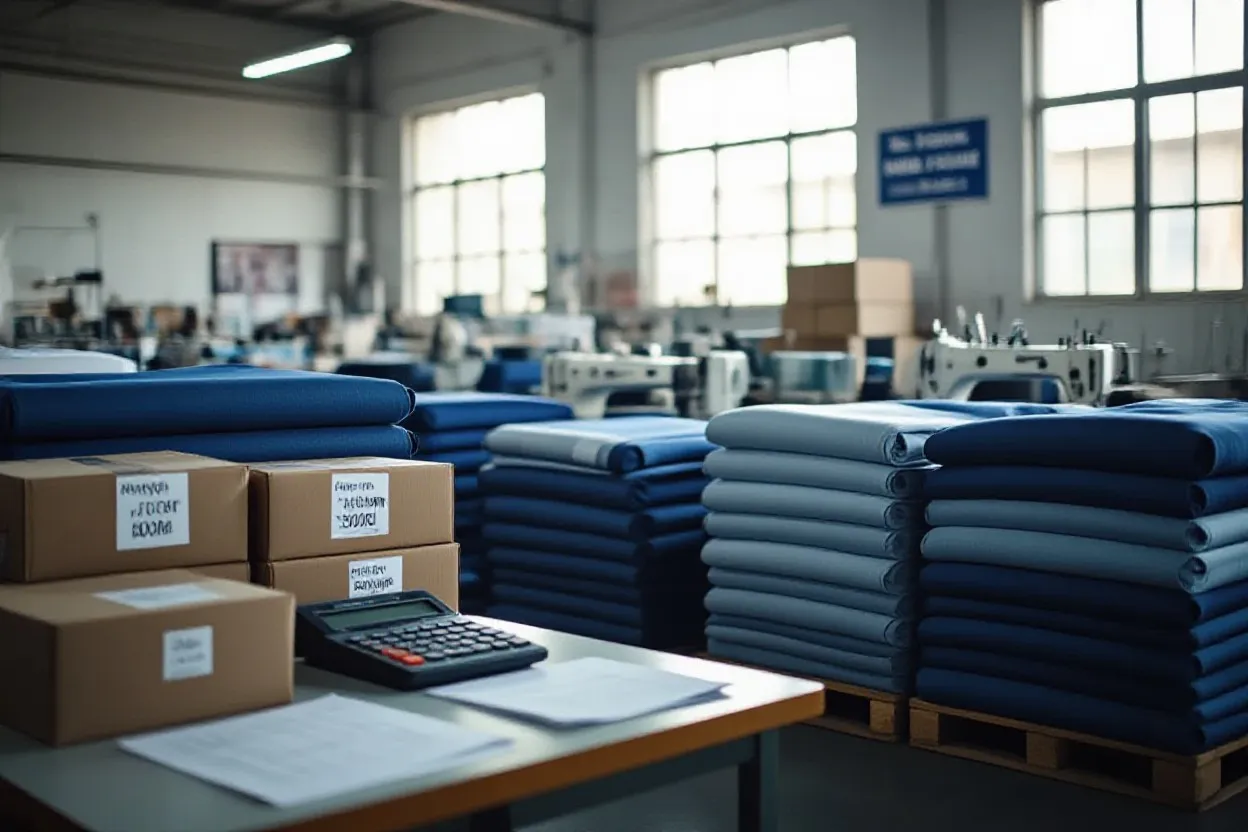
Factors Determining Garment MOQ:
- Style Complexity: High-component items like jackets require more operators and specialized machines, raising the necessary MOQ.
- Colorways & Sizes: Most factories set MOQs per color/style. More variations lead to complex markers and lower cutting efficiency.
- Business Model: Large export factories have different MOQ thresholds compared to small boutique workshops.
The Conflict: Balancing Fabric and Garment Requirements
The core challenge for brands is aligning these two requirements. Often, the Fabric MOQ is larger than what the brand wants to produce for a single style. Strategic solutions to navigate this conflict include:
- Fabric Consolidation: Using the same fabric across multiple styles (a “Capsule Collection” approach).
- Mill Stock Programs: Utilizing ready-to-ship fabrics to bypass custom Fabric MOQs entirely.
- Dye Lot Optimization: Staying within one dye lot but creating different styles to meet the mill’s minimum.
Hidden Risks of Low MOQs
While low MOQs offer flexibility, they often carry hidden operational costs. Small orders are frequently scheduled into production “gaps,” leading to lead-time uncertainty and higher defect risks due to lack of line continuity. Furthermore, the fabric price per meter is usually tiered—lower volumes significantly increase your raw material costs.
Conclusion
Fabric MOQ and Garment MOQ are not barriers; they are signals for better production planning. Fabric MOQ reflects the technical realities of textile chemistry, while Garment MOQ ensures factory efficiency and quality stability. By understanding both, brands can optimize their supply chains, reduce waste, and build more sustainable manufacturing partnerships. Success in apparel starts with aligning your material sourcing with your production execution.
FAQs: Navigating Fabric vs. Garment MOQs
In Short, What is fabric MOQ?
Fabric MOQ is the minimum quantity of fabric a textile mill requires to begin production. It is usually measured in kilograms or meters and reflects the mill’s setup, dyeing, and finishing costs. Custom fabrics almost always have higher MOQs than stock fabrics. Fabric MOQ often becomes the real production floor because garments cannot be made without sufficient material.
In Short, What is garment MOQ?
Garment MOQ is the minimum number of finished pieces a factory requires to run a style efficiently. It exists to justify cutting setup, line balancing, labor allocation, and quality control processes. Garment MOQ is usually defined per style and per color, not just total units. Smaller runs can be possible, but they often come with higher costs or longer lead times.
Which MOQ is more important: fabric MOQ or garment MOQ?
In most cases, fabric MOQ sets the absolute minimum because it determines how much usable material you can obtain. Garment MOQ then determines how efficiently that fabric can be converted into finished products. Ignoring either side creates planning problems, but fabric MOQ typically drives the final production volume. Successful brands evaluate both together rather than choosing one to prioritize.
Why are fabric MOQs usually higher than garment MOQs?
Fabric production involves high fixed costs such as machine setup, dye preparation, and finishing calibration. These costs must be spread across a large quantity to remain economical for the mill. Garment factories, by contrast, focus more on labor efficiency than material setup. As a result, fabric MOQs are often higher and less flexible.
Why do garment factories set MOQs?
Factories use MOQs to ensure stable production flow and consistent quality. Small orders disrupt line efficiency, increase waste, and raise per-piece costs. MOQs allow factories to plan labor, machines, and quality control resources properly. Without a minimum volume, production becomes inefficient and unpredictable.
Can I meet garment MOQ but fail fabric MOQ?
Yes, this happens frequently, especially with custom fabrics. A factory may accept 200–300 pieces, while the fabric mill requires enough material for 800 or more garments. In this situation, fabric MOQ becomes the limiting factor. Brands must then adjust design, colors, or fabric choice to resolve the mismatch.
Why does color selection affect MOQ so much?
Each color usually requires a separate dye lot or production setup. Mills and factories often set minimums per color to justify this work. Adding more colors can quickly multiply your effective MOQ. Limiting colorways is one of the most effective ways to control minimum order requirements.