Sewing Thread Properties: Strength, Stretch, Shrinkage… and More

Sewing thread may look like a small component of a garment, but its performance has a major influence on sewing efficiency, seam appearance, durability, and the quality of the finished product. During garment production, sewing thread must repeatedly travel through machine guides, tension devices, the needle eye, fabric layers, hooks, and loopers at high speed. After the garment is finished, the same thread may be exposed to stretching, abrasion, washing, drying, pressing, perspiration, chemicals, and everyday wear. For this reason, choosing a thread only by color, Tex size, or price is not enough. Garment manufacturers should also consider its mechanical and physical properties.
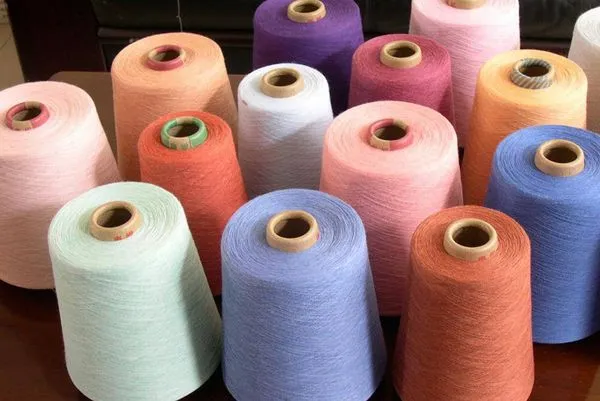
Industrial thread manufacturers identify properties such as tenacity, loop strength, elongation, elastic recovery, shrinkage, colorfastness, abrasion resistance, heat resistance, chemical resistance, uniformity, and sewability as important factors affecting seam and sewing performance. This guide explains 12 important properties of sewing thread, what each one means, and why it matters in garment manufacturing.
What Is Sewing Thread?
Sewing thread is a flexible strand made from natural fibers, synthetic fibers, or a blend of both, designed for stitching fabric and other materials together. Because sewing thread plays both a functional and visual role, its physical and performance properties are very important.
Why Sewing Thread Properties Matter
The properties of sewing thread influence sewing efficiency, seam strength, and resistance to washing. A thread may look suitable by size or color, but if its performance properties are poor, it can cause thread breakage, seam puckering, skipped stitches, or shade mismatch.

12 Main Properties of Sewing Thread
| Property | What It Measures | Why It Matters |
|---|---|---|
| Tensile Strength | Force needed to break the thread | Seam strength and durability |
| Tenacity | Strength relative to thread size | Compares strength efficiency between threads |
| Loop Strength | Strength when thread is loaded in a loop | Relevant to actual stitch formation |
| Elongation | Extension before breaking | Helps thread tolerate seam movement |
| Elastic Recovery | Ability to return after stretching | Helps seams recover after movement |
| Abrasion Resistance | Resistance to rubbing and wear | Improves sewing and seam durability |
| Shrinkage | Contraction after heat or washing | Helps control seam puckering |
| Colorfastness | Ability to retain color | Prevents fading and staining |
| Uniformity | Consistency in diameter and properties | Produces stable sewing performance |
| Surface Smoothness & Lubricity | Friction behavior during sewing | Reduces thread breakage and heat |
| Heat Resistance | Resistance to high sewing and finishing temperatures | Reduces heat-related thread damage |
| Chemical Resistance | Resistance to chemical attack | Important for washing, bleaching and finishing |
1. Tensile Strength: How Much Pulling Force Can the Thread Withstand?
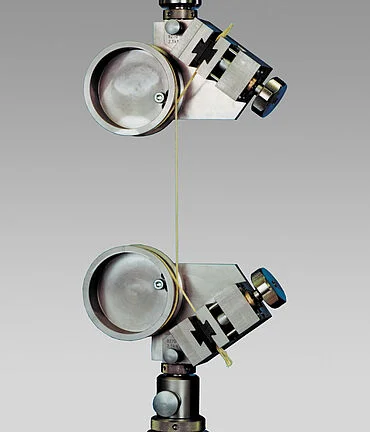
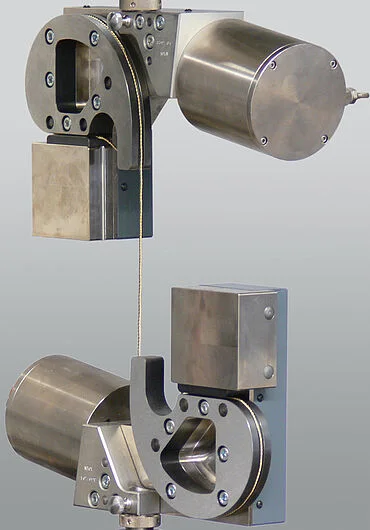
Tensile strength, often described as breaking strength, is the amount of pulling force required to break a thread. Coats defines tensile strength as the tension at which a thread breaks. Depending on the technical specification or test method, breaking force may be expressed in units such as centiNewtons (cN) or Newtons (N). This property is important because stitches experience considerable stress during garment production and normal use. High thread strength is particularly valuable in:
- Denim
- Workwear
- Uniforms
- Jackets
- Cargo pants
- Outdoor apparel
- High-stress seams
For example, seat seams in trousers experience much greater loading than a decorative stitch on a lightweight blouse. The required thread strength should therefore be selected according to the seam’s function.
Does a Thicker Thread Always Have Higher Tensile Strength?
Generally, increasing thread linear density gives the thread the potential to carry greater loads, but thread size and thread strength are not the same property. Two threads with the same Tex size may have different breaking strengths because their fiber, construction, twist, and manufacturing technology differ. Core-spun and continuous-filament constructions, for example, can provide higher strength for their size than some conventional staple-spun constructions. Therefore: Tex tells you thread size. Tensile strength tells you how much force the thread can withstand.
2. Tenacity: Strength Compared with Thread Size
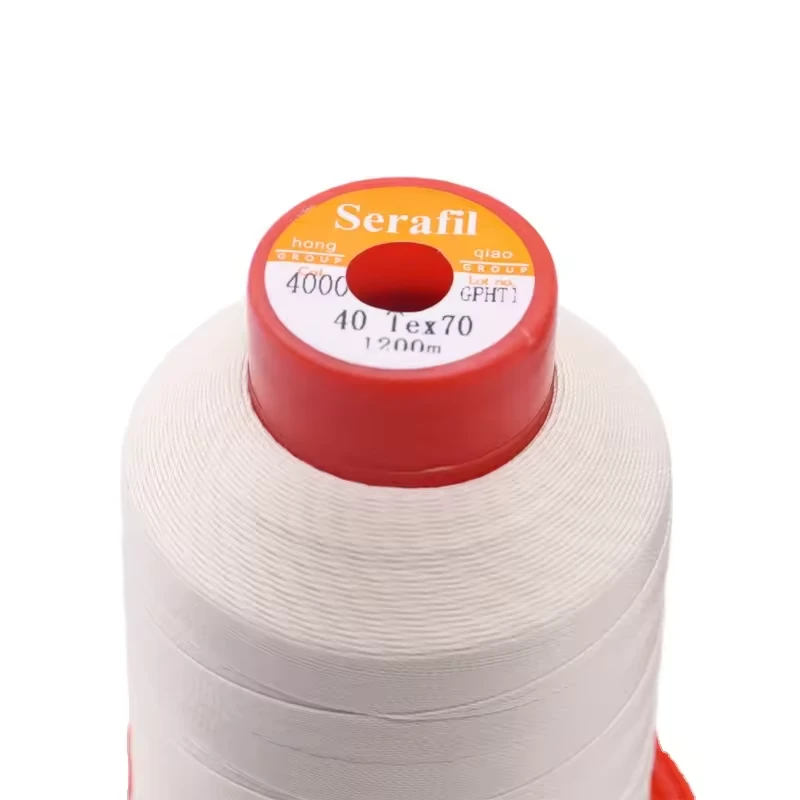
Tenacity is different from simple breaking strength. It expresses how much strength a thread provides relative to its linear density or size. Coats describes tenacity as relative strength obtained by comparing tensile strength with the thickness of the thread structure. Tenacity is commonly expressed in a unit such as cN/tex. This makes tenacity particularly useful when comparing two threads of different sizes.
And Why Is Tenacity Important? Imagine two threads that both provide enough seam strength, but one achieves that strength using a much finer thread. The higher-tenacity thread may allow:
- Finer seams
- Smaller needles
- Reduced seam bulk
- Cleaner appearance
- Good strength without unnecessarily heavy thread
This is one reason high-tenacity synthetic and core-spun threads are widely used in demanding garment applications.
Tensile Strength vs. Tenacity
| Property | Meaning |
|---|---|
| Tensile Strength | Actual force required to break the thread |
| Tenacity | Breaking strength relative to thread linear density |
3. Loop Strength: How Strong Is the Thread When It Forms a Stitch?
Sewing thread does not remain perfectly straight inside a seam. It bends, curves, and loops around other thread components to create stitches. That is why loop strength is another useful property. Coats defines loop strength as the load required to break one length of thread when it is looped through another length of the same thread.
Why Is Loop Strength Different from Tensile Strength?
A straight tensile test pulls the thread along its length. A loop test creates additional stress where threads bend and contact each other. It therefore gives useful information about how the thread behaves under a condition that more closely resembles parts of actual stitch formation. Thread constructions can differ significantly in both straight breaking strength and loop strength.

What Is Loop Strength Ratio?
Some technical evaluations compare loop strength with straight breaking strength to understand how effectively a thread retains strength when it is bent into a loop. The exact acceptance criteria should come from the thread supplier, buyer specification, or applicable test method rather than using one universal percentage for every sewing thread.
4. Elongation at Break: How Far Can the Thread Stretch?
Elongation at break describes how much a thread extends before it finally breaks. It is normally expressed as a percentage of its original test length. Coats defines elongation at break as the amount by which a thread extends at the breaking point relative to its original length. For example, a thread with 20% elongation can extend considerably before failure under the specified test conditions.
Why Elongation Matters in Garments
Garment seams are constantly exposed to movement. The wearer may:
- Bend an elbow
- Raise an arm
- Sit down
- Squat
- Run
- Stretch the garment while dressing
A thread that cannot tolerate the required movement may contribute to broken stitches or seam failure. Higher thread elongation can contribute to greater seam extensibility, although the final result also depends on stitch geometry, stitch density, fabric stretch, thread tension, and seam construction.

Higher Elongation Is Not Always Better:
Excessive elongation can also create sewing difficulties. American & Efird notes that very high thread elongation may negatively affect loop formation and contribute to skipped stitches or thread breakage in some sewing conditions. The goal is therefore appropriate elongation, not simply the highest possible percentage.
5. Elasticity and Elastic Recovery: Can the Thread Return to Its Original Length?
Elongation and elasticity are related but they are not identical. Elongation describes how much the thread stretches. Elastic recovery describes how effectively it returns toward its original length after the stretching force is removed. Coats identifies elasticity and recovery as important sewing-thread characteristics,
Why Elastic Recovery Matters
Suppose a seam stretches while someone bends or moves. If the thread stretches but does not recover effectively, the seam may become:
- Loose
- Distorted
- Wavy
- Poorly balanced
Good elastic behavior helps a seam respond more effectively to repeated movement.
Important for Stretch Garments
This property can be particularly relevant for:
- Activewear
- Underwear
- Leggings
- T-shirts
- Stretch trousers
- Knitted garments
However, seam elasticity must always be evaluated as a complete combination of fabric + thread + stitch type + stitch density + machine tension.
6. Abrasion Resistance: Can the Thread Survive Rubbing?
Abrasion resistance describes a thread’s ability to withstand rubbing and friction without excessive surface damage or failure. Sewing thread experiences abrasion both during manufacturing and during the life of the garment.
During sewing, it may rub against:
- Thread guides
- Tension devices
- Needle eye
- Fabric surfaces
- Hooks
- Loopers
After sewing, the thread may continue to experience rubbing through movement, washing, or contact with other surfaces. Coats identifies good abrasion resistance as important both for sewing performance and long-term thread durability.

Where Abrasion Resistance Is Especially Important
- Denim
- Workwear
- Outdoor clothing
- Heavy uniforms
- Jeans topstitching
- High-contact seams
Heavy garment-finishing processes can also place substantial abrasive stress on sewing thread.
7. Shrinkage: Will the Thread Contract After Washing or Heating?
Thread shrinkage is the amount by which sewing thread contracts when exposed to conditions such as washing or heat. Coats includes shrinkage among its important thread terminology and identifies low shrinkage as desirable for reducing the risk of seam puckering.
Why Does Thread Shrinkage Cause Problems?
Imagine that a garment body remains relatively stable while the sewing thread contracts significantly after washing. The shortened thread may pull the fabric along the stitch line and contribute to:
- Seam puckering
- Wavy hems
- Distorted plackets
- Puckered topstitching
- Poor garment appearance
The relationship between fabric shrinkage and thread shrinkage therefore matters more than looking at either material independently.
Products Requiring Extra Shrinkage Control
Shrinkage deserves particular attention in garments exposed to:
- Garment dyeing
- Industrial laundering
- Hot washing
- High-temperature drying
- Denim washing
- Heat finishing
Coats notes that differences between fabric and thread dimensional behavior can affect seam appearance after post-dye and laundering processes.
8. Colorfastness: Will the Thread Keep Its Color?
Sewing thread should retain an acceptable shade throughout garment manufacturing, washing, and normal use. Colorfastness describes resistance to fading, bleeding, or staining under different conditions. Coats identifies colorfastness as both an aesthetic and performance requirement for industrial sewing thread.
Thread May Need Resistance to:
- Washing
- Water
- Perspiration
- Rubbing
- Dry cleaning
- Pressing
- Bleaching
- Light exposure
The required tests depend on the garment’s intended use and buyer specification.
Why Colorfastness Is Especially Important for Contrast Thread
If a black garment uses white topstitching—or a white garment uses red decorative thread—any bleeding or shade change becomes immediately visible. Colorfastness is therefore particularly important for:
- Decorative topstitching
- Embroidery
- Contrast seams
- Uniforms
- Garment-dyed products
9. Thread Uniformity: Consistency from Meter to Meter
A good sewing thread should remain reasonably consistent along its length.
This includes uniformity in:
- Diameter
- Strength
- Elongation
- Twist
- Lubrication
- Construction
Coats explains that longitudinal uniformity helps provide consistent strength and lower friction as thread passes through sewing-machine stitch-forming mechanisms. Uniform diameter also helps the thread travel smoothly through the needle eye and fabric.
What Happens When Thread Is Uneven?
Irregular thread may contribute to:
- Tension variation
- Knots
- Needle-eye jamming
- Thread breakage
- Irregular stitch appearance
- Skipped stitches
American & Efird similarly identifies consistency in yarn construction, diameter, strength, elongation, lubrication, and cone winding as important aspects of thread uniformity and sewability.
10. Surface Smoothness and Lubricity: Can the Thread Run Smoothly Through the Machine?
Industrial sewing can operate at high speed, so the thread must move smoothly through many points of contact. Surface smoothness and lubricity help control friction as the thread travels through the machine. Coats lists sufficient surface smoothness and abrasion resistance among important sewability parameters. Industrial thread is also commonly lubricated after dyeing to reduce friction and protect the thread during sewing.
Why Is Lubrication Needed?
Thread experiences friction at:
- Guides
- Tension discs
- Needle eye
- Fabric penetration points
- Stitch-forming components
Controlled lubrication helps the thread move more consistently and can reduce heat and abrasion damage during sewing.
Poor Lubricity Can Lead To:
- Frequent thread breaks
- High thread tension
- Irregular stitches
- Thread abrasion
- Production stoppages

This is why a thread that looks strong in a laboratory tensile test may still perform poorly on the sewing line if its surface properties are unsuitable.
11. Heat Resistance: Can the Thread Survive Needle Heat?
Sewing-machine needles can become extremely hot during high-speed sewing because of friction between the needle and fabric. Heat resistance is therefore an important thread property, particularly when sewing dense fabrics or operating machines at high speeds. Coats identifies heat resistance and flammability among important characteristics of thread fibers and notes that sewing-machine needle friction can generate temperatures high enough to damage thermoplastic synthetic threads.
Heat Can Cause:
- Thread softening
- Melting
- Weakening
- Thread breakage at the needle
- Changes in seam performance
When Heat Resistance Becomes Especially Important
- High-speed sewing
- Dense woven fabric
- Multiple fabric layers
- Heavy denim
- Technical garments
- Long continuous seams
Thread finish, lubrication, fiber type, needle size, sewing speed, and fabric construction all influence how much heat stress reaches the thread.
12. Chemical Resistance: Can the Thread Survive Washing and Finishing Chemicals?
Sewing thread may encounter many chemicals during manufacturing and throughout the garment’s life.
Depending on the product, these may include:
- Detergents
- Bleaching agents
- Dry-cleaning chemicals
- Enzymes
- Acids
- Alkalis
- Garment-finishing chemicals
Coats identifies resistance to chemical attack as an important requirement for threads used in garments subjected to washing, bleaching, or dry cleaning.
Why Chemical Resistance Matters
A thread may initially have excellent tensile strength but lose strength after an aggressive garment-finishing process.
This is particularly relevant to:
- Denim washing
- Industrial workwear
- Garment-dyed clothing
- Healthcare uniforms
- Hospitality garments
- Products exposed to repeated commercial laundering
How Properties Affect Garment Quality
Poor thread performance leads to production bottlenecks and quality claims. Selecting thread based on performance properties, rather than just price or color, ensures even stitch formation, seam elasticity, and long-term garment durability.
Thread Properties vs. Sewing Performance
A thread can have impressive laboratory specifications and still perform poorly if it does not run efficiently through the sewing machine. That is why the industry also uses the broader concept of sewability. Coats describes good sewability in terms of characteristics such as consistent stitch formation, low thread-breakage rates, no skipped stitches, evenness, abrasion resistance, and sufficient surface smoothness.
In practical factory terms, a good sewing thread should:
- Run consistently at production speed.
- Produce balanced stitches.
- Require minimal machine adjustment.
- Resist breaking and fraying.
- Maintain consistent seam appearance.
Which Sewing Thread Properties Matter Most for Different Garments?
| Garment Type | Important Thread Properties |
|---|---|
| Lightweight Blouses | Uniformity, smoothness, low shrinkage, suitable strength |
| T-Shirts | Elongation, recovery, sewability, abrasion resistance |
| Polo Shirts | Strength, uniformity, colorfastness, shrinkage |
| Activewear | Elongation, elasticity, recovery, abrasion resistance |
| Corporate Uniforms | Strength, colorfastness, abrasion resistance, chemical resistance |
| Denim | Tenacity, loop strength, abrasion resistance, chemical and heat resistance |
| Workwear | Strength, tenacity, abrasion resistance, chemical resistance |
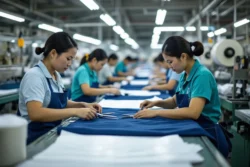
These are general priorities rather than fixed rules. Actual specifications should be confirmed according to fabric construction, seam type, garment finishing, and buyer requirements.
Conclusion / Final Words
Understanding sewing thread properties from tenacity and loop strength to shrinkage and colorfastness is essential for smooth garment manufacturing. By balancing these 12 properties, manufacturers can reduce defects and produce high-quality garments with a longer service life. Success in the apparel industry begins with the right thread for the right fabric.