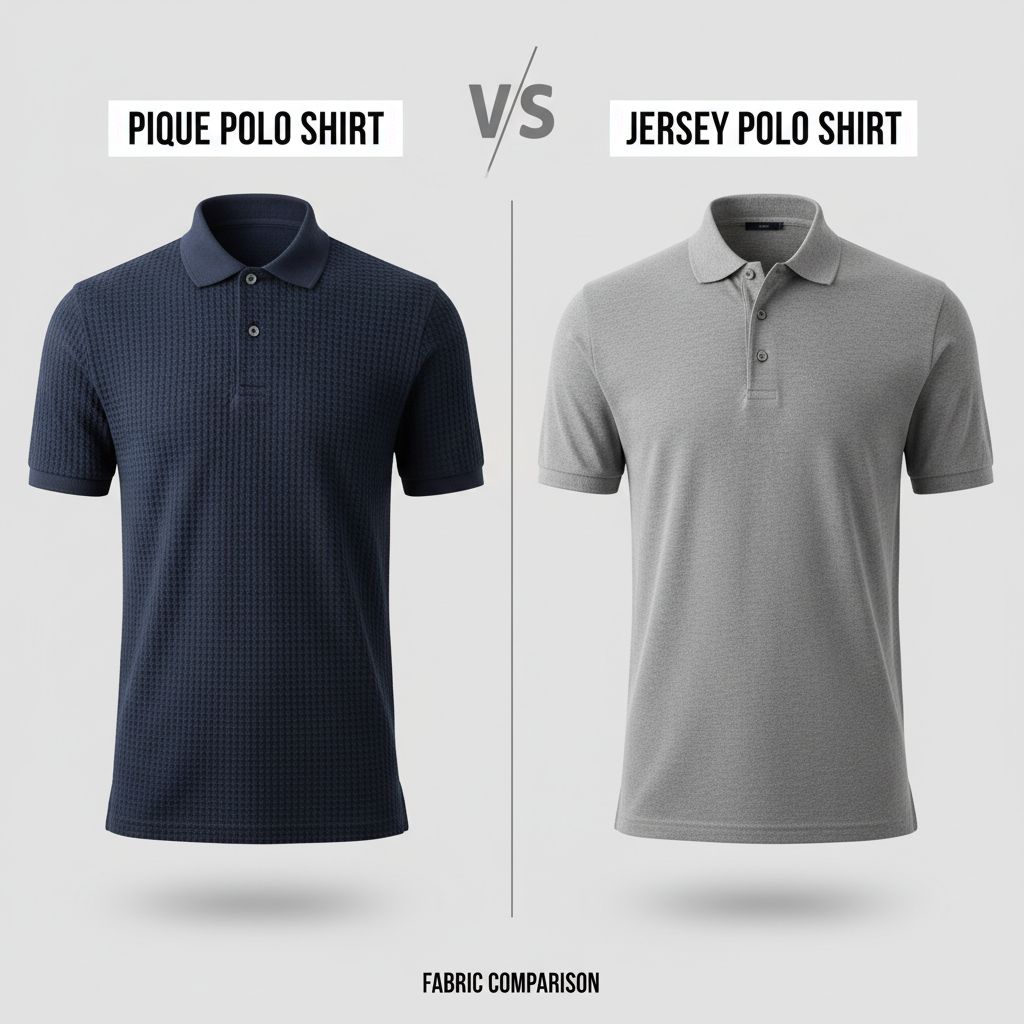

Polo shirts may look simple, but the fabric changes almost everything. Two polo shirts can look identical yet feel completely different once you put them on. That difference often comes down to pique or jersey fabric. Fabric affects the shirt’s texture, comfort, breathability, structure, and even how formal it looks. Understanding the difference between pique and jersey matters for choosing the right shirt for your needs.
=> Related Article: How to Maintain and Care for Polo Shirts

What Is Pique Fabric?
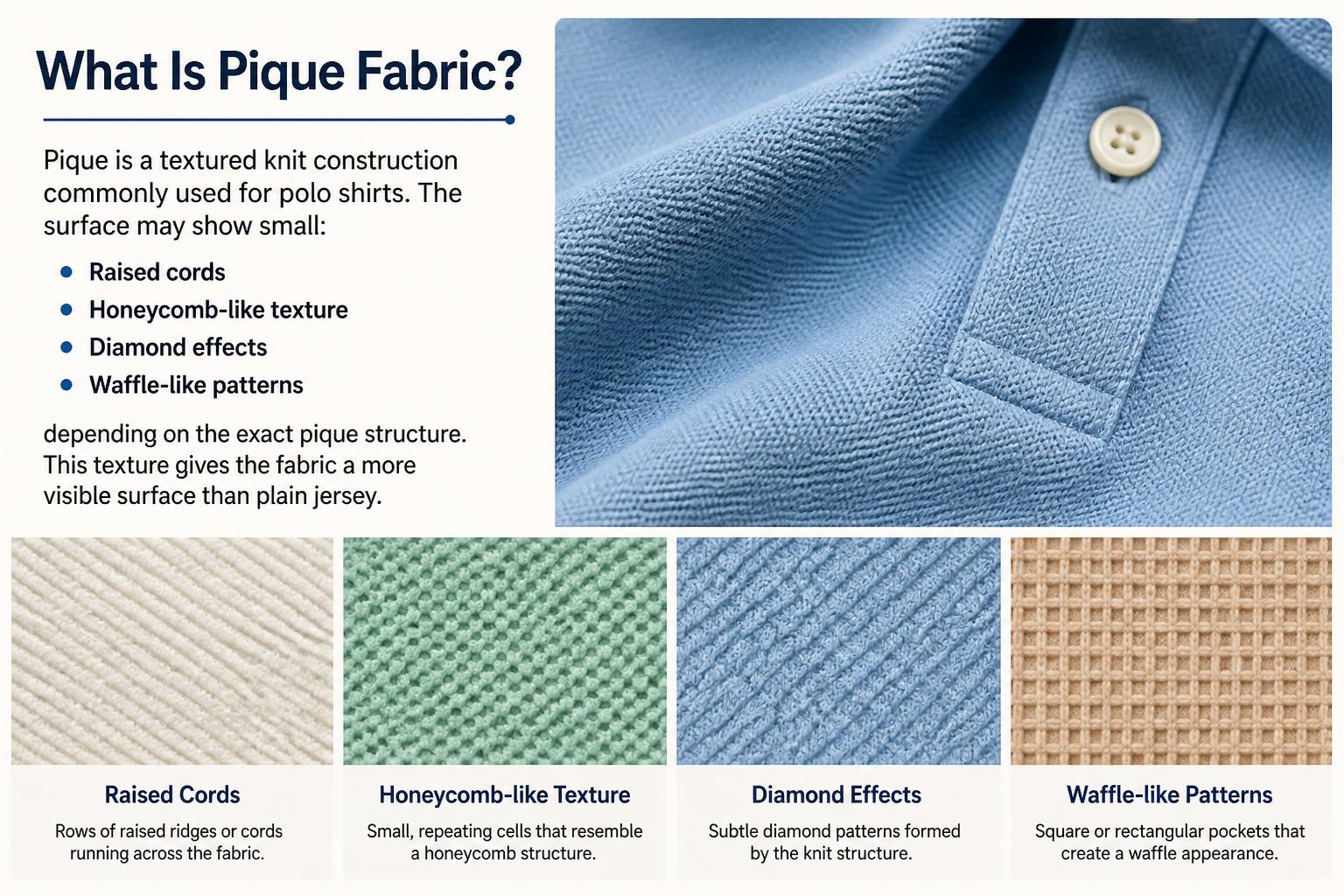
Pique is a textured knit construction commonly used for polo shirts. The surface may show small:
- Raised cords
- Honeycomb-like texture
- Diamond effects
- Waffle-like patterns
depending on the exact pique structure. This texture gives the fabric a more visible surface than plain jersey.
Why Is Pique So Common in Polo Shirts?
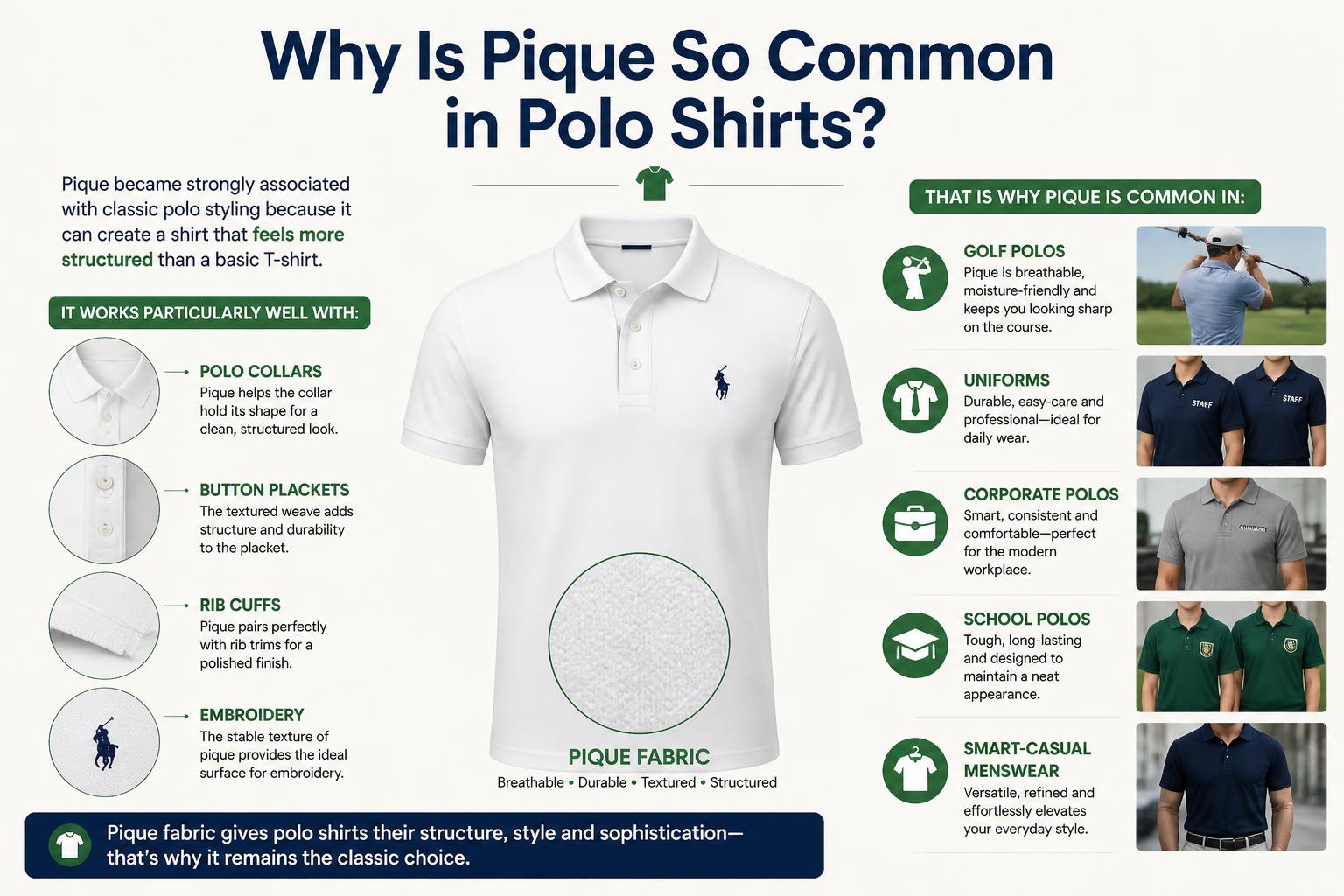
Pique became strongly associated with classic polo styling because it can create a shirt that feels more structured than a basic T-shirt.

It works particularly well with:
- Polo collars
- Button plackets
- Rib cuffs
- Embroidery
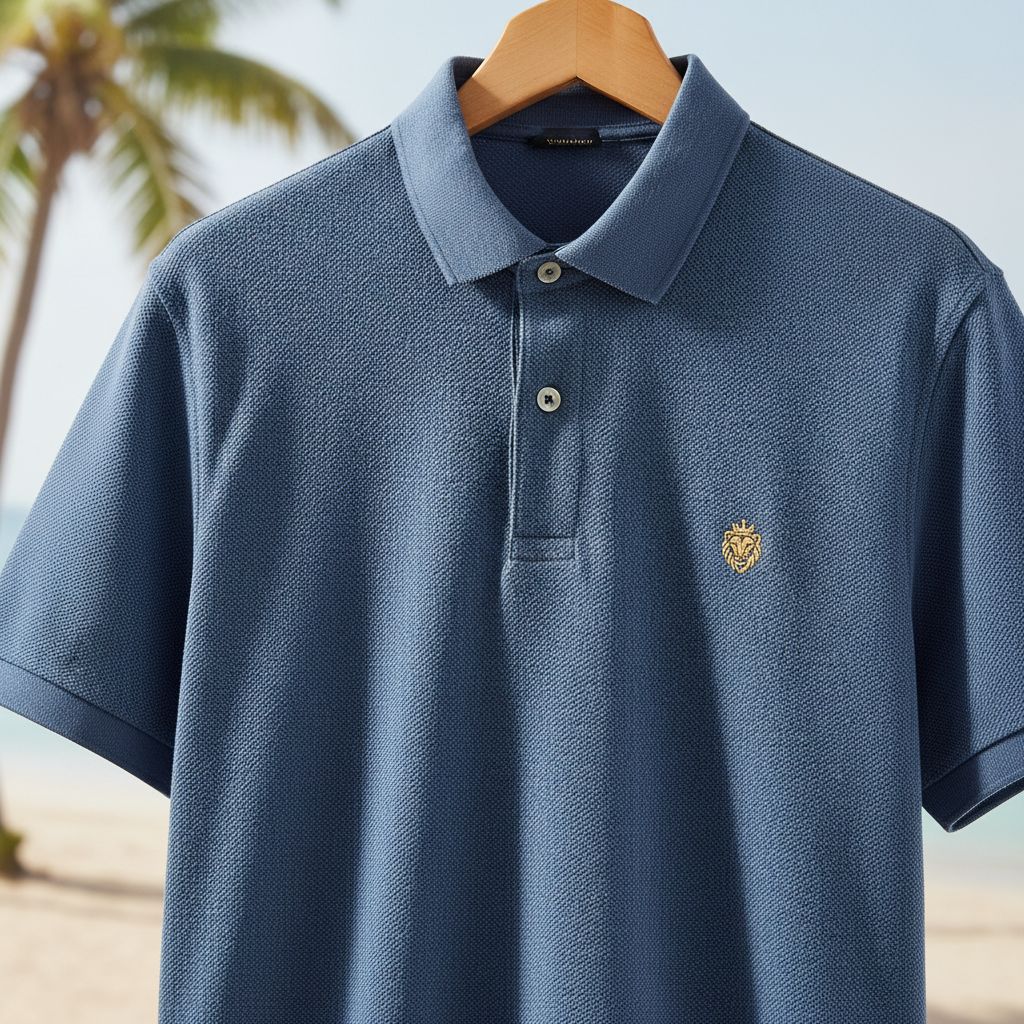
A pique polo shirt is made from a textured knit fabric with a raised pattern, like a waffle or honeycomb texture. This is the classic polo shirt fabric, offering a balance of structure and breathability. The texture improves airflow and helps the shirt maintain a defined shape, making it popular for golf, uniforms, and smart-casual outfits.
That is why pique is common in:
- Golf polos
- Uniforms
- Corporate polos
- School polos
- Smart-casual menswear
Main Features and Advantages: Pique Polo Shirts
- Textured knit surface: Provides a classic, sporty look.
- Better airflow: The knit allows air to circulate more easily.
- Holds shape well: Firmer than jersey and less likely to cling.
- Durable: Handles repeated wear well.

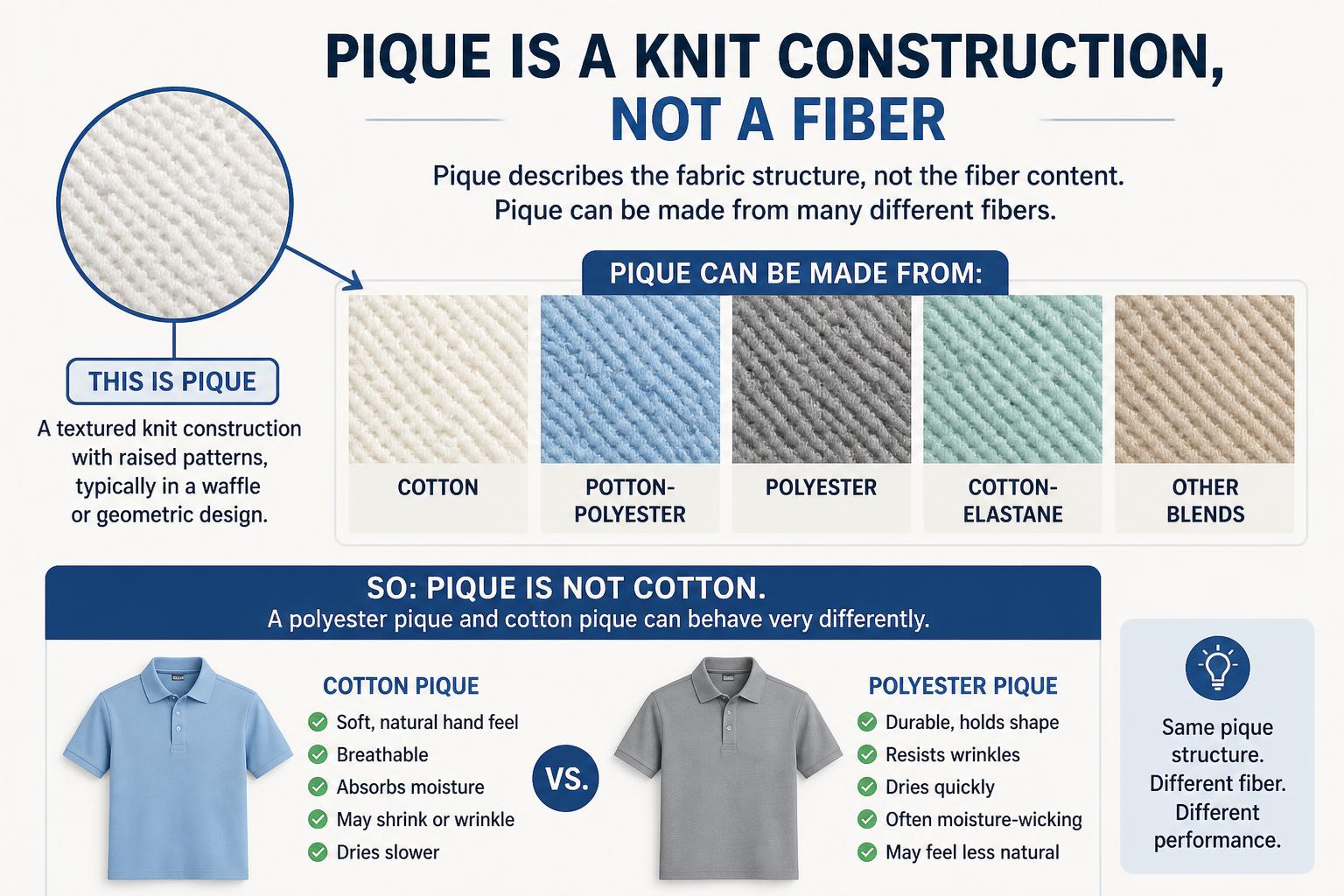
Pique Is a Knit Construction, Not a Fiber
This is important. Pique describes the fabric structure, not the fiber content. Pique can be made from:
- Cotton
- Cotton-polyester
- Polyester
- Cotton-elastane
- Other blends
So: Pique is not Cotton. A polyester pique and cotton pique can behave very differently.

What Is a Jersey Polo Shirts?
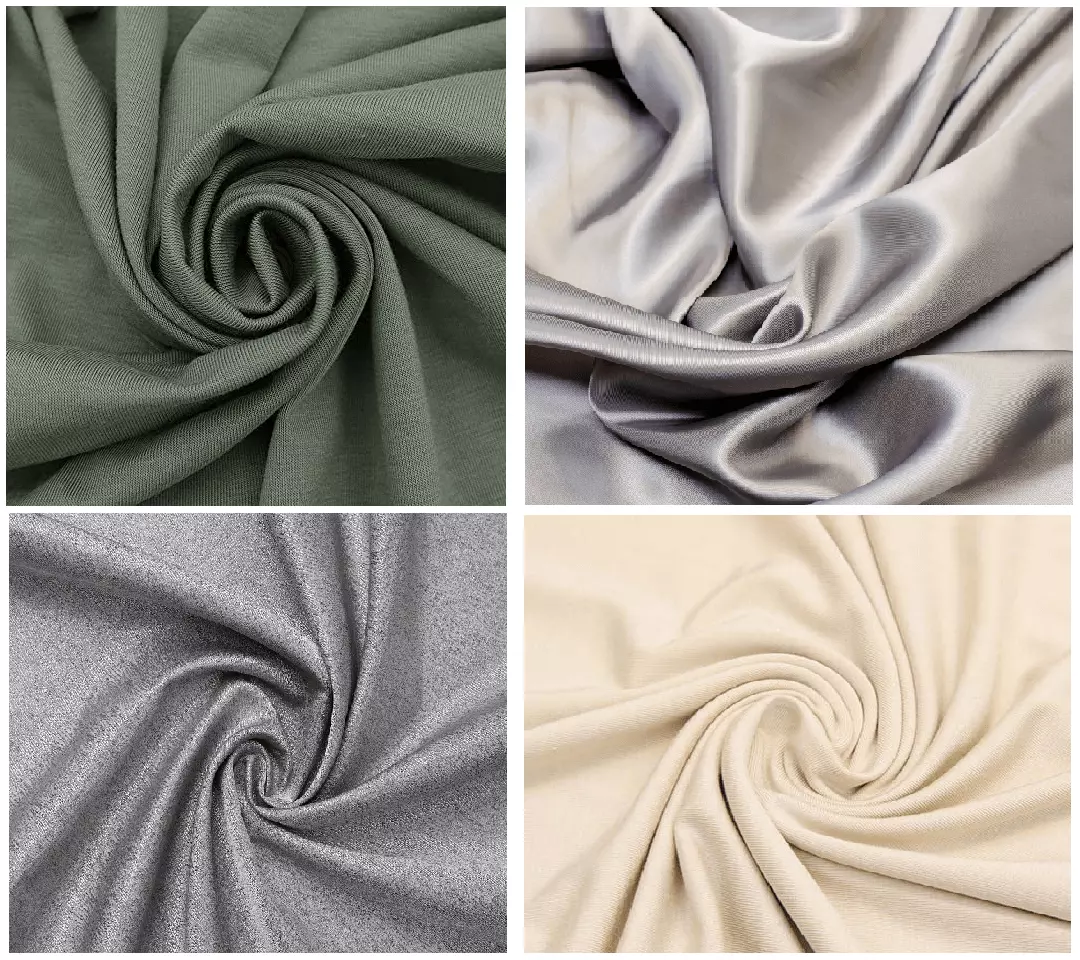
Jersey is another common knit construction. Compared with pique, its surface is usually:
- Smoother
- Flatter
- Less visibly textured
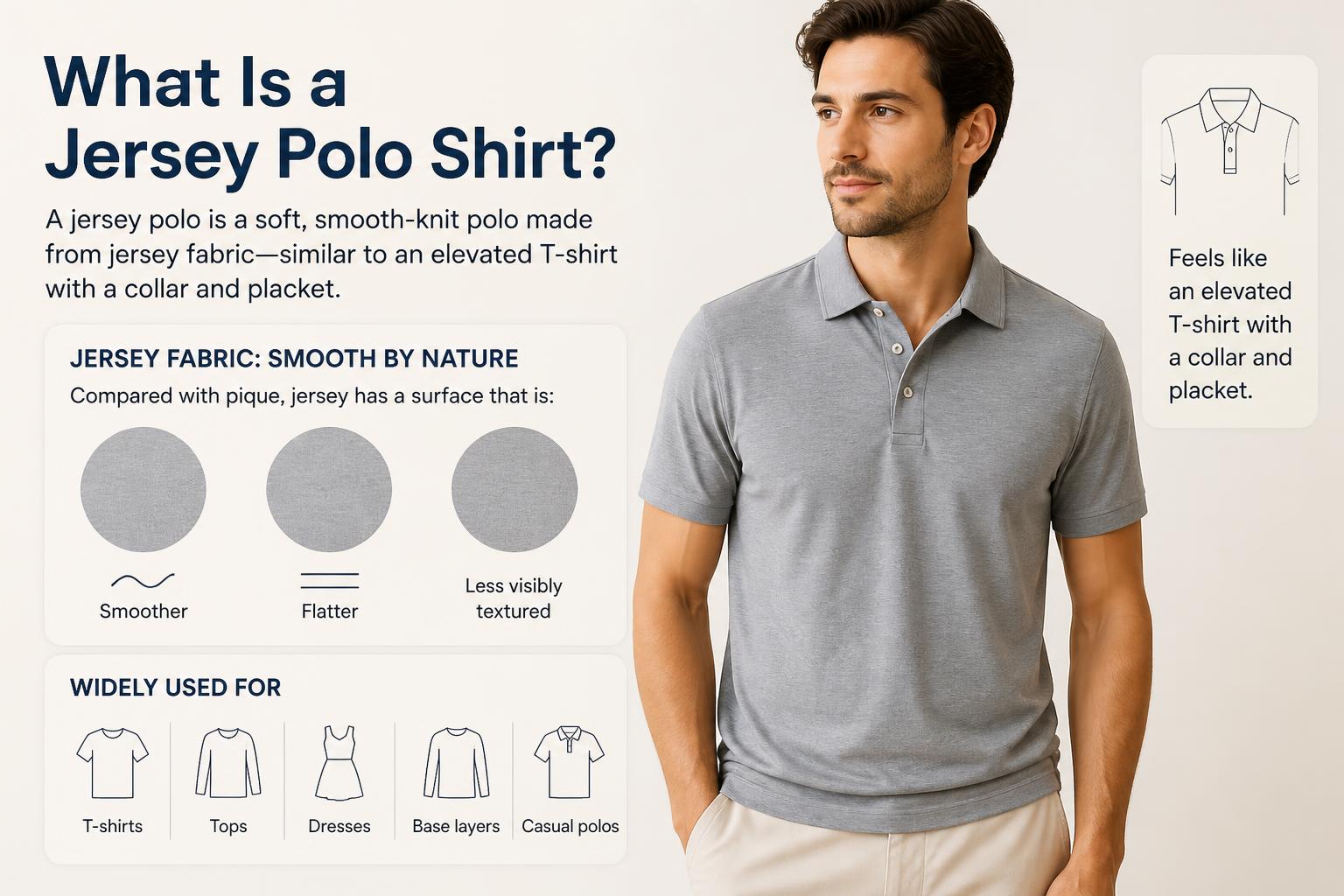
Jersey is widely used for:
- T-shirts
- Tops
- Dresses
- Base layers
- Casual polos
A jersey polo often feels closer to an elevated T-shirt with a collar and placket.

A jersey polo shirt is made from smooth knit fabric, similar to an elevated T-shirt. It is chosen for its softness, lightweight feel, and modern look. While pique is sports-inspired, jersey is the comfort-first option that works well for casual daily outfits and layering – Smooth jersey knit polo shirt for modern casual wear
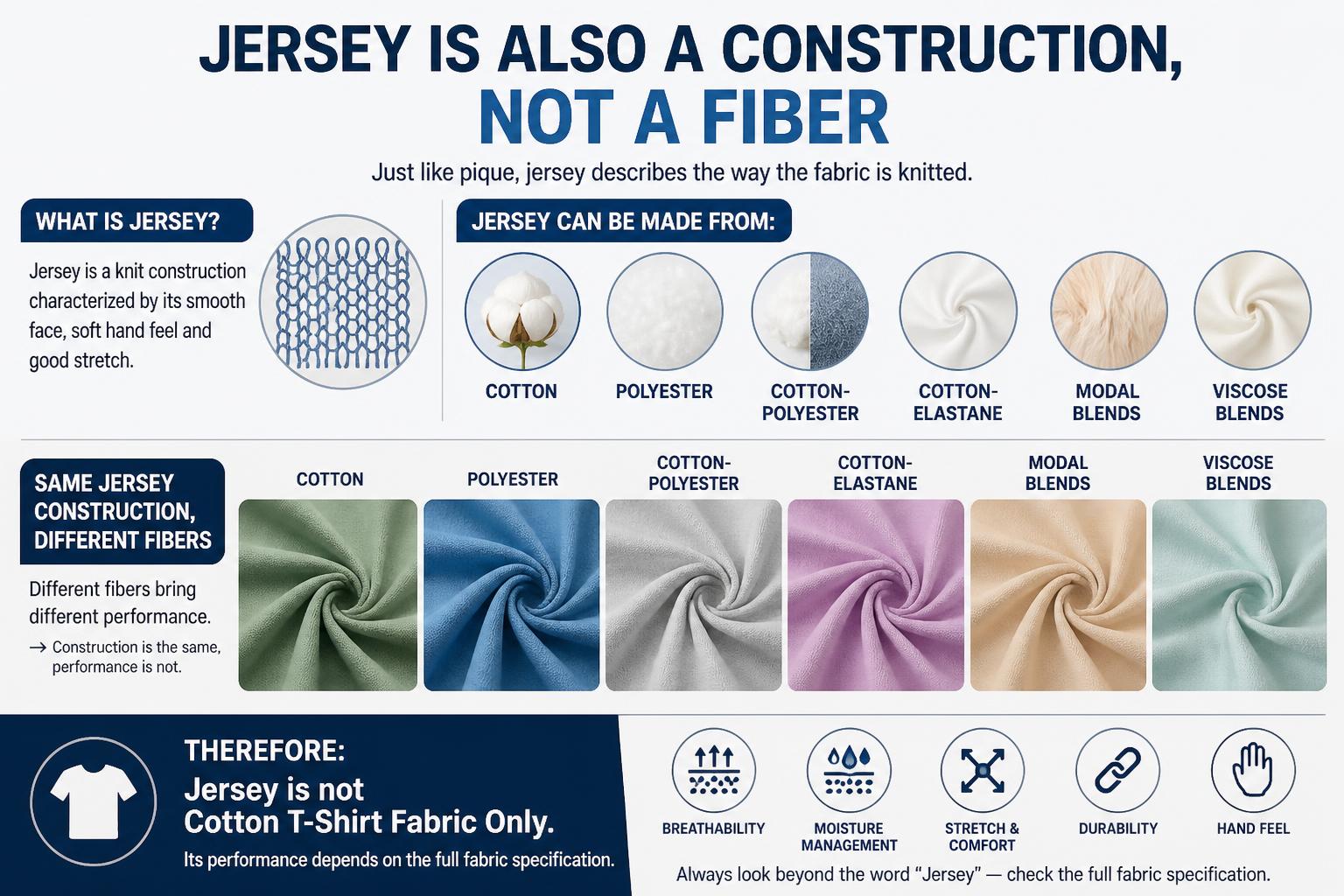
Jersey Is Also a Construction, Not a Fiber
Just like pique, jersey describes the way the fabric is knitted. Jersey can be made from:
- Cotton
- Polyester
- Cotton-polyester
- Cotton-elastane
- Modal blends
- Viscose blends

=> Therefore: Jersey is not Cotton T-Shirt Fabric Only. Its performance depends on the full fabric specification.
Main Features and Advantages:
- Smooth surface: Feels gentle and silky against the skin.
- Lightweight: Thinner and more flexible than pique.
- Minimalist look: Offers a cleaner, modern aesthetic.
- Versatile: Ideal for everyday professional comfort.

Key Differences Between Pique and Jersey
| Feature | Pique Fabric | Jersey Fabric |
|---|---|---|
| Texture | Waffle / Textured | Smooth / Flat |
| Weight | Medium to Heavy | Lightweight |
| Style | Classic / Sporty | Modern / Minimal |
| Breathability | High (Airflow) | Moderate (Softness) |
The Biggest Difference: Surface Texture
The easiest difference to see is the fabric surface.
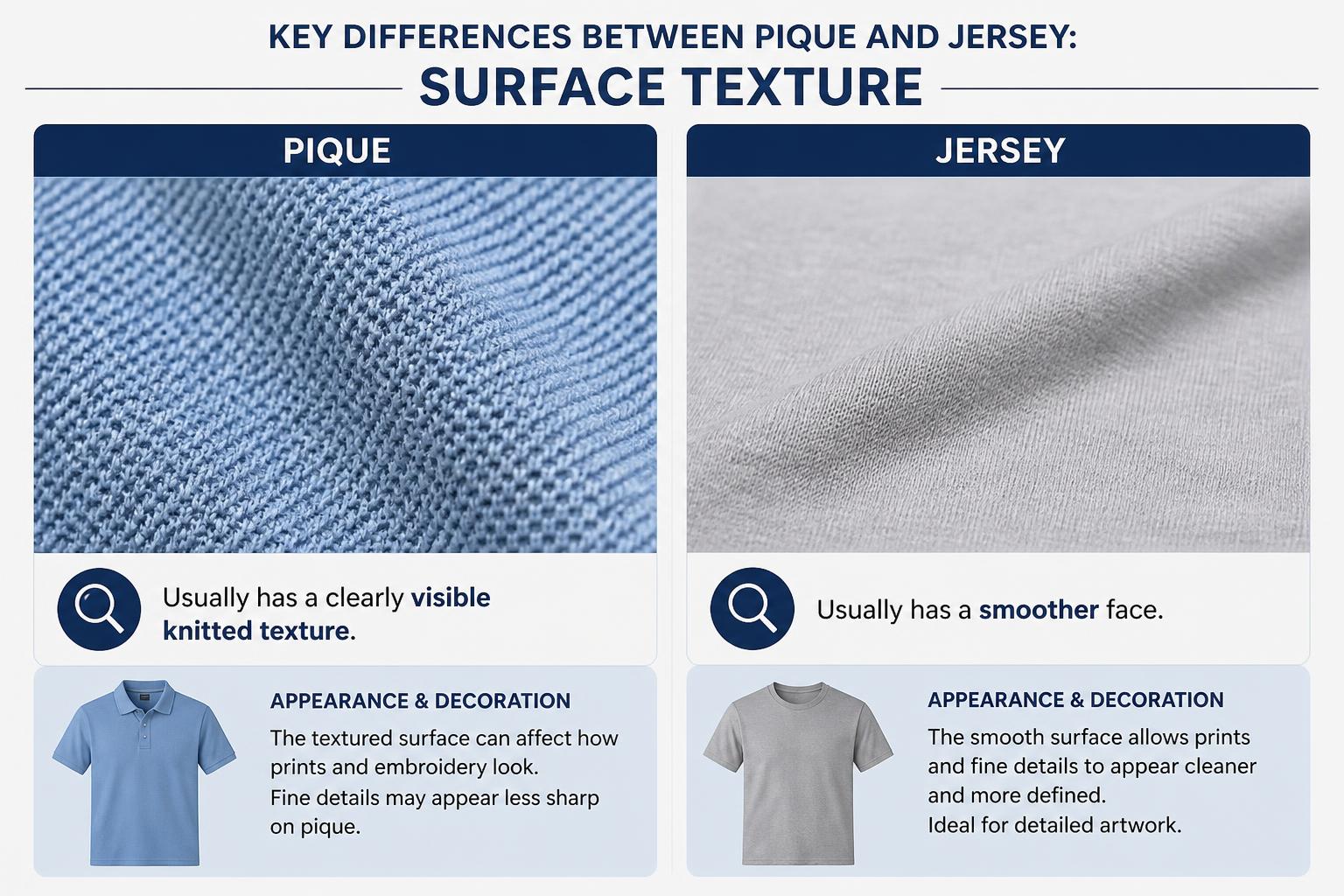
- Pique: Usually has a clearly visible knitted texture.
- Jersey: Usually has a smoother face. This difference affects both: Appearance, Decoration
=> For example, fine printed artwork may appear cleaner on smooth jersey than on heavily textured pique.
Which One Looks More Classic?
Pique is more strongly associated with the traditional polo shirt.

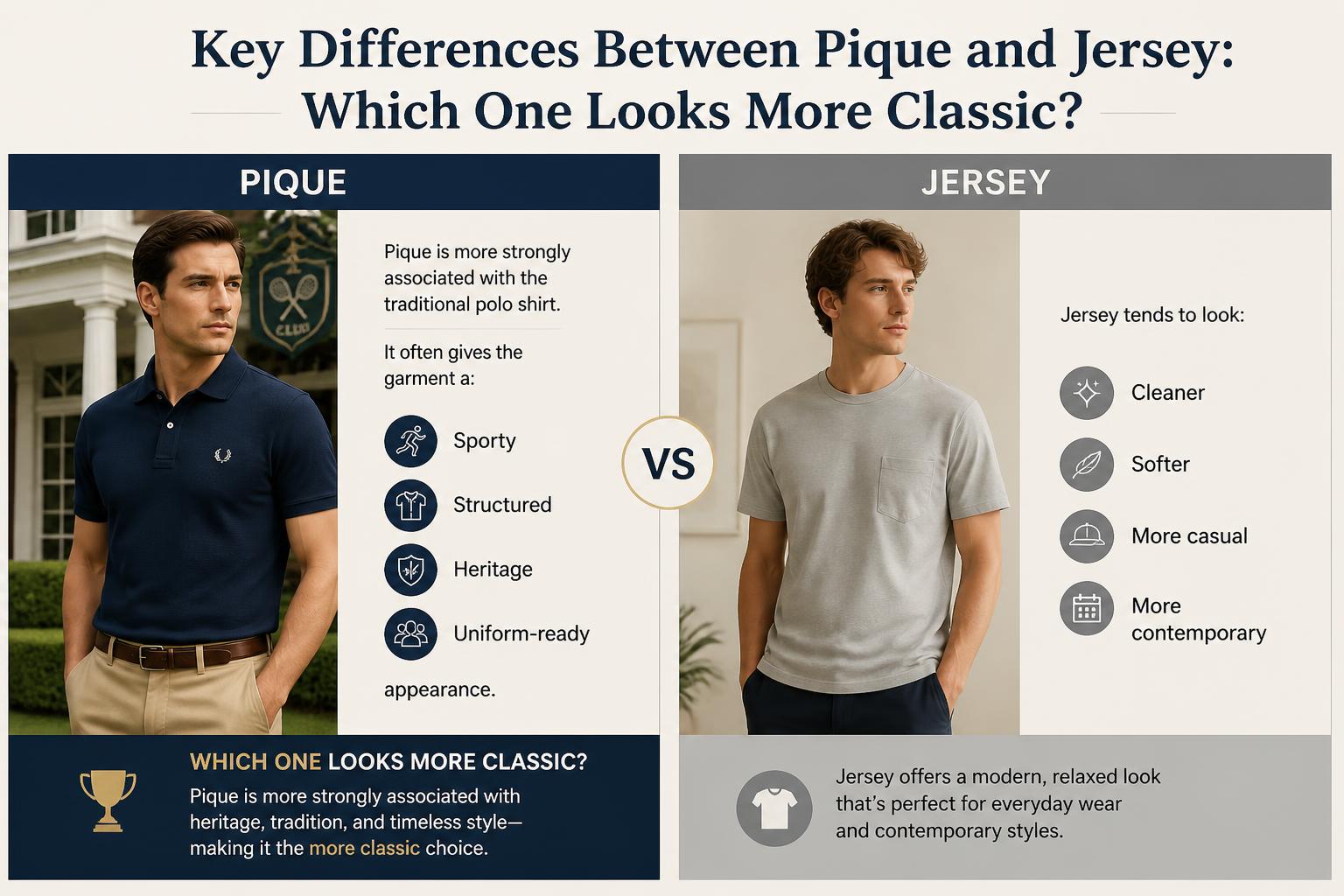
It often gives the garment a:
- Sporty
- Structured
- Heritage
- Uniform-ready
appearance.
Jersey tends to look:
- Cleaner
- Softer
- More casual
- More contemporary
Which One Feels Softer?
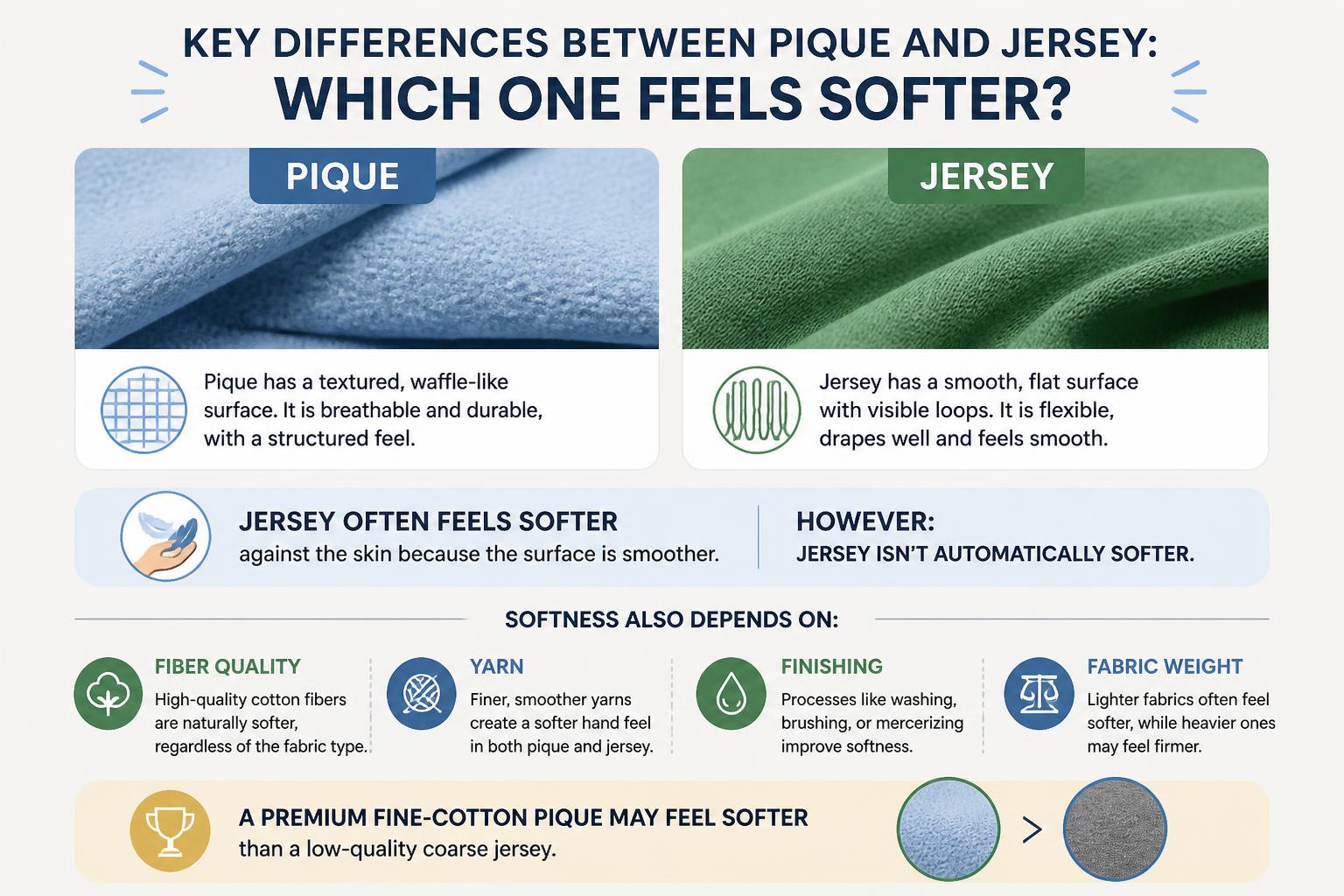
Jersey often feels softer against the skin because the surface is smoother. However: Jersey isn’t Automatically Softer. Softness also depends on:
- Fiber quality
- Yarn
- Finishing
- Fabric weight
A premium fine-cotton pique may feel softer than a low-quality coarse jersey.
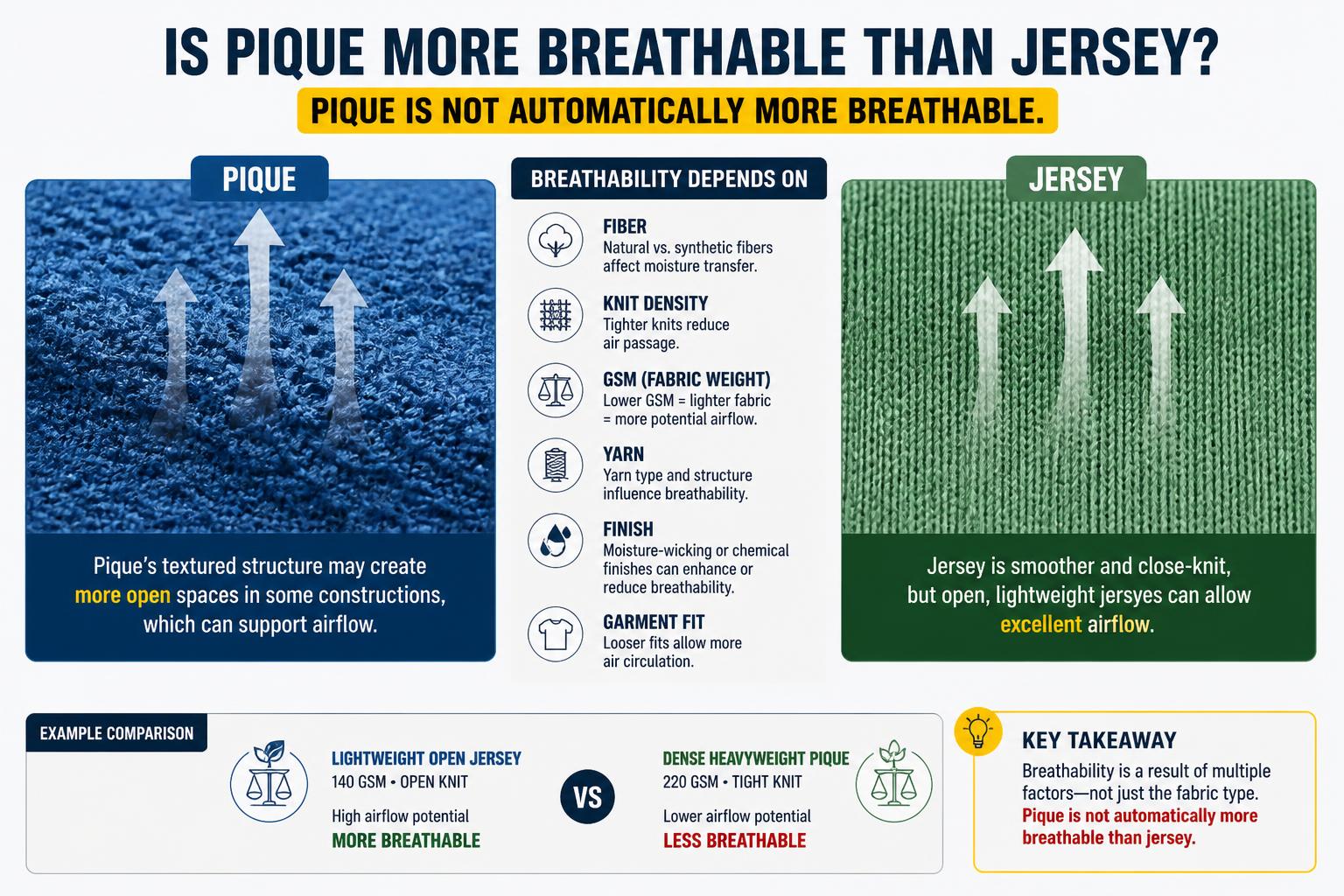
Is Pique More Breathable Than Jersey?
Not automatically. Pique’s textured structure may create more open spaces in some constructions, which can support airflow. But actual breathability depends on:
- Fiber
- Knit density
- GSM
- Yarn
- Finish
- Garment fit
A lightweight open jersey may be more breathable than a dense heavyweight pique. => Therefore: Pique is Not Automatically More Breathable.
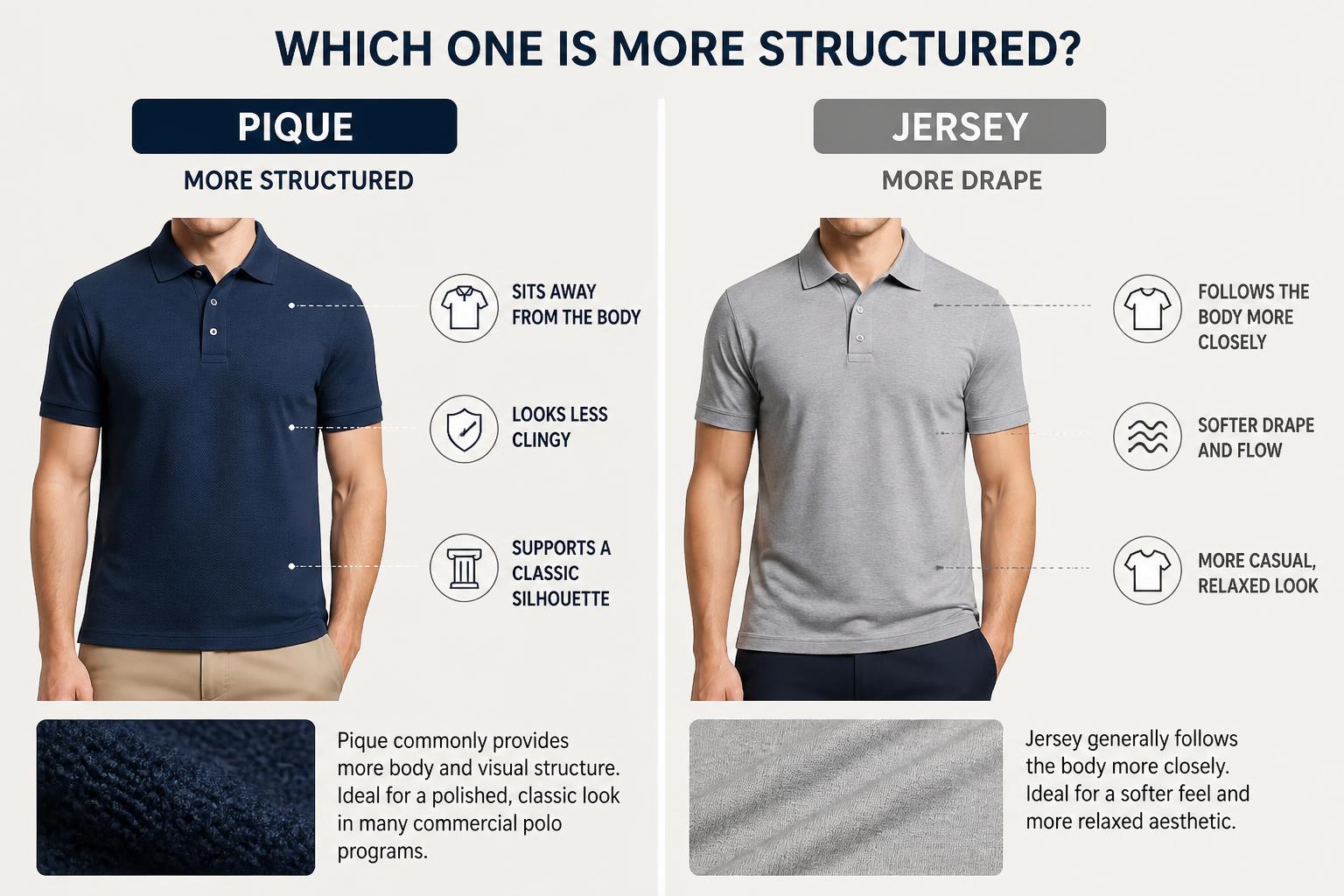
Which One Is More Structured?
Pique commonly provides more body and visual structure.
This can help the polo:
- Sit away from the body
- Look less clingy
- Support a classic silhouette
Jersey generally follows the body more closely.
So:
- Pique => More Structure
- Jersey => More Drape
in many commercial polo programs.
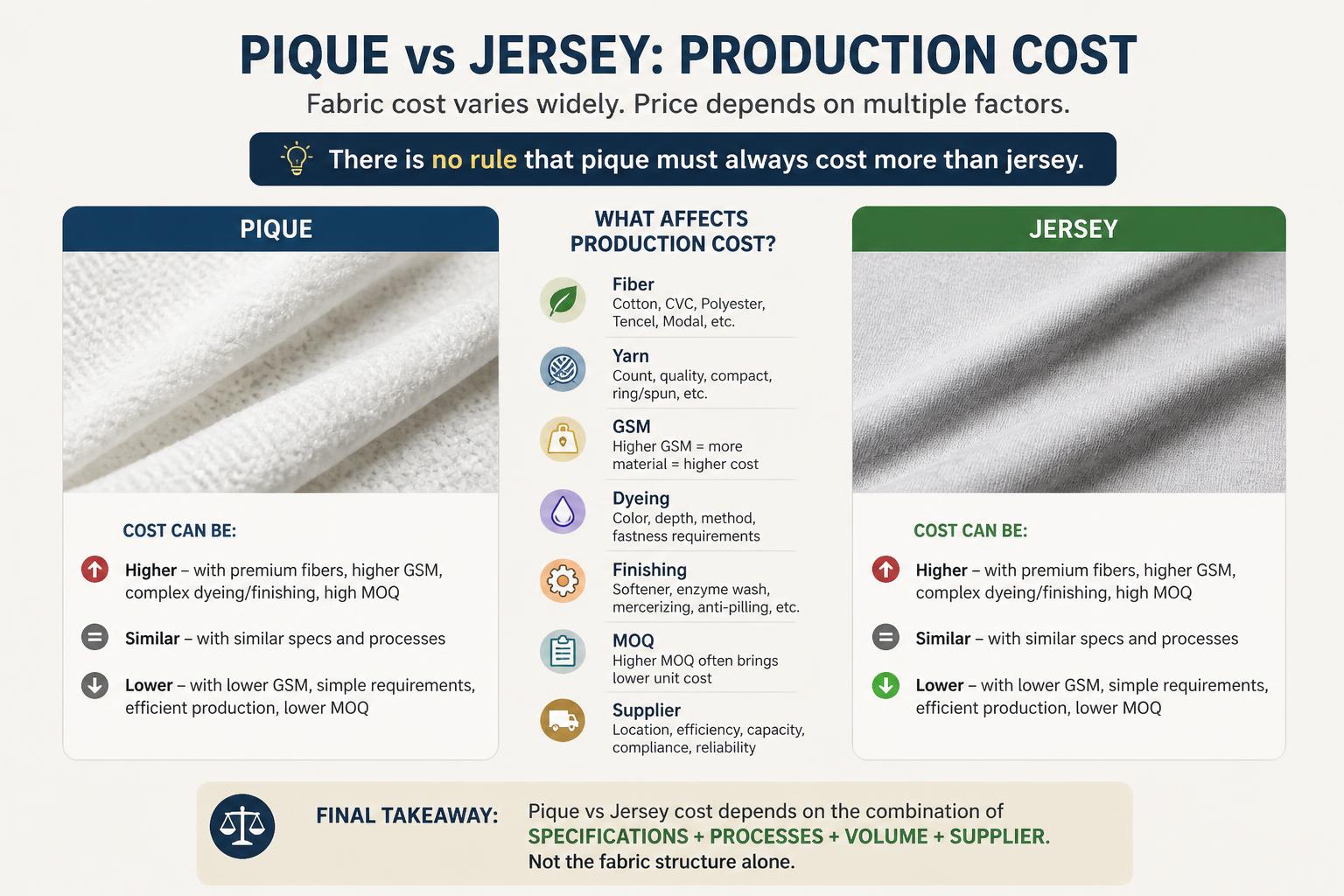
Pique vs Jersey Production Cost
Fabric cost varies widely. Price depends on: Fiber, Yarn, GSM, Dyeing, Finishing, MOQ, Supplier. There is no rule that pique must always cost more than jersey.
Pique vs Jersey: Pros and Cons
| Fabric | Main Advantages | Main Challenges |
|---|---|---|
| Pique | Texture, structure, classic polo appearance | Rougher surface, print detail, possible bulk |
| Jersey | Smoothness, softness, modern appearance | Cling, lower structure, lightweight instability |
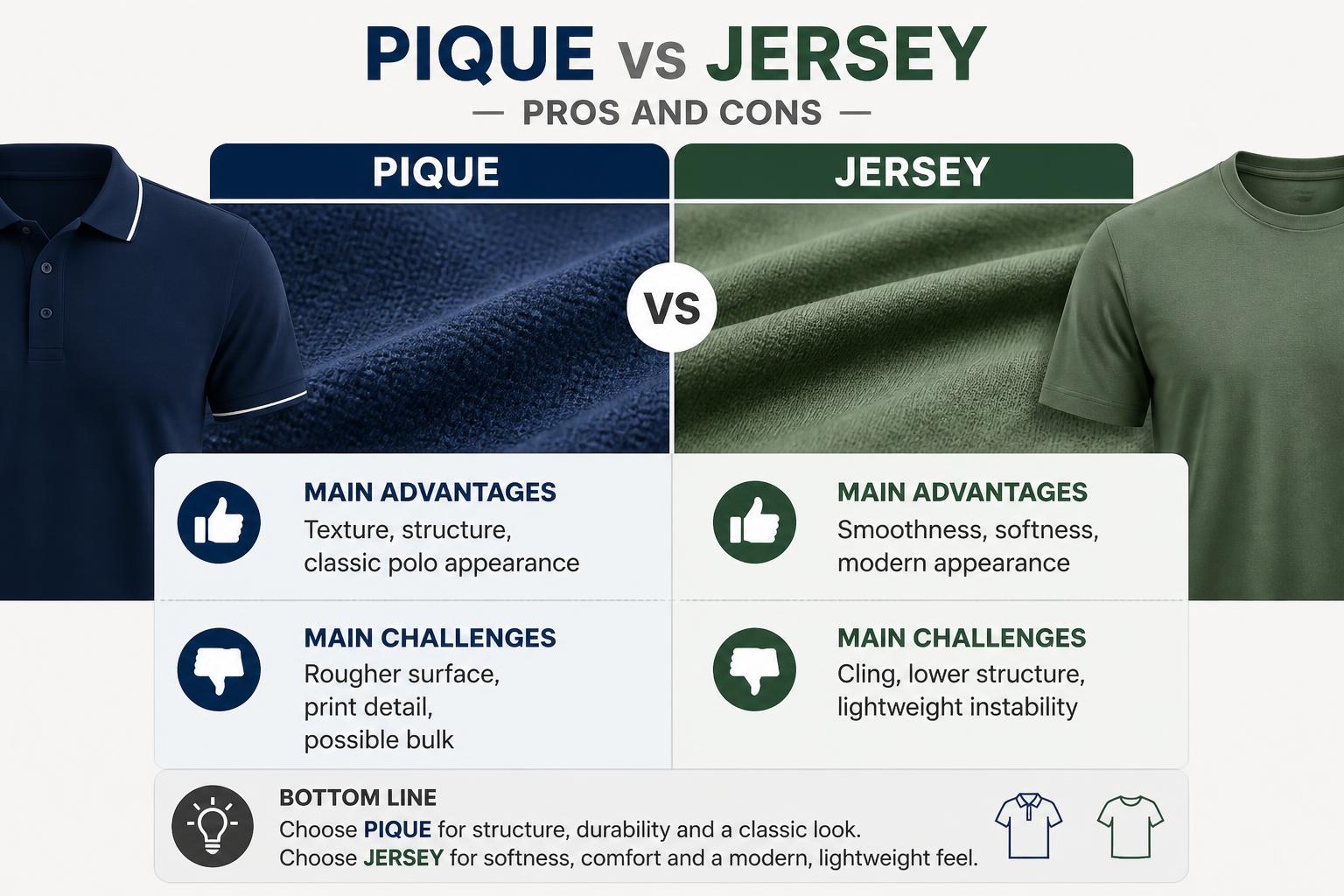
Choosing the Right Fabric for Your Needs
Pique often wins for hot or humid weather because its texture prevents sticking. It also works well in business settings because it looks more “intentional.” On the other hand, jersey is superior for pure softness and a laid-back feel. If you want a polo that behaves like a premium breathable tee, go for jersey. If you want a shirt with a crisp, tidy shape, pique is your best bet.
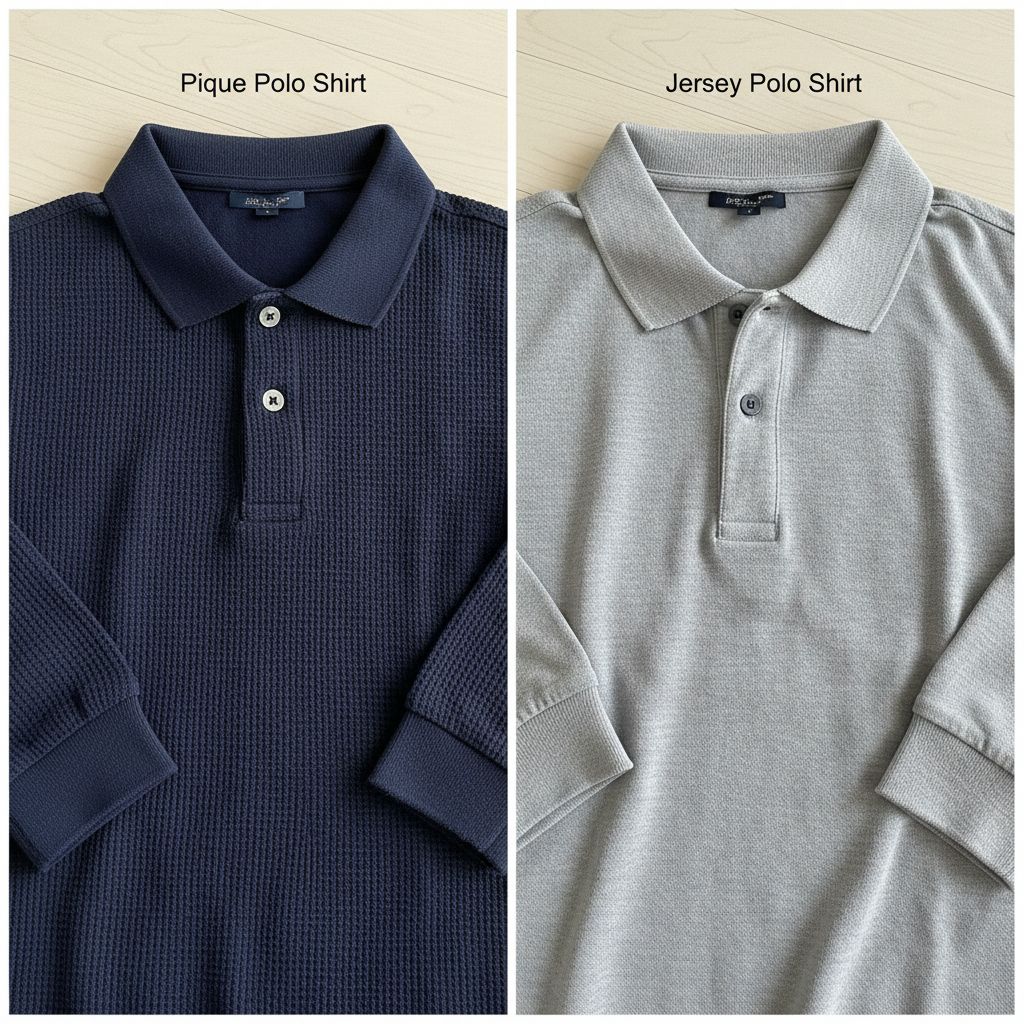
How to Choose Between Pique and Jersey
Choose Pique When You Want:
- Classic polo styling
- More texture
- More structure
- Uniform or golf appearance
Choose Jersey When You Want:
- Smooth surface
- Soft hand
- Cleaner modern styling
- More T-shirt-like comfort
Then confirm the decision through sampling.
Conclusion / Final Words
Pique and jersey are two different answers to different style needs. Pique gives you texture, shape, and a classic identity. Jersey gives you softness, simplicity, and modern comfort. Whether you prefer the traditional sporty look or a sleek contemporary aesthetic, choosing the right fabric is what truly determines the performance and style of your polo shirt.