High Neck T-Shirts: Pros, Cons, and How Brand Owners Should Build Them Right

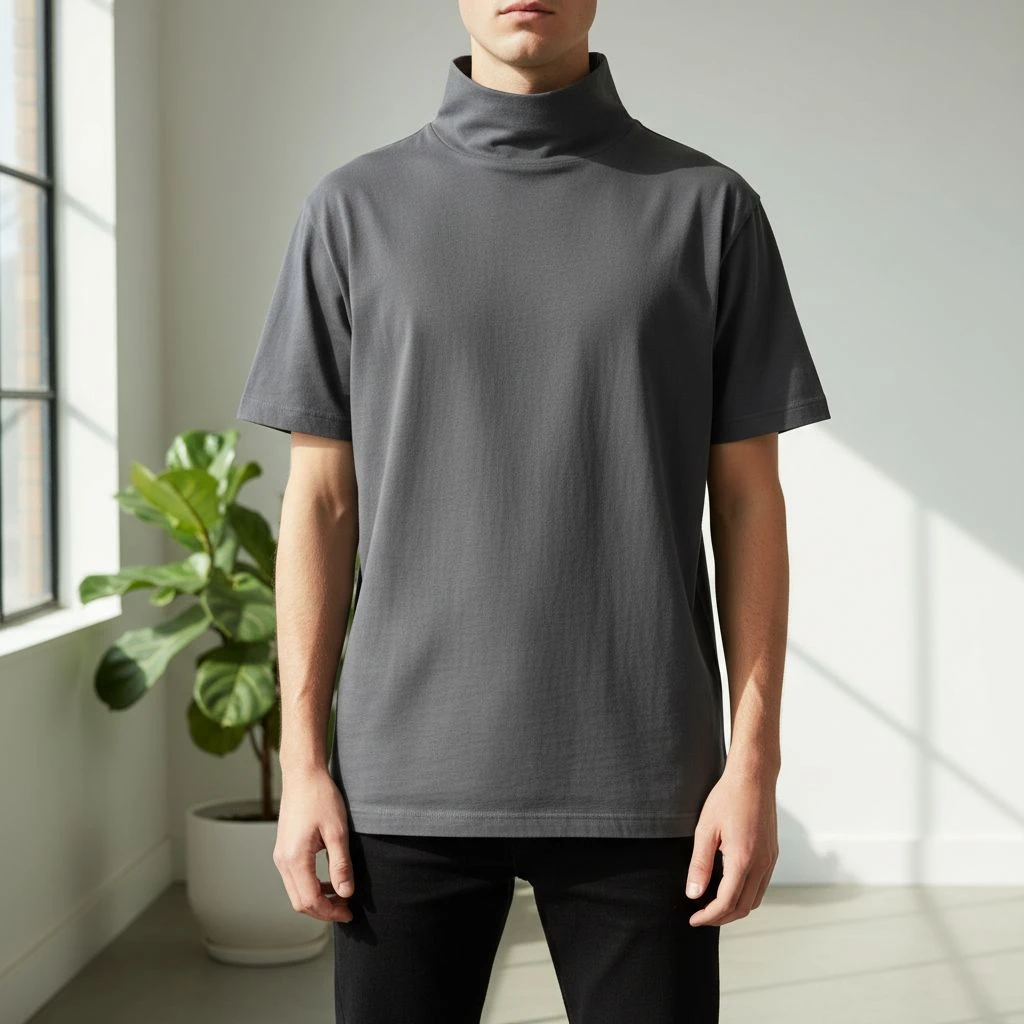
High neck T-shirts (also called raised crew, high crew, or funnel-leaning tees) are basic tees with a neckline that sits higher and closer to the neck than a standard crew. They give more coverage, look cleaner, and often feel more “premium” on camera. But here’s the catch: this style is not forgiving. If the collar feels tight or loses shape after washing, customers won’t call it “premium.” They’ll call it “annoying.” This guide is written for brand owners who want to sell high neck tees with fewer returns and stronger repeat buys.
=> Read More: T Shirts Manufacturing Vietnam | Mekong Garment Factory
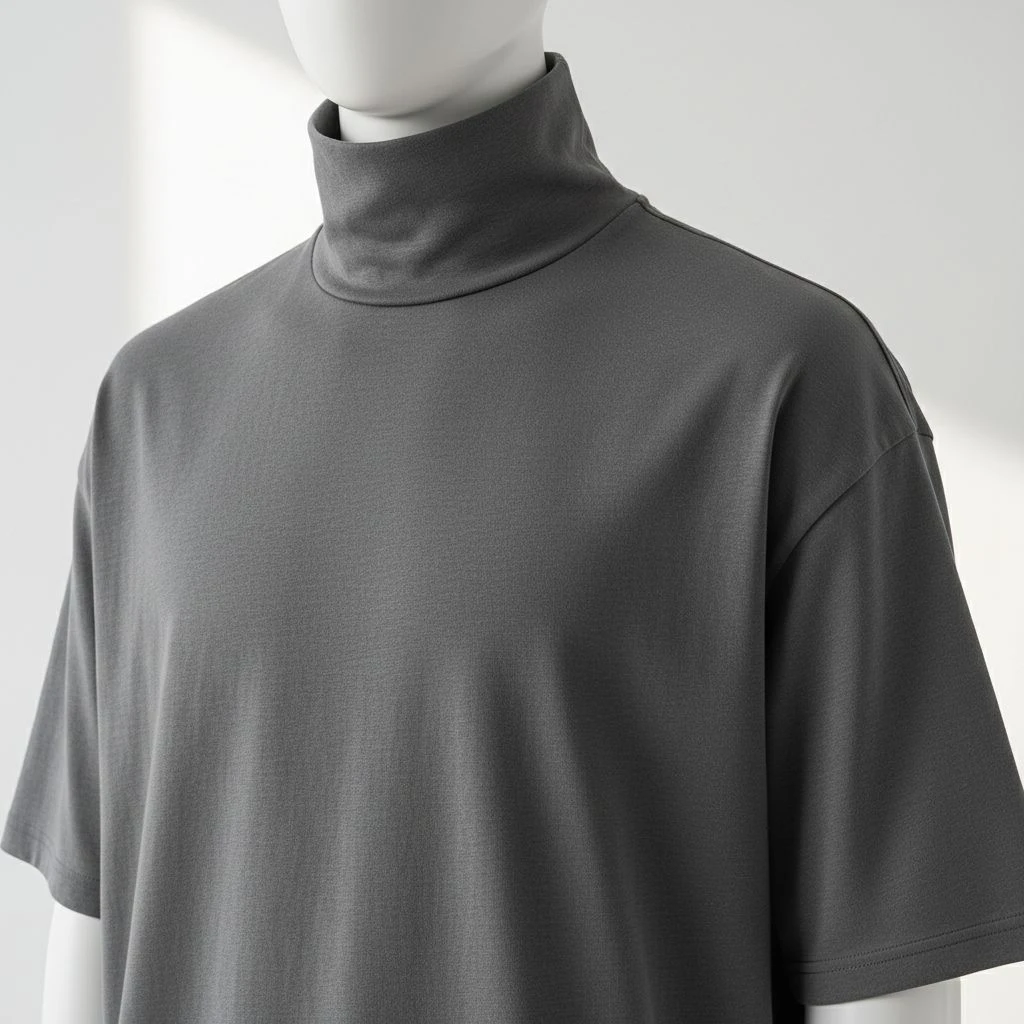
What Is a High Neck T-Shirt?
A high neck T-shirt is a tee with a neckline that sits higher and generally closer to the neck than a standard crew neck. The collar may also have more visible finished height. The overall appearance can feel:
- Clean
- Minimal
- Modern
- Structured
- Streetwear-oriented
- Premium
In many styles, the body of the T-shirt remains completely normal. The biggest visual change comes from the neckline. What it looks like in real life: A sharper neckline line, more structure around the neck, and it often reads “modern basic” or “athleisure.”
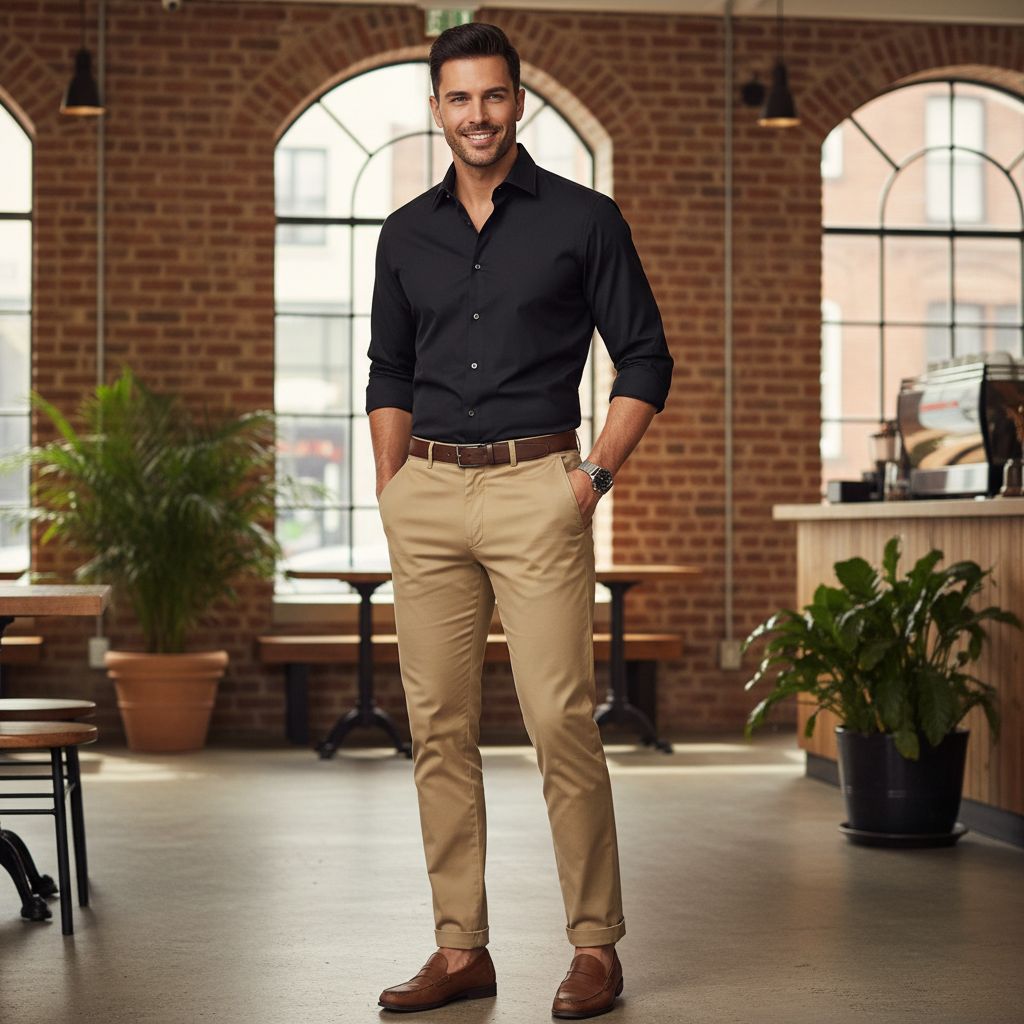
A high neck tee is a crew neck with extra collar height and usually a slightly smaller neck opening than a classic crew. It sits between: Standard crew (lower, more open) and Mock neck / turtleneck – Comparison between high neck and standard crew neck T-shirts
Why Brands Use High Neck Tees
- Refreshes core products: Keep your best-selling body fit while creating a “new” product that feels intentional.
- Instant Premium Signal: Customers notice neckline details; a higher collar looks styled and elevated.
- Modern Wardrobe Essential: Layers cleanly under overshirts, bomber jackets, and minimal outerwear.

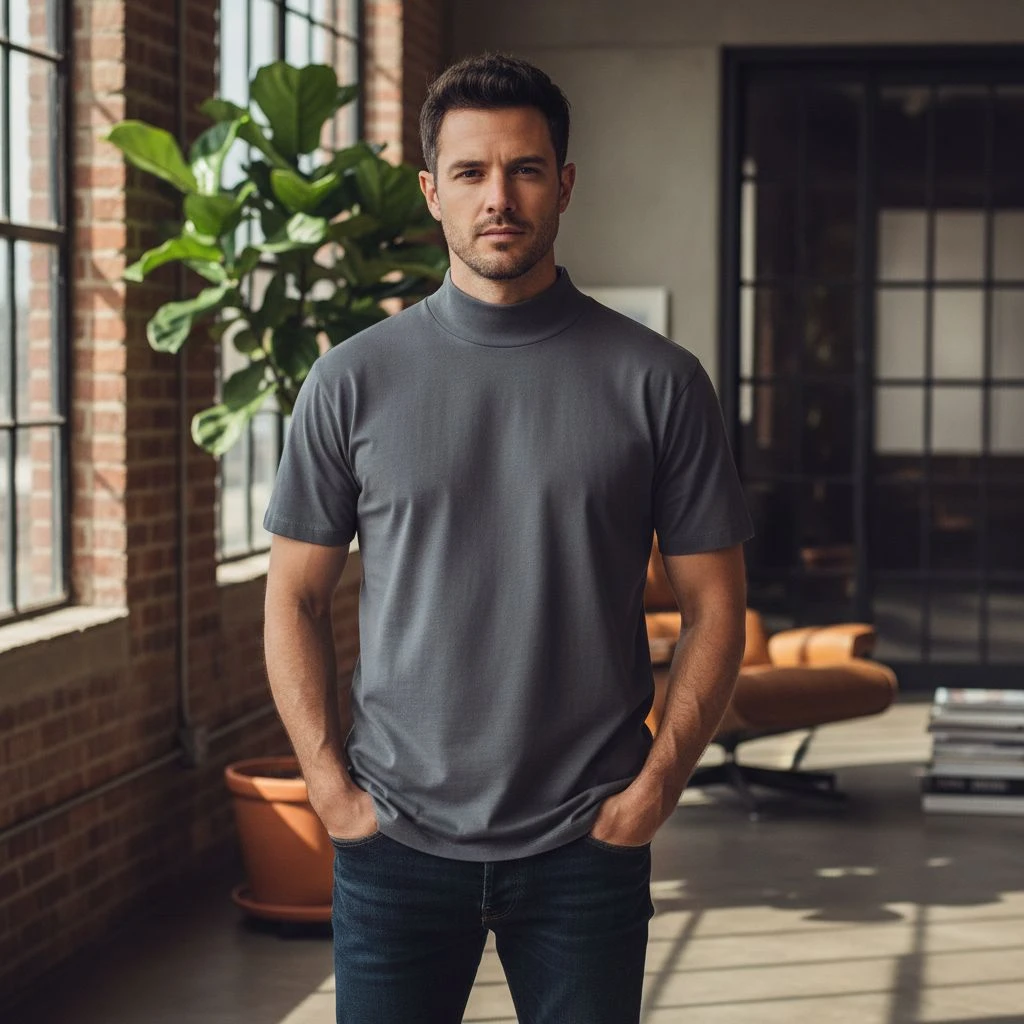
Best Use Cases: When High Neck Tees Sell Well
High neck tees win in collections where a clean, elevated silhouette matters more than airy comfort. Strongest categories: Premium basics collections, athleisure / “urban active” drops, cool-weather capsules, and polished uniform basics.
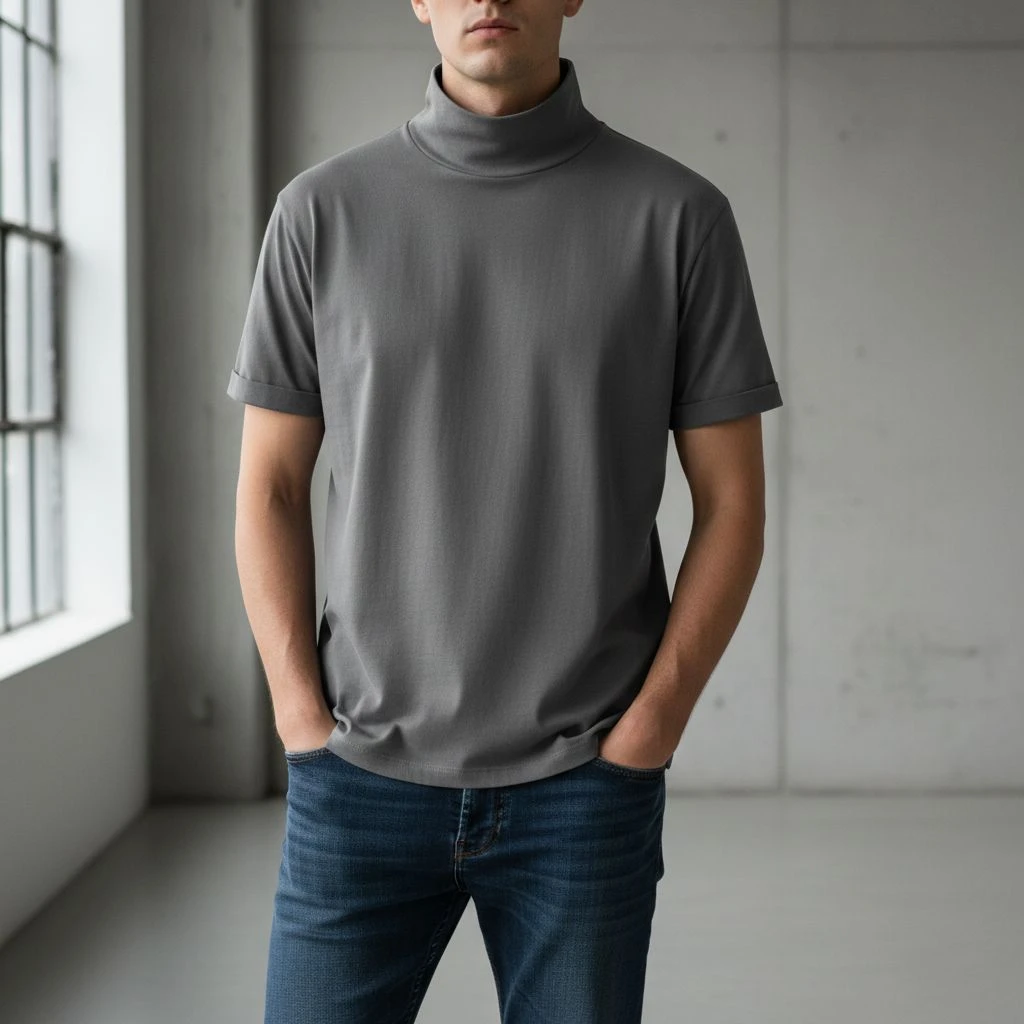
Why High Neck T-Shirts Can Look More Premium
A clean high collar gives the garment a stronger visual frame.
It can make the tee look:
- More intentional
- More structured
- More modern
- More fashion-focused
This is especially useful for:
- Premium basics
- Streetwear
- Minimal fashion
- Oversized T-shirts
But a high collar does not automatically make a garment premium. Poor recovery, uneven height, or bad sewing can quickly make it look cheap. So: High Neck Design can’t Automatic Premium Quality. The manufacturing quality still has to support the design.
Main Types of High Neck T-Shirts
High neck T-shirts can vary significantly.
| Style | Appearance | Typical Use |
|---|---|---|
| Raised Crew | Slightly higher than a normal crew | Premium basics |
| High Crew | Close and structured | Streetwear |
| Wide High Neck | Higher but less tight | Relaxed fashion |
| Mock Neck Tee | Short upright collar | Minimal fashion |
| Funnel-Leaning Tee | Taller, slightly looser | Designer collections |
| Heavy Rib High Neck | Strong collar presence | Heavyweight tees |

These are useful style descriptions, not universal technical standards.
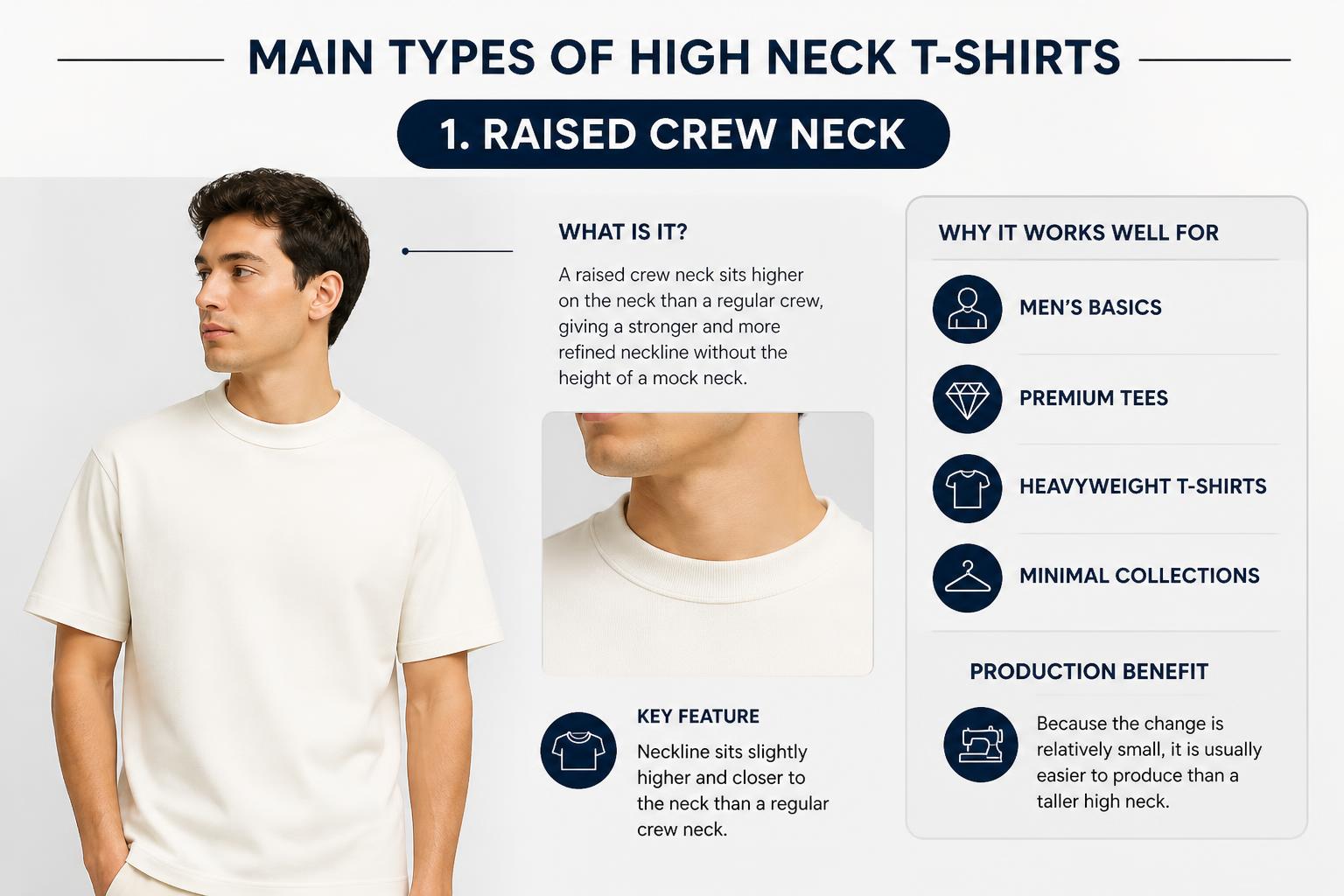
Raised Crew Neck
A raised crew is a good starting point for brands that want a stronger neckline without moving into a full mock neck.
It can work well for:
- Men’s basics
- Premium tees
- Heavyweight T-shirts
- Minimal collections
Because the change is relatively small, it is usually easier to produce than a taller high neck.
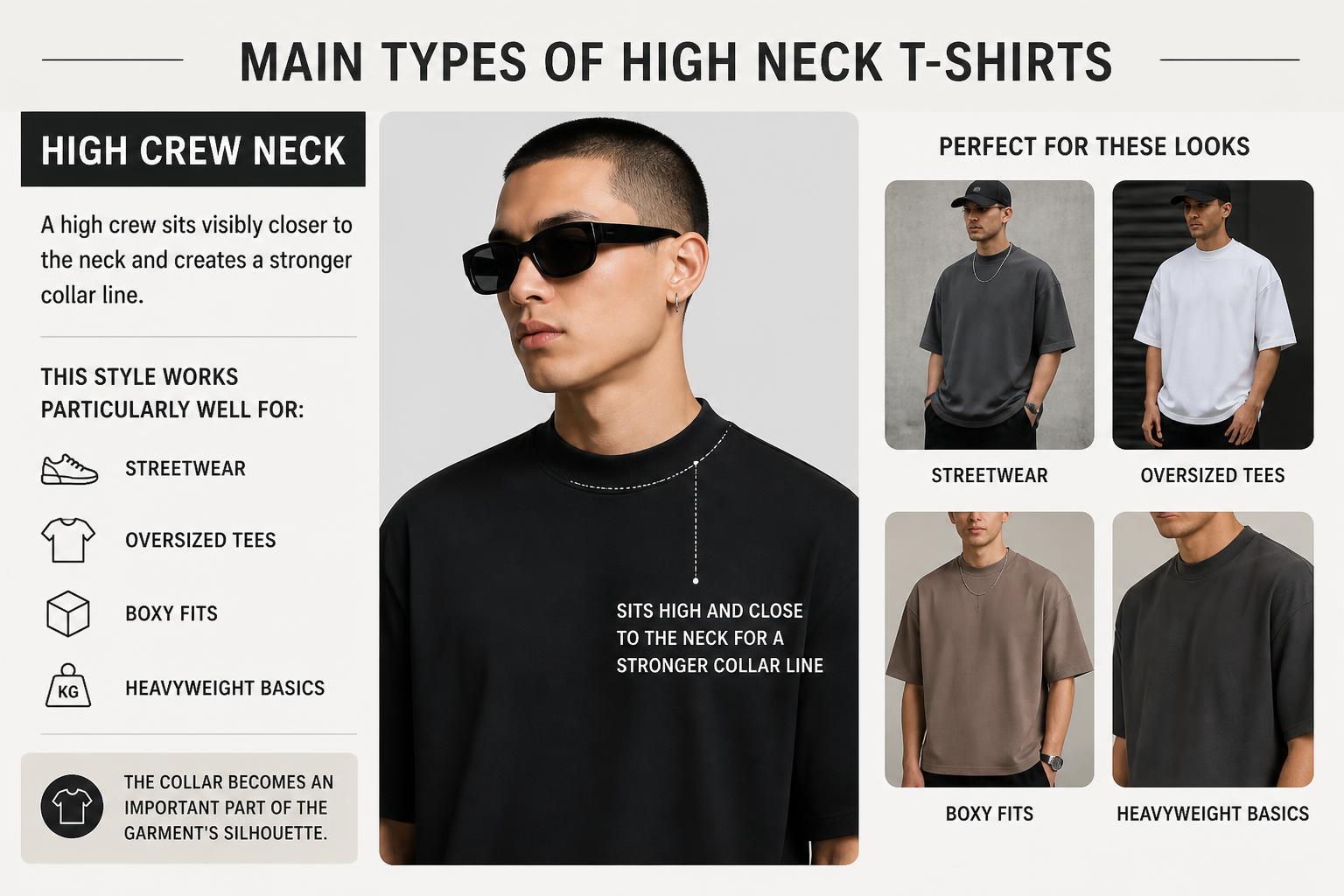
High Crew Neck
A high crew sits visibly closer to the neck and creates a stronger collar line.
This style works particularly well for:
- Streetwear
- Oversized tees
- Boxy fits
- Heavyweight basics
The collar becomes an important part of the garment’s silhouette.
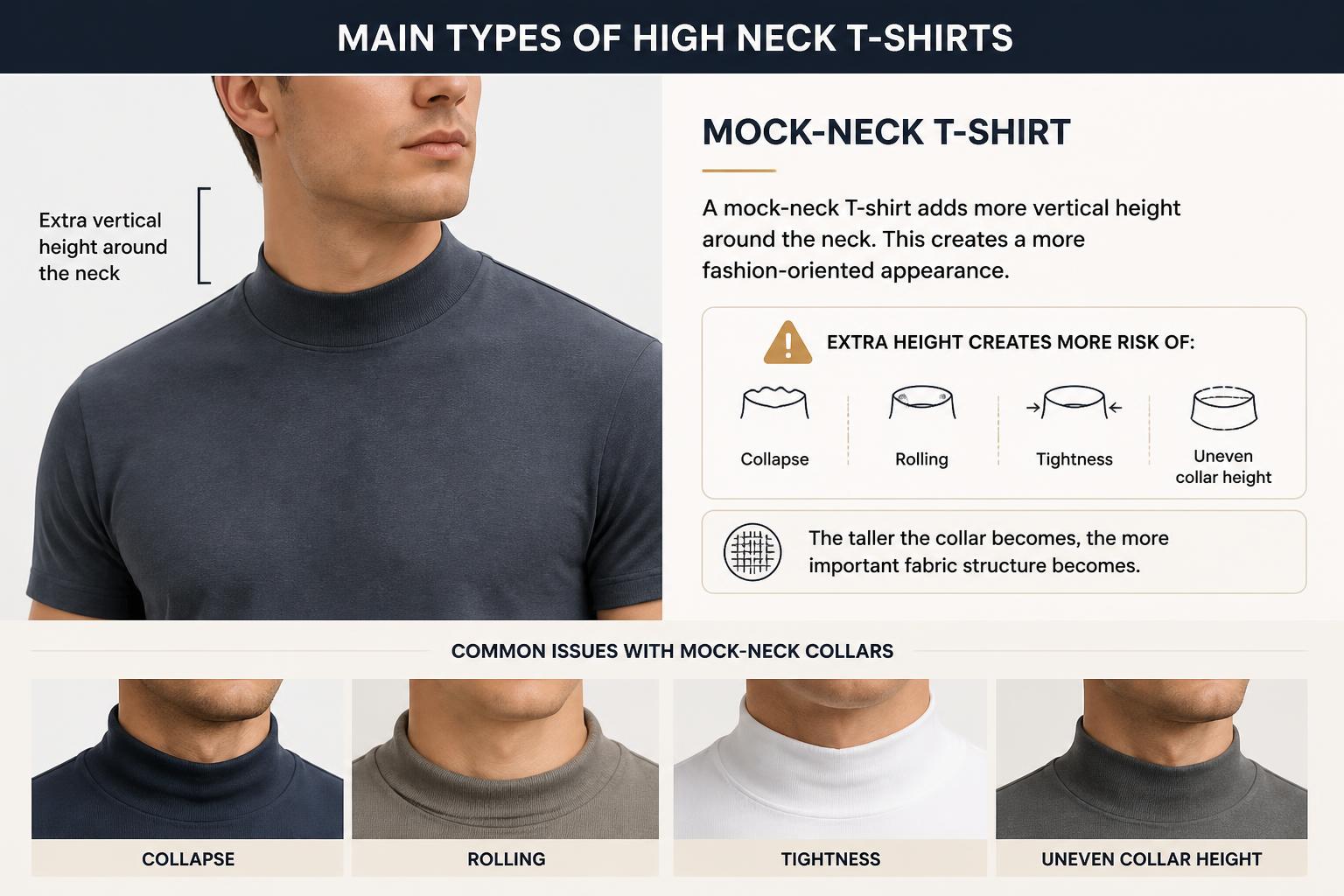
Mock-Neck T-Shirt
A mock-neck T-shirt adds more vertical height around the neck. This creates a more fashion-oriented appearance.
However, extra height creates more risk of:
- Collapse
- Rolling
- Tightness
- Uneven collar height
The taller the collar becomes, the more important fabric structure becomes.
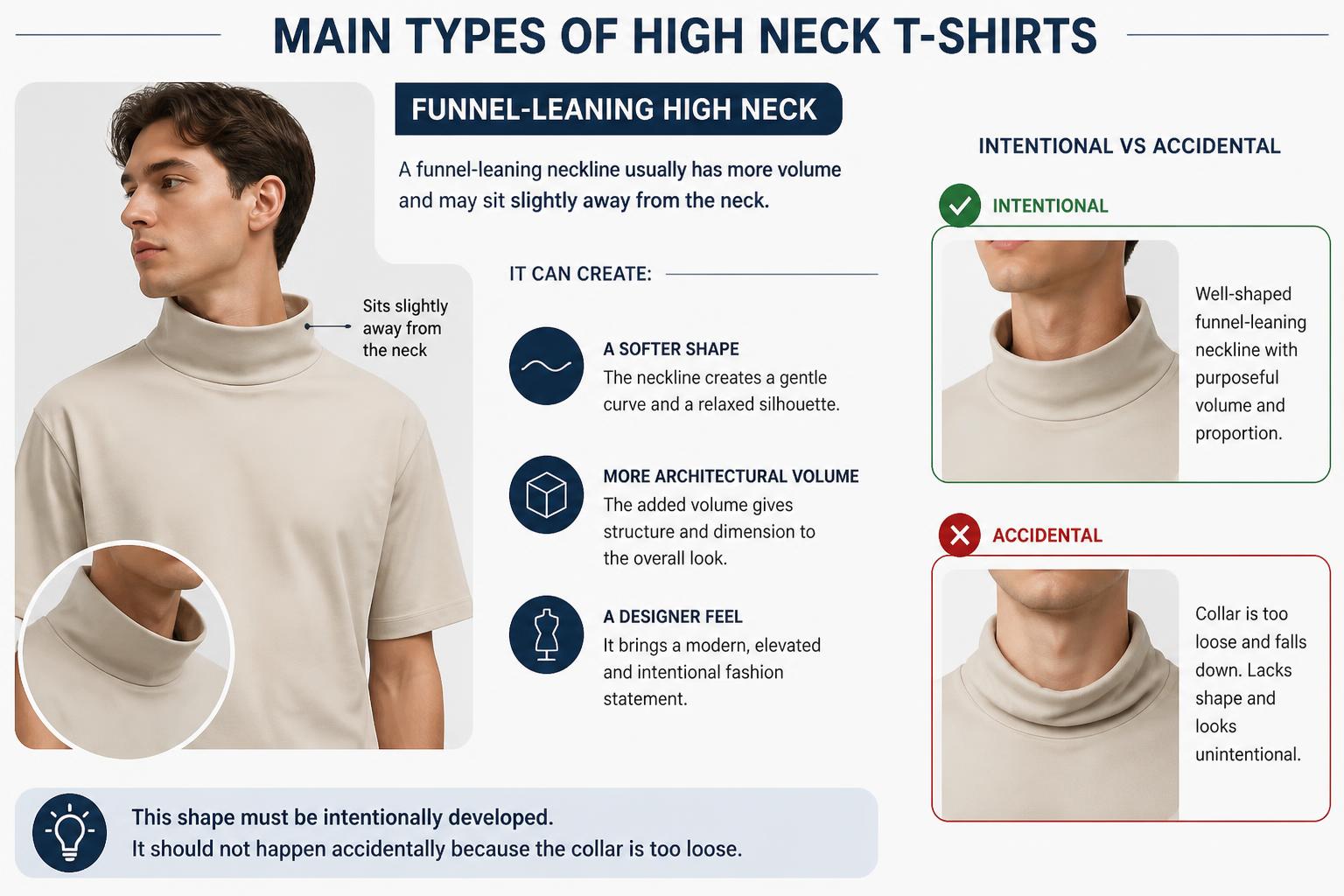
Funnel-Leaning High Neck
A funnel-leaning neckline usually has more volume and may sit slightly away from the neck.
It can create:
- A softer shape
- More architectural volume
- A designer feel
However, this shape must be intentionally developed. It should not happen accidentally because the collar is too loose.
Pros & Cons of High Neck T-Shirts
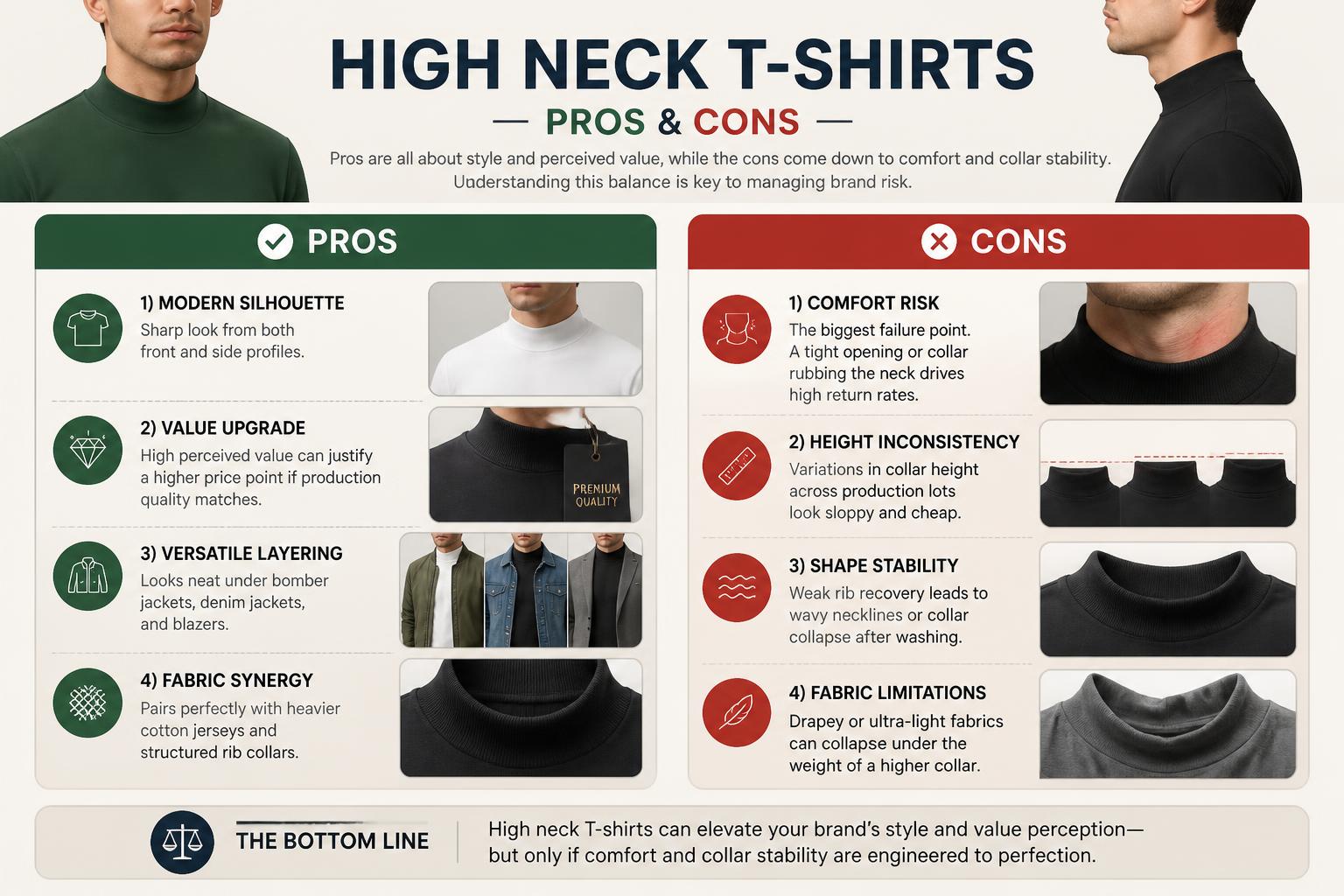
Pros are all about style and perceived value, while the cons come down to comfort and collar stability. Understanding this balance is key to managing brand risk.
Pros:
- 1) Modern Silhouette: Sharp look from both front and side profiles.
- 2) Value Upgrade: High perceived value can justify a higher price point if production quality matches.
- 3) Versatile Layering: Looks neat under bomber jackets, denim jackets, and blazers.
- 4) Fabric Synergy: Pairs perfectly with heavier cotton jerseys and structured rib collars.
Cons:
- 1) Comfort Risk: The biggest failure point. A tight opening or collar rubbing the neck drives high return rates.
- 2) Height Inconsistency: Variations in collar height across production lots look sloppy and cheap.
- 3) Shape Stability: Weak rib recovery leads to wavy necklines or collar collapse after washing.
- 4) Fabric Limitations: Drapey or ultra-light fabrics can collapse under the weight of a higher collar.
High Neck vs. Crew Neck, V-Neck, and Cowl Neck
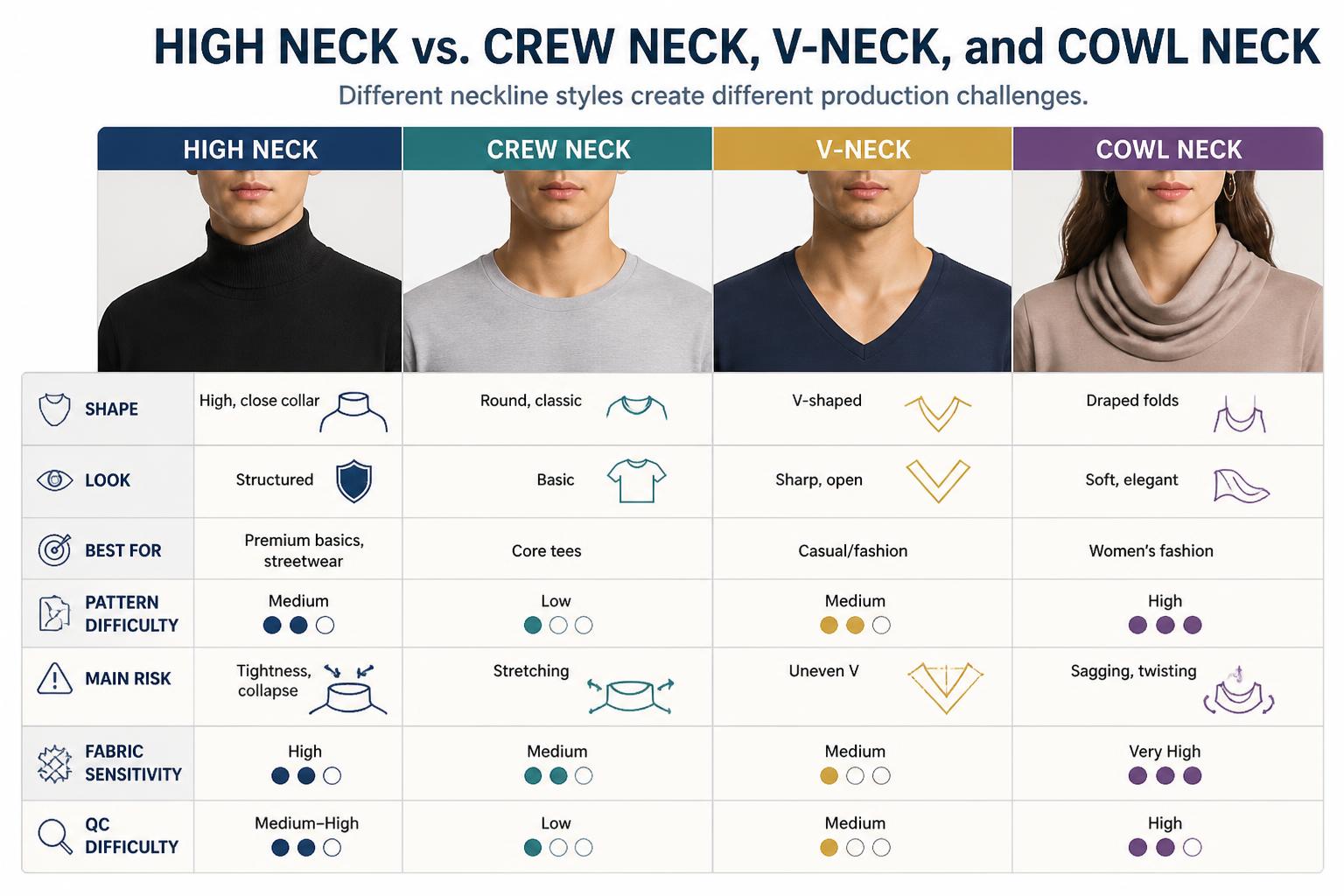
Different neckline styles create different production challenges.
| Factor | High Neck | Crew Neck | V-Neck | Cowl Neck |
|---|---|---|---|---|
| Shape | High, close collar | Round, classic | V-shaped | Draped folds |
| Look | Structured | Basic | Sharp, open | Soft, elegant |
| Best For | Premium basics, streetwear | Core tees | Casual/fashion | Women’s fashion |
| Pattern Difficulty | Medium | Low | Medium | High |
| Main Risk | Tightness, collapse | Stretching | Uneven V | Sagging, twisting |
| Fabric Sensitivity | High | Medium | Medium | Very High |
| QC Difficulty | Medium–High | Low | Medium | High |
High Neck vs. Standard Crew Neck
A standard crew neck already sits relatively close to the neck. A high crew moves that neckline even higher.
Standard Crew Neck – Usually:
- Lower
- More open
- More universal
- Easier to produce
High Neck – Usually:
- Higher
- Closer
- More structured
- More sensitive to fit and recovery
In simple terms:
- Crew Neck = Classic Basic
- High Neck = Structured Basic
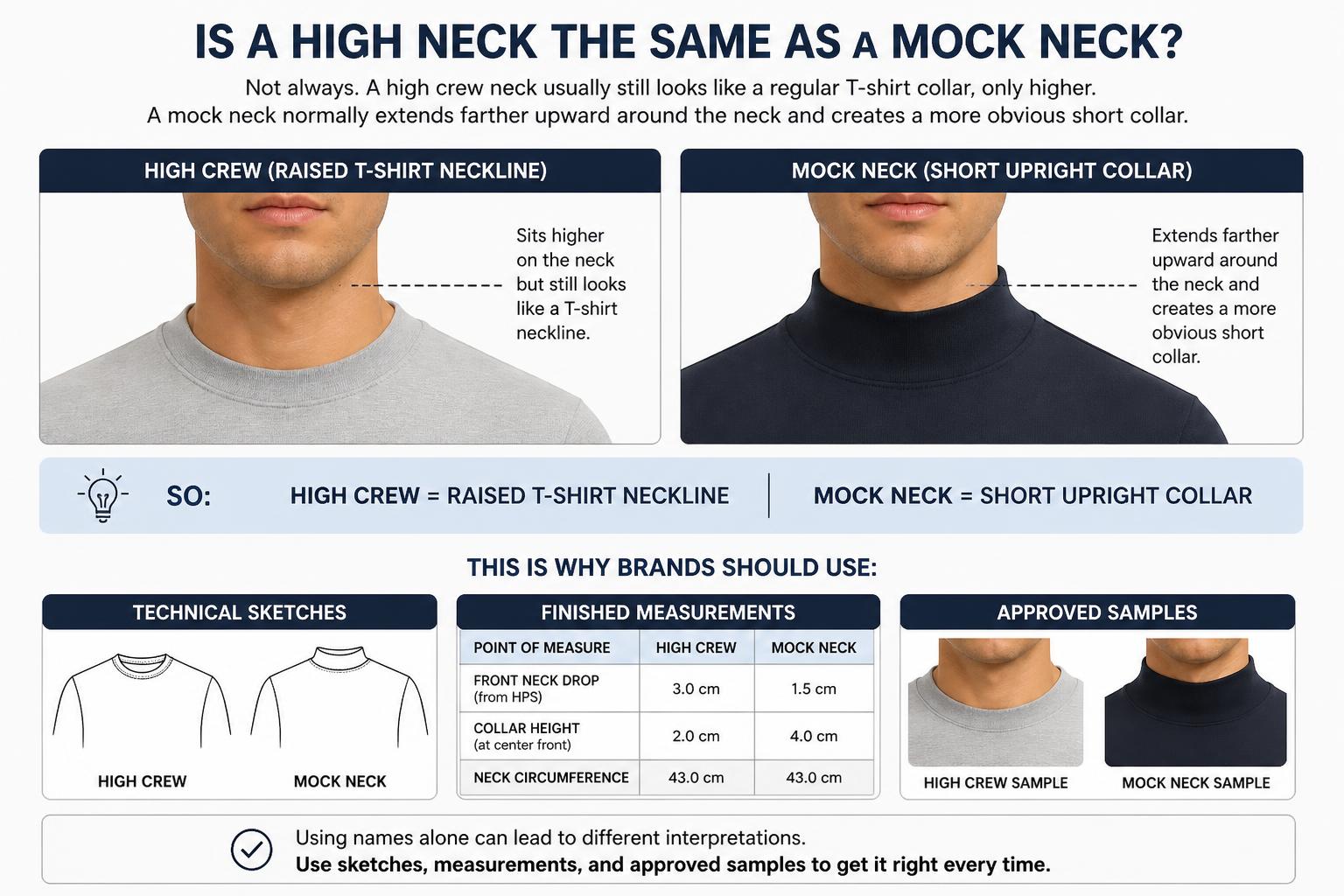
Is a High Neck the Same as a Mock Neck?
Not always. A high crew neck usually still looks like a regular T-shirt collar, only higher. A mock neck normally extends farther upward around the neck and creates a more obvious short collar.
So:
- High Crew = Raised T-Shirt Neckline
- Mock Neck = Short Upright Collar
This is why brands should use:
- Technical sketches
- Finished measurements
- Approved samples
instead of relying only on names.
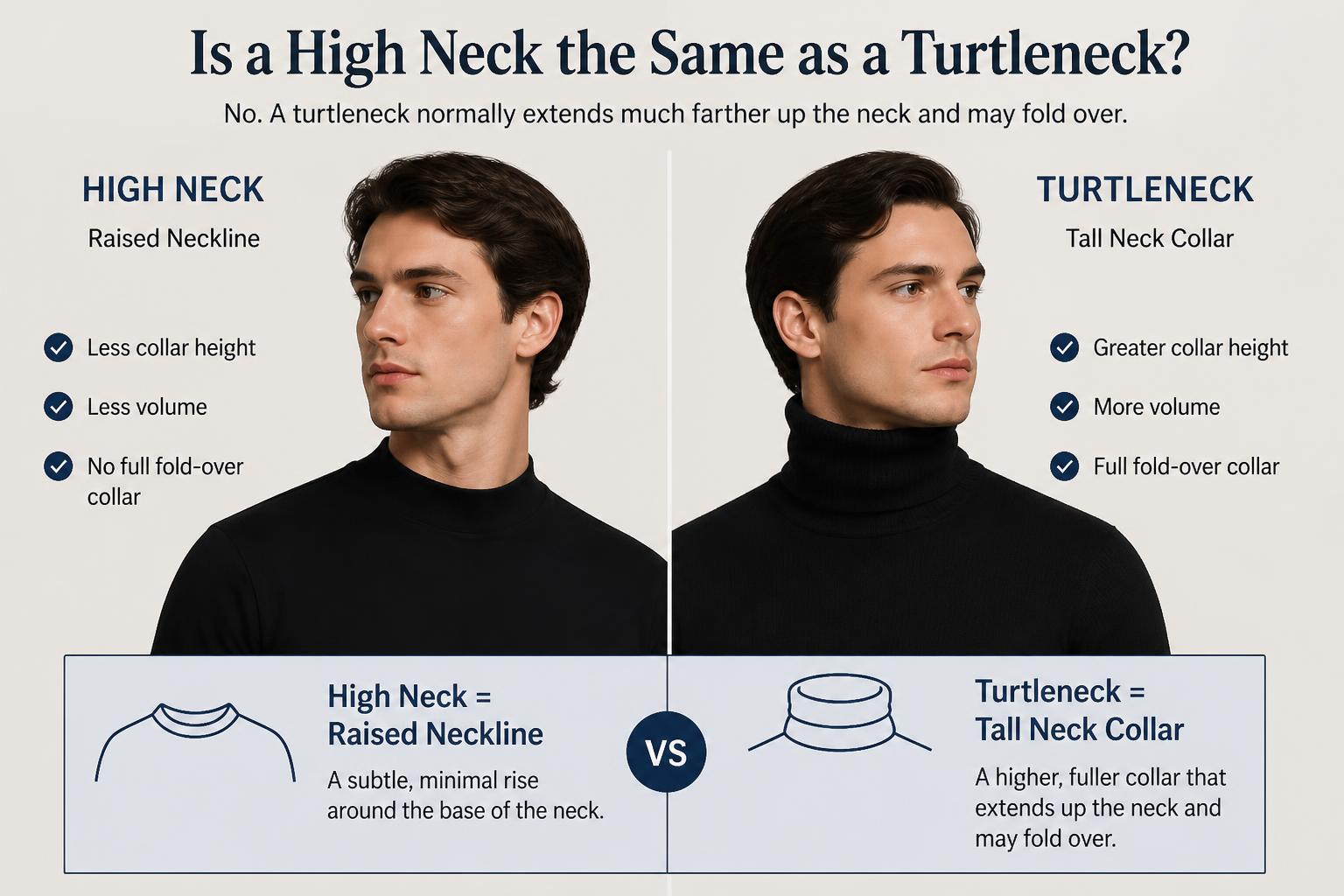
Is a High Neck the Same as a Turtleneck?
No. A turtleneck normally extends much farther up the neck and may fold over.
A high neck T-shirt generally has:
- Less collar height
- Less volume
- No full fold-over collar
So:
- High Neck = Raised Neckline
- Turtleneck = Tall Neck Collar
Final Words for Brand Owners
High neck T-shirts are a smart “small change, big upgrade” product if you build the collar right. Comfort and recovery are the deal-breakers. If your brand can’t control collar stability, this style may create more returns than a standard crew. Work with a manufacturer that understands consistent production standards to ensure your high neck remains a premium staple.