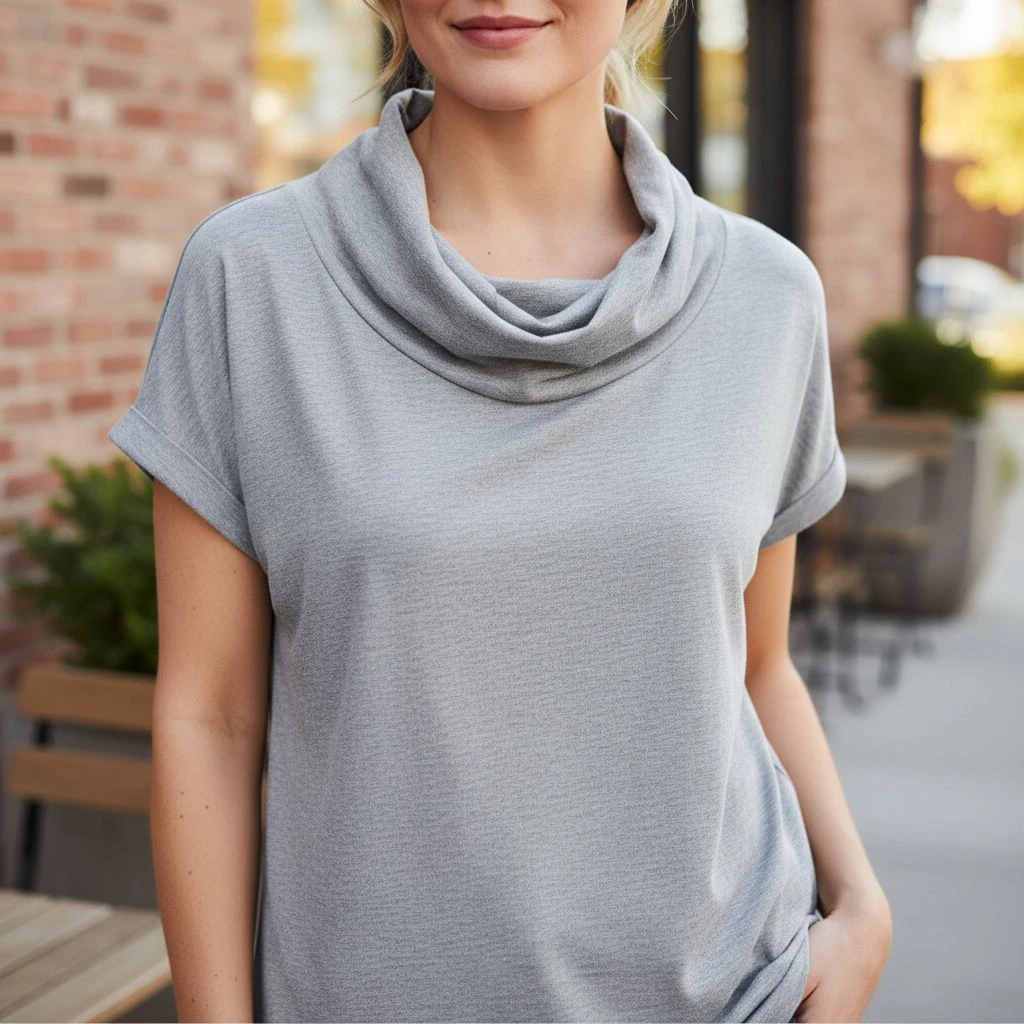
At first glance, a neckline seems like a small design detail. In reality, it is one of the highest-risk construction areas in garment production. Many quality issues stretching, curling, tearing, or shape loss after washing start at the neckline. This article explains which necklines are the most difficult to produce, why they cause problems, and what brands often misunderstand when choosing them.
=> Read More: T Shirts Manufacturing Vietnam | Mekong Garment Factory
Why Necklines Fail in Production
Before listing difficult necklines, it’s important to challenge a common belief: Neckline difficulty is not about shape alone – “A neckline becomes difficult when stress exceeds structure.”
Stress comes from:
- Large or deep openings
- Body movement and gravity
- Repeated washing and wearing
Structure comes from:
- Fabric stability and recovery
- Reinforcement (tape, facing, binding)
- Stitch choice and workmanship
When stress => structure, failure is guaranteed, no matter how “simple” the neckline looks.

What Actually Makes a Neckline “Difficult”:
| Risk Factor | Why It Matters |
|---|---|
| Deep or wide openings | Higher stress |
| Long curves | Harder to stabilize |
| Lightweight knits | Less natural support |
| No reinforcement | Shape drifts |
| Tight cost targets | Steps get cut |
| Wrong stitch choice | Stretch failure |

Deep V-Neck
Deep V-necks can instantly make a tee feel more premium and fashion-forward. But that look comes with a cost: the deeper the V, the higher the stress at the point and the greater the chance of stretching, twisting, or tearing over time. If your goal is consistent bulk quality, a deep V-neck should be treated as a technical feature, not a simple style change.

Why it’s difficult – Deep V-necks concentrate stress at a single sharp point.
That point absorbs:
- vertical pulling from the body
- horizontal stretch from wear
- tension from washing

Even a small sewing error becomes visible.
Common production issues:
- Tearing at the V point
- Wavy or twisted V shape
- Uneven left/right angles
What brands often get wrong
Many assume reinforcement alone solves the problem. In reality, fabric choice and V depth matter just as much. A deep V on lightweight jersey is far riskier than the same V on a stable rib.
Scoop Neck
Most brands treat scoop necks as “low risk” because they don’t have sharp corners or complicated details. That’s a mistake. A wide scoop actually puts stress along the entire neckline edge, which makes it highly sensitive to fabric quality, stitch tension, and reinforcement. The result is a neckline that can pass QC today but look worn out after a few washes.
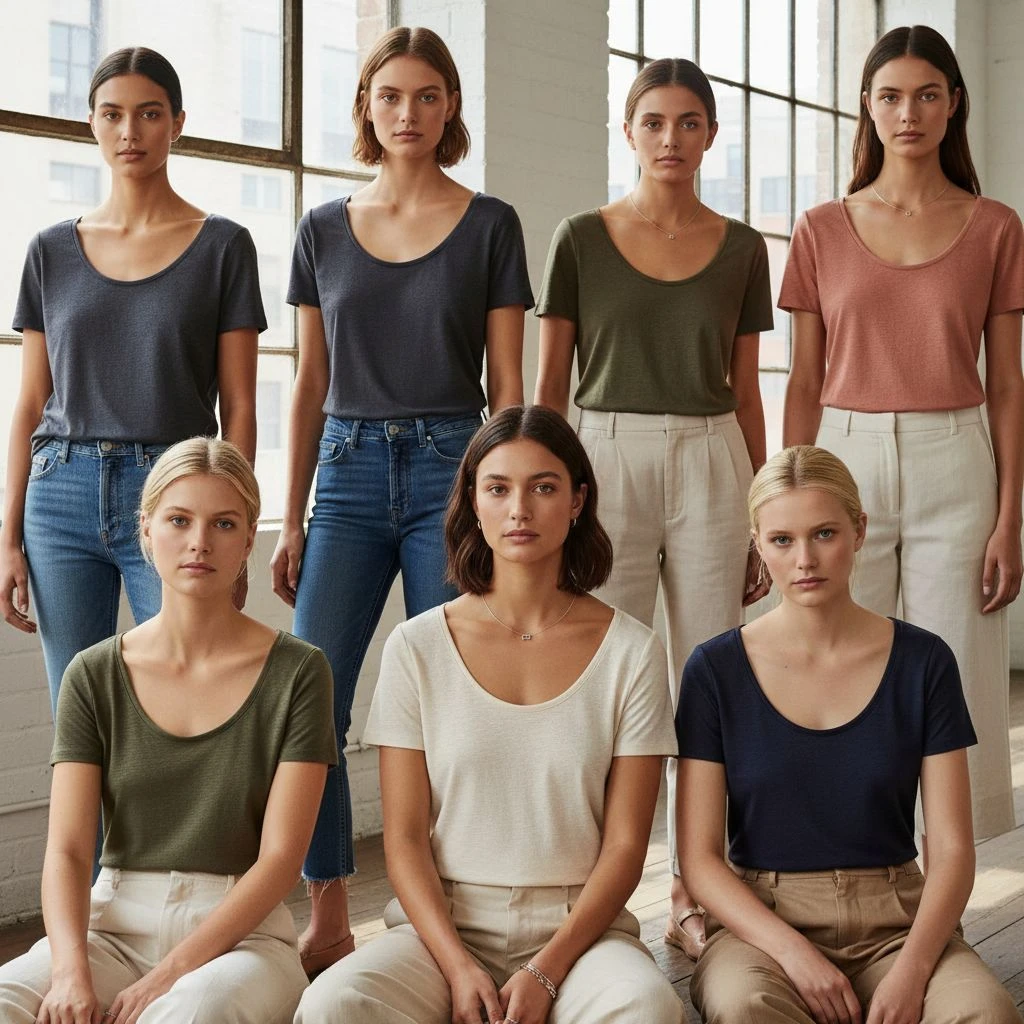
Why it’s difficult – Scoop necks look simple, but they are deceptively risky.
- Long curved edge = constant gravity pull
- No corner or point to lock the shape
- Stretching shows clearly on the body
Typical failures:
- Neckline slowly stretches wider
- Front dips lower over time
- Shape looks “tired” after washing
Important Notes:
A wide scoop neck often fails more often than a V-neck, just more quietly. Brands miss the issue until customer complaints appear months later.
Notch / Split Neck
Notch necks look like a small design tweak, so many brands treat them like a basic crew neck. That’s the trap. The split behaves like a “mini opening,” and without reinforcement at the split end, the neckline will slowly widen and lose shape often after washing. If you want this style to look premium in bulk, you have to engineer it like a high-risk neckline.
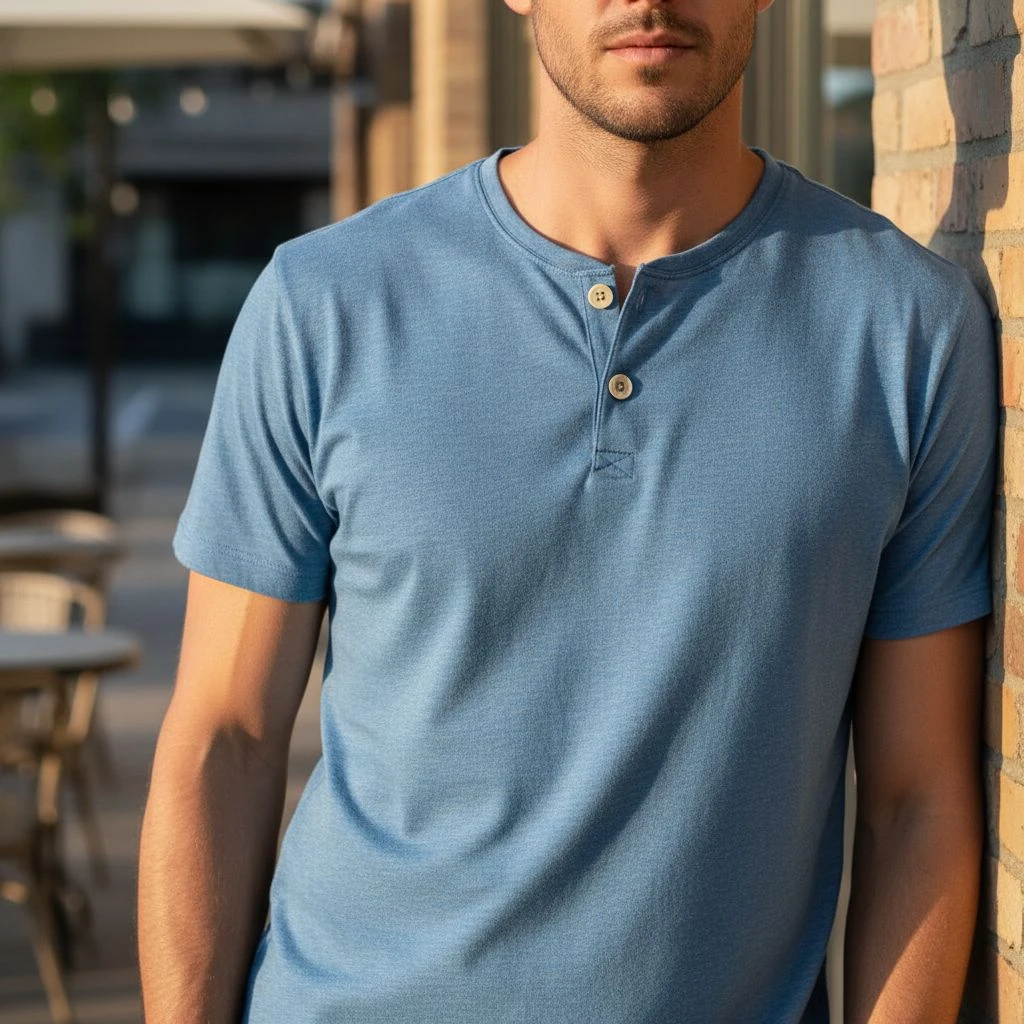
Why it’s difficult – A notch creates two stress points at the end of the split. Without proper control:
- the split spreads wider
- edges curl inward
- the neckline loses symmetry
Common production mistakes:
- No reinforcement at the split end
- Stitch density too low
- Soft fabric with no support

This neckline fails fast if under-engineered.
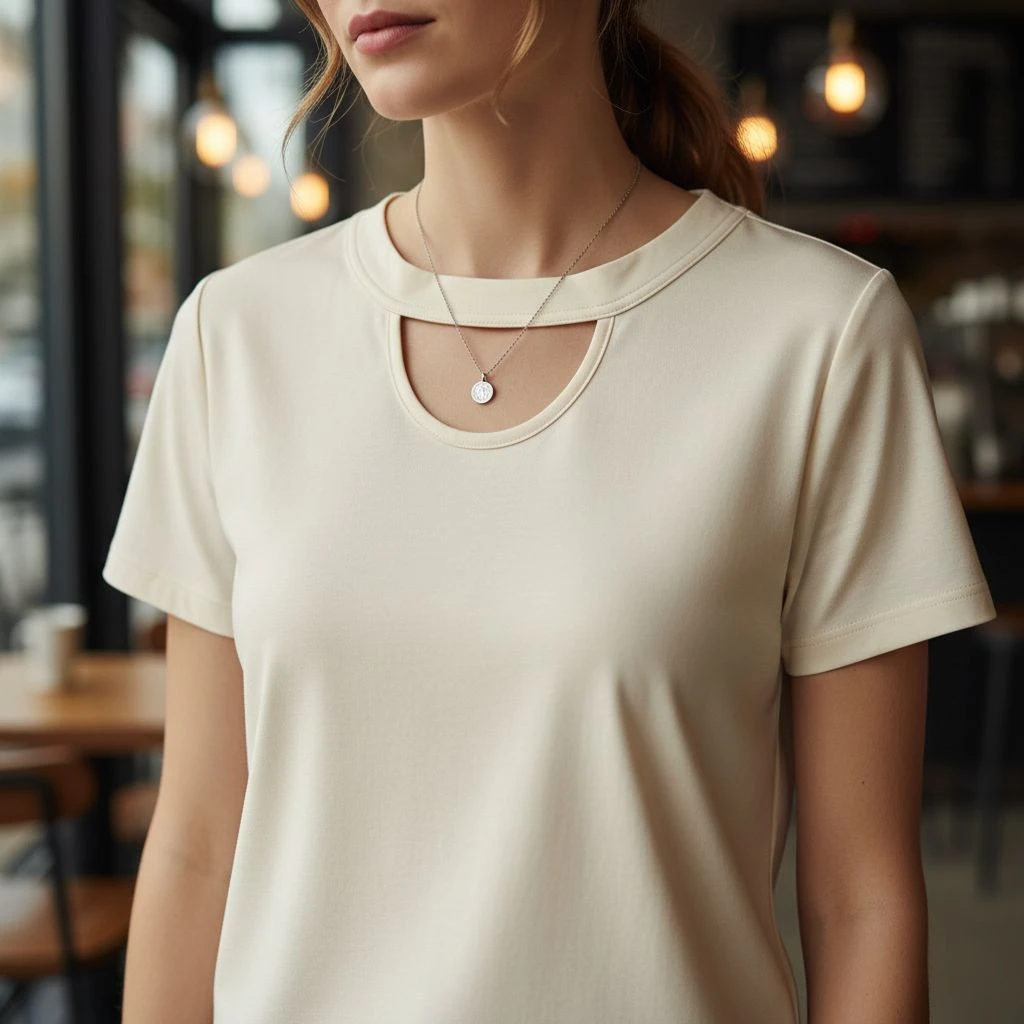
Keyhole Neck
Keyhole necks often get treated like a “cute cutout,” but in production they behave like a stress test. A tiny distortion makes the shape look uneven, and weak stabilization can lead to stretching or puckering around the opening. If your factory and fabric aren’t tightly controlled, a keyhole neck can quickly shift from “premium detail” to “quality complaint.”
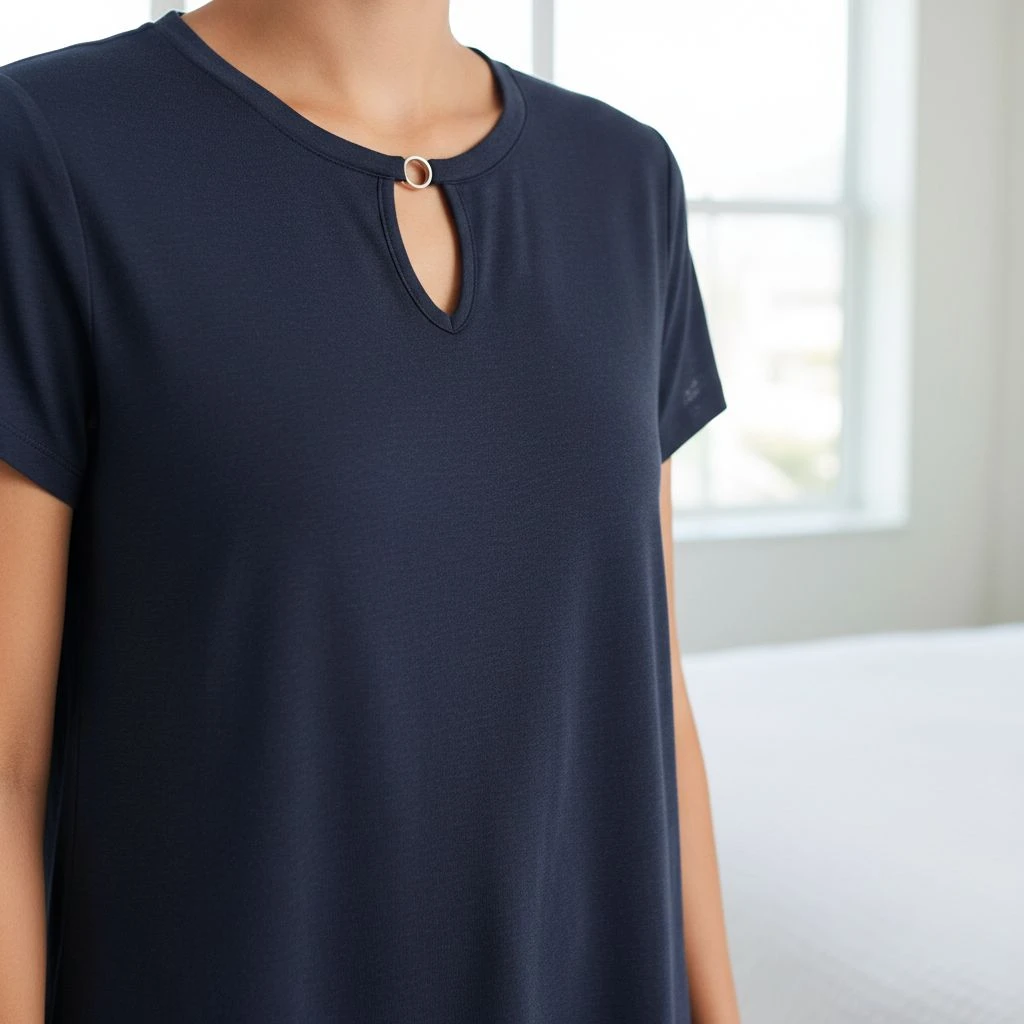
Why it’s difficult – Keyhole necklines require precise circular control on stretch fabric.
Challenges include:
- Maintaining a clean round shape
- Preventing distortion during sewing
- Keeping symmetry after wash
The real risk:
- Keyhole necks are not forgiving. Small inaccuracies in stitching, cutting, or pressing become obvious immediately.
Boat Neck
Boat necks are often underestimated because they look “simple.” But wide neck openings are unforgiving. If fabric recovery is weak or the construction isn’t stabilized, the neckline widens, the shoulders drop, and the garment loses its intended silhouette after washing. In production, a boat neck should be treated like a high-stress neckline not a basic one.

Why it’s difficult – Boat necks are very wide and sit close to the shoulders. This creates:
- strong horizontal tension
- high risk of shoulder slip
- fast stretch-out if fabric recovery is weak
Why brands underestimate it:
- Boat necks look like a “straight cut,” so they’re treated as low risk. In reality, they expose every weakness in fabric and construction.
Mock Neck
Boat necks are often underestimated because they look like a simple, straight neckline. But wide openings are unforgiving. If the fabric recovery is weak or the construction is under-reinforced, the neckline will widen, the shoulders will drop, and the garment will lose its intended shape after washing. In production, a boat neck should be treated as a “high-stress neckline,” not a basic one.

Why it’s difficult – Mock necks require vertical structure from horizontal knit fabric.
Problems appear when:
- collar fabric is too soft
- collar height is not controlled
- recovery is assumed, not tested
Typical failures:
- Collar collapses
- Wavy or “bacon” edge
- Neck loses shape after wash
Mock necks look premium, but only when engineered properly.
Comparison Table: Which Necklines Are the Most Difficult to Produce?
“Difficult” doesn’t always mean “complicated.” Some necklines look simple but fail often in real wear and washing, especially when fabric recovery or reinforcement is weak. This comparison table breaks down neckline difficulty based on real production risk and post-wash performance, not just appearance so you don’t underestimate styles that quietly cause returns.
| Neckline Type | Production Difficulty | Primary Stress Area | Typical Production Problems | Fabric Sensitivity | Reinforcement Level | Overall Risk |
|---|---|---|---|---|---|---|
| Deep V-Neck | Very High | V tip point | Tearing, twisting, distorted V | Very High | Mandatory | Very High |
| Wide Scoop Neck | High | Long curved edge | Stretching, sagging, loss of shape | High | Strongly recommended | High |
| Notch / Split Neck | High | End of split | Curling, widening, asymmetry | High | Mandatory at split | High |
| Keyhole Neck | High | Circular opening | Distortion, uneven shape | Medium–High | Mandatory | High |
| Boat Neck | Medium–High | Shoulder span | Shoulder slip, widening | High | Recommended | Medium–High |
| Mock Neck (Soft Knit) | Medium–High | Collar edge | Waving, collapse, “bacon” edge | High | Mandatory | Medium–High |
| Wide Crew Neck | Medium | Front neckline | Stretching, waving | Medium | Recommended | Medium |
| Standard Crew Neck | Low | Even distribution | Minor shape loss | Low | Optional | Low |
Final Words / Conclusion
Neckline problems rarely come from sewing alone they start with design choices. The most difficult necklines are those where opening size, fabric behavior, and construction are not properly matched.
Complex styles like deep V-necks or notch necks demand strong engineering, but even simple-looking necklines can fail if they’re underestimated. Without the right fabric, reinforcement, and cost allowance, stretching and shape loss are inevitable. For brands, the takeaway is simple: choose necklines based on durability, not appearance. Treating necklines as a technical decision not just a style detail leads to better quality, fewer returns, and stronger long-term products.