


What’s the Difference Between a Tech Pack and a Spec Sheet?

Receiving a sample that feels “off” is a common frustration for fashion brands. Often, the issue isn’t the factory’s skill, but the lack of detailed documentation. Brands frequently confuse a tech pack with a spec sheet, leading to critical production errors. While they work together, they serve different masters: one explains the entire “DNA” of the garment, while the other focuses strictly on measurement control. Understanding this difference is the key to faster, cleaner, and less risky production.
What Is a Tech Pack in Garment Manufacturing?
A tech pack is the master instruction file for your garment. It acts as the single source of truth for designers, pattern makers, sourcing teams, and QC inspectors. It transforms a creative concept into a technical reality that a factory can execute without guessing.

A Complete Tech Pack Includes:
- Technical flats (front, back, and detail views).
- Bill of Materials (BOM): A precise checklist of fabrics, threads, and hardware.
- Construction Notes: Detailed instructions on stitch types and seam finishes.
- Labeling, trims, and packaging specifications.
- Measurement spec sheet (as a sub-section).
What Is a Spec Sheet?
A spec sheet is a focused document dedicated entirely to measurements and fit control. It is the primary tool used by pattern makers to build templates and by QC teams to verify finished goods against brand standards.

Key Elements of a Spec Sheet:
- Points of Measurement (POM): Specific locations where the garment must be measured.
- Base Size Dimensions: The ideal measurements for your sample size.
- Grading Rules: How dimensions increase or decrease for larger or smaller sizes.
- Tolerances: The allowed margin of error (e.g., +/- 0.5 cm).
Tech Pack vs. Spec Sheet: The Key Differences
While a spec sheet is usually part of a tech pack, it cannot replace the entire document. Relying only on a spec sheet is like having the dimensions of a house but no information on the materials or structural engineering needed to build it.
| Feature | Tech Pack | Spec Sheet |
|---|---|---|
| Primary Purpose | Full production blueprint | Size & fit control only |
| Scope | Design + Materials + Construction | Measurements + Grading |
| Main Users | Developers & Factory Managers | Pattern Makers & QC Inspectors |
| Format | Visual + Technical drawings | Table-based numeric data |

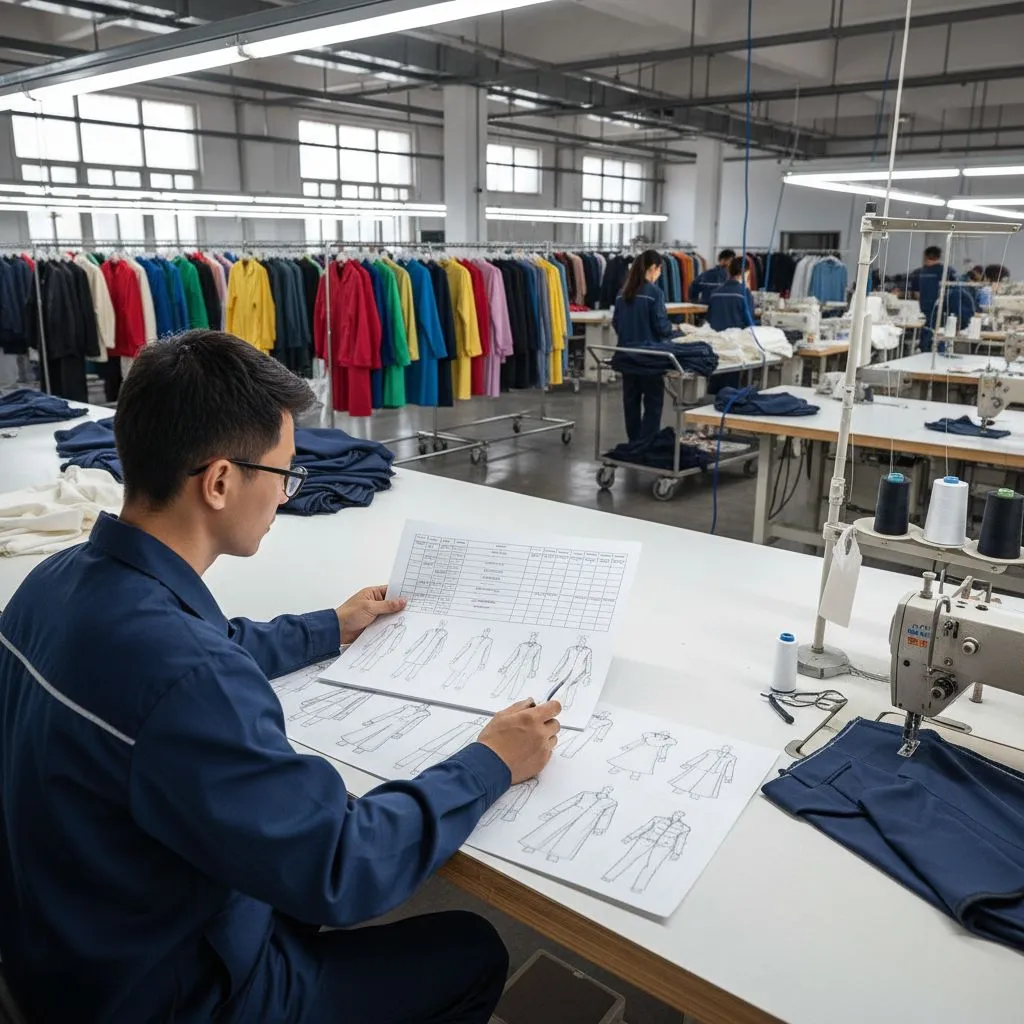
The Danger of Sending “Only a Spec Sheet”
Without the full tech pack, factories are forced to make assumptions. They may measure the garment correctly, but use the wrong stitch type, a lower-quality fabric weight, or substitute trims that don’t match your vision. This often results in a garment that fits right but feels wrong or looks cheap. Accuracy in fit alone does not guarantee a premium product.
Conclusion
In modern apparel manufacturing, clarity is your strongest form of protection. The tech pack provides the vision and the “how-to,” while the spec sheet ensures the consistency of the “what.” Using them together eliminates guesswork and protects your profit margins. At Mekong Garment, we help our partners refine both documents to ensure every collection meets world-class standards from the first sample to the final unit.
Contact Mekong Garment Factory
- VN Phone/WhatsApp/WeChat: +84 947 729 829
- Email: hanh@kimmy.vn