OEM/FOB in the Garment Industry: What It Really Means

In the garment industry, choosing the right production model can define your brand’s agility and profitability. An OEM/FOB order means you supply the design while the manufacturer handles material sourcing, production, and delivery up to ship loading. Under FOB terms, responsibility transfers to you once the goods are on board. This model offers lower upfront capital requirements but requires a clear understanding of the risks and workflows involved.
What is OEM / FOB in Garment Manufacturing?
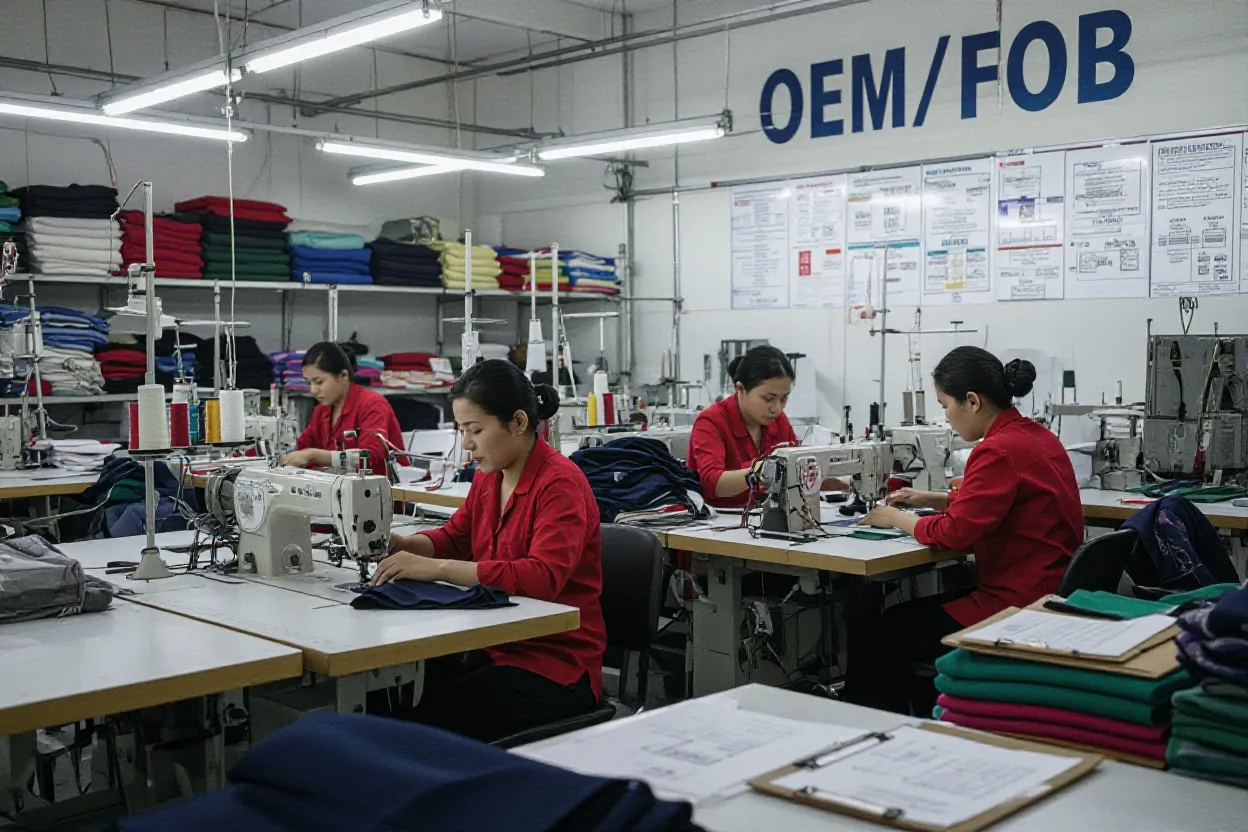
When people say “OEM/FOB order,” they are combining a production method with a shipping term. The manufacturer essentially acts as a full-service partner, taking the brand’s vision and turning it into a container-ready product.
- OEM (Original Equipment Manufacturing): A model where the factory builds products based on the designs, tech packs, and branding provided by the customer.
- FOB (Free On Board): An Incoterm stating that the manufacturer is responsible for the cost and risk of the goods until they are loaded onto the vessel at the named port of shipment.
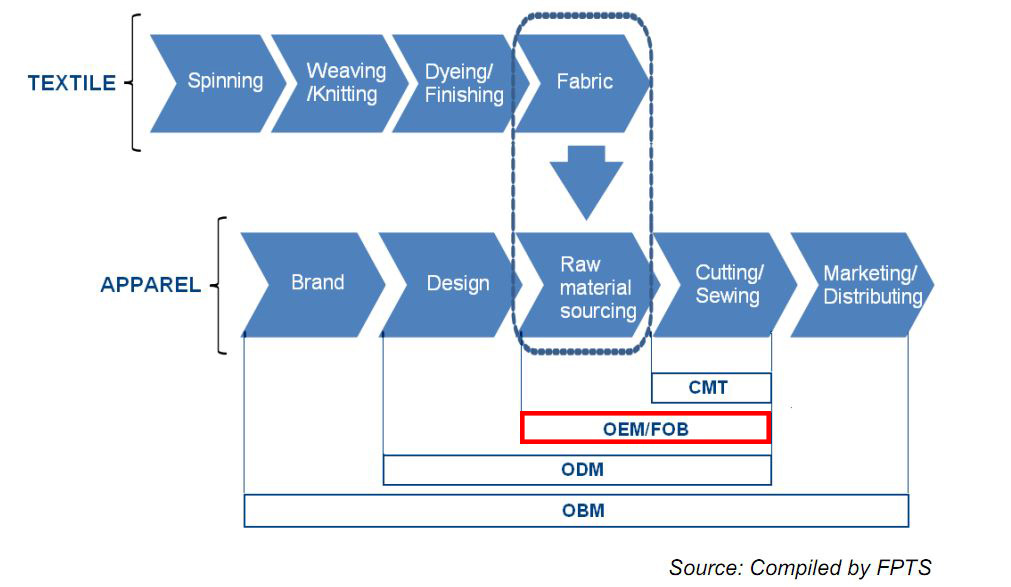
The OEM/FOB Workflow: Step-by-Step
A structured workflow is vital to manage costs and prevent delays. Here is how a typical order flows from design to port:
- Design & Spec Submission: The brand provides the tech pack, sizing charts, and color requirements.
- Material Sourcing: The manufacturer sources fabric, buttons, zippers, and labels. They leverage their network to find the best quality-to-cost ratio.
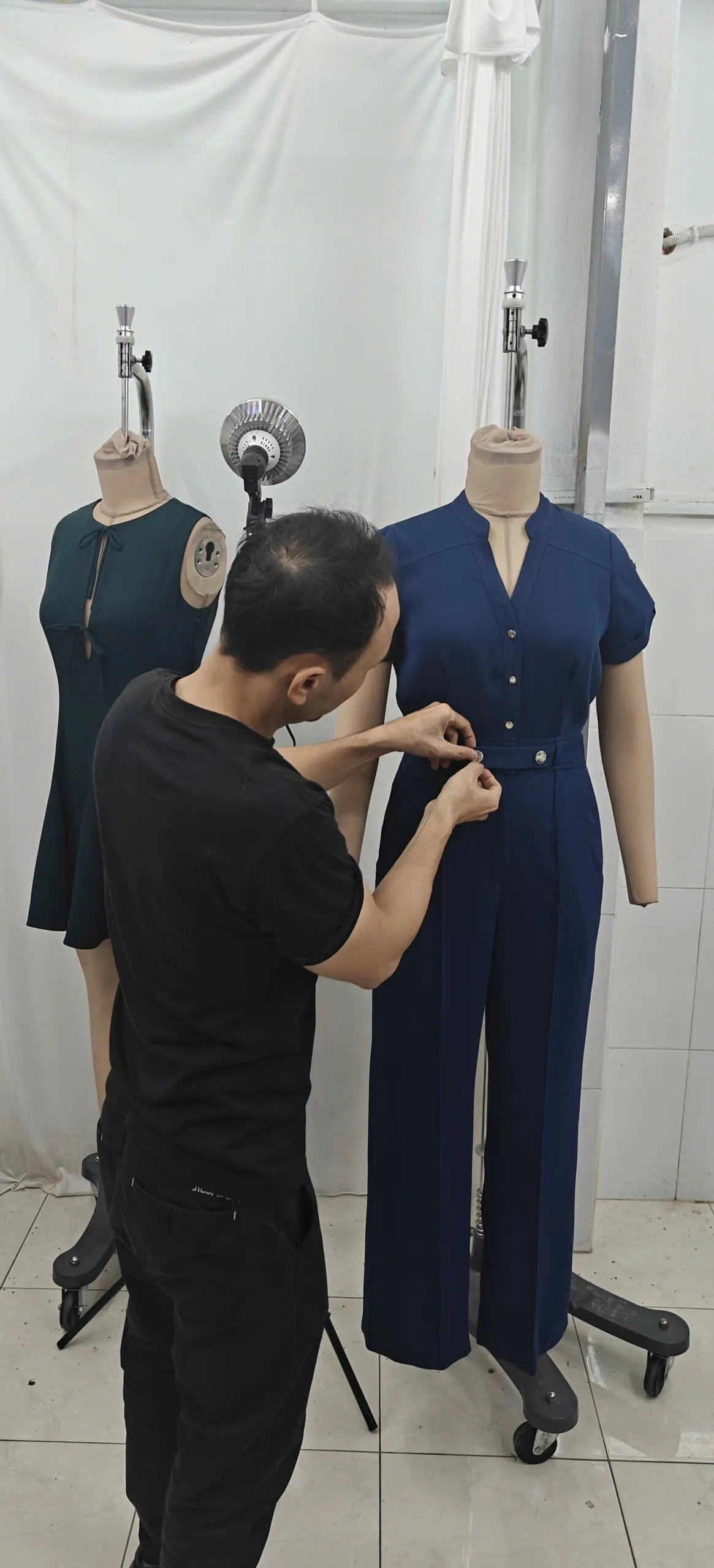
- Sample Approval: A prototype is produced for the brand to check fit, workmanship, and finishing before bulk production starts.
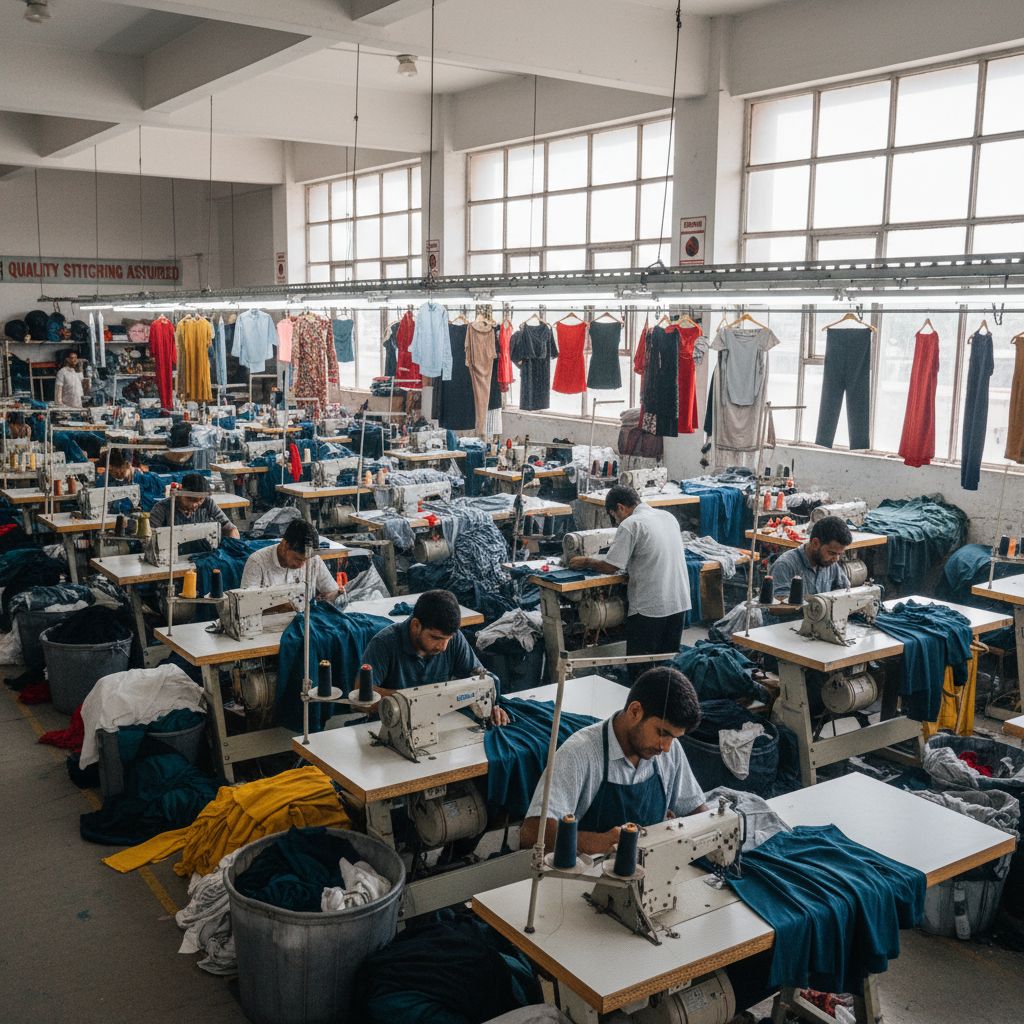
- Mass Production: Cutting, sewing, and trimming are performed under one roof to maintain consistency.
- QC & Inspection: Rigorous quality checks ensure every piece meets the agreed specifications.
- FOB Shipment: The manufacturer handles export clearance and transports goods to the port. Once loaded onto the ship, the risk transfers to the buyer.
- Logistics Takeover: The buyer handles sea freight, insurance, and final inland delivery.
Key Benefits of the OEM/FOB Model
For the Brand:
- Lower Financial Pressure: You don’t need to buy raw materials months in advance or maintain your own production facility.
- Strategic Focus: Spend more time on marketing, market expansion, and customer loyalty while the factory handles the “heavy lifting.”
- Speed to Market: Factories often have established sourcing networks, enabling faster turnarounds for fast-fashion or seasonal drops.
For the Manufacturer:
- Higher Margins: Capturing more value by managing the supply chain (sourcing + production) compared to basic CMT orders.
- Competitive Advantage: Integrated services (Material + Production + Port delivery) make the factory more attractive to global buyers.
Risks and Challenges to Manage
Success in OEM/FOB requires high transparency and clear communication. Major risks include:
- Sourcing Delays: If a fabric supplier is late, the entire production timeline shifts.
- Quality Failures: The manufacturer is responsible for the input material quality; any failure at the QC stage can lead to costly rework.
- IP Protection: Brands must ensure their designs and trademarks are legally protected throughout the manufacturing process.
Conclusion
The OEM/FOB model has become the backbone of the modern garment industry because it balances responsibility and rewards. Brands gain the freedom to scale without heavy infrastructure, while manufacturers like Mekong Garment provide the technical expertise and sourcing power to deliver high-quality apparel. With clear specifications and tight communication, this partnership drives efficiency and profitability for both parties. As global fashion demands more flexibility, the OEM/FOB model remains the most reliable path for delivering retail-ready products to the world.
FAQs About OEM/FOB Garment Orders
In Short, Under an OEM/FOB arrangement, what specific responsibilities fall to the manufacturer?

The manufacturer handles material sourcing (unless restricted by the buyer), cost negotiation with suppliers, production planning, cut-make-trim (CMT) activities, quality control, packing to buyer specifications, export documentation, customs clearance and physically loading containers onto the vessel at the named port. Mekong Garment Vietnam often also coordinates samples, fit approvals and pre-shipment inspections when agreed in the contract.
In Short, What does OEM/FOB mean in the garment industry
OEM (Original Equipment Manufacturing) means the manufacturer produces garments to a brand’s design, specs and branding. FOB (Free On Board) is an Incoterm where the seller (manufacturer) is responsible for producing, packing, clearing exports and loading the goods onto the ship at the named port; liability and freight cost transfer to the buyer once cargo is on board.
What does the brand/ordering party need to provide and manage in an OEM/FOB order?
The brand supplies technical files (specs, patterns, grading, bill of materials), artwork and labeling instructions, sampling and approval timelines, packaging requirements, and the shipping instructions including nominated port and preferred carrier if applicable. The buyer arranges and pays for ocean freight, insurance beyond FOB point, import clearance and inland delivery at destination. Brands may also specify approved suppliers or quality standards that the factory must follow.
What does the brand/ordering party need to provide and manage in an OEM/FOB order?
The brand supplies technical files (specs, patterns, grading, bill of materials), artwork and labeling instructions, sampling and approval timelines, packaging requirements, and the shipping instructions including nominated port and preferred carrier if applicable. The buyer arranges and pays for ocean freight, insurance beyond FOB point, import clearance and inland delivery at destination. Brands may also specify approved suppliers or quality standards that the factory must follow.
What are the typical steps in an OEM/FOB workflow from design to ship loading?
Typical steps: 1) Technical packet and design handover; 2) Sample development (proto, fit, pre-production sample) and approvals; 3) Material sourcing and approval; 4) Production planning and cutting; 5) Sewing and finishing; 6) In-line and final quality inspections; 7) Packing, labeling and marking per buyer specs; 8) Export documentation and customs clearance; 9) Loading on board at the named port. Each stage requires clear sign-offs to avoid delays and disputes.
What variants of OEM/FOB exist and how do they change control, cost and manufacturer margin?
Variants range from brand-controlled sourcing (manufacturer must buy from approved suppliers) to manufacturer-controlled sourcing (full sourcing freedom). Other variants include partial FOB where the brand supplies key materials (e.g., fabrics) and the factory provides manufacturing and export services. Greater sourcing freedom usually increases manufacturer margin and shortens lead times, while brand-controlled sourcing provides more consistency and lower material-risk for the brand but can reduce factory margin and speed.