
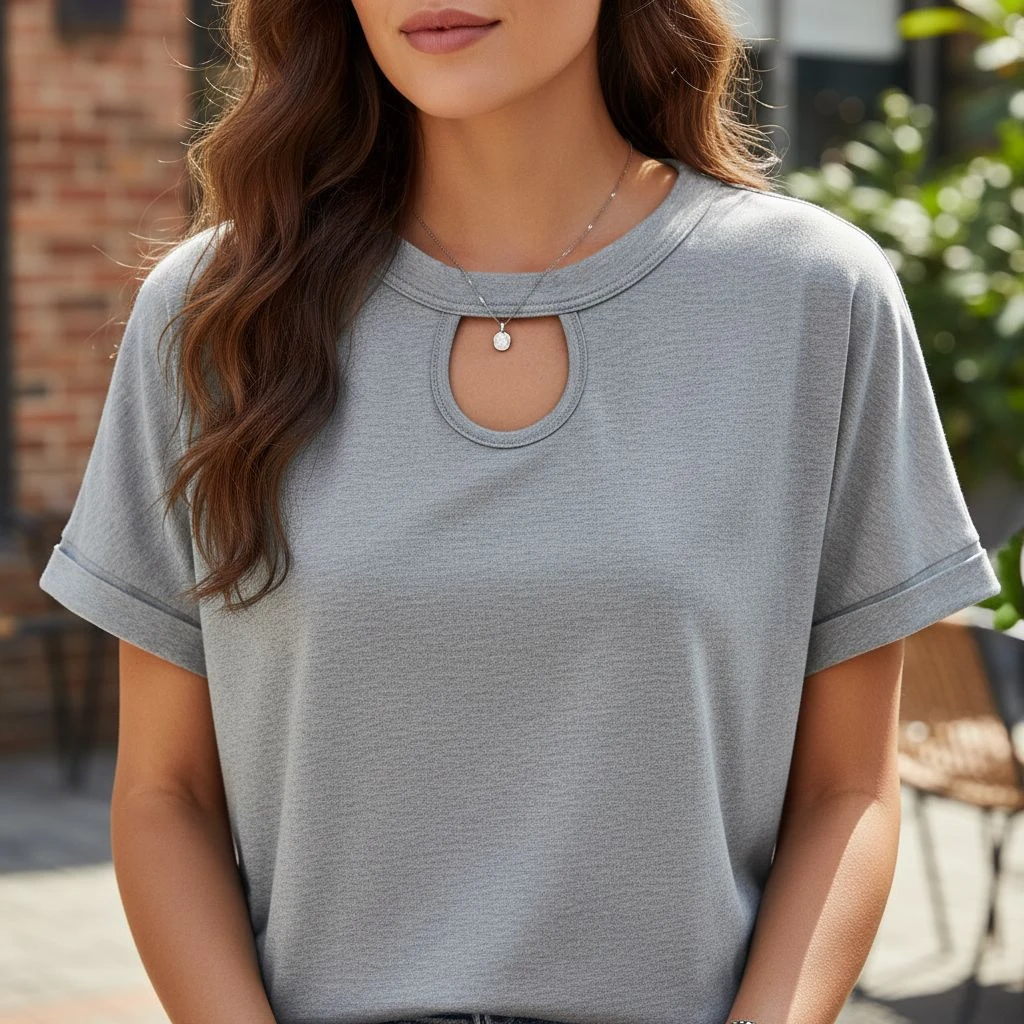
A keyhole neck T-shirt is one of the simplest ways to make a basic tee feel more “designed.” With one small cutout at the neckline, the style can look feminine, premium, and boutique-ready without changing the body silhouette or fit. But here’s the catch for brand owners: that small opening becomes a stress point. If the cutout isn’t reinforced and finished perfectly, it stretches, curls, or tears after washing, and the whole garment feels cheap fast. This guide breaks down the real pros, cons, and production risks so you can decide if a keyhole neck is a smart upgrade or an expensive mistake.
=> Read More: T Shirts Manufacturing Vietnam | Mekong Garment Factory
What Is a Keyhole Neck T-Shirt?
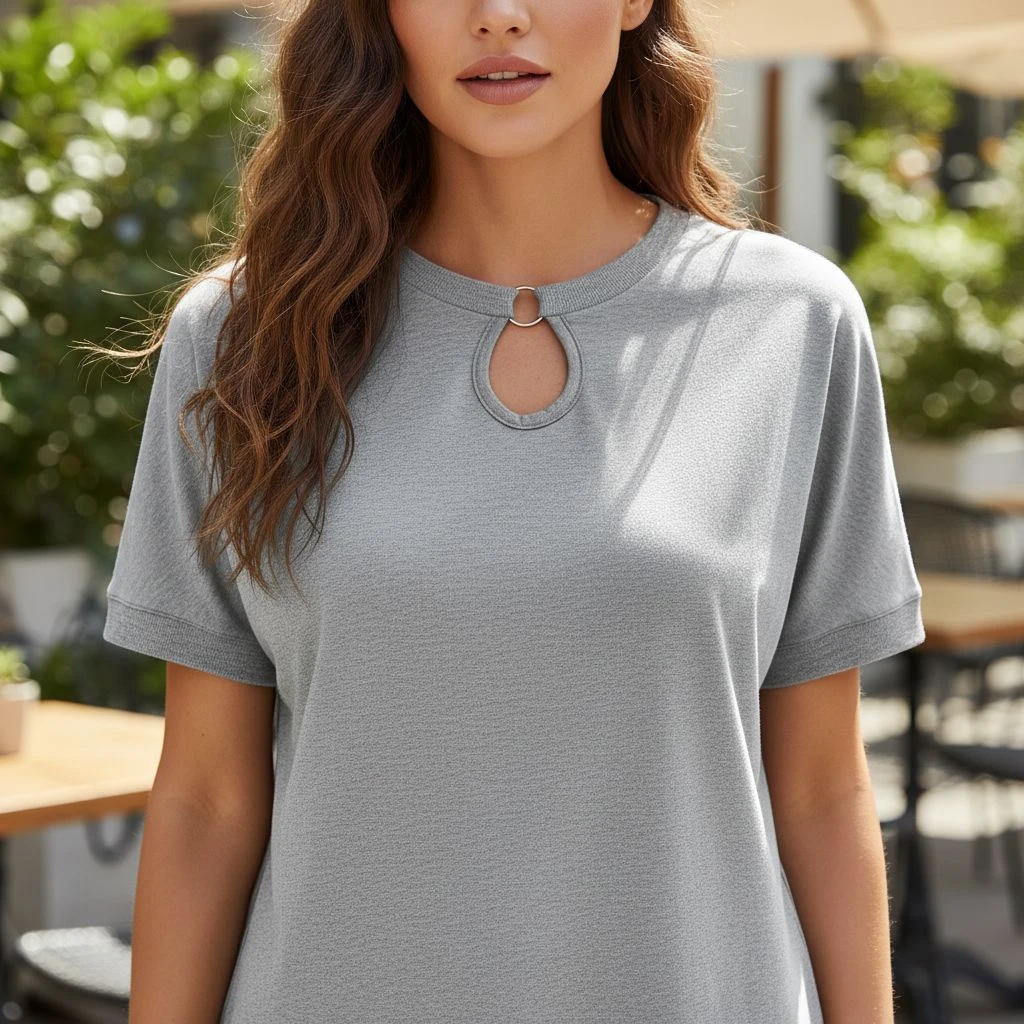
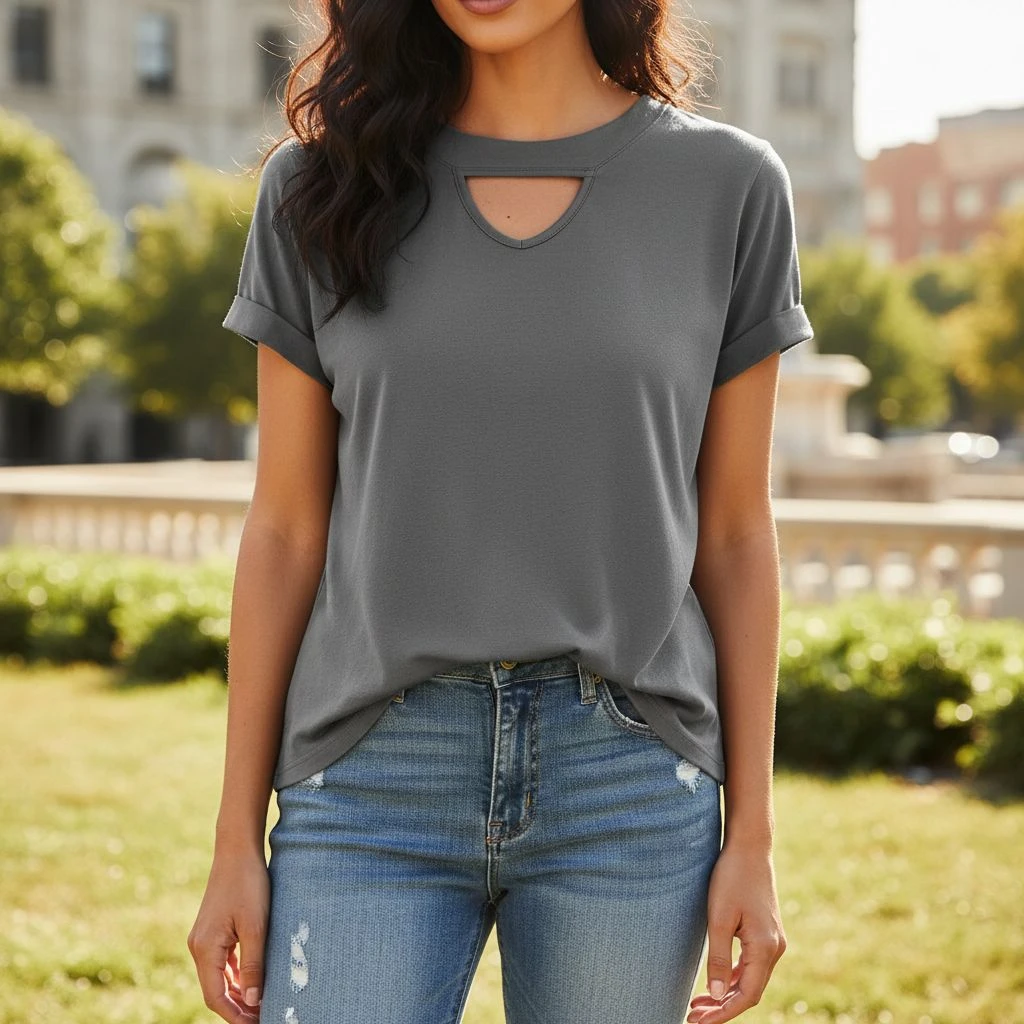
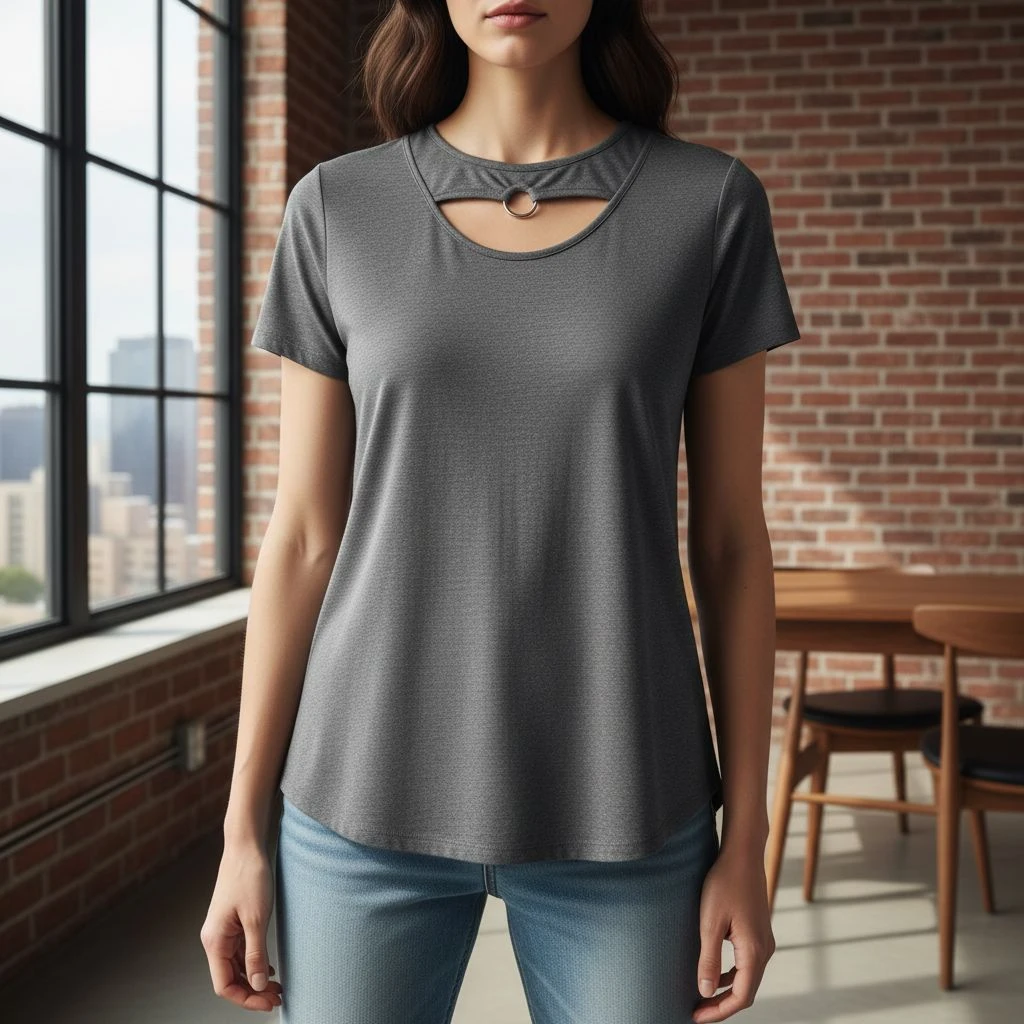
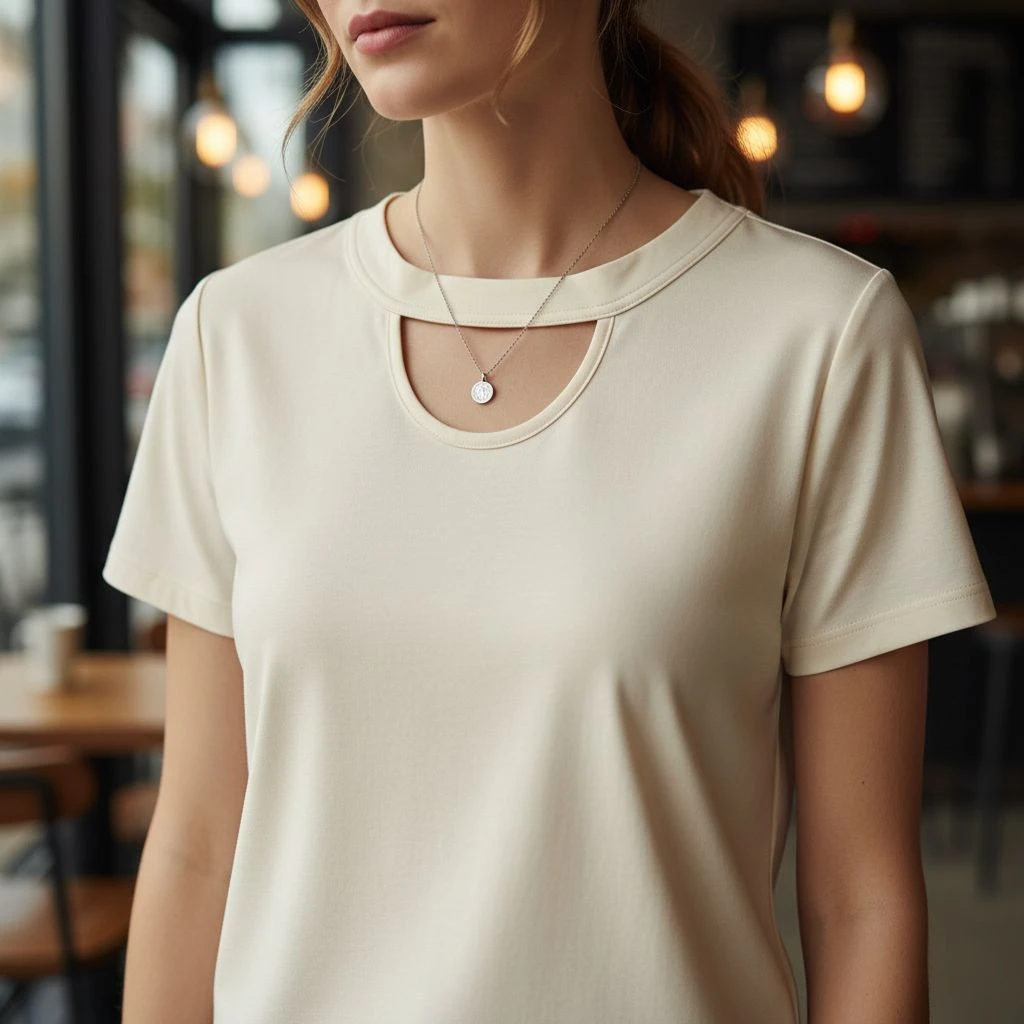
A keyhole neck T-shirt features a small, intentional cut-out opening at the neckline usually centered at the front, sometimes finished with a button, loop, or clean edge binding. The overall silhouette stays close to a classic tee. The keyhole acts as a visual accent, not a structural change. That subtlety is why brands like it and why many underestimate it.
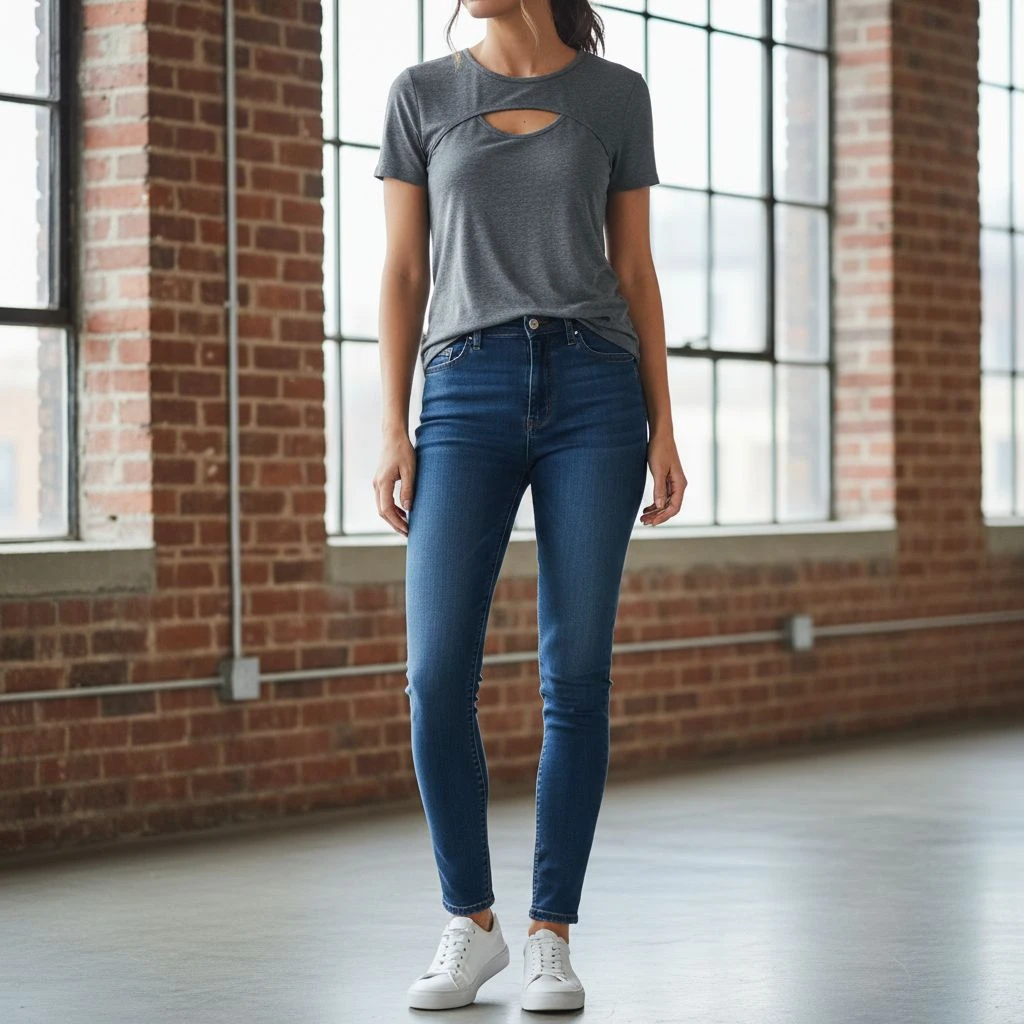
Why Brands Are Drawn to Keyhole Necklines
From a brand strategy view, keyhole necks promise three things:
- Differentiation without re-patterning the body
- A more feminine or fashion-forward look
- Higher perceived detail value

On paper, it sounds perfect. In reality, the neckline becomes the highest-risk zone of the garment.
Pros & Cons of Keyhole Neck T-Shirts
Keyhole neck T-shirts look like a small upgrade but for brands, they’re a big decision. That tiny cutout can make a basic tee feel more feminine and premium, helping you stand out without changing the overall fit. At the same time, the keyhole becomes a stress point. If it isn’t reinforced and finished cleanly, it can stretch, curl, or tear after washing leading to returns and unhappy customers. In this section, we’ll break down the real pros and cons so you can judge whether a keyhole neck adds value or adds risk.
Pros:
- 1. Strong Perceived Value with Minimal Visual Change – A small neckline detail can: Make a basic tee look “designed”, Support higher pricing in boutique or DTC channels, Reduce comparison with plain crew-neck competitors, This only works if the execution is clean. Sloppy edges erase all perceived value.
- 2. Feminine Without Being Revealing – Keyhole necks: Draw attention upward toward the collarbone, Feel softer than V-necks, Avoid the exposure issues of deep cuts, This makes them popular in women’s casual fashion where customers want “interesting, but safe.”
- 3. Keeps Fit & Size Predictability – Because: the body pattern stays unchanged: Sizing remains familiar, Returns from fit issues stay low, Merchandising is easier, That’s a real operational win.
- 4. Easy to Style Across Seasons – Keyhole tees layer well under: Cardigans, Blazers, Lightweight jackets. This extends selling windows beyond summer.
Cons:
This is where most sourcing mistakes happen.
- 1. Higher Durability Risk: A keyhole creates a stress point. Without reinforcement, the opening stretches, edges curl, and the neckline loses shape fast. Hard truth: bad keyholes age faster than almost any other neckline
- 2. High QC Sensitivity – Small errors are very visible: Uneven stitching, Misaligned cutout, Asymmetry. Customers may not know why but they know it looks wrong.
- 3. Limits Prints & Graphics – Keyholes break: Center chest prints, Typography alignment, Vertical artwork flow. If graphics are your main value, this neckline works against you.
- 4. Fabric-Dependent Performance: Not all fabrics behave the same – Risky: low-recovery jersey, soft modal, light rib without tape. Safer: stable cotton jersey, interlock, taped or faced necklines. Ignoring this leads to post-wash returns.
- 5. Small Detail, Real Production Risk: Factories often treat keyholes like normal necklines. Without clear specs, reinforcement and finish quality become inconsistent.
Keyhole Neck vs Other “Detail” Necklines
Not all “small neckline details” carry the same risk. A keyhole neck can add a premium, feminine touch with minimal silhouette change but it also introduces a cutout that can stretch, curl, or fail if construction and fabric recovery aren’t controlled. This comparison section helps brand owners choose the right detail neckline based on what matters in production: durability, QC difficulty, print compatibility, cost impact, and return risk… If your goal is to add value without creating sourcing headaches, picking the right neckline detail matters more than the trend.
| Criteria | Keyhole Neck | Split / Notch Neck | Henley Neck | Crew Neck (Basic) |
|---|---|---|---|---|
| Visual Differentiation | Medium–High (subtle focal point) | Medium (clean, intentional) | High (buttons = obvious detail) | Low |
| Durability Risk | High (cutout = stress point) | Medium | Medium–High (buttons & placket) | Low |
| QC Sensitivity | High (small errors very visible) | Medium | High | Low |
| Fabric Dependency | High (needs good recovery) | Medium | Medium | Low |
| Print / Graphic Friendly | Low (breaks center prints) | Medium | Low | High |
| Production Complexity | Medium | Low–Medium | High | Low |
| Cost Impact | Low–Medium | Low | Medium–High | Low |
| Best For | Women’s fashion tees, boutique basics | Lifestyle, unisex, casual brands | Menswear, rugged / premium casual | Volume basics, uniforms |
| Worst For | Heavy daily wear, print-driven brands | Very dressy looks | Cost-sensitive programs | Brands needing differentiation |
| Overall Risk Level | High if unmanaged | Balanced | High but visible value | Lowest |

Conclusion / Final Words
A keyhole neck T-shirt is a small detail with big consequences. It can raise perceived value, but it also increases durability risk, QC sensitivity, and fabric dependency. For brands, this style only works when construction and materials are tightly controlled. In short, a keyhole neck is not an easy upgrade it’s a quality test. Use it only if your production is ready for the extra risk.