
A Henley shirt is one of those garments that feels familiar yet often gets mis-represented. It’s not a basic tee, and it’s not a polo. it lives somewhere in between, with a distinctive button placket that adds both visual interest and production complexity. In this guide, we’ll break down what a Henley truly is, why brands use it, the real pros and cons, and how it affects costing, quality, and customer satisfaction
=> Read More: T Shirts Manufacturing Vietnam | Mekong Garment Factory
What Is a Henley Neckline T-Shirt?
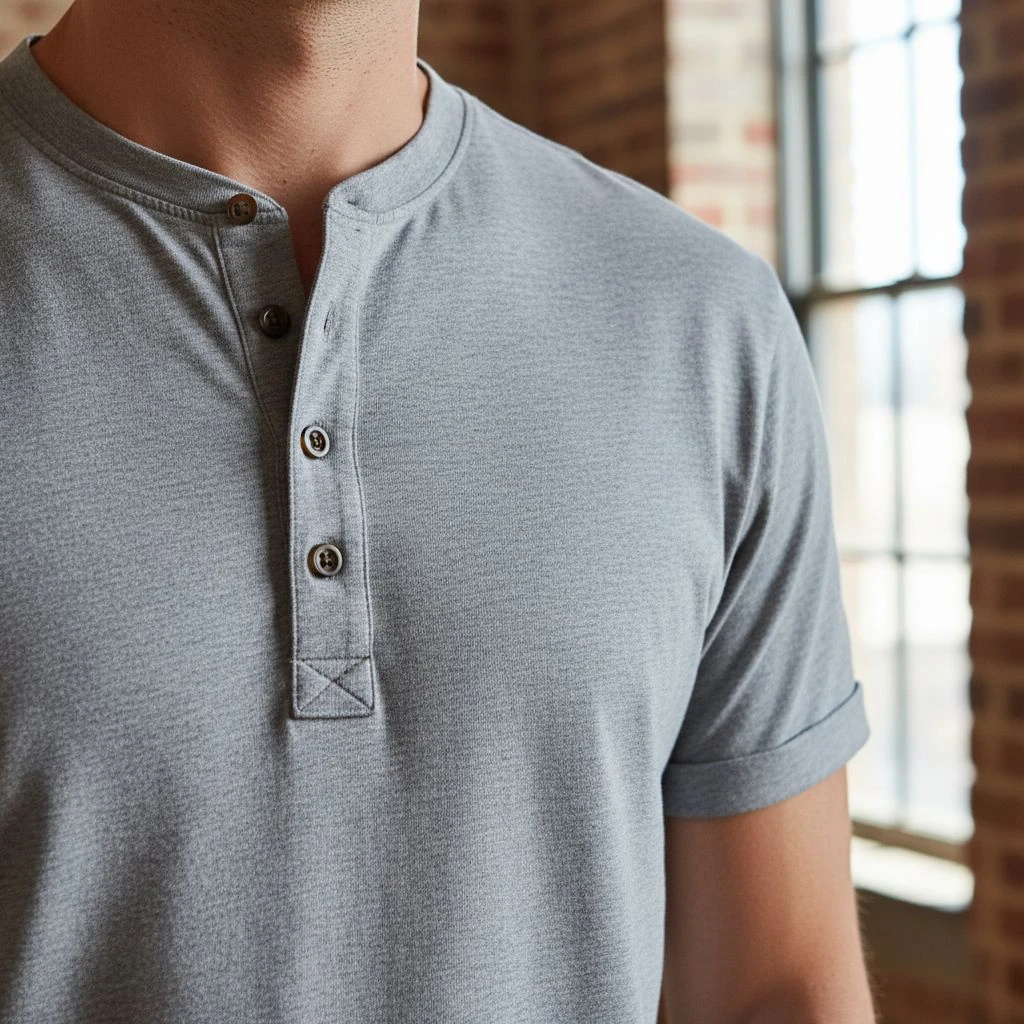
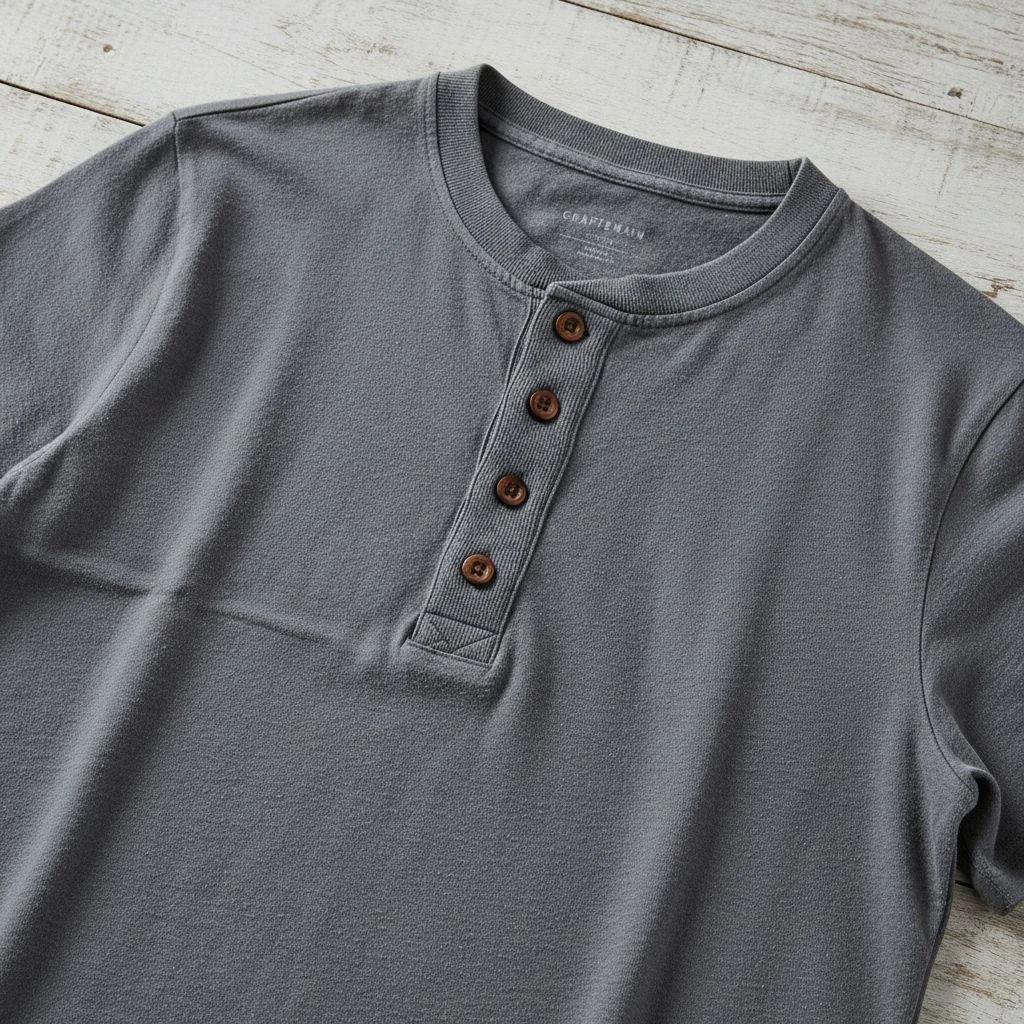
A Henley neckline T-shirt is a collarless knit top with a short button placket at the center front, usually 2–5 buttons. It keeps the comfort of a standard tee, but the placket adds structure and a more “finished” look. For brands, that small construction detail changes both the styling and the production requirements. A Henley neckline T-shirt is a knit top that:
- Has no collar
- Features a short front placket with buttons (typically 2–5)
- Is usually made from knit fabrics like jersey or thermal knit
Unlike polos, which have collars and woven plackets, Henleys keep the casual comfort of a tee but add character through the button detail. This small change in neckline style has big effects on how the garment looks, feels, and wears.
Best Uses for Henley T-Shirts
Henley tees perform best when you use them with a purpose, not just as “another neckline.” They’re strongest in collections that benefit from texture, rugged styling, and layering where the placket reads as real value. If your brand is chasing ultra-minimal basics or lowest-cost volume, Henleys can actually create more problems than profit.

Henleys fit well into these categories:
- Menswear
- Outdoor and adventure wear
- Heritage or workwear–inspired collections
- Layering-focused assortments
They’re less effective when:
- Positioned as basic wardrobe staples
- Paired with very formal styles
- Launched in ultra-cheap fabrications
Why Brands Love Henley Shirts
Henley shirts are popular because they offer an immediate visual upgrade over basic crew and V-neck tees. Customers often associate them with:
- Rugged heritage or workwear style
- Outdoors and utilitarian aesthetics
- Smart-casual layering pieces
They’re particularly strong in menswear, especially when paired with denim, flannels, or overshirts. But let’s go deeper than style, here’s what really drives brands to include Henleys in their collections:
1. Perceived Value Boost
Buttons and a placket instantly make a T-shirt feel more than basic. Many customers are willing to pay a premium because these details suggest craftsmanship.
2. Styling Flexibility
Henleys translate well across:
- Casual wardrobes
- Outdoor collections
- Transitional seasons (spring/fall layering)
- Lookbooks and curated outfits
3. Identity and Positioning
For certain brands, especially heritage, outdoor, and workwear labels, Henleys help define a point of view. They signal thoughtful design while staying true to comfort.
Pros and Cons of Henley Shirts

Henley necklines look simple, but they change your product more than most brands expect. The button placket adds visible value and helps a tee feel “upgraded,” which can support higher pricing. But that same detail also adds cost, more sewing steps, and more QC risk. Before you commit, you should weigh what Henleys do best and where they can quietly hurt margins, consistency, and returns.
Pros of Henley Neckline T-Shirts.
Let’s look at what Henleys actually deliver for brands and customers:
- 1. Visual Interest Without a Collar: The placket and buttons give structure and a focal point at the neckline, without the formality of a collar.
- 2. Easy Layering Piece: Henleys work perfectly under jackets, cardigans, and overshirts, making them versatile for try-on outfits and seasonal collections.
- 3. Premium Perception: Even at moderate price points, customers often perceive Henleys as higher value than plain tees, which can support better margins. if execution is clean.
- 4. Heritage and Storytelling: They carry associations with classic American workwear and outdoors culture, useful for brand narratives.
Cons of Henley Neckline T-Shirts
…but it isn’t all sunshine. Here are the real drawbacks brands need to understand:
- 1. Higher Production Complexity: Basic tees are simple, bodies, sleeves, and a neckline. Henleys add -A placket pattern, Interfacing or reinforcement, Buttonholes, Buttons, Extra stitching and pressing steps. This means higher labor cost and longer lead times.
- 2. More Quality Risks: Every added button and stitch is a potential failure point – Placket puckering, Button pulling, Uneven placement, Distortion after washing. If factories cut corners on reinforcement, Henleys can look cheap instead of premium.
- 3. Cost and Pricing Pressure: Because of the added details, Henleys cost more to make. If you price them too close to basic tees, margins shrink and customers may not see enough difference to justify the price.
- 4. Fit & Fabric Sensitivity: Henleys reveal fabric weakness more than regular tees. Stretchy, lightweight jerseys can warp around the placket. Midweight, stable knits perform far better.
Fabric and Construction: What Matters Most
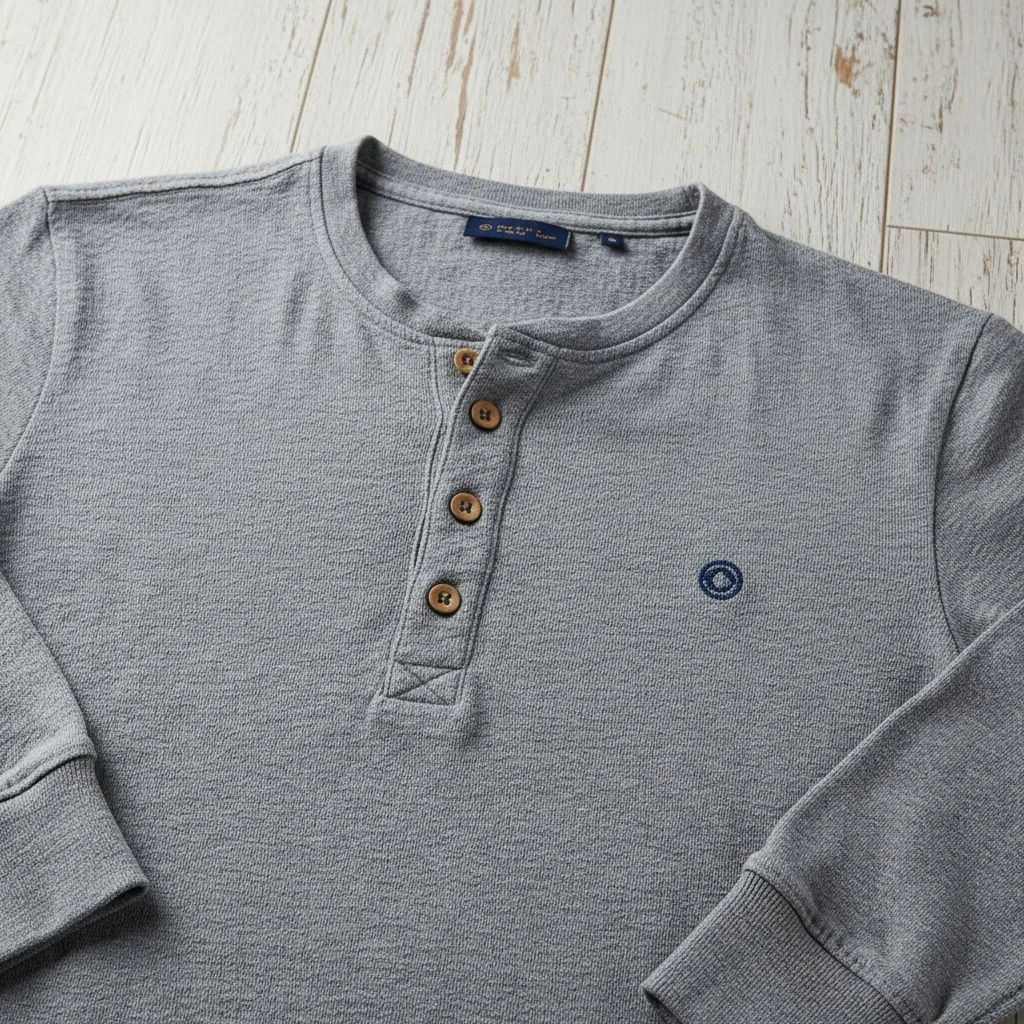
A strong Henley isn’t just a tee with buttons glued on. it requires thoughtful construction:
Placket Reinforcement:
The placket must lie flat and hold shape.
That often means:
- Interfacing or twill tape
- Clean topstitching
- Symmetry and balanced tension
Button Choices:
Buttons aren’t decoration, they must survive wear and laundering.
Better choices include:
- Corozo or reinforced plastic
- Bar-tacked button stitching
- Buttons sized for knit stretch
Fabric Selection:
Best fabrics for Henleys:
- Mid-weight jerseys (180–220 gsm)
- Cotton blends with good recovery
- Thermal or waffle knits for structure
Avoid very light knits or high-spandex blends that distort around the placket.

Conclusion: Are Henley Shirts Worth It?
Yes if you treat them as a design investment, not a cost add-on. Henley necklines offer visual richness and genuine perceived value, but they demand higher quality standards and careful fabric choice. Mispricing or rushed production turns this potential asset into a liability something customers notice even if they can’t name it. For brands that control quality and tell strong style stories, Henleys can become hero items that elevate whole collections. For brands chasing volume at the lowest cost, they can be a trap.