Split / Notch Neck T-Shirts: Pros, Cons, and How to Produce Them Right

A split / notch neck tee is the “quiet upgrade” of a crew neck: it keeps the easy, everyday feel of a basic tee, but adds a small center-front opening that makes the style look more intentional. The catch? That tiny split is also a stress point. If it’s not built correctly, it can curl, stretch open, or start tearing and customers won’t say “construction issue,” they’ll just feel “cheap.” This guide breaks down what it is, why brands use it, the real pros/cons, and the production details that protect your reorder rate.
=> Read More: T Shirts Manufacturing Vietnam | Mekong Garment Factory
What a Split / Notch Neck T-Shirt Is
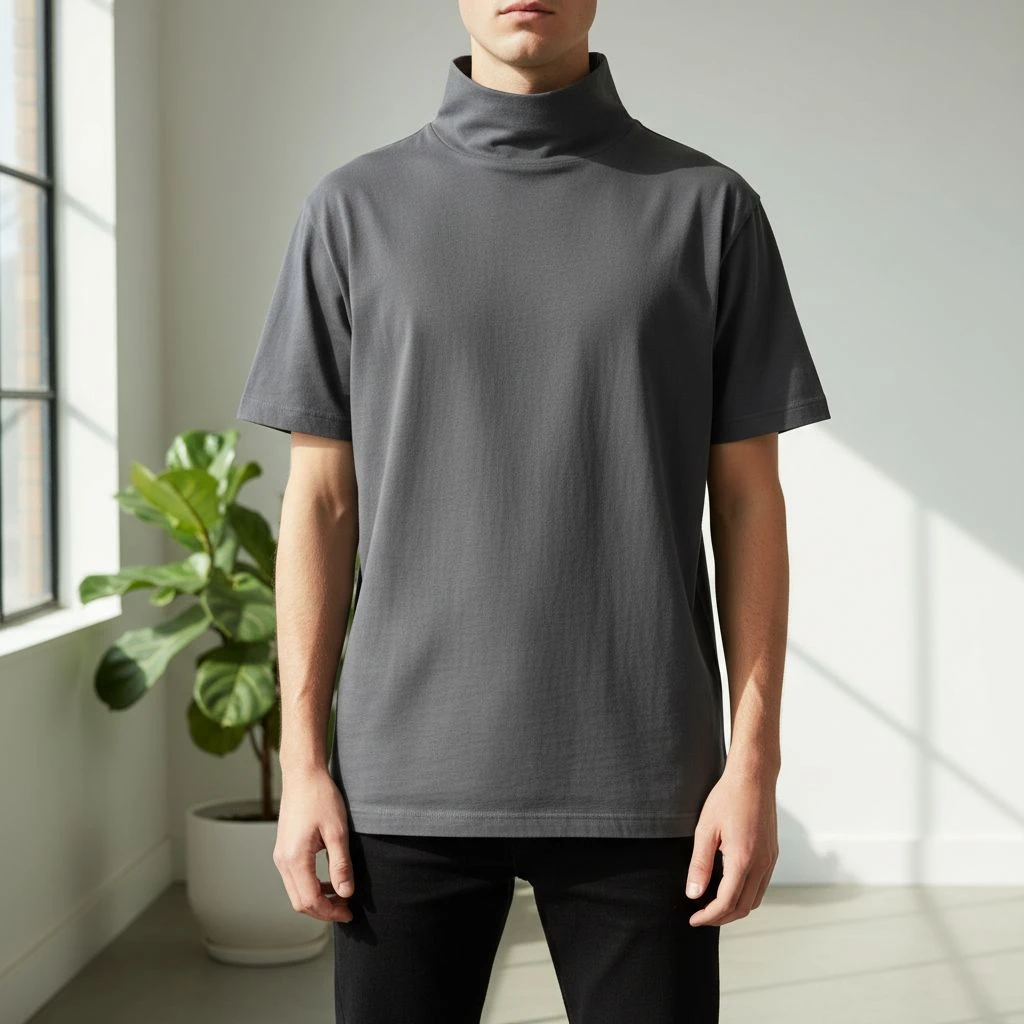
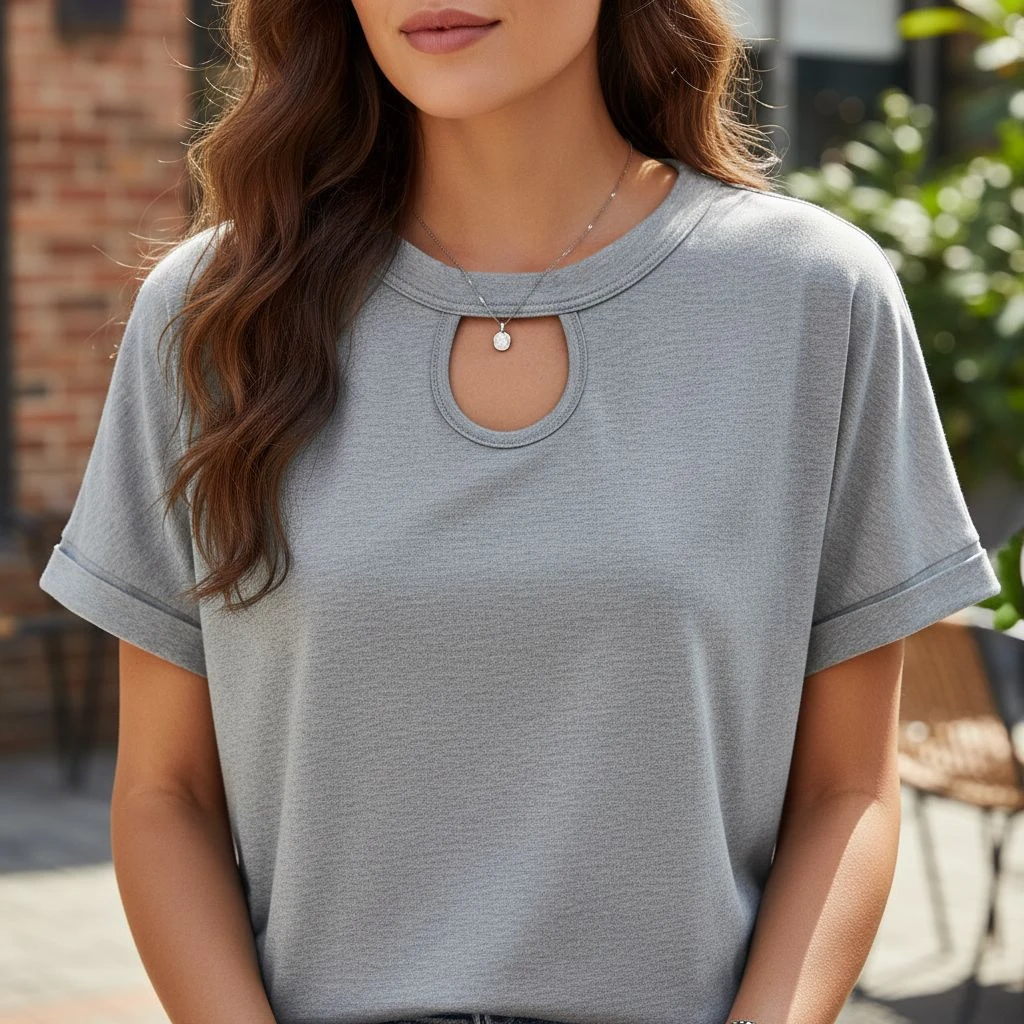
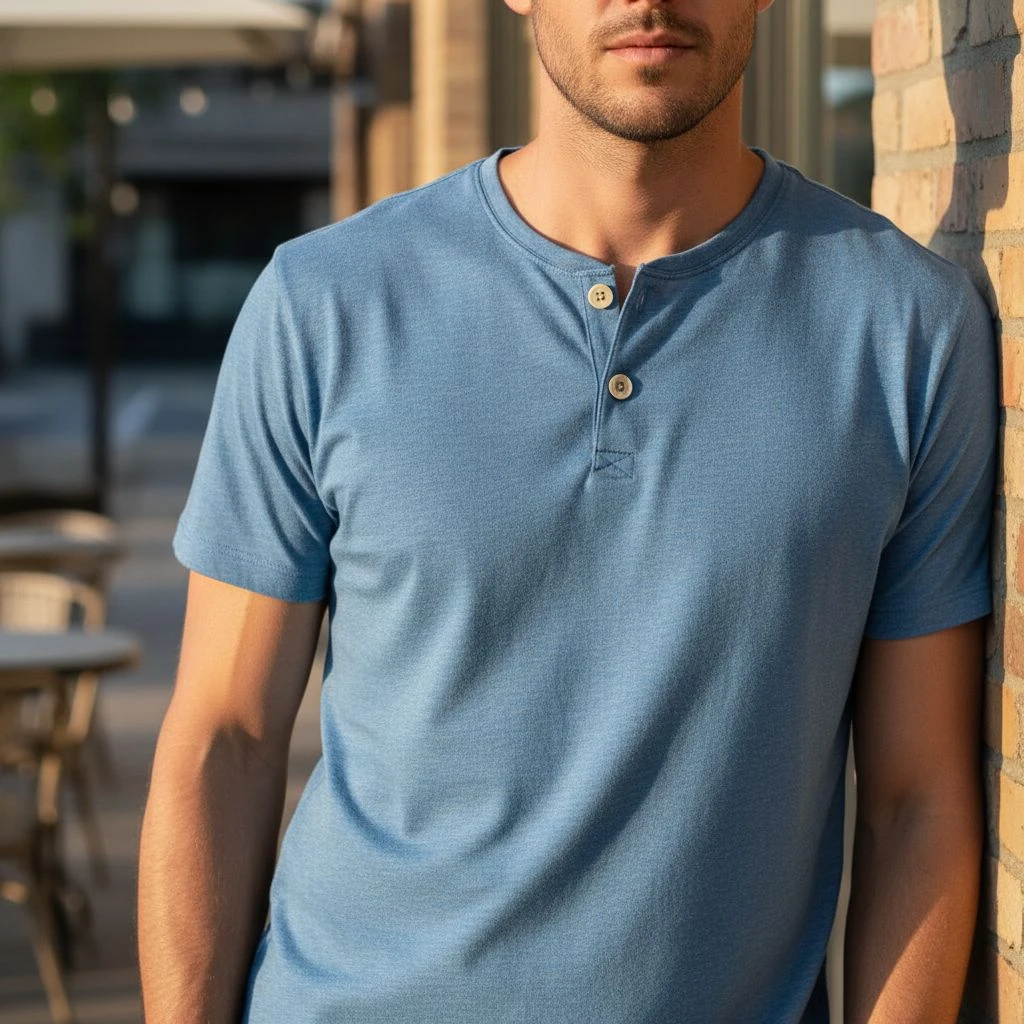
A notch neck is typically a round/crew neckline with a small V-shaped notch cutout at the center front. A split neck is commonly described as a vertical slit/opening at the center of the neckline. In real product terms, brands often use “split neck” and “notch neck” interchangeably for tees because they’re visually similar: a crew-like neck with a short center opening (not a full V). This neckline sits in-between categories (crew – V – henley).
Best Use Cases (And When It’s a Bad Idea)
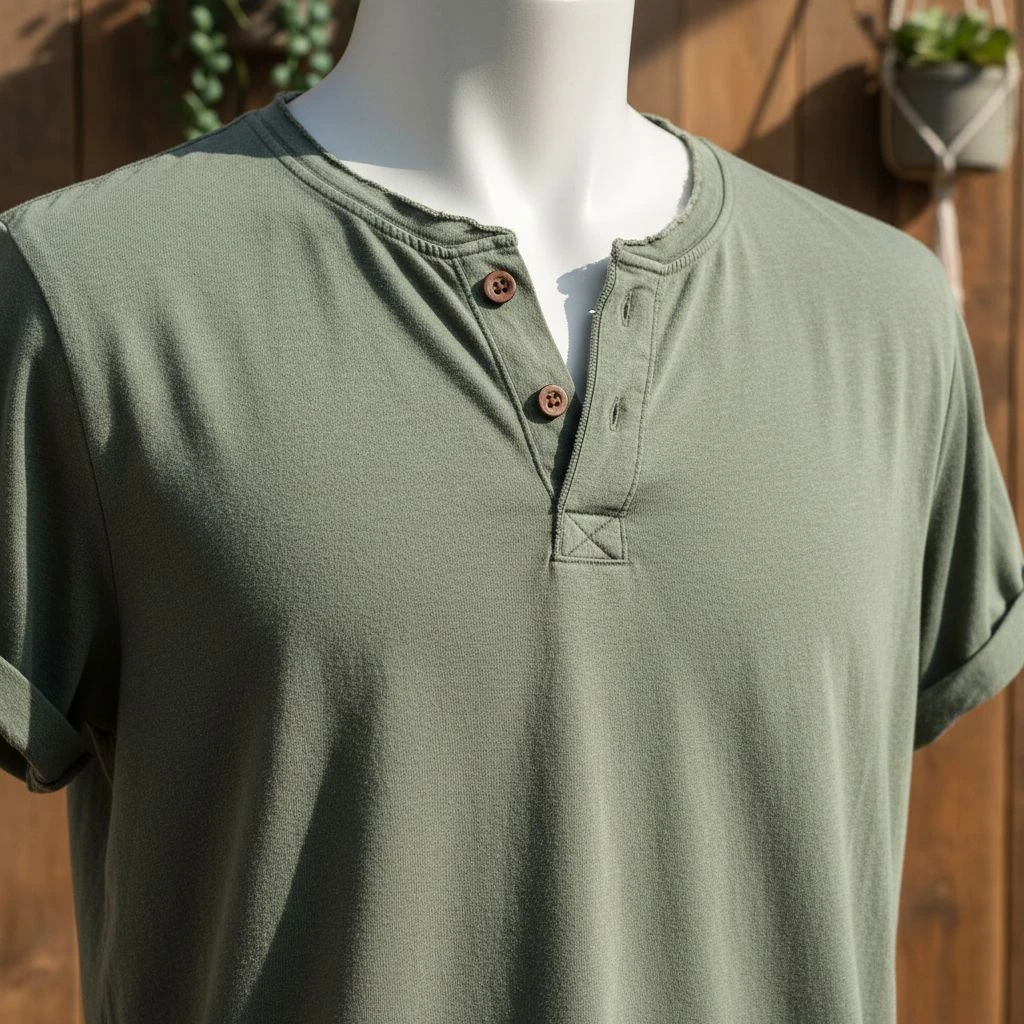
Best for: Casual lifestyle brands, resort/travel collections, outdoors-inspired basics, and “elevated comfort” private labels. Risky / not ideal for: Corporate merch programs, uniform basics, or conservative markets that dislike any neckline opening.
Why Brands Choose Split / Notch Necks
- It adds a design detail that’s easy to understand at a glance.
- It keeps chest exposure low (safer than a V-neck).
- It often reads “relaxed” and “weekend-ready.”
If you’re doing notch necks just because “crew is boring,” you’re using design to solve a positioning problem. Fix the story + styling first. Best categories include lifestyle, resort, outdoor, and unisex basics.
Pros and Cons of Split / Notch Neck Tees
Split / notch neck tees look simple, but they’re one of those “small detail, big outcome” styles. The notch adds a relaxed, intentional feel giving customers a little more breathing room than a tight crew.

Pros:
- 1) Looks casual but intentional: Signals “designed,” even when the rest is simple.
- 2) Enhanced comfort: Less restrictive than a tight crew neck without the exposure of a V-neck.
- 3) Great for unisex lines: Less “gender-coded” than scoop or deep V necklines.
- 4) Styling versatility: Pairs well with slub jerseys, resort palettes, and light layering.
Cons:
- 1) Failure point if not reinforced: The base of the split can stretch or tear if not stabilized with tapes or reinforcement stitching.
- 2) Finishing sensitivity: A messy notch looks like damage or an unfinished V-neck rather than a premium detail.
- 3) Production complexity: Requires more QC points and operator skill than a standard crew neck.
- 4) Reorder risk: As a style decision, reorders depend heavily on positive customer wash tests and reviews.
Split/Notch vs Crew vs V-Neck vs Henley
| Neckline | Visual vibe | Customer risk | Best use |
|---|---|---|---|
| Crew Neck | Basic, universal | Low (safe reorder) | Core blanks, uniforms |
| Split / Notch | Casual upgrade | Medium | Lifestyle, resort |
| V-Neck | Sharper / open | Medium (polarizing) | Fashion basics |
| Henley | Rugged / heritage | Medium | Premium casual, outdoor |
Split / Notch vs V-Neck
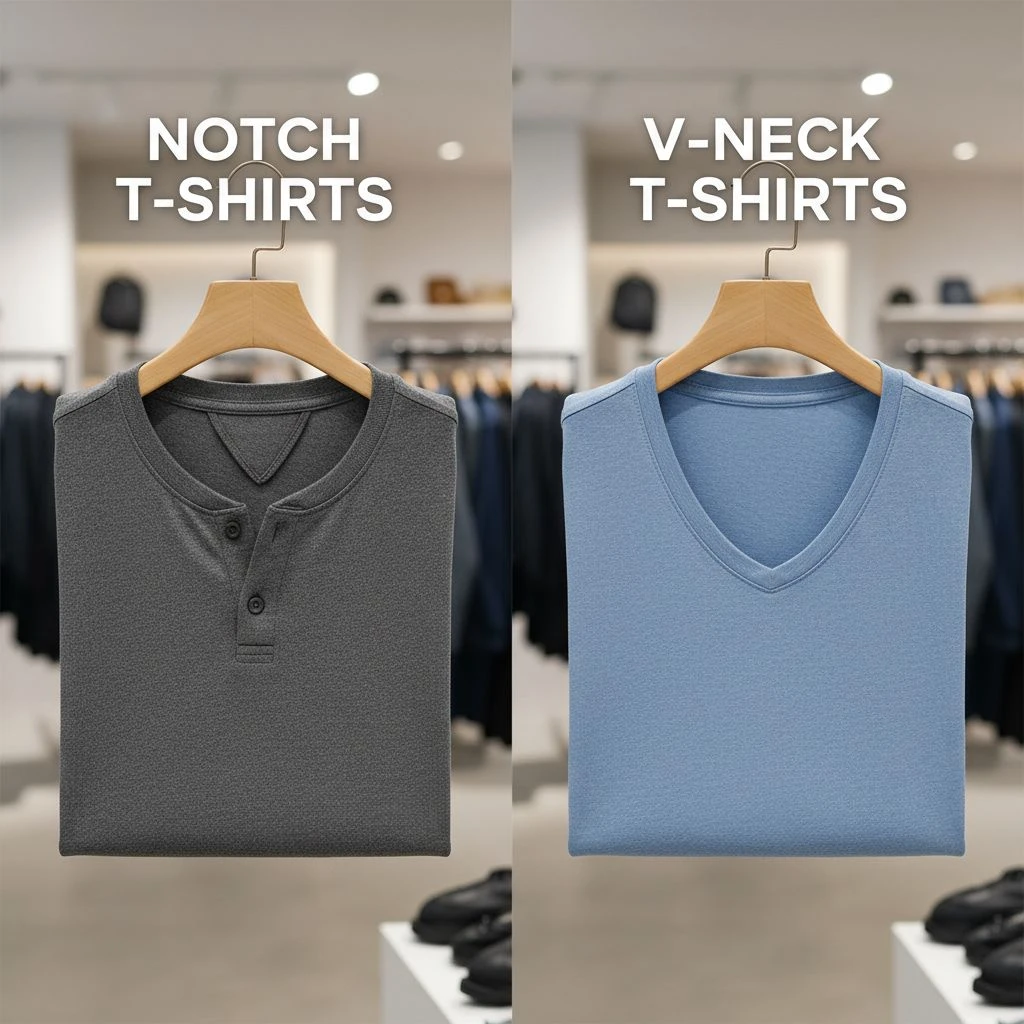
A Split/Notch has a small opening but still reads like a crew, while a V-neck is a distinct category. For conservative or corporate markets, the split/notch is safer as it offers less chest exposure.
Split / Notch vs Henley
Split/notch is a minimal detail and more cost-effective. Henley is a feature detail using a button placket, which provides a premium look but requires higher labor and stricter QC.
Final Words for Brand Owners
A split / notch neck T-shirt is a smart way to upgrade a “basic” without going as open as a V-neck. But that tiny center split is the make-or-break detail. If the notch is clean, stable, and reinforced, it reads premium. If it’s weak, it looks like damage. Lock the construction early with stabilization and reinforcement standards, and test it through wash cycles to ensure it earns those reorders.