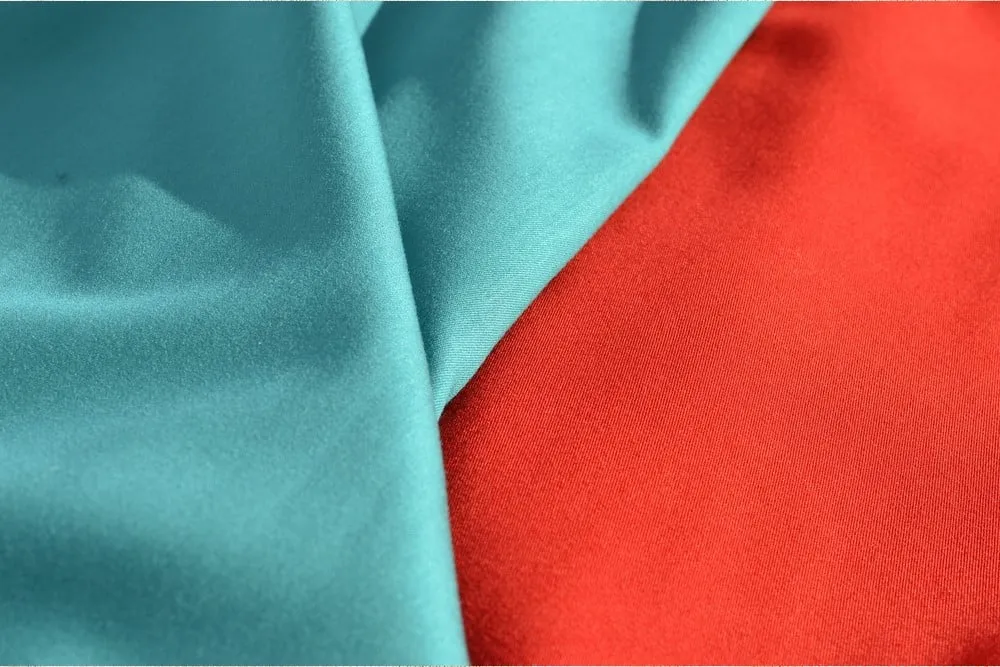
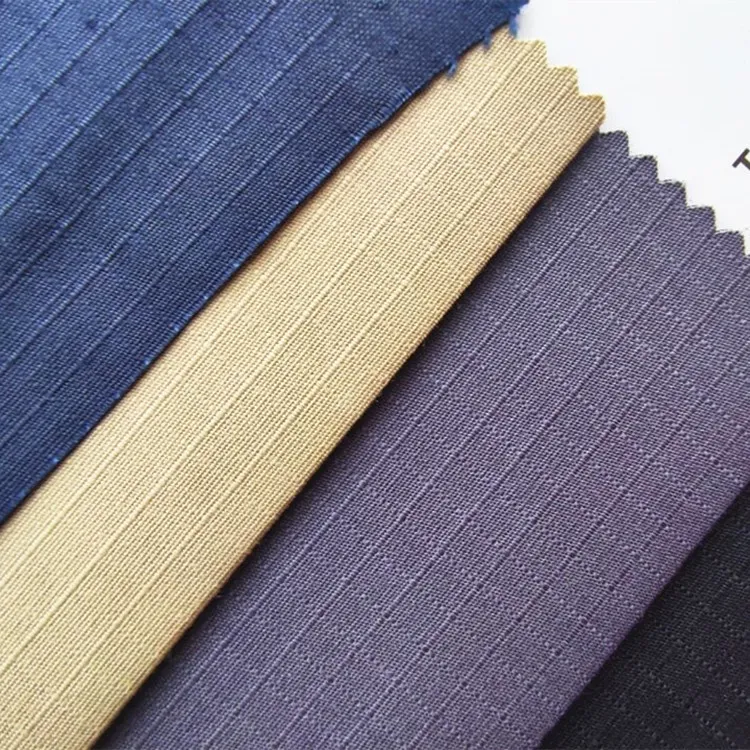

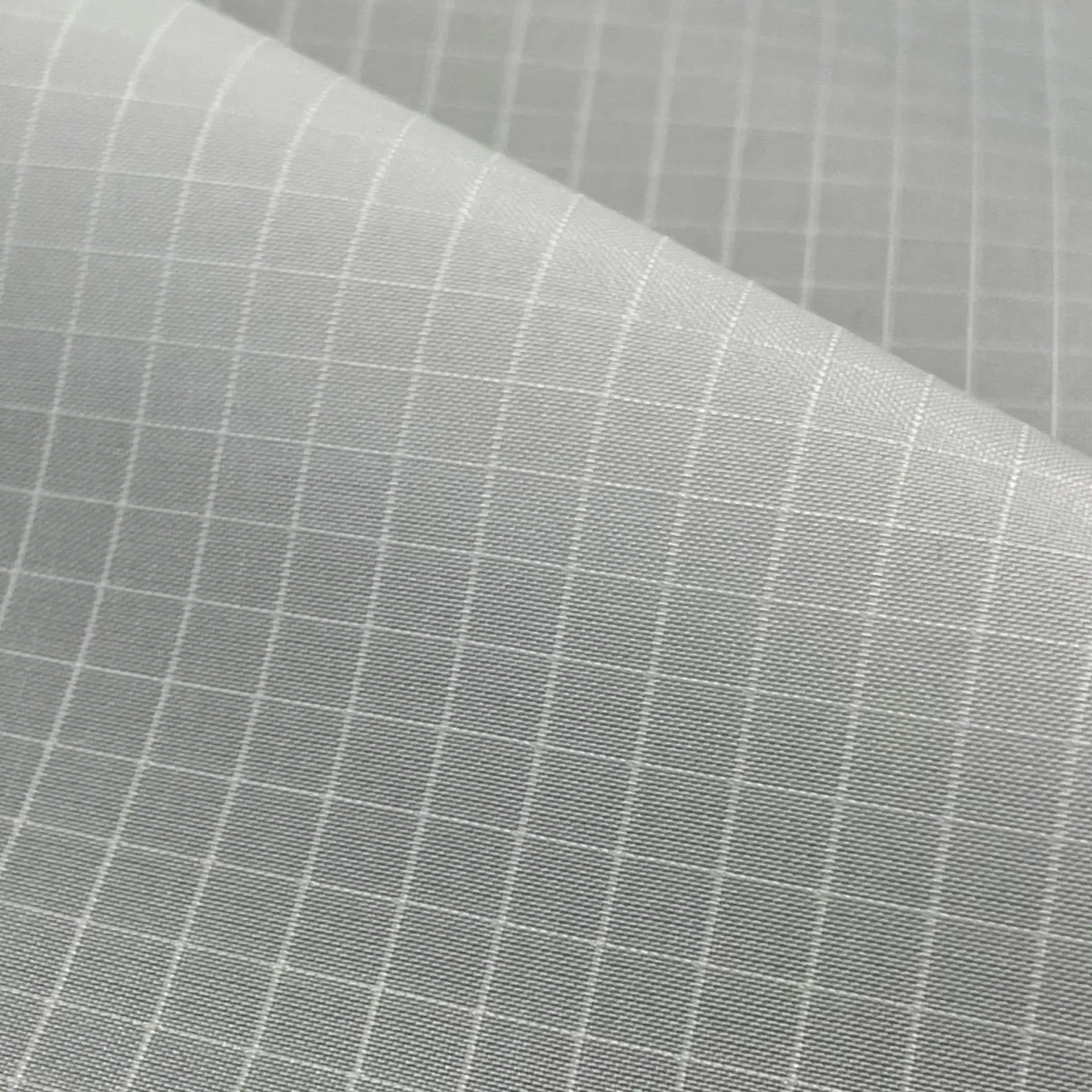
Ripstop nylon is a specialized fabric engineered with a reinforced “stop-the-tear” grid. During the weaving process, stronger yarns are interlaced at regular intervals (typically 5-8mm apart), creating a subtle crosshatch pattern. If the fabric suffers a puncture, this high-tenacity grid prevents the tear from spreading across the panel. Crucially, “Ripstop” refers to the weave pattern, not the material itself; while nylon is common, you can also find ripstop in polyester or cotton blends.
What Is Ripstop Nylon Fabric?
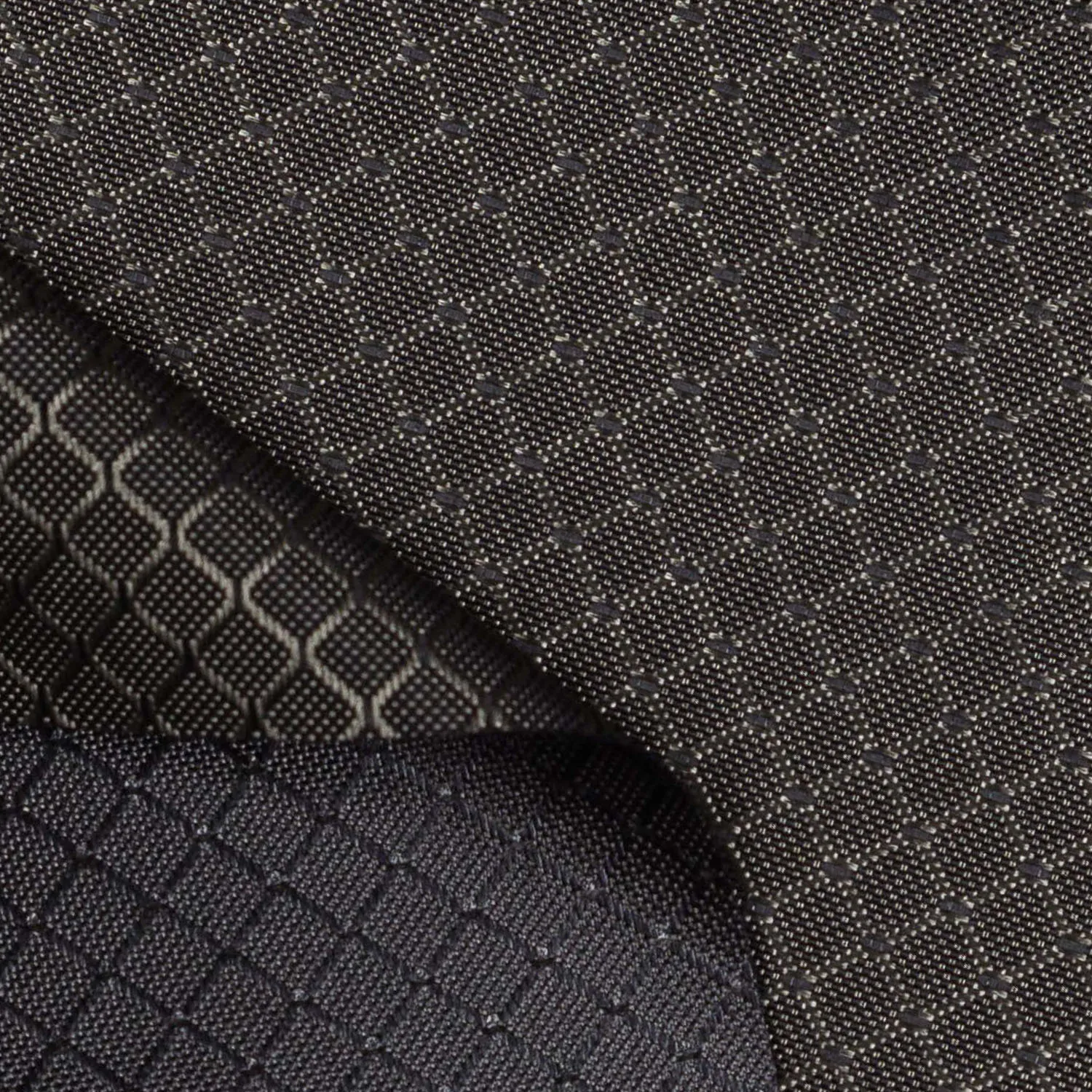
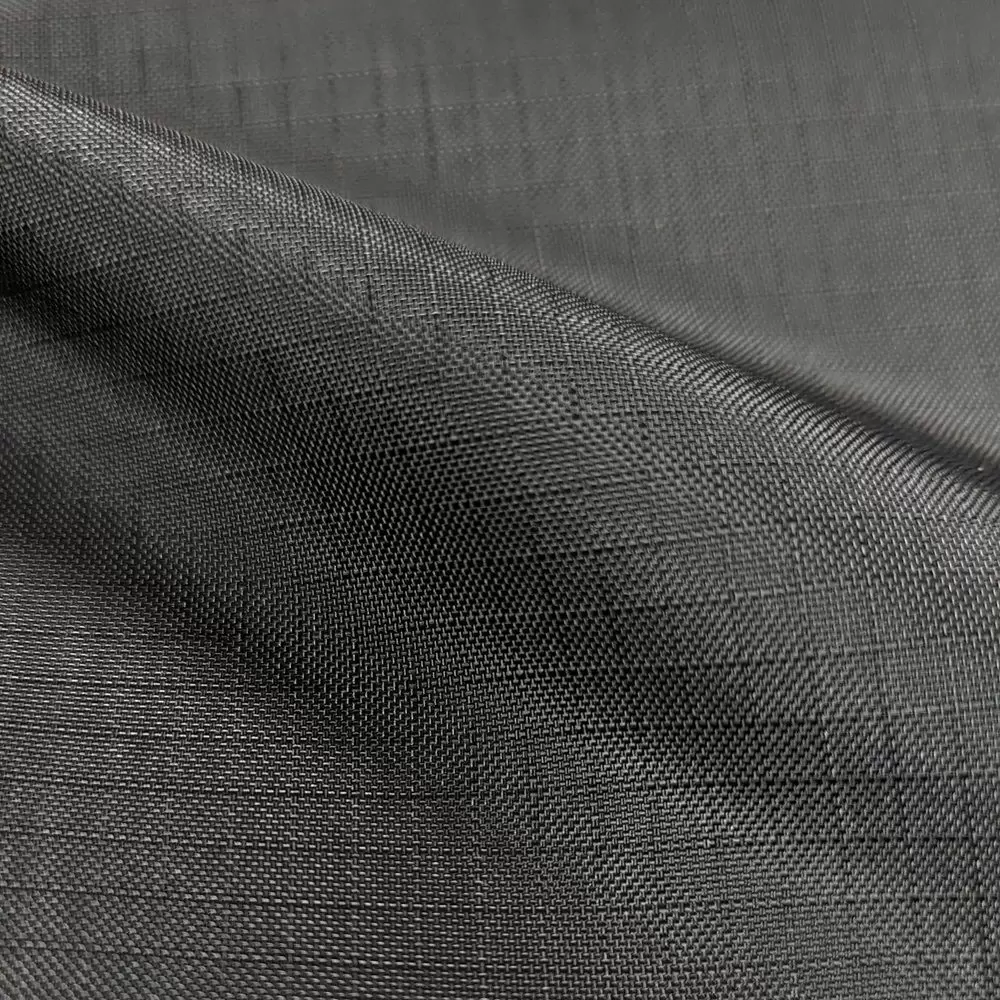
Ripstop nylon is a woven fabric made primarily from nylon yarns and constructed with a reinforcement grid. During weaving, stronger, thicker, doubled, or otherwise reinforced yarns are inserted into the fabric at regular intervals. These reinforcement yarns usually run in both directions:
- Warp direction
- Weft direction
The result is the characteristic crosshatch pattern often associated with ripstop fabric.
The grid may appear as:
- Small squares
- Rectangles
- Diamonds
- Other reinforcement patterns
The exact spacing varies by fabric design.

Ripstop structures are commonly made using nylon, but the term ripstop refers primarily to the fabric construction, not the fiber itself. You can also find:
- Polyester ripstop
- Cotton ripstop
- Cotton-polyester ripstop
- Nylon blends
- Other technical ripstop fabrics
Therefore:
- Ripstop = reinforcement construction.
- Nylon = fiber type
“Ripstop nylon” combines the two.
Is Ripstop Nylon Strong?
Ripstop nylon can provide an excellent strength-to-weight ratio, particularly in lightweight technical products. However, “strong” can mean several different things in textile engineering. A fabric may need:
- Tensile strength
- Tear resistance
- Abrasion resistance
- Seam strength
- Puncture resistance
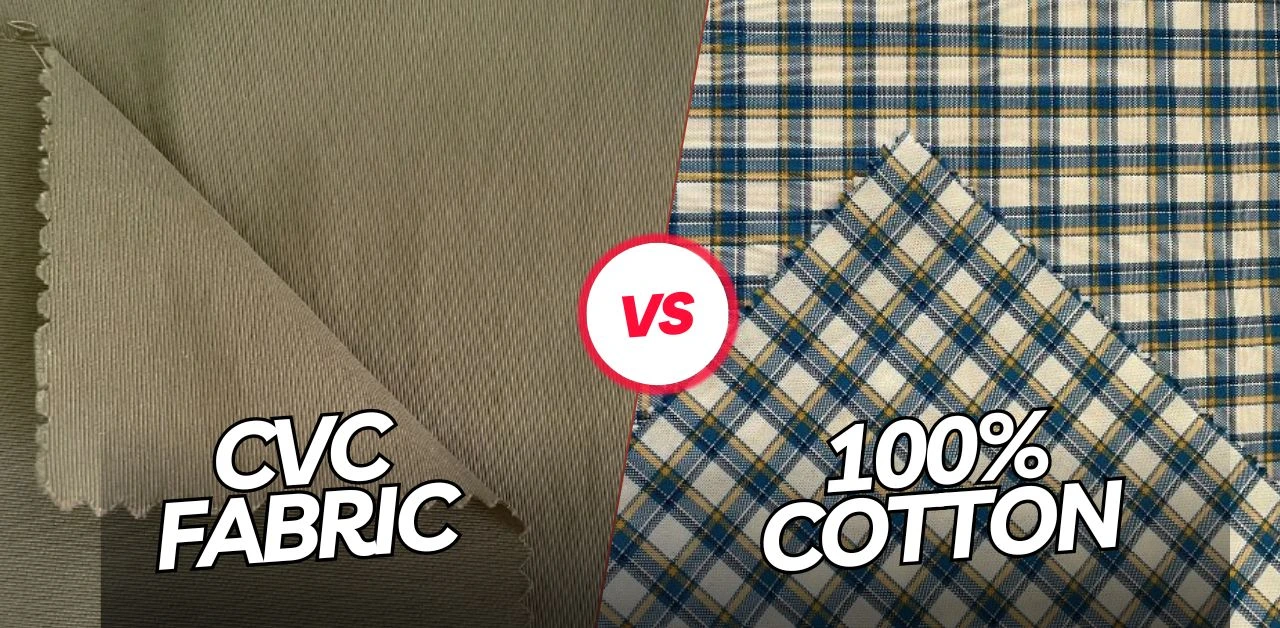
Ripstop construction is particularly useful for tear propagation control, but it does not automatically maximize every type of strength. For example, a very lightweight 30D ripstop nylon can still be less abrasion-resistant than a much heavier 500D nylon fabric. So fabric weight and yarn size still matter.
Is Ripstop Nylon Waterproof?
Not necessarily. This is probably the most common misunderstanding. A standard ripstop fabric may be:
- Breathable
- Water-resistant
- Water-repellent
without being fully waterproof. Ripstop describes the fabric structure, not waterproof performance. Whether the fabric resists water depends heavily on finishing and coating.
Is Ripstop Nylon Breathable?
It depends. Uncoated ripstop can allow some air and moisture-vapor movement depending on:
- Weave density
- Fabric weight
- Finishing
But coatings can significantly reduce air permeability. For example: Uncoated lightweight ripstop may be relatively breathable. Heavily PU-coated ripstop may be much less breathable. Therefore: Ripstop itself does not determine breathability.
Pros & Cons: A Technical Evaluation
| Pros | Cons |
|---|---|
| Helps limit tear propagation | Not automatically waterproof |
| Lightweight and durable | Can still puncture or tear |
| Good strength-to-weight ratio | Lightweight types may have limited abrasion resistance |
| Quick drying | Can look very technical |
| Packable | Some versions are noisy |
| Can receive DWR or coatings | Sensitive to excessive heat |
| Good wind resistance | Nylon can degrade under prolonged UV exposure |
| Available in many weights | Coatings may reduce breathability |
| Useful for outdoor and tactical products | May feel less natural next to skin |
| Versatile performance fabric | Quality varies greatly by specification |
Advantages & Benefits
- 1. Good Tear Resistance: The reinforced grid helps stop small tears from spreading quickly across the fabric. This makes ripstop nylon useful for garments and gear exposed to rough use.
- 2. Lightweight but Durable: Ripstop nylon can provide good strength without requiring a heavy fabric. This makes it suitable for packable jackets, outdoor clothing, tents, and lightweight bags.
- 3. Good Strength-to-Weight Ratio: Compared with many heavier fabrics, ripstop nylon can deliver strong performance while keeping the total product weight low.
- 4. Quick Drying: Nylon absorbs relatively little moisture compared with natural fibers such as cotton, so lightweight ripstop nylon generally dries quickly.
- 5. Easy to Pack: Lightweight ripstop fabrics can be folded or compressed into a small space, making them useful for travel garments, windbreakers, and camping equipment.
- 6. Can Be Water-Repellent: Ripstop nylon can be treated with finishes such as DWR to improve resistance to light rain and surface wetting.
- 7. Compatible with Different Coatings: Manufacturers can apply PU, silicone, or other coating systems to improve water resistance, wind resistance, or other performance properties.
- 8. Good Wind Resistance: Tightly woven ripstop nylon can reduce airflow through the fabric, which is useful for windbreakers and lightweight shell garments.
- 9. Available in Many Weights: Ripstop nylon can range from ultralight 20D or 30D fabrics to much heavier constructions for bags, tactical equipment, and protective covers.
- 10. Suitable for Many Applications: It can be used for outdoor apparel, tactical garments, backpacks, tents, sleeping bags, sports gear, and protective products.
Limitations & Considerations
- 1. Not Automatically Waterproof: Ripstop describes the reinforcement construction, not waterproof performance. Uncoated ripstop nylon may still allow water to pass through.
- 2. Can Still Tear or Puncture: Ripstop does not make the fabric indestructible. Sharp objects can still create holes, and strong enough force can tear through the reinforcement grid.
- 3. Limited Abrasion Resistance in Lightweight Versions: Very light ripstop nylon may resist tear propagation well but still wear through when repeatedly rubbed against rough surfaces.
- 4. Can Look Too Technical: The visible grid pattern gives ripstop a sporty, outdoor, military, or technical appearance that may not suit formal or minimalist fashion.
- 5. Some Types Are Noisy: Lightweight or coated nylon can make a crinkling or swishing sound during movement.
- 6. Sensitive to High Heat: Nylon is thermoplastic. Excessive ironing, pressing, or drying temperatures can soften, distort, or damage the fabric.
- 7. Can Degrade from Long-Term UV Exposure: Extended exposure to sunlight can gradually reduce nylon strength unless the fabric has suitable UV-resistant treatment.
- 8. May Feel Less Comfortable Next to Skin: Nylon absorbs less moisture than cotton and may feel less natural or comfortable when worn directly against the skin, depending on fabric construction.
- 9. Coatings Can Reduce Breathability: PU coatings, silicone treatments, or waterproof laminations may improve weather protection but can also reduce air permeability and increase stiffness.
- 10. Performance Varies Greatly by Specification: Two fabrics both called “ripstop nylon” can perform very differently depending on denier, GSM, yarn strength, grid construction, coating, and finishing. Buyers should not select the fabric by name alone.
Best Uses for Ripstop Nylon Fabric
1. Windbreakers
Lightweight ripstop nylon is commonly used for windbreaker shells. Advantages include:
- Low weight
- Packability
- Wind resistance
- Quick drying
- Tear control
A DWR finish may also improve light-rain performance.
2. Packable Jackets
Packable outerwear benefits from fabrics that can be compressed without adding excessive weight. Ripstop is useful because the reinforcement helps improve durability while maintaining low fabric mass.
3. Outdoor Trousers
Medium-weight ripstop can be useful for:
- Hiking trousers
- Cargo trousers
- Utility pants
especially where garments may contact rough surfaces.
4. Tactical Apparel
Ripstop constructions are common in tactical and military-inspired apparel. Applications include:
- Combat shirts
- Field trousers
- Utility uniforms
- Tactical jackets

In these products, durability and tear control are often major requirements.
However, actual military specifications may require much more than simply “ripstop,” including defined:
- Fiber content
- Fabric weight
- Strength
- Colorfastness
- Infrared properties
- Flame resistance
depending on end use.
5. Backpacks
Ripstop nylon can be used for lightweight backpacks and accessories. Higher-denier versions may be selected for:
- Bag bodies
- Internal panels
- Pockets
High-wear areas may still require heavier reinforcement.
6. Tents
Ripstop nylon is widely used in tent construction because:
- Weight is important
- Tear resistance is important
- Water-resistant coatings can be added
The actual waterproof performance should be confirmed through the coating specification and testing.
7. Sleeping Bags
Very lightweight ripstop can be used as:
- Outer shell
- Inner shell
depending on the product. The low weight helps keep the sleeping bag packable.
8. Equipment Covers
Coated ripstop nylon may be used for:
- Machine covers
- Equipment covers
- Travel covers
The required fabric weight depends on abrasion and weather exposure.
Ripstop Nylon vs. Regular Nylon, Polyester Ripstop, Ballistic Nylon and Other Fabrics
| Feature | Ripstop Nylon | Regular Nylon | Polyester Ripstop | Ballistic Nylon | Cotton-Nylon Ripstop | Stretch Ripstop |
|---|---|---|---|---|---|---|
| Main Fiber | Nylon | Nylon | Polyester | Usually nylon | Cotton + nylon | Nylon/polyester + elastane |
| Construction | Reinforced ripstop grid | Plain, twill, or other weave without ripstop grid | Reinforced ripstop grid | Dense, heavy woven construction | Reinforced ripstop grid | Ripstop grid with stretch yarn |
| Visible Grid | Yes, usually | Usually no | Yes | Usually no traditional ripstop grid | Yes | Usually yes |
| Main Strength | Tear propagation control | General nylon performance | Tear resistance + weather stability | Heavy-duty abrasion and durability | Comfort + durability | Mobility + tear resistance |
| Tear Resistance | High for its weight | Moderate to high depending on construction | High | Very high in heavy constructions | Good | Good to high |
| Abrasion Resistance | Moderate to high depending on denier | Depends greatly on fabric weight | Moderate to high | Very high | Moderate to high | Moderate to high |
| Puncture Resistance | Moderate; lightweight types can puncture | Depends on weight | Moderate | High | Moderate | Moderate |
| Strength-to-Weight Ratio | Excellent | Good | Good | Lower because fabric is much heavier | Good | Good |
| Typical Weight | Very light to heavy | Light to heavy | Light to heavy | Usually heavy | Medium | Light to medium |
| Packability | Excellent in lightweight versions | Good depending on weight | Excellent in lightweight versions | Poor | Moderate | Good |
| Quick Drying | Fast | Fast | Very fast | Fast | Slower because of cotton | Fast |
| Moisture Absorption | Low | Low | Very low | Low | Higher due to cotton | Low |
| Breathability | Depends on weave/coating | Depends on construction | Depends on weave/coating | Usually lower in heavy versions | Often better for apparel comfort | Often good when uncoated |
| Wind Resistance | Good in tightly woven versions | Good depending on weave | Good | High due to dense construction | Moderate to good | Good |
| Water Resistance | Depends on DWR/coating | Depends on finish | Depends on DWR/coating | Depends on coating | Usually limited unless treated | Depends on finish |
| Automatically Waterproof? | No | No | No | No | No | No |
| DWR Compatible | Yes | Yes | Yes | Yes | Yes | Yes |
| PU Coating Compatible | Yes | Yes | Yes | Yes | Possible | Possible |
| UV Resistance | Moderate; nylon can degrade with prolonged UV exposure | Moderate | Generally better than nylon | Moderate | Depends on blend/finish | Depends on fiber blend |
| Heat Resistance | Sensitive to high heat | Sensitive to high heat | Sensitive to high heat | Sensitive to high heat | Cotton component may improve heat tolerance somewhat, but blend still requires care | Elastane can increase heat sensitivity |
| Stretch | Usually low unless engineered | Usually low unless engineered | Usually low unless engineered | Low | Usually low | High relative to standard ripstop |
| Hand Feel | Smooth, technical | Smooth to textured | Technical, sometimes slightly firmer | Heavy and rugged | More natural and cotton-like | Flexible and comfortable |
| Noise During Movement | Some lightweight versions can be crinkly | Depends on finish | Can also be crinkly | Usually less “paper-like,” but heavy | Usually quieter | Usually softer/quieter |
| Technical Appearance | Strong | Moderate | Strong | Rugged / industrial | Tactical / casual | Modern outdoor |
| Best for Lightweight Garments | Excellent | Good | Excellent | Poor | Moderate | Excellent |
| Best for Heavy-Duty Gear | Depends on denier | Depends on weight | Depends on denier | Excellent | Moderate | Moderate |
| Typical Applications | Windbreakers, tents, sleeping bags, lightweight bags | Jackets, linings, bags, general apparel | Outdoor gear, tents, covers, bags | Luggage, tactical bags, equipment cases | Tactical trousers, cargo pants, uniforms | Hiking pants, climbing pants, outdoor shorts |
| Main Advantage | Lightweight tear resistance | Versatile and widely available | Ripstop performance with good UV/moisture behavior | Maximum rugged durability | Better comfort with useful durability | Combines mobility with ripstop protection |
| Main Limitation | Not puncture-proof or automatically waterproof | No reinforced tear-stop grid | May offer lower strength-to-weight than comparable high-tenacity nylon | Heavy, bulky, less packable | Heavier and slower drying than 100% nylon | More expensive and dimensional control can be harder |
Ripstop Nylon vs. Regular Nylon
Both can use nylon fiber, but ripstop nylon has a reinforced grid, while regular nylon usually does not. The grid helps limit the spread of small tears. Ripstop nylon is commonly used for outdoor clothing, tactical gear, tents, and bags. Regular nylon is more common in general apparel, linings, and accessories. Ripstop nylon offers better tear control, while regular nylon provides a smoother, more conventional fabric surface.

Ripstop Nylon vs. Polyester Ripstop
Both use a ripstop grid, but the fibers are different. Nylon ripstop generally offers an excellent strength-to-weight ratio, while polyester ripstop usually absorbs less moisture and often has better resistance to prolonged UV exposure. Both can dry quickly and may require coatings or finishes for waterproof performance. Choose nylon ripstop for lightweight strength and polyester ripstop when moisture and UV resistance are higher priorities.
Ripstop Nylon vs. Ballistic Nylon
Ripstop nylon is designed mainly for lightweight tear resistance and packability. Ballistic nylon is usually thicker, heavier, and designed for high abrasion resistance and rugged use. Ripstop is common in jackets, tents, and lightweight gear, while ballistic nylon is more suitable for luggage, tactical bags, and equipment cases. Ripstop nylon is lighter and more packable; ballistic nylon is heavier and more rugged.
Why Manufacturers Choose Ripstop Nylon
When high strength-to-weight ratios are required, ripstop nylon is the industry standard. It provides exceptional durability without adding bulk, making it the preferred choice for performance-driven products. At Mekong Garment, we often recommend this for:
- Lightweight Shells: Windbreakers and packable jackets.
- Outdoor Gear: Tents, sleeping bags, and technical backpacks.
- Tactical Apparel: Cargo pants, field shirts, and utility uniforms.
- Industrial Use: Protective covers, flags, and heavy-duty sports gear.
Conclusion / Final Words
Ripstop nylon is a tactical choice for brands needing tough-for-its-weight performance. It turns a standard material into a durable asset capable of handling high-stress environments. At Mekong Garment, we help our partners navigate the various weights and finishes available to ensure the fabric matches the specific mission of the garment. Whether you are building a lightweight commuter shell or heavy-duty tactical gear, selecting the right ripstop is key to product longevity.
Contact Mekong Garment Factory
- VN Phone/WhatsApp/WeChat: +84 947 729 829
- Email: hanh@kimmy.vn