Hot and humid weather is not the same as “just warm.” It’s sweat + stickiness + fabric clinging to skin. And the first place people feel discomfort is often the neck and upper chest, because that area traps heat and moisture fast. So yes, neckline choice matters.
- But here’s the part I’m going to challenge you on: Neckline shape is not the 1 factor.
- For real comfort in humidity, the order is usually: Fabric (breathability + drying) → Fit (airflow) → Collar construction (bulk/tightness) → Neckline shape (opening)
- A light, breathable crew neck can feel cooler than a dense V-neck. So the “best neckline” is really the best neckline + fabric + build combo.
One strong rule to remember: In humidity – anything that adds coverage + bulk around the neck usually loses. If your neckline feels like a “collar,” it’s probably going to feel hot.
=> Read More: T Shirts Manufacturing Vietnam | Mekong Garment Factory
This article explains:
- which necklines feel best in heat and humidity
- which necklines tend to feel worse
- what fabric and construction choices actually decide comfort
- brand mistakes that create returns and complaints
Why Necklines Feel Hotter in Humid Climates
The neck area becomes a problem zone because:
- It touches skin more (so sweat builds up there).
- Necklines often have extra layers: rib collar, binding, neck tape, seam allowances.
- Many styles are tight at the throat for a “clean look,” which blocks airflow.
- In humidity, sweat doesn’t evaporate well so anything that traps moisture feels worse.
That means a neckline feels cooler when it:
- lets air move around the throat and upper chest
- avoids bulk (thick rib and heavy tape)
- is not tight against the neck
The Necklines that Usually Work Best in Hot or Humid Climates
1) V-Neck (moderate depth)
Why it works: A V-neck opens the throat area and gives heat an easier escape path. It reduces that “choked” feeling a tight crew can cause in humidity.

Best for:
- summer basics
- men’s and unisex lines
- customers who want “cooler” without a wide opening
Brand reality check (what can go wrong):
- Deep V’s are less wearable for many customers and can feel too exposed.
- A weak V can stretch, wave, or curl, especially after washing.
- Sweat marks may be more noticeable because the opening exposes more upper chest.
Spec tips (simple but important):
- Keep the V “moderate,” not extreme.
- Stabilize the V so it holds shape (clean topstitch + proper reinforcement).
- Don’t use heavy, dense fabric and expect the V to magically feel cool.
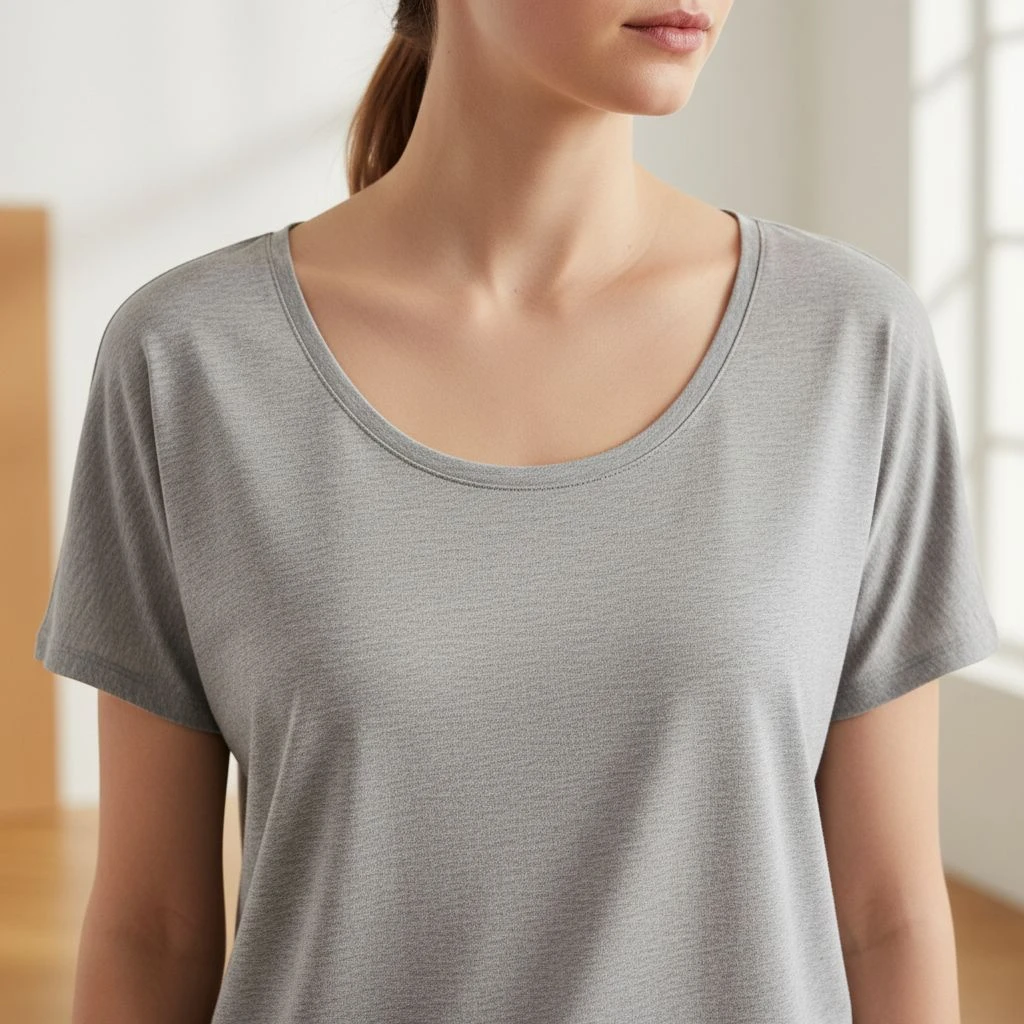
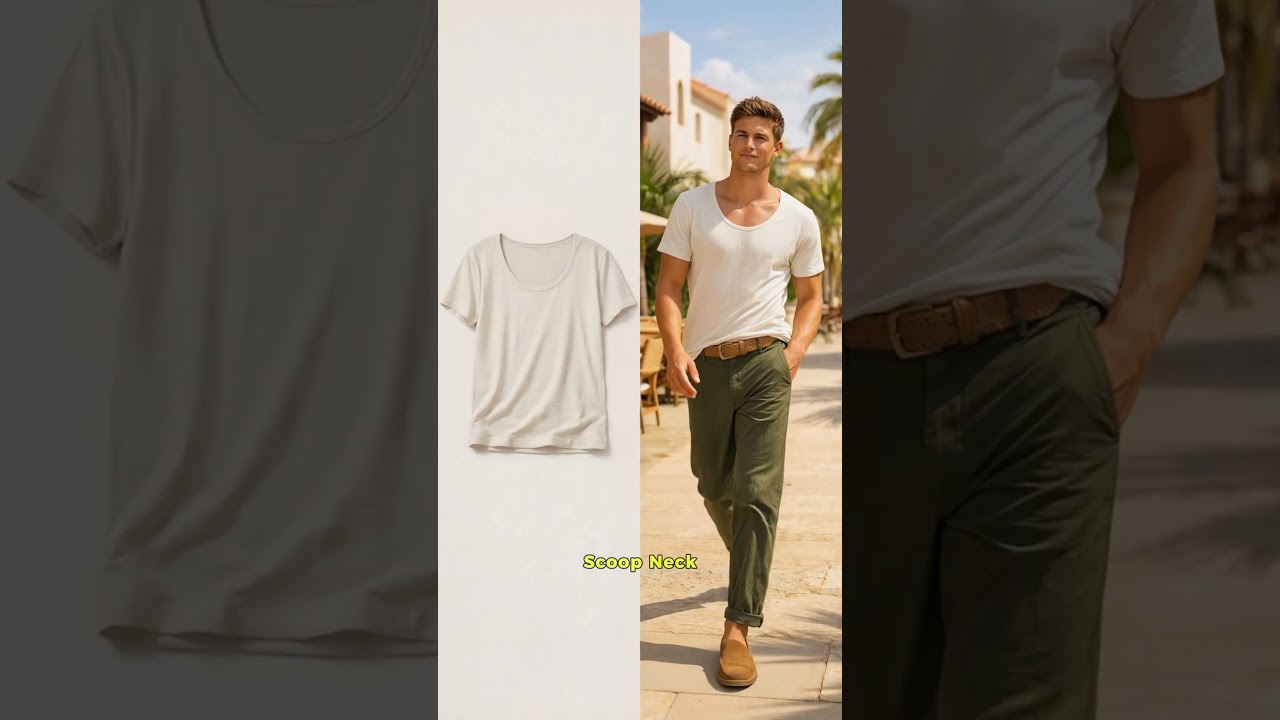
2) Scoop Neck (wide opening, maximum airflow)
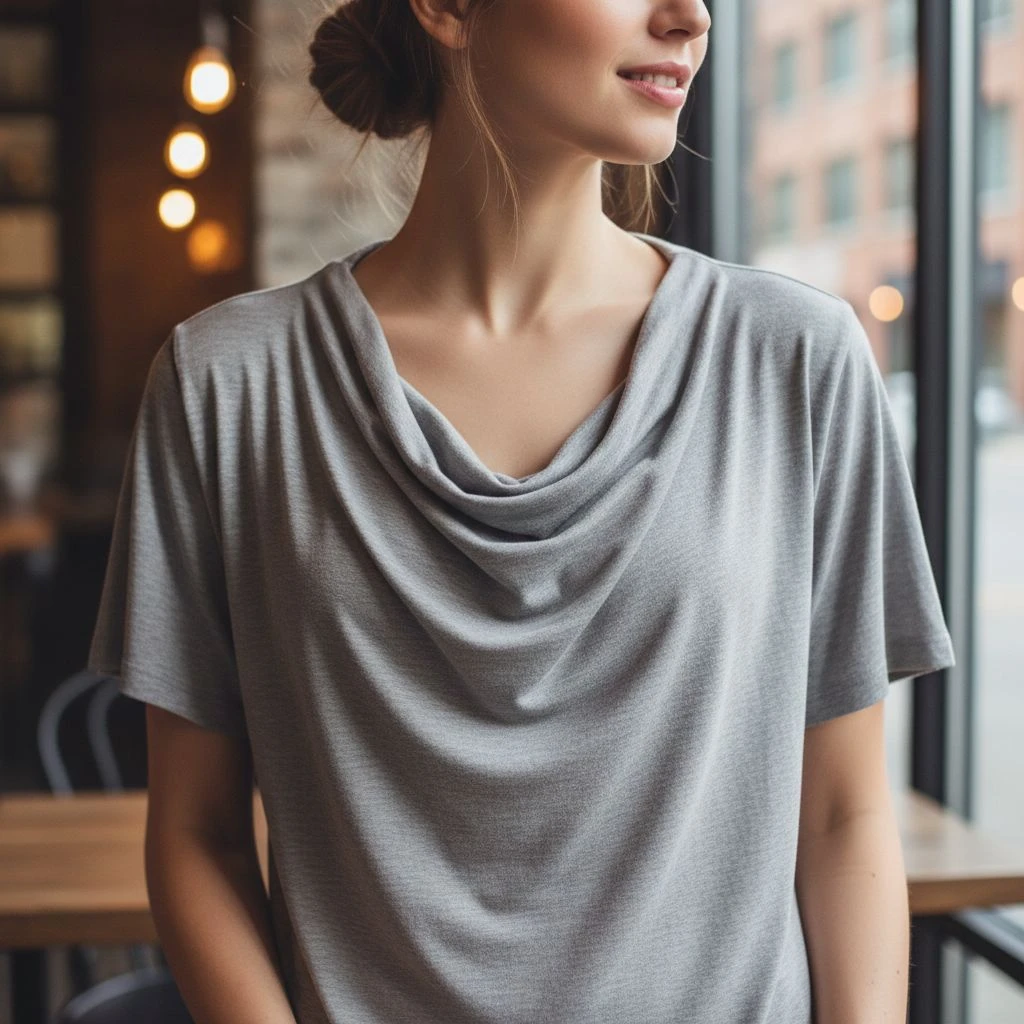
Why it works: Scoop necks open a bigger area, so ventilation is strong. Many people feel instant comfort because there’s less fabric pressing around the neck.

Best for:
- women’s fashion tees
- lounge / casual soft silhouettes
- brands selling “light, airy” summer vibe
Brand reality check:
- Scoops are fabric-dependent. If recovery is weak, the neckline can grow and look sloppy.
- Wide openings can shift during wear and feel “less secure” to some customers.
Spec tips:
- Choose fabric with decent recovery (or a stable binding).
- Avoid super thin, weak jerseys unless you’re okay with a more relaxed, lived-in look.
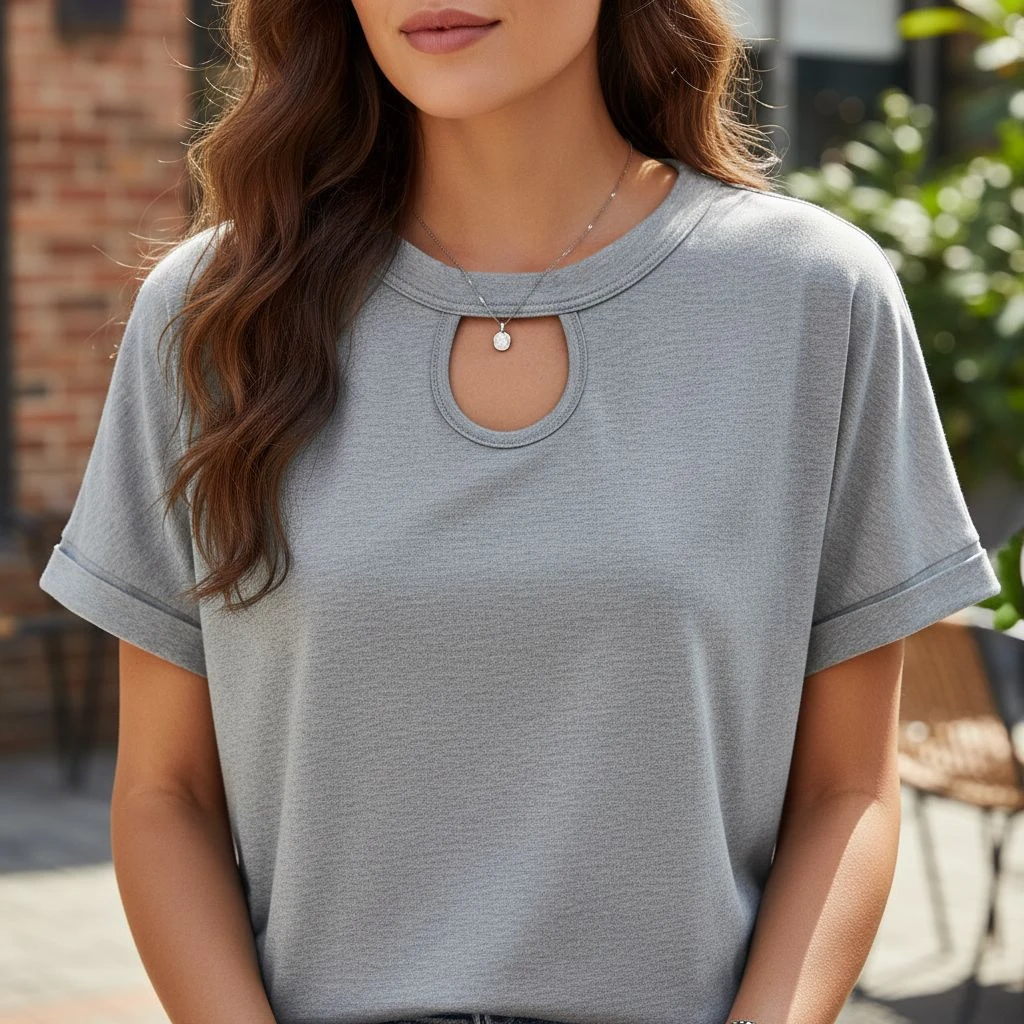
3) Notch Neck (balanced airflow + wearability)
Why it works: A notch neck creates that “open neckline” feeling without going full scoop. It’s a nice middle ground: airy, but still looks structured.

Best for:
- unisex fashion drops
- streetwear basics that need a “detail”
- brands that want to stand out without prints
Brand reality check:
- This is a QC trap. A small asymmetry is easy to see.
- Poor reinforcement can cause curling or shape distortion around the notch.
Spec tips:
- Reinforce the notch area so it stays flat.
- Control stitching tolerance small mistakes are obvious here.
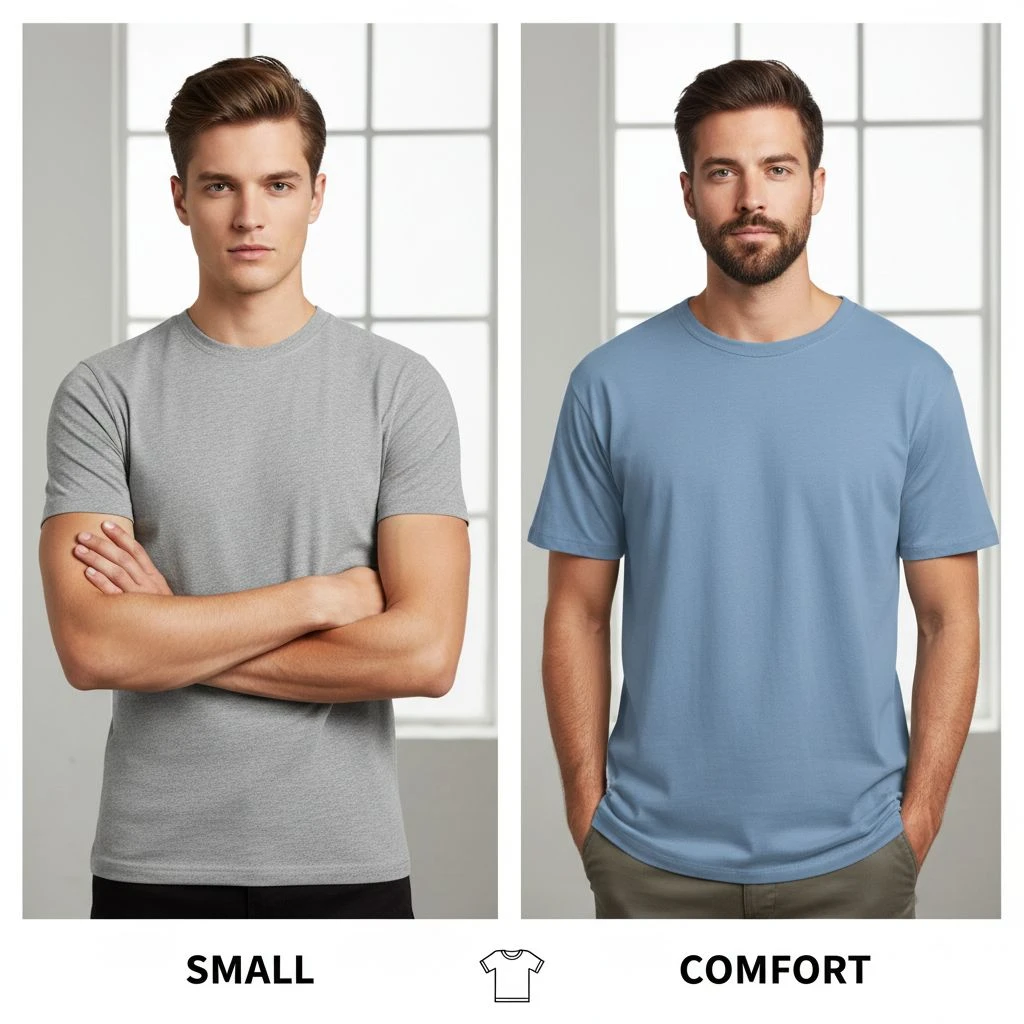
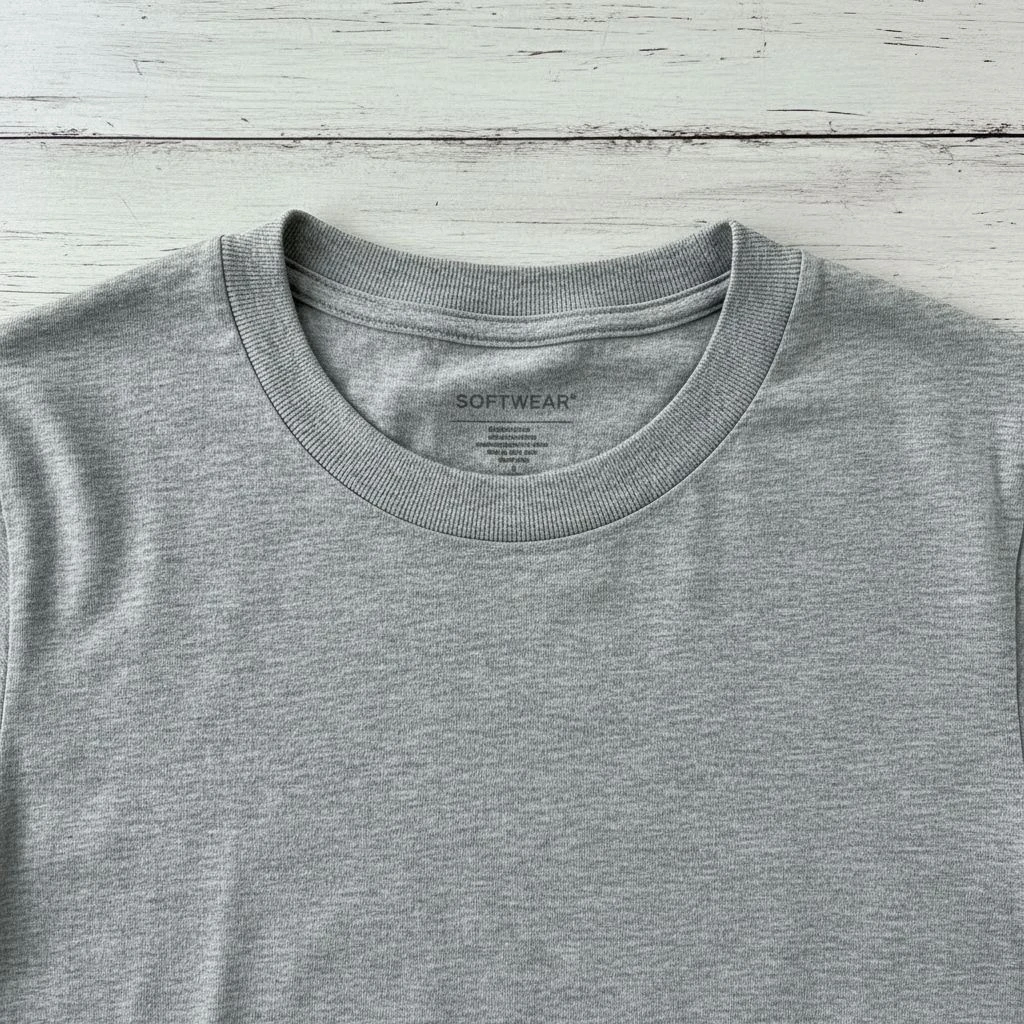
4) Relaxed Crew Neck (yes, it can be excellent)
Crew necks have the widest market appeal, and in hot climates they can still work extremely well if you don’t build them like a winter collar.

Why it works (when done right):
- A slightly wider or relaxed crew doesn’t trap heat.
- It supports mass-market wearability better than deeper openings.
Best for:
- core basics
- uniform tees
- unisex products
- brands needing stable grading and predictable fit
Brand reality check:
- A tight crew collar can feel suffocating in humidity.
- Thick collar rib + heavy neck tape can make the neck area the hottest part of the shirt.
Spec tips:
- Avoid tight neck openings in hot markets.
- Keep the collar rib lighter and avoid over-building the neckline with thick tape.
Necklines That Often Feel Worse in Hot/humid Weather (and why)
Hot + humid weather punishes anything that touches the neck tightly, adds extra layers, or blocks airflow. So the “worst” necklines aren’t always about style they’re about heat trapping and sweat staying wet. Below are the neckline types that usually feel worse, plus the real reasons and how brands can reduce the damage.
1) High Neck / Raised Crew

Why it feels worse
- The opening sits higher and closer to the throat → less ventilation
- Customers feel “boxed in” when the air is humid
- Often uses a taller rib collar, which adds fabric right where sweat builds up
What complaints sound like
- “Feels suffocating”
- “Neck feels hot”
- “I can’t wear this outside in the daytime”
How to make it less bad (if you still want the look)
- Loosen the neck opening slightly (don’t choke the neck)
- Use a lighter rib and avoid heavy neck tape
- Keep the collar height moderate (don’t turn it into a mini-mock neck)
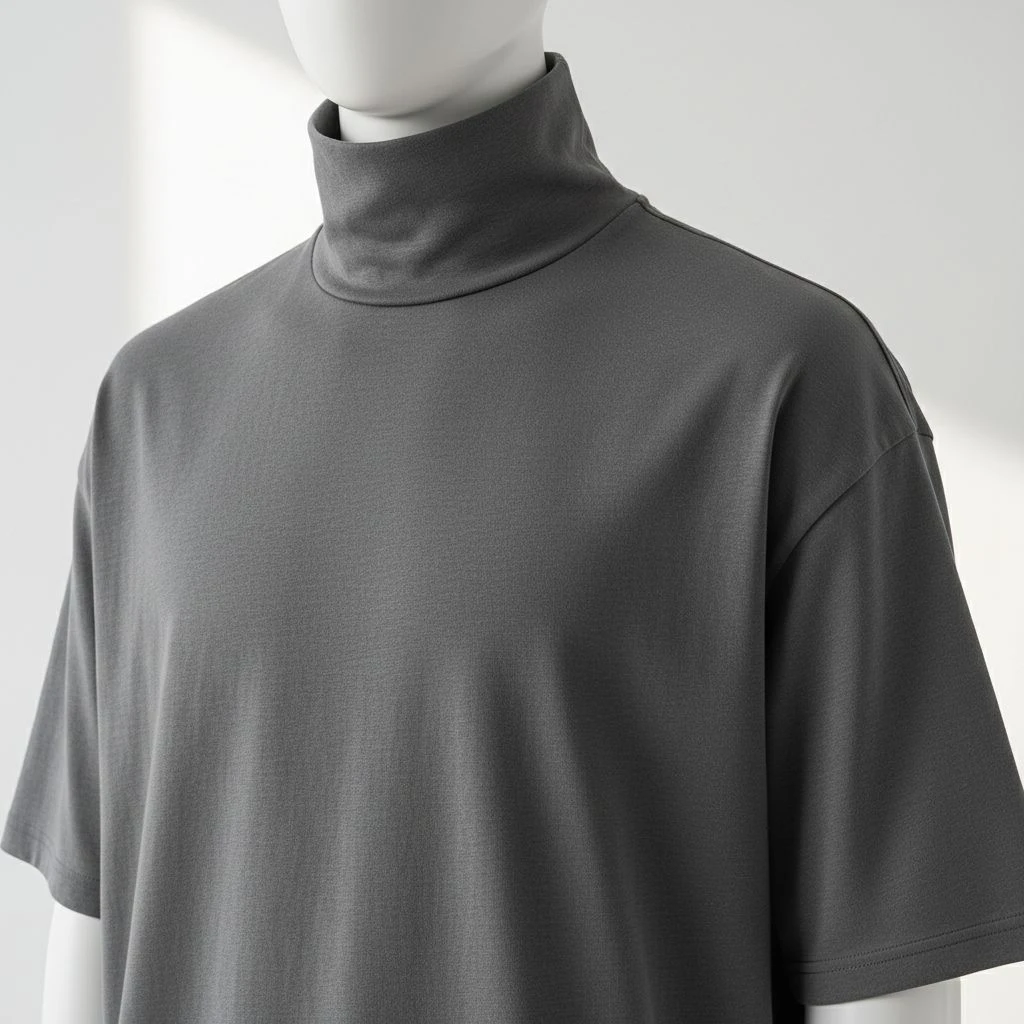
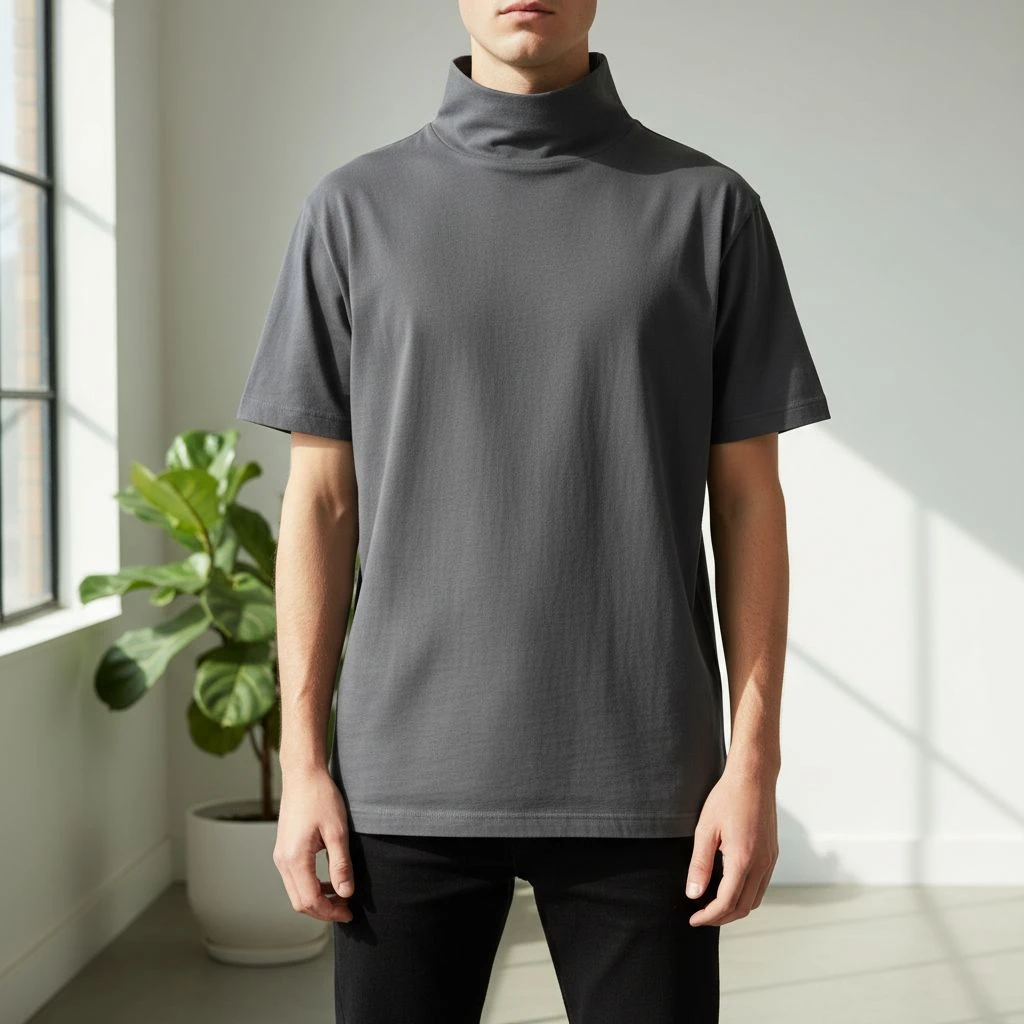
2) Mock Neck
Mock neck looks premium, but humidity exposes its weakness fast.

Why it feels worse:
- A collar that stands up traps heat like a “ring” around the neck
- The collar is usually double-layer or more structured → bulk + sweat
- In humid weather, people sweat around the neck and collar feels damp longer
What complaints sound like
- “Too warm”
- “Feels sticky”
- “Collar stays wet”
If you insist on mock neck for brand identity
- Use breathable fabric with good drying behavior
- Spec a softer, thinner collar build
- Avoid tight fit; mock neck needs ease or it becomes torture
3) Turtleneck (or anything fold-over)
This one is obvious, but brands still try “summer turtlenecks” sometimes.

Why it feels worse
- Maximum coverage + multiple layers = maximum heat trap
- Sweat has nowhere to evaporate around the neck
- The fold-over adds thickness and keeps moisture close to skin
When it makes sense anyway
- Fashion statement pieces
- Indoor / AC-heavy environments
- Photoshoots (but not real outdoor wear)
Reality check
- If your market is truly humid daily wear, this will be a niche item, not a volume seller.
4) Tight Crew Neck (even a normal crew can fail)
I’m going to challenge the “crew neck is always fine” idea here. A crew neck becomes a hot-weather problem when it’s tight, not when it’s a crew.

Why it feels worse
- Tight opening blocks airflow
- Rib collar presses into skin → sweat builds up faster
- Some brands use thick rib + strong recovery to look “premium,” but that can feel hot
What complaints sound like
- “Neck is too tight”
- “Feels like it’s choking me”
- “Uncomfortable after 10 minutes outside”
Fix
- Slightly wider neck opening
- Softer/lighter rib
- Reduce bulky neck tape
5) Necklines with heavy binding or thick rib trims
This includes some “premium” builds and retro looks.

Why it feels worse
- Binding and heavy rib = extra fabric layers
- Extra layers mean more warmth and slower drying
- In humidity, the collar area becomes the wettest part
Examples
- Thick bound necklines
- Heavy rib collars on oversized tees
- Some ringer tees with thick rib trim
Fix
- Use lighter rib
- Minimize tape width and thickness
- Avoid double-layer binding if comfort is the goal
6) Necklines with extra structure and details
Details look cool, but details often equal heat + QC risk.
Why it feels worse
- Plackets, snaps, zippers, layers, overlays → more bulk and less breathability
- These parts can rub when skin is sweaty
Examples
- Polo plackets (especially thick ones)
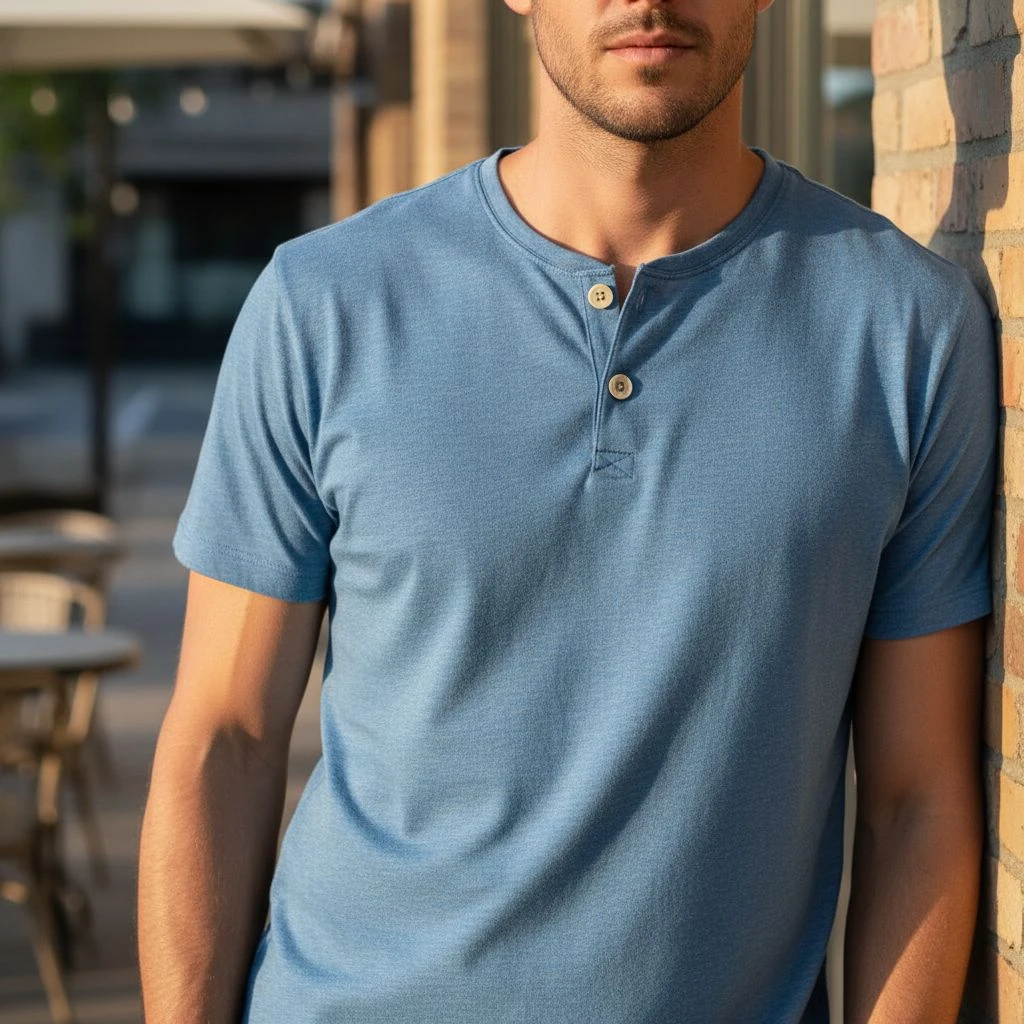
- Henley necks with heavy placket + buttons
- Zip necks
- Layered/overlay neck designs
Fix
- Keep plackets light and narrow
- Choose soft trims that don’t rub
- Make sure the neckline doesn’t sit tight at the throat
Conclusion / Final Words
In hot or humid climates, the neckline that feels “best” is usually the one that doesn’t trap heat at the throat. Open shapes like V-necks, scoops, and notch necks often feel cooler because they increase airflow—but they only win when the fabric is breathable and the collar build stays light.
Necklines tend to feel worse when they add coverage, tightness, or bulk around the neck—like high necks, mock necks, tight crews, thick rib collars, heavy binding, and structured details (plackets, zips). These styles can look premium, but in humidity they often create the exact problem customers hate most: a damp, sticky collar that won’t dry. So if your goal is real-world comfort (and fewer complaints), design summer tees with this priority: breathable fabric + relaxed fit + lightweight collar construction first, then choose the neckline shape. A well-built crew can beat a poorly built V, every tim