4 Main Production Models in the Garment Industry: CMT, OEM/FOB, ODM, and OBM

The garment industry offers various ways to produce clothing, each providing a different level of control, cost, and responsibility. Whether you manage a startup or a large scale manufacturing business, understanding these four production models helps you choose the best fit for your goals. We will walk through CMT, OEM/FOB, ODM, and OBM in simple, clear language to see how each works and when to use it.
Overview: CMT, OEM/FOB, ODM, and OBM
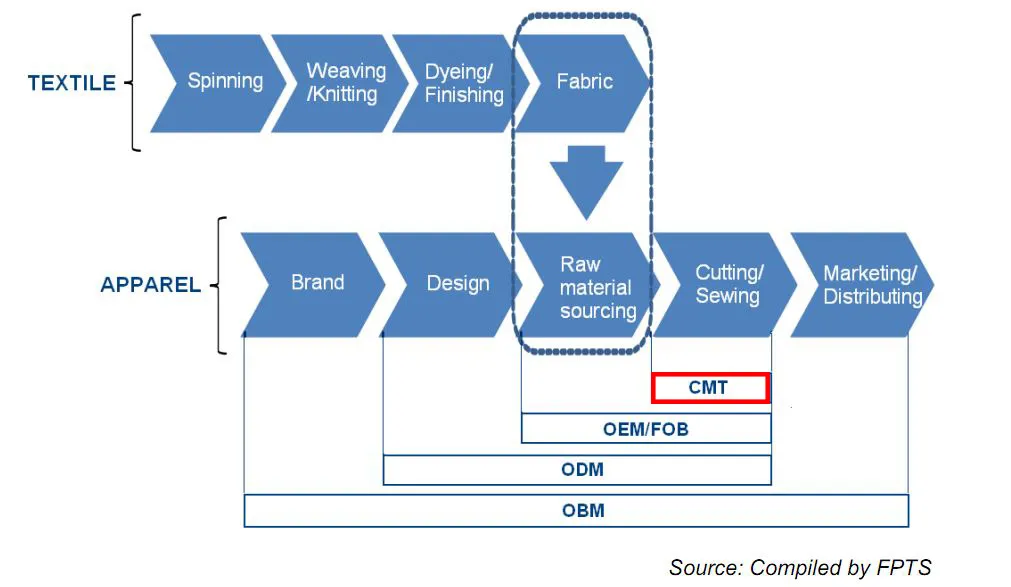
- CMT: Low investment, buyer supplies all materials.
- OEM/FOB: Factory sources materials, offering higher convenience for the brand.
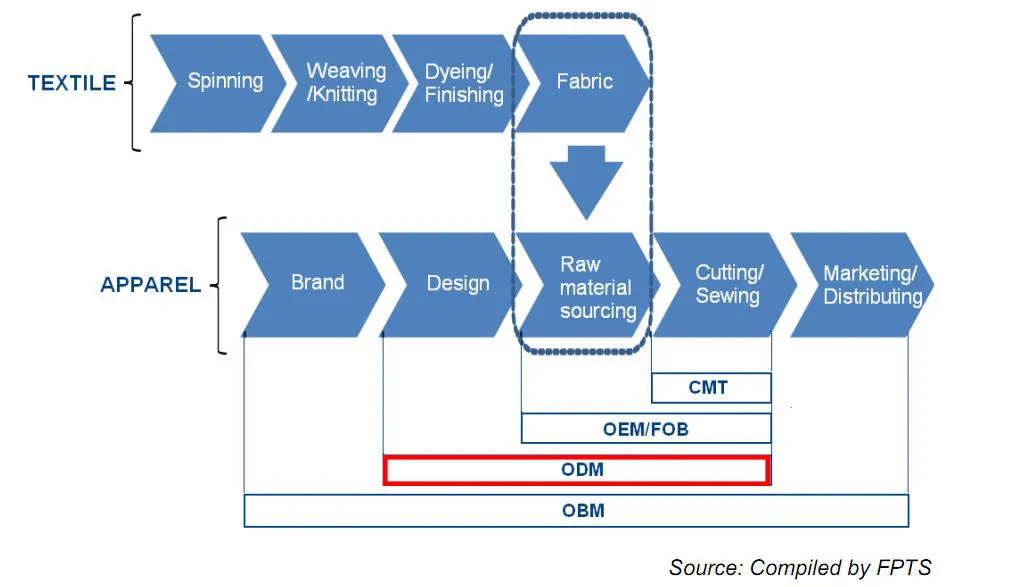
- ODM: Factory provides both design and production.
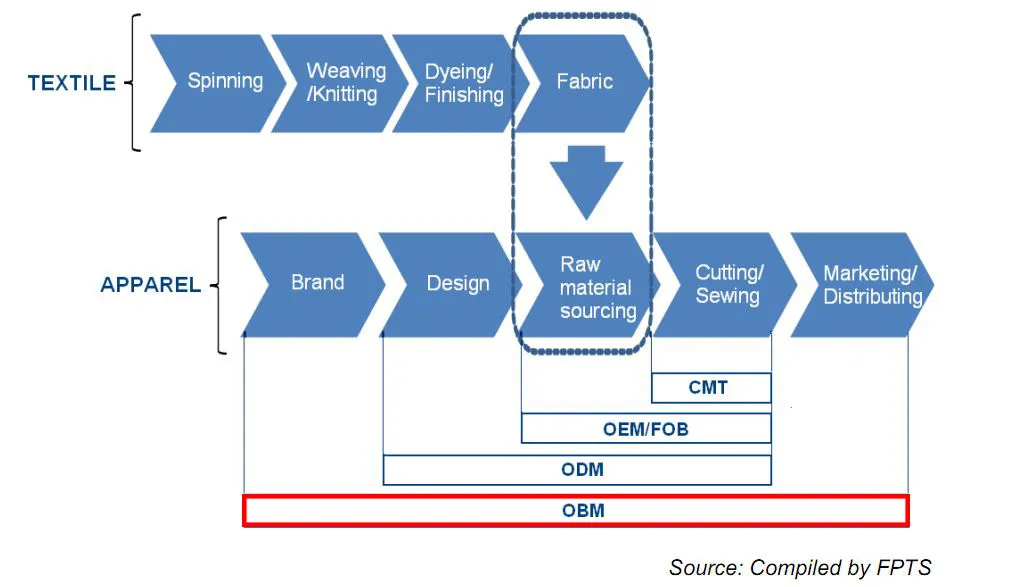
- OBM: Full brand ownership by the manufacturer.
=> Related Article: What Is CM (Cut & Make)?
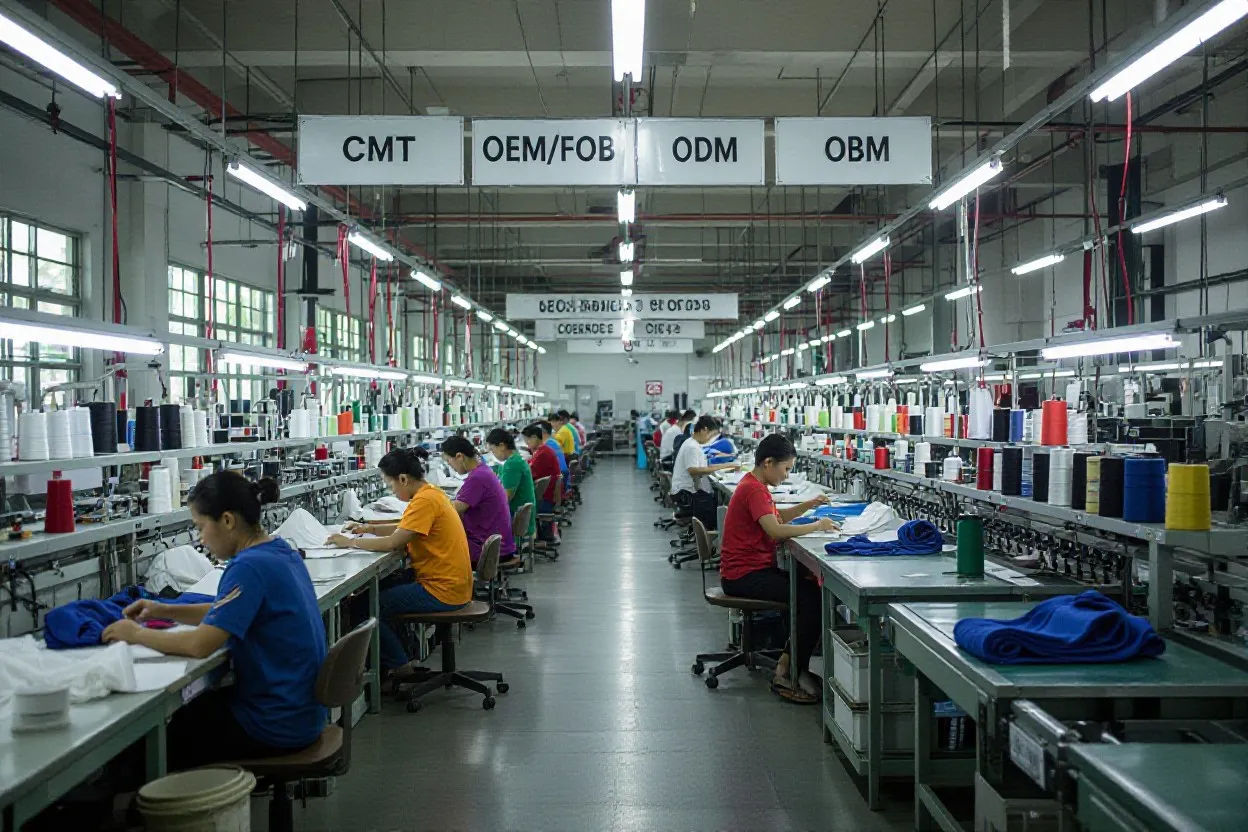
1. CMT (Cut – Make – Trim)
In this model, you keep total design control while the factory handles production only. It is ideal for brands that prefer sourcing their own specialty or sustainable fabrics. Typical MOQs range from 500 – 2,000 pieces, and lead times sit around 2-6 weeks.
- Pros: Very low financial risk for the factory; total material control for the buyer.
- Cons: Limited profit margin for the factory; buyer bears all sourcing and logistics risks.
2. OEM / FOB (Original Equipment Manufacturing)
OEM/FOB means the factory sources materials based on your tech packs, manufactures the garments, and delivers finished goods to the shipping port. This shifts sourcing responsibility and inventory risk to the manufacturer, giving you a turnkey service. Lead times are commonly 6-12 weeks.

=> Related Article: OEM/FOB: What It Really Means
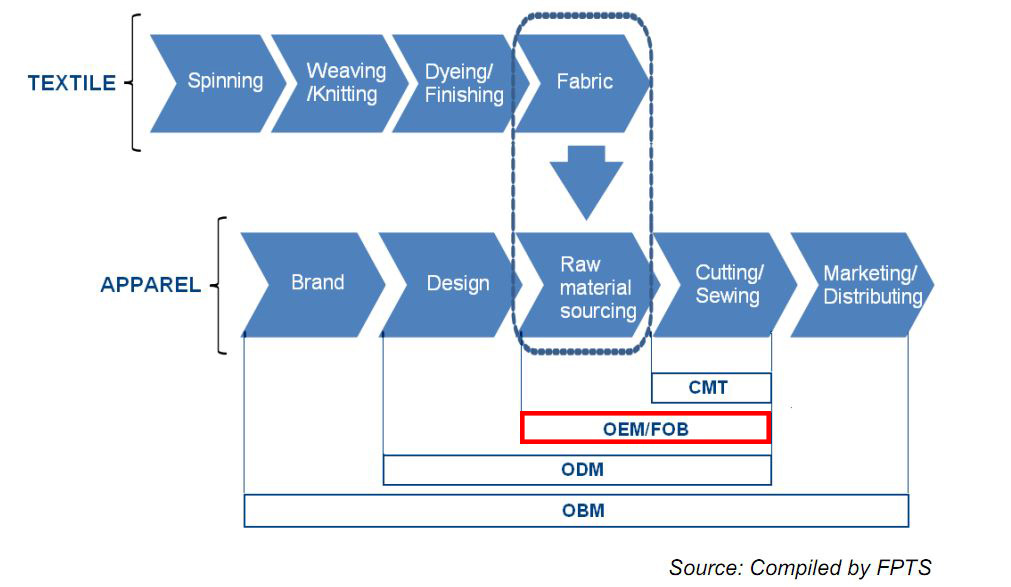
- Pros: Higher factory margins; maximum convenience for brands—you only provide ideas or tech packs.
- Cons: Higher capital requirements for the factory; buyer depends on factory QC systems.
3. ODM (Original Design Manufacturing)
With ODM, you hand over product development entirely. The factory creates the designs and patterns, helping you scale fast without an in-house design team. This is perfect for retailers needing seasonal assortments quickly.
- Pros: Saves time and reduces internal design costs by 30-50%.
- Cons: Risk of design duplication if exclusivity agreements are not airtight.
4. OBM (Original Brand Manufacturing)
The factory is no longer just a contractor; it is the brand owner. OBM involves managing packaging, marketing, and sales channels. While it unlocks the highest margins (>30-40% gross), it requires significant investment in branding and distribution.
Comparative Analysis of Models
| Model | Who Sourcing? | Who Designs? | Profit | Risk |
|---|---|---|---|---|
| CMT | Buyer | Buyer | Low | Very Low |
| OEM/FOB | Factory | Buyer | Medium | Medium |
| ODM | Factory | Factory | High | High |
| OBM | Factory | Factory | Very High | Very High |
Conclusion
Each model has its own benefits and challenges. Choose CMT if you want full fabric control, OEM/FOB for turnkey production, ODM for fast development, or OBM to build your own legacy. At Mekong Garment, we specialize in CMT and OEM/FOB services to help brands deliver stable quality and predictable lead times across global markets.