
Sourcing wholesale blank apparel requires a clear understanding of lead time from the beginning. It affects launch dates, printing schedules, warehouse planning, cash flow, and customer satisfaction. A good price means very little if the garments arrive too late for your selling season or production plan.
Blank apparel is widely used for screen printing, embroidery, private labeling, promotions, uniforms, reselling, and fashion basics. Many buyers assume blank garments are always ready to ship, but that is not always the case. Some blank apparel is available in stock, while other orders still require fabric sourcing, sewing, packing, and international shipping.
That is why understanding typical lead times matters. It helps buyers make better purchasing decisions, avoid unrealistic expectations, and reduce costly delays. This guide breaks down the usual lead times for wholesale blank apparel, explains what affects delivery speed, and shows how buyers can plan more accurately.
What Does Lead Time Mean in Wholesale Blank Apparel?
Lead time is the total amount of time from the moment a buyer places an order until the goods are delivered. In wholesale blank apparel, lead time may include:
- order confirmation
- stock checking
- fabric sourcing
- production
- quality inspection
- packing
- export handling
- shipping
- customs clearance
- final delivery
Many buyers confuse production time with lead time. They are not the same. Production time is only one part of the full process. Even if garments are already made, the supplier still needs time to pick, pack, and ship the goods. So when discussing blank apparel lead times, the real question is not just “How fast can you make it?” but also “How fast can it actually reach me?”
Typical Lead Times for Wholesale Blank Apparel
Below is a simple overview of common lead times for wholesale blank apparel.
| Order Type | Typical Lead Time | Comments |
|---|---|---|
| In-stock local warehouse apparel | 3–7 business days | Fastest option for standard items |
| In-stock overseas apparel | 2–6 weeks | Depends on freight mode and customs |
| Made-to-order blank apparel | 30–60 days | Common for bulk factory production |
| Made-to-order plus shipping | 45–90 days | Full cycle from production to delivery |
| Stock sample | 3–7 days | If sample is ready and available |
| Custom sample | 1–3 weeks | If special development is needed |
| Air freight shipment | 5–12 days | Faster, but more expensive |
| Sea freight shipment | 3–6 weeks | More economical, but slower |
Lead Times for In-Stock Wholesale Blank Apparel
In-stock blank apparel is usually the fastest option. This works best for buyers who need common colors, standard sizes, and basic styles such as blank T-shirts, polo shirts, sweatshirts, and hoodies.
Typical timelines for in-stock orders:
- Local stock: 3 to 7 business days
- Regional warehouse stock: 1 to 3 weeks
- Overseas stock: 2 to 6 weeks
If the supplier has a local warehouse near your market, delivery can be very quick. But if the stock is held in another country, the order may still take several weeks even though the goods are technically “ready.” That is an important detail many buyers miss. “In stock” does not always mean “ready tomorrow.”
Common advantages of in-stock blank apparel:
- shorter lead time
- easier reorder process
- less production risk
- better for urgent orders
- good for standard styles and colors
Common limitations:
- fewer customization options
- limited size ratios
- limited colors in slow-moving shades
- stock-outs during peak season
Lead Times for Made-to-Order Blank Apparel
Made-to-order blank apparel takes longer because the garments are produced after the order is confirmed. This is common for buyers who need larger volumes, special GSM, uncommon colors, private labeling, or a custom fit.
Typical made-to-order timeline:
- production only: 30 to 60 days
- production plus shipping: 45 to 90 days
In some cases, lead time can be longer if fabric is not ready, dyeing takes extra time, or shipping routes are congested.
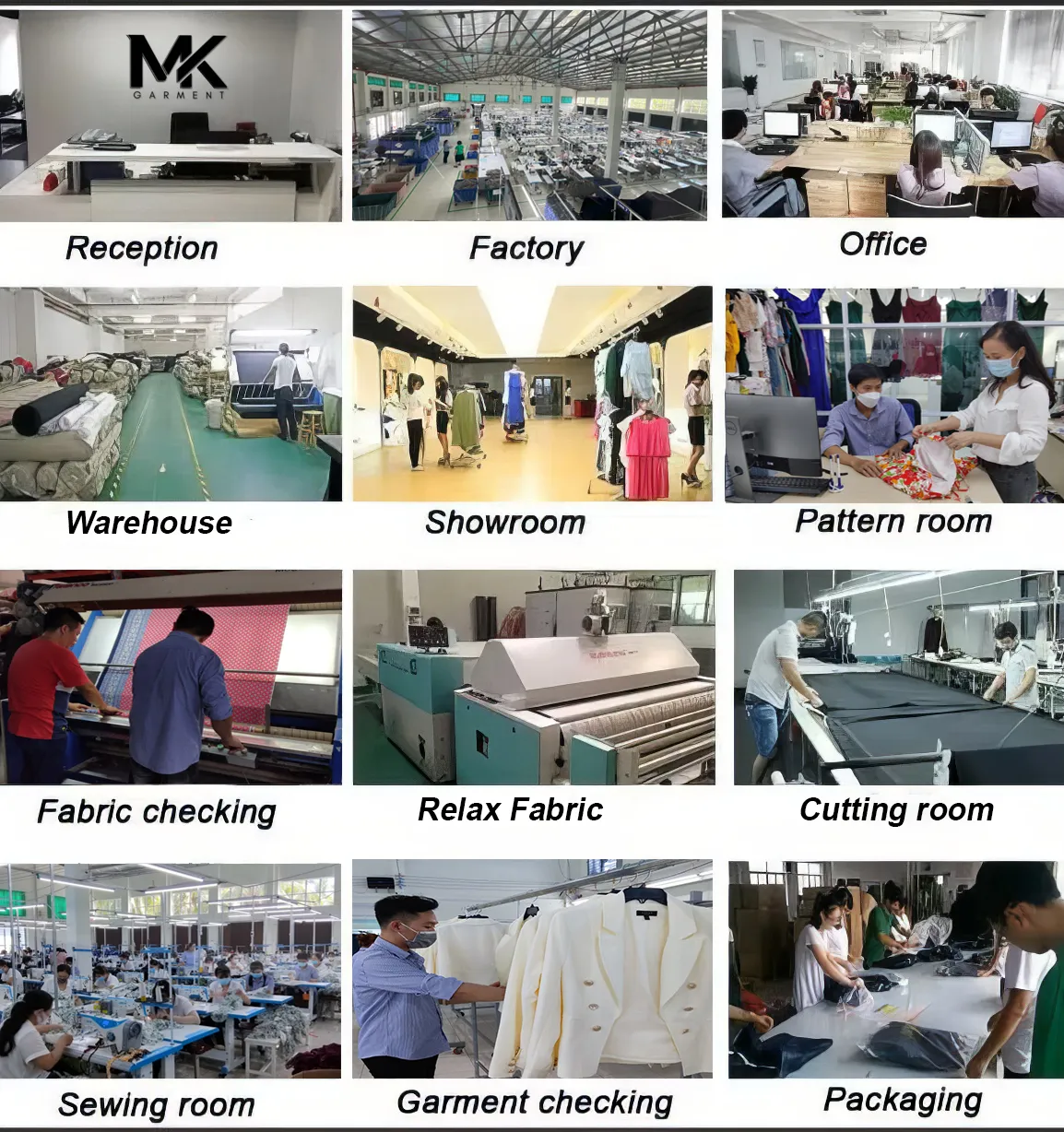
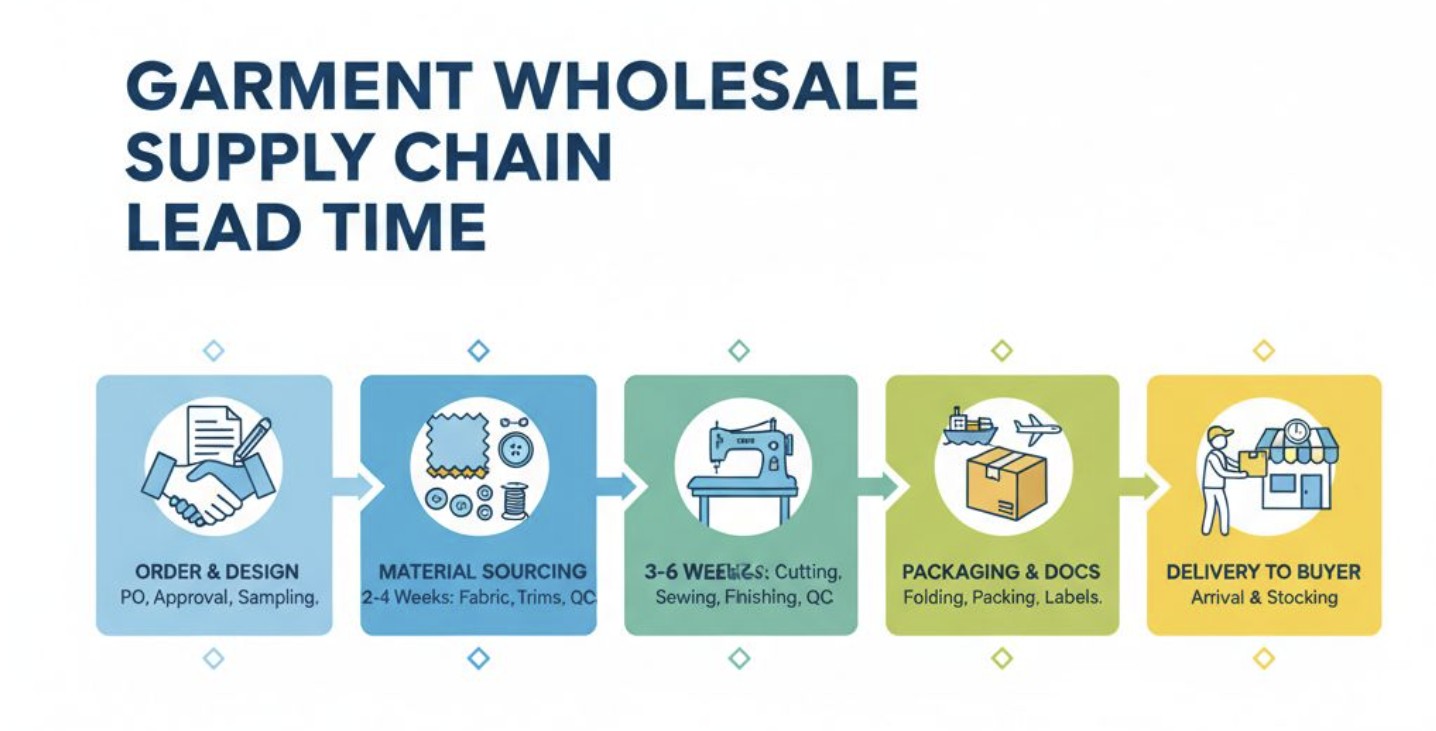
A typical production flow may include:
- order confirmation
- fabric booking or sourcing
- knitting or fabric preparation
- dyeing and finishing
- cutting
- sewing
- quality checking
- packing
- shipment booking
- export and delivery
If any one of these steps is delayed, the full order timeline becomes longer.
About Lead Times by Product Type:
Not all blank apparel products require the same amount of time. Simple garments move faster. More complex garments need longer production and inspection time.
| Product Type | Typical Production Lead Time | Reason |
|---|---|---|
| Basic blank T-shirts | 20–45 days | Simple construction, common fabric |
| Tank tops / sleeveless tops | 20–40 days | Fewer sewing steps |
| Blank polo shirts | 30–50 days | Collar, placket, trims add time |
| Blank long sleeve tees | 25–45 days | Slightly more sewing time |
| Blank sweatshirts | 35–60 days | Heavier fabric and rib trims |
| Blank hoodies | 35–60 days | Hood, rib, fleece fabric increase complexity |
| Jogger pants | 30–55 days | Waistband, rib, pockets add time |
| Workwear / uniforms | 45–90 days | More panels, more QC points |
| Jackets / outerwear | 45–90 days | Higher complexity and heavier materials |
The Main Factors That Affect Lead Time
Lead times in blank apparel are shaped by more than just sewing speed. Buyers should understand the real factors behind the timeline.
| Factor | Impact on Lead Time |
|---|---|
| Stock availability | In-stock items are much faster |
| Fabric availability | If fabric must be sourced or dyed, time increases |
| Color choice | Core colors are usually quicker than fashion shades |
| Order quantity | Larger orders may need more capacity planning |
| Product complexity | Simple T-shirts are faster than hoodies or uniforms |
| Size breakdown | Unusual ratios may require extra production balancing |
| Custom labeling | Adds extra preparation time |
| Packaging requirements | Special packing can extend the timeline |
| Freight mode | Air is faster, sea is slower |
| Customs clearance | Can add unpredictable delays |
| Peak season demand | Busy periods can increase lead time |
The most important factors buyers should ask about:
- Is the garment already in stock?
- Is the fabric ready now?
- Does the color need fresh dyeing?
- Is the order going by air or sea?
- Is the supplier in peak season right now?
- Does the order include custom labels or packaging?
These questions matter more than simply asking for “best delivery time.”
About Lead Times for Samples:
Samples are another part of the sourcing process that buyers often underestimate. If you are working with a new supplier, it is smart to review a sample first. But samples also need time.
Typical sample lead times:
- Stock sample: 3 to 7 days
- Custom sample: 1 to 3 weeks
- Revised sample: another 1 to 2 weeks if changes are requested
Sample stages may include:
- sample request
- sample making
- sample shipping
- buyer review
- comments and revision
- final approval
If the buyer is developing custom blank apparel rather than selecting an existing item, sample approval can add several weeks before bulk production even starts.
Shipping Time Matters Just as Much as Production Time
Many sourcing delays happen because buyers focus only on production and ignore shipping. A factory may say production is 35 days, but that does not mean the goods arrive in 35 days. Shipping still needs to be added.
Typical shipping timelines:
- domestic delivery: 1 to 7 days
- regional shipment: 1 to 3 weeks
- international air freight: 5 to 12 days
- international sea freight: 3 to 6 weeks
Production Time vs Total Delivered Lead Time:
| Scenario | Production Time | Shipping Time | Total Estimated Lead Time |
|---|---|---|---|
| Local stock order | 0–2 days | 3–7 days | 3–7 business days |
| Overseas stock order | 0–5 days | 2–6 weeks | 2–6 weeks |
| Basic made-to-order by air | 30–45 days | 5–12 days | 35–57 days |
| Basic made-to-order by sea | 30–45 days | 3–6 weeks | 51–87 days |
| Complex order by sea | 45–60 days | 3–6 weeks | 66–102 days |
Why Lead Times Suddenly Get Longer
Even strong suppliers sometimes face delays. That does not always mean they are unreliable. Apparel production has many moving parts, and one weak link can affect everything. Common reasons for delays:
- fabric mill delay
- dye house backlog
- trim shortage
- factory overload
- labor shortages
- quality issues requiring rework
- vessel booking delays
- port congestion
- customs inspection
- public holidays or seasonal shutdowns
That said, buyers should not accept vague promises. A supplier should be able to explain the reason for the delay clearly and provide a realistic recovery plan.
How to Reduce Lead Time Risk
A lot of lead time problems come from poor planning, not just slow production. Buyers can reduce risk by making smarter sourcing decisions early.
Best ways to shorten or control lead time:
- order earlier
- choose core colors such as black, white, navy, and gray
- use standard fabric weights
- avoid unnecessary customization
- confirm size ratios early
- approve samples quickly
- select reliable suppliers with planning systems
- ask for a stage-by-stage timeline
- build buffer time into the launch schedule
- use air freight only when the margin can support it
Practical buyer checklist:
- Confirm whether the goods are in stock or made to order
- Ask where the stock is located
- Ask whether the fabric is available now
- Confirm freight method before payment
- Check whether the quoted lead time includes customs and final delivery
- Leave buffer time for unexpected delays
This part matters because too many buyers compare only price and ignore the calendar. That is usually where problems start.
Final Thoughts / Conlusion
Typical lead times for wholesale blank apparel can range from just a few business days to several months. The final timeline depends on whether the goods are in stock, whether the order is made to order, how complex the garment is, what freight method is used, and how well the whole supply chain is managed.
The most important lesson is simple: blank apparel does not always mean fast apparel. Some orders move quickly, but others still require full production and shipping time. Buyers who understand lead times clearly can plan better, reduce risk, and make smarter purchasing decisions. Instead of asking only for the cheapest quote, it is better to ask for the most realistic delivery plan. In wholesale blank apparel, a realistic lead time is often more valuable than an unrealistic promise.