
At first glance, most t-shirts look the same. A crewneck is a crewneck, right? But here’s the trap: two shirts can look identical on a hanger and still fit totally different on a body. There’s one tiny detail that often decides whether a tee looks slim and “retail” or wide and boxy and most people never think to check it: Side seams. Once you notice them, you’ll start spotting them everywhere. And you’ll understand why some tees just “sit right” while others feel like a fabric tube.
Why T-Shirt Fit Is So Hard to Judge From Photos
Photos hide the stuff that matters most:
- how the fabric drapes
- whether the shirt twists after washing
- how the body is shaped through the waist
- how the sleeves fall on your arms
That’s why you can see three cotton tees online and still have no clue which one will fit better. So instead of guessing, look for a construction clue, something that tells you how the shirt was made. That clue is the side seam.
What Are Side Seams?
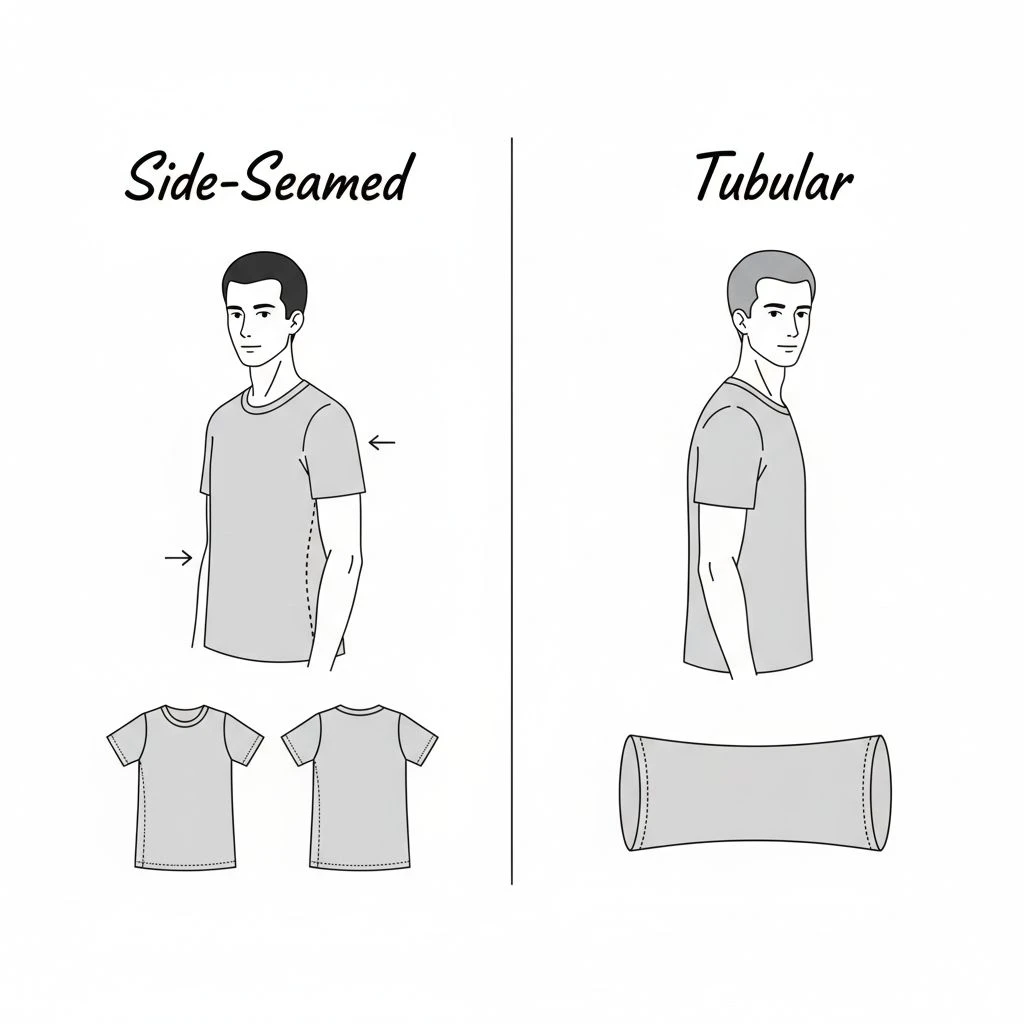
Side seams are the lines of stitching that run down both sides of a t-shirt, from the underarm area to the bottom hem.
- They’re not decorative.
- They’re not “extra stitching.”
- They’re a sign that the shirt was built from separate fabric panels, then stitched together.

And that changes everything.

Side Seamed vs. Tubular: The Two Ways T-Shirts Are Made
Most t-shirts are made one of two ways:
1) Tubular T-Shirts (No Side Seams)
A tubular shirt starts as a fabric tube (imagine a cylinder). The factory:
- cuts a body length from the tube
- cuts a neck hole
- attaches sleeves
It’s fast, efficient, and usually cheaper, because there’s less cutting and less stitching.
=> The downside: people aren’t shaped like cylinders.
So tubular tees tend to look:
- wider through the waist
- boxier overall
- less “shaped” to the body
2) Side-Seamed T-Shirts (With Side Seams)

A side-seamed shirt is made from separate pieces:
- a front panel
- a back panel
- sleeves
Those panels are cut individually and stitched together, including the seams down the sides.
This method gives manufacturers the option to:
- shape the waist slightly
- control the drape more cleanly
- make the fit look more modern and “retail”
How Side Seams Affect the Fit of Your Shirt
Here’s the key idea: Side seams don’t magically “tighten” a shirt. What they do is reveal the shirt’s construction, and construction controls fit.
Side-seamed shirts often fit better because they can be designed to match the human body:
- a little narrower at the waist
- better balance between chest and hips
- cleaner lines along the torso
Tubular shirts often fit looser because the body is literally a tube:
- same width front to back
- minimal shaping
- tends to hang straight down
The “Retail Fit” Look
When people say a tee looks “retail” or “premium,” they usually mean:
- it frames the body better
- it doesn’t balloon at the waist
- it looks intentional, not like a giveaway shirt
Side seams make that easier to achieve.

Side Seams Can Reduce Twisting Let’s talk about something that drives people crazy: That annoying twist after washing, where the shirt’s side drifts forward and the hem looks crooked. This can happen for a few reasons (fabric grain, finishing, shrink, cutting), but in general: better construction control = less weird twisting. Side-seamed shirts are cut from flat panels, which can make it easier to control alignment and grain.
=> Important notes: side seams don’t guarantee perfection. A badly made side-seamed shirt can still twist. But when you’re choosing between two unknown blanks, side seams are often a safer bet.
Why Printers Often Prefer Side-Seamed Shirts
If you print t-shirts (screen print, DTG, DTF, heat transfer), side seams are helpful because they:
- give a clearer reference for centering the garment
- make placement more consistent across a batch
- reduce “my print looks off-center” complaints
That’s why many print shops steer customers toward side-seamed blanks for higher-end projects.
When Tubular T-Shirts Are Actually a Smart Choice
Side seams get hyped a lot — but tubular shirts have their place.
Tubular tees can be great if:
- you’re ordering for a big event (school, charity run, company outing)
- cost matters more than fashion fit
- you want a looser classic shape
- you’re printing a large quantity and need value
Tubular isn’t “bad.” – It’s just built for a different goal: speed + cost efficiency, not tailored fit.
Final Take / Conclusion

If you want the shirt that looks more “retail,” more shaped, and more flattering, side seams are one of the easiest tells. They reveal that the shirt was built with panels, not cut from a tube. And that small construction choice often shows up in fit, drape, and consistency. So next time you’re shopping, don’t just check the collar. Check the sides.