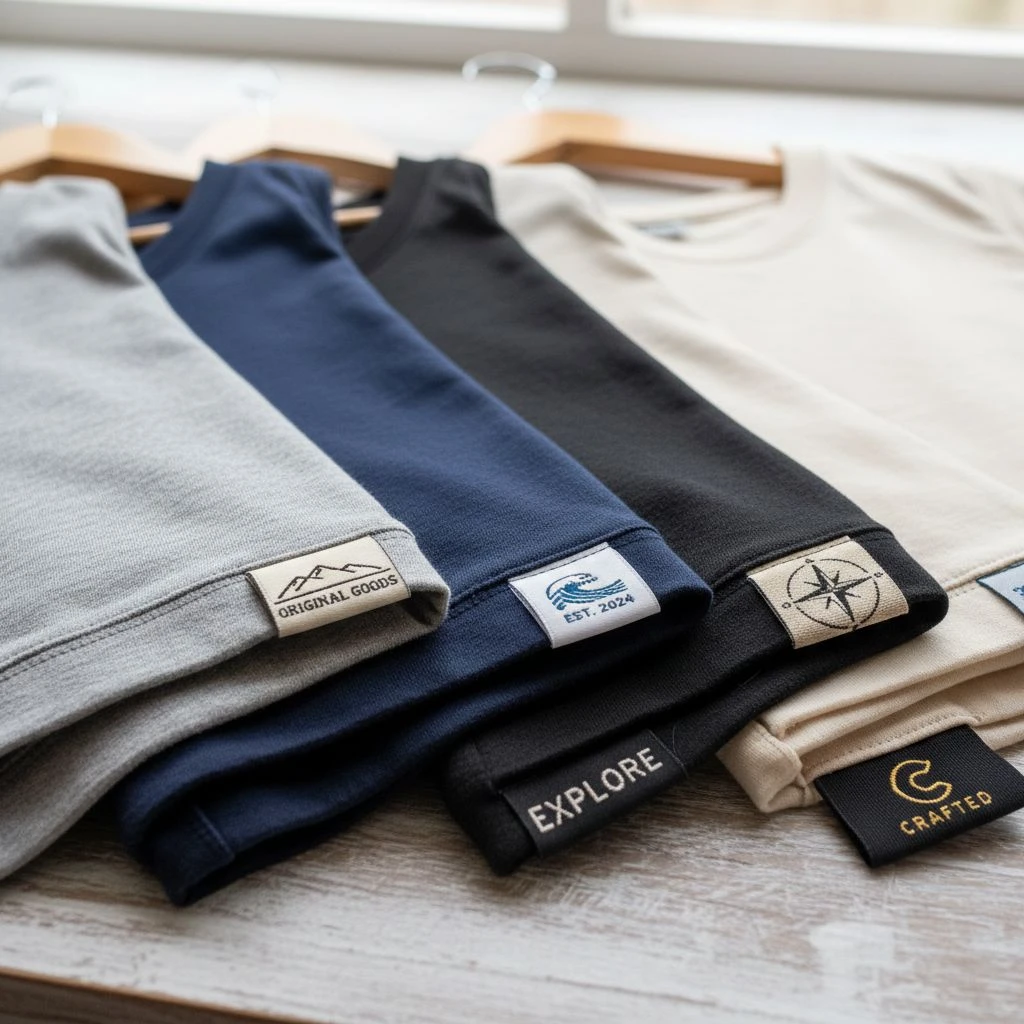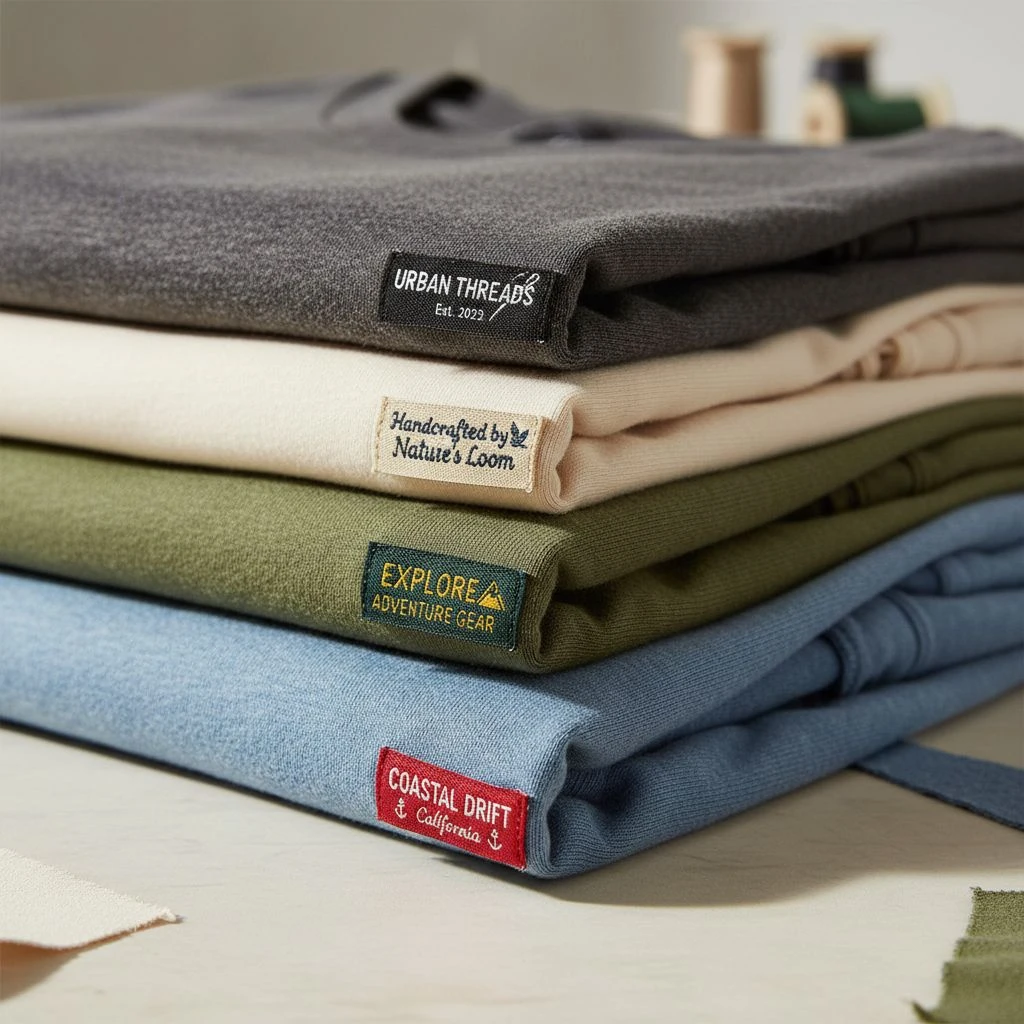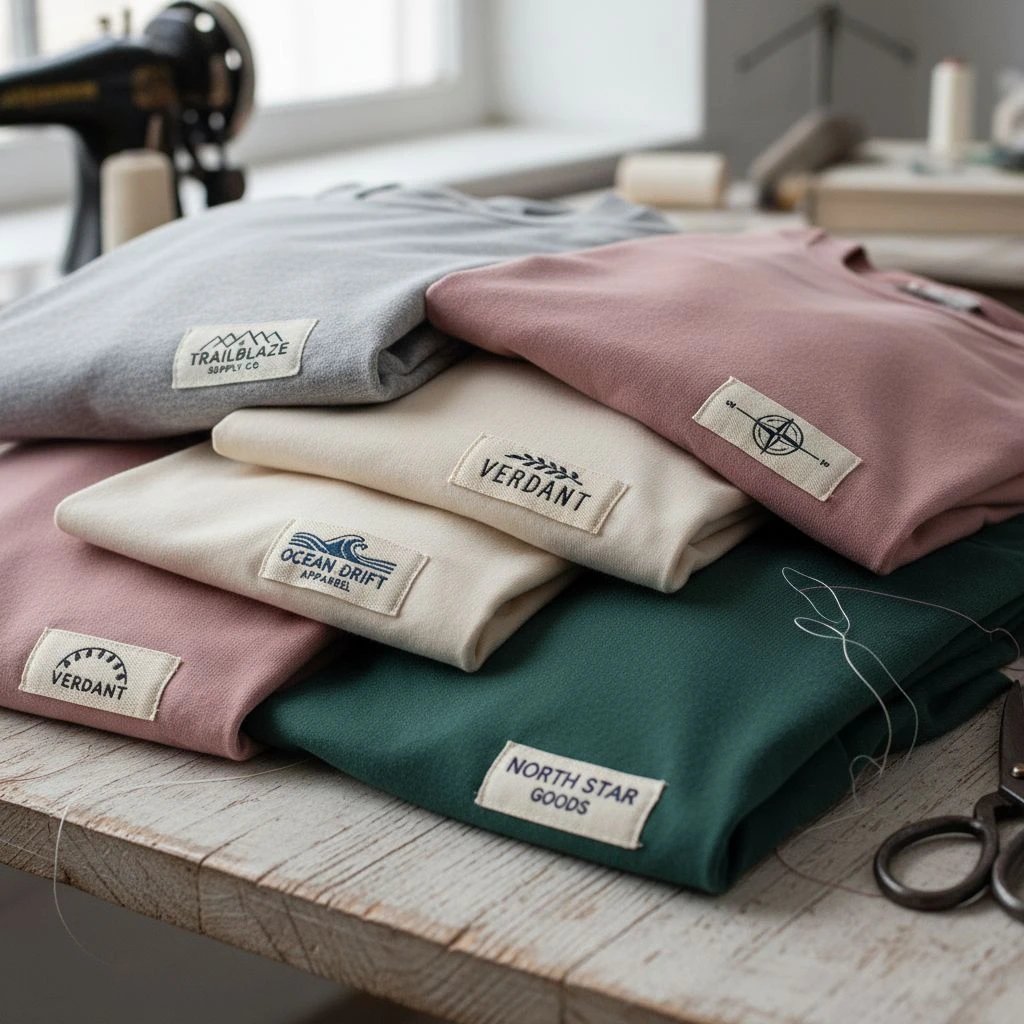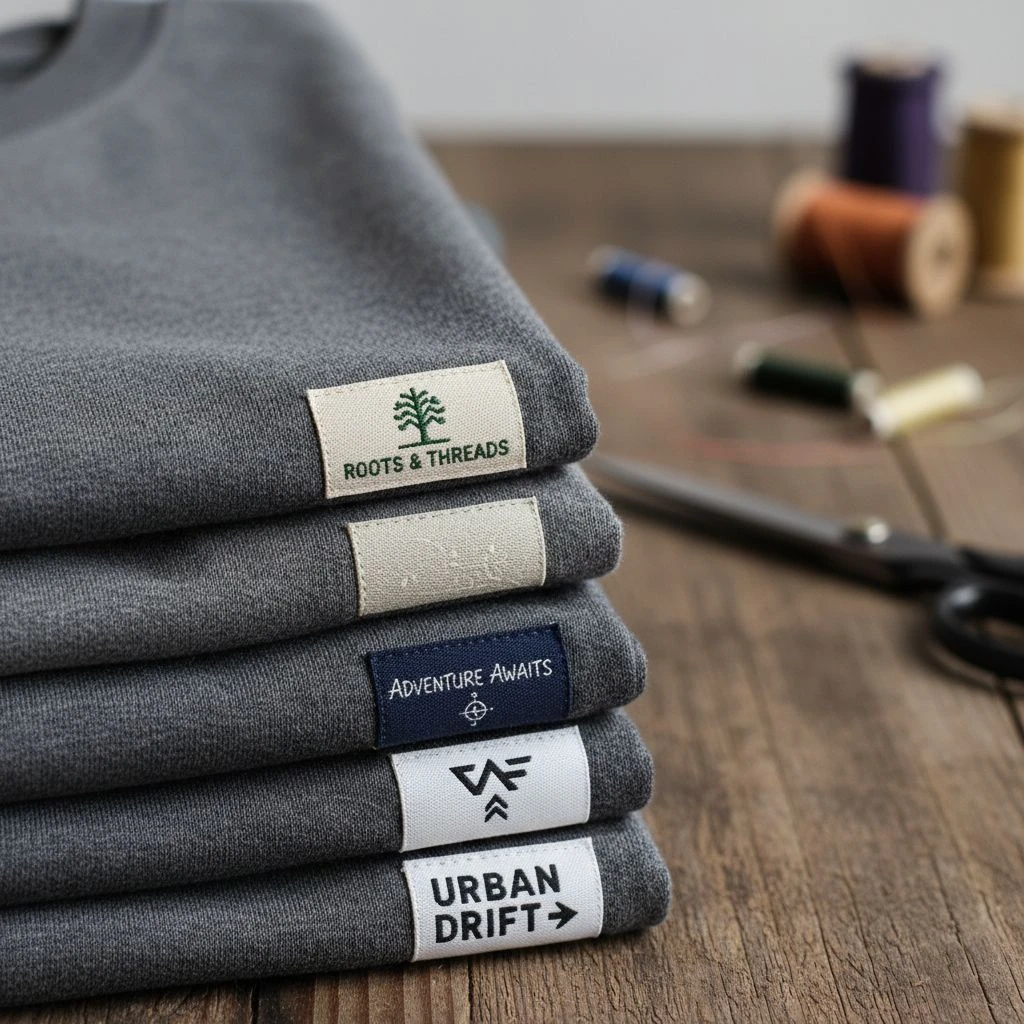


In custom apparel, most people focus on the big things first: fabric, fit, print size, colors, and logo placement. Those things matter a lot. But small details often decide whether a T-shirt feels basic or feels like a real brand product. One of the strongest small details is the custom hem tag. A hem tag is a small label sewn onto the hem or seam of a T-shirt. It may seem minor, but it can shape how customers see your brand. A good hem tag can make a shirt look more polished, more intentional, and more premium. It can also help people remember your brand long after they forget the original packaging. That said, let’s be honest: hem tags are not magic. A hem tag will not fix a poor-quality T-shirt, weak print, or bad fit. But when the base product is good, a hem tag becomes a powerful finishing touch. This article explains why custom hem tags matter, how they add value, and how to use them the right way on T-shirts.
What Is a Custom Hem Tag?
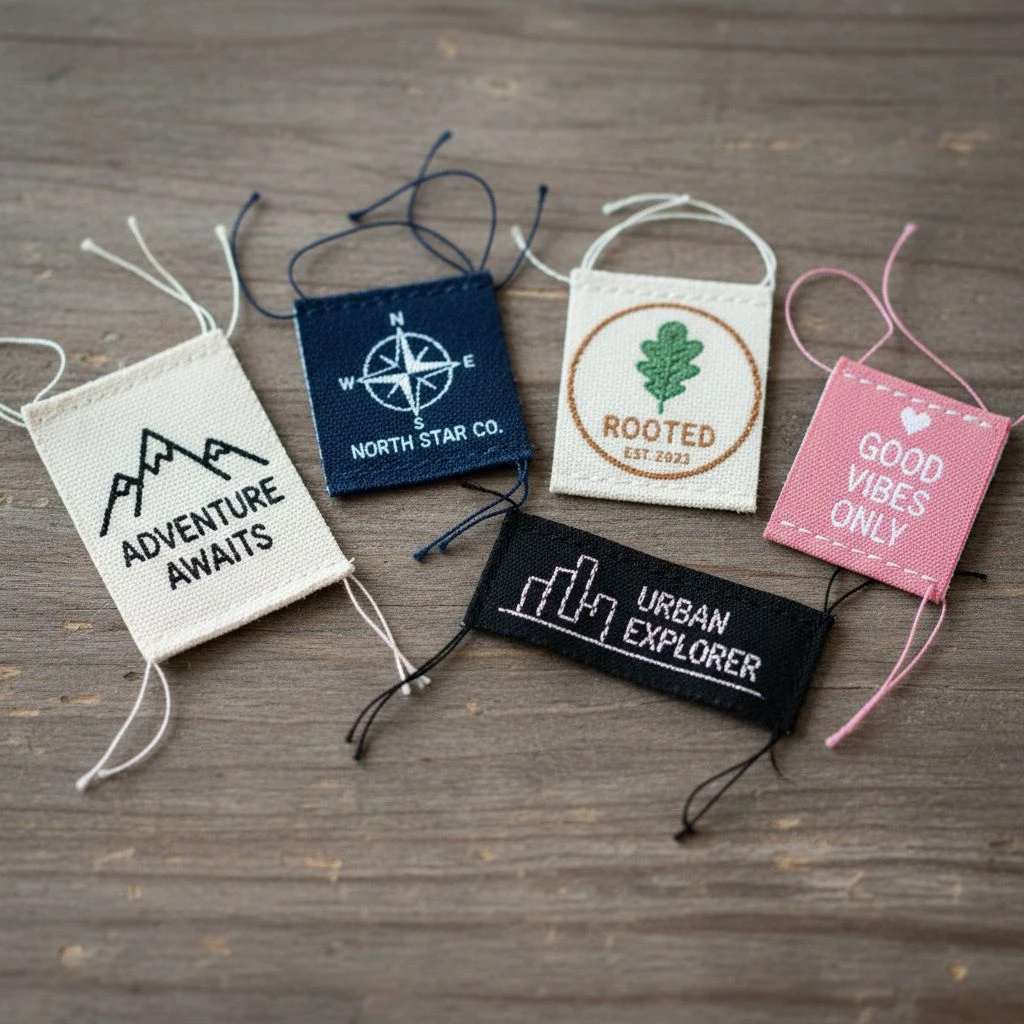
A custom hem tag is a small branded label attached to the hem or seam of a T-shirt as a finishing detail. It can feature your logo, monogram, or a short phrase, and it adds a subtle but professional touch to the garment. While small in size, a hem tag can improve presentation and make a T-shirt feel more retail-ready.
A custom hem tag is a small branded label sewn onto a T-shirt, usually at the:
- bottom hem
- sleeve hem
- side seam
- pocket edge (for pocket tees)
It usually includes one or more of these elements:
- brand name
- logo or icon
- short slogan
- size or product line marker
- small design mark
Hem tags are often made as:
- woven labels (most common for a premium feel)
- printed labels (better for fine text/detail in some cases)
- fabric patches (more bold and visible)
For many brands, hem tags are used as an add-on finishing service during production.
Why Custom Hem Tags Matter for T-Shirts
T-shirts are simple by nature. That is exactly why hem tags can be so effective. On a simple garment, small details become more noticeable. A custom hem tag can make a plain T-shirt feel more like a thoughtfully designed retail product. Here’s where the real power comes from.
1) Hem Tags Strengthen Brand Identity
In a crowded apparel market, many shirts start to look the same. If your brand only appears in a printed chest logo, your product may not feel unique enough. A custom hem tag gives your T-shirt another brand touchpoint.
It helps by:
- reinforcing your logo in a subtle way
- making the garment feel brand-owned, not blank-based
- creating a recognizable signature detail
- adding consistency across different products (tees, hoodies, joggers, beanies)
Why this matters:
Customers often remember repeated details. A hem tag may be small, but it acts like a quiet brand marker. Over time, that repeated marker can help build recognition.
=> Notes: If the hem tag design is messy, too large, or off-brand, it can hurt identity instead of helping it. The tag should support your brand system, not compete with it.
2) Hem Tags Make T-Shirts Look More Professional
A custom tee with a clean hem tag often looks more “finished” than one without it.
It signals:
- planning
- attention to detail
- production care
- consistency
Even if customers do not say, “This hem tag looks professional,” they often feel the difference. Small finishing details influence how people judge quality. => Professional image = trust. When you are building a brand, trust matters. A well-made hem tag can communicate that your team cares about the final product, not just the print on the front.
This is especially important for:
- retail brands
- fashion labels
- premium merch
- startup brands trying to look established
3) Hem Tags Increase Perceived Value
Perceived value is not only about fabric weight or print quality. It is also about presentation and finishing.
Custom hem tags can increase perceived value because they make the garment feel:
- more exclusive
- more intentional
- more premium
- less generic
A customer may compare two similar T-shirts. If one has a clean print and a branded hem tag while the other looks plain, the tagged version often feels more valuable. => Notes: Perceived value only rises when the tag is done well. A cheap-looking tag, scratchy edge, or crooked stitching can make the shirt feel lower quality.
4) Hem Tags Support Customer Loyalty
Loyalty grows when customers feel a connection to your brand. That connection comes from more than just a logo. It comes from the overall experience. A custom hem tag can help create that experience by making the shirt feel:
- personal
- memorable
- consistent
- thoughtfully branded
Over time, repeat customers start recognizing your brand details. These small cues help turn “I bought a shirt” into “I buy from this brand.” => Emotional connection matters: When a customer sees a tag that reflects your style, values, or design language, it creates a stronger impression than a plain garment. It shows personality.
5) Hem Tags Showcase Quality and Craftsmanship
If your brand says it cares about quality, customers will look for proof. Hem tags can serve as one piece of that proof. They show craftsmanship in areas many brands ignore.
A well-executed hem tag reflects:
- careful garment finishing
- design planning
- production standards
- quality control
=> This is a subtle but powerful message: “We care about the details.” And in apparel, detail is often what separates average brands from trusted ones.
6) Hem Tags Give You More Branding Options
One major advantage of custom hem tags is flexibility. They are not just labels. They are tiny design spaces.
You can use them to:
- display a logo mark
- add a brand monogram
- include a short phrase
- mark a special collection
- distinguish a premium line
- add a signature visual element
This makes hem tags useful for both minimalist brands and bold fashion labels.
Good use case examples:
- A streetwear brand uses a woven logo icon at the sleeve hem.
- A minimalist brand uses a small side seam tag with only a monogram.
- A premium basics brand uses subtle tonal tags for a clean look.
- A limited-edition drop uses a custom color tag for that release.
7) Hem Tags Help Tell Your Brand Story
T-shirts are physical products, but they can also carry meaning. Hem tags create a small space for storytelling. You can use that space to express:
- brand values
- origin story
- motto
- collection theme
- design philosophy
Even a short phrase can make the garment feel more personal. Example – A simple line like:
- “Made to move”
- “Built for everyday wear”
- “Designed in Vietnam”
- “Small batch / big ideas”
can help shape how customers feel about your brand. => Keep it simple: This is not a place for long paragraphs. Hem tags work best when the message is short, clear, and easy to read.
Why Custom Hem Tags Work Especially Well on T-Shirts
Hem tags can be used on many products, but they are especially powerful on T-shirts because:
- tees are a core product for most brands
- tees are often visually simple
- tees are repeated purchases
- tees are worn often in public
- tees are a common entry-point product for new customers
That means every small upgrade to the T-shirt experience can have a bigger long-term impact on your brand. If your T-shirt is your volume product, a hem tag can become one of your strongest brand signatures.
Common Mistakes Brands Make with Custom Hem Tags
Adding a hem tag is easy. Adding a good hem tag takes thought.
Here are common mistakes to avoid:
- 1) Tag is too big: A large tag on a simple T-shirt can look awkward and forced.
- 2) Too much text: Small labels are not mini brochures.
- 3) Low contrast design: Looks good on screen, unreadable in real life.
- 4) Wrong placement: The tag fights with the print or looks unbalanced.
- 5) Poor stitching quality: Crooked tags kill the premium effect instantly.
- 6) Branding overload: Chest print + sleeve print + back print + big hem tag + big neck print = too much.
- 7) Using hem tags on the wrong project: For ultra-budget promo tees or very short campaign runs, hem tags may not be the best use of budget.
When Custom Hem Tags Are Worth It or Might Not Be the Best Choice
When Custom Hem Tags Are Worth It
Hem tags are usually a smart investment when:
- you want to build a long-term apparel brand
- you sell direct-to-consumer
- your products are retail-focused
- you want a premium or fashion-forward image
- your T-shirts are a core product category
- you care about repeat buyers and brand recognition
They are especially useful for:
- streetwear brands
- boutique fashion labels
- artist merch brands aiming for premium quality
- gym/lifestyle brands
- small brands trying to look more established
When Hem Tags Might Not Be the Best Choice
Let’s be practical. Hem tags are not always necessary.
You may skip them (at least for now) if:
- your budget is very tight
- your order quantity is too low for cost efficiency
- the project is temporary/event-only merch
- your print design is already very busy
- your production timeline is too short
- you are still testing your brand identity
In these cases, improving the blank quality, fit, or print may create more value first. That is not anti-hem-tag. It is just smarter sequencing.
Final Thoughts / Conclusion
Custom hem tags may be small, but they can have a big impact on how your T-shirts are perceived. They help strengthen brand identity, improve professionalism, increase perceived value, support loyalty, and showcase attention to detail. Most importantly, they help turn a basic T-shirt into a more complete branded product.
But the key is execution. A hem tag works best when:
- the design is simple,
- the placement is intentional,
- the stitching is clean,
- and the garment quality supports the premium message.
If you treat hem tags as a strategic finishing detail—not just an add-on—you can use them to build a stronger, more recognizable T-shirt brand.