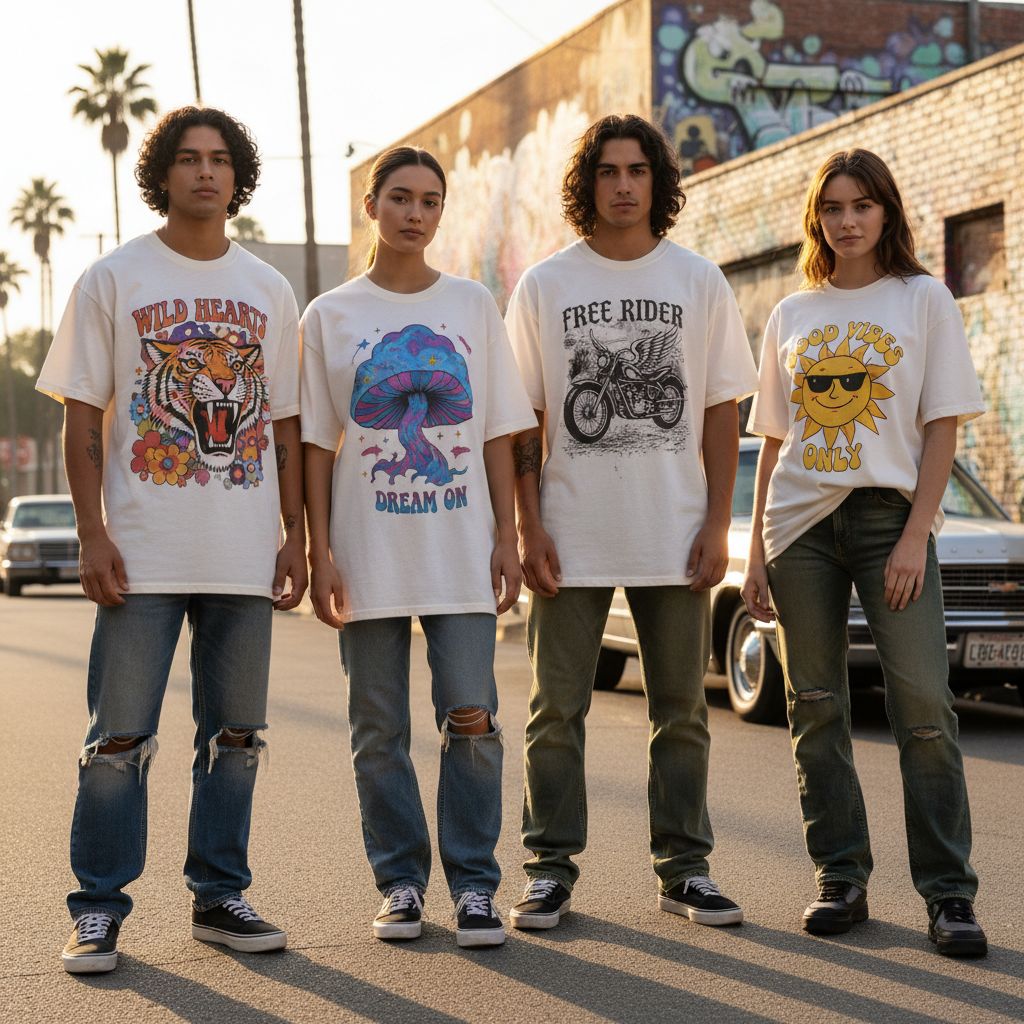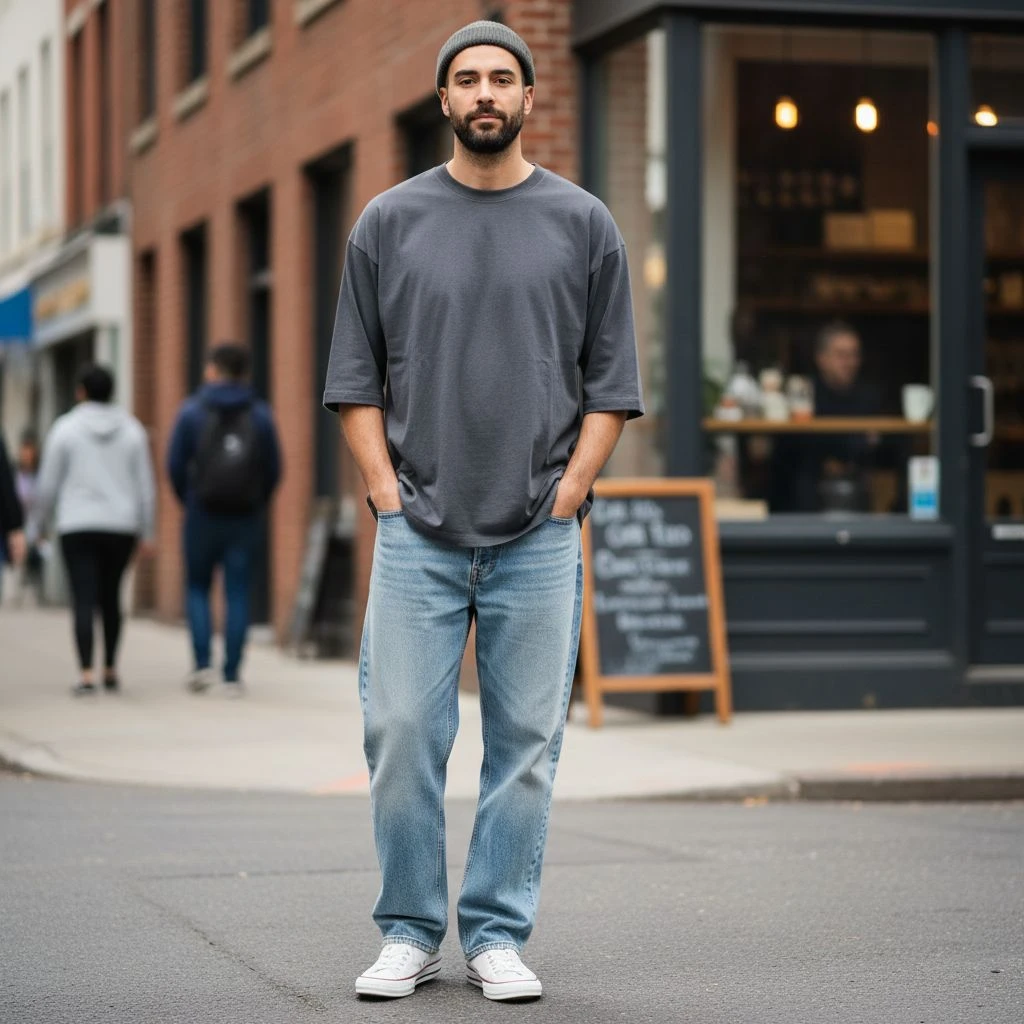

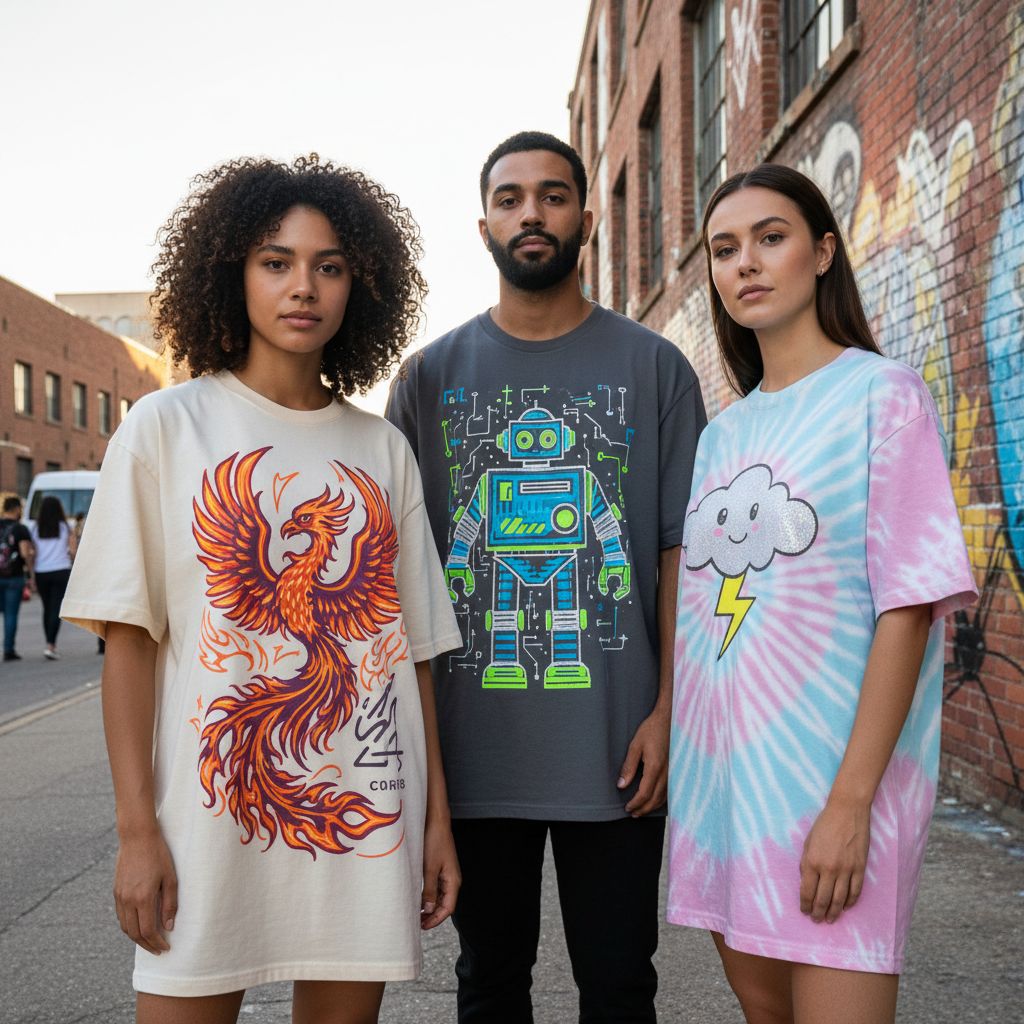
Oversized screen-printed tees are everywhere right now. And yeah, they can look insanely cool, boxy shape, dropped shoulders, big graphic energy. But here’s the problem: oversized + screen print is easy to mess up. A shirt can go from “streetwear premium” to “cheap promo tee” fast, even if the art is good. This article gives you 5 Dos & 5 Don’ts that actually matter, fit, fabric, ink, placement, and durability, so your oversized graphic tee looks intentional, feels comfortable, and holds up after washes.
Why Oversized Screen-Printed Tees Are Tricky
A normal tee is predictable: the chest is flat, the drape is tight, the print area behaves.
An oversized tee is different:
- The fabric hangs and folds more
- The body has more width and length
- The graphic can warp or disappear into folds
- Big prints can feel stiff, hot, and heavy
So you can’t just “scale up” a regular design and hope it works.
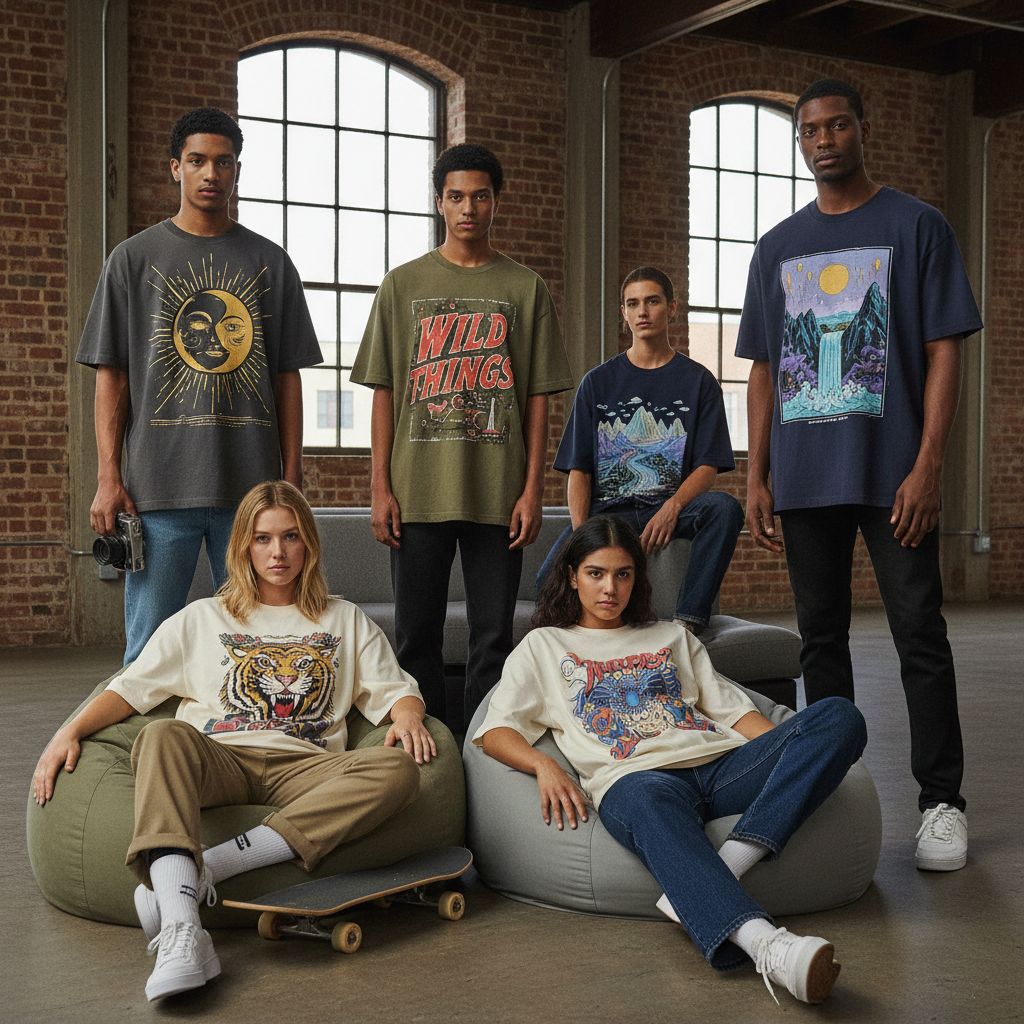
1) DO Balance the Print With the Fit & DON’T Let the Graphic Fight the Shirt
DO: Match your graphic scale to the silhouette
Oversized tees already scream “relaxed.” Your print should guide the eye—not overwhelm the whole shirt.
What works:
- Medium-to-large front print with plenty of empty space
- Small chest logo + big back graphic
- Centered designs with clean margins
DON’T: Go oversized on everything
This is the classic mistake: Oversized shirt + oversized full-front print = messy.
Big print + big tee often looks like:
- a poster slapped on fabric
- cheap tourist merchandise
- “trying too hard” energy
=> Quick check: If your graphic touches seams or looks cramped when worn, it’s too big or placed wrong.
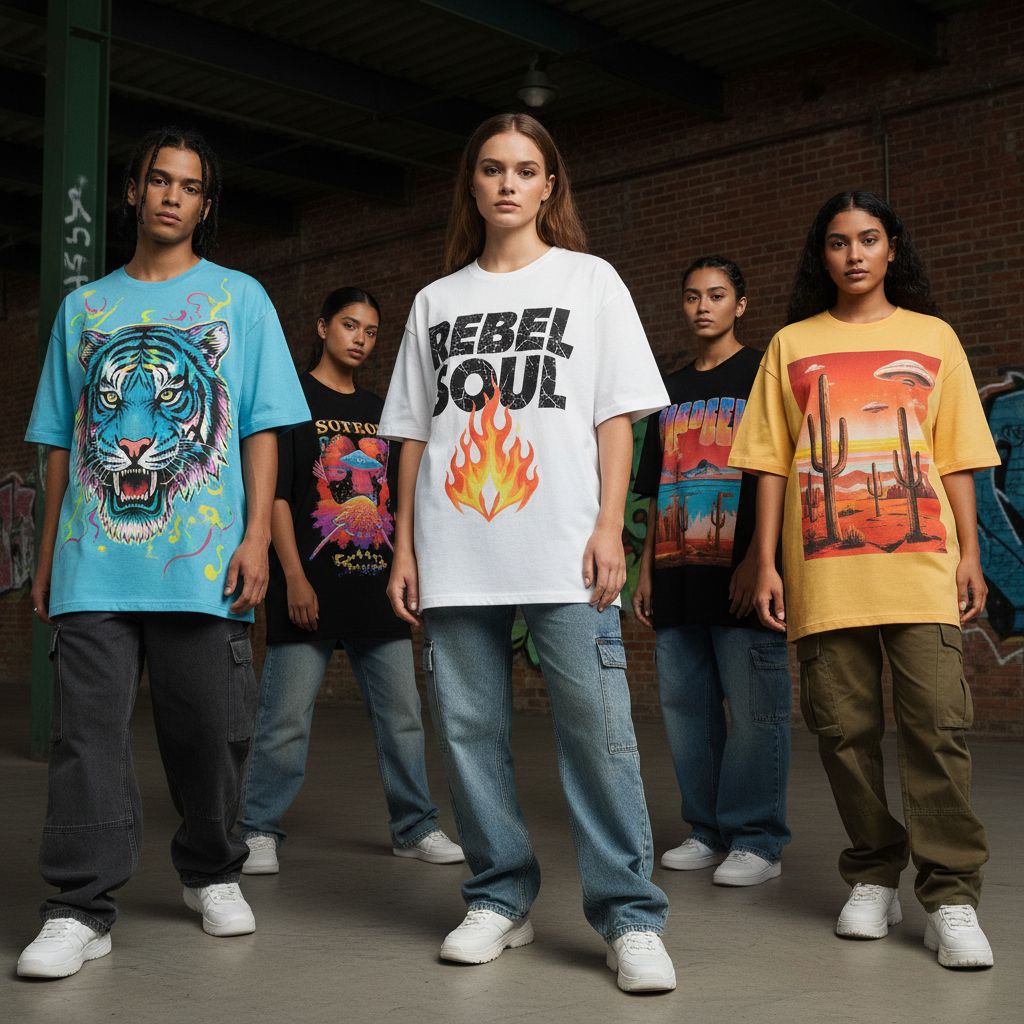
2) DO Choose the Right Ink Feel (Hand Feel) & DON’T Turn Your Tee Into Plastic Armor
DO: Think comfort first
Oversized tees are meant to move. If your print is thick and stiff, it kills the drape and makes the shirt feel cheap.
Better options (depending on budget and factory skill):
- Softer plastisol (well-cured + controlled deposit)
- Water-based / discharge (soft hand)
- Puff / high-density only for accents, not full coverage
DON’T: Print huge solid areas with heavy ink

A giant plastisol block can:
- feel hot
- crack faster
- stick to skin
- stiffen the shirt so it hangs weird
=> Important Notes: If your design only looks “premium” when the ink is thick and shiny… the design might not be strong enough.
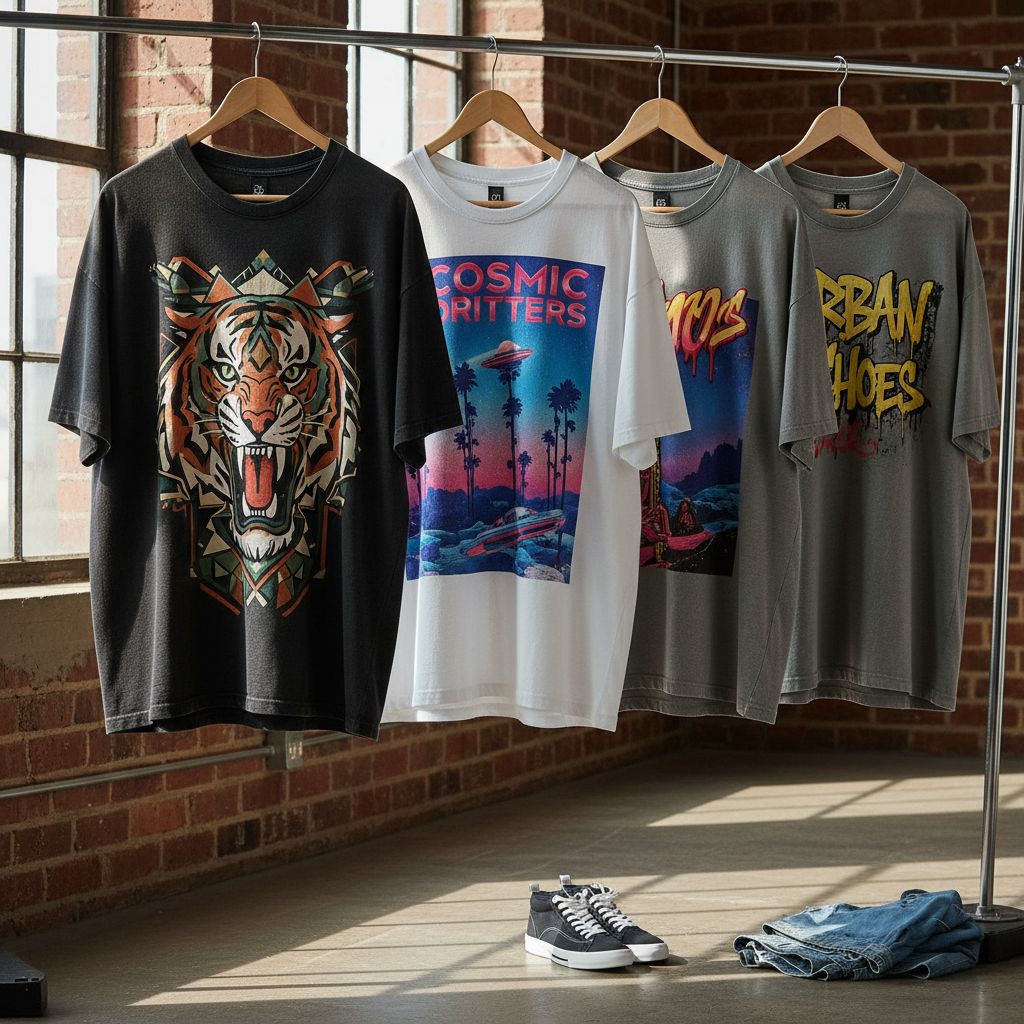
3) DO Pick Fabric Weight That Matches the Print & DON’T Print Big Graphics on Thin, Flimsy Fabric
DO: Use heavier fabric for oversized silhouettes
Oversized tees look best when the fabric has structure.
Common sweet spots:
- 220–280 GSM cotton for a premium streetwear feel
- Compact knit or ring-spun cotton for cleaner print results
Heavy fabric helps:
- the shirt drape cleanly
- the graphic stay stable
- the silhouette look intentional instead of sloppy
DON’T: Use lightweight tees for huge prints
Printing big art on thin fabric often causes:
- warping and twisting
- “see-through” or uneven ink coverage
- neckline and shoulder collapse
- cheap feel after a few washes
If your brand wants oversized, but your cost target forces 160–180 GSM, then your print design must be lighter and more breathable (less coverage, smarter negative space).
4) DO Design for How the Shirt Hangs on a Body & DON’T Approve Designs Only on Flat Mockups
DO: Test print placement on real bodies
Oversized tees fold and shift when worn.
That means:
- a centered graphic can appear too low
- side folds can hide parts of the design
- the back print can sit too close to the neckline or drop too far
Placement tips that usually work:
- Front prints slightly higher than standard tees
- Back prints centered but adjusted for longer body length
- Keep key text/icons away from side fold zones
DON’T: Ignore movement
A print that looks perfect laid flat can look wrong when worn:
- stretched across chest
- folded on the sides
- “floating” too low
=> Reality rule: If you don’t wear-test, you’re not doing quality control, you’re gambling.
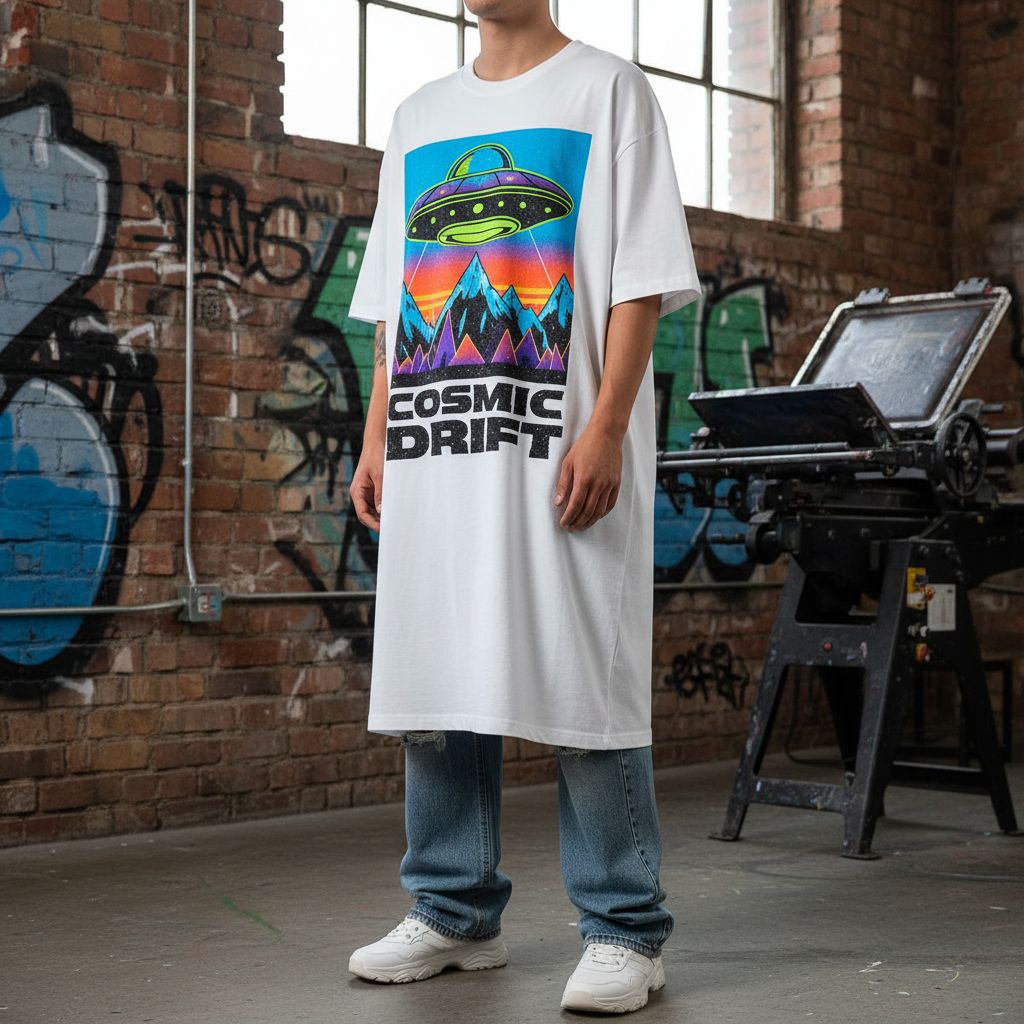
5) DO Control the Visual Hierarchy & DON’T Shout Everything at Once
DO: Keep one main idea

Oversized tees are a bigger canvas, but that doesn’t mean you should fill it.
A strong oversized design usually has:
- one hero element (main graphic or statement)
- one support element (small text, logo, detail)
- lots of negative space to feel premium
This is why minimal designs often look more expensive: they let the shirt breathe.
DON’T: Stack too many elements
Too many fonts, slogans, symbols, and effects make it look:
- cluttered
- outdated fast
- like a “template design” from the internet
=> Hard truth: If your shirt needs 12 elements to look interesting, it probably doesn’t have a clear concept.