


Khakis are one of those “easy” items that people mess up all the time. Why? Because khakis are neutral, and neutral clothes show every fit mistake. If your pants are too baggy, too long, or too stiff, khakis will highlight it fast. The good news: once you get the fit, shirt choice, and shoes right, khakis can look clean, modern, and expensive, without trying too hard.
What Counts as “Khakis” (So We Don’t Mix Things Up)
Before we talk styling, let’s clear something up. Not every tan or beige pair of pants is truly “khakis.” The term gets used loosely, and that confusion leads to wrong outfit choices. Classic khakis usually refer to cotton twill pants in a light brown or sandy tone, often more relaxed in structure. Meanwhile, chinos are smoother, slightly dressier, and more tailored—yet many people call them khakis too. If you don’t know which one you’re wearing, it’s hard to style them properly.
A lot of people call any tan pants “khakis.” But there are two common types:
- Khaki chinos: lighter, smoother fabric, more “smart casual”
- Khaki twill pants: thicker, more rugged, sometimes more “workwear”
Both can look great. The key is matching the vibe of the fabric with your shirt and shoes.

Step 1: Nail the Fit (This Is 70% of the Look)
If your khakis don’t fit right, nothing else matters. You can wear the best shirt, the cleanest shoes, even a sharp jacket—but a poor fit will cancel it out. Fit is what makes an outfit look intentional instead of accidental. It shapes your proportions, defines your silhouette, and signals confidence without saying a word. Get this part right first, and everything else becomes easier.
The “Pro Fit” Checklist
- Waist fits without a belt (belt is for style, not for survival)
- Seat and thighs feel comfortable but not ballooning
- Taper from knee to ankle (not skinny, just clean)
- Length hits the shoe nicely: Slight break (tiny fold) = classic, No break (clean line) = modern


Common Fit Mistakes (Be honest)
- Pants puddle over your shoes → looks sloppy
- Too tight at thighs → pulls and wrinkles weirdly
- Too loose in legs → looks dated fast
- Low rise + long shirt → makes your legs look shorter
=> Important Notes: Many people blame “khaki color” for looking old. It’s not the color. It’s the fit + length.
Step 2: Choose the Right Shirt (Not Every Shirt Works)
Once the fit is right, the shirt becomes the deciding factor. Khakis are neutral, which means they can either look sharp or completely flat depending on what you pair them with. Not every shirt creates balance, contrast, or structure. The wrong choice can make the outfit feel outdated or careless. The right one makes it look effortless and intentional.
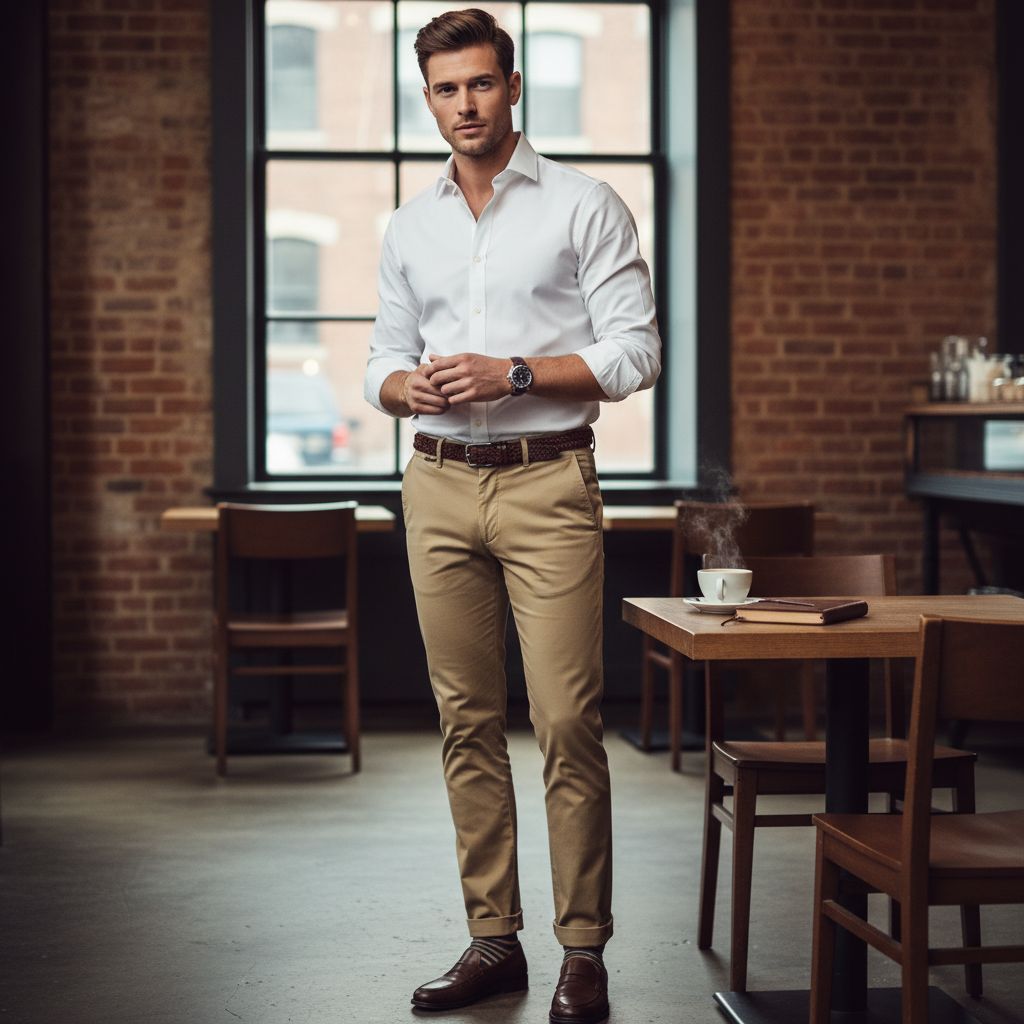
1) The White Button-Down (Clean and Sharp)
This is the safest “pro” combo. When to wear it: meetings, work, client visits, presentations
How to wear it:
- Tuck it in
- Add a simple belt
- Keep it crisp (wrinkles kill the look)
Want it to feel less stiff? Choose an Oxford cloth instead of a shiny dress shirt.

2) Light Blue Oxford (Smart Casual King)
If you don’t know what to wear, do this.
- Why it works: blue cools down the warmth of khaki
- Best for: office casual, dinner, everyday “put together”
- Pro move: roll sleeves neatly (two clean rolls), not messy.

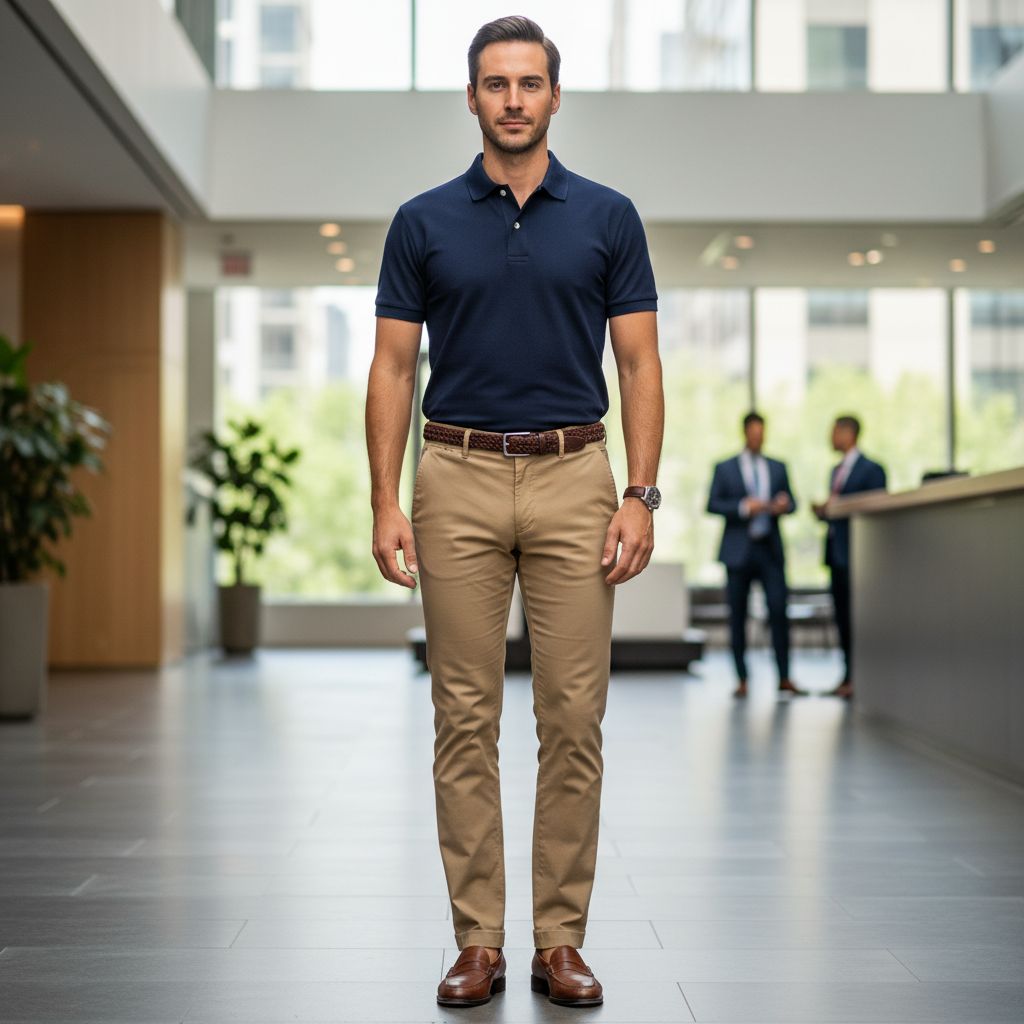
3) Polo Shirt (Casual but Still Clean)
A polo can look sharp, but only if it fits.
- Best for: daytime events, casual meetings, travel
- Avoid: oversized polos with long sleeves and floppy collars
- Rule: the sleeve should hit mid-bicep. If it hits near your elbow, it looks dated.
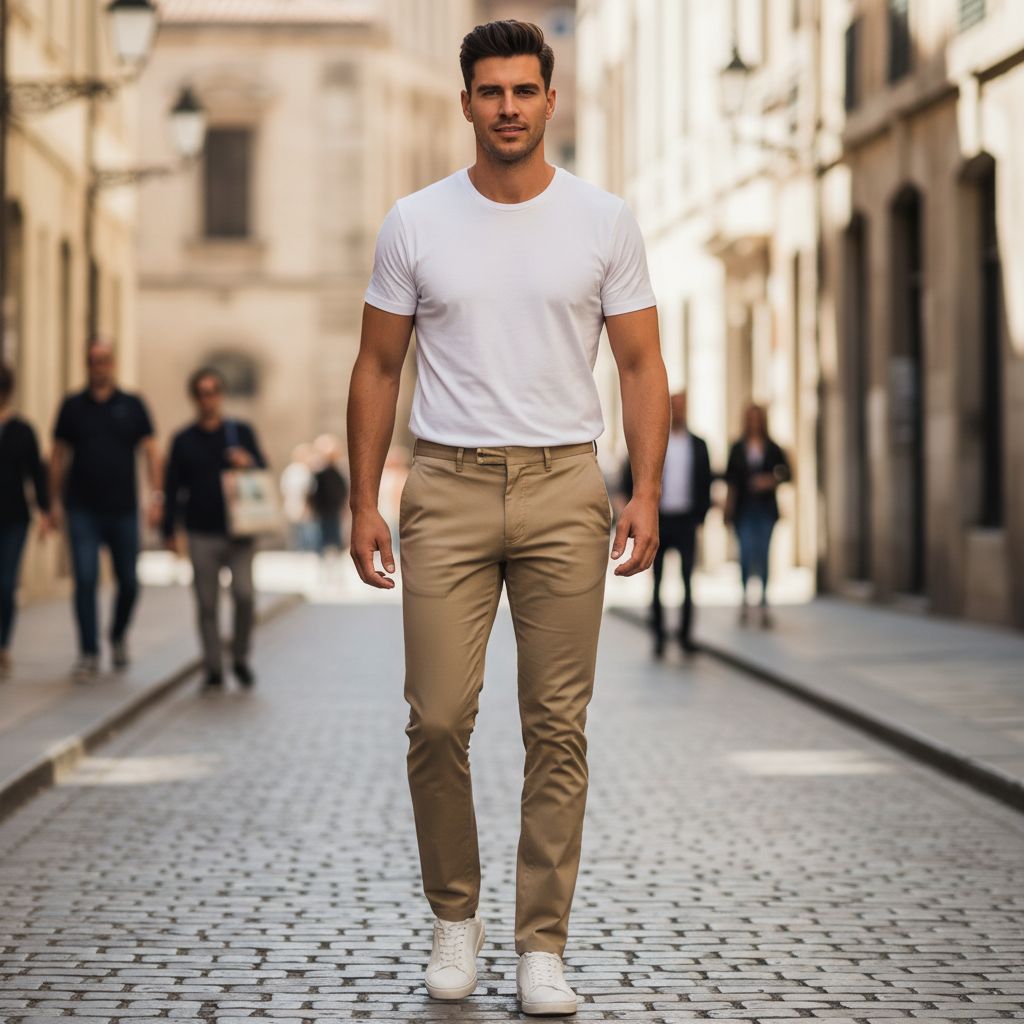
4) T-Shirt (Yes, But Do It Right)
Khakis + t-shirt can look modern—or lazy.
To make it pro:
- choose a thicker tee (not thin and clingy)
- fit should be slightly tailored
- stick to neutral colors: white, navy, charcoal, olive
Avoid: big logos, loud graphics, and long tees that cover the whole zipper area.
5) Flannel or Overshirt (Rugged and Stylish)
- Great for a casual “weekend pro” look.
- Best for: cooler weather, travel, coffee dates
- Key: keep the rest simple (plain tee underneath, clean sneakers/boots)

Step 3: Learn Pro Color Pairing (So You Don’t Look Flat)
Khaki sits in a warm, mid-light range. That sounds simple, but it’s exactly why color pairing matters. If you combine it with tones that are too similar, the whole outfit loses depth and looks washed out. On the other hand, the right contrast adds sharpness and dimension without being loud. Mastering color balance is what separates a safe outfit from a confident one.
Easy “Pro” Shirt Colors With Khakis
- White (clean contrast)
- Navy (strong, masculine, sharp)
- Light blue (smart and balanced)
- Olive (earthy and modern)
- Burgundy (rich and confident)
- Black (works, but can feel heavy—use carefully)
Colors That Often Look Weak
- Beige + khaki (too flat)
- pale yellow + khaki (washed out)
- super light grey + khaki (can look “dusty”)
=> Important Notes: People think “matching neutrals” is classy. Sometimes it is. But with khakis, too many light neutrals can make you look like a blank wall.
Step 4: Shoes Decide Your Level (Casual vs Pro)
You can wear the same khakis and shirt, and completely change the message just by switching your shoes. Footwear sets the tone faster than any other piece in the outfit. It tells people whether you’re dressed for business, relaxed confidence, or something in between. The wrong pair can make everything feel off, even if the rest looks solid. The right pair quietly pulls the whole look together.
Most Reliable Shoe Choices:
- Brown leather shoes (most “pro” look)
- Loafers (smart casual, confident)
- White leather sneakers (modern casual)
- Desert boots / chukkas (great with khaki)
What to Avoid:
- Running shoes (kills the outfit)
- overly chunky sneakers (can clash with slim khakis)
- beat-up shoes (khakis make this obvious)
Pro rule: Match your belt to your shoes most of the time. It’s a simple detail that makes you look “finished.”
Step 5: The Tuck Rules (This Is Where Pros Win)
Tucking seems small, but it changes everything. It shifts your proportions, defines your waist, and makes the outfit look structured instead of loose. The same shirt can look polished or careless depending on how you wear it. Pros don’t tuck randomly. They do it with intention, based on the setting and the overall silhouette. Get this detail right, and the entire look feels more refined.
When to Tuck
- button-down shirts (usually yes)
- oxford shirts (yes)
- dressy situations (yes)
When Not to Tuck
- t-shirts (usually no)
- casual overshirts (depends)
- short polos (half-tuck optional)
The Best Option for Most Guys: The Half-Tuck

It gives structure without looking stiff. But don’t do the sloppy “one corner” tuck. Keep it clean.
How to Style Khakis for Work, Weekends, and Date Nights
Khakis are one of the few pieces that can move effortlessly between different parts of your life, if you style them correctly. The same pair can look boardroom-ready, relaxed on the weekend, or sharp enough for a date. The difference isn’t dramatic changes. It’s smart adjustments in fit, color, and footwear. Once you understand how to shift the tone, khakis become one of the most versatile items in your wardrobe.
1) Office-Pro Look
- Tailored khaki chinos
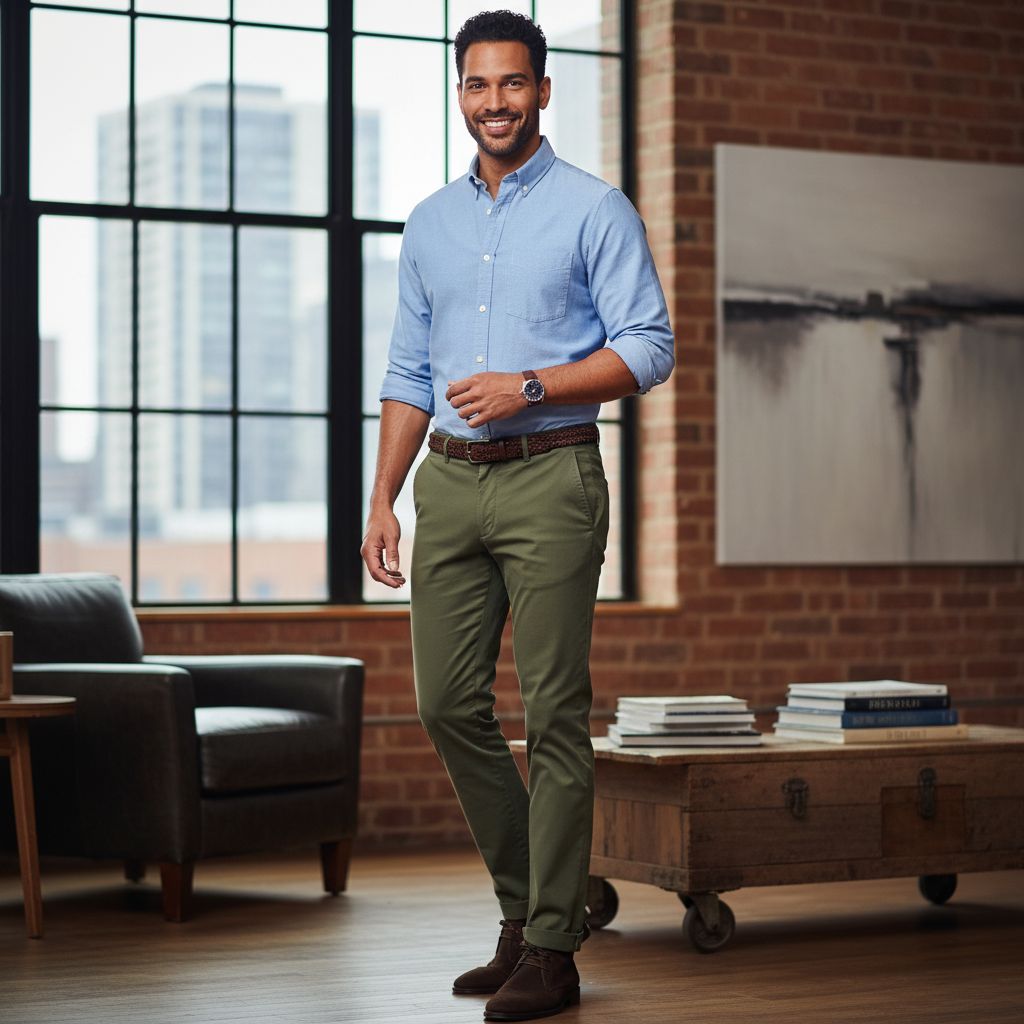
- Light blue oxford shirt (tucked in)
- Brown belt with matching brown loafers or derbies
- Simple, clean watch
=> Why it works: The blue cools down the warmth of khaki. The brown leather adds authority without feeling too formal. Everything looks intentional. If this feels “basic,” good. Basic done right looks expensive.
2) Modern Casual Look
- Khakis with a slight taper
- White t-shirt (thicker fabric, structured fit)
- Overshirt or lightweight jacket
- Clean white sneakers
=> Why it works: The structured tee keeps it sharp. The extra layer adds depth. The sneakers make it relaxed but still polished. Warning: if the t-shirt is thin or oversized, the whole look collapses.
3) Date Night Look
- Darker-toned khaki chinos (richer shade)
- Black or navy shirt (clean, fitted cut)
- Loafers or sleek boots
=> Why it works: Darker tones create contrast and look more refined at night. The sharper shirt silhouette makes the outfit feel intentional, not last-minute. Skip bulky shoes. They ruin the elegance.
4) Weekend Clean Look
- Khakis
- Fitted polo shirt
- Minimal sneakers
- Sunglasses or a simple cap
=> Why it works: The polo gives structure. The sneakers keep it relaxed. The accessories add personality without noise. If the polo is too long or loose, it instantly looks outdated. Fit matters here more than brand.
Quick Checklist: “Do I Look Like a Pro?”
Before you step out the door, pause for a quick reset. Looking polished isn’t about wearing more, it’s about refining what’s already there. Small details can quietly elevate your outfit or quietly ruin it. A clean silhouette, balanced proportions, and intentional finishing touches make the difference. Run through a simple mental check, and you’ll know instantly whether you look put together, or just dressed.
Before you leave the house:
- Pants length clean?
- Shirt ironed or at least not wrinkled?
- Shoes clean?
- Belt matches shoes?
- No bulky pockets?
- Fit looks intentional, not accidental?
If you hit those, you’ll look put together even with a simple outfit.
Final Thoughts: The Real Secret
Khakis don’t make you look sharp, your decisions do. Because they’re neutral, they expose bad fit, poor proportions, and sloppy details faster than darker pants ever will. When the cut is clean, the length is right, and the shirt creates contrast, the whole outfit suddenly looks intentional. Pros don’t think about matching pieces; they think about balance, structure, and shape. Clean shoes, proper tailoring, and simple discipline matter more than logos or trends. In the end, khakis simply amplify your level, if you’re sharp, they highlight it; if you’re careless, they reveal it.