

Polo shirts are one of the most practical pieces in any wardrobe. They look neat, feel comfortable, and work well for many situations, from office uniforms and team wear to casual daily outfits. But here’s the catch: polo shirts can lose their shape fast if they are washed and dried the wrong way. Collars curl, colors fade, fabric pills, and logos crack or lift. The good news is that proper care is simple once you know the basics. In this guide, you’ll learn how to wash, dry, iron, store, and treat stains on polo shirts so they stay clean, sharp, and comfortable for a long time.
Why Proper Polo Shirt Care Matters
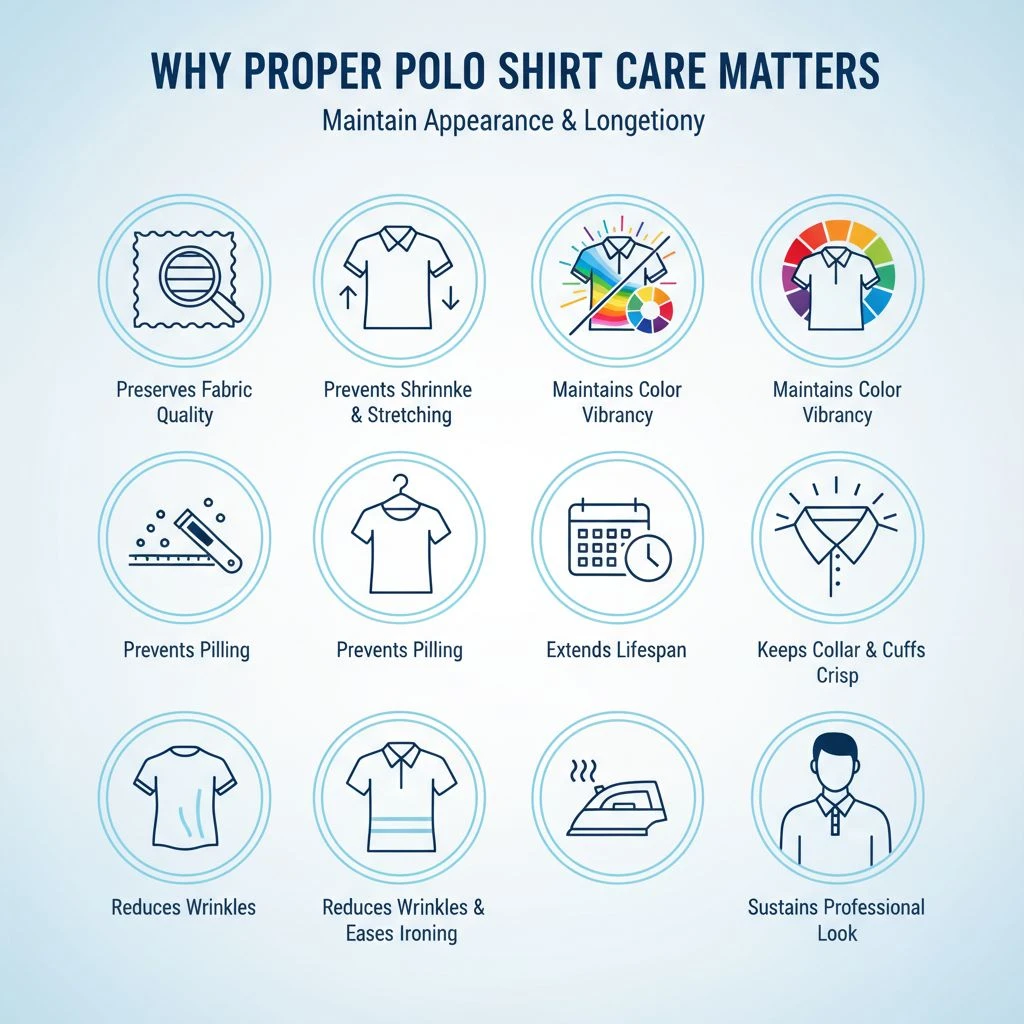
Polo shirts may look easy to care for, but they can lose their shape and color faster than people think. A polo’s clean look depends on small details like the collar, fabric surface, fit, and logo quality. If you wash or dry it the wrong way, the collar can curl, the fabric can shrink, and the shirt can start looking old after only a few months. Proper care helps your polo shirts stay neat, comfortable, and long-lasting. It protects the fabric, keeps colors looking fresh, and helps custom prints or embroidery stay in good condition. Whether you wear polos for work, uniforms, events, or everyday style, a good care routine helps them look polished every time.

Polo shirts often use fabrics like:
- Cotton
- Polyester
- Cotton-poly blends
- Performance fabrics (moisture-wicking)
Each fabric reacts differently to heat, friction, and detergent. On top of that, many polos also have:
- Embroidery
- Printed logos
- Heat transfer graphics
- Special finishes (anti-odor, moisture-wicking)
If you care for them correctly, polo shirts will:
- Keep their shape
- Hold their color
- Protect the collar and placket
- Preserve logos/designs
- Last much longer
Start With the Care Label (Always)
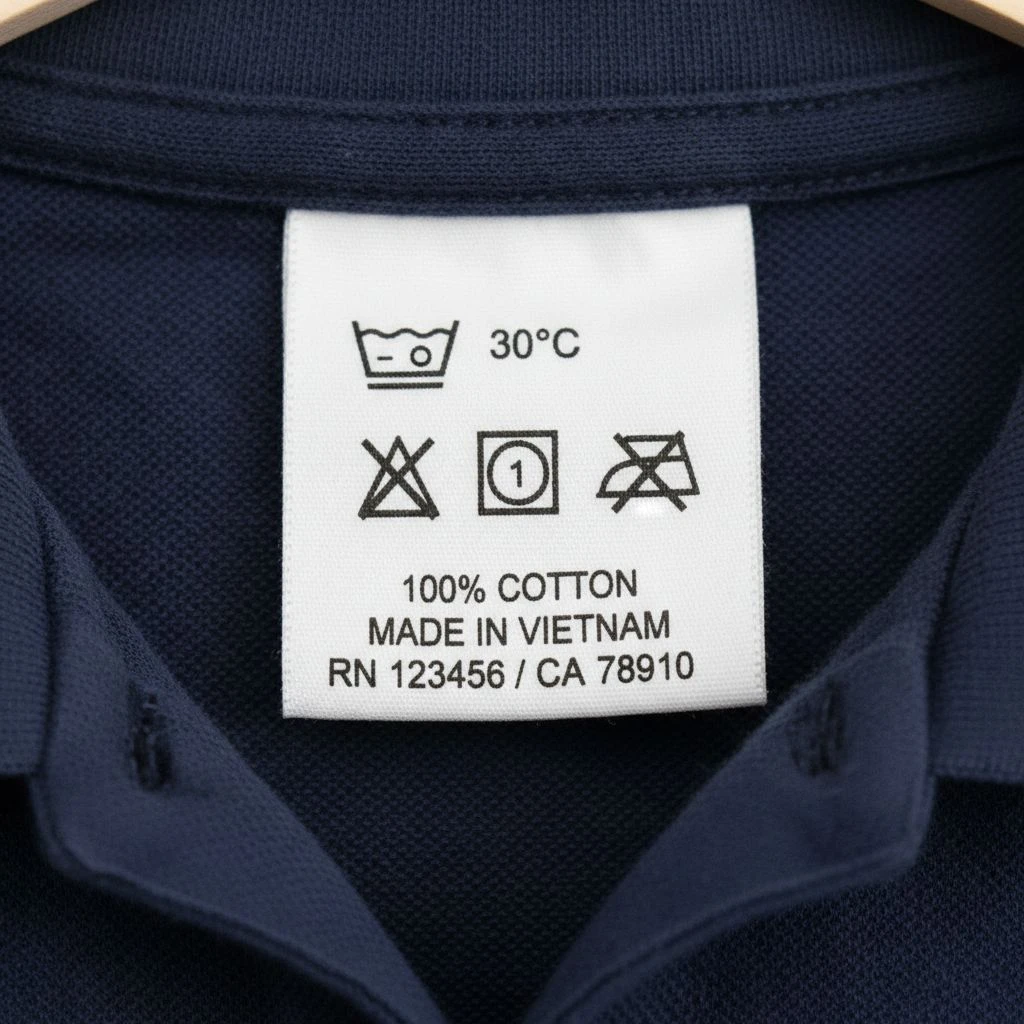
Before you wash, dry, or iron any polo shirt, the first thing to check is the care label. It may seem small, but it gives the most important instructions for keeping the shirt in good condition. The label tells you the safe water temperature, washing method, drying setting, and ironing heat for that specific fabric. This step matters because not all polo shirts are made the same. Some are 100% cotton, some are polyester, and others are blended or performance fabrics. Even if two polos look similar, they may need different care. Starting with the care label helps you avoid shrinkage, fading, fabric damage, and logo problems right from the first wash.

Before washing any polo shirt, check the inside care label. This is the most important step because the label tells you:
- Water temperature
- Wash cycle
- Drying method
- Ironing temperature
- Fabric warnings (like no bleach)
=> Why this matters: Two polo shirts may look the same, but one may be 100% cotton and another may be a performance blend. If you use the same care routine for both, one could shrink or get damaged. => Rule: When the label and general advice conflict, follow the label.
Sort Polo Shirts Before Washing
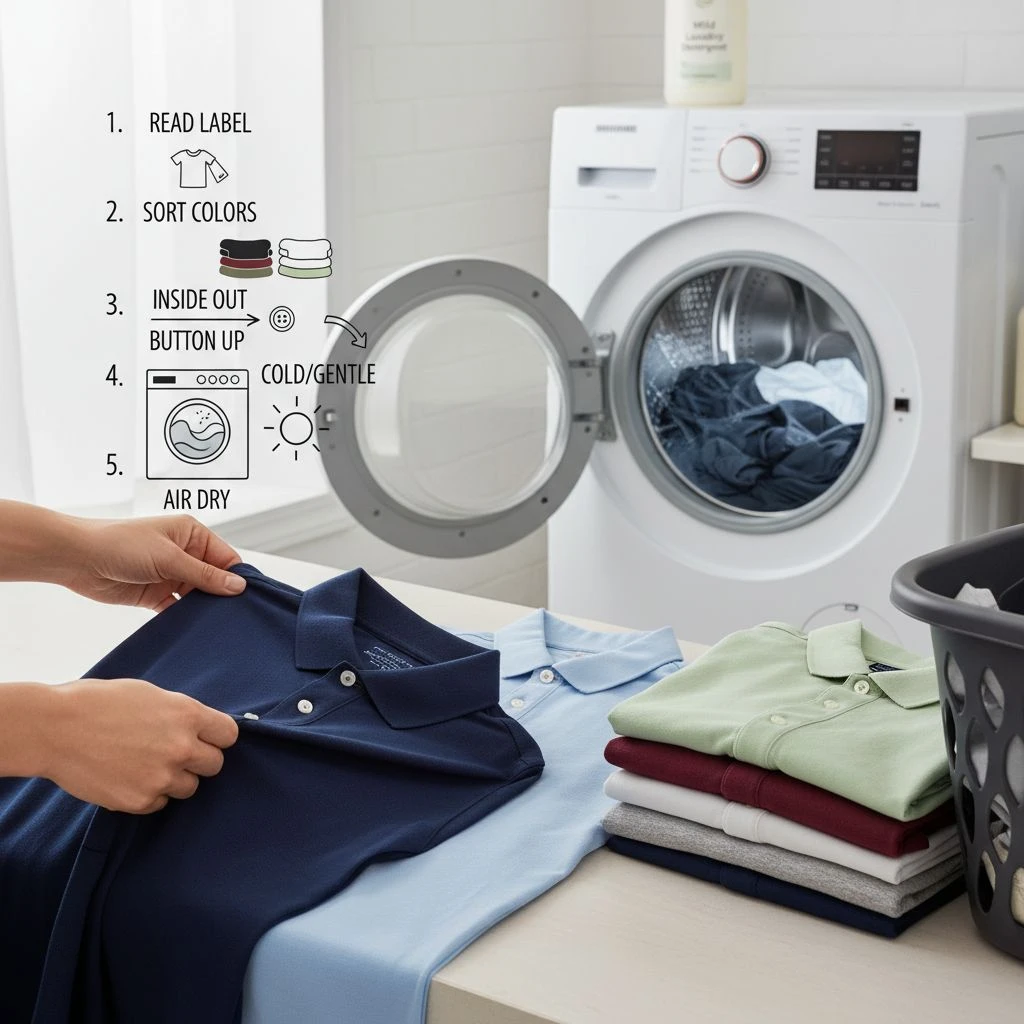
Before washing your polo shirts, take a minute to sort them properly. This simple step helps protect the fabric, color, and overall shape of the shirts. If you wash everything together, dark colors can bleed onto lighter polos, and rough items can rub against the fabric and cause wear. It’s best to sort polo shirts by color (whites, lights, darks) and by fabric type or weight. Washing polos with heavy items like jeans, towels, or jackets can lead to pilling, stretching, and damage to collars, embroidery, or printed logos. Proper sorting keeps your polos cleaner, safer, and looking newer for longer.

Rule: Do not throw all clothes into one load. – Sort by color:
- Whites
- Lights
- Darks
This helps prevent color bleeding and fading.
Sort by fabric weight:
Wash polos separately from rough or heavy items like:
- Jeans
- Towels
- Jackets
- Clothes with zippers/hooks
These items can rub against polos and cause:
- Pilling
- Snagging
- Collar wear
- Damage to embroidery or prints
Pre-Wash Prep: What to Do Before Washing
Before your polo shirt goes into the wash, a few quick prep steps can make a big difference. Pre-wash prep helps protect the fabric, keep the shirt’s shape, and reduce damage to collars, buttons, embroidery, or printed logos during the wash cycle. Simple actions like turning the shirt inside out, checking for stains, and buttoning one or two buttons can help your polo come out cleaner and in better condition. This step only takes a minute, but it can greatly improve how your polo shirt looks and lasts over time.

A little prep makes a big difference. Turn the shirt inside out – This protects:
- Embroidery
- Printed logos
- Surface color
- Fabric texture
It reduces friction during washing.
About button 1–2 buttons:
Closing a couple of buttons helps the shirt keep its shape better in the wash, especially around the collar and placket.
Check for stains:
Look at common stain areas first:
- Collar
- Underarms
- Front chest
- Sleeve cuffs
Treating stains before washing gives you better results.
How to Wash Polo Shirts Properly
Washing polo shirts the right way is one of the most important steps in keeping them looking clean, neat, and long-lasting. Even durable polos can lose their shape, fade, or wear out faster if they are washed with the wrong water temperature, harsh detergent, or rough cycle. A proper washing routine helps protect the fabric, collar, buttons, and any custom embroidery or printed logos. By using the right settings and a gentle approach, you can keep your polo shirts comfortable, polished, and ready to wear for much longer.

Machine Washing (Best for most polos)
Most polo shirts can be machine-washed safely if you use the right settings.
Best settings:
- Cycle: Gentle or delicate
- Water: Cold or lukewarm
- Detergent: Mild, color-safe detergent
Avoid these common mistakes:
- Hot water (can shrink cotton and fade colors)
- Harsh detergents (can damage fabric and logos)
- Bleach on colored polos (can weaken fibers and ruin color)
- Overloading the machine (causes extra friction and wrinkles)
=> How much detergent? Use the correct amount only. Too much detergent can leave residue, make fabric stiff, and trap odor over time.
Hand Washing (Best for delicate or premium polos)
Hand washing is a safer option for:
- Delicate fabric polos
- Embroidered polos
- Polos with detailed prints
- Expensive/custom polos you want to protect

Steps for hand washing
- Fill a basin with cool water
- Add a small amount of mild detergent
- Soak the shirt for a few minutes
- Gently move it through the water
- Rub lightly only where needed
- Rinse thoroughly with cool water
=> Do not wring the shirt. Wringing can stretch the fabric and twist the collar. Instead, gently press water out.

Common Stains and What to Do
Stains are a normal part of wearing polo shirts, especially if you use them for work, events, or daily wear. Food, oil, sweat, and other stains can happen quickly, but the way you treat them makes a big difference. If handled the right way, many stains can be removed without damaging the fabric or the shirt’s design. Knowing what to do for common stains helps you protect your polo shirt’s color, shape, and overall appearance. The key is to act early, treat the stain gently, and use the right method for the type of stain. A quick response can help keep your polo looking clean and professional for longer.
Food or oil stains
- Blot first
- Use mild detergent
- For greasy stains, apply a small amount of baking soda as a pretreatment (before washing), then rinse and wash
Sweat stains
- Pretreat with a mild stain solution
- A diluted water-and-white-vinegar pretreatment can help with odor and discoloration (use as a separate step, not mixed randomly with detergent in the same wash)
Ink or unknown stains
- Test any stain remover on a hidden area first
- Treat gently
- Follow garment label instructions
Drying Polo Shirts the Right Way
Drying is one of the most overlooked parts of polo shirt care, but it has a big effect on how long your shirts last. Even if you wash your polos correctly, using too much heat or the wrong drying method can cause shrinkage, fading, wrinkling, and collar distortion. Drying polo shirts the right way helps preserve their shape, fabric quality, and overall appearance. It also protects custom details like embroidery or printed logos from heat damage. With a few simple habits, you can keep your polos looking crisp, comfortable, and ready to wear.
Drying is where many polo shirts get damaged. – Heat can cause:
- Shrinkage
- Fading
- Collar distortion
- Print damage
- Fabric wear
Best Option: Air-Dry
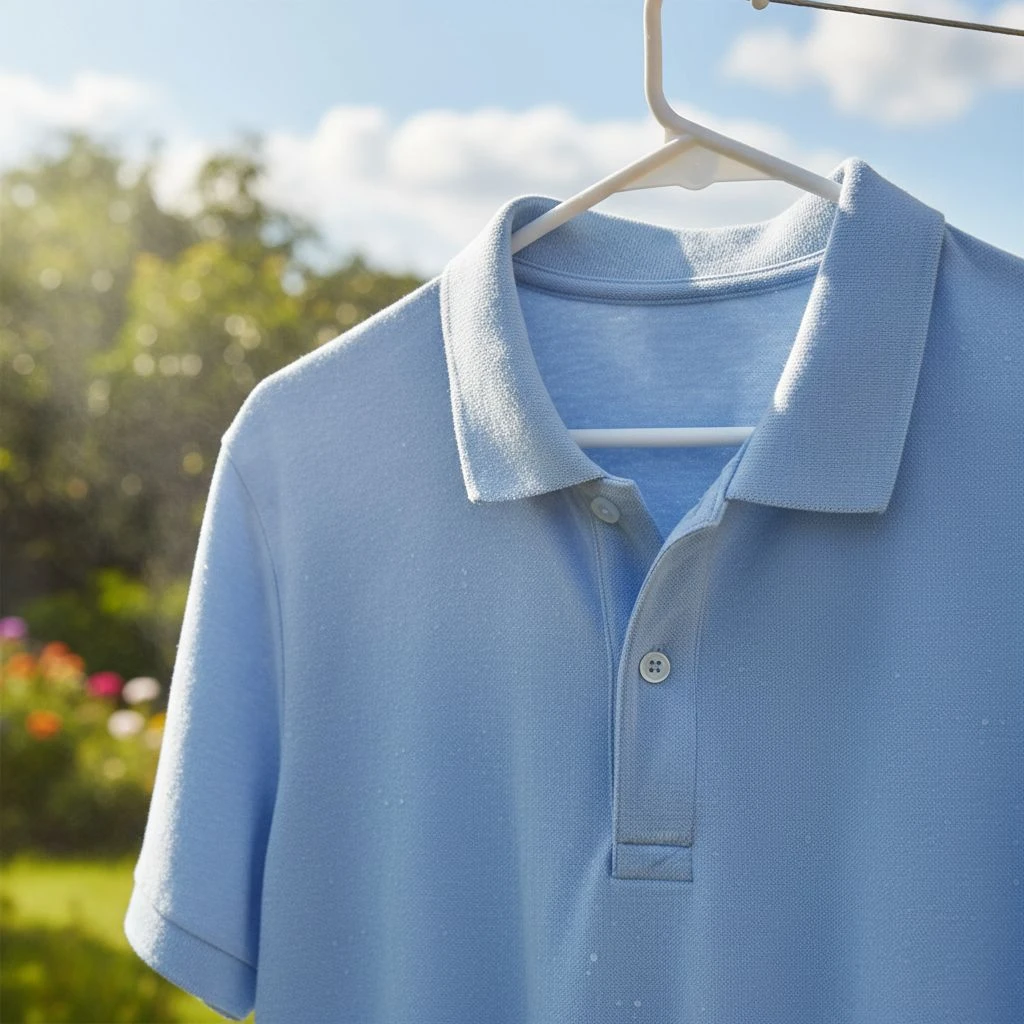
Air-drying is the safest way to keep polos in good shape. How to air-dry correctly:
- Gently shake the shirt after washing to reduce wrinkles
- Smooth the collar and placket by hand
- Hang on a hanger or lay flat to dry
- Use a padded or wide hanger for better shoulder support
=> Important: Keep polo shirts out of direct sunlight while drying, especially dark colors. Strong sunlight can fade fabric over time.

How to Store Polo Shirt
Proper storage is an important part of polo shirt care, but it is often ignored. Even a clean, well-washed polo shirt can lose its shape if it is stored the wrong way. Collars can wrinkle, shoulders can stretch, and fabric can become creased if shirts are folded or hung carelessly. Storing polo shirts correctly helps maintain their shape, smooth appearance, and overall quality between wears. Whether you fold them in a drawer or hang them in a closet, a few simple storage habits can keep your polos looking neat, fresh, and ready to wear anytime.
Folding vs. Hanging
Fold polos when:
- Fabric is thicker/heavier
- You are stacking shirts in drawers
- You want to avoid shoulder marks
Hang polos when:
- Fabric is lighter
- You want quick access
- You need them to stay wrinkle-free
If hanging:
Use:
- Padded hangers
- Wide-shoulder hangers
Avoid thin wire hangers because they can distort the shoulder shape.
Collar Care During Storage
The collar is what makes a polo shirt look sharp. If the collar looks messy, the whole shirt looks worn out.
To protect the collar
- Smooth it flat before folding/hanging
- Do not crush polos under heavy stacks
- Avoid overcrowding in the closet
This helps prevent curling and wrinkling.
Final Thoughts / Conclusion
Polo shirts are simple to care for, but they do require the right routine. The biggest keys are low heat, gentle washing, and smart storage. If you treat your polo shirts well, they will keep their shape, color, and clean look for a long time—whether they are for everyday wear, uniforms, events, or brand promotion. A few extra minutes of care now can save you from faded collars, shrunken fits, and damaged logos later.