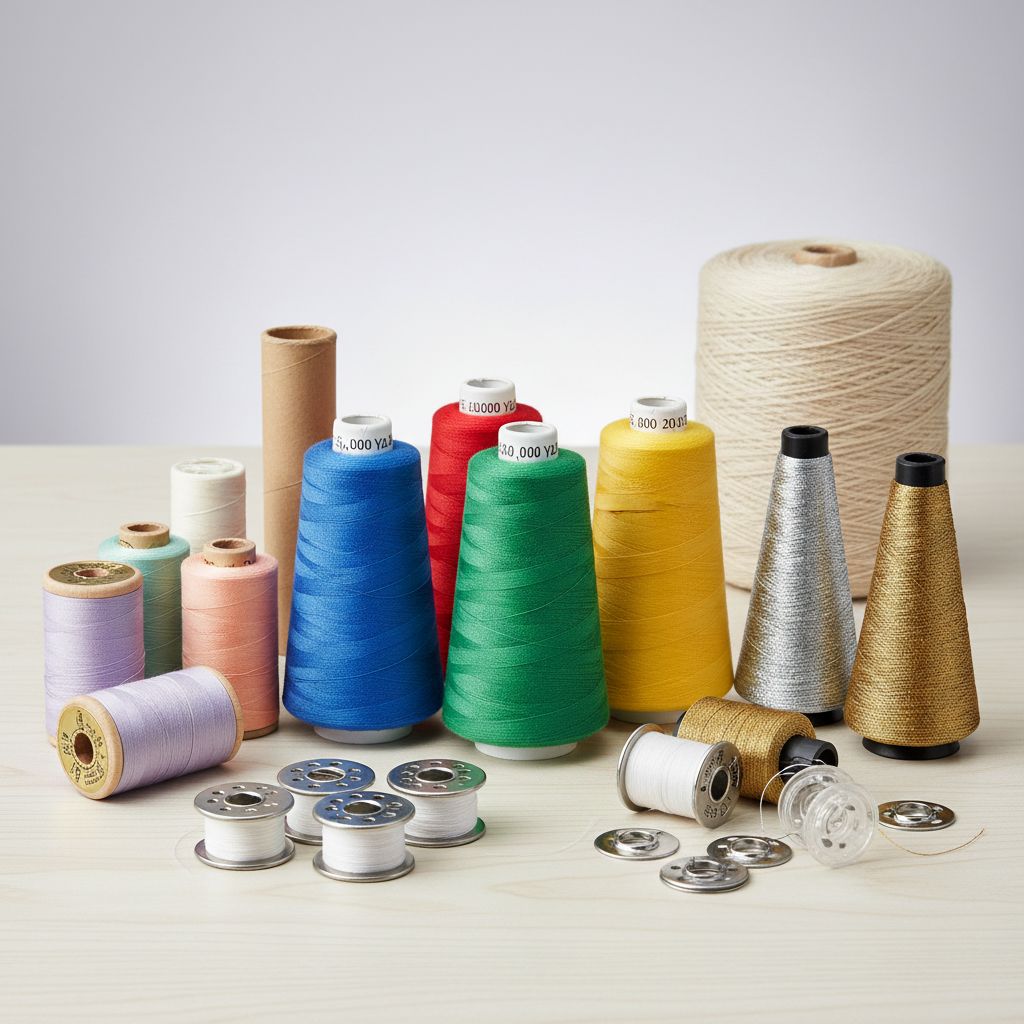

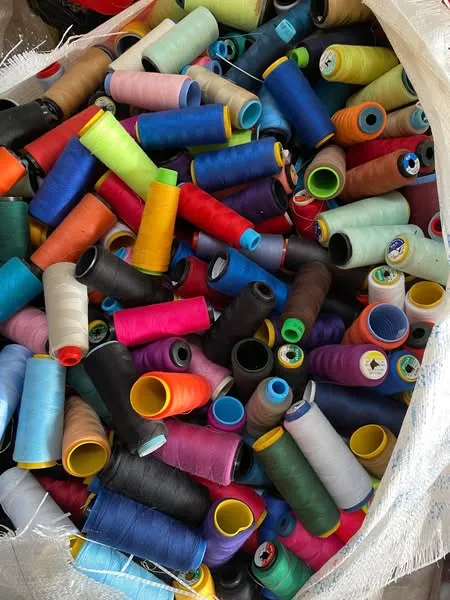

The length of a thread roll depends on the type of thread, its intended purpose, and manufacturing specifications. Typically, lengths vary from a few hundred meters for home use to tens of thousands of meters for industrial production. In garment manufacturing, roll length is a key factor that directly affects efficiency and machine uptime. This article explores common thread roll types and their average lengths to help you choose the right supply for your needs.
3 Common Types of Sewing Thread on the Market
1. Domestic Sewing Thread: 300 – 500 Metres
Domestic sewing thread is designed for simple home repairs or small DIY projects. The length is moderate, typically averaging around 400 metres per standard small spool.
- Common length: ~300–500 m.
- Features: Small core diameter, easy to store, and suitable for home sewing machines or hand stitching. Usually made of polyester or poly-cotton blends for color-fastness.
- Example: One roll is generally enough to sew 6–8 standard garments for personal use.
2. Medium-scale Industrial Sewing Thread: 2,500 – 5,000 Metres
This type is the standard for small to medium garment factories. It balances durability with stable performance, reducing the frequency of roll changes to save time during batch production.
- Common length: 2,500–5,000 m.
- Features: Suitable for high-speed industrial machines. Tightly twisted to prevent breakage during continuous usage.
- Example: A 5,000 m roll can sew more than 800 standard T-shirts.
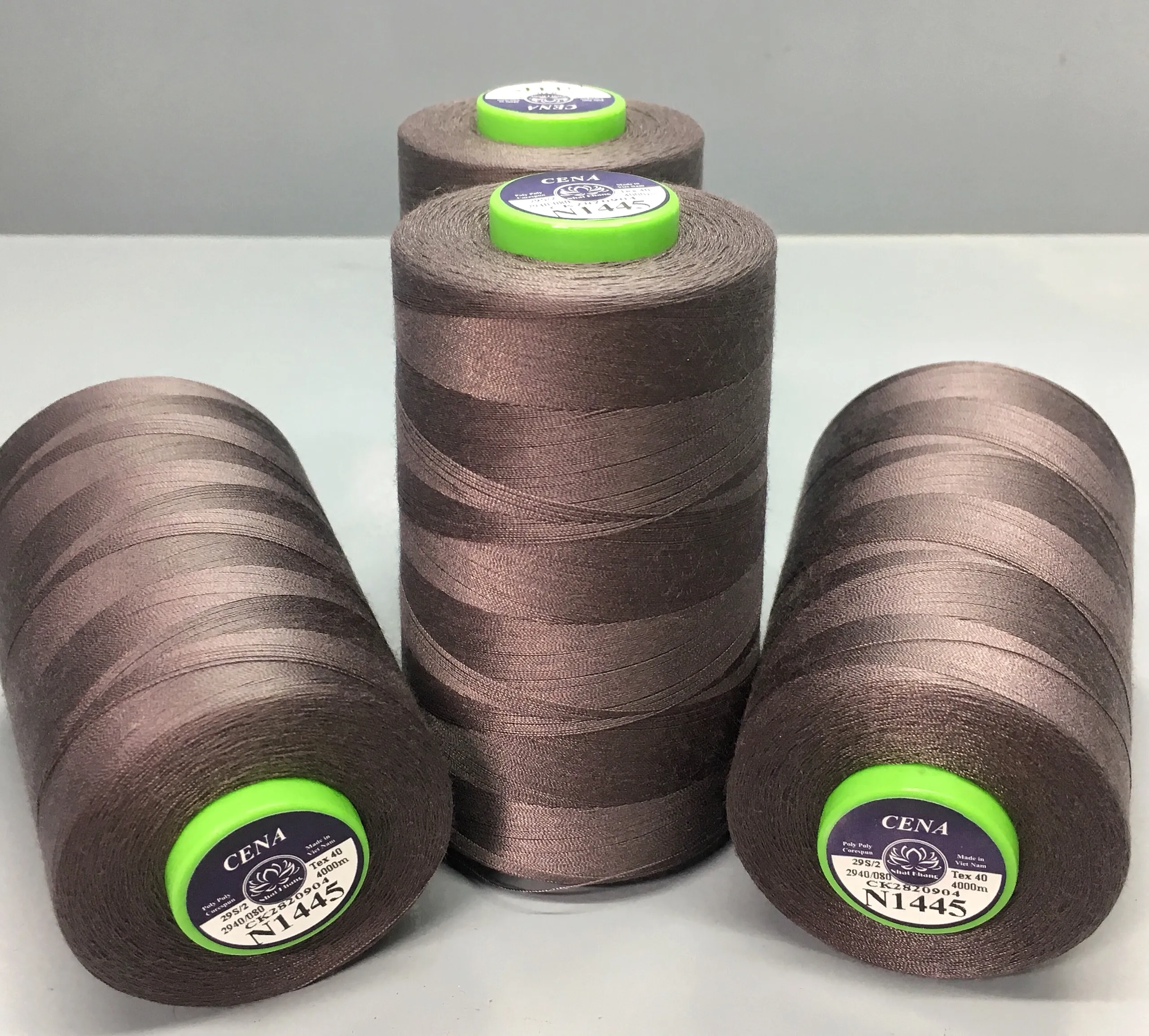
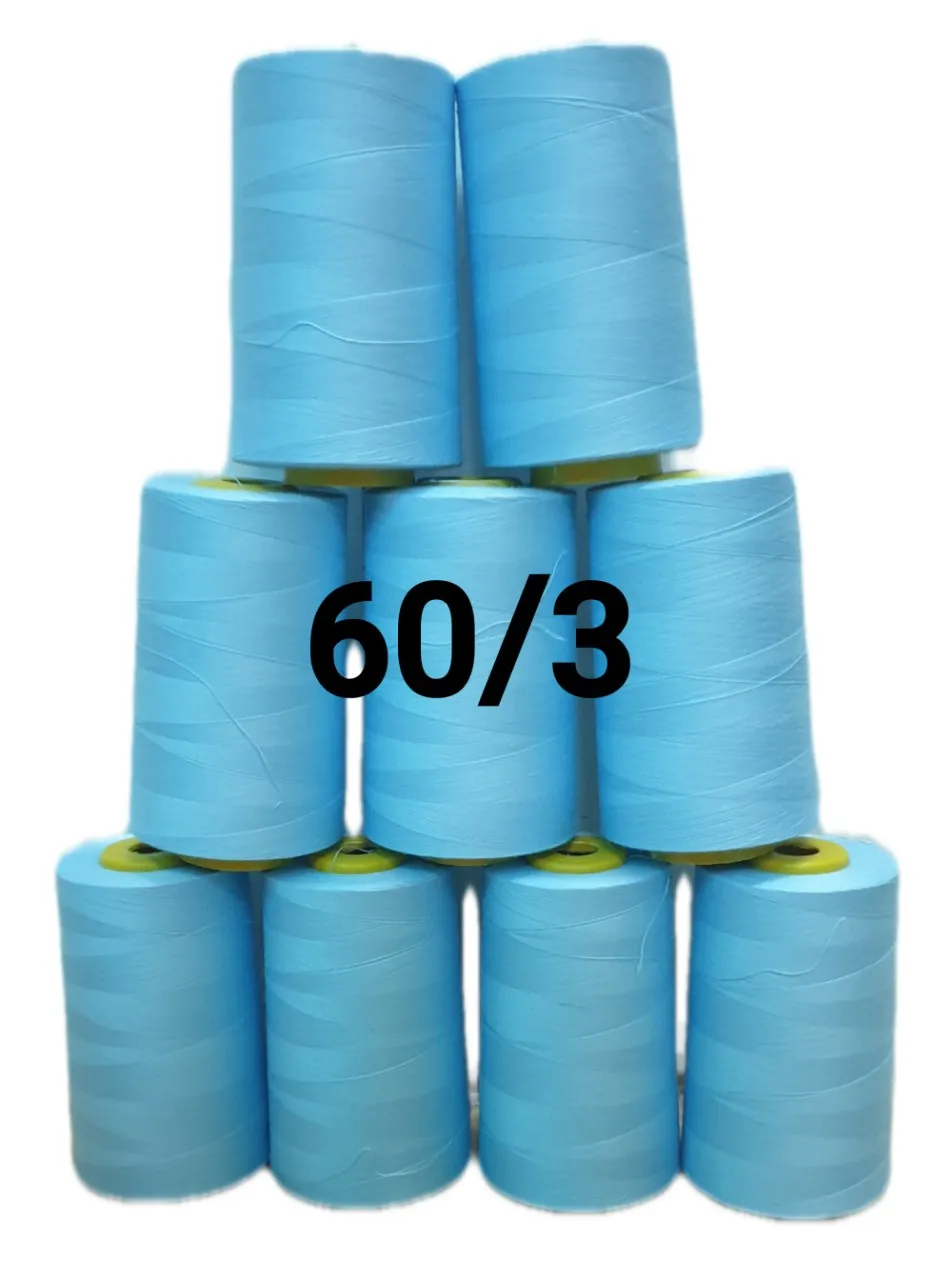
3. Large-scale Industrial Sewing Thread: 10,000 – 20,000 Metres
An indispensable assistant in export garment factories and high-volume continuous production lines. These massive rolls minimize downtime, significantly increasing machine efficiency for large orders.
- Common length: 10,000–20,000 m (or more with specialized cores).
- Features: Plastic or rigid paper cores ensure the thread is wound tightly and evenly to prevent tangling during long hours of operation.
- Example: One 20,000 m roll can be enough to sew over 3,000 pairs of jeans.
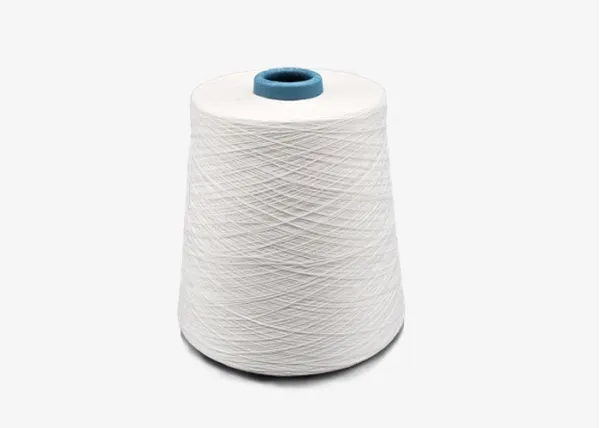
Factors Affecting the Length of a Thread Roll
The total length of a roll is not just about size; it is influenced by several technical factors:
- Thread Thickness: Thinner threads (e.g., Tex 18) can be wound much longer on the same spool than thicker threads (e.g., Tex 80).
- Material: Synthetic materials like Polyester or Nylon can typically be wound tighter and longer than pure cotton fibers.
- Spool Weight: Industrial rolls are often measured by weight (e.g., 350g – 500g). A 410g roll of fine thread might yield 20,000m.
- Application: Heavy-duty items like backpacks use thicker thread, resulting in shorter roll lengths for the same physical spool size compared to light apparel.
Conclusion
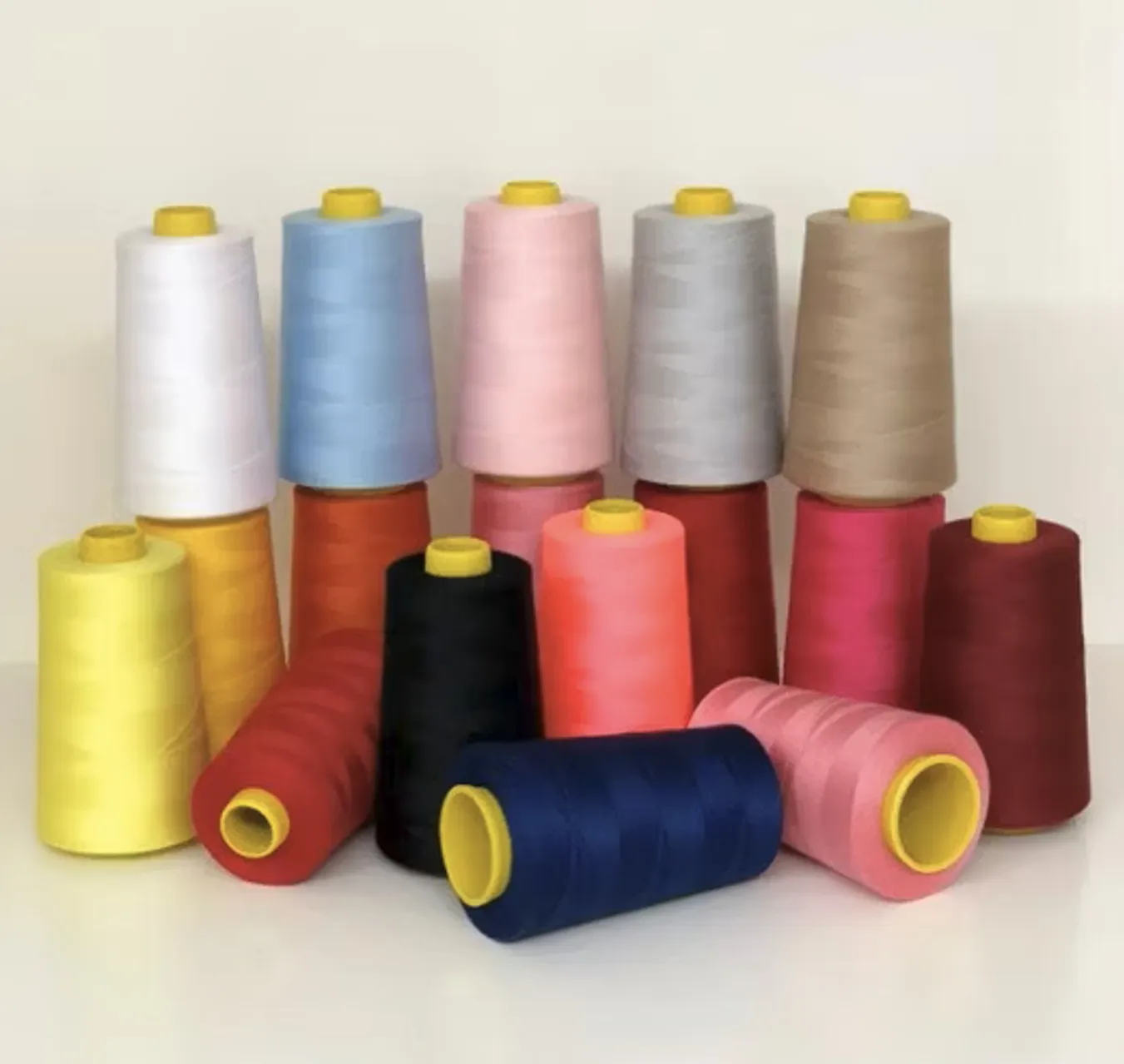
Choosing the right roll length directly impacts your production speed and operating costs. While shorter rolls are ideal for managing frequent color changes in home sewing, long industrial rolls are essential for keeping large-scale production lines running efficiently. At Mekong Garment, we carefully select the optimal thread specifications to ensure high productivity and consistent quality for every export order.