

Labels are a small part of a garment, but they carry a lot of value. In the apparel industry, a label does much more than show a brand name; it supports legal compliance, identifies product details, and improves the customer’s overall experience. From fiber content to care instructions, garment labels act as a direct communication tool between the manufacturer and the end user.
What Is a Garment Label?
A garment label is a piece of material attached to a clothing item to provide information about the product. Labels may be made from woven fabric, printed satin, nylon, cotton tape, or even leather depending on the garment type and brand requirement. They typically include the brand name, size, fiber composition, country of origin, and care instructions.
Why Are Labels Important in Garments?
Labels serve both commercial and practical purposes. From a manufacturer’s point of view, they ensure the product meets international market regulations and buyer specifications. Key reasons for garment labeling include:
- Building brand identity and trust.
- Helping customers select the correct size.
- Explaining mandatory care and washing instructions to prevent fabric damage.
- Showing fabric composition and origin for legal compliance.
- Supporting pricing, inventory control (barcodes), and retail display.
Main Categories: Main Label vs. Sub Labels
In factory production, labels are generally divided into two broad categories to streamline the assembly process:
| Category | Main Purpose | Common Placement |
|---|---|---|
| Main Label | Branding and product identity (Logo/Brand name). | Back neck, waistband, inside yoke. |
| Sub Labels | Detailed product support (Care, size, composition). | Side seam, neck area, hang tags. |
1. Main Label
The primary identity of the product. It creates trust and helps the customer recognize the brand immediately. Common placements include the back neck area or inside the waistband for trousers.
2. Essential Sub Labels
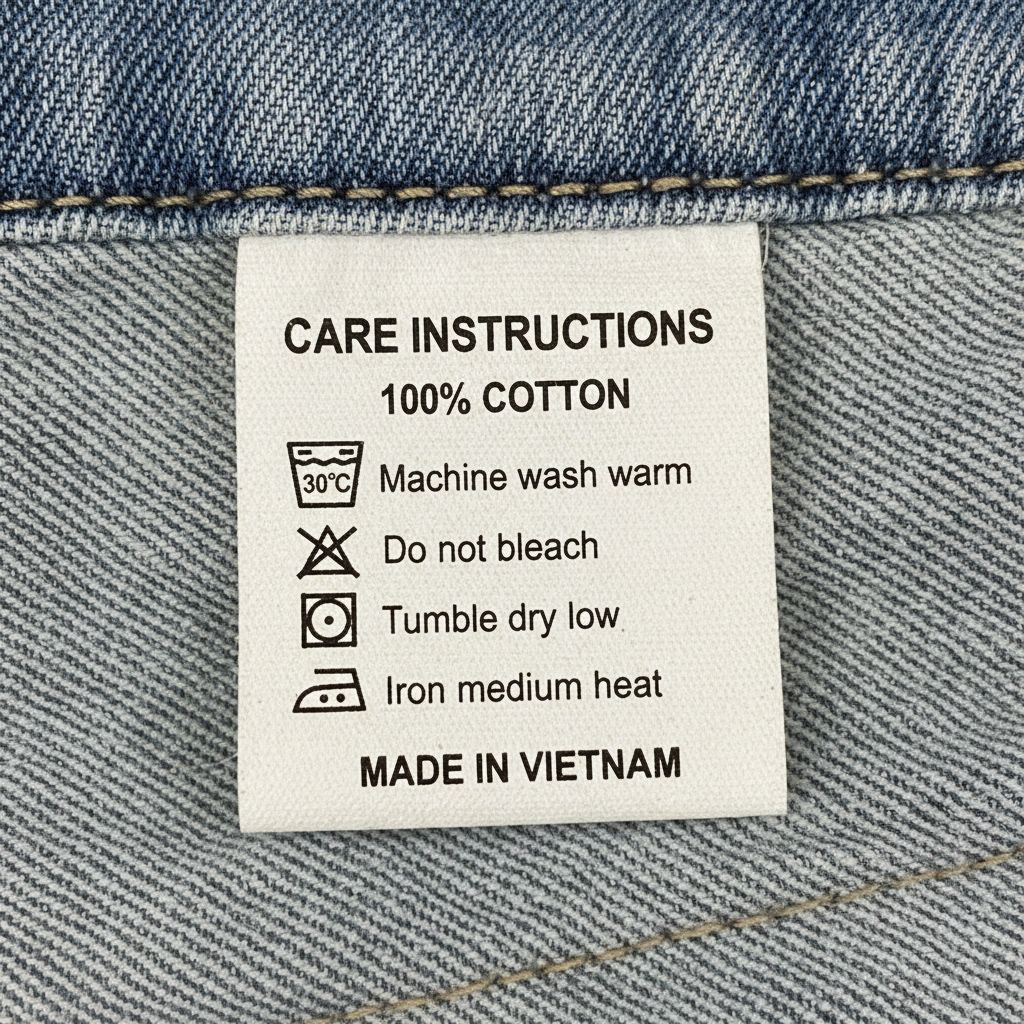
Care Label
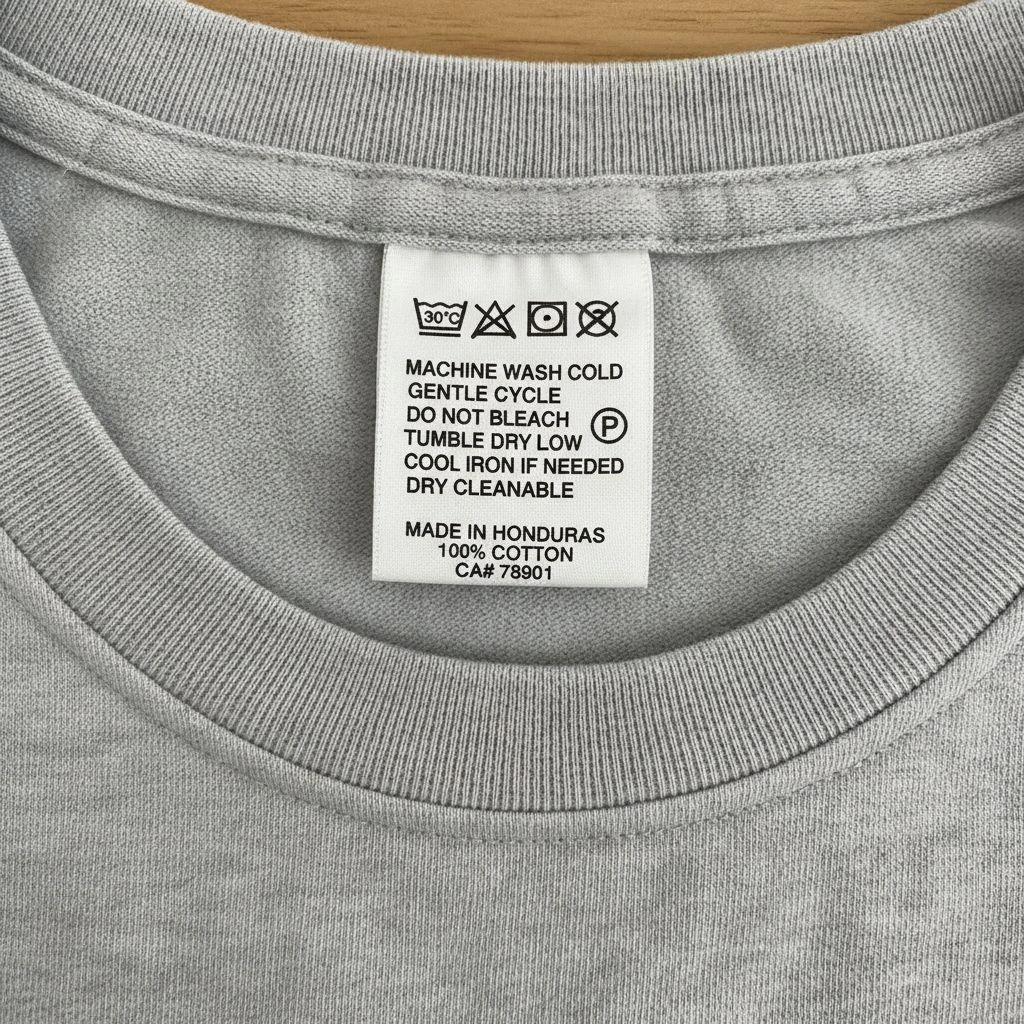
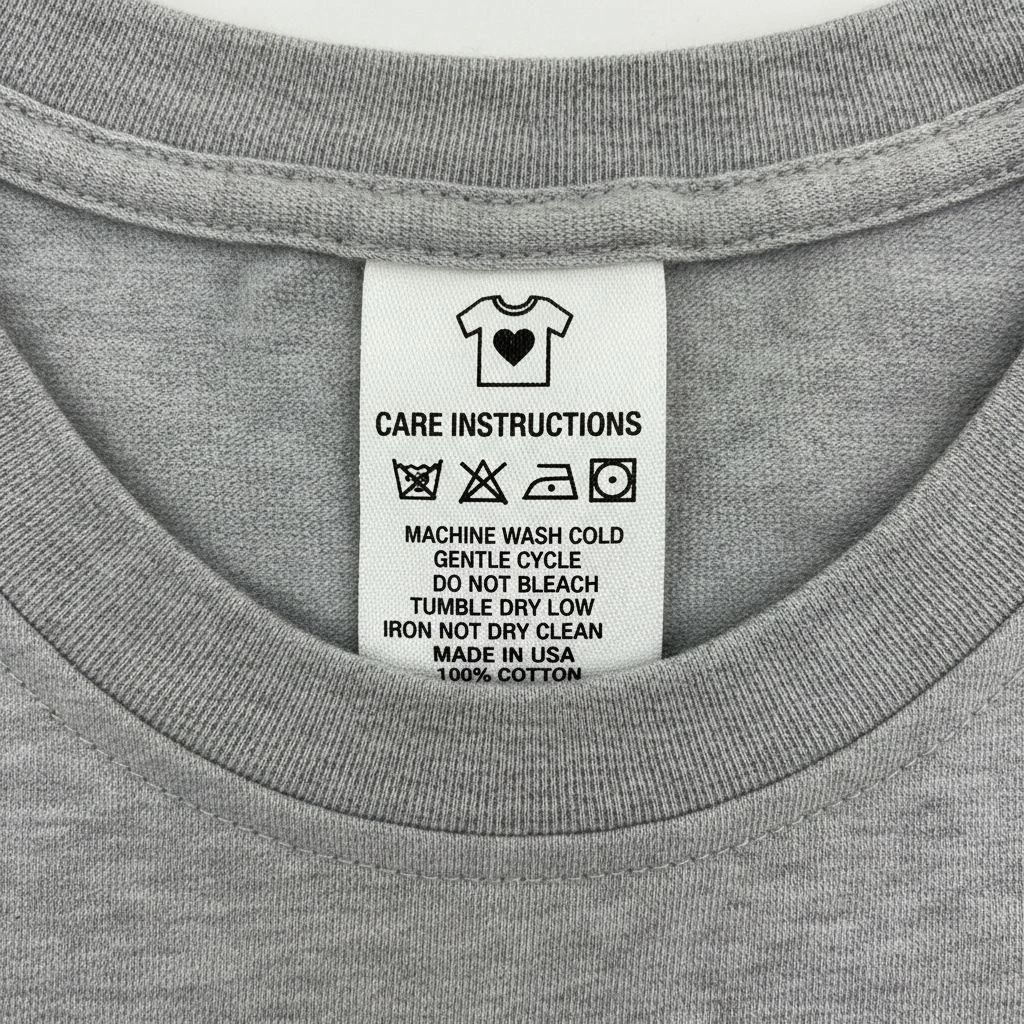
One of the most critical labels, providing instructions on washing, drying, and ironing. Incorrect care can lead to shrinkage or color bleeding, making this label mandatory in most export markets.

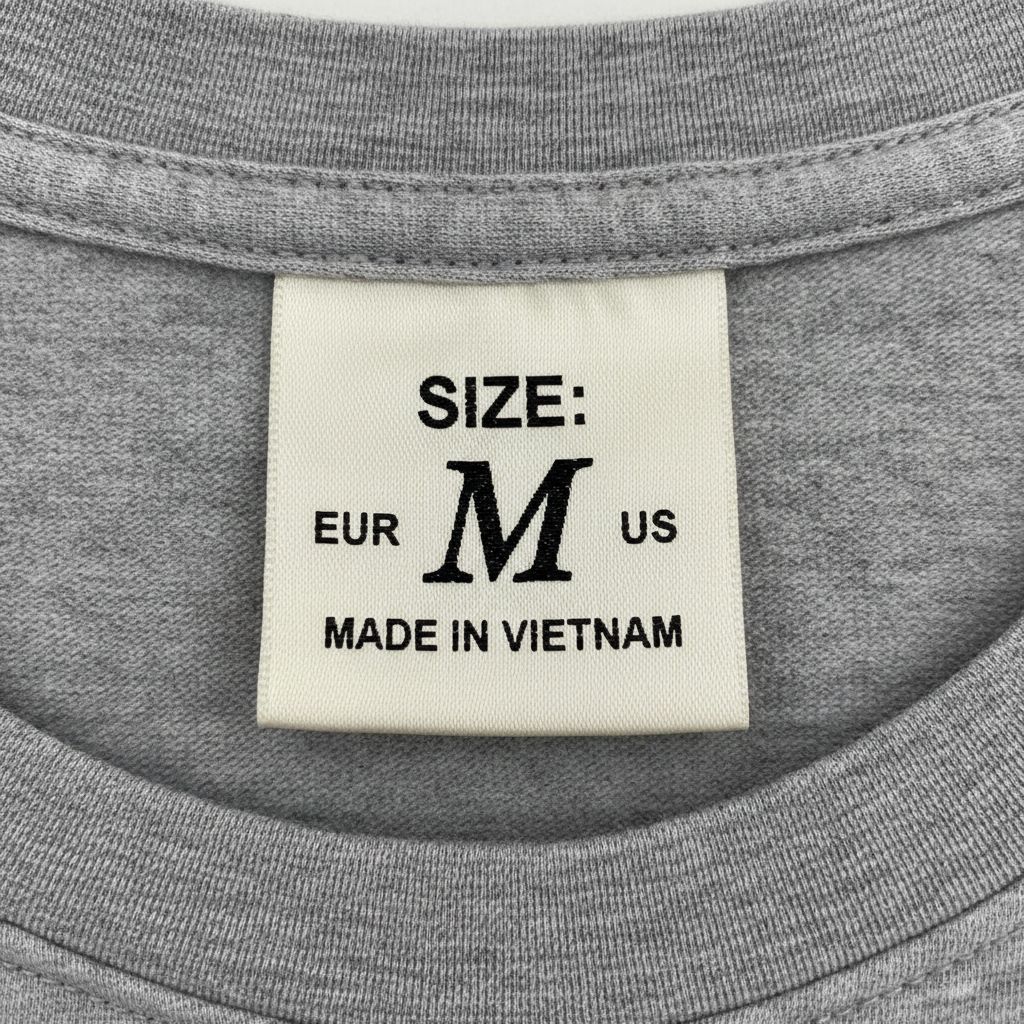
Size Label
Indicates the garment size (XS, S, M, L, XL, etc.) or numeric sizing. It is usually attached near the main label for easy visibility during shopping.
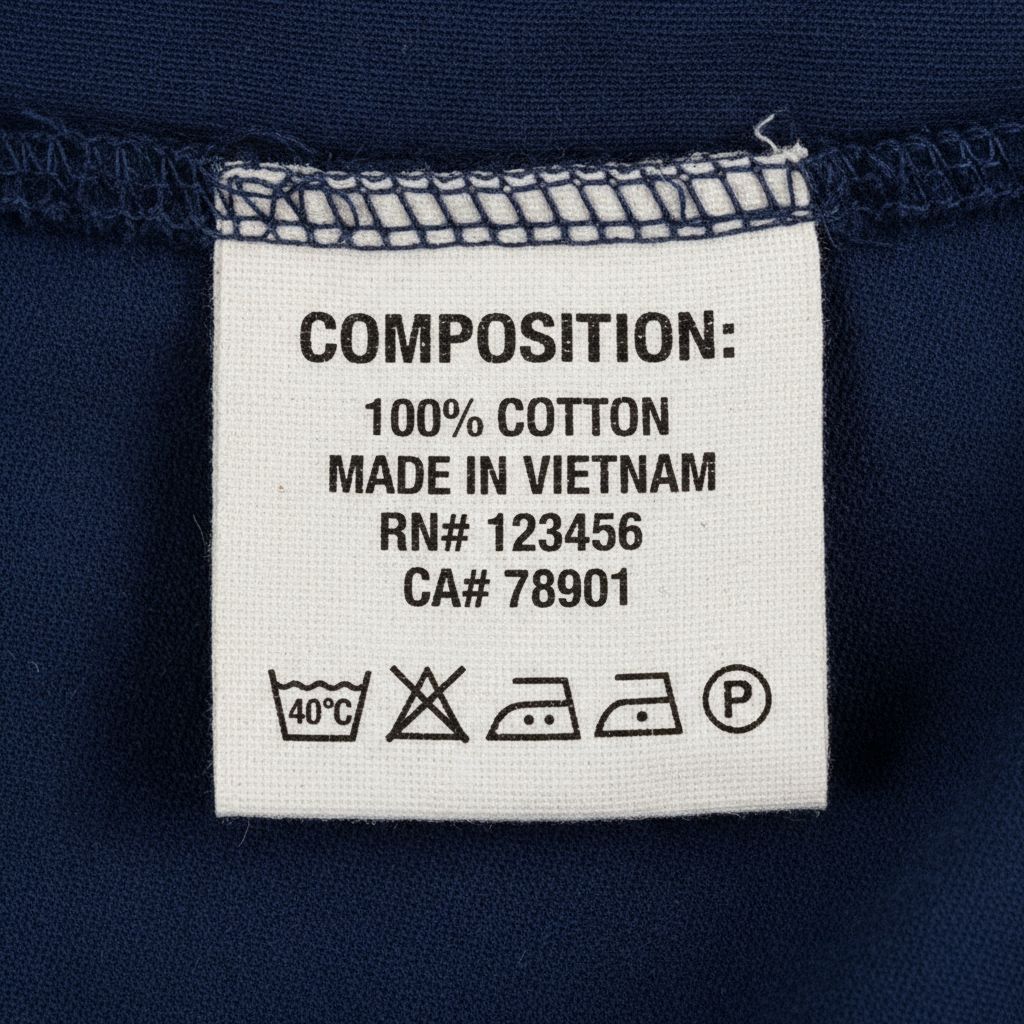
Composition Label
Shows the fiber content ratio (e.g., 100% Cotton, 65% Polyester / 35% Cotton). This affects the comfort, price, and durability of the garment.
Flag Label
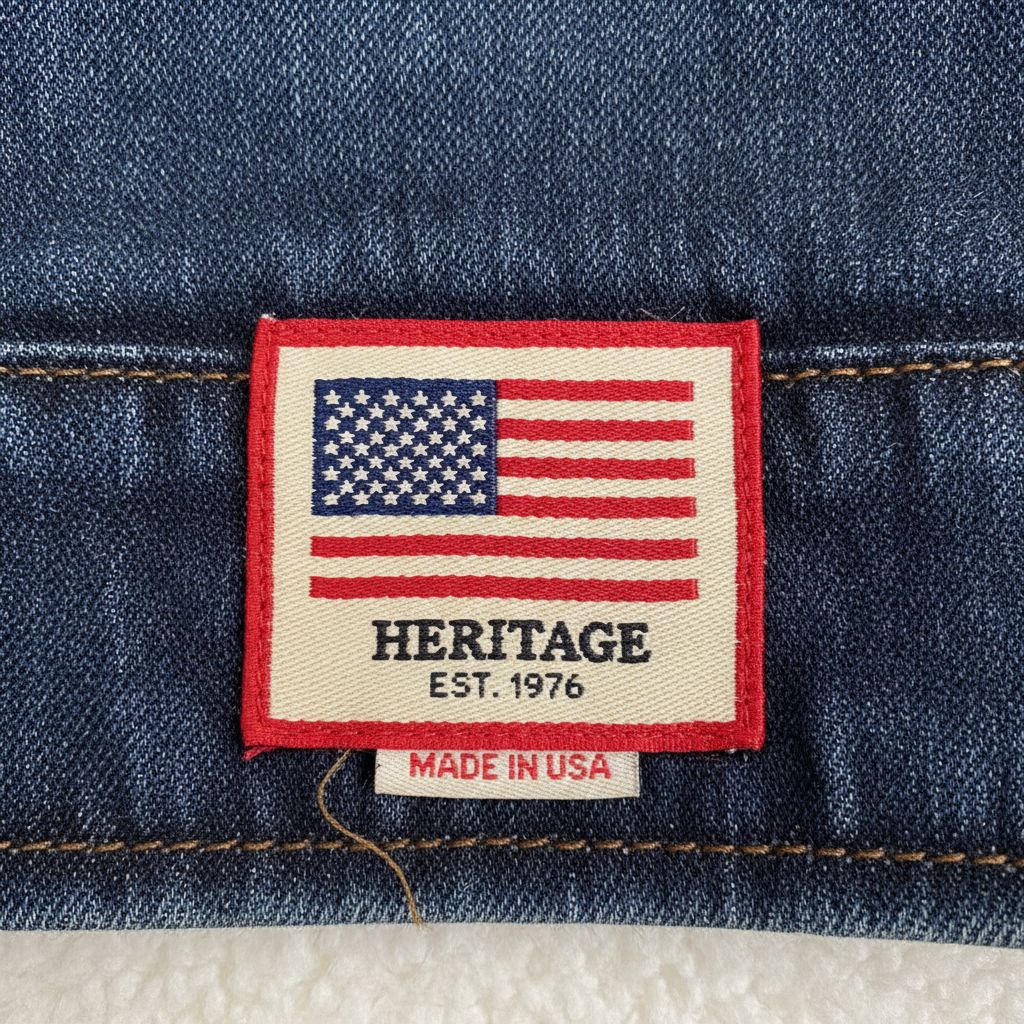
A small label sewn into visible seams like the side seam or pocket edge. It adds a premium branding touch and increases product recognizability.
Other Specialized Labels
- Country of Origin: Legally required “Made in Vietnam” or “Made in Bangladesh” tags.
- Barcode/Price Label: Essential for retail inventory control and scanning.
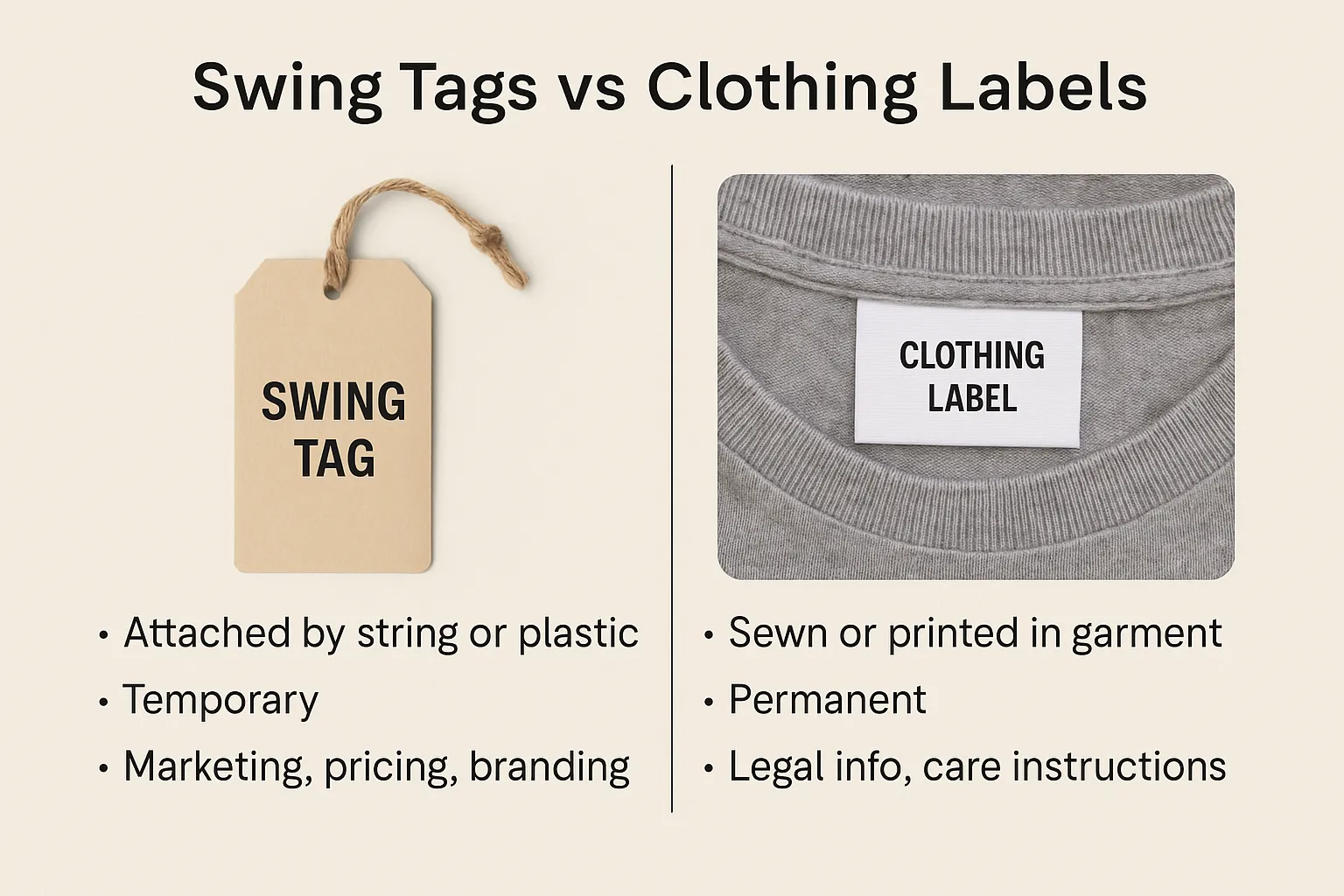
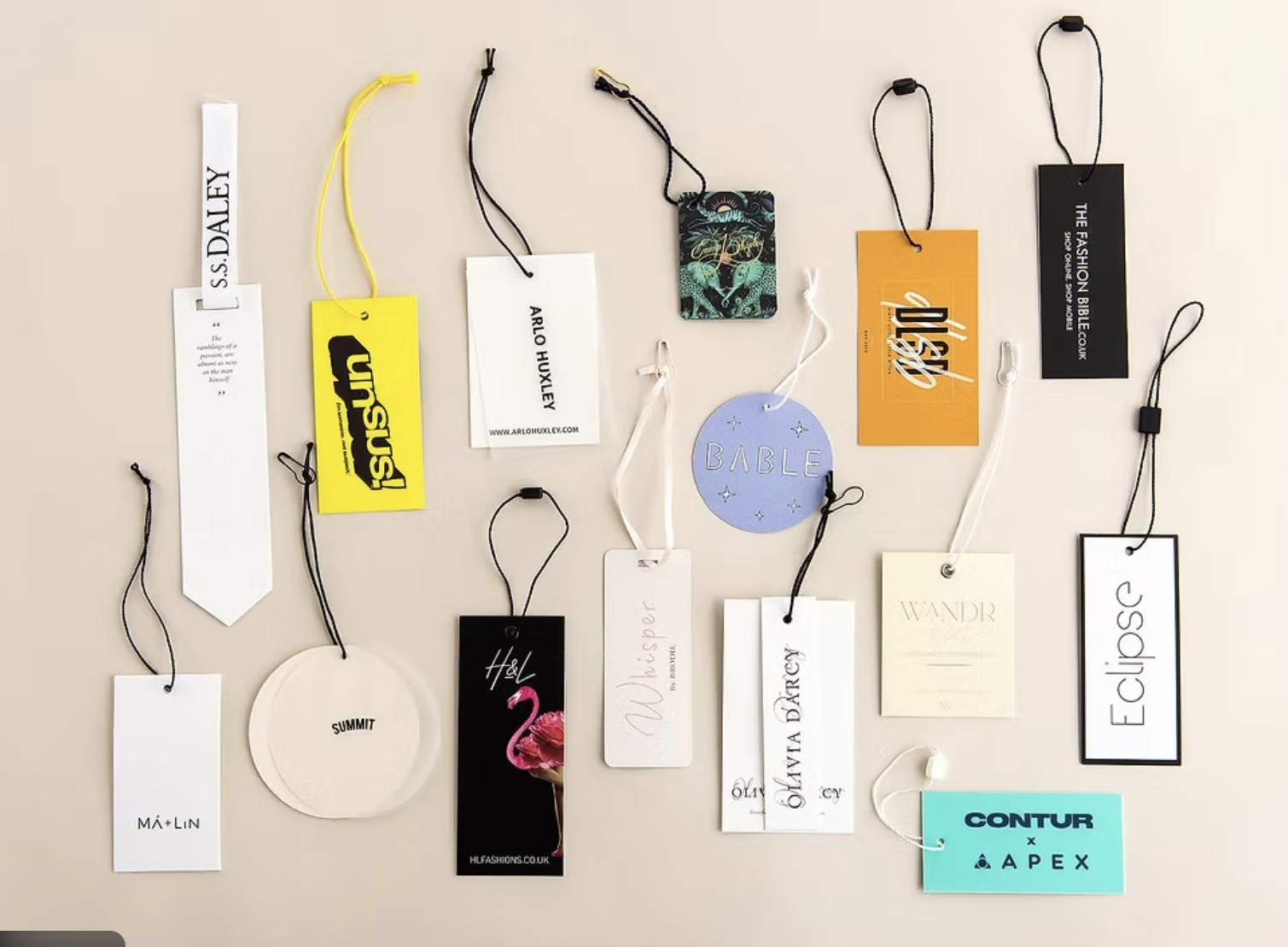
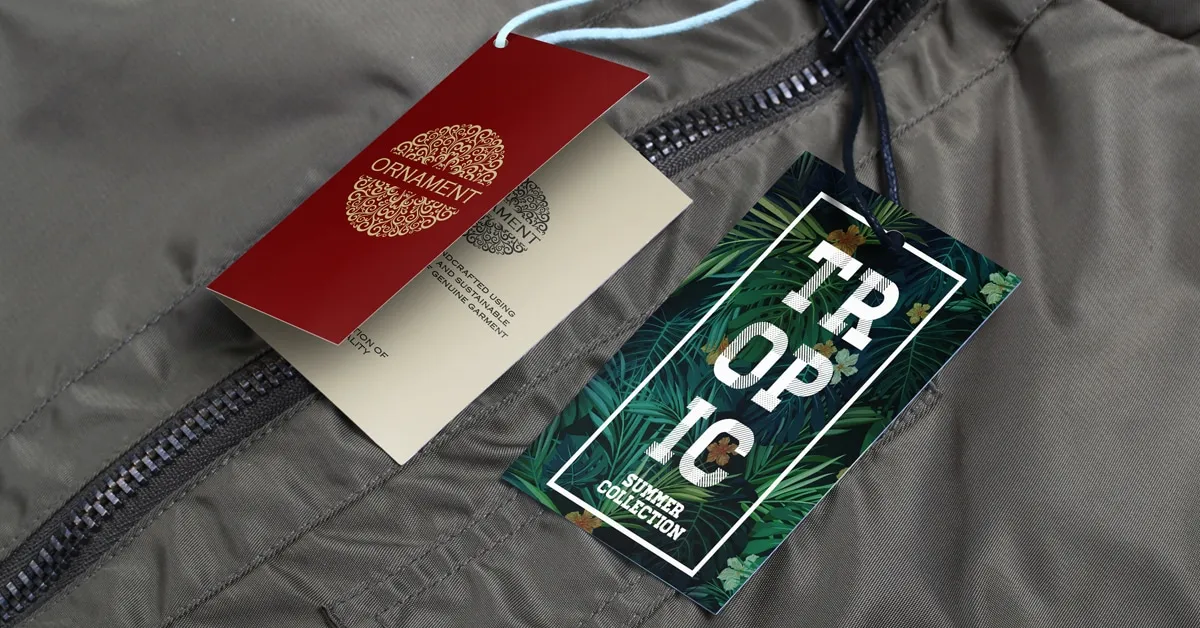
- Hang Tag: Provides retail information like style numbers and promotional messages.
Materials & Placement

Labels are crafted from various materials like woven damask for luxury, printed satin for soft care labels, or nylon taffeta for durability. Correct placement (neck, side seam, hem) ensures the label is readable without causing discomfort to the wearer.
Conclusion
Garment labels are a vital bridge between the manufacturer and the customer. They ensure compliance, protect the brand’s image, and provide the customer with the information they need to value the product. For manufacturers like Mekong Garment, understanding the nuances of labeling is essential for ensuring smooth export operations and delivering a polished final product.