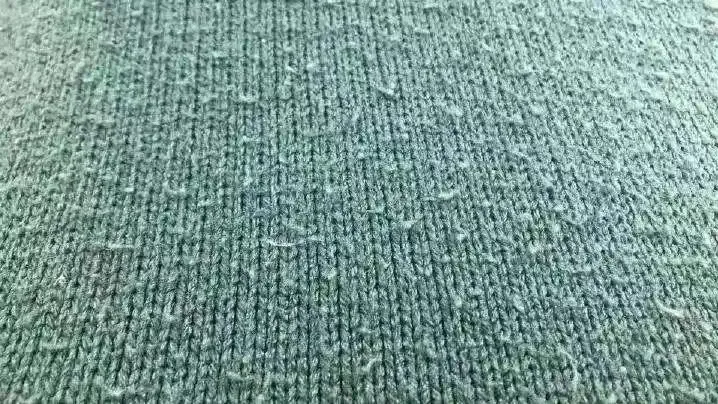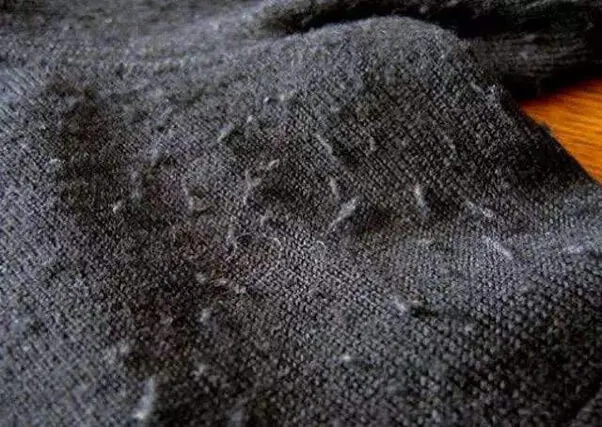
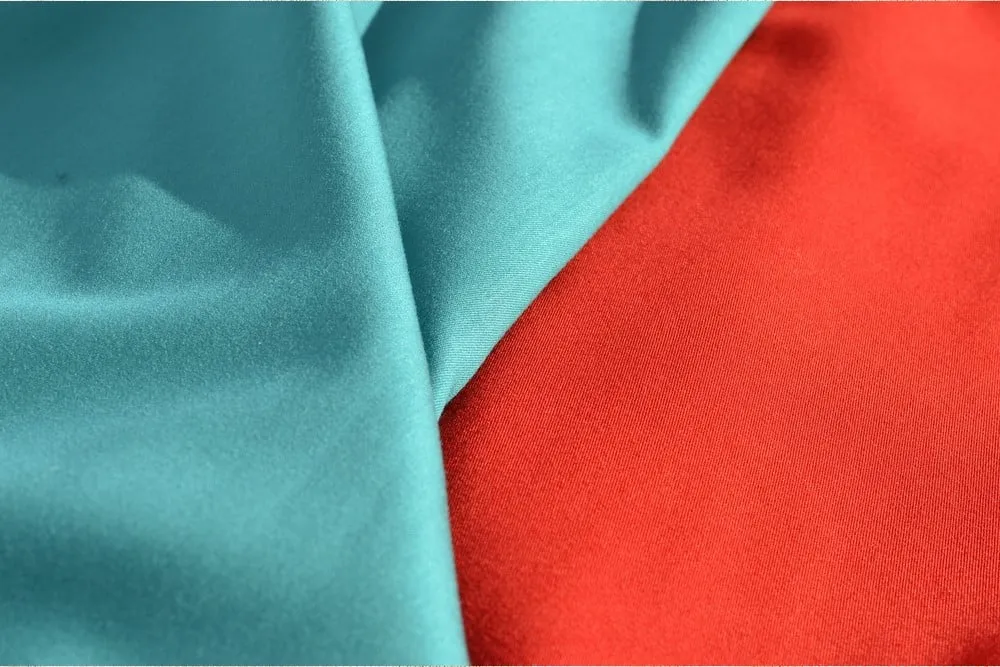

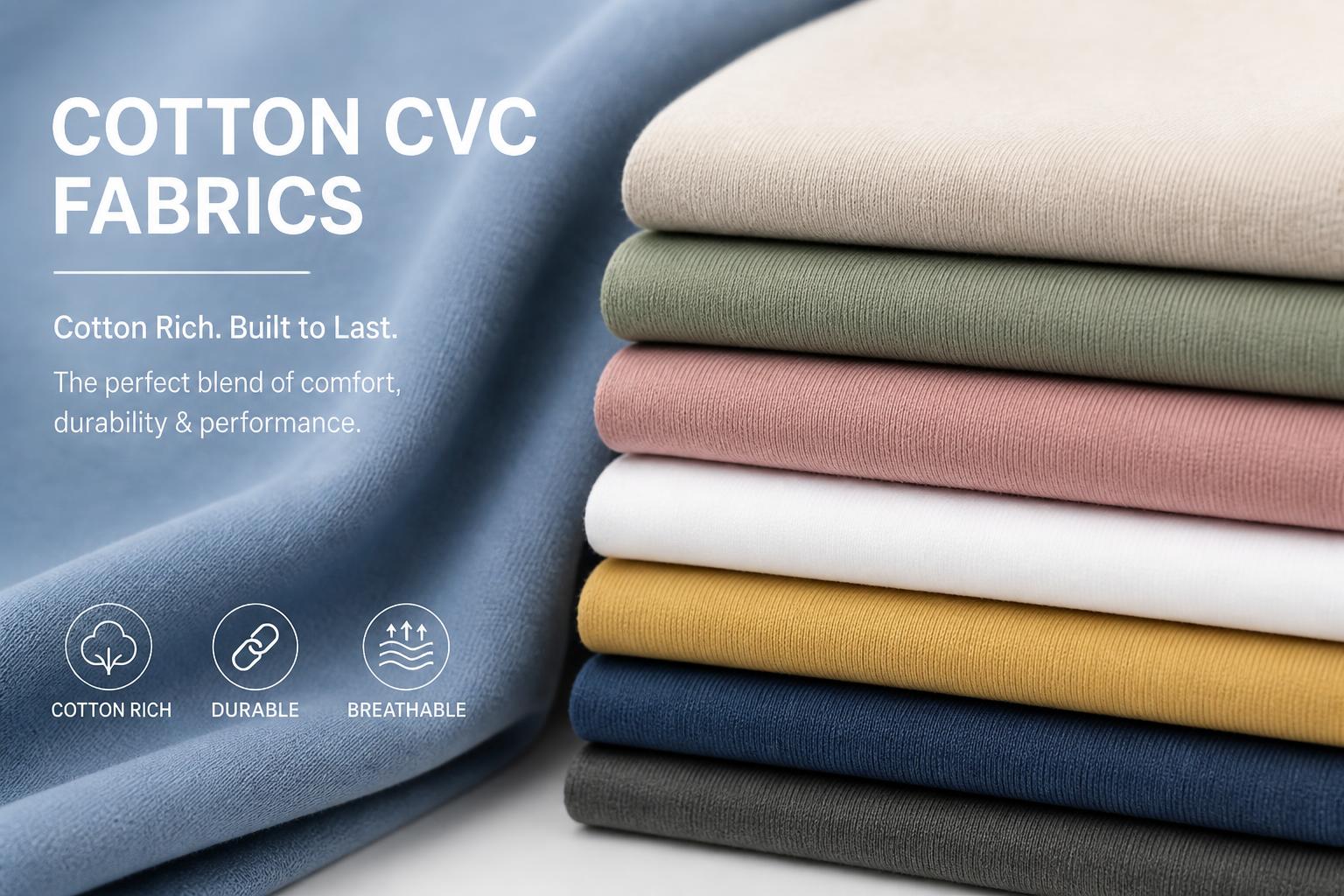
In the textile world, no single fiber can always deliver the best balance of comfort, durability, and cost-efficiency. That’s why Cotton CVC was born as an artful blend combining the natural softness of cotton with the strength and practicality of polyester. With cotton content typically above 50%, CVC fabrics maintain a gentle feel and breathability while significantly enhancing wrinkle resistance and shape retention.
What Is Cotton CVC?
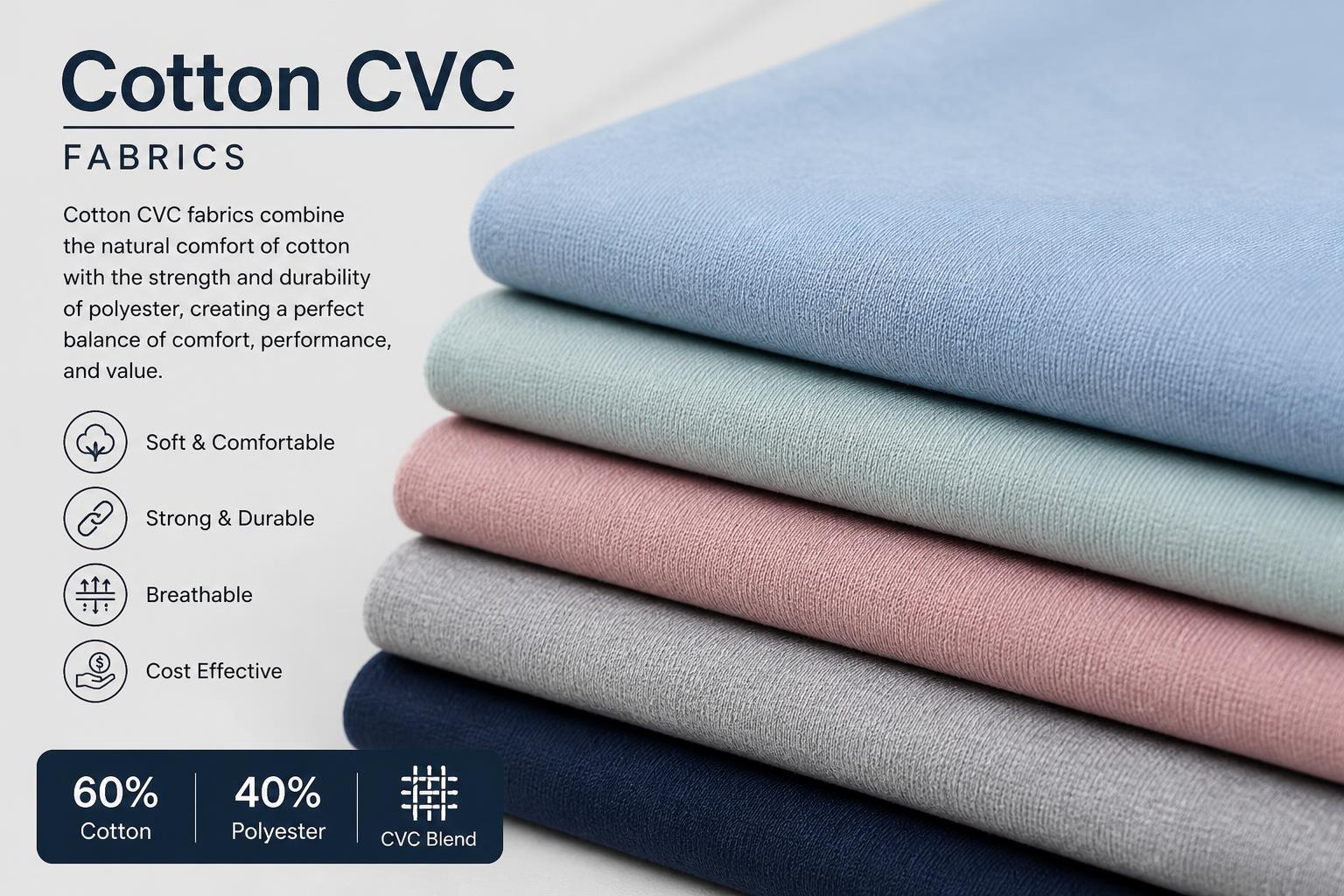
Cotton CVC (Chief Value Cotton) refers to fabrics whose main component is cotton, blended with polyester at a balanced ratio (e.g., 60% cotton + 40% polyester). The objective is to overcome drawbacks found in 100% cotton such as wrinkling and slow drying while preserving the comfort and softness that cotton is known for. Examples may include:
- 80% cotton / 20% polyester
- 65% cotton / 35% polyester
- 60% cotton / 40% polyester
The exact ratio should always be confirmed in the fabric specification.
=> Related Article: What is Cotton 60s? Its Advantages, Comparison with Cotton 40s,… Real Life Applications
Why Is It Called “Chief Value Cotton”?
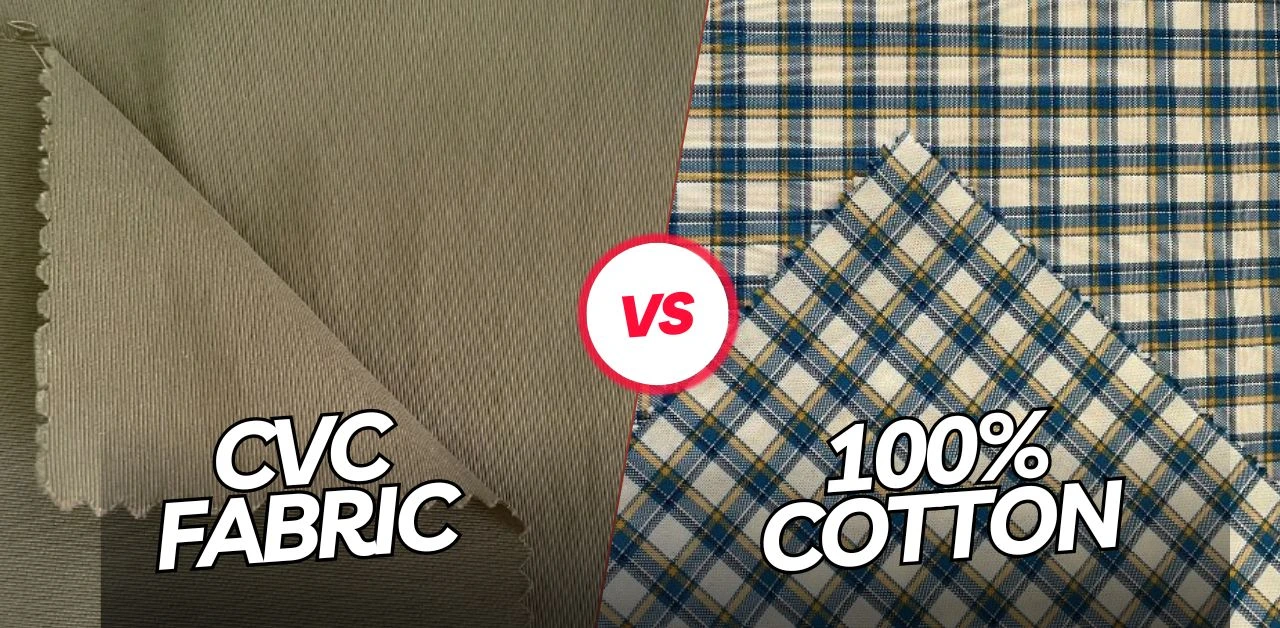
The name reflects the fact that cotton represents the major fiber component in the blend. In simple terms: CVC = Cotton-Dominant Cotton/Polyester Blend It is useful to distinguish CVC from polyester-dominant blends, which are often called TC in garment industry usage. However, commercial terminology can vary between suppliers and countries, so brands should always verify the actual fiber composition rather than relying only on the label “CVC.”
=> Related Article: Polyamide Fabric: How It Works, What It Feels Like, and Where You See It Daily
Key features of Cotton CVC:
- Softness and breathability from high cotton content.
- Enhanced strength and abrasion resistance from polyester.
- Reduced wrinkling and shrinkage after washing.
- Faster drying times and better color retention.
Types of CVC Fabric
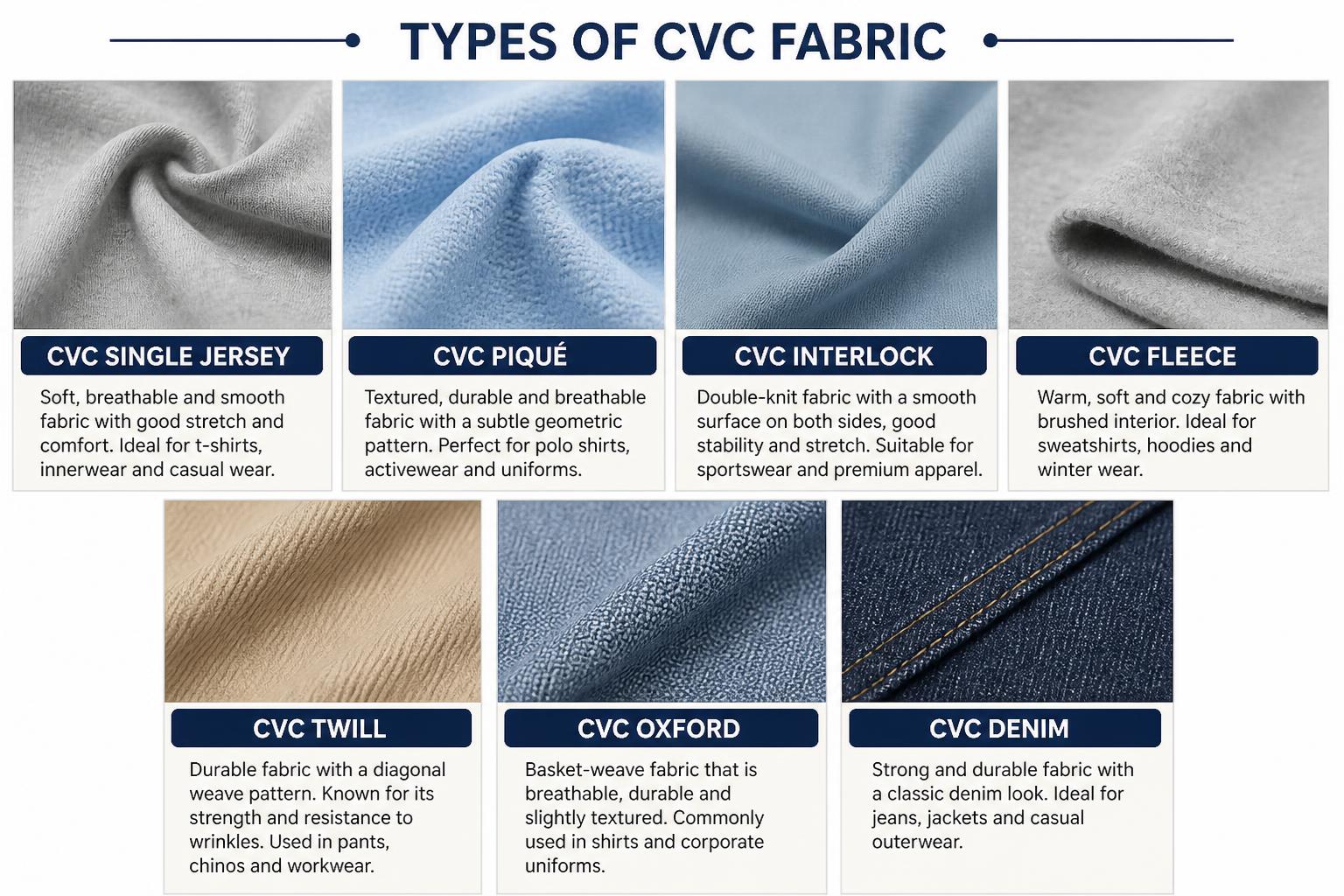
| Type of CVC Fabric | Main Characteristics | Common Uses |
|---|---|---|
| CVC Single Jersey | Soft, lightweight to medium weight, comfortable, smooth enough for many printing applications. | T-shirts, casual tops, promotional shirts, everyday basics. |
| CVC Piqué | Textured knit surface, more structured than jersey, good shape retention, suitable for embroidery. | Polo shirts, corporate uniforms, school polos, hospitality uniforms. |
| CVC Interlock | Smooth surface, stable knit structure, good coverage, often heavier than single jersey. | Premium T-shirts, kidswear, casualwear, structured knit tops. |
| CVC Fleece | Soft, warm, comfortable, good body and structure, suitable for cooler-weather garments. | Hoodies, sweatshirts, joggers, loungewear. |
| CVC Twill | Durable woven construction, structured appearance, good wrinkle resistance and shape retention. | Uniforms, work trousers, casual trousers, workwear. |
| CVC Oxford | Textured woven surface, neat appearance, practical care, cotton-dominant comfort. | Office shirts, school uniforms, casual shirts, corporate wear. |
| CVC Denim | Strong and durable, can offer better shape retention and reduced wrinkling depending on construction. | Jeans, jackets, utility garments, casual workwear. |
=> Related Article: CVC Cotton vs 100% Cotton vs TC (Poly-Cotton): Balancing Comfort, Durability, and Care
What Makes a High-Quality CVC Fabric?
A good CVC fabric should be evaluated as a complete textile system. Important factors include:
- Consistent Composition: The actual blend should match the specification.
- Stable GSM: Fabric weight should remain within approved tolerance.
- Good Dimensional Stability: Shrinkage and spirality should meet requirements.
- Controlled Pilling: The surface should remain acceptable through intended use.
- Consistent Shade: Roll-to-roll variation should be controlled.
- Good Hand Feel: The fabric should match the intended product positioning.
- Suitable Strength: The fabric should meet the durability requirements of the garment.
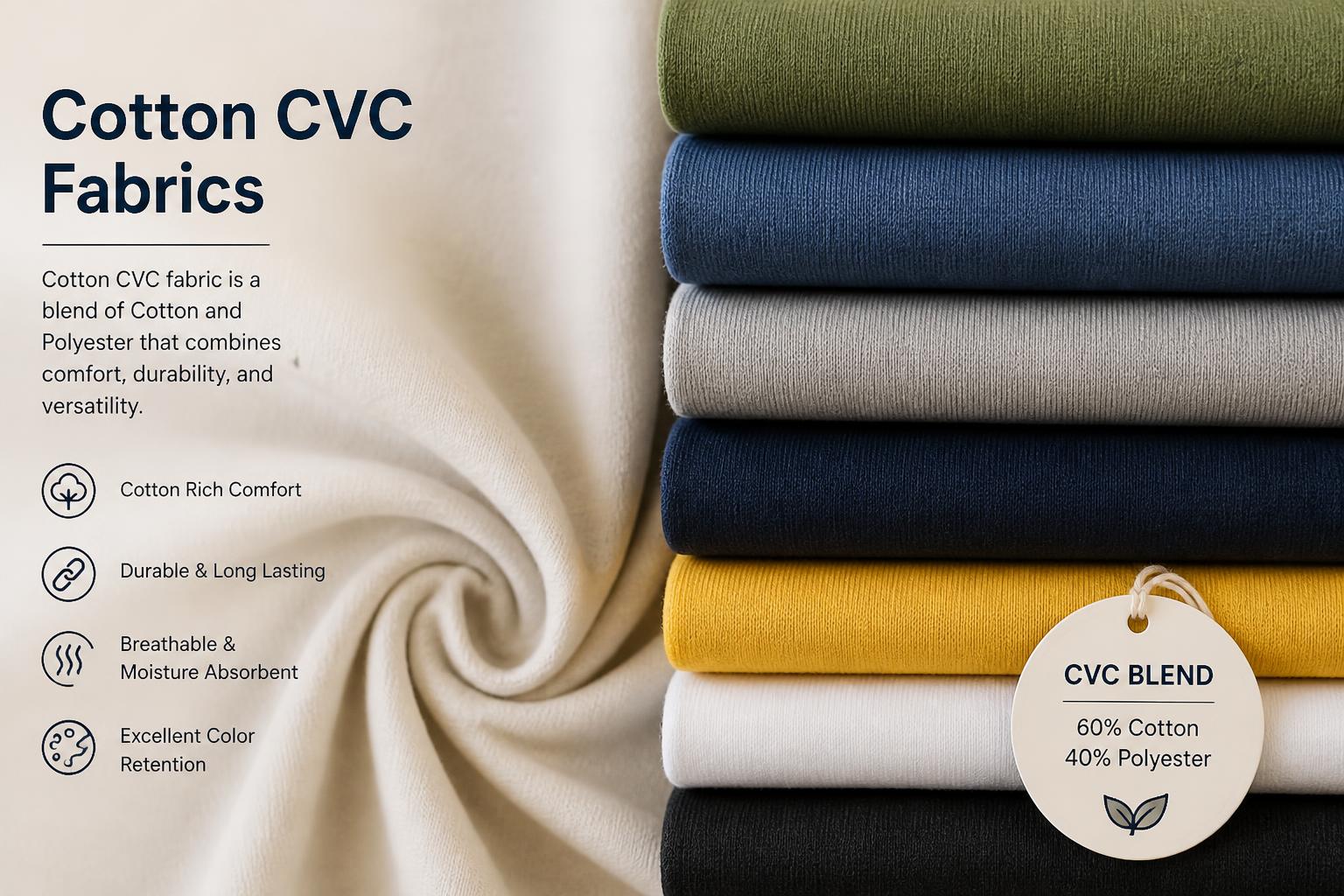
Why Choose CVC for Your Collection?
- Softness: You still get the soft hand of cotton because CVC contains over 50% cotton. This prevents the limpness and long-term sag common in pure cotton items.
- Performance: Technically, cotton has a moisture regain around 8–9% while polyester is near 0.4%. This blend allows a shirt to absorb humidity from your skin and then release it faster than 100% cotton, reducing damp time after wear.
- Durability: Polyester fibers reinforce the weave, making CVC a solid choice for high-use items like uniforms and workwear. Field data shows CVC garments often withstand 30–50 commercial wash cycles with minimal shape loss.
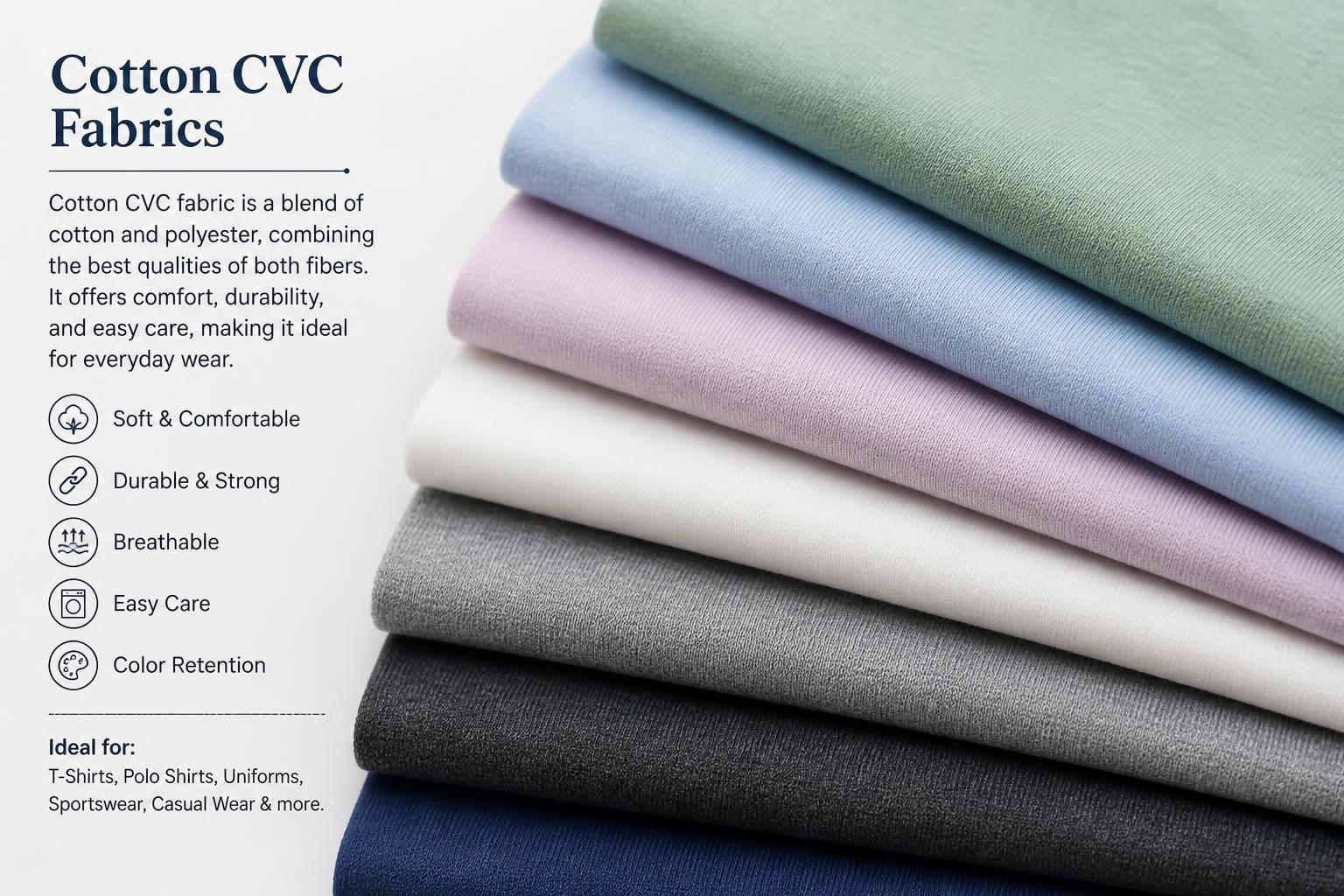
Why Combine Cotton and Polyester?
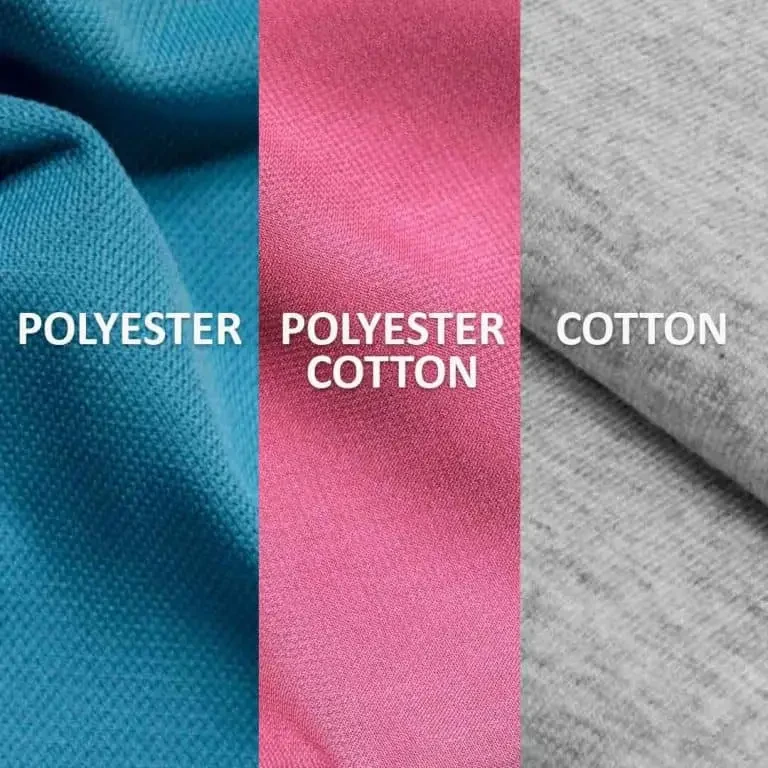
Cotton and polyester behave very differently. Cotton provides some characteristics that polyester does not, while polyester provides some practical benefits that cotton alone may not deliver as easily. The purpose of blending them is to create a more balanced fabric.
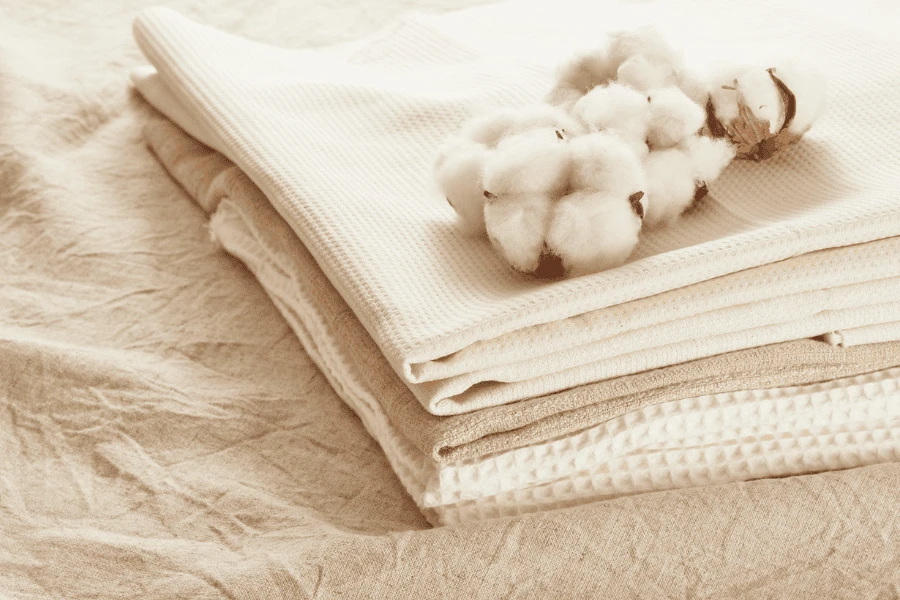
What Cotton Contributes
Cotton can provide:
- Soft natural hand
- Familiar skin comfort
- Good moisture absorption
- Matte appearance
- Good dye affinity with suitable dye systems
- Natural-fiber character
=> Related Article: 100% Cotton Fabric: Benefits, Drawbacks, and Common Uses (Pure Cotton Yarn, Naturally Soft)
What Polyester Contributes
Polyester can contribute:
- Higher dimensional stability in many constructions
- Lower moisture absorption than cotton
- Faster drying potential
- Good strength
- Wrinkle resistance
- Good shape retention
- Durability
- Easier-care performance
=> Related Article:
- Polyester Fabric: Properties, Manufacturing, and Uses
- Polyethylene Fabric (PE Fabric): Benefits, Safety, and Modern Industrial Uses
The Basic CVC Concept
A simplified way to understand the blend is:
- Cotton = Comfort
- Polyester = Stability and Practicality
- CVC = Balance
That does not mean every CVC fabric performs the same way. The final result depends heavily on how the yarn and fabric are engineered.
=> Related Article: TC Fabric (Poly-Cotton): Durable and Easy to Maintain
Advantages and Disadvantages
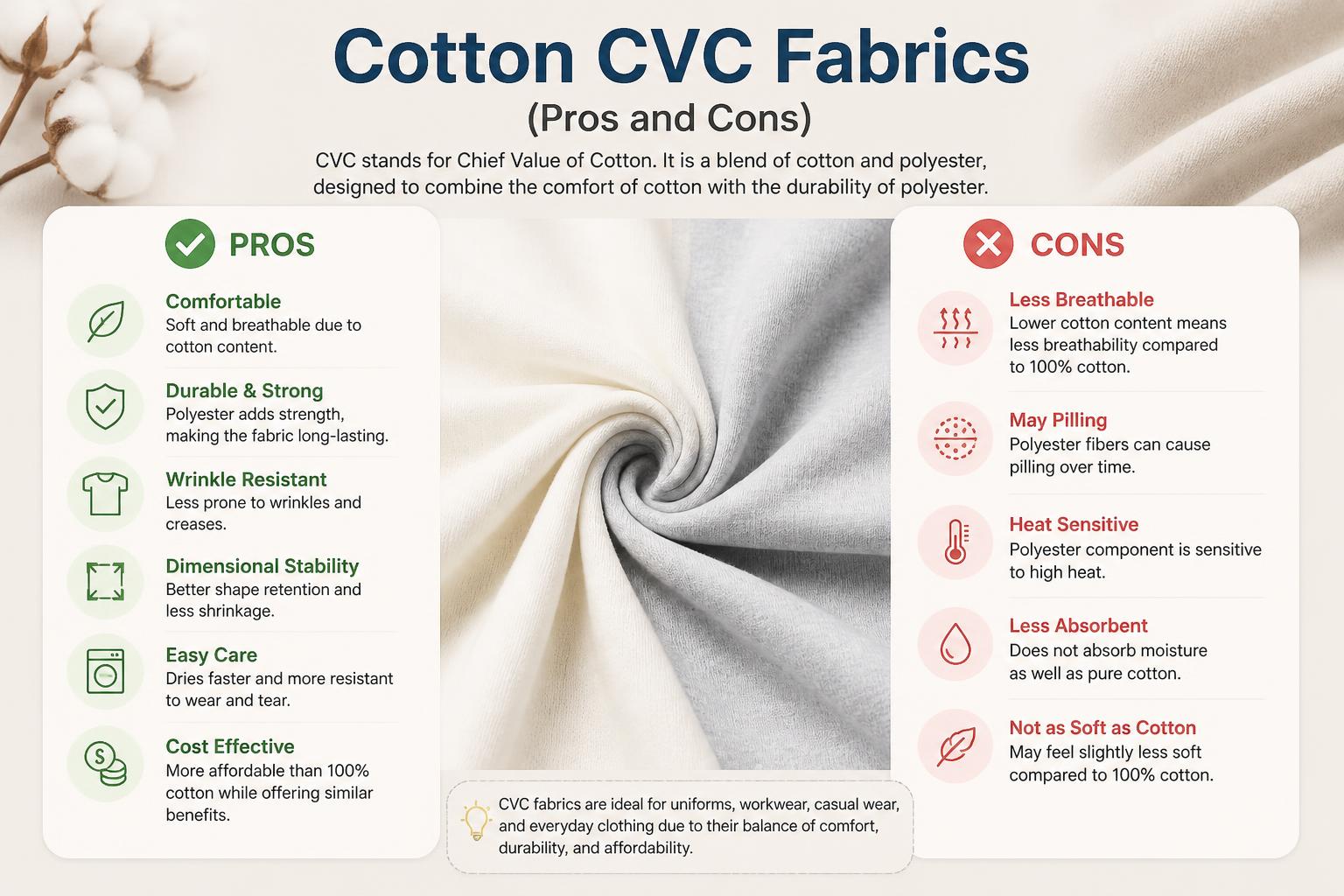
| Advantages | Disadvantages |
|---|---|
| Soft, breathable, and skin-friendly | Not 100% natural (contains synthetic fiber) |
| Highly durable and long-lasting | Slightly lower absorbency than pure cotton |
| Wrinkle-resistant and shrink-resistant | Can generate static electricity in dry weather |
| Dries quickly and retains color well | May feel slightly less “luxurious” than 100% cotton |
Main Advantages of CVC Fabric
CVC has become popular because it offers a useful middle ground.
Comfortable Cotton-Dominant Hand
Because cotton is the main component, many CVC fabrics retain a soft, familiar feel. This makes them suitable for:
- T-shirts
- Polos
- Casualwear
- Uniforms
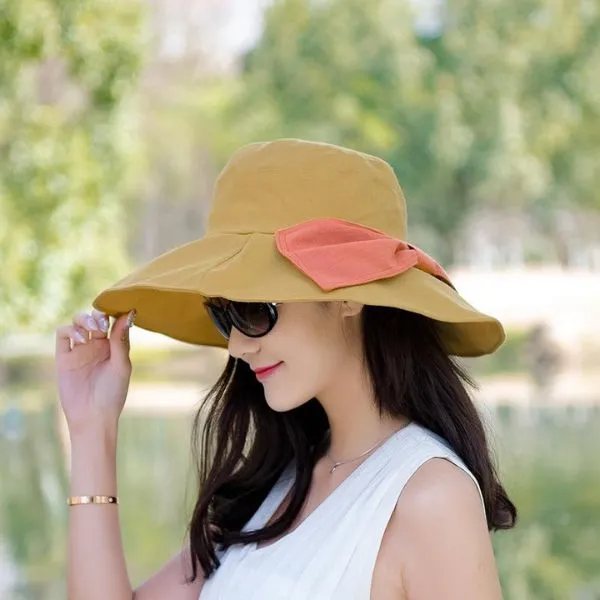
where comfort is still important.
However, softness is not guaranteed by cotton percentage alone. It also depends on:
- Fiber length
- Yarn quality
- Spinning
- Finishing
- Fabric construction
Better Shape Retention
Polyester can help the fabric resist excessive deformation.
This can improve:
- Collar shape
- Body shape
- Sleeve appearance
- Post-wash stability
This is especially useful for garments that are washed frequently.
Reduced Wrinkling
Compared with many 100% cotton fabrics, CVC can show fewer wrinkles after washing or wearing. This is one reason it is often selected for:
- Uniforms
- Schoolwear
- Corporate polos
- Workwear
where a neat appearance matters.
Faster Drying
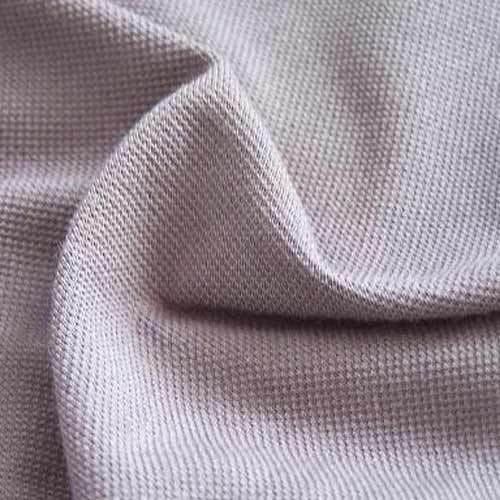
Cotton absorbs more moisture into the fiber. Polyester absorbs much less. As a result, a cotton/polyester blend can often dry faster than a comparable 100% cotton fabric.
This can be useful for:
- Travel
- Uniforms
- Everyday workwear
- Light activewear
However, faster drying should not automatically be described as moisture-wicking.
True moisture-management performance depends on:
- Yarn structure
- Fabric construction
- Surface treatment
- Finish
Better Dimensional Stability
CVC may help reduce:
- Excess shrinkage
- Shape loss
- Twisting
compared with some 100% cotton fabrics. But this still depends on production control. A poorly finished CVC fabric can still shrink or distort.
Good Durability
Polyester can improve mechanical durability in many blends. CVC may therefore work well in:
- Uniforms
- Promotional garments
- Workwear
- Children’s clothing
- Frequently washed items
Actual durability should be confirmed through testing rather than assumed from composition alone.
Limitations of CVC Fabric
CVC also has disadvantages.
It Is Not 100% Natural
CVC contains synthetic polyester. This may not suit brands that specifically want:
- 100% cotton
- Natural-fiber positioning
- Plastic-free fiber composition
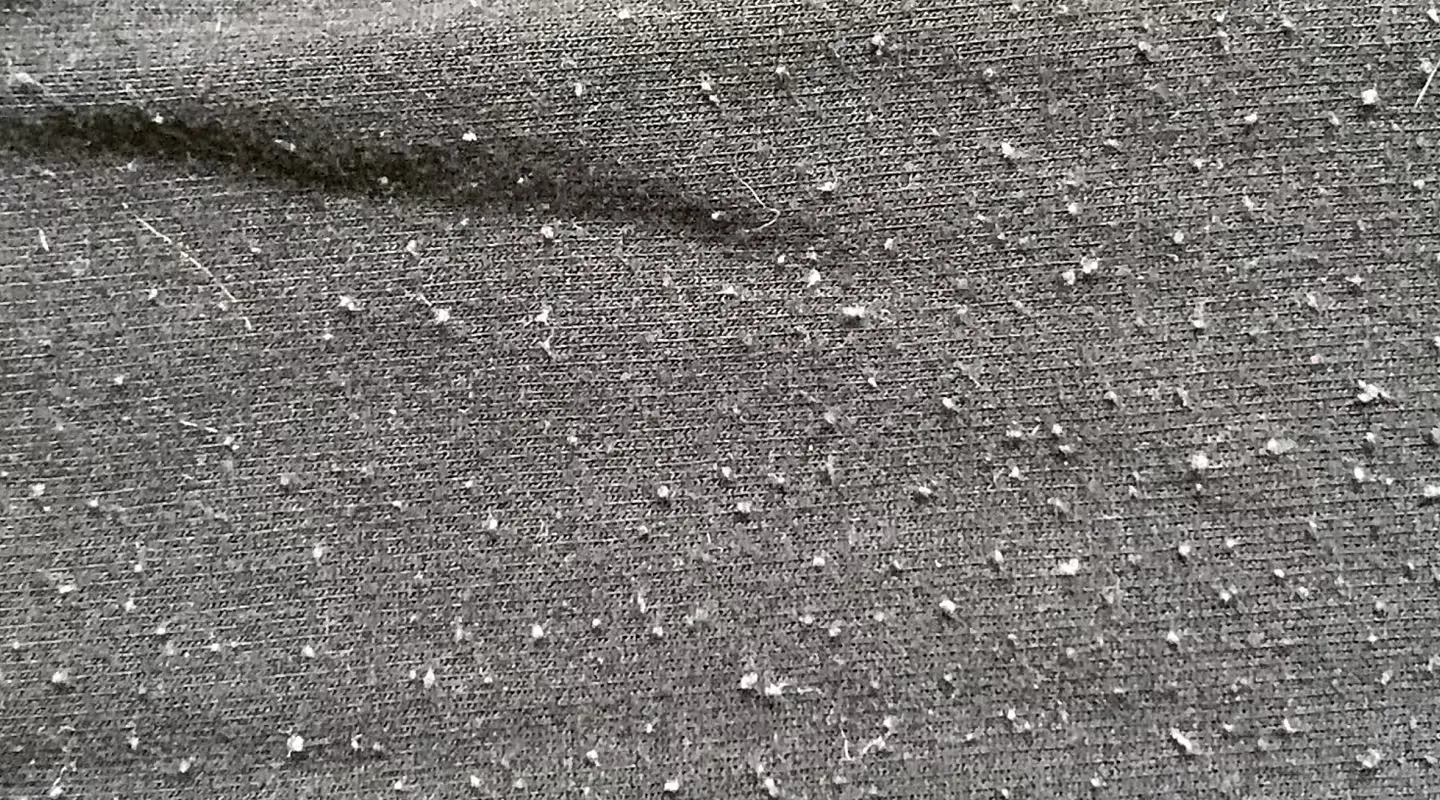
Pilling Can Be a Problem
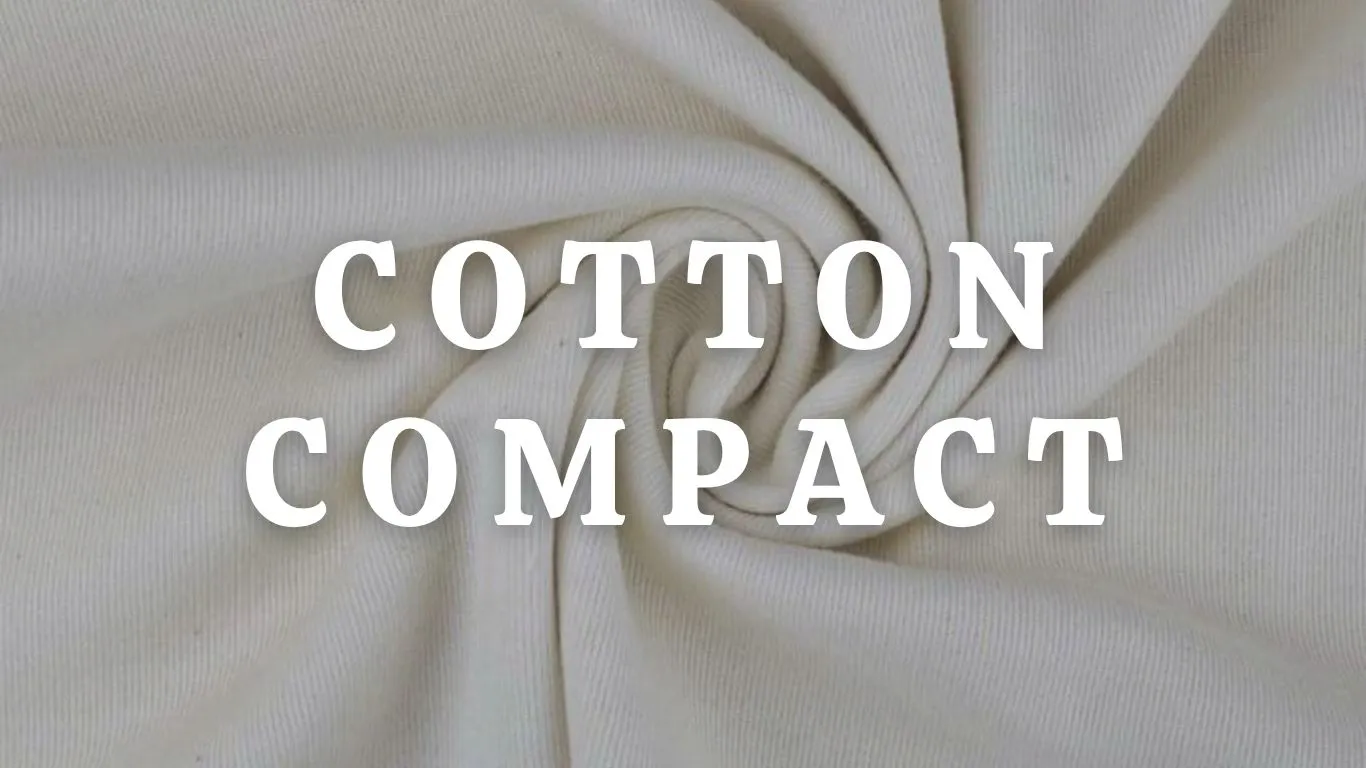
CVC can pill. This may happen because polyester fibers are strong and can hold pills on the fabric surface.
Pilling risk depends on:
- Cotton staple length
- Polyester content
- Yarn twist
- Spinning quality
- Knit structure
- Brushing
- Finishing
- Abrasion during use
A CVC blend is not automatically anti-pilling.
Hand Feel May Be Less Natural
As polyester content rises, the fabric may feel less like pure cotton. This is especially noticeable in low-quality fabrics. The final hand can also be affected by:
- Silicone finish
- Enzyme finish
- Compacting
- Brushing
- Yarn quality
Dyeing Can Be More Complex
Cotton and polyester require different dyeing systems. This can make:
- Color matching
- Heather effects
- Shade consistency
- Dark shades
more technically demanding.
Static Can Increase
Polyester can contribute to static electricity under some dry conditions. Whether this becomes noticeable depends on:
- Climate
- Fabric construction
- Finishing
- Garment use
CVC vs. 100% Cotton vs. TC: Quick Comparison
| Factor | 100% Cotton | CVC | TC |
|---|---|---|---|
| Main Fiber | Cotton | Cotton-dominant | Usually polyester-dominant |
| Hand Feel | Natural, cotton-like | Cotton-like with added stability | More synthetic/structured |
| Moisture Absorption | Higher | Medium to high | Lower |
| Drying Speed | Generally slower | Faster than many cotton fabrics | Often faster |
| Wrinkle Resistance | Lower | Better | Usually higher |
| Dimensional Stability | Depends strongly on finish | Generally improved | Often very good |
| Pilling Risk | Possible | Possible | Possible |
| Easy Care | Moderate | Good | Very good |
| Typical Uses | Premium tees, casualwear | Tees, polos, uniforms | Uniforms, shirts, workwear |
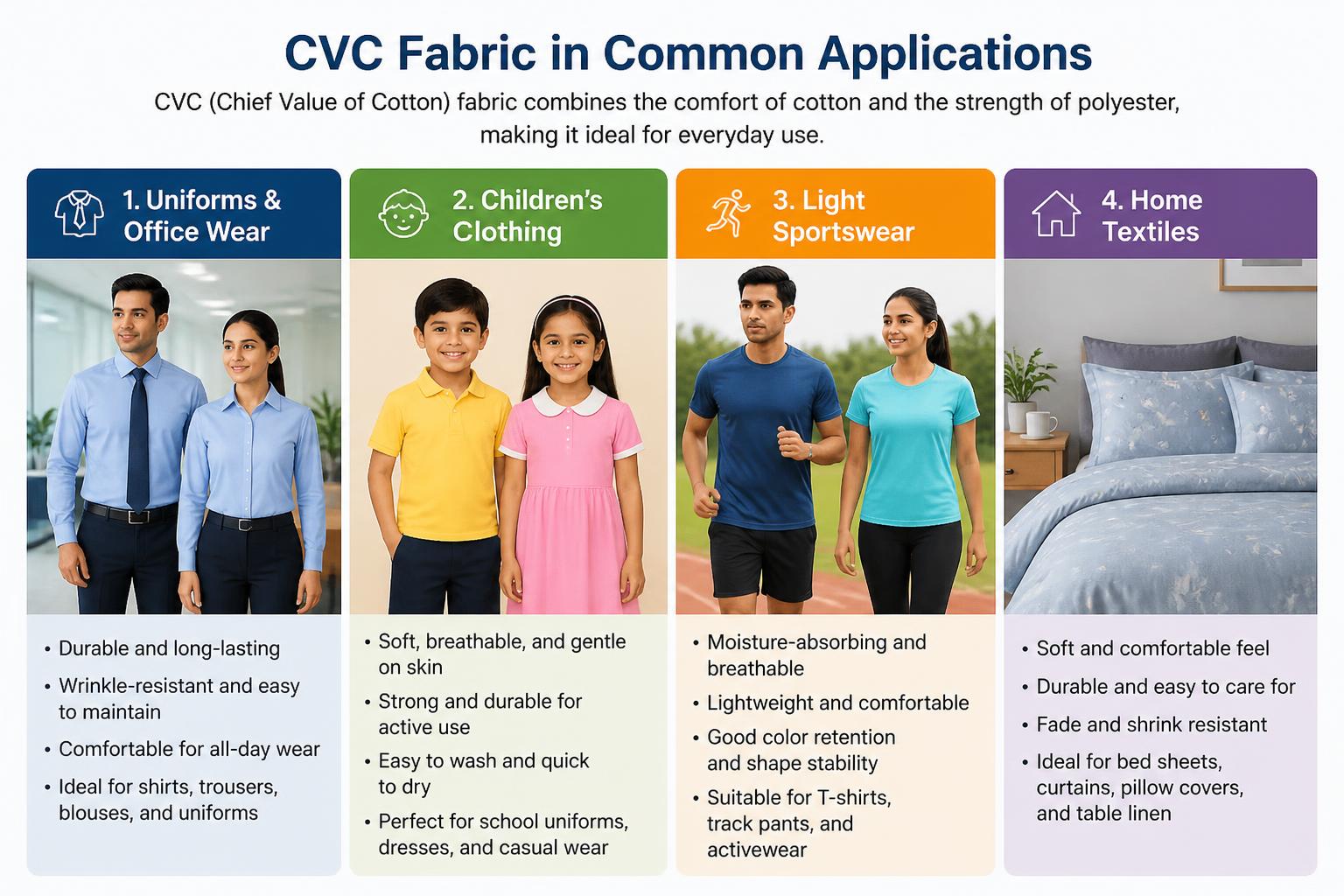
Common Applications
Designing for longevity and professionalism? Cotton CVC is used extensively in:
- Uniforms & Office Wear: Keeps shape and resists wrinkles throughout the day.
- Children’s Clothing: Soft enough for skin, durable for frequent high-heat washing.
- Light Sportswear: Offers the comfort of a tee with the quick-dry tech of poly.
- Home Textiles: Ideal for sheets and pillowcases that need to be both soft and functional.
How to Care for Cotton CVC Fabric
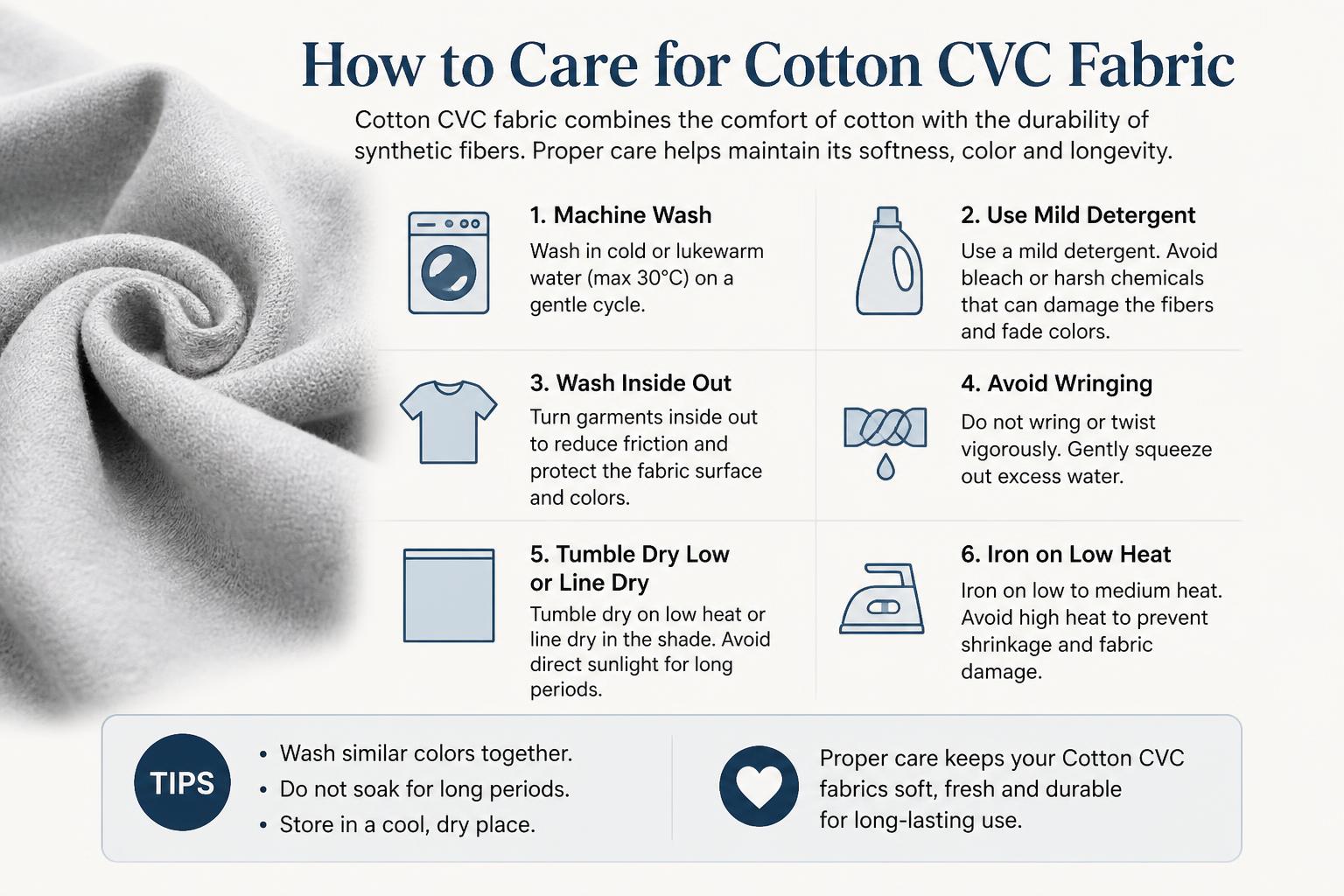
- Wash at temperatures below 40 °C.
- Avoid harsh bleaching agents to maintain color brightness.
- Dry in the shade to prevent fiber damage from intense UV rays.
- Iron at medium heat while the fabric is slightly damp.
Conclusion / Final Words
CVC fabric is popular because it solves a practical problem in apparel development: brands often want the comfort and familiar feel of cotton, but they also want better dimensional stability, easier care, faster drying, and improved garment durability. By keeping cotton as the dominant fiber and adding polyester, CVC can provide a useful middle ground between 100% cotton and polyester-dominant blends. However, the blend ratio alone does not determine quality. A strong CVC fabric still depends on: Cotton quality, Polyester quality, Yarn, Spinning, GSM, Fabric construction, Dyeing, Finishing, Shrinkage control, Pilling control For T-shirts and polo shirts, CVC can be an especially practical option because it can maintain much of the comfort customers expect while helping the garment keep its shape during repeated wear and washing.
For uniforms and workwear, CVC can provide a useful balance between everyday comfort and easier maintenance. Brands should also remember that CVC is not automatically moisture-wicking, shrink-proof, anti-pilling, sustainable, or higher quality than 100% cotton. These claims should be supported by the actual fabric specification and testing.
FAQs About Cotton CVC Fabrics
In Short, What is Cotton CVC?
Cotton CVC (Chief Value Cotton) is a blended fabric where cotton is the dominant fiber—typically above 50%—combined with polyester (for example 60% cotton / 40% polyester). The blend preserves cotton’s softness and breathability while adding polyester’s strength, wrinkle resistance, faster drying and improved color retention, producing a balanced, practical textile ideal for everyday and functional garments.
How does Cotton CVC differ from 100% cotton and polyester-rich blends?
Compared with 100% cotton, CVC reduces wrinkling, shrinkage and slow drying while keeping much of the natural feel and breathability. Versus polyester-heavy blends, CVC is softer and more breathable but offers better shape retention and color stability than pure cotton. It sits between the two extremes to combine comfort with durability and easier maintenance.
In Short, What are the main advantages of Cotton CVC?
Key benefits include a soft, breathable hand from the cotton content; improved wrinkle resistance and shape retention from polyester; faster drying and better colorfastness; greater durability and reduced shrinkage; and cost-efficiency for large-scale production. These traits make CVC suitable for apparel that must look neat while remaining comfortable and low-maintenance.
In Short, What disadvantages or limitations should be considered?
CVC can feel less natural than 100% cotton and may not match the moisture-wicking of pure cotton in high-sweat situations. It can be prone to pilling depending on yarn and finishing, and polyester reduces biodegradability compared with all-natural fibers. High-heat care can damage the polyester component, so aggressive drying or ironing should be avoided.
What are common applications for Cotton CVC?
Cotton CVC is widely used for uniforms, office and school apparel, casual shirts, light sportswear, children’s clothing, bedding and home textiles. Its blend of comfort, wrinkle resistance and durability also suits promotional garments, workwear and any items requiring frequent laundering while maintaining a neat appearance.
How should Cotton CVC be cared for to maximize lifespan?
Wash at or below 40 °C with mild detergent and similar colors; avoid bleach and strong chemicals. Dry in shade or tumble dry low; remove promptly to minimize creasing. Iron at moderate temperature while garments are slightly damp, and avoid prolonged high heat to protect polyester fibers. Gentle handling preserves softness, color and form over many washes.