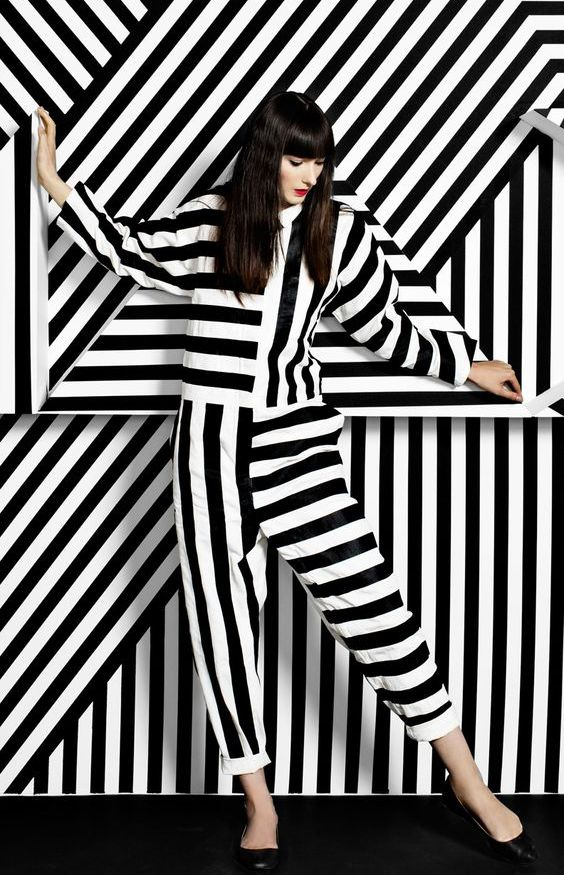

Lines act like arrows for the eyes. With simple choices, where a seam runs, how a stripe leans, or where a hem lands, you can change how a body looks in motion and in photos. This guide explains the “why” behind those choices in plain English. Use it as a training piece for design, merchandising, and retail staff.
What Is a Line in Fashion Design?
A “line” in fashion is not just a printed stripe. It is any visual path the eye follows on clothing. Designers often use three categories:
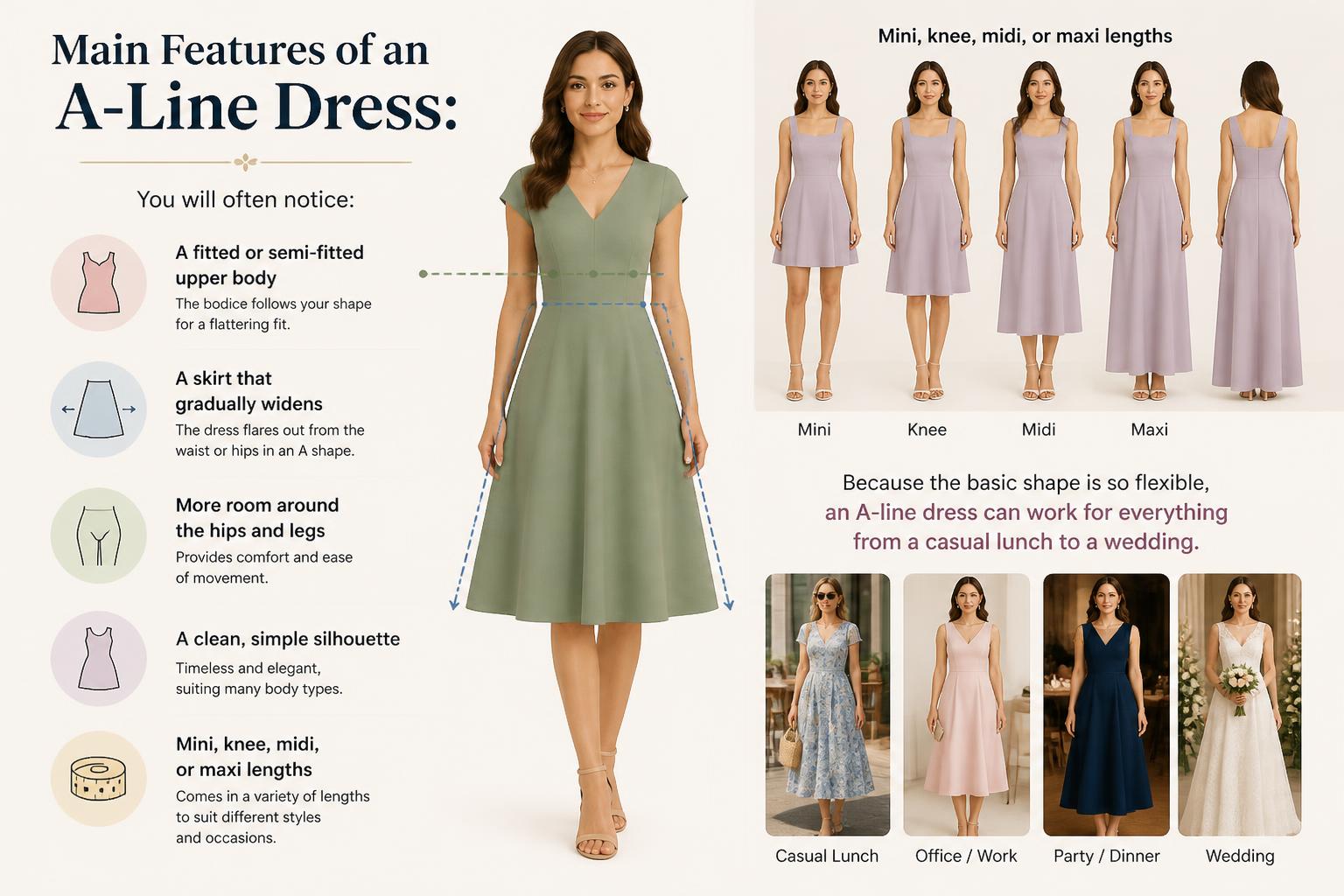
- Structural lines: The overall cut or silhouette (A-line, sheath, empire).
- Style lines: Design details such as pleats, princess seams, panels, or hemlines.
- Printed lines: Stripes or patterns running vertically, horizontally, or diagonally.
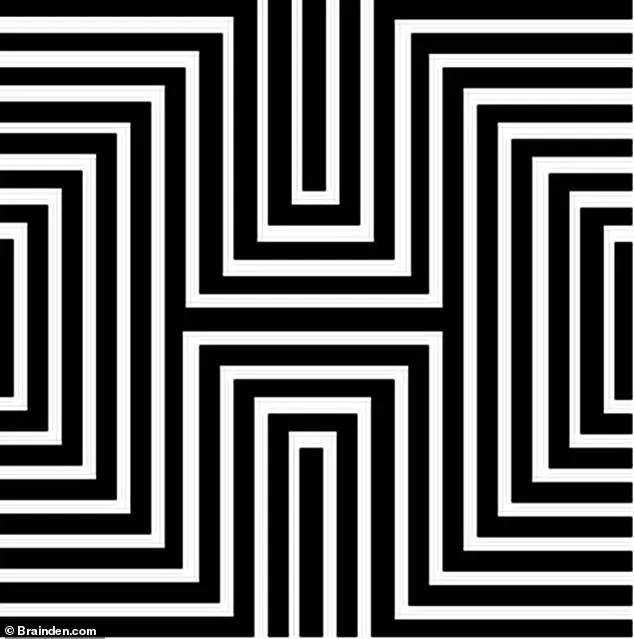
A line can be created by: Seam placement, Garment edges, Color blocking, Pleats, Piping, Buttons, Necklines, Fabric patterns.
How Lines Influence the Eye
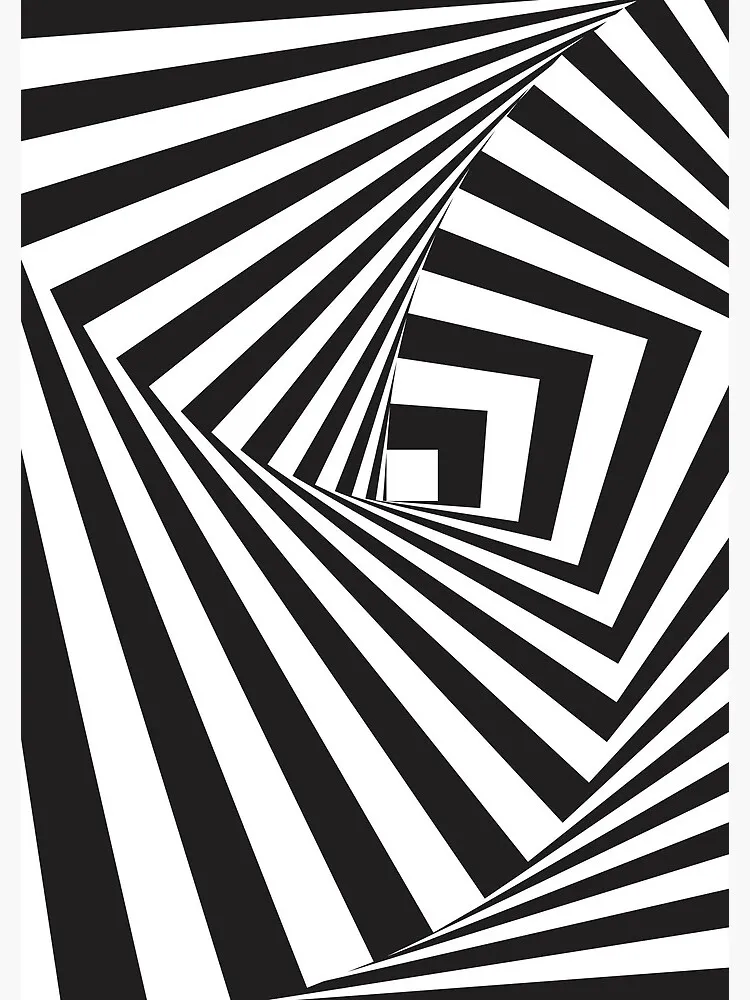
The eye naturally follows lines. When lines converge, the meeting point becomes a focal point and looks smaller. When they diverge, the space appears wider. Thicker lines feel bold, while thinner lines feel calm and steady.
Why Lines Matter in Clothing
The human eye naturally follows:
- Edges
- Repetition
- Contrast
- Direction
Designers can use this behavior to influence how a garment is perceived. For example, a long center-front placket creates a strong vertical path. A wide boat neckline creates a strong horizontal path. A wrap dress creates a diagonal path. Each directs attention differently.
Lines Do Not Change the Body
Lines create visual perception, not physical change. The wearer does not actually become:
- Taller
- Shorter
- Wider
- Narrower
Instead, the garment influences how the eye interprets proportion.
- So it is better to say: Lines Change Visual Emphasis
- rather than: Lines Change the Body
Different Line Types of Lines in Fashion
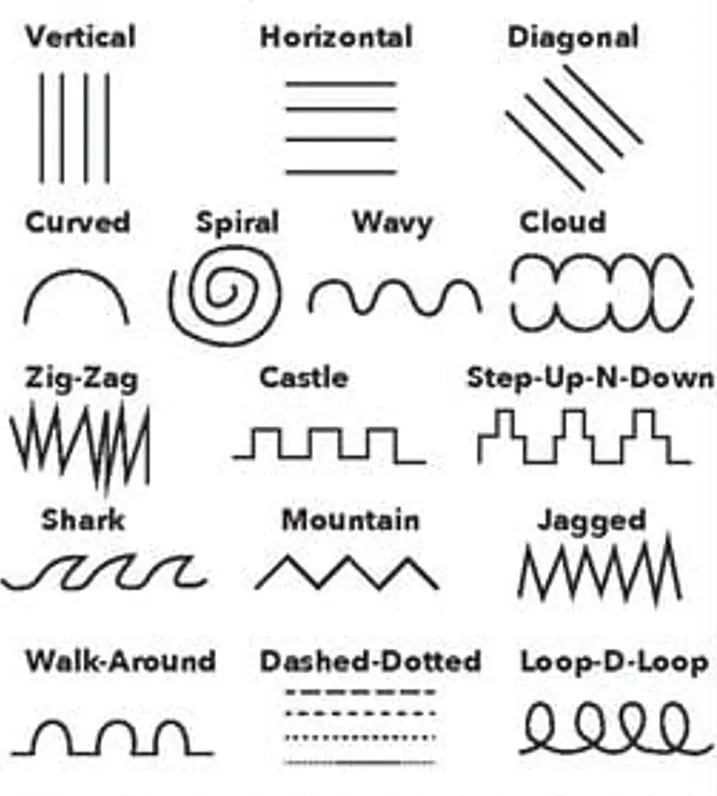
Fashion lines can be grouped into several useful categories.
| Line Type | What Creates It | Example |
|---|---|---|
| Structural Line | Garment shape or construction | A-line silhouette |
| Style Line | Seams and design details | Princess seam |
| Printed Line | Fabric print | Pinstripe |
| Edge Line | Garment boundary | Hemline |
| Trim Line | Added trim | Piping |
| Color Line | Color blocking | Side panel |
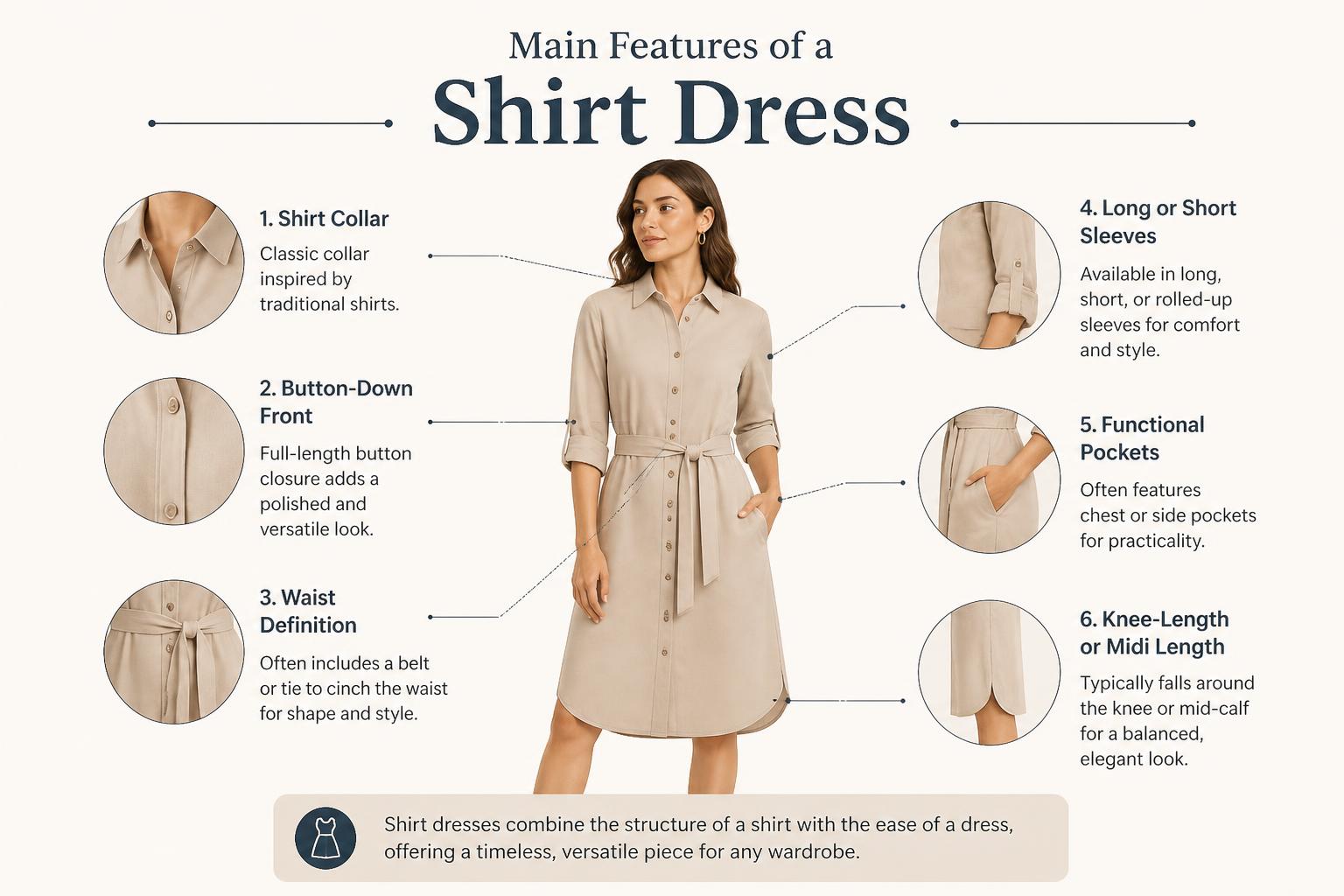
| Closure Line | Buttons / zipper / placket | Shirt front |
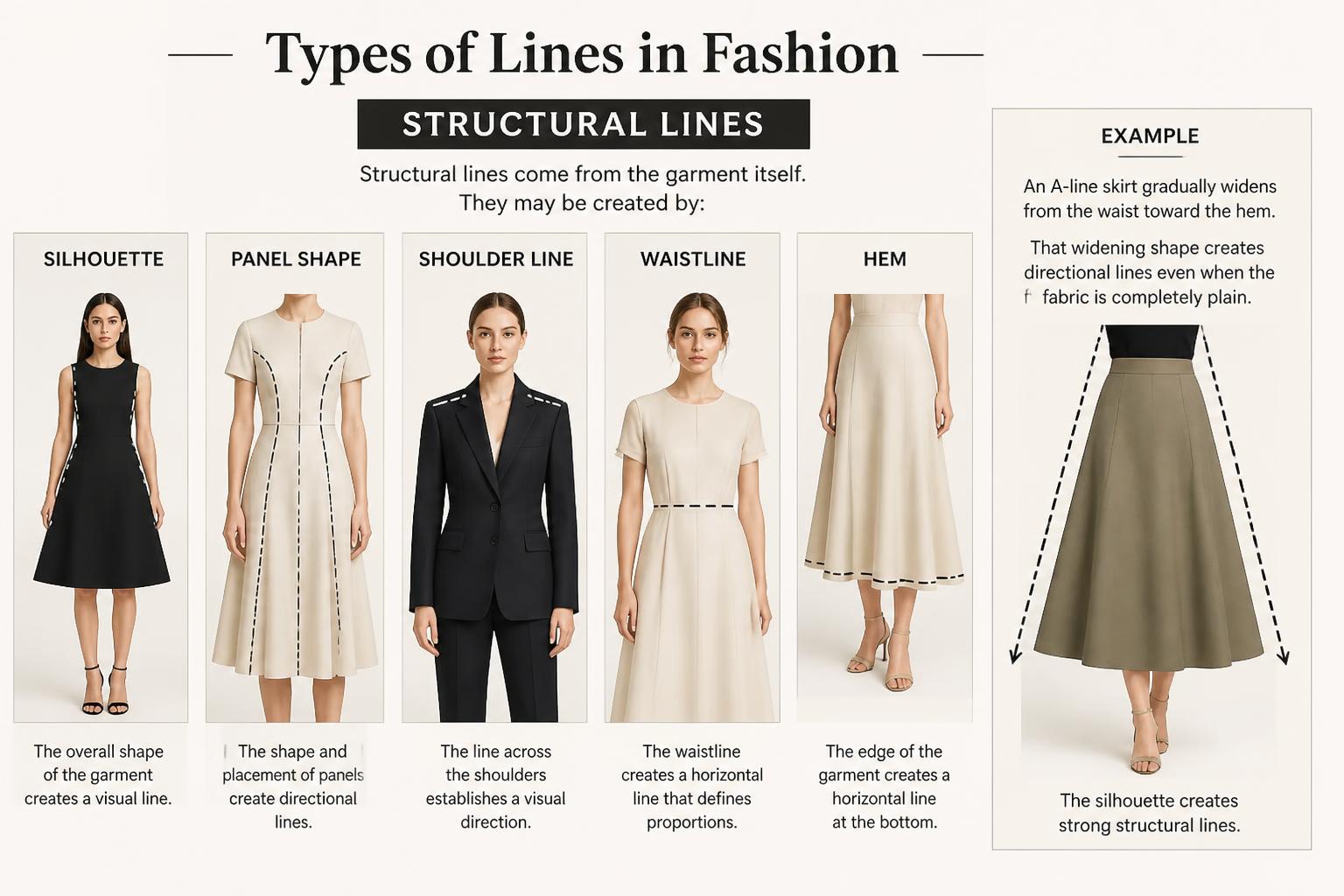
Structural Lines:
Structural lines come from the garment itself. They may be created by:
- Silhouette
- Panel shape
- Shoulder line
- Waistline
- Hem

=> For example: An A-line skirt gradually widens from the waist toward the hem. That widening shape creates directional lines even when the fabric is completely plain.
Style Lines:
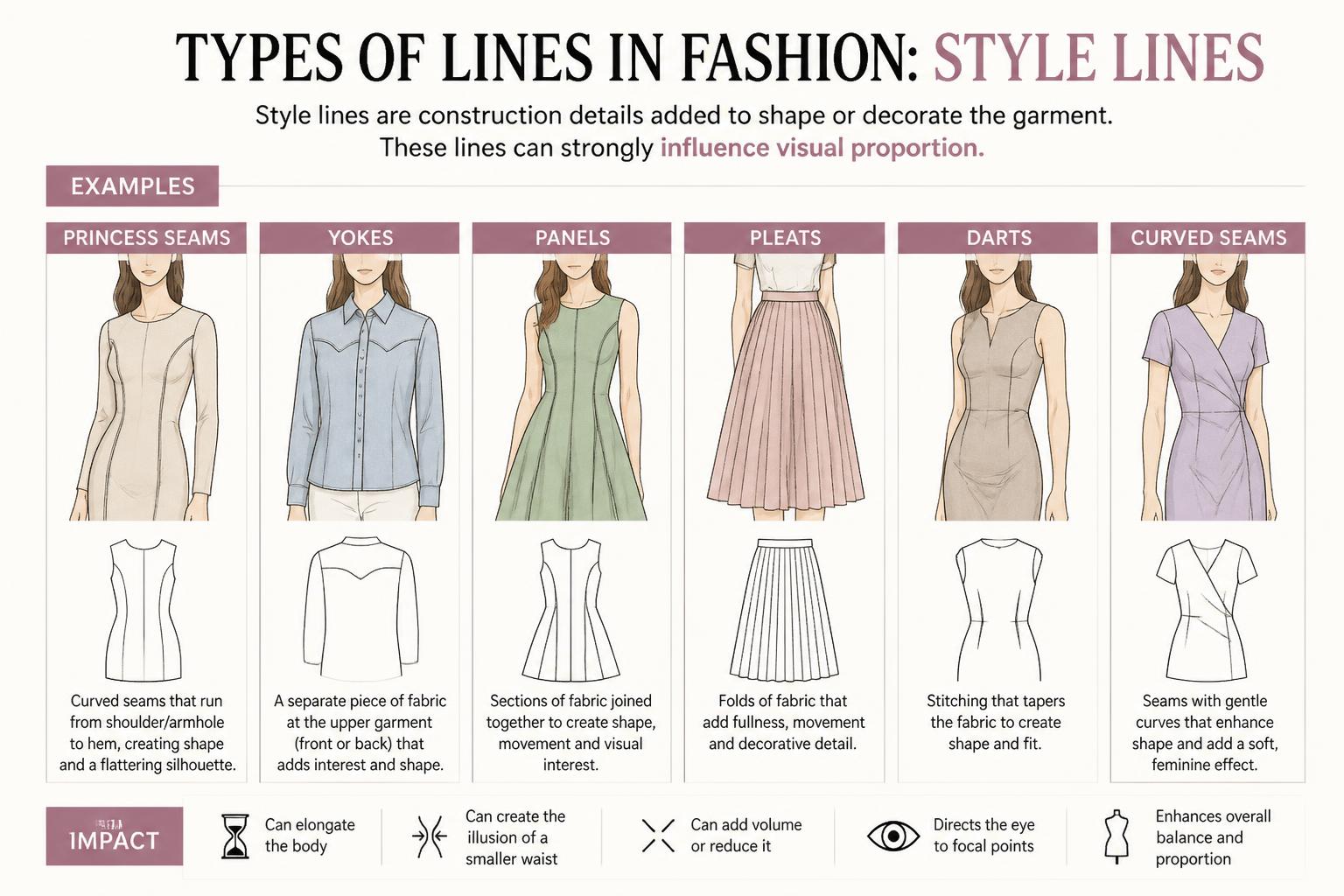
Style lines are construction details added to shape or decorate the garment.
=> Examples: Princess seams, Yokes, Panels, Pleats, Darts, Curved seams. These lines can strongly influence visual proportion.
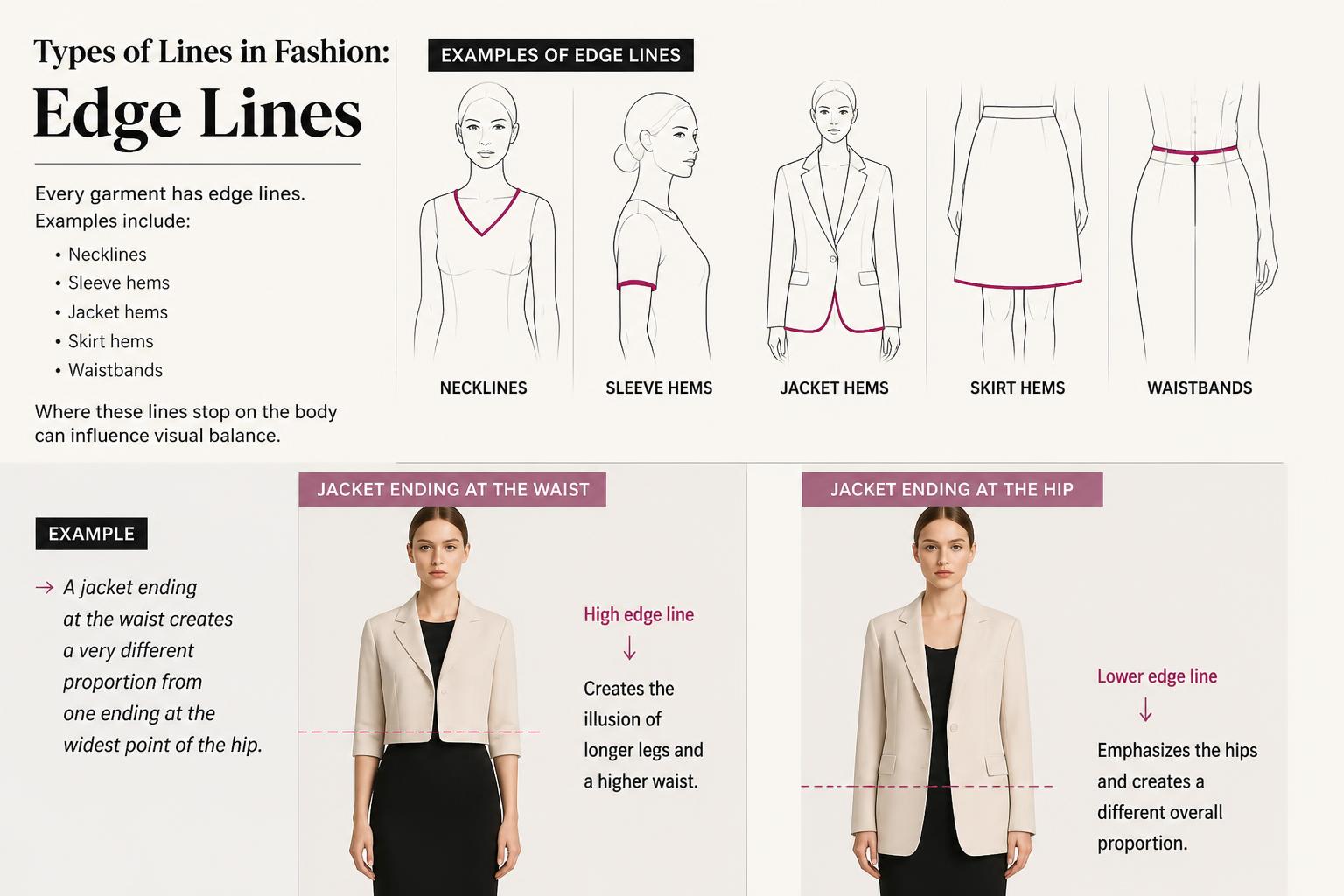
Edge Lines
Every garment has edge lines. Examples include:
- Necklines
- Sleeve hems
- Jacket hems
- Skirt hems
- Waistbands
Where these lines stop on the body can influence visual balance.
=> Example: a jacket ending at the waist creates a very different proportion from one ending at the widest point of the hip.
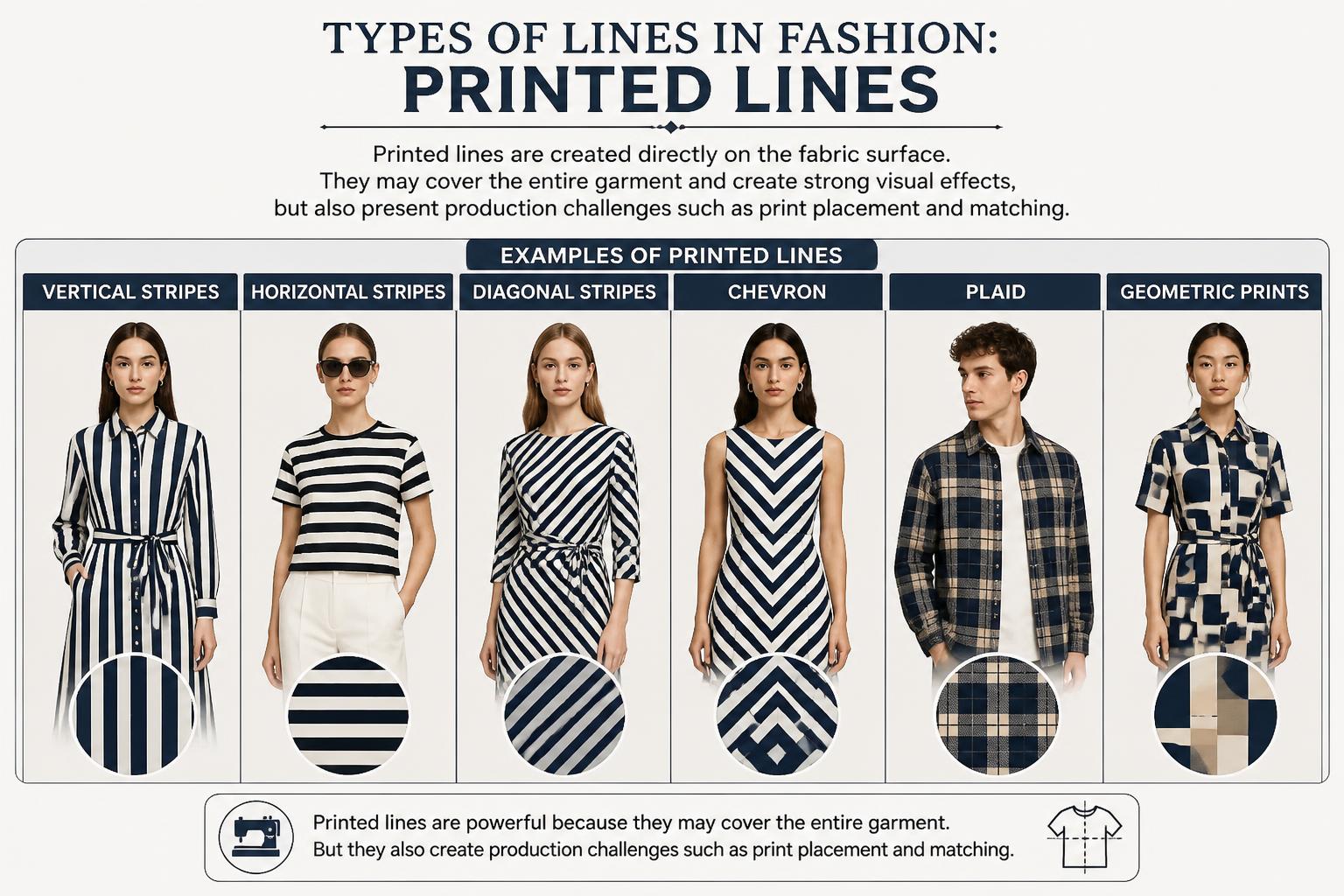
Printed Lines
Printed lines are created directly on the fabric surface. Examples include:
- Vertical stripes
- Horizontal stripes
- Diagonal stripes
- Chevron
- Plaid
- Geometric prints
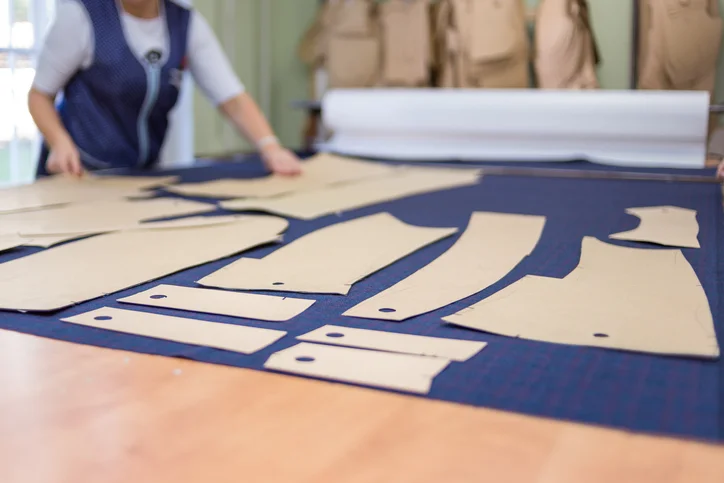
Printed lines are powerful because they may cover the entire garment. But they also create production challenges such as print placement and matching.
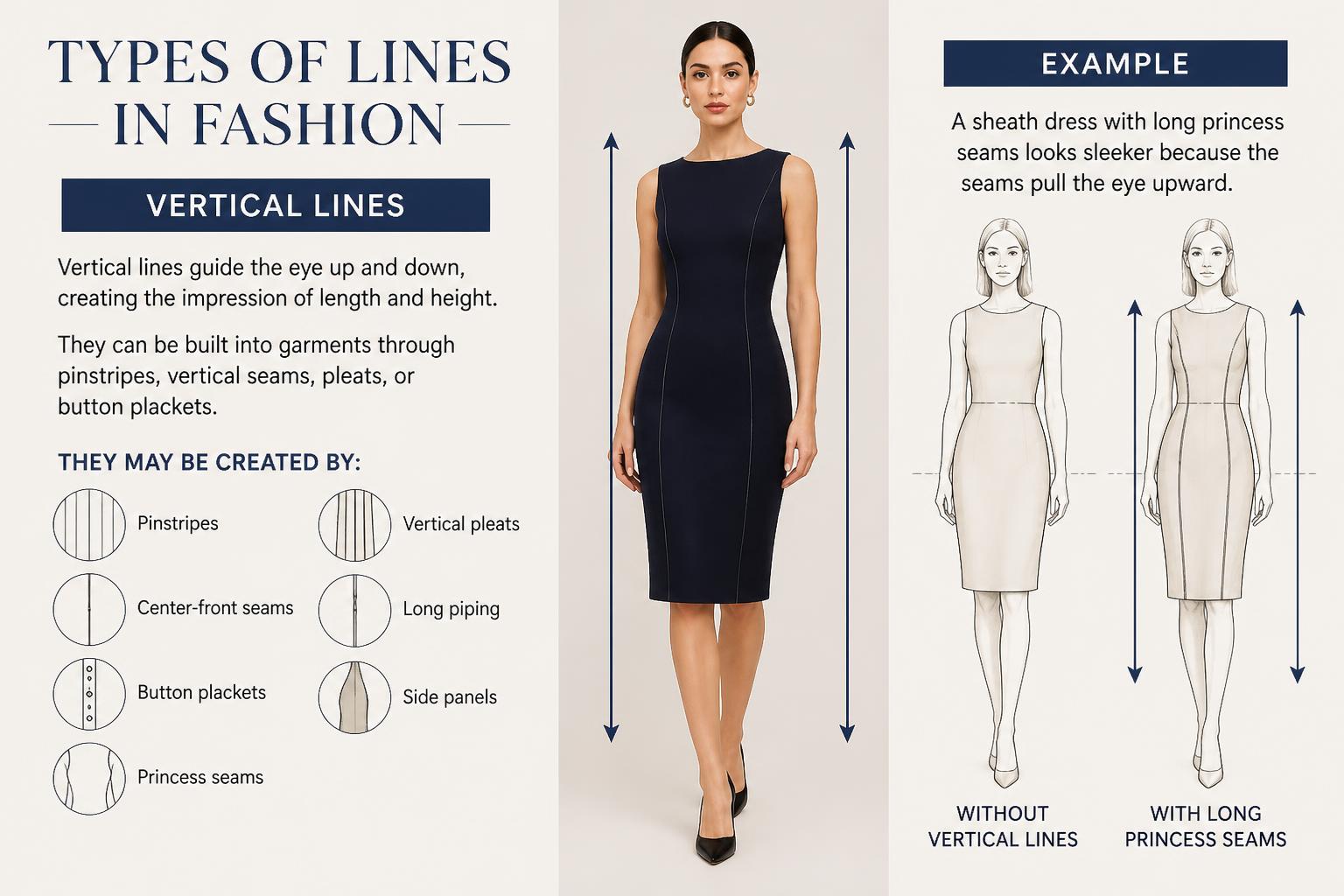
Vertical Lines (The Slimming Effect)
Vertical lines guide the eye up and down, creating the impression of length and height. They can be built into garments through pinstripes, vertical seams, pleats, or button plackets. They may be created by:
- Pinstripes
- Center-front seams
- Button plackets
- Princess seams
- Vertical pleats
- Long piping
- Side panels
=> Example: A sheath dress with long princess seams looks sleeker because the seams pull the eye upward.

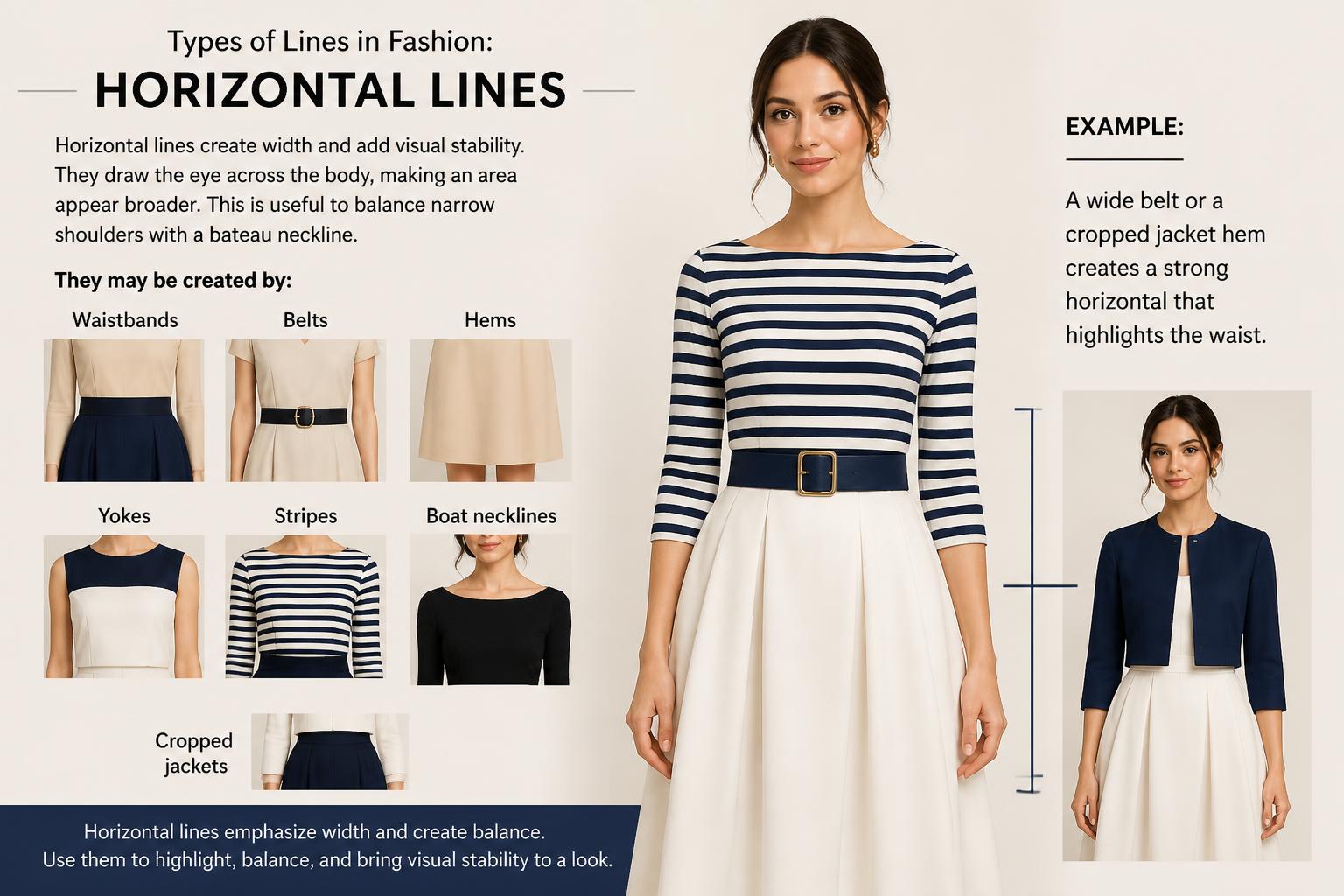
Horizontal Lines (The Balancing Effect)
Horizontal lines create width and add visual stability. They draw the eye across the body, making an area appear broader. This is useful to balance narrow shoulders with a bateau neckline. They may be created by:
- Waistbands
- Belts
- Hems
- Yokes
- Stripes
- Boat necklines
- Cropped jackets
=> Example: A wide belt or a cropped jacket hem creates a strong horizontal that highlights the waist.
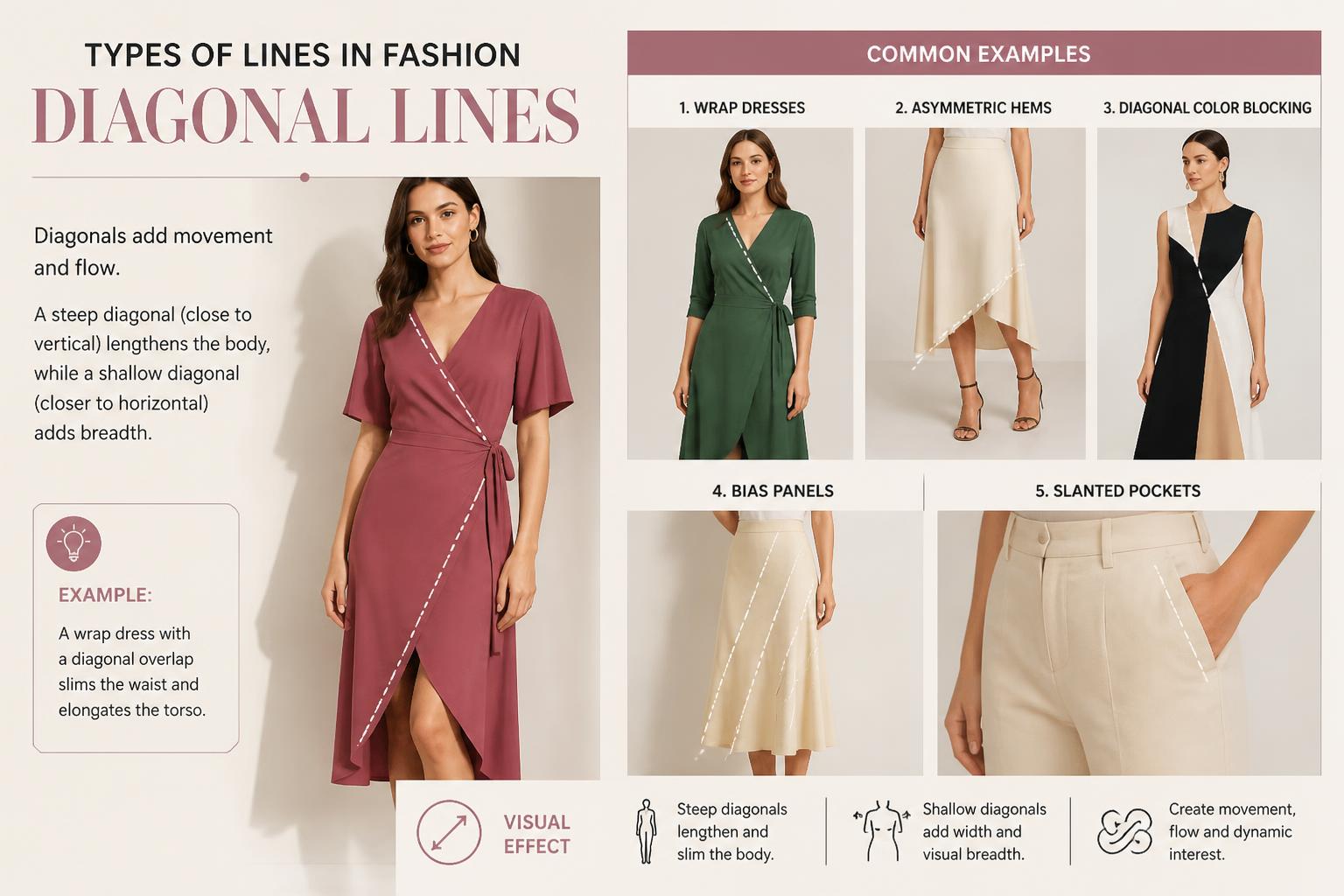
Diagonal Lines (The Dynamic Effect)
Diagonals add movement and flow. A steep diagonal (close to vertical) lengthens the body, while a shallow diagonal (closer to horizontal) adds breadth. Common examples include:
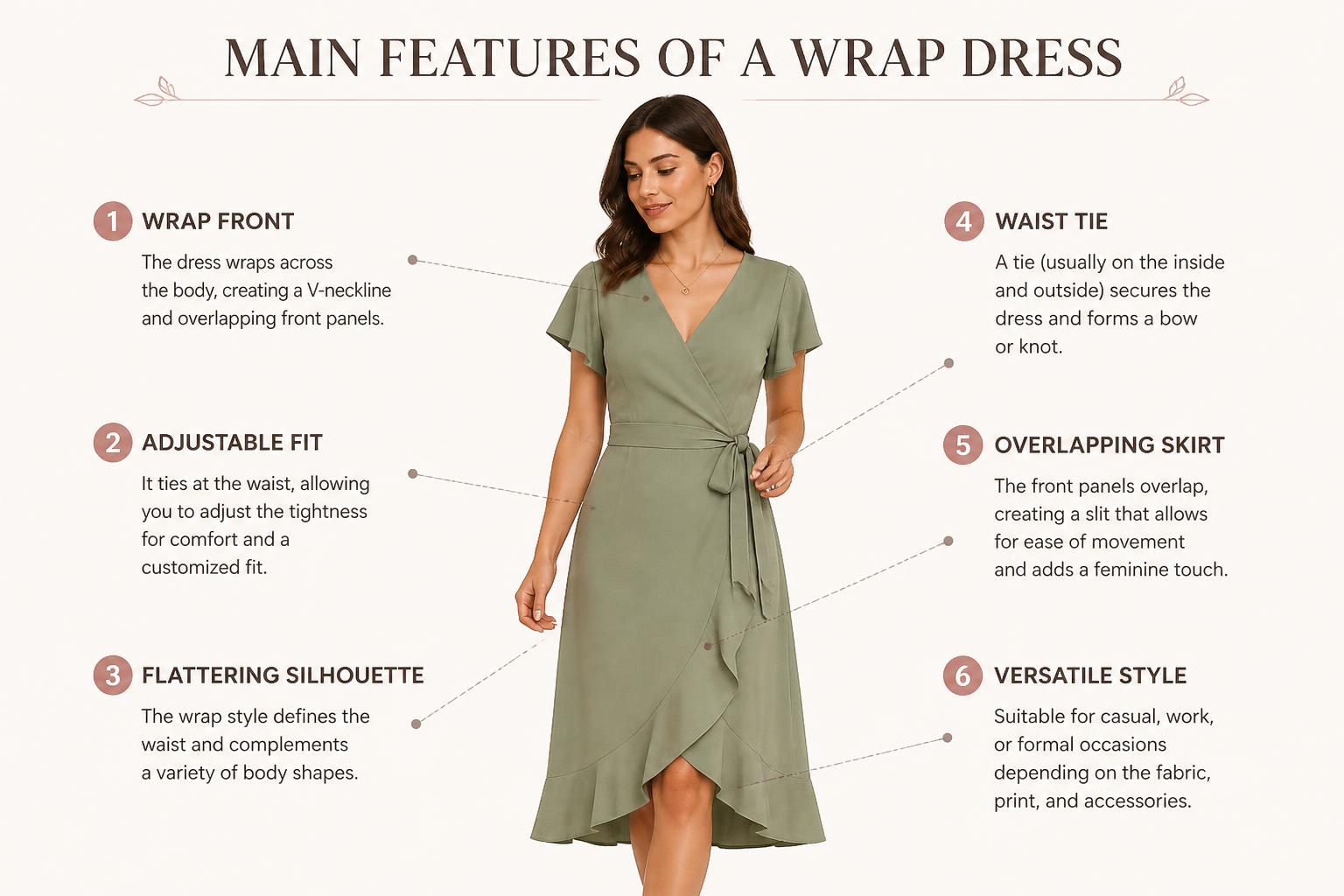
- Wrap dresses
- Asymmetric hems
- Diagonal color blocking
- Bias panels
- Slanted pockets
=> Example: A wrap dress with a diagonal overlap slims the waist and elongates the torso.
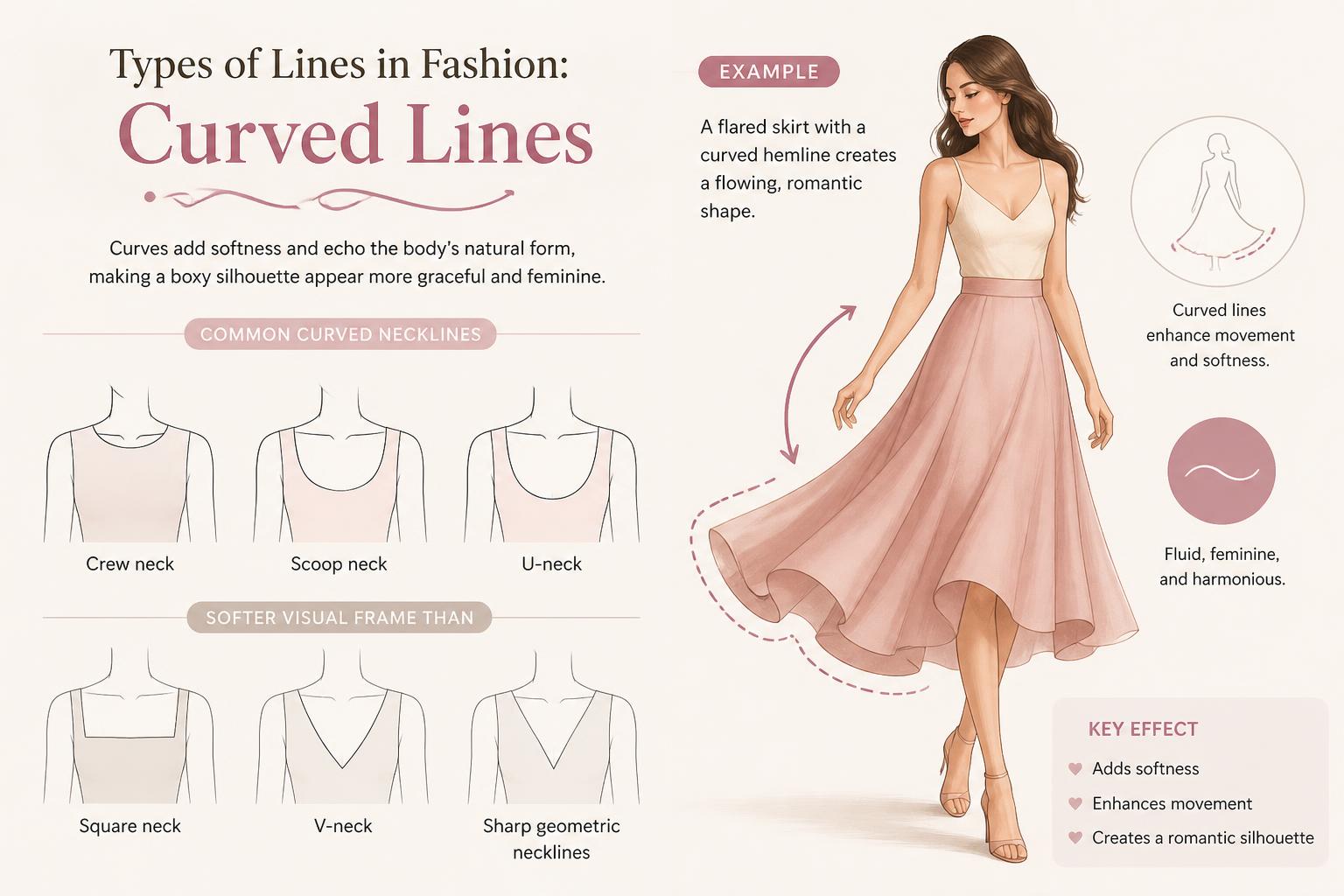
Curved Lines (The Graceful Effect)
Curves add softness and echo the body’s natural form, making a boxy silhouette appear more graceful and feminine. Common curved necklines include:
- Crew neck
- Scoop neck
- U-neck

These create a softer visual frame than:
- Square neck
- V-neck
- Sharp geometric necklines
=> Example: A flared skirt with a curved hemline creates a flowing, romantic shape.
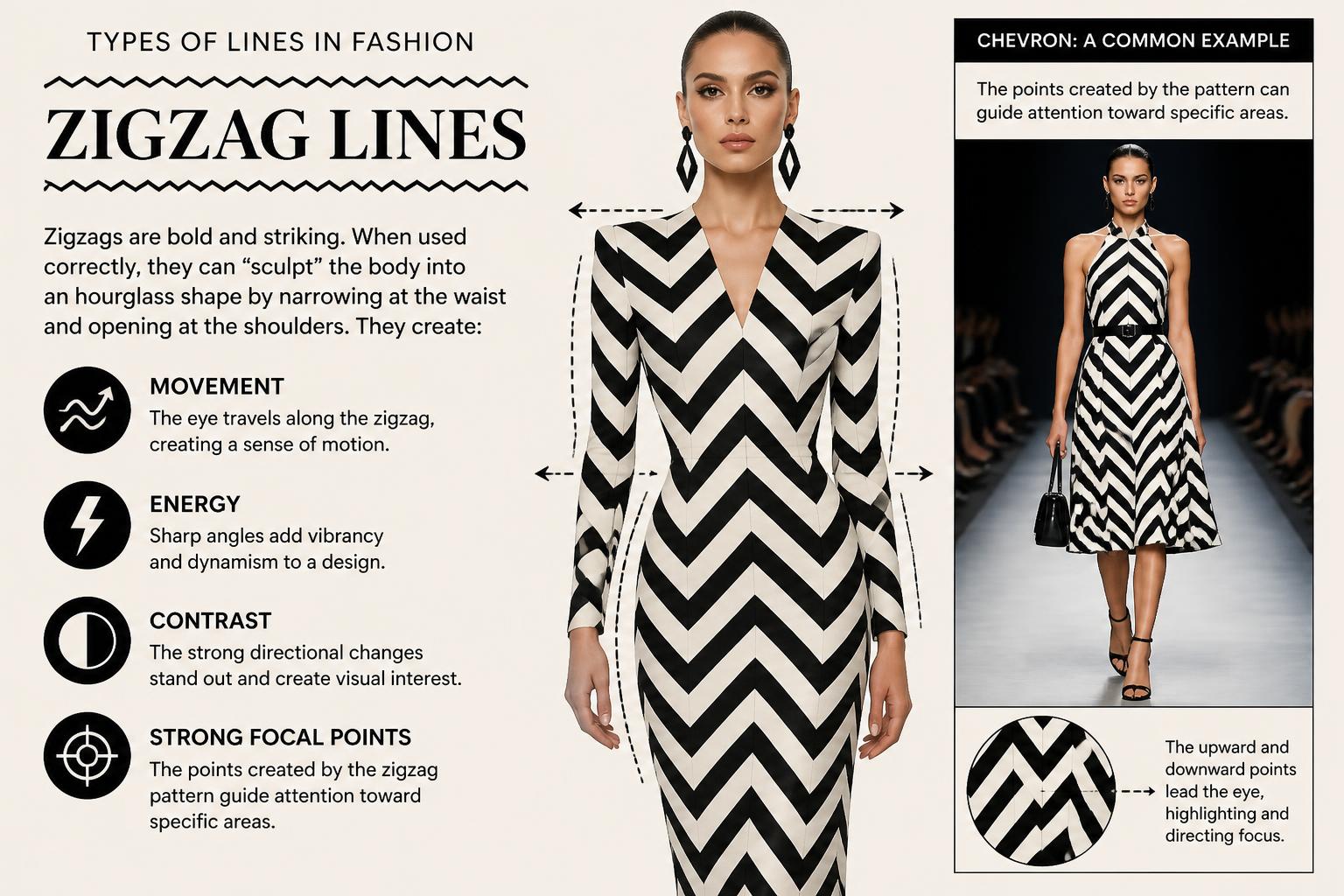
Zigzag Lines (The High-Energy Effect)
Zigzags are bold and striking. When used correctly, they can “sculpt” the body into an hourglass shape by narrowing at the waist and opening at the shoulders. They create:
- Movement
- Energy
- Contrast
- Strong focal points
Chevron is a common example. The points created by the pattern can guide attention toward specific areas.
How Lines Work Across Different Types of Clothing
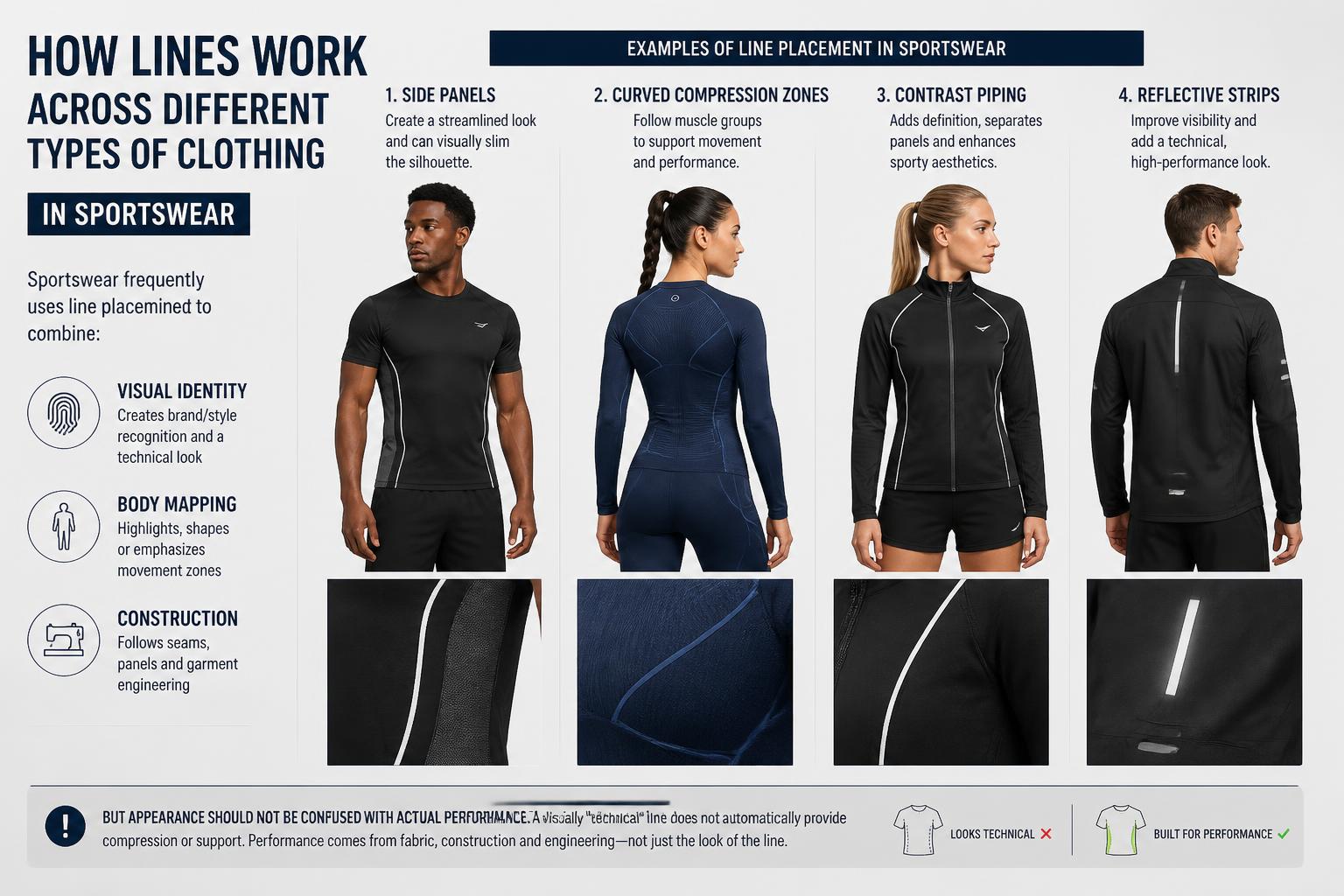
Lines in Sportswear
Sportswear frequently uses line placement to combine:
- Visual identity
- Body mapping
- Construction
Examples include:
- Side panels
- Curved compression zones
- Contrast piping
- Reflective strips
But appearance should not be confused with actual performance. A visually “technical” line does not automatically provide compression or support.
Lines in Workwear
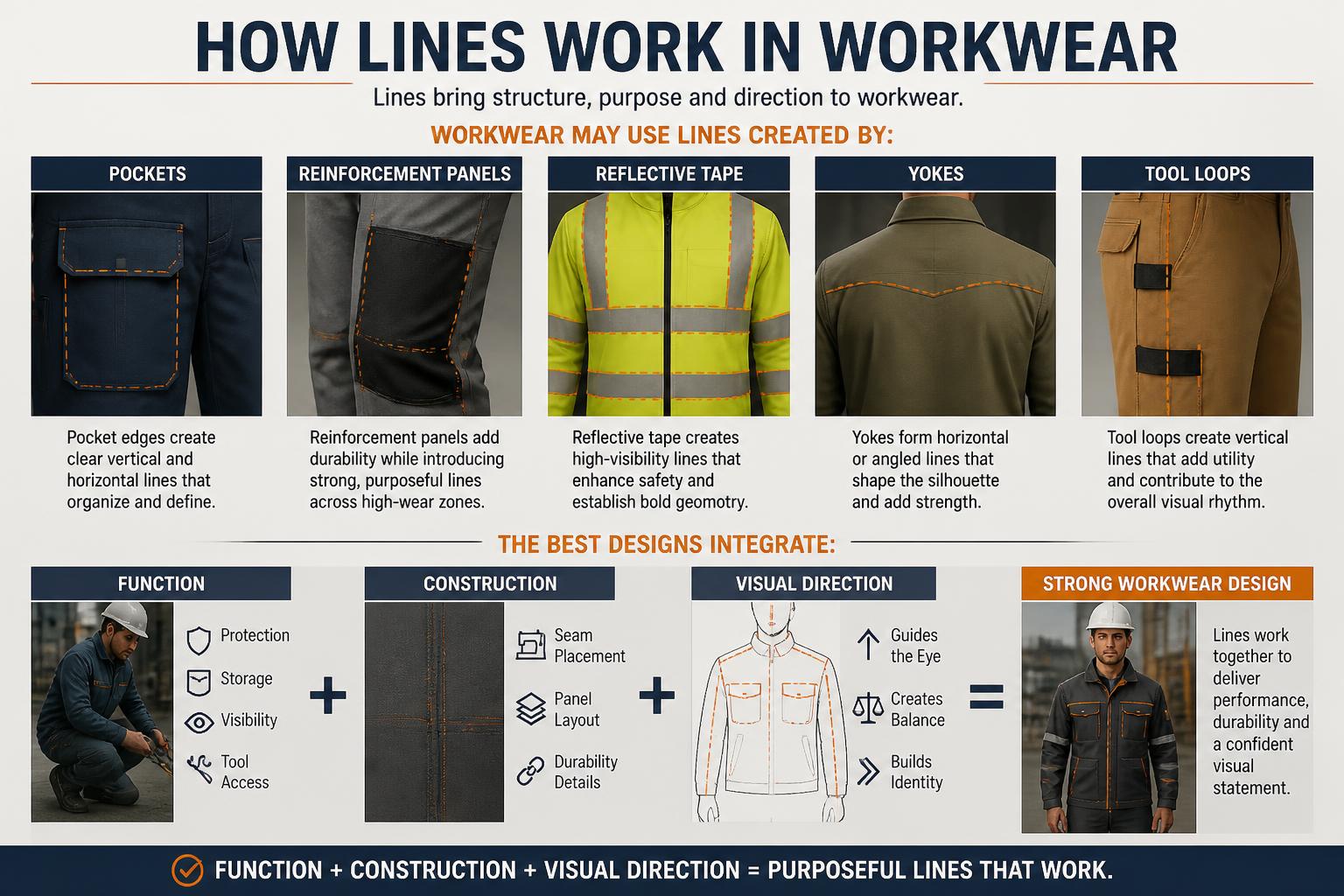
Workwear may use lines created by:
- Pockets
- Reinforcement panels
- Reflective tape
- Yokes
- Tool loops
These often serve both functional and visual roles. The best designs integrate: Function + Construction + Visual Direction.
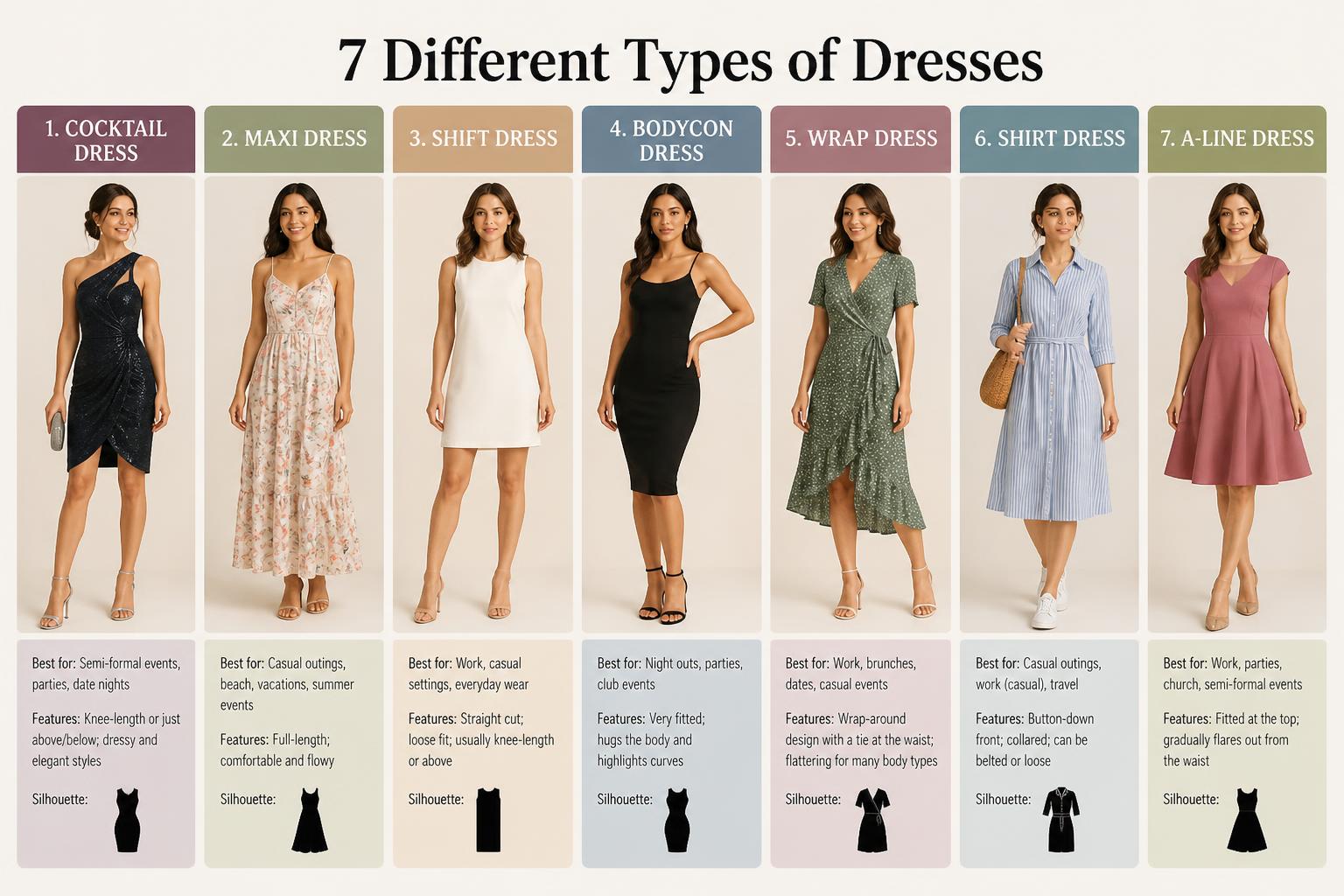
Lines in Dresses
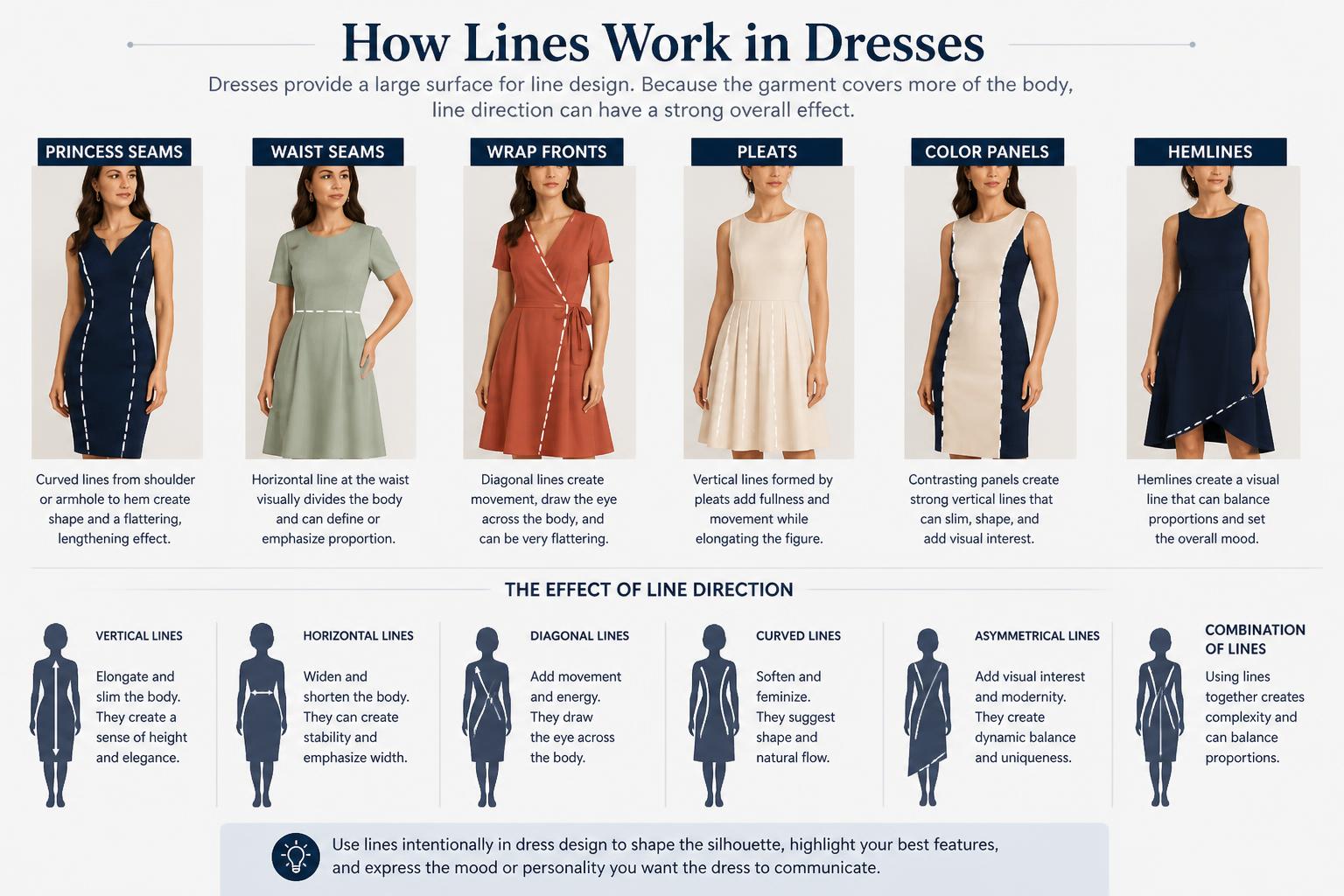
Dresses provide a large surface for line design. Common tools include:
- Princess seams
- Waist seams
- Wrap fronts
- Pleats
- Color panels
- Hemlines
Because the garment covers more of the body, line direction can have a strong overall effect.
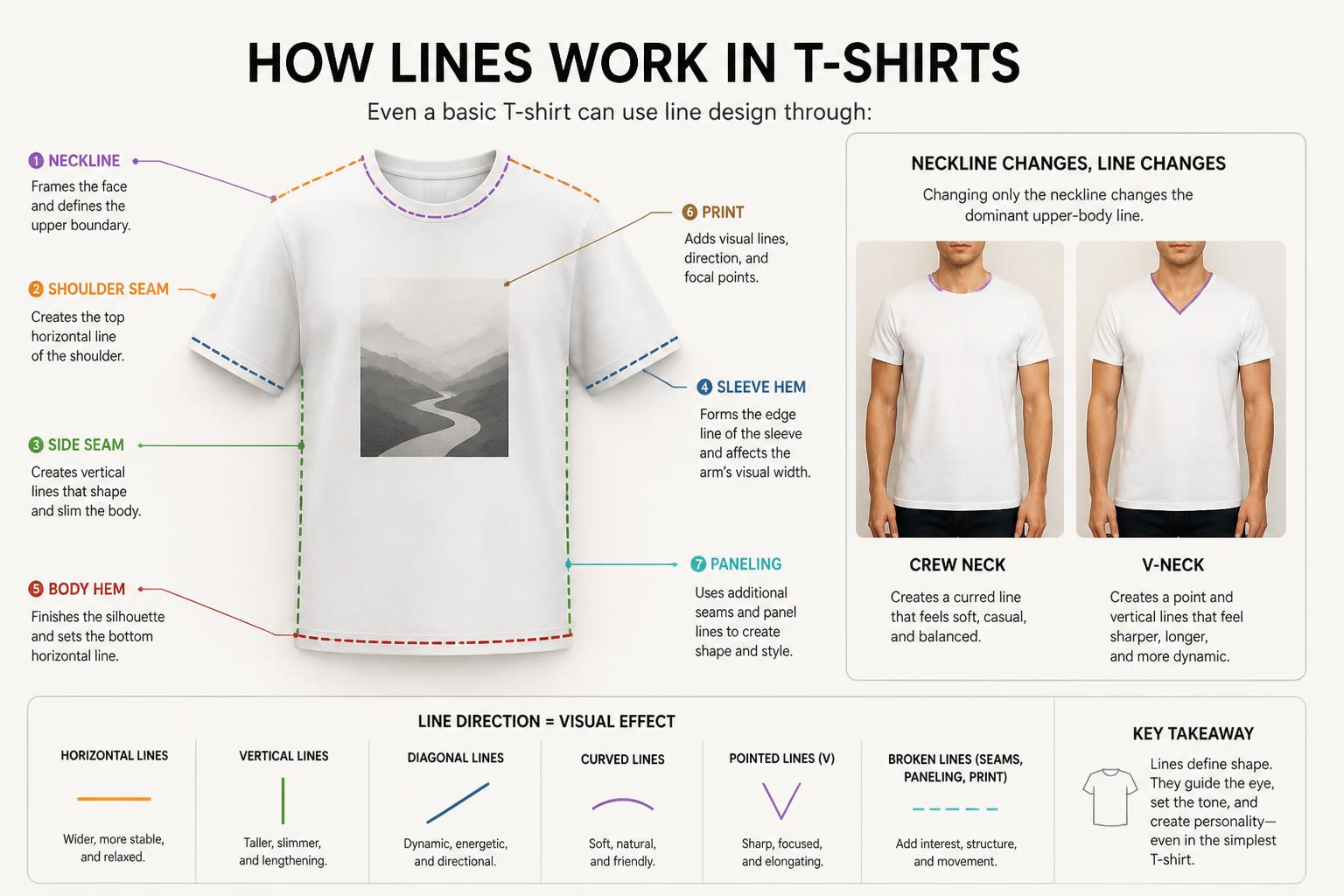
Lines in T-Shirts
Even a basic T-shirt can use line design through:
- Neckline
- Shoulder seam
- Side seam
- Sleeve hem
- Body hem
- Paneling
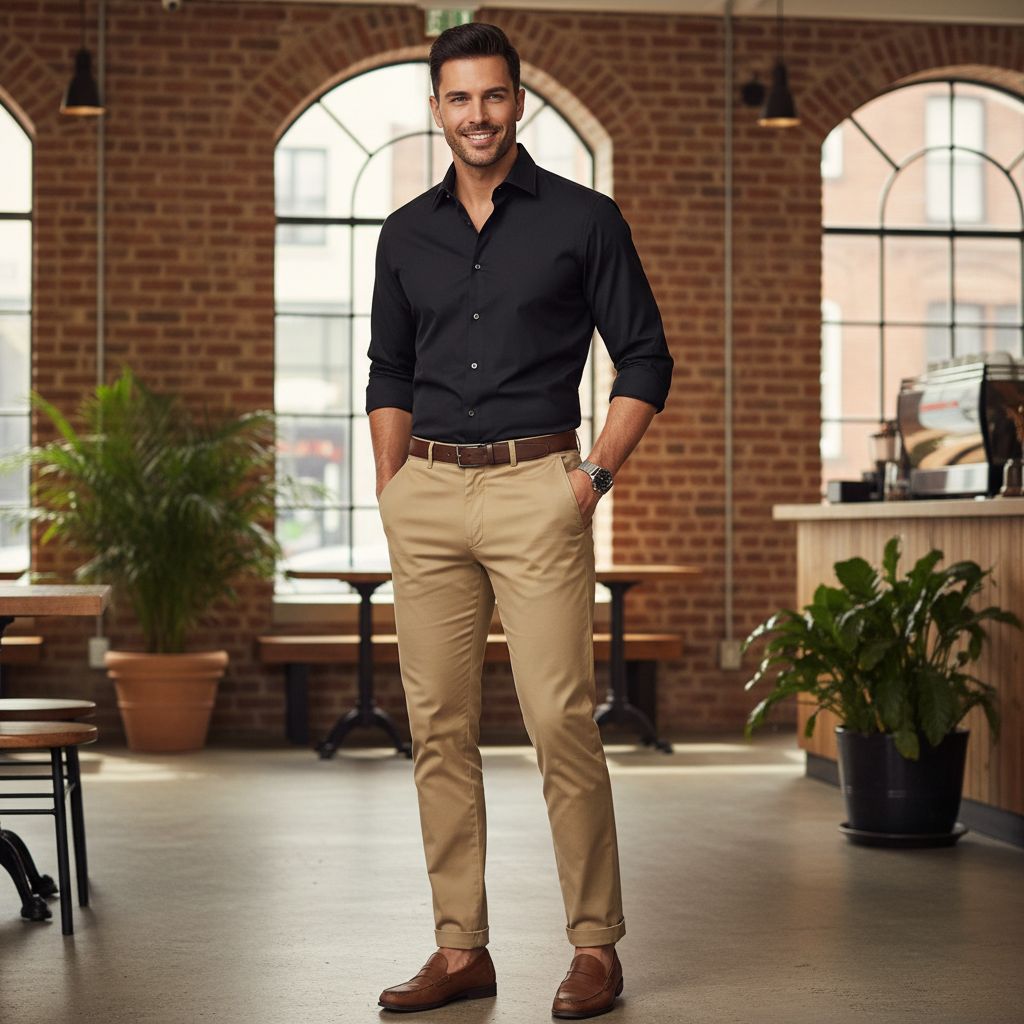
For example, changing only the neckline from crew to V-neck changes the dominant upper-body line.
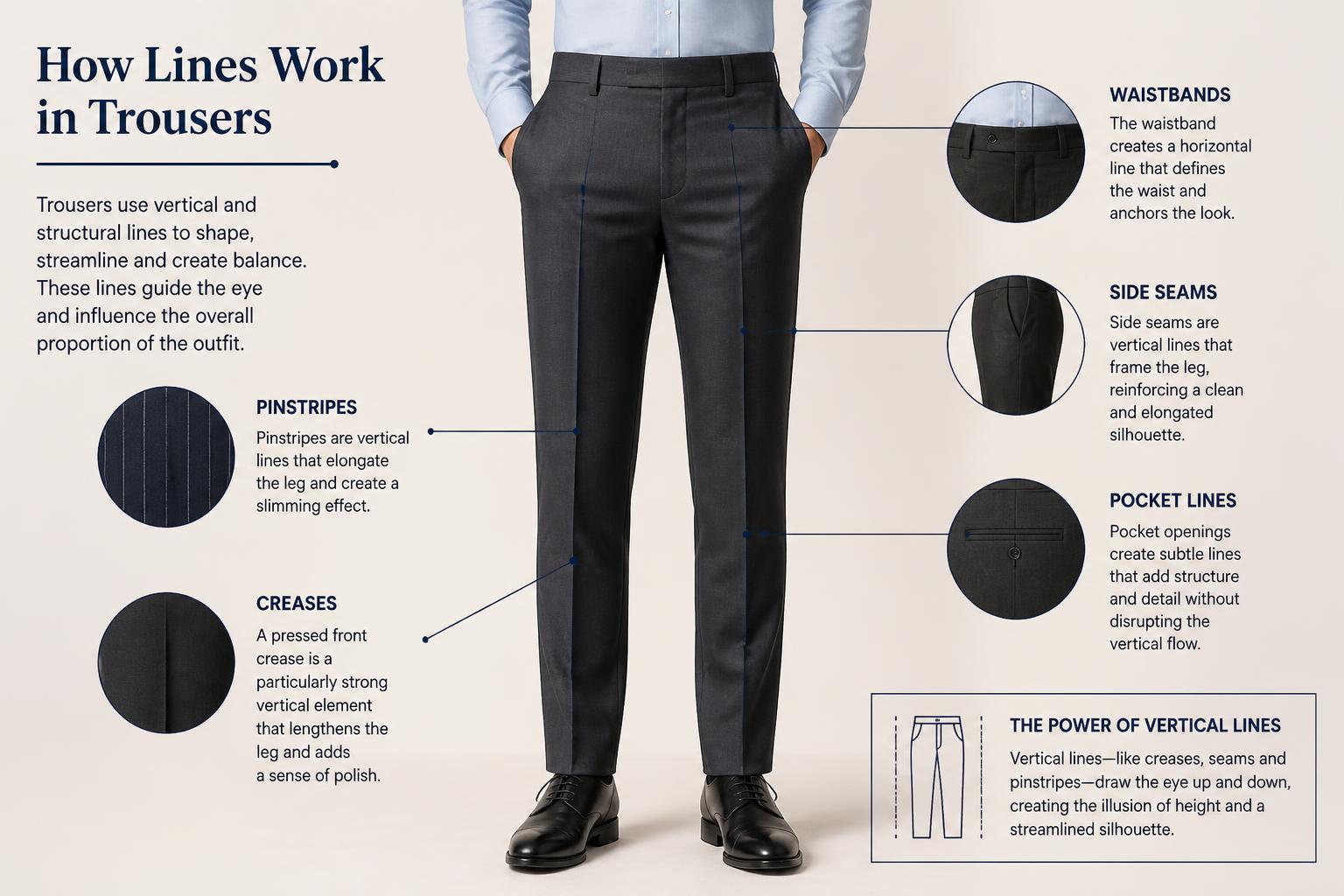
Lines in Trousers
Trousers commonly use:
- Creases
- Side seams
- Pinstripes
- Pocket lines
- Waistbands
A pressed front crease is a particularly strong vertical element.
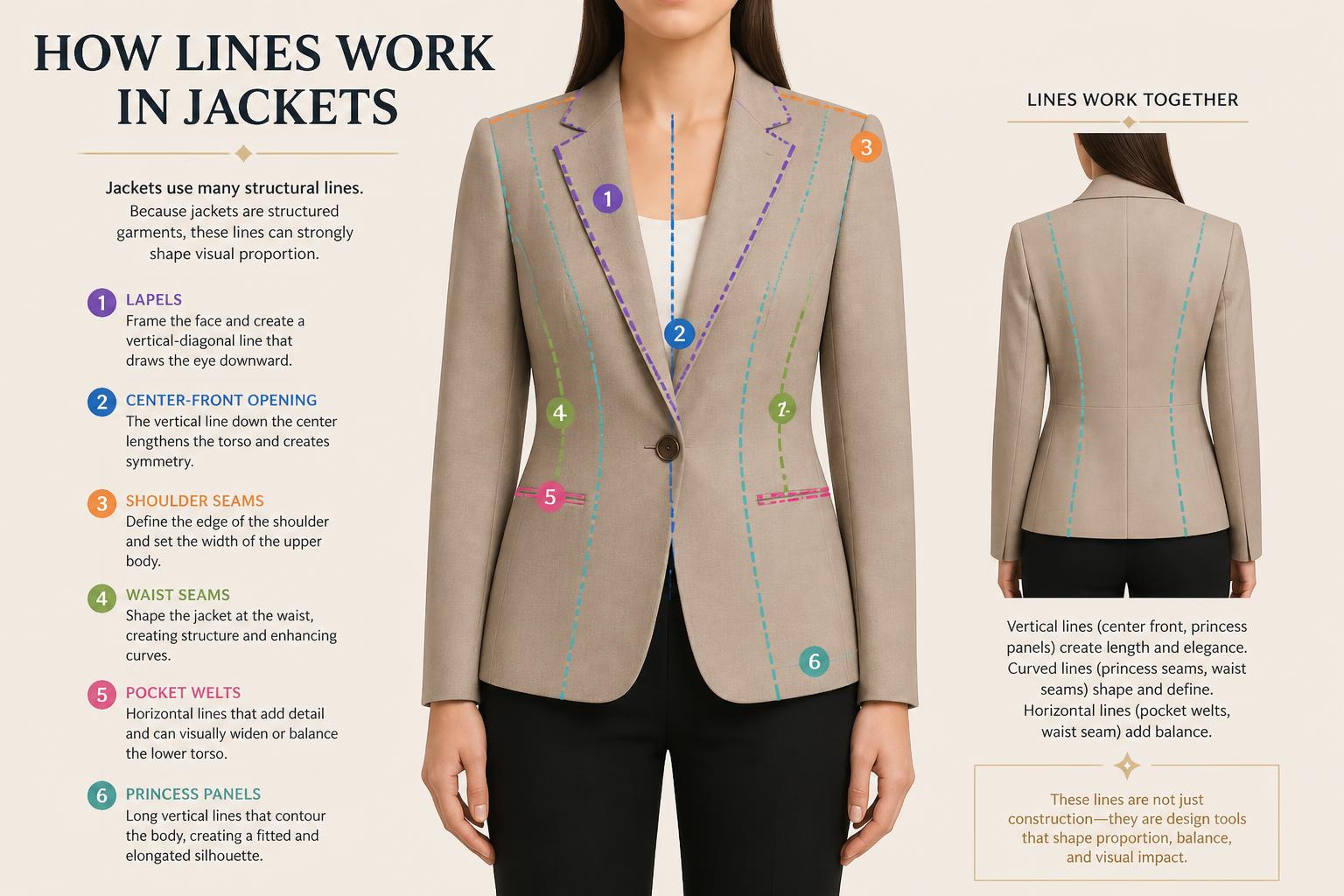
Lines in Jackets
Jackets use many structural lines:
- Lapels
- Center-front opening
- Shoulder seams
- Waist seams
- Pocket welts
- Princess panels
Because jackets are structured garments, these lines can strongly shape visual proportion.
A Quick Guide to Using Lines
- To create height: Use vertical seams, pleats, or V-necks.
- To add width: Try horizontal yokes, wide waistbands, or bateau necklines.
- To define the waist: Place converging style lines or inward-pointing chevrons.
- To add drama: Use diagonals or zigzag patterns with strong contrast.
Common Line-Design Problems
| Problem | Possible Cause |
|---|---|
| Vertical line looks crooked | Cutting or sewing distortion |
| Stripe shifts between sizes | Poor grading |
| Side panels look uneven | Pattern or sewing variation |
| Horizontal line dips | Garment balance problem |
| Diagonal loses angle | Incorrect grading |
| Stripe mismatch | Cutting / matching issue |
| Line changes after wash | Shrinkage or twisting |
| Color block puckers | Fabric compatibility issue |
A single visible problem may have several causes.
Conclusion / Final Words
Lines are simple but powerful tools. By using verticals, horizontals, diagonals, and curves with care, designers can create clothes that feel balanced and timeless. At Mekong Garment, we turn these small details into big results for your collection.