How to Design the Perfect T-Shirts for Summer Camps (step by step guides)

A summer camp t-shirt is more than “matching shirts.” It’s a badge that says, “I was there.” The best camp tees get worn long after camp ends because they’re comfortable, look cool, and bring back memories. But here’s the pushback: most camp shirts fail because they’re designed like event uniforms, not like something people choose to wear. This guide shows you how to design a camp t-shirt that campers love, staff actually wear, and parents don’t complain about after one wash.
Start With One Clear Idea (Not 10)

Think about the camp shirts you’ve actually kept. They weren’t packed with details. They had one simple message that instantly brought the whole summer back. That’s the goal. Before you pick fonts or colors, lock in one main idea your camp wants to be remembered for adventure, friendship, growth, or “we survived this together.” One clear idea makes everything else easier and better.

Before fonts and colors, decide what the shirt is really saying. Ask these three quick questions:

  • What is this camp about? (adventure, leadership, sports, arts, faith, STEM…)
  • What’s the vibe? (funny, brave, cozy, intense, “we survived,” friendly…)
  • What memory should the shirt trigger later? (campfire nights, a big hike, winning a tournament, new friends)

=> Pro tip: Pick one main message. If you try to show everything (camp name, 6 icons, 3 slogans, 2 logos), the design turns into clutter.

Choose a Theme That’s Easy to “See”

A camp theme shouldn’t need a paragraph to explain. If people can’t see it in their head right away, it won’t translate well onto a shirt. The best themes are visual and simple, so one icon, one scene, or one symbol can tell the whole story at a glance. Pick a theme that instantly screams “this camp,” even to someone who’s never been there.

A good camp theme is visual. You can “picture it” fast. – Here are strong theme lanes:

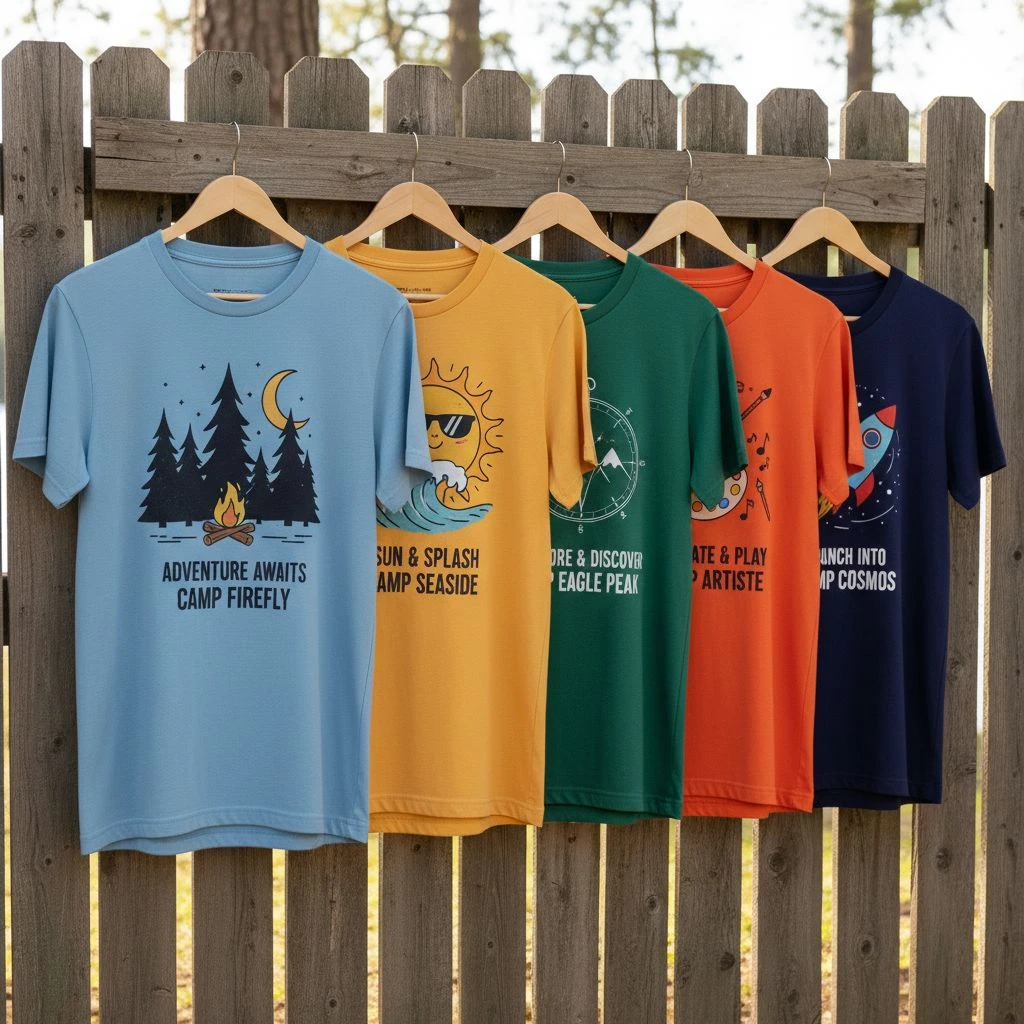
  • Adventure / Outdoor: mountains, compass, trail markers, campfire, tents
  • Water / Beach: waves, sun, paddle, lifeguard-style icons
  • Sports Camp: jersey numbers, bold stripes, athletic badges
  • Leadership Camp: crest, shield, torch, “class of” identity
  • Arts Camp: brush strokes, stage lights, music notes, playful shapes
  • STEM Camp: rockets, circuits, pixel icons, clean futuristic lines

=> Challenge your idea: If your theme needs a long explanation, it’s probably too complicated for a t-shirt.

Build the Design Like a Real Brand Shirt

Here’s the uncomfortable truth: most camp shirts look like they were designed by committee. Too many logos. Too much text. Too much “information.” Real brands don’t design that way. They focus on strong placement, confident simplicity, and wearable style. If you want your camp tee to feel premium, start thinking like a clothing brand, not an event organizer.

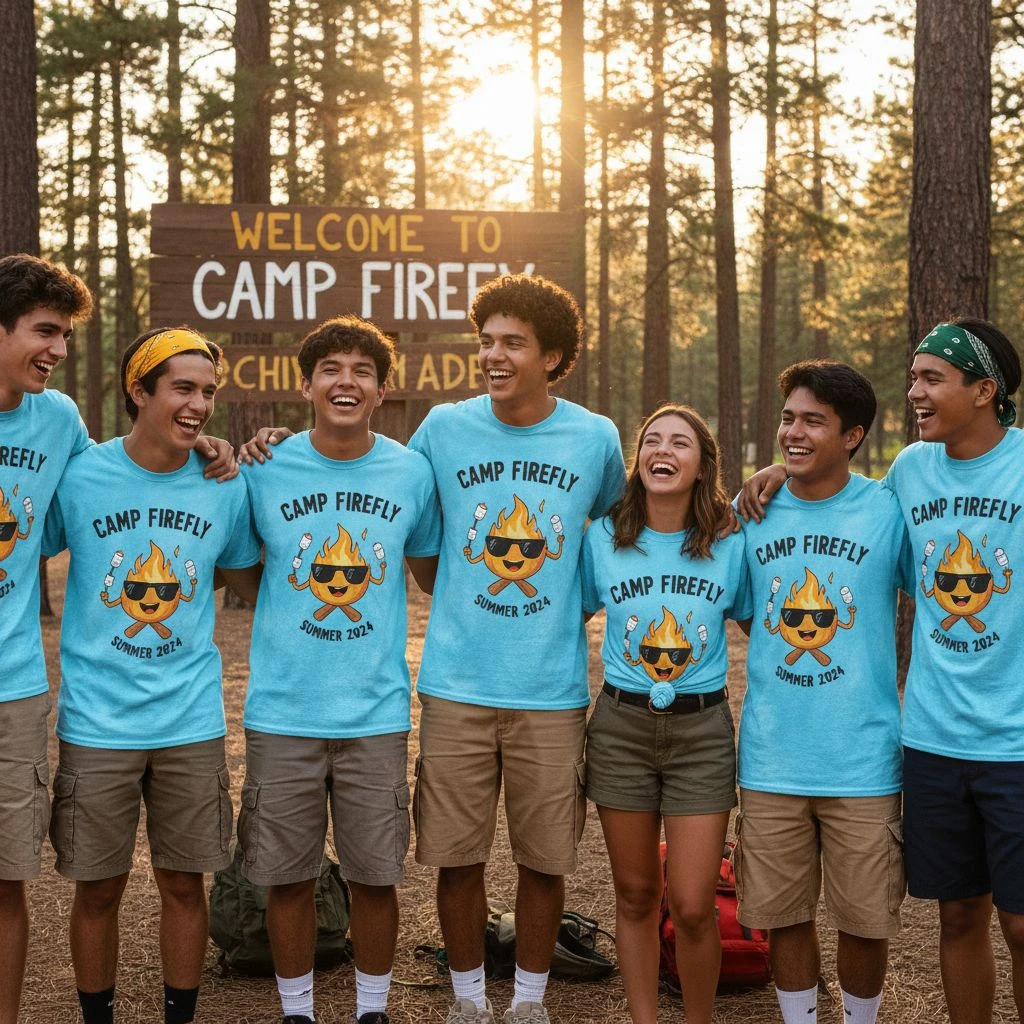
You want campers to wear it at school, not only at camp. That means it should look like a tee from a cool store. The best layout formula – Small front + strong back:

  • Front: small left-chest logo or badge (clean and wearable)
  • Back: the “main moment” graphic (where the fun goes)

This feels modern and makes the shirt easier to wear anywhere.

Other layouts that work

  • Big center front graphic: classic, bold, easy to recognize
  • Sleeve print: subtle and premium (great for staff shirts)
  • Pocket print + back print: stylish and balanced

=> Avoid this common mistake: Huge front + huge back + sleeve + quotes everywhere = too busy.

Typography That Matches the Camp (And Stays Readable)

Here’s where many camp shirts go wrong: they pick a “fun” font that looks exciting on screen but becomes messy on fabric. Swirly scripts, ultra-thin letters, or overly decorative styles may look creative, but they often print poorly and lose impact from a distance. Typography should match the camp’s vibe yes but it also has to stay bold, clean, and easy to read in real life.

Fonts set the mood fast. Choose based on camp vibe:

  • Rustic / Nature camps: rough serif, stamped, hand-lettered (simple)
  • Sports camps: bold sans, varsity, block lettering
  • Modern youth camps: clean sans, minimal caps, subtle spacing
  • Kids camps: friendly rounded fonts (but don’t make it baby-ish)

Typography rules that save you:

  • Don’t use more than 2 fonts
  • Make sure it’s readable from 10 feet away
  • Avoid super thin fonts (they print poorly and fade faster)

Colors That Look Good on Fabric (Not Just on Screen)

Colors that look amazing on a laptop can look totally different on a real t-shirt. Fabric absorbs ink, lighting changes everything, and some “cute” color combos turn muddy or dull once printed. That’s why choosing camp shirt colors isn’t just about what looks nice—it’s about what stays bright, readable, and wearable after sun, sweat, and lots of washes.

Camp shirts live in sunlight, sweat, and laundry. Choose colors that stay good in real life. Smart color strategies:

  • 2–3 ink colors max (cleaner + cheaper + more durable)
  • High contrast (light ink on dark shirt or vice versa)
  • Use camp colors, but don’t force them if they look ugly on fabric

Shirt color ideas that work well for camps:

  • Outdoor: forest green, sand, charcoal, navy
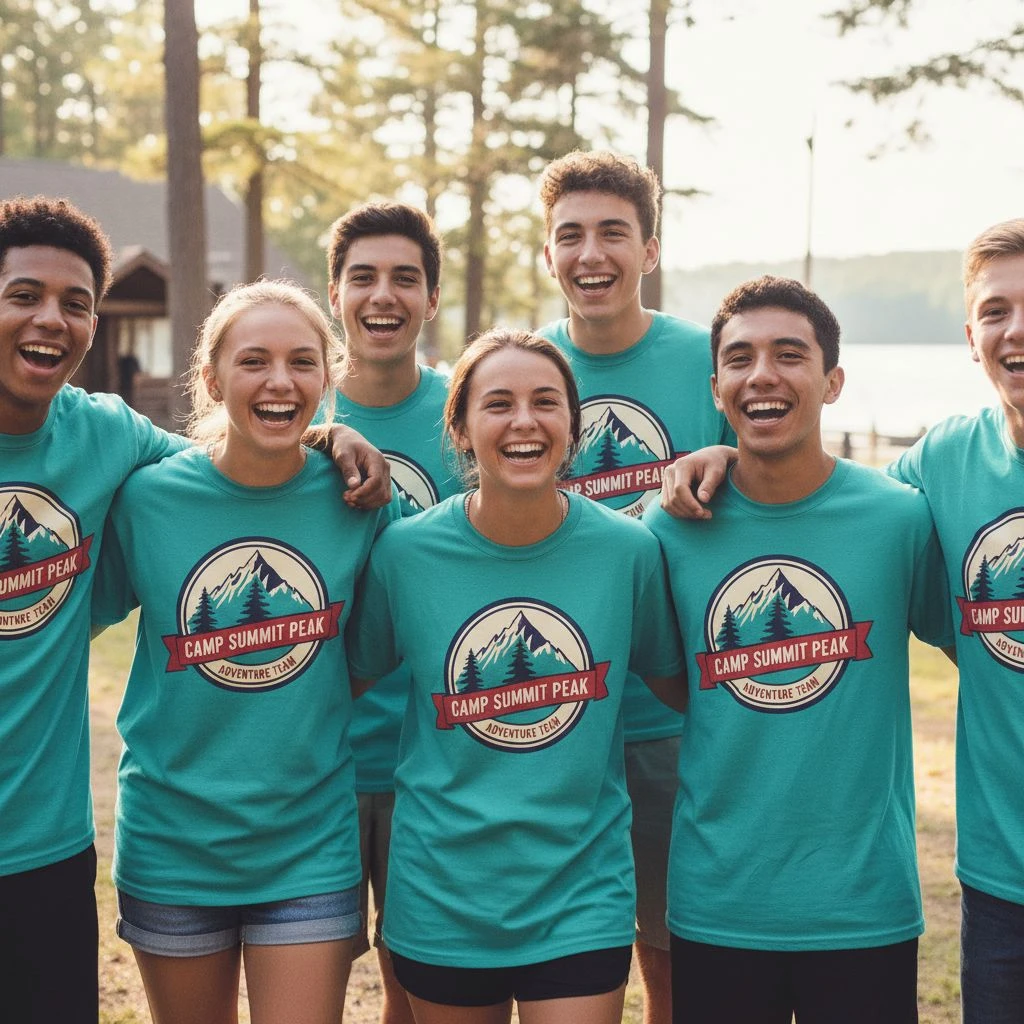
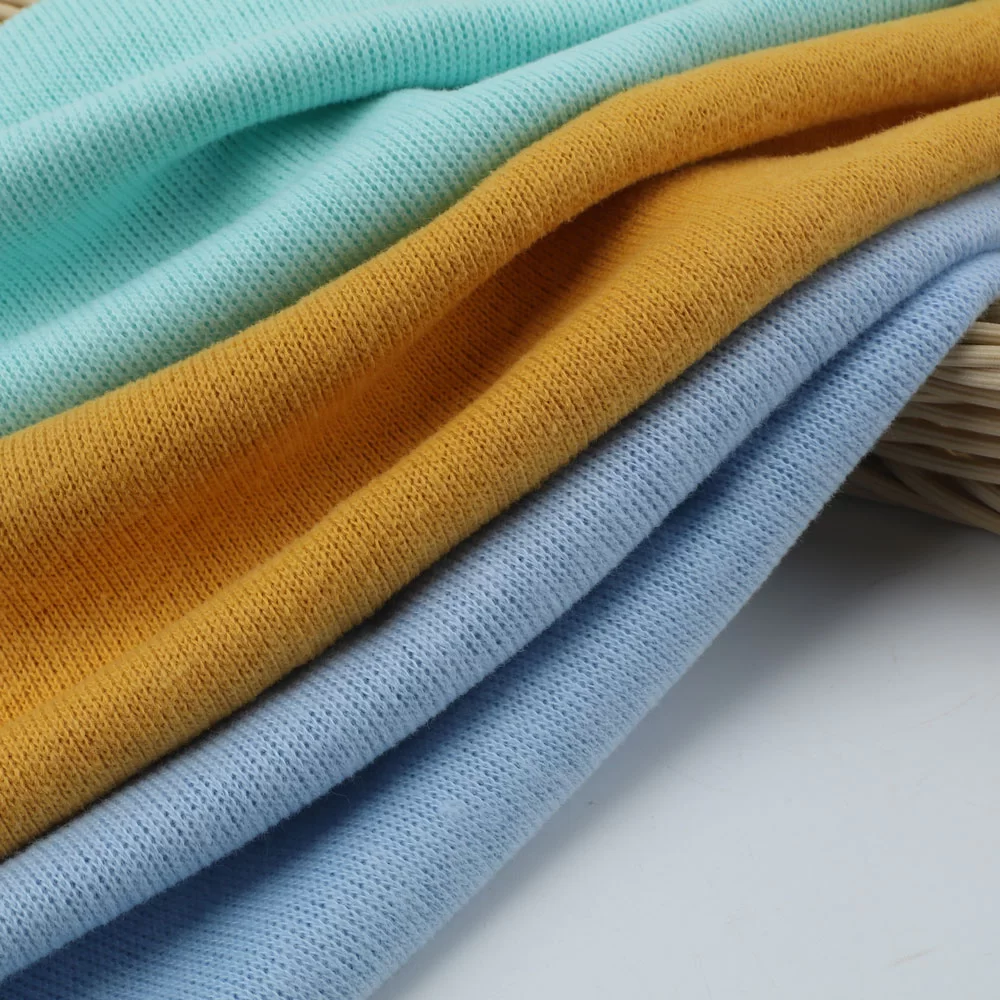
  • Youth fun: bright blue, teal, coral, sunshine yellow
  • Leadership: black, navy, heather grey (more “premium”)
  • Water camps: light blue, seafoam, white, navy

=> Notes: Bright neon looks fun… until it fades fast and people stop wearing it.

Graphics: Pick a Style That Fits Your Camp Identity

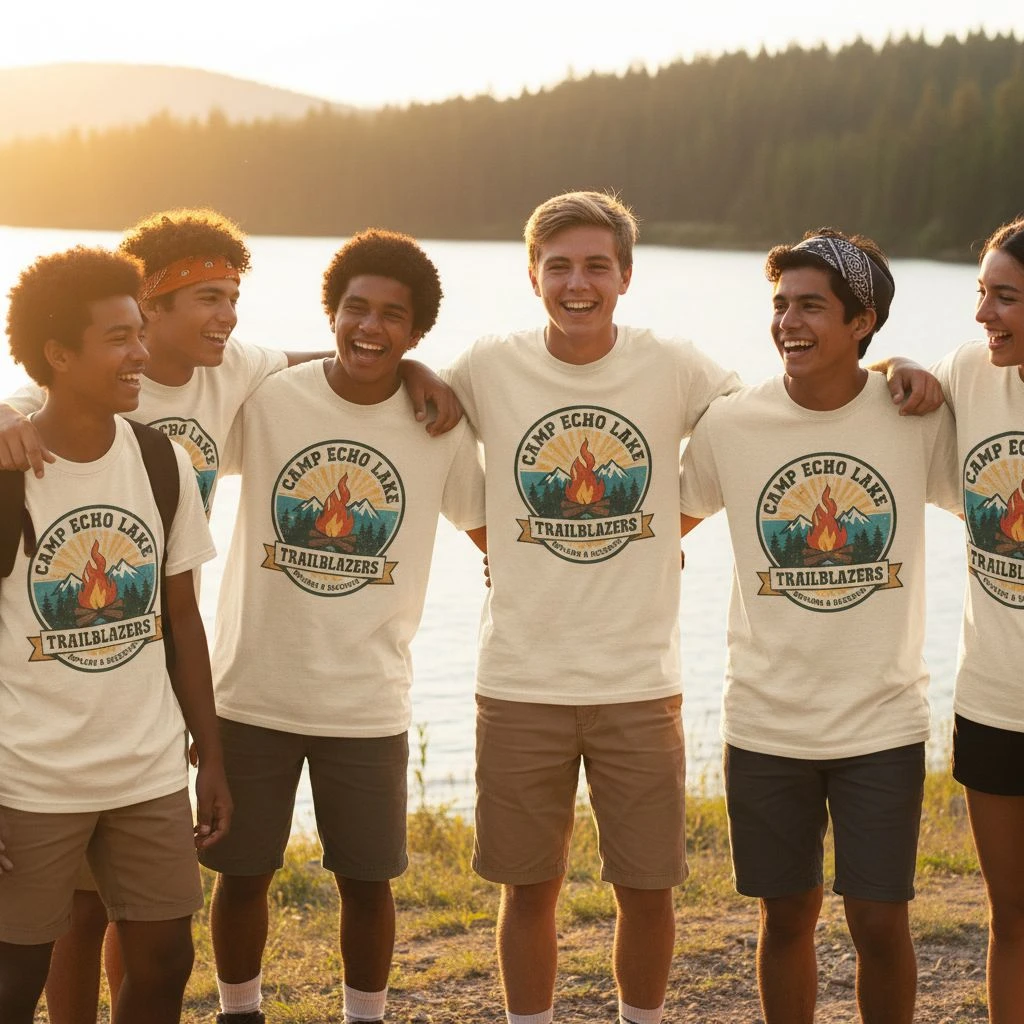
Graphics are usually the first thing people notice on a camp shirt so they need to instantly match what your camp is about. A nature camp can feel rugged and outdoorsy with badge-style art or vintage park posters. A sports camp might look best with bold, athletic icons. The key is choosing one graphic style and sticking to it. When the style is consistent, the shirt looks intentional instead of random.

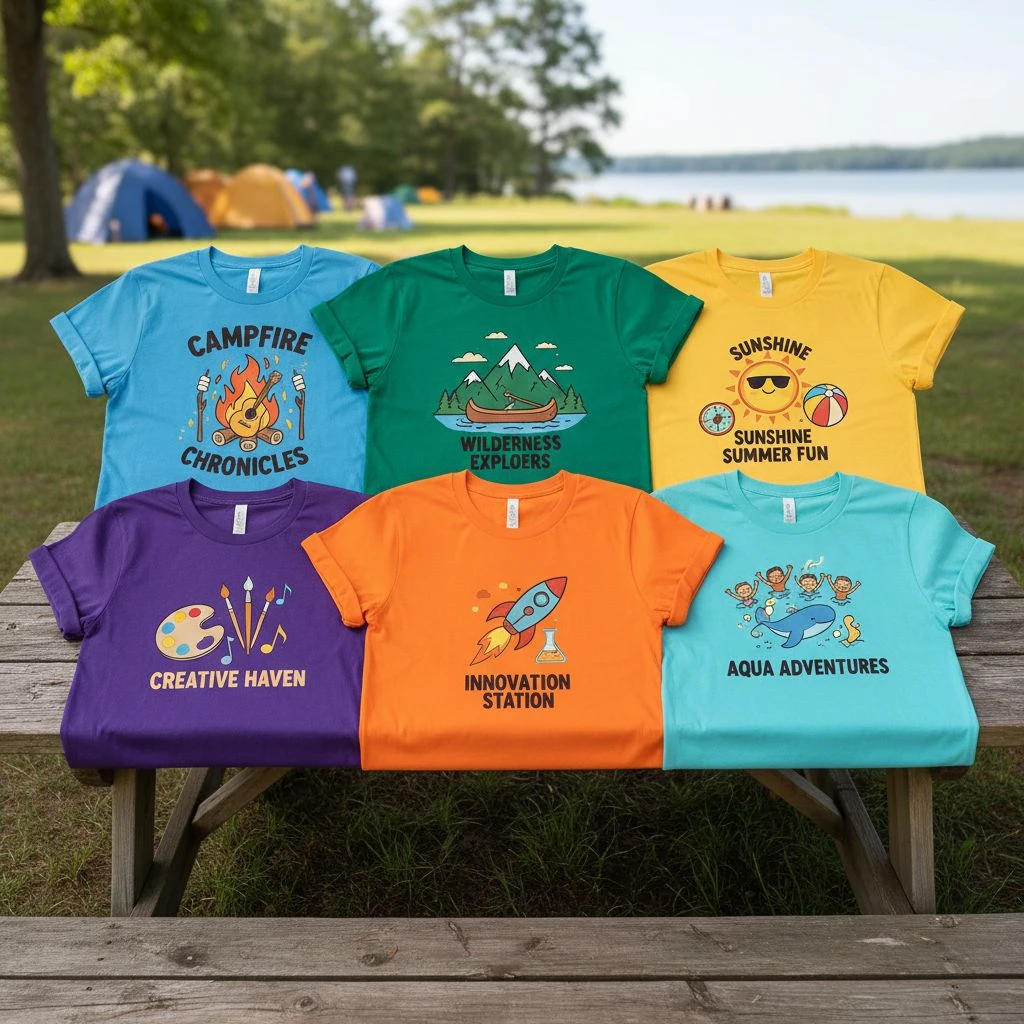
Your illustration style matters as much as the subject. Popular styles for camp tees:

  • Badge / patch style: looks official + timeless
  • Vintage outdoors: “national park poster” vibe
  • Minimal line art: trendy, clean, wearable
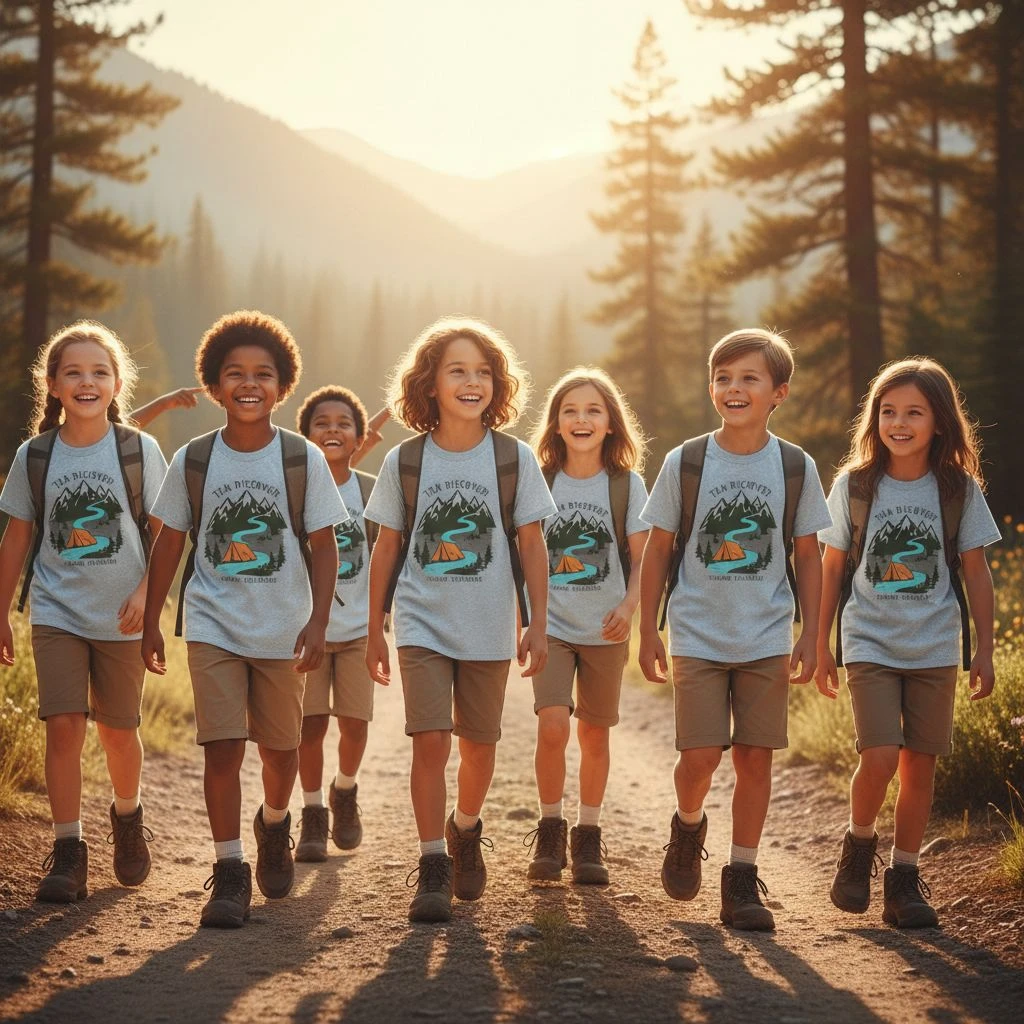
  • Hand-drawn doodles: friendly, fun, great for kids camps
  • Retro collegiate: perfect for leadership and sports camps

Make it feel “earned”:

Camps are about achievement. Add a detail that feels special:

  • Coordinates of the camp location
  • “Camp Name • Established 20XX”
  • Cabin/team nickname
  • “Summer 2026” like a class year

That’s how a shirt becomes a keepsake.

Pick a Shirt That Campers Actually Like Wearing

Think about the shirts you grab without thinking. They’re soft, they fit well, and they still look good after a bunch of washes. That’s the goal for a camp tee. Campers run, sweat, play, and wash these shirts a lot so comfort matters more than you think. Pick a shirt that feels good from day one, and your design will have a real chance to become a keep-wearing favorite.

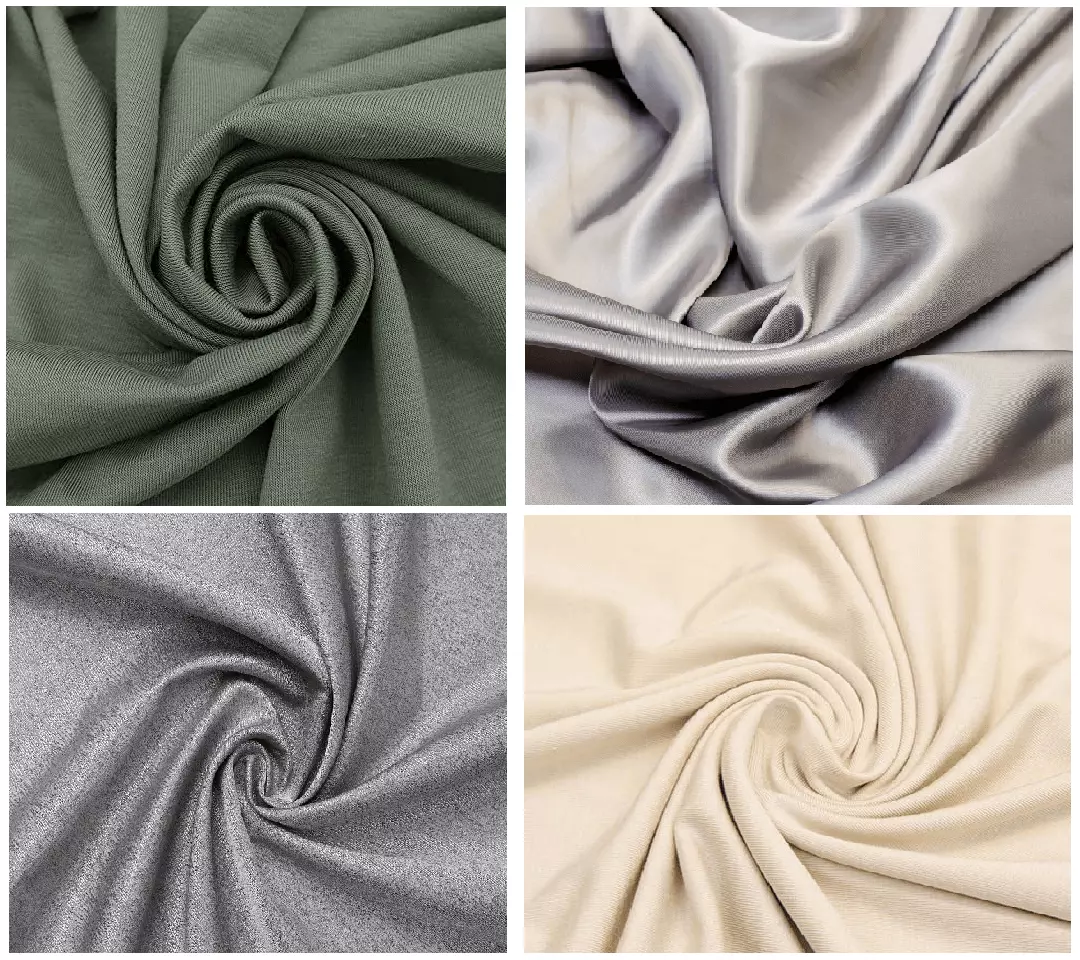
This is where most camps lose. If the shirt feels cheap, the design can’t save it. Fabric choices (simple and practical):

  • 100% cotton: soft, breathable, classic (can shrink)
  • Cotton/poly blend (like 60/40): soft + durable + less shrinking (great for camps)
  • Tri-blend: very soft, lightweight, “vintage” look (more expensive, slightly less crisp prints)

Weight matters:

  • Lightweight (4–5 oz): breathable, but can feel thin
  • Midweight (5.5–6 oz): more durable, holds shape better (usually best for camps)

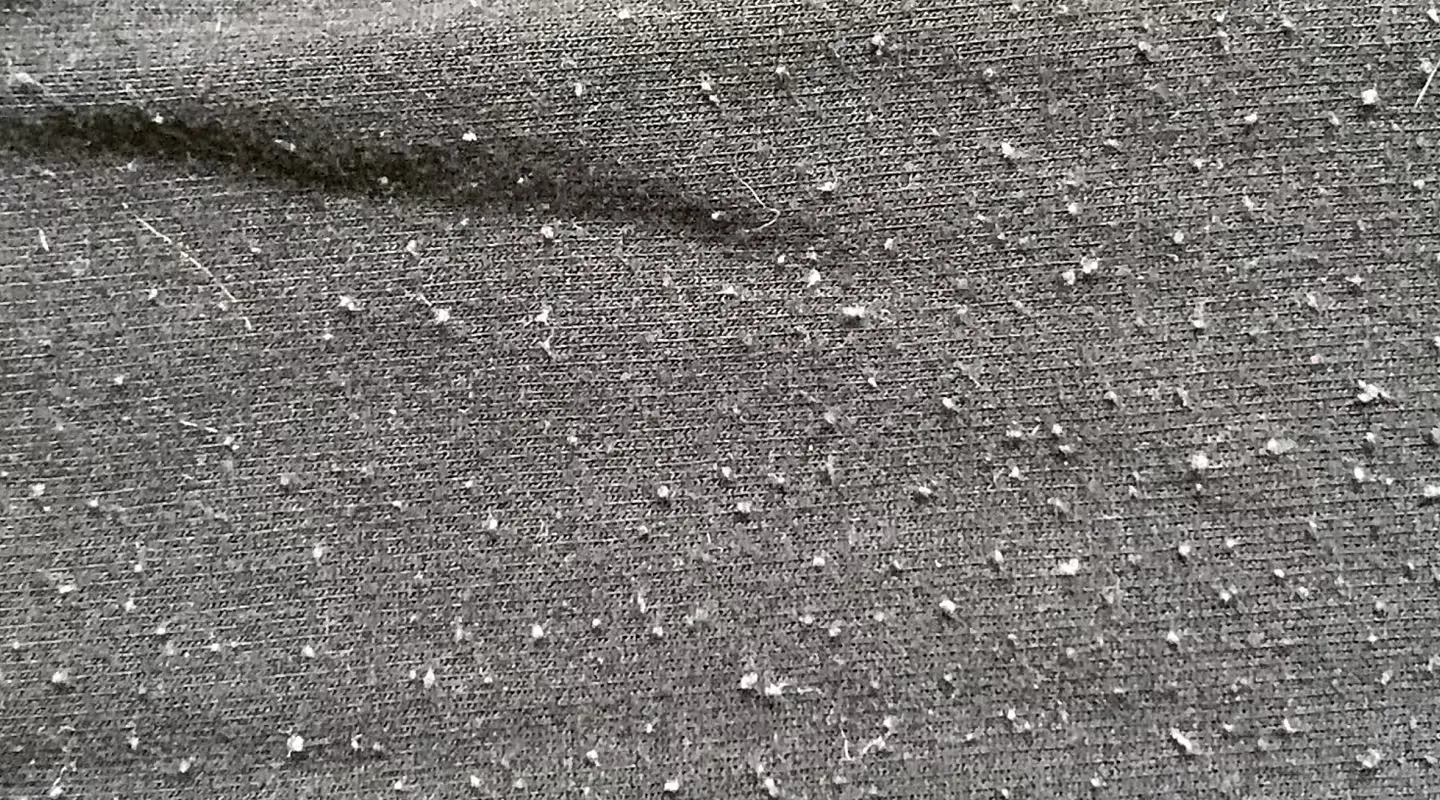
=> Hard truth: If the shirt twists, shrinks, or feels rough, nobody will wear it again.

Choose the Right Printing Method (So It Lasts)

Your printing method decides whether the shirt looks great for one summer, or for years. Camp tees get punished: sun, sweat, rough play, and lots of washing. If you choose the wrong print method, the design can crack, peel, or fade fast, and the shirt loses its “keepsake” feel. Pick a printing method that matches your design, your budget, and how hard the shirts will be used.

Your print method affects durability, comfort, and cost. Best option for most camps – Screen printing:

  • Great for bulk orders
  • Very durable
  • Best cost per shirt at higher quantities

For small runs or many colors – DTG (Direct-to-Garment):

  • Good for detailed designs
  • Better for low quantity
  • Not always as durable as great screen printing (depends on vendor + shirt)

Use carefully – Heat transfer / vinyl:

  • Can crack or peel over time
  • Fine for names/numbers, not best for big designs

Staff vs Camper Shirts: Make Them Different on Purpose

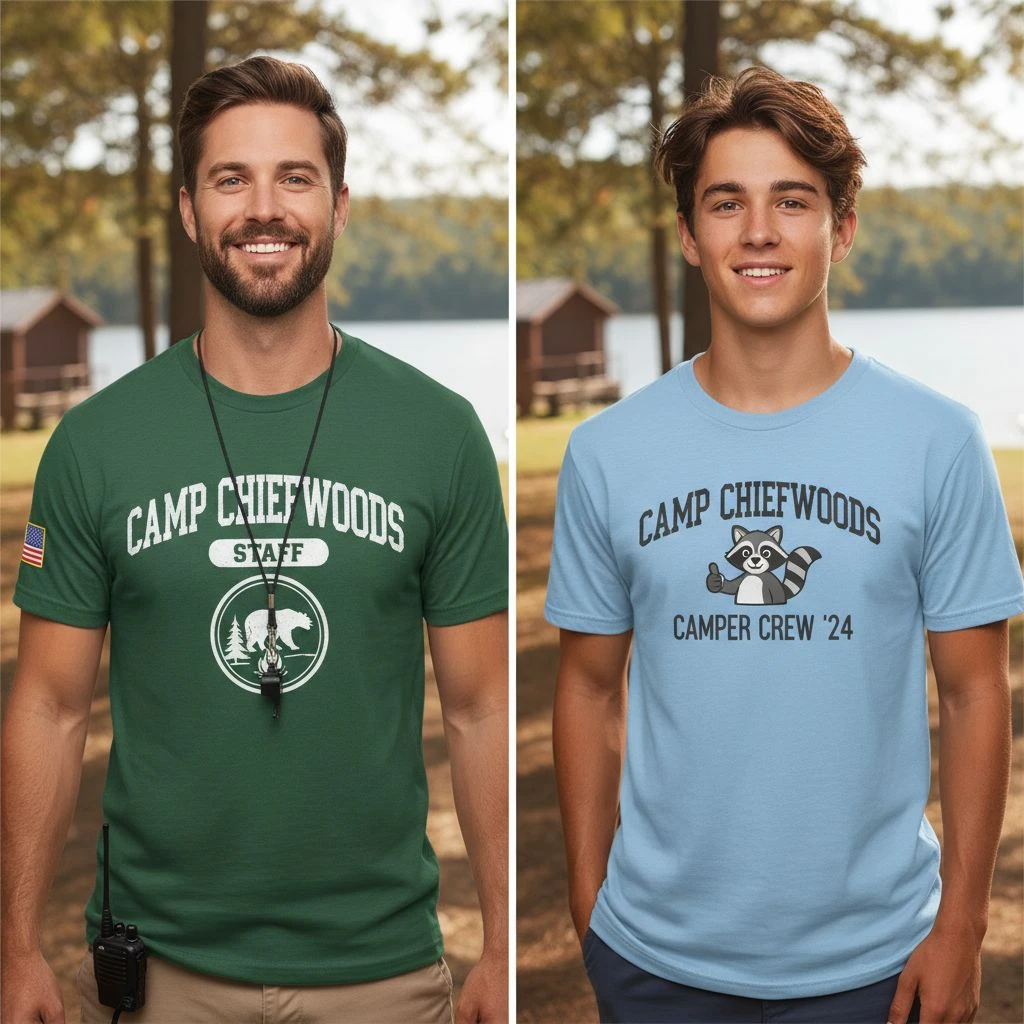
Matching shirts build unity, but clear distinction builds order. During busy activities, quick identification matters. Different shirt colors or subtle “STAFF” markings help campers know who to go to and help parents feel confident that the camp is well managed. Done thoughtfully, these differences look intentional not awkward.

This is both smart and safe. – Easy options:

  • Same design, different color
  • Same color, STAFF on sleeve or back
  • Staff gets a more premium version (pocket logo, minimal, clean)

=> Bonus: staff shirts can look more “professional,” and camper shirts can be more fun.

Size Planning Without Guessing

“Just order more mediums and larges.” That sounds easy, and it’s often wrong. Every camp has a different age range, gender mix, and staff ratio. Relying on a generic rule of thumb can leave you with piles of leftovers and frustrated campers. The smarter move is to plan sizes intentionally, not emotionally.

Many camps guess sizes and end up with leftovers nobody wants. Better plan:

  • Collect sizes during registration (best)
  • If you must estimate: order balanced quantities and avoid extremes

General guide (not perfect, but helpful):

  • Youth camps: more youth sizes + fewer adult XL/2XL
  • Teen camps: more adult S–XL
  • Staff-heavy programs: more adult L–2XL

=> Pushback: “Order mostly M and L” is lazy advice. Your camp age range decides everything.

Final Thoughts / Conclusion

Designing the perfect camp t-shirt isn’t about adding more elements, it’s about making smarter choices. A clear idea, a wearable layout, durable fabric, thoughtful sizing, and long-lasting printing all work together. When each decision is intentional, the result is a shirt campers actually choose to wear again, not just a souvenir they forget. The perfect summer camp t-shirt is not the one that looks “nice.” It’s the one campers choose to wear again. Focus on:

  • One clear theme
  • A wearable layout
  • Comfortable, durable fabric
  • Printing that lasts
  • A design that feels like a badge of belonging

If you want, tell me:

  • camp type (outdoor/sports/leadership/etc.)
  • age range
  • shirt color you like
  • budget level (basic vs premium)

…and I’ll challenge your choices and draft 3 complete t-shirt concepts (front/back layout + fonts + colors + slogans + print method) that fit your camp perfectly.
Related posts