
Silk screen printing (screen printing) is one of the best ways to put bold, long-lasting designs on t-shirts. But here’s the truth people skip: most “bad prints” are not the printer’s fault, they come from choosing the wrong shirt. A perfect design can still look blurry, crack early, or feel rough if the fabric is wrong. So in this guide, you’ll learn exactly what makes a t-shirt great for screen printing, what to avoid, and how to pick the best blank for your goal.
What “Best for Screen Printing” Actually Means?
Before the checklist, let’s challenge a common idea:
- Myth: “100% cotton is always the best for screen printing.”
- Reality: Cotton is often great, but blends can be better for shape, shrink control, and comfort — if you print with the right inks and curing settings.
So “best” depends on:
- your ink type (plastisol, water-based, discharge)
- your design (solid logo vs fine halftone)
- your customer (cheap promo vs premium streetwear)
- your budget and quantity
1) Fabric Composition: Pick the Right Fiber Mix
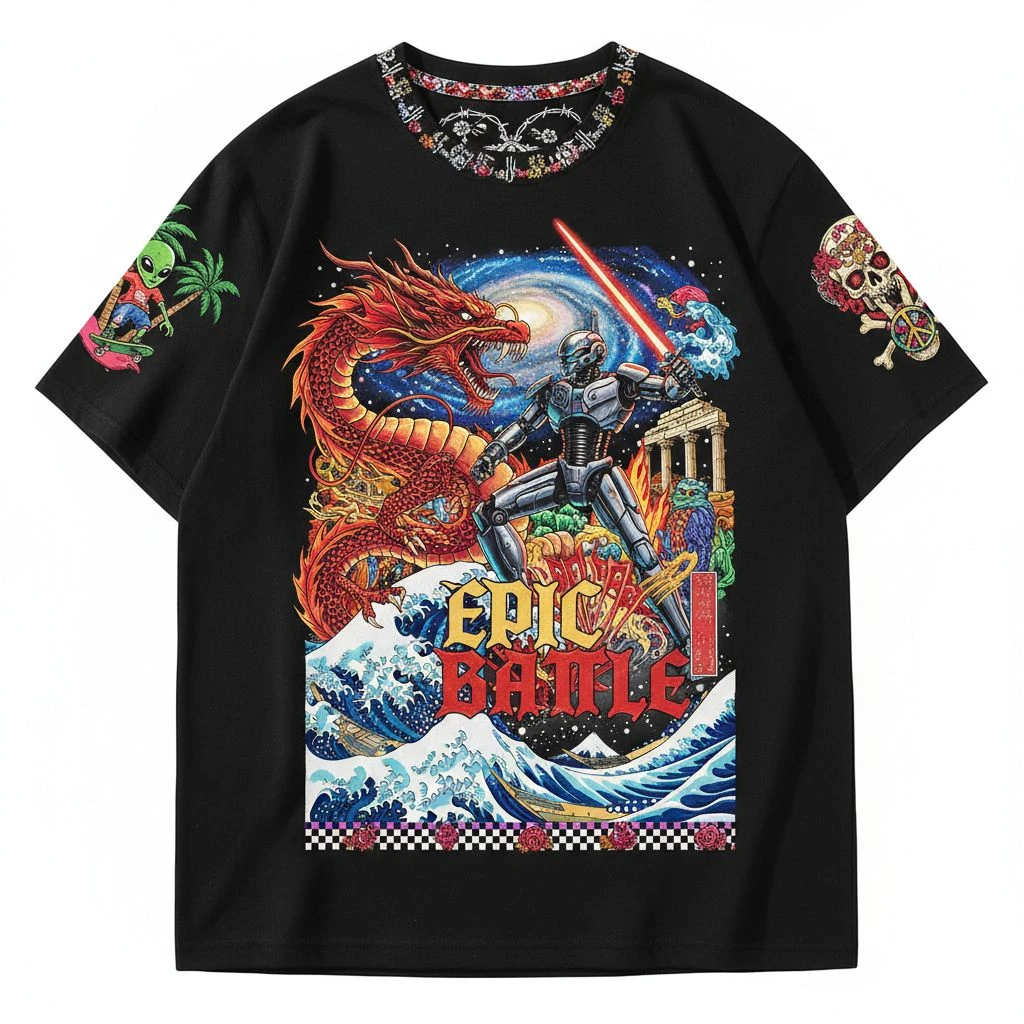
100% Cotton (Combed Ring-Spun is the sweet spot): Great!!
Why it’s great:
- Absorbs ink well
- Gives sharp detail
- Usually has strong color payoff
- Comfortable and breathable
Watch out:
- Can shrink more than blends
- Cheap cotton can be fuzzy → prints look less crisp

Best for:
- Most standard plastisol prints
- Water-based prints (especially)
- High-detail prints when fabric is smooth
=> Pro tip: Look for “combed ring-spun cotton.” It’s smoother than basic open-end cotton.
Cotton/Poly Blends (CVC, 50/50): Popular
Blends are popular for modern blanks because they:
- shrink less
- hold shape better
- often feel softer (especially heather colors)
=> But here’s the catch (important): Polyester can cause dye migration under heat curing. That means a white print on a dark poly blend can shift color later (like turning slightly pinkish or dull).

Best for:
- Soft, retail-feel tees,
- Everyday merch where shape matters
- Athletic/lifestyle styles


If you print on blends, you may need:
- low-bleed ink
- a barrier underbase
- lower cure temperatures (depending on ink system)

Tri-Blends (Cotton/Poly/Rayon): not always the best
Tri-blends feel amazing and look trendy. But they’re not always the best for bold graphics.
Trade-offs:
- Softer prints, but sometimes less vibrant
- Fabric stretch can affect registration (alignment)
- Better for “vintage” or softer-style printing

Best for:
- fashion tees with softer, worn-in look
- simple designs, not ultra-sharp micro details
2) Yarn and “Singles”: The Real Detail Secret
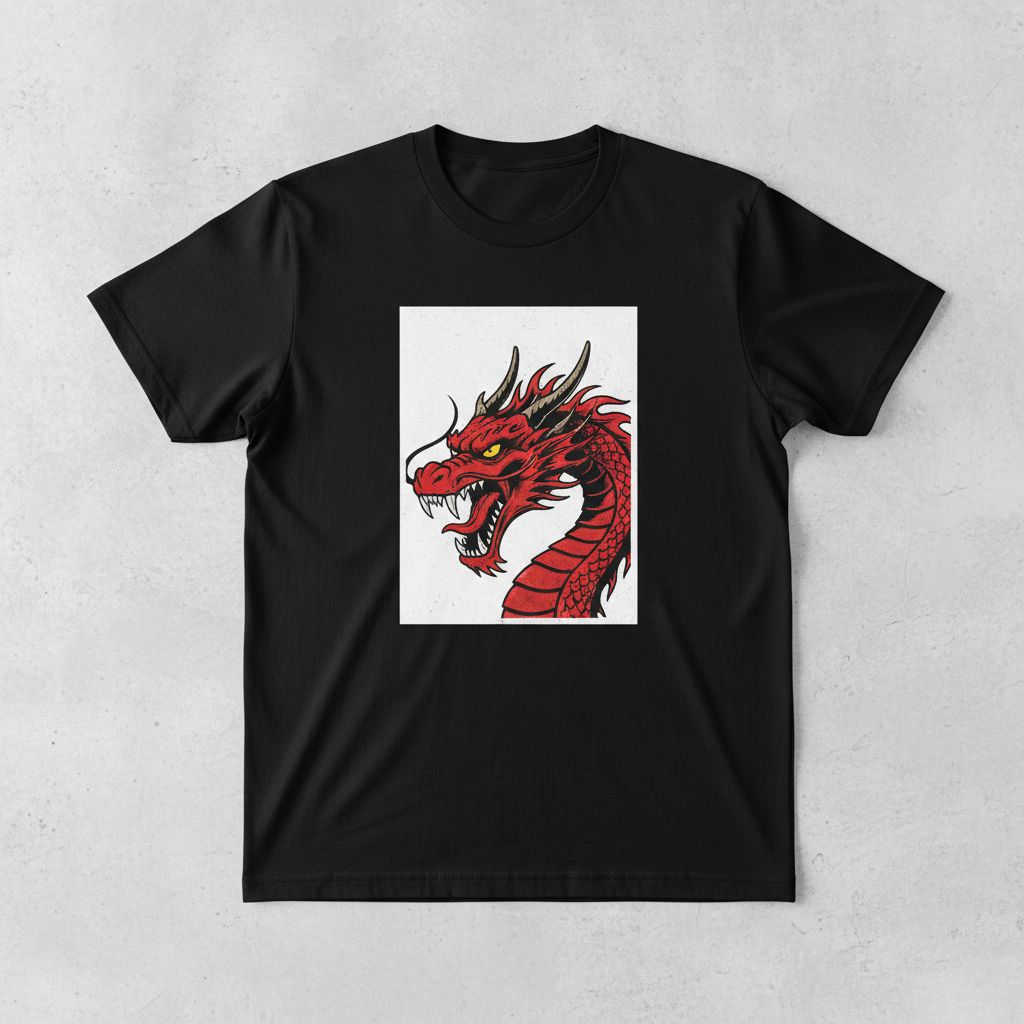
You might hear “30 singles” or “20 singles.”
That number usually relates to yarn fineness. In simple terms:
- Higher singles = finer yarn = smoother fabric = sharper prints
- Lower singles = thicker yarn = rougher fabric = less detail
| Yarn (Singles) | Feel | Print Detail | Best Use |
|---|---|---|---|
| 18–20s | rougher | low-medium | cheap promos |
| 24s | okay | medium | standard merch |
| 30s | smooth | high | premium prints |
| 32–40s | very smooth | very high | detailed art, high-end |
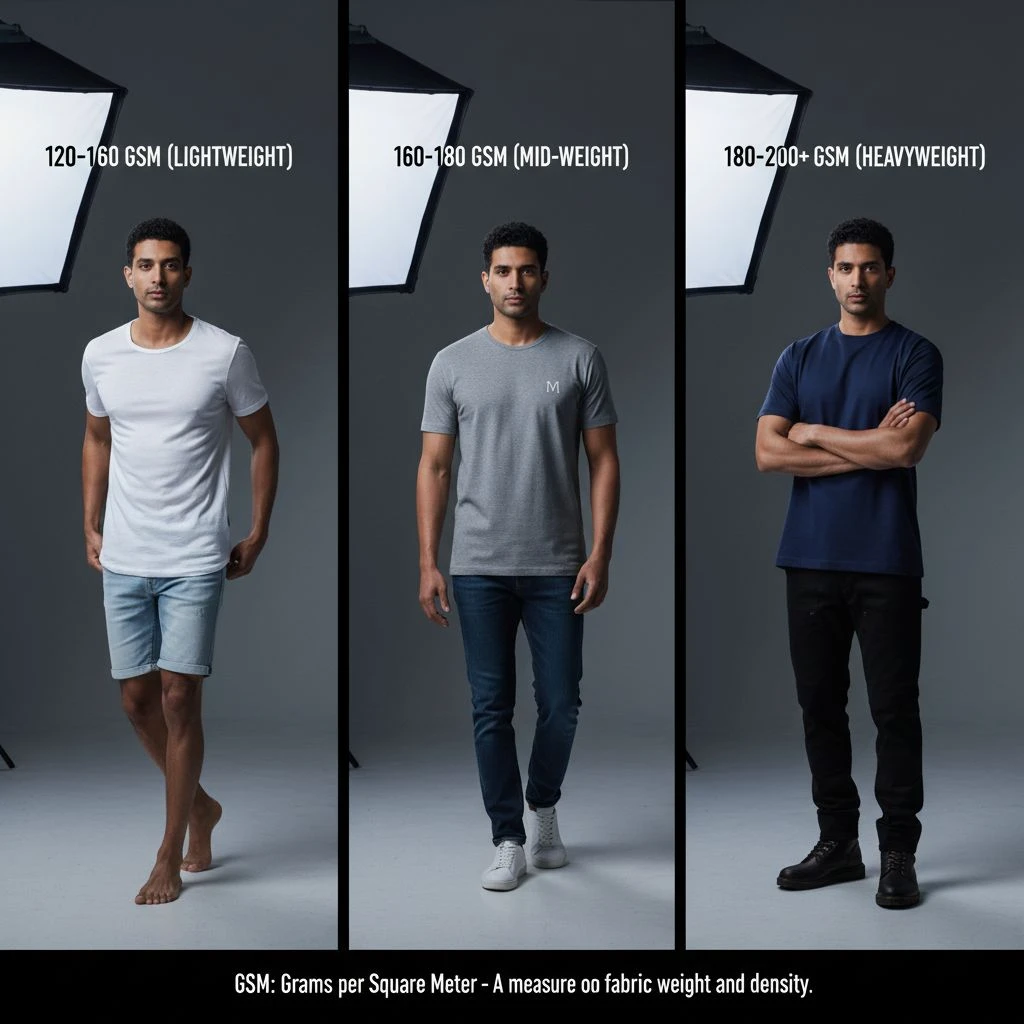
3) Fabric Weight: Light vs Medium vs Heavy
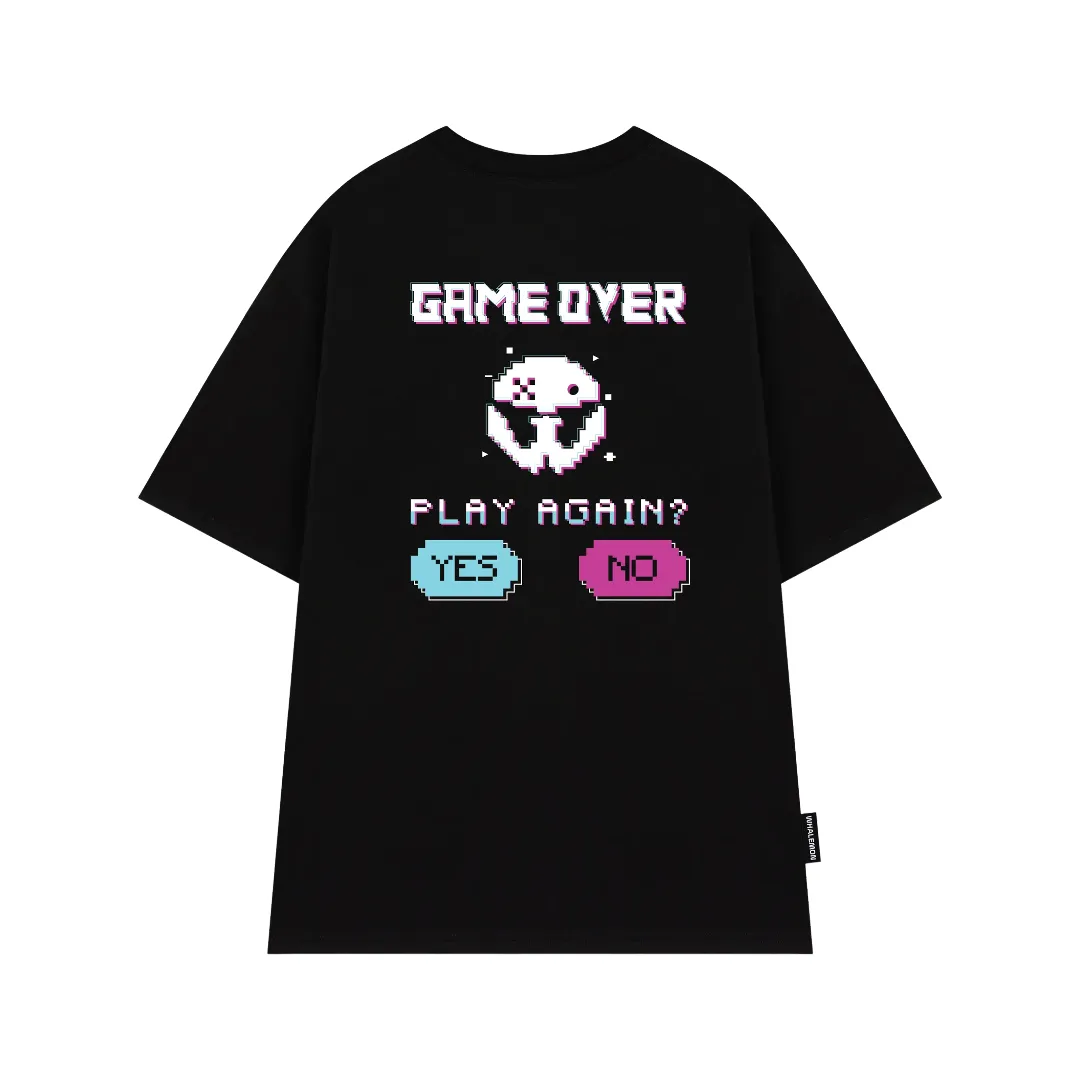
Weight affects how the shirt drapes, how ink sits, and how premium it feels.
Lightweight (around 4.0–4.5 oz):
- Cool and trendy
- Can show more texture through ink
- Higher risk of bleed-through if printed heavy
Midweight (around 5.0–5.6 oz):
- Best all-around choice
- Holds ink well
- Most common for merch

Heavyweight (6.0 oz and up):
- Premium streetwear feel
- Better opacity and stability
- Great for bold prints
- Costs more and feels warmer
=> Important Notes: Heavyweight isn’t automatically better. If your buyers want summer comfort or a soft drape, heavyweight can feel too stiff.
4) Smoothness: The Print “Canvas” Rule
Screen printing loves flat, even surfaces.
Avoid tees that are:
- heavily textured
- slub fabric (bumpy “intentional texture”)
- thick pique knits
- uneven yarn styles
If the surface is uneven, ink doesn’t land evenly, so details look rough.
5) Color Choice: Easy Wins (and Hard Truths)
Light shirts:
- Easier printing
- Bright colors pop
- Less ink needed
Dark shirts:
- Often need underbase (extra layer)
- More time + more cost
- More risk of curing issues (especially with poly blends)
If you want dark shirts, plan your process:
- underbase white
- proper flash settings
- correct cure temp and time
6) Pre-Shrunk, Treatments, and “Soft-Hand” Finishes
Some shirts feel super soft because of chemical finishes. That can be great, or it can hurt printing.
What you want:
- pre-shrunk (more size stability)
- enzyme washed (often okay)
- consistent fabric lots
What to test carefully:
- heavy silicone softeners
- special coatings that may reduce ink adhesion
=> Best practice: Always print and wash-test one sample before committing to bulk.
Conclusion / Final Words
The best t-shirts for silk screen printing are the ones that match your design, ink system, and customer expectation. Cotton is often a safe choice, but blends can be smarter for durability and shape, as long as you respect the risks like dye migration.
If you want consistent, pro-level results:
- prioritize smooth fabric and stable construction
- match ink type to fiber content
- and always test before bulk