

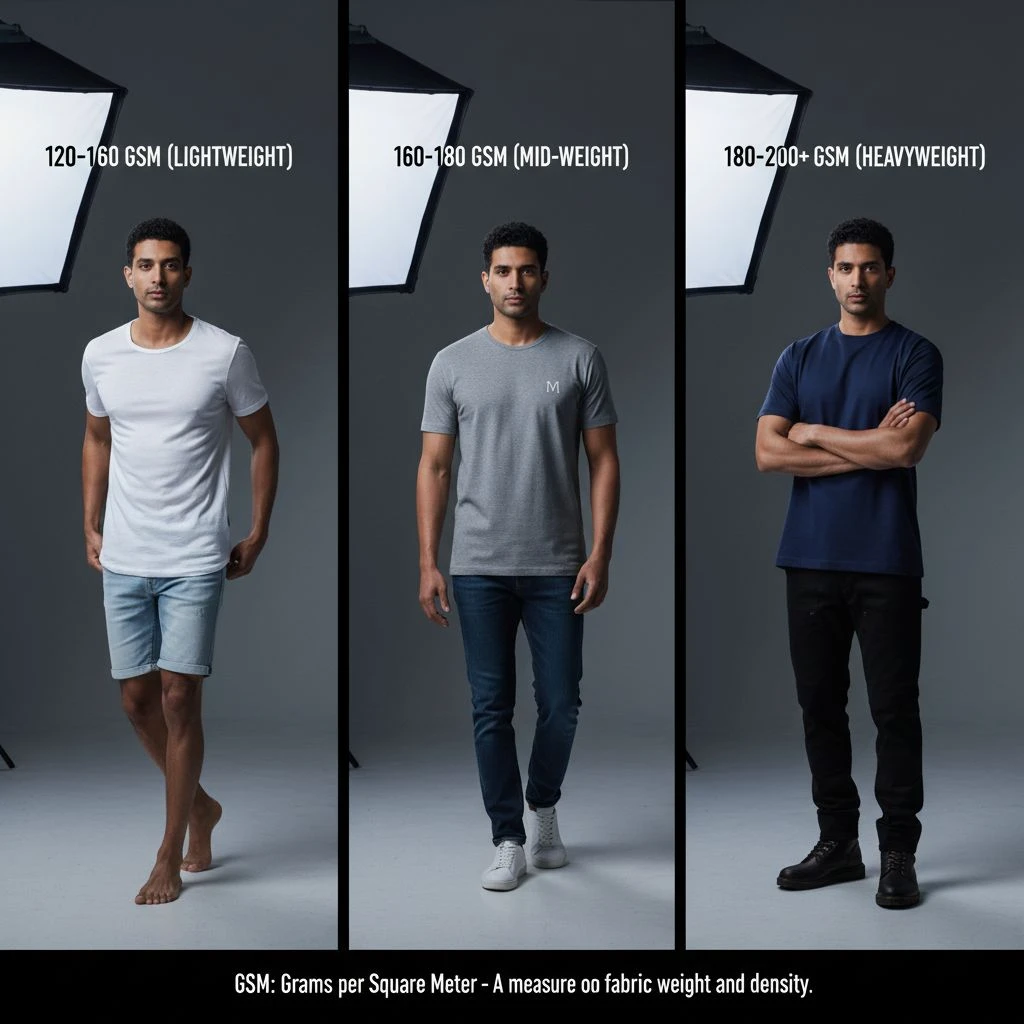
Let’s settle this right away. T-shirt weight is not a small detail. It shapes comfort, durability, print quality, price, and even brand perception. If you ignore it, you may end up with shirts that feel wrong, wear out fast, or fail your target market. But here’s the key: weight alone does not determine quality. It is one variable in a larger system. This article breaks down what T-shirt weight really means and how to choose it wisely.
What Does T-Shirt Weight Mean?
T-shirt weight refers to how dense the fabric is. It is usually measured in:
- GSM (grams per square meter) – common internationally
- Ounces per square yard (oz/yd²) – common in the United States
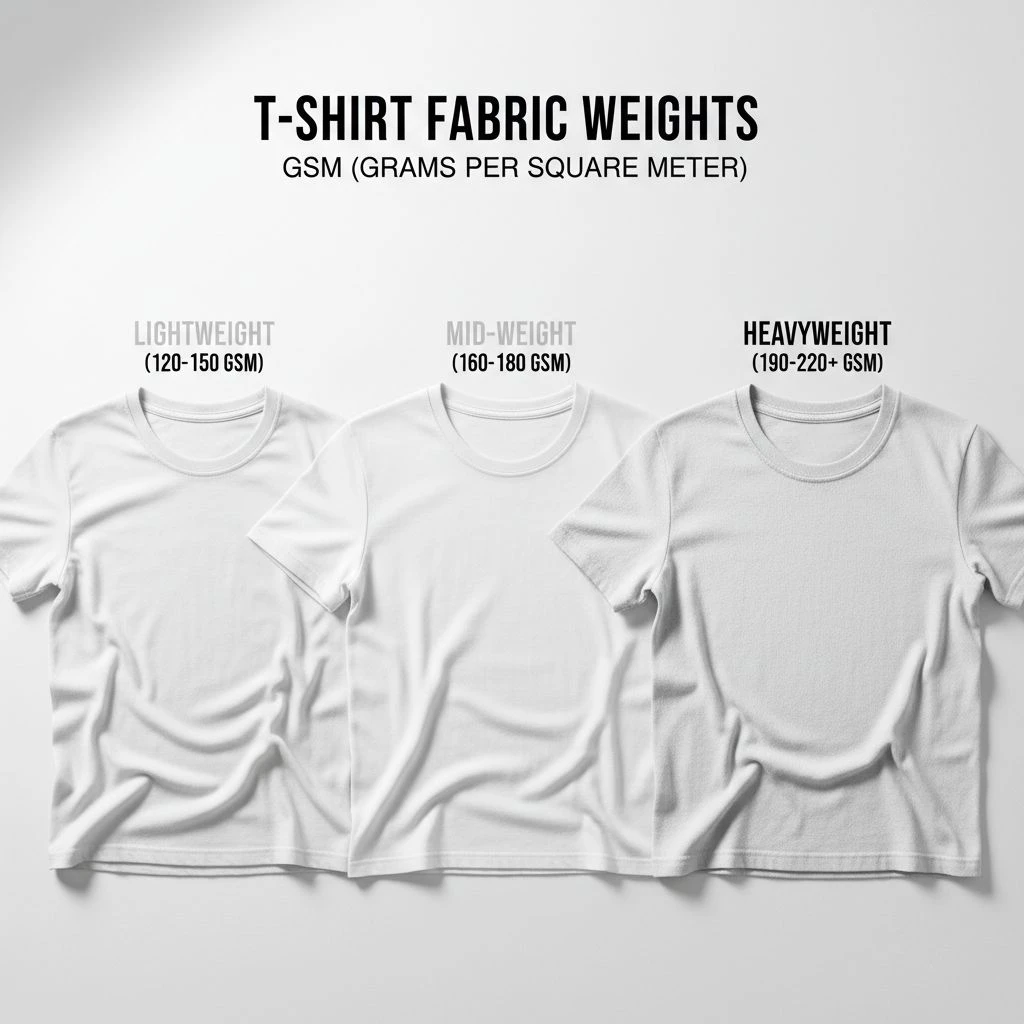
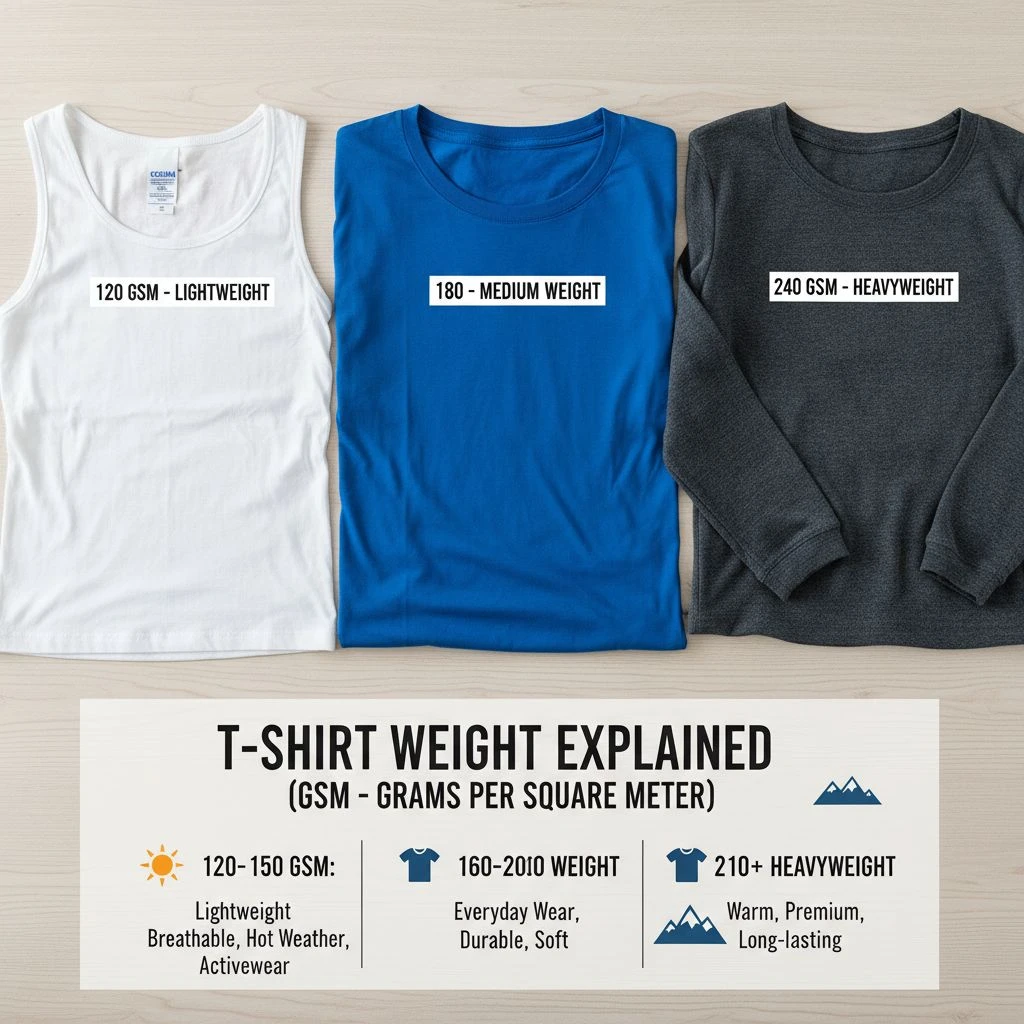
Here is a practical breakdown:
| Category | GSM | Typical Feel |
|---|---|---|
| Ultra Lightweight | 120–140 GSM | Very thin, airy |
| Lightweight | 140–160 GSM | Soft, breathable |
| Midweight | 160–180 GSM | Balanced, everyday |
| Heavyweight | 180–220 GSM | Thick, structured |
| Premium Heavy | 220+ GSM | Dense, durable |
Comfort: The First Thing People Notice
Weight directly affects how a shirt feels on the body.
Lightweight T-Shirts (140–160 GSM):
- More breathable
- Ideal for hot weather
- Soft and flexible
- Great for sports, events, summer wear

These shirts allow airflow and feel light against the skin. In warm climates, they are often the practical choice.

Heavyweight T-Shirts (180+ GSM):
- Feel more substantial
- Offer more structure
- Less clingy on the body
- Better for layering
Heavier shirts can feel cozy and stable, especially in cooler conditions. However, they may feel warm or restrictive in high heat. Still, comfort is not just about weight. Fiber type, yarn quality, and knit construction matter just as much.
Durability: Does Heavier Mean Stronger?
In general, heavier T-shirts:
- Resist stretching better
- Hold shape longer
- Develop fewer holes
The thicker fabric can handle repeated washing and daily wear.
But weight is not the only factor. Durability also depends on:
- Cotton quality (combed vs. carded)
- Stitch density
- Collar rib construction
- Pre-shrink treatment

A well-made 165 GSM shirt can outlast a poorly constructed 220 GSM shirt. So weight is a signal, not a guarantee.
Climate and Seasonal Use
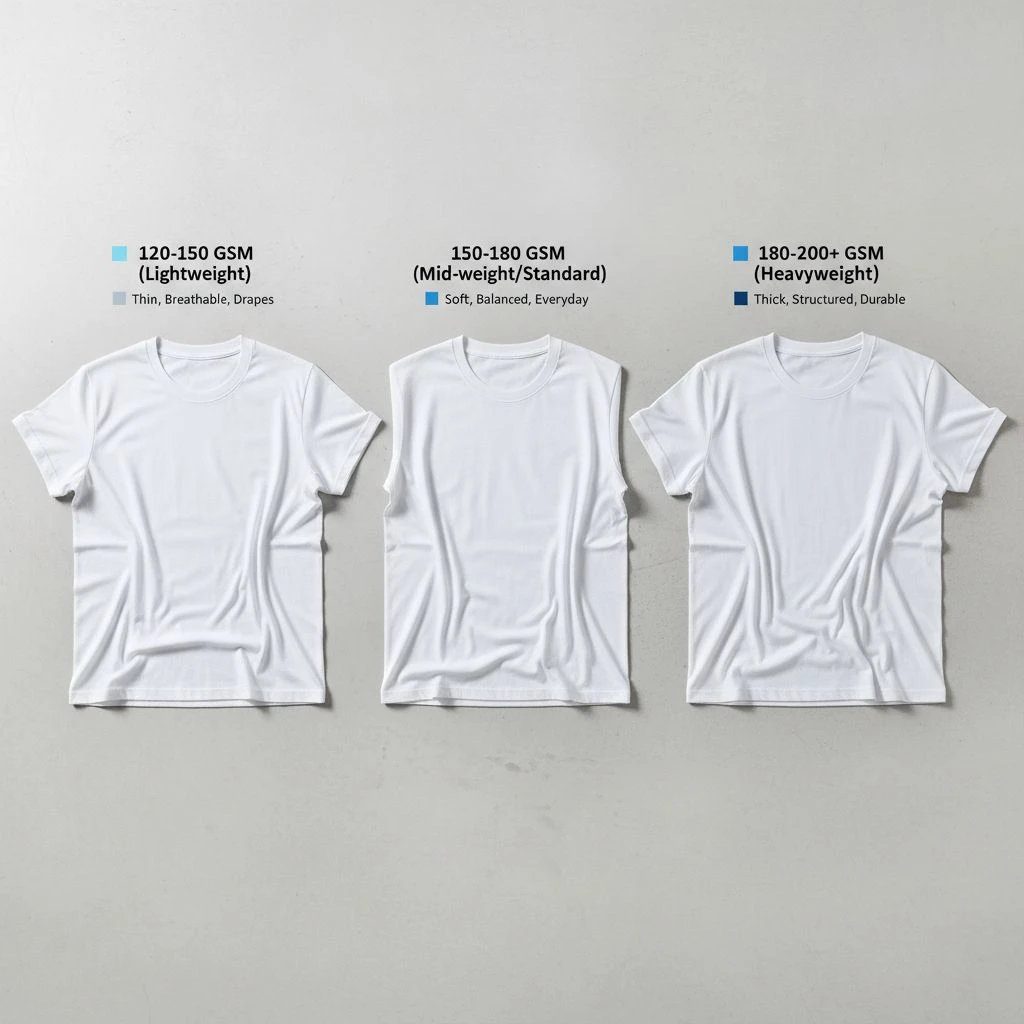
T-shirt weight should match the environment.
- Hot and Humid Weather: Lightweight shirts are usually better. They allow airflow and help the body stay cool.
- Cooler Seasons: Heavier shirts provide more insulation. They work well as base layers or as standalone pieces in mild cold.
If your customers live in different climates, offering more than one weight option may be smart.
Printing and Decoration Performance
If you plan to screen print or embroider, weight becomes even more important.
Lightweight Shirts:
- Softer drape
- More flexible
- Ink may feel heavier on thin fabric
- Light colors may show slight transparency

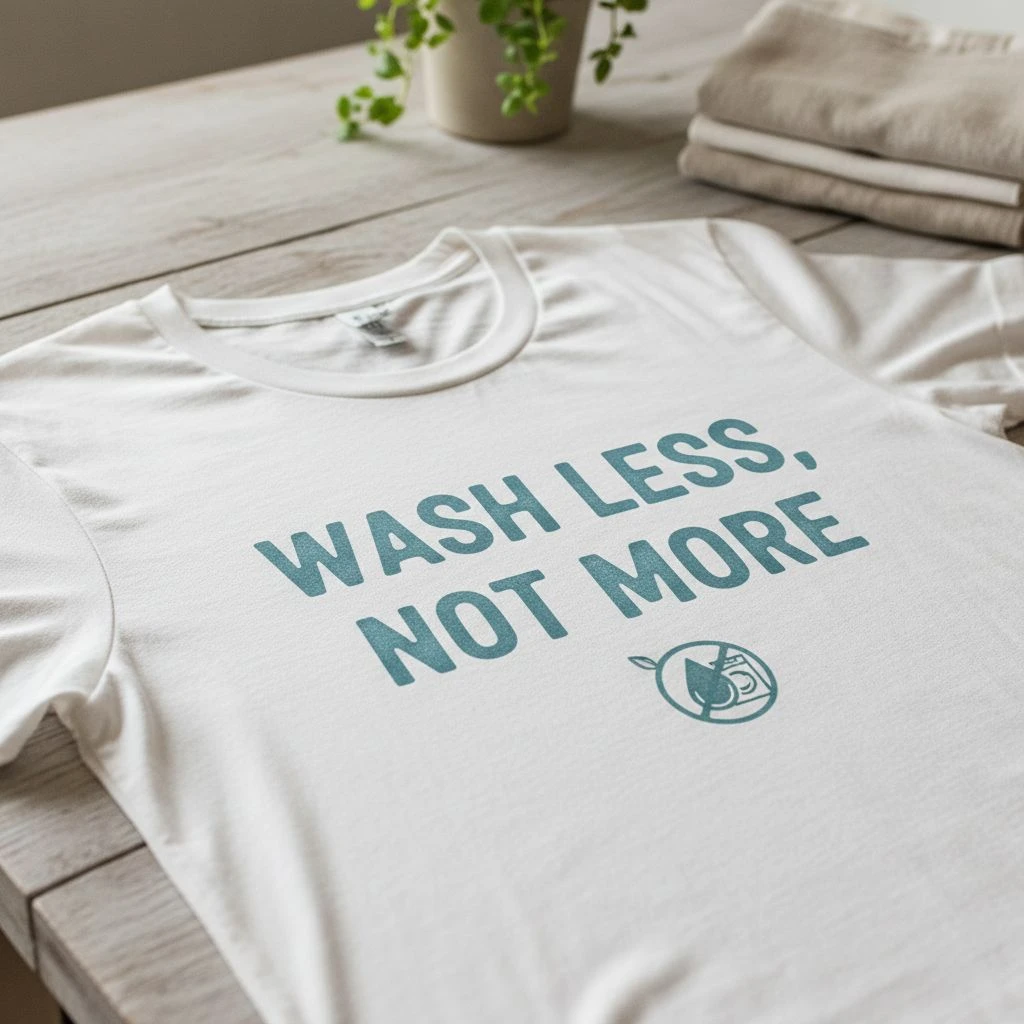
Heavyweight Shirts:
- Better ink stability
- Stronger base for embroidery
- Less distortion around prints
- Premium “streetwear” feel
For high-end branding or bold graphic prints, heavier fabric often creates a cleaner presentation. But for soft, vintage designs, lightweight fabric can enhance the aesthetic. The right weight depends on your printing method and brand identity.

Style and Silhouette
Fabric weight changes how a shirt drapes.
- Lightweight shirts flow more naturally and create a relaxed look.
- Heavyweight shirts hold shape and create a structured silhouette.
Modern streetwear brands often choose 220+ GSM because the fabric keeps a boxy shape and feels premium in hand.
Weight influences:
- How the shirt hangs
- How it fits on the shoulders
- How it photographs
- How “expensive” it feels

That perception matters more than many people realize.
Cost and Business Considerations
Heavier fabric means more material. More material means higher cost.
This affects:
- Fabric price
- Shipping weight
- Import duties in some markets
- Overall production margin
If you are producing large quantities, even a small GSM difference can significantly impact total cost. Choosing weight should balance performance and profitability.
Wash and Wear Behavior
Over time, weight influences how a shirt ages.
Heavier shirts:
- Maintain shape better
- Shrink less (in many cases)
- Resist thinning
Lightweight shirts:
- May soften quickly
- Can lose structure faster
- Sometimes create a desirable “worn-in” look
Again, finishing treatments and fabric quality play major roles.
So, How Important Is T-Shirt Weight?
Very important but not by itself.
Weight affects: Comfort, durability, climate suitability, printing results, style, cost, brand perception.
However, the smartest decision considers:
- Who will wear it?
- In what climate?
- For what activity?
- What image does the brand want to project?
- What printing or decoration method will be used?
- What is the target price point?
+ For many brands, 160–180 GSM offers a safe balance between comfort and durability.
+ For premium streetwear, 200–240 GSM may be ideal.
+ For summer events or athletic use, 140–160 GSM often performs best.
Conclusion / Final Words
T-shirt weight is not just a technical detail. It is a strategic choice. It influences how the garment feels, how it performs, how long it lasts, and how customers perceive your brand. Choosing the right weight requires understanding your audience, your climate, your design goals, and your budget. The best weight is not the heaviest or the lightest. It is the one that aligns with your purpose. And once you understand that, a T-shirt becomes much more than “just a T-shirt.”