
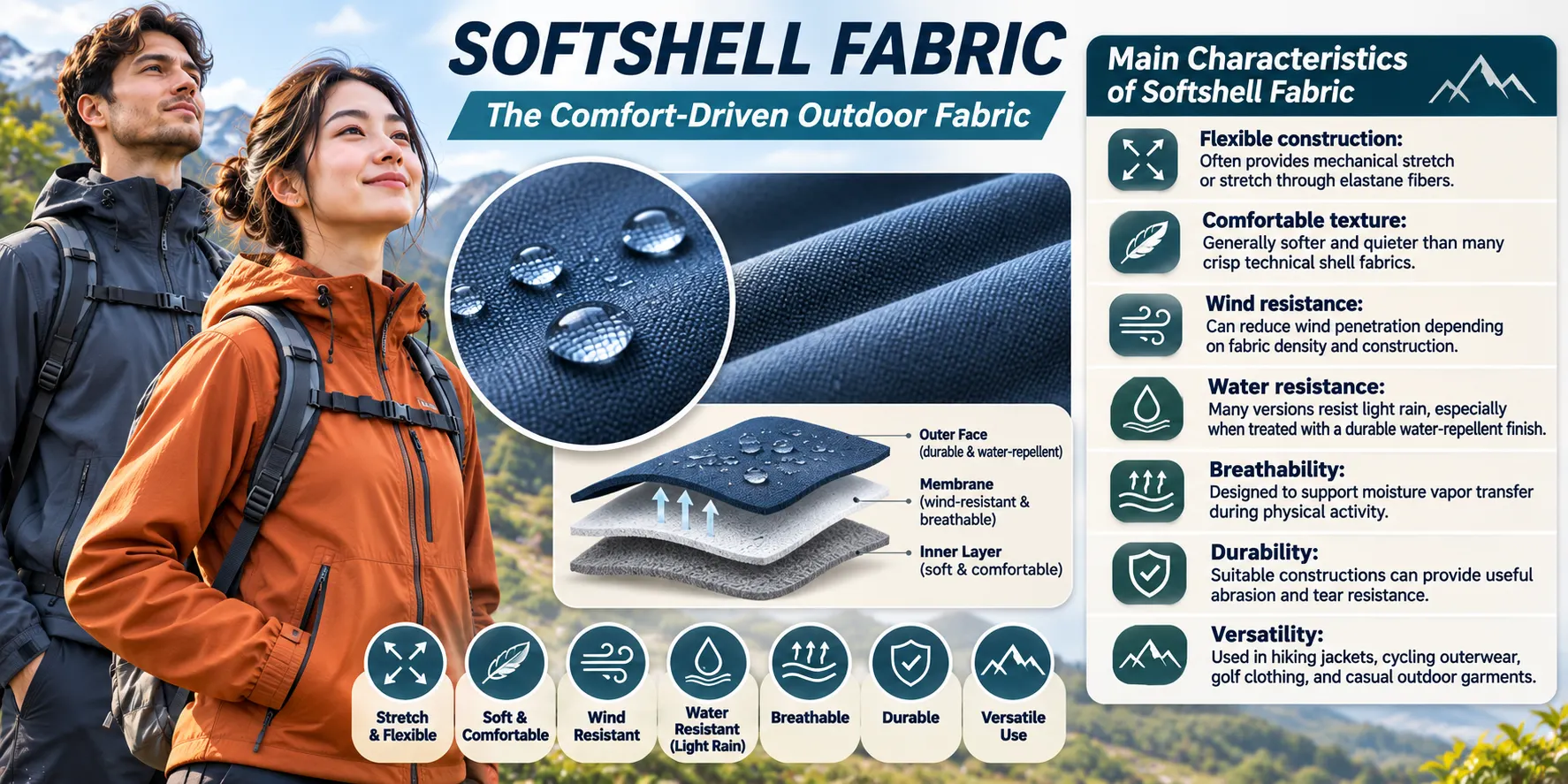

- Unlike many traditional waterproof shell fabrics, softshell is often designed to prioritize breathability, stretch, and quiet movement. It allows wearers to remain comfortable during activities that involve frequent motion, such as hiking, climbing, cycling, and golf.
- However, not all softshell fabrics are the same. Some are lightweight stretch-woven materials, while others combine multiple layers, including fleece backings or protective membranes. Their warmth, breathability, weight, and water resistance can vary significantly.
In this guide, we explore what softshell fabric is, how it is made, its main characteristics, different types, advantages, disadvantages, common applications, and important considerations for garment manufacturing.
What Is Softshell Fabric?
Softshell fabric refers to a category of flexible performance textiles designed for outdoor clothing. Rather than describing a single fiber or weave, the term covers a range of fabric constructions that balance comfort, mobility, durability, and weather resistance. Many softshell fabrics use woven polyester, nylon, or blends containing elastane. Some constructions include a soft brushed or fleece-backed interior, while others consist of a lightweight stretch-woven fabric without additional bonded layers. Softshell is particularly useful when movement and comfort are more important than complete protection from prolonged heavy rain.
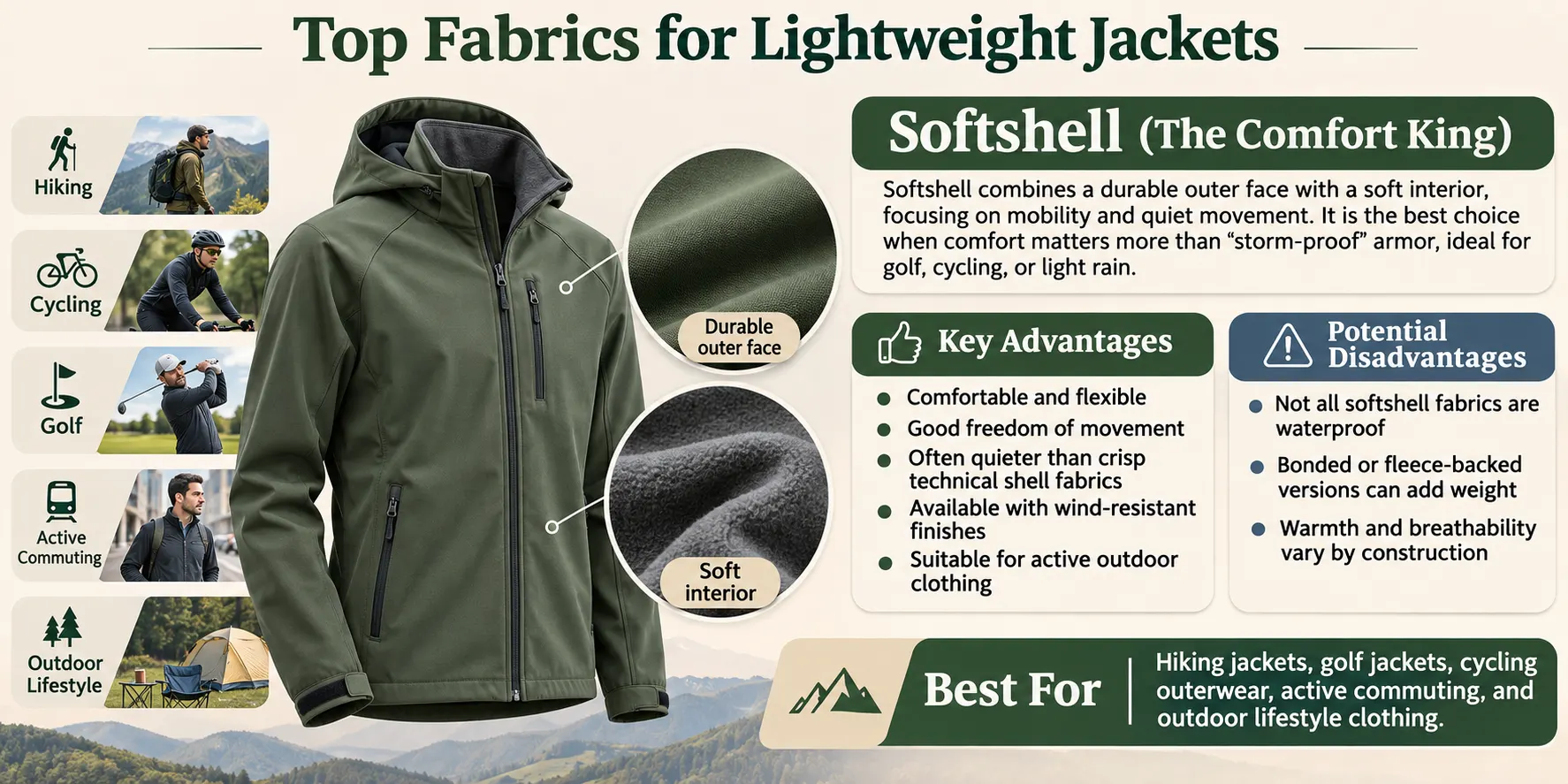
Softshell fabrics combine comfort, flexibility, and practical weather protection for active outdoor clothing.
Main Characteristics of Softshell Fabric:
- Flexible construction: Often provides mechanical stretch or stretch through elastane fibers.
- Comfortable texture: Generally softer and quieter than many crisp technical shell fabrics.
- Wind resistance: Can reduce wind penetration depending on fabric density and construction.
- Water resistance: Many versions resist light rain, especially when treated with a durable water-repellent finish.
- Breathability: Designed to support moisture vapor transfer during physical activity.
- Durability: Suitable constructions can provide useful abrasion and tear resistance.
- Versatility: Used in hiking jackets, cycling outerwear, golf clothing, and casual outdoor garments.
Is Softshell a Fabric or a Jacket Type?
Softshell can describe both a category of performance fabrics and the garments made from them. For example, a softshell jacket may use a single-layer stretch-woven fabric, a bonded fabric with a fleece interior, or a multilayer construction with a protective membrane. Therefore, buyers should not assume that every product labeled “softshell” has the same fiber composition, thickness, or weather protection.
How Is Softshell Fabric Made?
Softshell manufacturing depends on the intended performance requirements. Some fabrics are produced as a single woven layer, while others are bonded or laminated with additional materials.
- Outer Face Fabric: The outer face is commonly made from woven polyester or nylon. It provides the visible appearance of the garment and contributes to abrasion resistance, wind resistance, and durability. Depending on the design, the surface may be smooth, matte, textured, or slightly brushed.
- Stretch Construction: Flexibility is one of the defining features of many softshell fabrics. Stretch may come from elastane yarns, specialized textured yarns, or the fabric’s mechanical construction. Some fabrics stretch primarily in one direction, while others provide two-way or four-way flexibility, depending on the supplier’s terminology and the construction.
- Inner Surface or Fleece Backing: Some softshell fabrics have a soft interior designed to improve comfort. This may be a brushed surface, a lightweight knit backing, or a bonded fleece layer. Fleece-backed constructions can provide additional warmth, but they may also increase fabric weight and reduce packability.
- Optional Membrane Layer: Some technical softshell fabrics incorporate a membrane between the outer fabric and inner backing. This can improve resistance to wind and water penetration. However, adding a membrane may affect flexibility, air permeability, moisture vapor transfer, and production cost. A membrane alone does not guarantee that a finished jacket is fully waterproof.
- Water-Repellent Finishing: Many softshell fabrics receive a durable water-repellent (DWR) finish. This treatment helps water droplets bead on the fabric surface and roll off rather than immediately soaking into the outer layer. DWR performance can decrease with repeated washing, abrasion, and wear. It should not be confused with a waterproof membrane or coating.
Different Types of Softshell Fabric
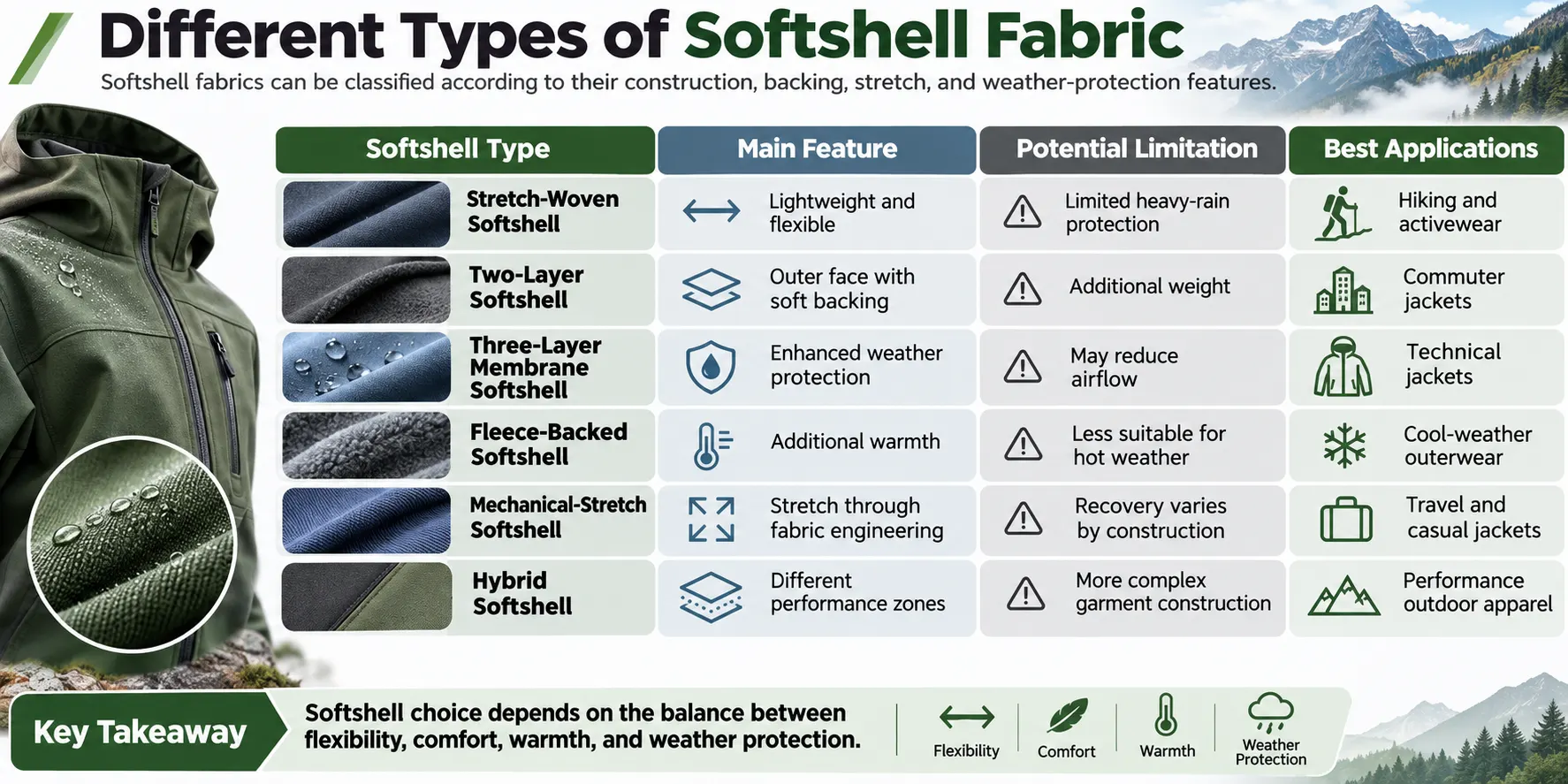
Softshell fabrics can be classified according to their construction, backing, stretch, and weather-protection features.
| Softshell Type | Main Feature | Potential Limitation | Best Applications |
|---|---|---|---|
| Stretch-Woven Softshell | Lightweight and flexible | Limited heavy-rain protection | Hiking and activewear |
| Two-Layer Softshell | Outer face with soft backing | Additional weight | Commuter jackets |
| Three-Layer Membrane Softshell | Enhanced weather protection | May reduce airflow | Technical jackets |
| Fleece-Backed Softshell | Additional warmth | Less suitable for hot weather | Cool-weather outerwear |
| Mechanical-Stretch Softshell | Stretch through fabric engineering | Recovery varies by construction | Travel and casual jackets |
| Hybrid Softshell | Different performance zones | More complex garment construction | Performance outdoor apparel |

- Lightweight Stretch-Woven Softshell: Stretch-woven softshell typically uses a flexible woven fabric without a separate waterproof membrane. It often provides a balance of low weight, airflow, and mobility. Best for: Hiking jackets, running outerwear, travel jackets, and active clothing.
- Two-Layer Bonded Softshell: Two-layer bonded softshell combines an outer face fabric with an inner backing. The inner layer may be a soft knit or fleece material. This construction can improve comfort and provide additional warmth compared with an unlined woven fabric. Best for: Casual outdoor jackets, commuter outerwear, and cooler-weather clothing.
- Three-Layer Membrane Softshell: Some softshell materials use a three-layer construction consisting of an outer fabric, a functional membrane, and an inner backing. The membrane can improve wind and water resistance, while the other layers contribute to comfort and durability. Performance depends on the membrane and fabric system. The term “three-layer” alone does not guarantee waterproof garment performance. Best for: Weather-resistant outdoor jackets and selected technical outerwear.
- Fleece-Backed Softshell: Fleece-backed softshell has a soft, insulating inner surface. It can provide comfort and warmth during cooler weather. However, thicker fleece-backed fabrics may feel too warm for intense activity in mild or humid conditions. Best for: Autumn jackets, winter layering, and casual outdoor clothing.
- Mechanical-Stretch Softshell: Mechanical-stretch softshell uses yarn engineering or fabric construction to create flexibility without relying entirely on elastane fibers. Stretch recovery and long-term dimensional stability should still be evaluated through testing. Best for: Commuter jackets, technical uniforms, and travel clothing.
- Hybrid Softshell: Hybrid garments combine different materials in selected areas. For example, a jacket may use a more weather-resistant fabric across the shoulders and a more breathable stretch material under the arms. This approach helps designers balance comfort, protection, and durability according to garment function. Best for: Technical outdoor clothing, climbing jackets, and performance apparel.
Common Uses of Softshell Fabric
Softshell fabrics are popular in clothing categories where movement, comfort, and moderate weather protection are important.
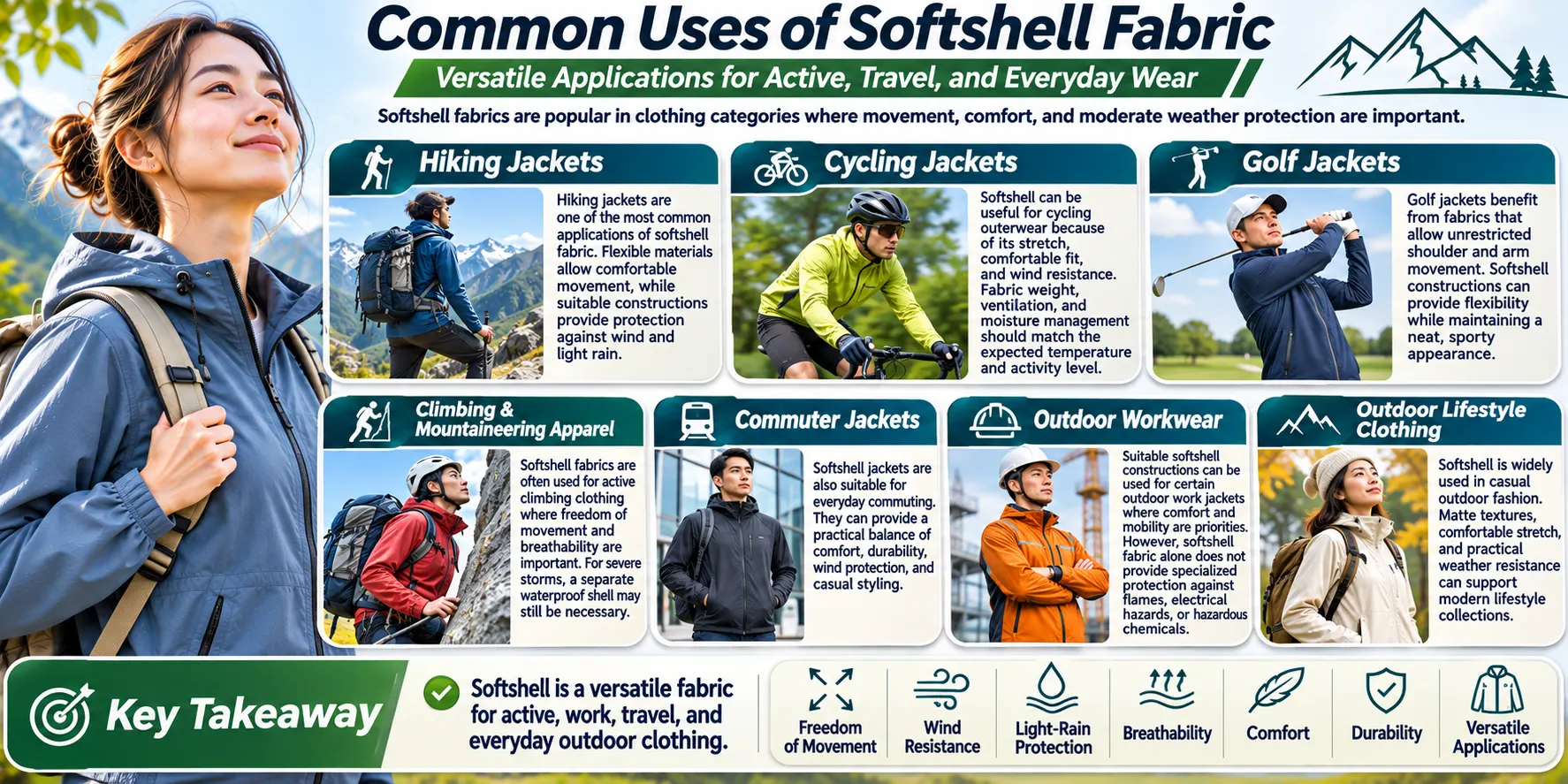
- Hiking Jackets: Hiking jackets are one of the most common applications of softshell fabric. Flexible materials allow comfortable arm and body movement, while suitable constructions provide protection against wind and light rain.
- Cycling Jackets: Softshell can be useful for cycling outerwear because of its stretch, comfortable fit, and wind resistance. Fabric weight, ventilation, and moisture management should match the expected temperature and activity level.
- Golf Jackets: Golf jackets benefit from fabrics that allow unrestricted shoulder and arm movement. Softshell constructions can provide flexibility while maintaining a neat, sporty appearance.
- Climbing and Mountaineering Apparel: Softshell fabrics are often used for active climbing clothing where freedom of movement and breathability are important. For severe storms, a separate waterproof shell may still be necessary.
- Commuter Jackets: Softshell jackets are also suitable for everyday commuting. They can provide a practical balance of comfort, durability, wind protection, and casual styling.
- Outdoor Workwear: Suitable softshell constructions can be used for certain outdoor work jackets where comfort and mobility are priorities. However, softshell fabric alone does not provide specialized protection against flames, electrical hazards, or hazardous chemicals.
- Outdoor Lifestyle Clothing: Softshell is widely used in casual outdoor fashion. Matte textures, comfortable stretch, and practical weather resistance can support modern lifestyle collections.
Pros and Cons of Softshell Fabric
Advantages:
- Comfortable and flexible: Supports movement during outdoor and everyday activities.
- Good freedom of movement: Suitable for hiking, cycling, climbing, and golf.
- Quiet fabric performance: Often produces less noise than stiff technical shells.
- Useful wind resistance: Can reduce wind penetration in suitable constructions.
- Light-rain protection: DWR-treated fabrics can shed limited precipitation.
- Versatile construction: Available in lightweight, bonded, and fleece-backed versions.
- Suitable for casual styling: Often provides a softer appearance than conventional rainwear.
Disadvantages:
- Not always waterproof: Many softshell fabrics are designed for water resistance rather than heavy-rain protection.
- Additional fabric weight: Fleece-backed or multilayer constructions can be heavier than single-layer fabrics.
- Variable warmth: Insulation depends on backing material and overall construction.
- Variable breathability: Membranes and coatings can reduce airflow.
- Higher costs: Technical membranes, stretch fibers, and bonding processes can increase material prices.
- Care requirements: Some laminated fabrics need special washing and drying conditions.
Softshell vs. Hardshell vs. Fleece: What Is the Difference?
Softshell, hardshell, and fleece are commonly used in outdoor clothing, but they serve different purposes.
| Feature | Softshell | Hardshell | Fleece |
|---|---|---|---|
| Main Purpose | Mobility and moderate weather protection | Protection against rain and wind | Comfort and insulation |
| Stretch | Often good | Varies; some are stretchy | Often flexible |
| Water Protection | Usually water-resistant | Designed for waterproof protection | Generally limited |
| Breathability | Often favorable for active use | Depends on membrane and ventilation | Often allows substantial airflow |
| Warmth | Depends on backing | Usually requires separate insulation | Often provides useful insulation |
| Fabric Feel | Soft and flexible | Often firmer or more structured | Soft and insulating |
| Typical Uses | Hiking, cycling, casual outdoor jackets | Rain jackets and storm shells | Midlayers and casual jackets |
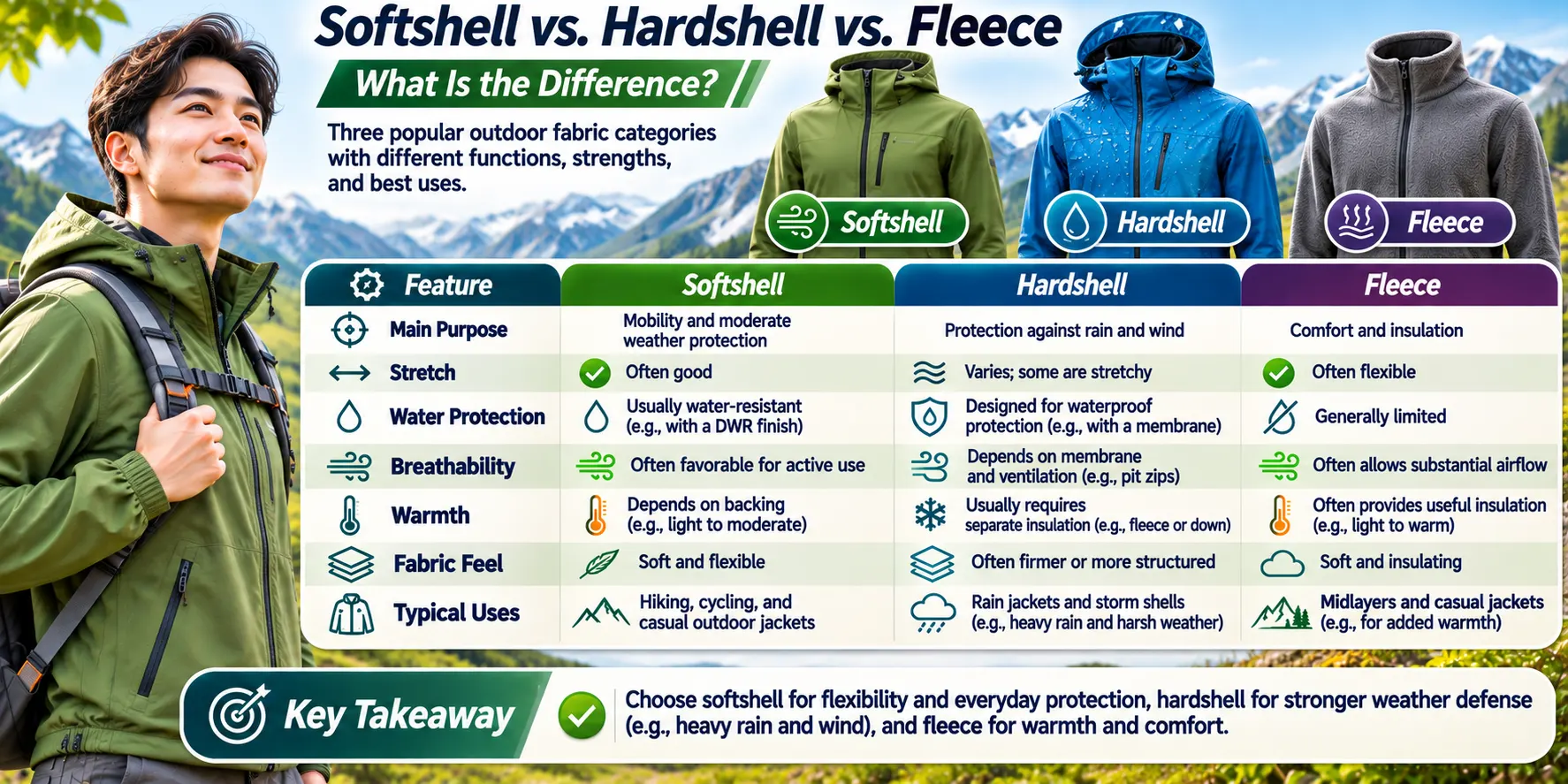
- Softshell vs. Hardshell: Softshell generally emphasizes comfort, flexibility, and breathability. Hardshell garments prioritize waterproof and windproof protection. For demanding activities in mild weather, softshell may provide greater comfort. For prolonged rain or storms, a properly constructed waterproof hardshell is usually more appropriate.
- Softshell vs. Fleece: Fleece is commonly used for insulation and warmth. Softshell typically offers a more protective outer surface and can provide better resistance to wind and light rain. Some softshell fabrics incorporate fleece as an inner backing, combining weather resistance with added warmth.
- Softshell vs. Windbreaker Fabric: Basic windbreakers are often made from lightweight nylon or polyester fabrics. They can be highly packable but may offer less stretch and a crisper hand feel than many softshell materials. Softshell is often preferred when flexibility and comfort matter more than minimum weight and packability.
How to Care for Softshell Fabric
Proper washing and maintenance help preserve the appearance and performance of softshell garments. Always follow the care label provided by the manufacturer.
Washing Softshell Jackets
- Follow the recommended washing temperature.
- Use a detergent suitable for the fabric and finishing.
- Avoid harsh washing conditions.
- Close zippers and hook-and-loop fasteners before washing.
- Follow special instructions for membrane-backed constructions.
Drying Softshell Jackets
Drying instructions depend on the fiber composition, bonding materials, and finishing. Avoid excessive heat unless the care label specifically permits it.
Maintaining Water Repellency
DWR treatments can gradually lose effectiveness. Cleaning and suitable reproofing products may help restore surface water repellency when recommended by the garment manufacturer.
Avoiding Fabric Damage
Keep jackets away from sharp objects and excessive abrasion. Membrane and bonded constructions may also require protection from high heat and aggressive chemicals.
Proper Storage
Store clean, dry jackets in a well-ventilated area. Avoid prolonged compression when the garment contains thick bonded layers or insulating materials that could be affected by storage conditions.
Conclusion: Is Softshell Fabric the Right Choice?
Softshell fabric is an excellent option for outdoor clothing that prioritizes comfort, flexibility, and practical weather protection. Its combination of stretch, wind resistance, and soft hand feel makes it suitable for hiking jackets, cycling outerwear, golf clothing, commuter jackets, and active lifestyle garments.
- However, softshell is not a single standardized material. Lightweight stretch-woven fabrics, fleece-backed constructions, and membrane softshells can have very different performance characteristics.
- For fashion brands and garment manufacturers, choosing the right softshell requires balancing fabric weight, mobility, weather resistance, breathability, durability, and production cost. Careful material testing and sample development can help ensure that the finished jacket meets the intended functional and quality requirements.

Looking for a garment manufacturing partner in Vietnam? Visit Mekong Garment to explore fabric sourcing, apparel development, and garment manufacturing services for your next clothing collection.
Frequently Asked Questions About Softshell Fabric
What Is Softshell Fabric Made Of?
Softshell fabric is commonly made from polyester, nylon, or blends containing elastane. Some versions include fleece backings, coatings, or functional membranes.
Is Softshell Fabric Waterproof?
Not always. Many softshell fabrics are water-resistant rather than fully waterproof. Some membrane-based constructions can offer stronger protection, but waterproof garment performance also depends on seams and overall design.
Is Softshell Fabric Breathable?
Many softshell fabrics are designed to support breathability during physical activity. Actual performance depends on fabric density, membranes, coatings, and finishing.
Is Softshell Fabric Warm?
Warmth varies by construction. Lightweight stretch-woven softshell provides limited insulation, while fleece-backed versions can offer additional warmth.
Is Softshell Fabric Stretchy?
Many softshell fabrics offer useful stretch through elastane fibers or mechanical construction. The amount of stretch and recovery varies between materials.
Is Softshell Better Than Hardshell?
Neither is universally better. Softshell is often preferred for comfort, mobility, and breathability. Hardshell is generally more appropriate for prolonged exposure to heavy rain.
Is Softshell Suitable for Hiking?
Yes. Softshell is a popular option for hiking because it can provide flexibility, wind resistance, and comfortable moisture management.
Can Softshell Fabric Be Used for Cycling Jackets?
Yes. Stretch and wind resistance make suitable softshell fabrics useful for cycling jackets. Weight, ventilation, and garment fit should match the intended riding conditions.
Is Softshell Fabric Suitable for Summer?
Some lightweight stretch-woven softshell fabrics can be suitable for mild or breezy conditions. However, fleece-backed or membrane-heavy constructions may feel too warm in hot and humid climates.
Does Softshell Fabric Need a Lining?
Not necessarily. Some softshell materials have a finished inner surface, while others include bonded fleece or knit backings. Lining requirements depend on comfort, garment design, and intended performance.
Is Softshell Fabric Durable?
Softshell can offer good durability when made with suitable yarns and constructions. Abrasion resistance, tear strength, seam performance, and bonding quality should be evaluated for the intended application.
What Should Brands Check Before Buying Softshell Fabric?
Brands should confirm fiber composition, fabric weight, stretch recovery, wind resistance, water repellency, breathability, abrasion resistance, dimensional stability, seam performance, and bonding quality when applicable.