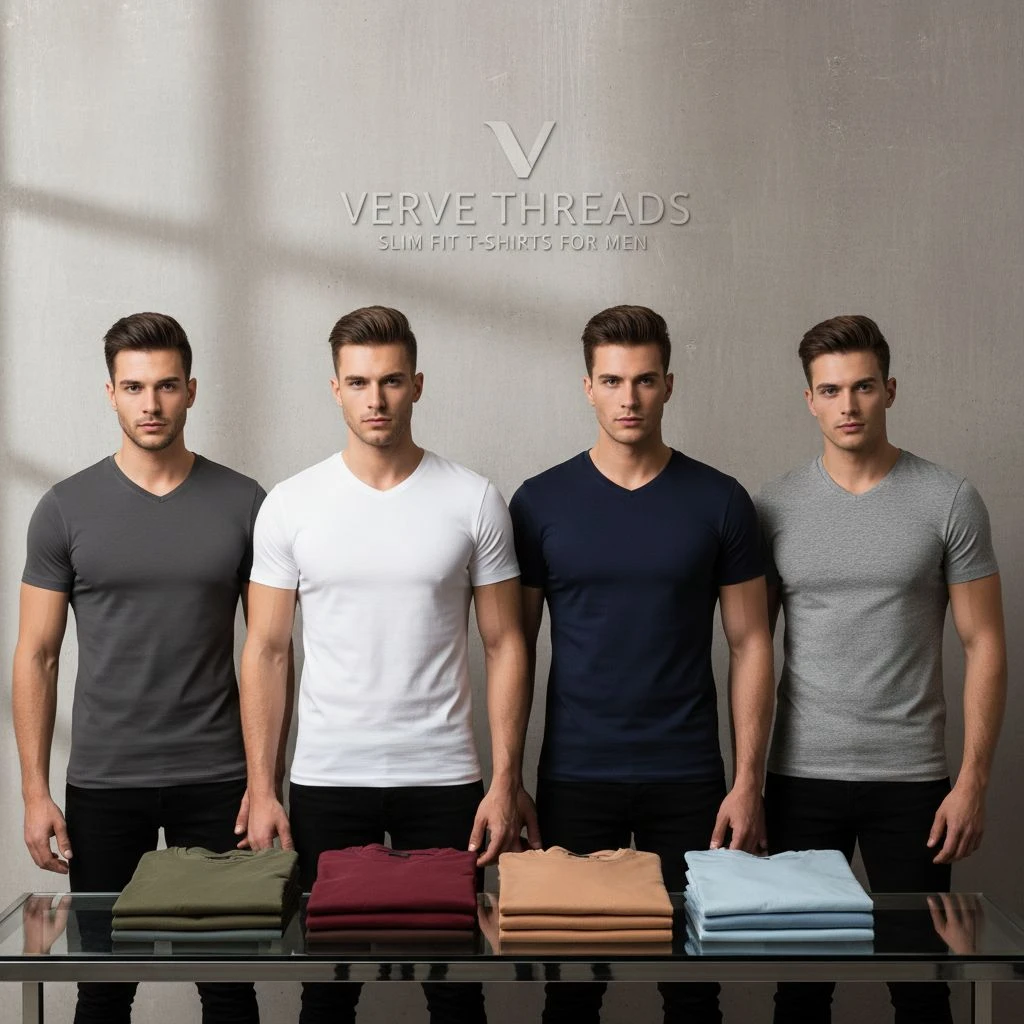

A skinny fit T-shirt is a tee cut very close to the body tighter than slim fit, with minimal extra space in the chest, waist, and sleeves. The goal is a snug, body-hugging silhouette. Alot of “skinny fit” tees are just regular tees sold one size too small. True skinny fit should look intentional and still let you move normally.
What Skinny Fit T-Shirts Actually Means?
Skinny fit doesn’t just mean “fitted.” It means the T-shirt is cut very close to the body, with very little extra room in the chest, waist, and sleeves. The goal is a tight, sharp silhouette. But because brands label it differently, you need to understand what the fit is supposed to do before you buy. Skinny fit usually has:
- Very little ease (extra room) around the torso
- Narrow sleeves that sit close to the arms
- A body shape that follows your chest-to-waist line
- Often stretch fabric to stay wearable
If it creates strong pulling lines, it’s not “skinny style.” It’s the wrong size or wrong fabric.
Why People Wear Skinny Fit T-Shirts
People choose skinny fit because it creates a strong, fitted silhouette with almost no extra fabric. It can look sharp, modern, and “styled” even in a simple outfit. It also layers easily under jackets. But the same tightness can quickly look wrong if the sizing or fabric isn’t right.
- 1) Strong silhouette: Skinny fit creates a narrow outline and makes an outfit look very fitted.
- 2) Works for certain style aesthetics: It fits well with – rock / minimal looks, street layering (big jacket on top, tight base layer), sharp, narrow silhouettes
- 3) Layers easily: Under jackets, a skinny tee won’t bunch up as much as a loose tee.
When Skinny Fit T-shirt fit is the Best choice Or Not?
Skinny fit can be the best choice when you want a tight, intentional silhouette especially for layering under a jacket or creating a sharp, narrow look. But it’s not a “better” fit by default. In hot weather, long workdays, or with low-stretch fabric, skinny fit can feel restrictive and look like you simply bought the wrong size. This section helps you know when skinny fit will look stylish on purpose and when slim or regular fit will actually look cleaner and feel better.
When Skinny Fit Is the Best Choice
Skinny fit can be a great choice when:
- You want a tight, intentional silhouette
- You’re layering with oversized outerwear (balance looks good)
- You prefer the “second-skin” feel
- The fabric has stretch and doesn’t fight your movement

It’s also useful if you like your tee to stay tucked and not move around.
When Skinny Fit Is NOT the Best Choice
Skinny fit is often a bad idea when:
- It’s hot and humid (less airflow = sticky fast)
- You need comfort for long hours (work, commuting, sitting)
- You don’t like cling or visible body outlines
- You’re buying low-quality thin fabric (tight + thin usually looks cheap)
=> Notes: People buy skinny fit to look slimmer. If the shirt strains, it can make you look more squeezed, not leaner.
How a Skinny Fit T-Shirt Should Fit
A skinny fit T-shirt should feel snug and intentional, not uncomfortable. It’s meant to sit close on the shoulders, chest, and arms, creating a tight silhouette while still letting you breathe and move normally. If you see strong pulling lines, feel trapped when you raise your arms, or the shirt keeps riding up, that’s not “skinny fit” it’s the wrong size, the wrong fabric, or both.
Shoulders
- Shoulder seam sits right at the shoulder edge
- No pulling or forced tension when you move arms
Chest
- Snug but you can breathe normally
- No extreme stretching across the chest
Waist / Body
- Close to the torso, no big air gaps
- Should not roll up constantly when you move
Sleeves
- Fitted, but not squeezing or leaving deep marks
Length
- Covers waistband
- Doesn’t ride up too much when you raise arms
Styling Skinny Fit T-Shirts
Styling skinny fit T-shirts is all about balance. Because the tee is tight and close to the body, the rest of your outfit needs to support that silhouette either with straighter or looser pants, or with an outer layer that adds structure. Done right, skinny fit looks sharp and intentional. Done wrong, it can look like you simply bought a shirt that’s too small.
1) Balance the outfit
If the top is tight, let something else be looser:
- Skinny tee + straight/relaxed jeans
- Skinny tee + oversized jacket
- Skinny tee + wide pants (more fashion-forward)
2) Keep it clean
Skinny fit already looks “loud” because it’s tight, so keep the tee simple to look sharp.
- Choose solid colors (black, white, navy, charcoal)
- Avoid big logos and busy graphics
- Pick a clean neckline that stays flat (crew neck is safest)
- Use better fabric so it drapes smooth, not clingy
- Let one thing stand out (shoes or jacket), not the tight shirt and a loud design
3) Layer to make it intentional
Layering makes a skinny fit tee look intentional, not like the wrong size.
- Add an open layer: overshirt, denim jacket, bomber, cardigan, or zip hoodie
- Keep the outer layer slightly looser than the tee (that contrast is the point)
- Wear it open to create clean lines and reduce the “too tight” look
- Avoid tight-on-tight (tight tee + tight jacket looks restrictive)
Compare Table about Skinny Fit vs Regular Fit vs Slim Fit vs Oversized
Skinny fit is only one option on a fit spectrum. Regular fit is relaxed and safe, slim fit is clean but still wearable, skinny fit is tight and demanding, and oversized is intentionally roomy. This comparison matters because many people pick skinny fit thinking it’s “better,” when it’s really just a different look with different comfort trade-offs.
| Factor | Regular Fit | Slim Fit | Skinny Fit | Oversized |
|---|---|---|---|---|
| Room (ease) | Medium | Low | Very low | Very high |
| Look | Natural, balanced | Clean, sharp | Tight, bold | Relaxed, trendy |
| Comfort | High | Medium–high | Medium–low | Very high |
| Fabric needs | Most fabrics | Better with good recovery | Needs stretch + recovery | Holds best in medium/heavy |
| Risk if wrong size | Low | Medium | High | Medium |
Final Thoughts / Conclusion
Skinny fit T-shirts can look sharp, but only when they’re worn on purpose not when they’re pulling, clinging, or restricting movement. The winning formula is simple: get the shoulders right, choose fabric with stretch and good recovery, keep the tee clean (solid colors work best), and use layering or balanced pants to make the silhouette look intentional. If skinny fit feels uncomfortable or looks strained, don’t force it slim fit often gives the same “clean” vibe with way less risk.