

How to Design Custom Hospitality Uniforms: Key Considerations for Hotels, Restaurants, and Resorts
In hospitality, guests notice the details,and uniforms are one of them. A custom uniform is more than clothing. It shapes first impressions, supports your brand, and affects how well staff can work during long shifts. When uniforms are comfortable, durable, and well-designed, teams look professional and perform better. When they are not, they can cause discomfort, wear out quickly, and hurt the guest experience.
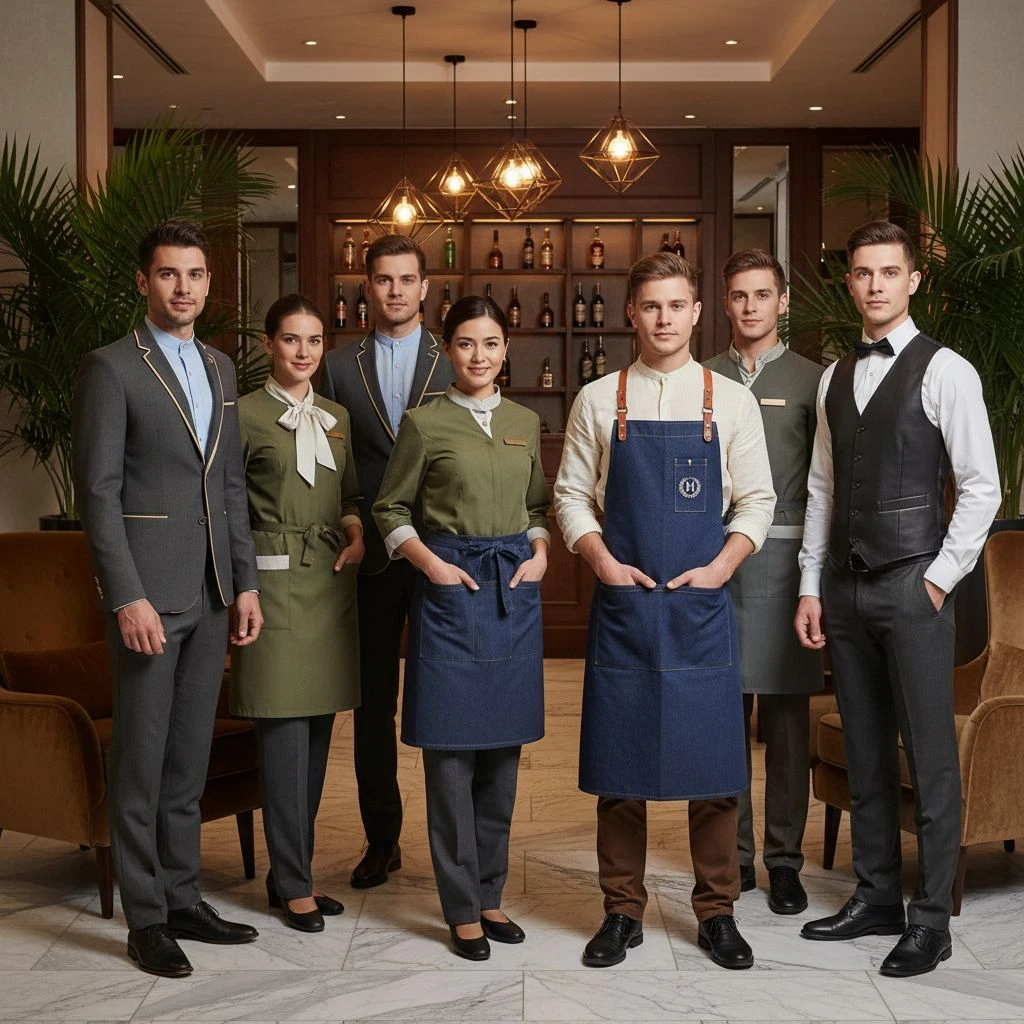
That is why designing hospitality uniforms takes more than choosing colors and adding a logo. Hotels, restaurants, and resorts all have different service styles and job demands. The best uniform programs are built around function, fit, brand identity, and long-term use. This guide covers the key factors to help you design custom hospitality uniforms that look polished, feel comfortable, and last.
Why Custom Uniform Design Matters in Hospitality
Hospitality is built on trust, comfort, and presentation. Guests form opinions quickly, often before they speak to anyone. Uniforms help shape that first impression by making staff look: professional, approachable, organized, consistent with the brand
But the value goes beyond image. Well-designed uniforms can also:
- improve staff comfort during long shifts
- support movement and job performance
- make roles easier to identify (front desk, housekeeping, kitchen, etc.)
- reduce replacement costs through better durability
- increase employee confidence and pride
In short, uniform design affects both guest perception and operational performance.
Start With the Service Model, Not the Sketch
A common mistake is starting with visuals only: “We want something modern” or “Make it look luxury.” That is not enough.
Before designing anything, define how the business actually operates.
Ask these questions first:
- Is this a hotel, restaurant, resort, café, or mixed-use property?
- Is the brand formal, casual, premium, family-friendly, or lifestyle-focused?
- Which roles need uniforms? (FOH, BOH, housekeeping, maintenance, spa, valet, etc.)
- Are staff working indoors, outdoors, or both?
- What is the climate like?
- How long are typical shifts?
- Is laundering done in-house or outsourced?
- How often will uniforms be replaced?
These answers should drive the design. A uniform that works for a boutique hotel front desk may fail completely in a beach resort or high-volume restaurant kitchen.
Design by Role and Department
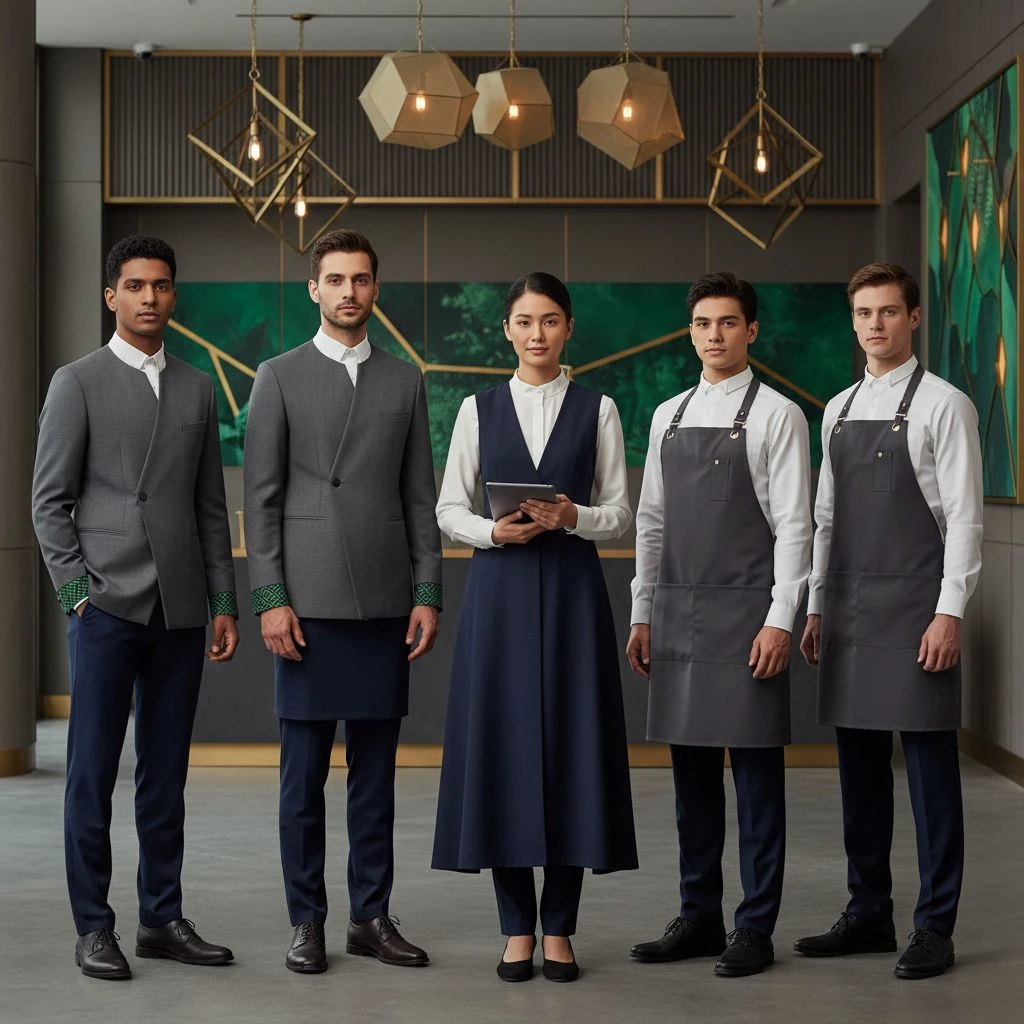
One of the biggest design mistakes in hospitality is treating all staff the same. They are not doing the same work, so they should not be wearing the same uniform solution.
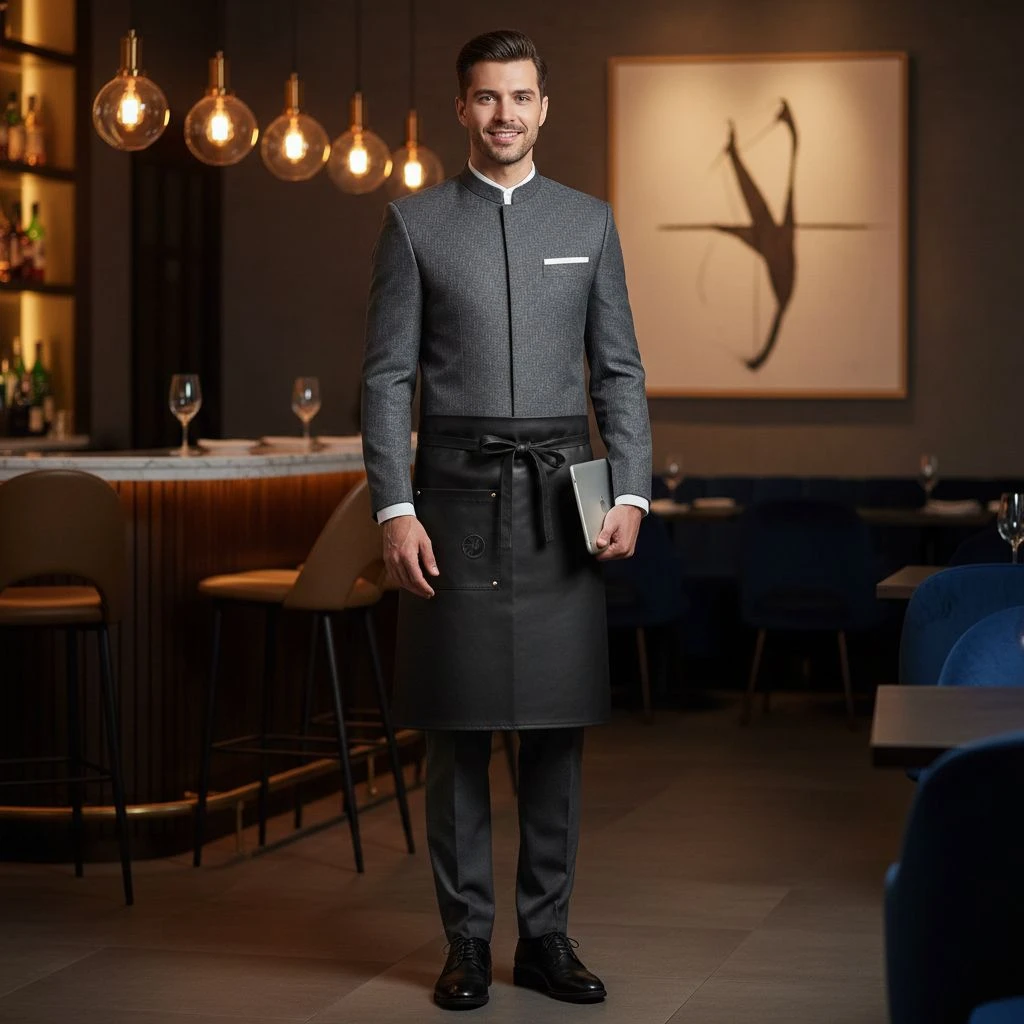
Front of House (FOH)
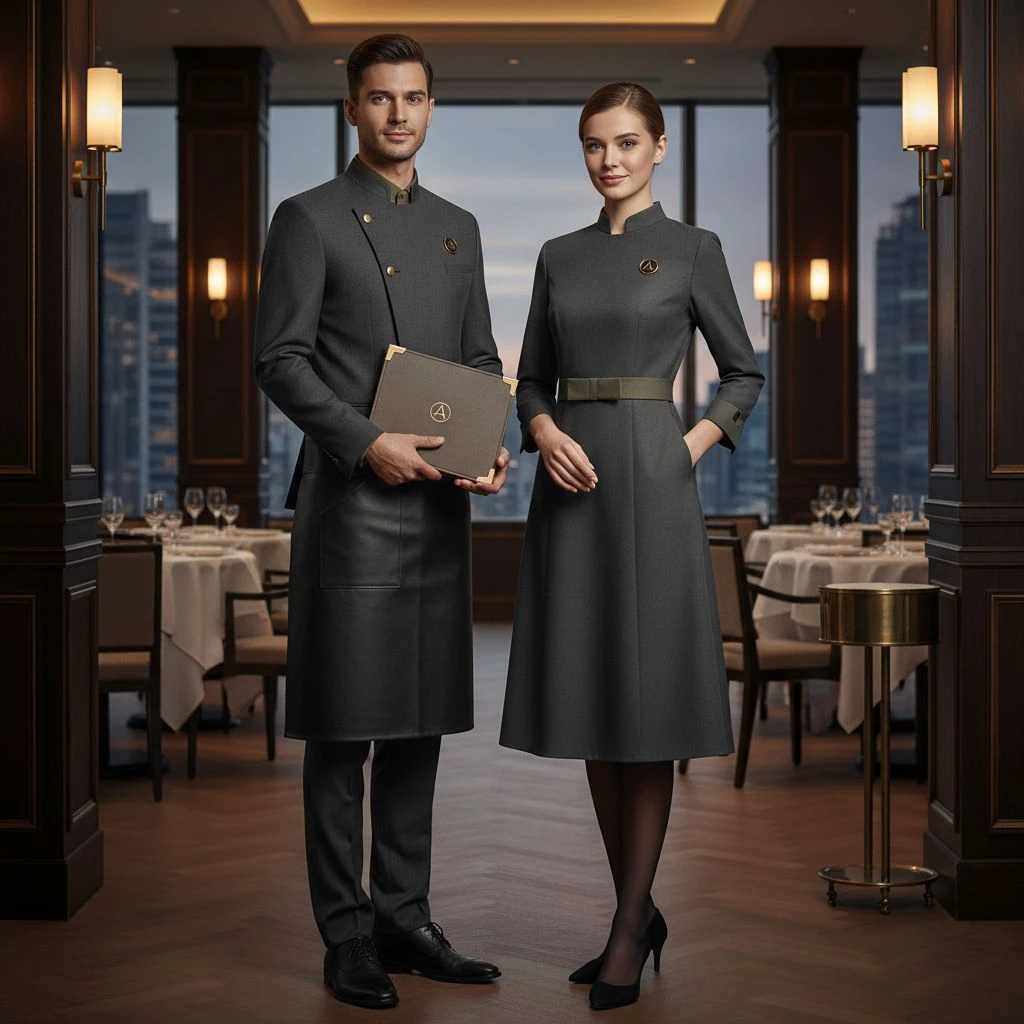
- Includes: reception / front desk, concierge, hosts, servers, bartenders, guest relations.
- Priorities: polished appearance, brand consistency, comfort for long standing hours, easy movement, wrinkle resistance, professional look at end of shift.
- Useful design features: breathable fabrics with structure, hidden stretch panels, well-placed pockets, easy-care finishes, neat logo placement / name badge placement.
Back of House (BOH)
- Includes: chefs, line cooks, prep staff, dishwashing teams.
- Priorities: heat management, durability, easy cleaning, safety compatibility, movement during fast-paced work.
- Useful design features: breathable panels, durable stitching, secure closures, practical pockets, aprons and protective layering compatibility.
Housekeeping
Housekeeping staff need mobility and durability more than “fashion styling.”
- Priorities: stretch and comfort, easy movement, practical pocket access, repeated washing performance, neat and professional appearance
Maintenance / Engineering / Utility Staff
These teams often need stronger construction and more functional design.
- Priorities: durability, mobility, practical utility, compatibility with tools and safety footwear, easy identification without overly formal styling
Resort-Specific Roles
=> Resorts may include: pool staff, recreation teams, spa therapists, beach service staff, golf operations, valet / transport teams
These roles often require climate-specific fabrics, sun exposure considerations, and more flexible uniform options. => Key takeaway: Design a uniform system, not a single outfit.
Prioritize Comfort and Mobility for Long Shifts
Hospitality teams spend hours walking, lifting, bending, reaching, carrying, and standing. If a uniform feels restrictive, heavy, or irritating, performance drops. And guests can see discomfort.
What comfort really includes
Comfort is more than soft fabric. It also includes:
- breathability
- stretch or ease of movement
- moisture management
- light-to-medium fabric weight (depending on role)
- seam placement that does not rub
- fit that stays comfortable during movement
Movement matters
Test how garments feel during real actions:
- bending to clean or lift
- reaching across tables
- carrying trays
- climbing stairs
- standing for long periods
- moving quickly in tight spaces
A uniform may look perfect while standing still and feel terrible during service.
Pushback worth hearing
Many businesses overvalue appearance in the fitting room and undervalue comfort on shift. That usually leads to complaints, workarounds, and low adoption. If staff avoid wearing pieces correctly, the design has failed even if it looks great in photos.
Choose Fabrics Based on Performance, Not Just Appearance
Fabric selection is where many uniform projects succeed or fail. A fabric can feel premium in hand but wrinkle badly, trap heat, fade fast, or lose shape after repeated washing.
Evaluate fabric using real performance needs
Look at: breathability, durability, stretch / recovery, wrinkle resistance, stain behavior, drying speed, pilling resistance, colorfastness, shape retention, laundry compatibility, comfort against skin.
Match fabric to the work environment
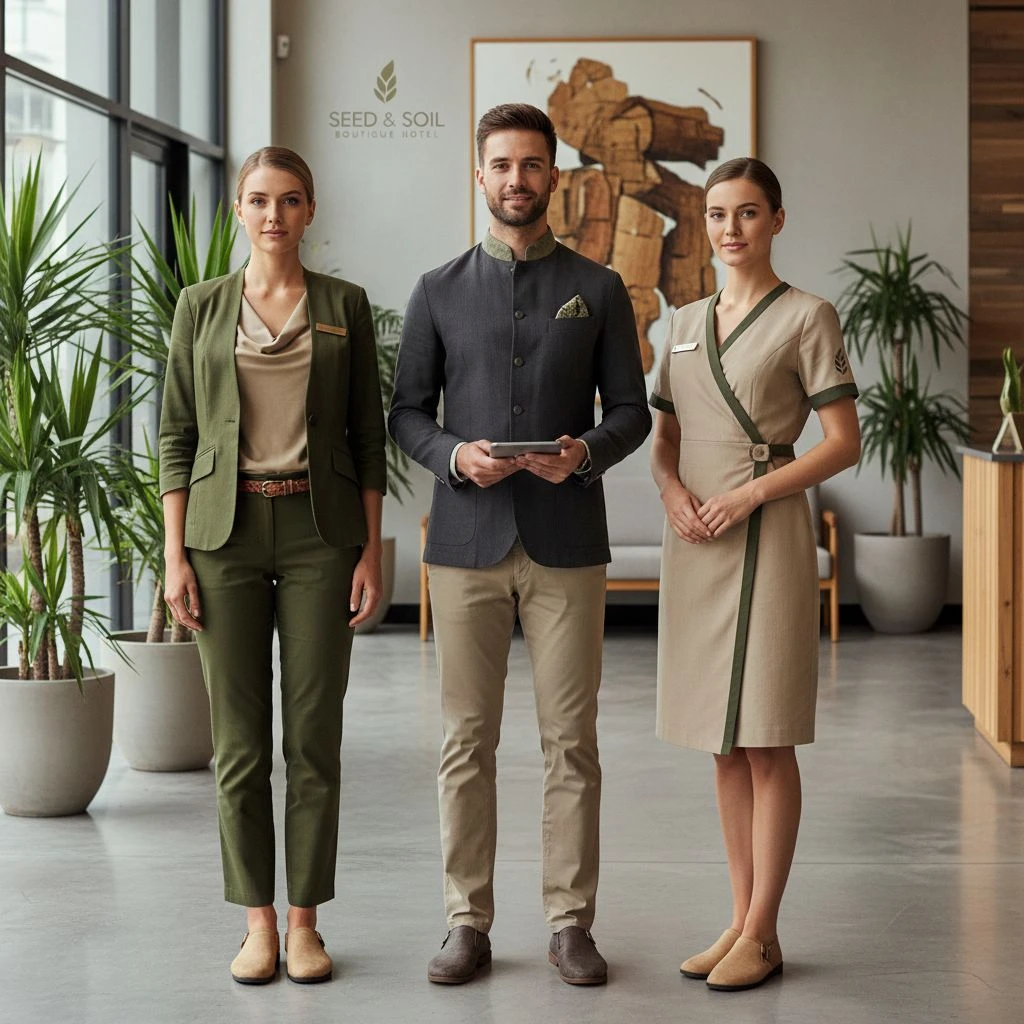
- Hotels (FOH): Often need a polished look, good drape, wrinkle resistance, and comfort for long wear.
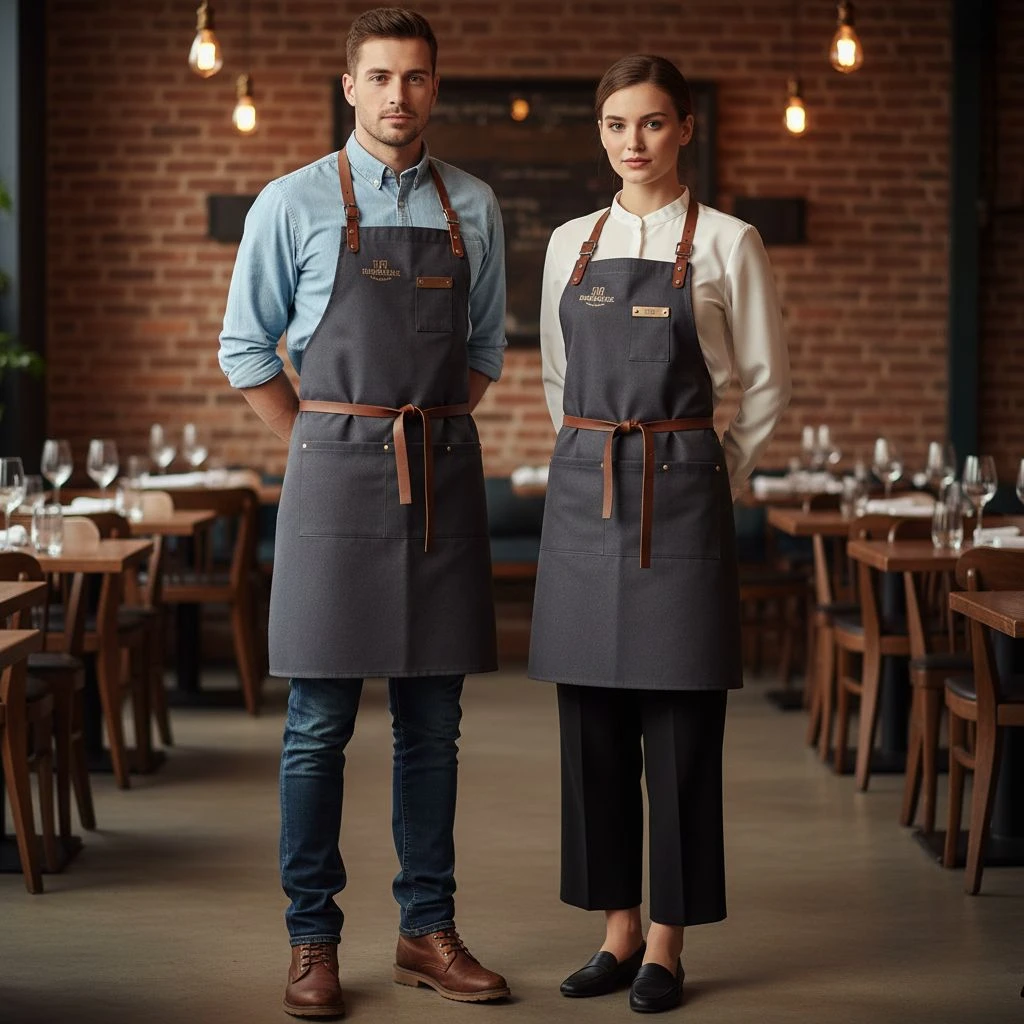
- Restaurants: Need durability, stain management, easy care, and role-specific fabric choices (server vs kitchen).
- Resorts: Need climate-sensitive fabrics, breathability, and often lighter constructions for outdoor roles.
Common mistake to avoid
Do not choose one fabric for all departments just to simplify purchasing. That can reduce performance, increase complaints, and raise replacement rates. A better strategy is to create a coordinated fabric family: same brand look, different performance fabrics by role
Build Safety and Hygiene Into the Uniform Design
Hospitality uniforms are not just visual tools. In many departments, they also support hygiene and day-to-day safety. This is especially important in:
- kitchens
- food prep areas
- housekeeping
- laundry operations
- maintenance zones
Design considerations for hygiene and safety
- garments that can be washed frequently without breaking down
- practical coverage based on role
- compatibility with aprons, gloves, and hair restraints
- easy change options if garments are soiled
- non-slip footwear policies for wet/slippery areas (especially kitchens)
- clean, professional appearance that can be maintained throughout service
Don’t separate style from safety
A uniform that looks good but ignores real working conditions creates risk and frustration. The best designs balance:
- appearance
- comfort
- practical hygiene needs
- department-specific job realities
Design for Durability and Easy Maintenance
Hospitality uniforms live hard lives.
=> They face: frequent washing, spills and stains, heat and humidity, repeated movement, constant wear in busy environments… If durability is weak, uniforms quickly look tired—and so does the brand.
Features that improve durability
- reinforced seams
- strong stitching at stress points
- reliable buttons/zippers/snaps
- colorfast fabrics
- shape retention after washing
- anti-pilling performance
- durable trims and branding methods
Maintenance matters just as much
A beautiful uniform that is hard to clean becomes a daily problem. Design for:
- easy laundering
- quick drying
- low-maintenance care
- wrinkle resistance (where possible)
- compatibility with in-house or industrial washing processes
Think in total cost, not price per piece
- A cheaper garment may cost more over time if it: fades fast, shrinks, tears easily, needs frequent replacement
- A smarter uniform program looks at total cost of ownership: purchase cost, laundry impact, replacement rate, repair cost, lifespan consistency