


Classic vs Premium T-Shirts: Which Is Best for Your Custom Apparel Needs?

When you start a custom apparel project, the first big choice is often not the design. It’s the shirt. Pick the wrong blank, and everything gets harder: the print can look dull, the fit can feel awkward, and customers may not wear it again. Pick the right blank, and the same design suddenly feels “premium,” sells faster, and gets worn more often. But here’s the tricky part: “premium” isn’t always the best choice. Sometimes a classic tee is the smarter move, especially when budget, durability, and scale matter. This guide breaks down what “classic” and “premium” really mean, how they affect screen printing, and how to choose the best option for your goals.

What Is a Classic T-Shirt?

Before you choose a blank for your custom apparel project, it helps to understand what a “classic” t-shirt really means. A classic tee isn’t about trends or fashion cuts. It’s about reliability. It’s the dependable, everyday shirt built for comfort, durability, and broad appeal. Typically made from heavier cotton or cotton blends, classic t-shirts offer a more structured feel and relaxed fit. They’re designed to handle frequent washing, repeated wear, and large-scale printing without losing their shape too quickly. That’s why they’re often the go-to choice for uniforms, events, and promotional campaigns. In short, a classic t-shirt is built to work hard, making it a practical foundation for many custom apparel projects.

A classic t-shirt is made for reliability, bulk programs, and everyday durability. It usually has:

  • Heavier fabric weight (often around 5.3–6.1 oz)
  • More structured feel (less drape)
  • Relaxed or boxier fit
  • Often open-end cotton or standard cotton blends
  • Built to handle frequent wear and washing

Classic tees are common for:

  • Work uniforms
  • School events
  • Charity runs
  • Giveaways
  • High-volume promotional printing

Pros of Classic T-Shirts

  • 1) Strong durability: Classic tees are tough. They hold up well for repeated washing and daily wear, which is ideal for uniforms or shirts that people will use hard.
  • 2) Better price for bulk: If you need 200, 500, or 2,000 shirts, classic blanks help you control cost per piece without sacrificing basic quality.
  • 3) Great for bold screen prints: Thicker fabric provides a stable base for screen printing. Big logos, block text, and strong color prints tend to look consistent.

Cons of Classic T-Shirts (The Part People Skip):

Here’s the pushback: classic doesn’t always feel “nice.”

Some classic shirts can:

  • Feel stiff or rough
  • Look less modern because of the boxier fit
  • Shrink or twist more depending on the yarn and finish
  • Get worn less often if the wearer cares about comfort and style

So while classic tees are reliable, they may not be the best choice if your goal is repeat wear or retail sales.

What Is a Premium T-Shirt?

A premium t-shirt is designed with comfort, fit, and overall feel at the forefront. Unlike standard basics, premium tees focus on finer materials, softer textures, and a more modern silhouette. The goal isn’t just to provide a shirt to wear, it’s to create one people want to wear again and again. These shirts are often made from ring-spun or combed cotton, sometimes blended with materials like modal or rayon for added softness and drape. The fabric feels smoother against the skin, the fit is more tailored, and the overall look feels closer to retail fashion than promotional wear. In short, a premium t-shirt is built to elevate the experience, both for the wearer and for the brand behind it.

A premium t-shirt is made for comfort, fit, and a more retail-ready look. It typically features:

  • Softer yarns (often ring-spun cotton)
  • Sometimes combed cotton (cleaner, smoother fibers)
  • More modern fit (tailored, fashion-forward)
  • Often lighter weight (around 4–4.5 oz, sometimes 5 oz midweight)
  • Higher perceived value

Premium tees are common for:

  • Brand merchandise
  • Retail drops
  • Influencer merch
  • Fashion collaborations
  • Events where image matters

Pros of Premium T-Shirts

  • 1) Comfort that people notice instantly: Premium tees feel soft the moment you touch them. That matters because comfort drives repeat wear.
  • 2) Better detail for prints: Smoother fabric can help prints look cleaner, especially fine lines, small text, and detailed artwork.
  • 3) Stronger brand perception: A premium blank can instantly lift your brand image. Customers often judge the whole brand based on how the shirt feels and fits.

Cons of Premium T-Shirts (Also Important)

Premium tees can fail if you’re not careful.

They may:

  • Cost significantly more per piece
  • Feel too thin for rough daily work use
  • Show sweat or cling more depending on the fabric
  • Feel “rubbery” if you use heavy plastisol ink on a lightweight shirt

So “premium” can backfire if your audience expects durability more than softness.

Classic vs Premium: Key Differences That Matter

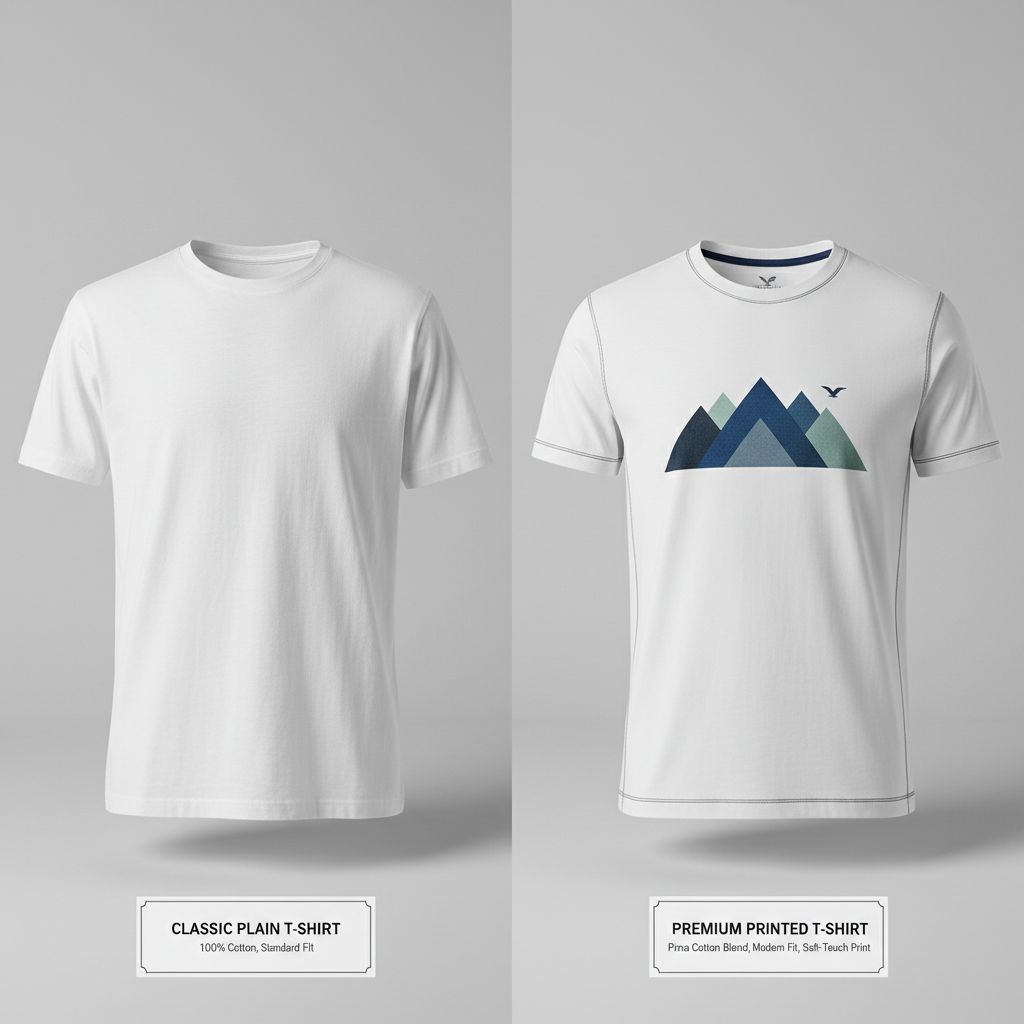
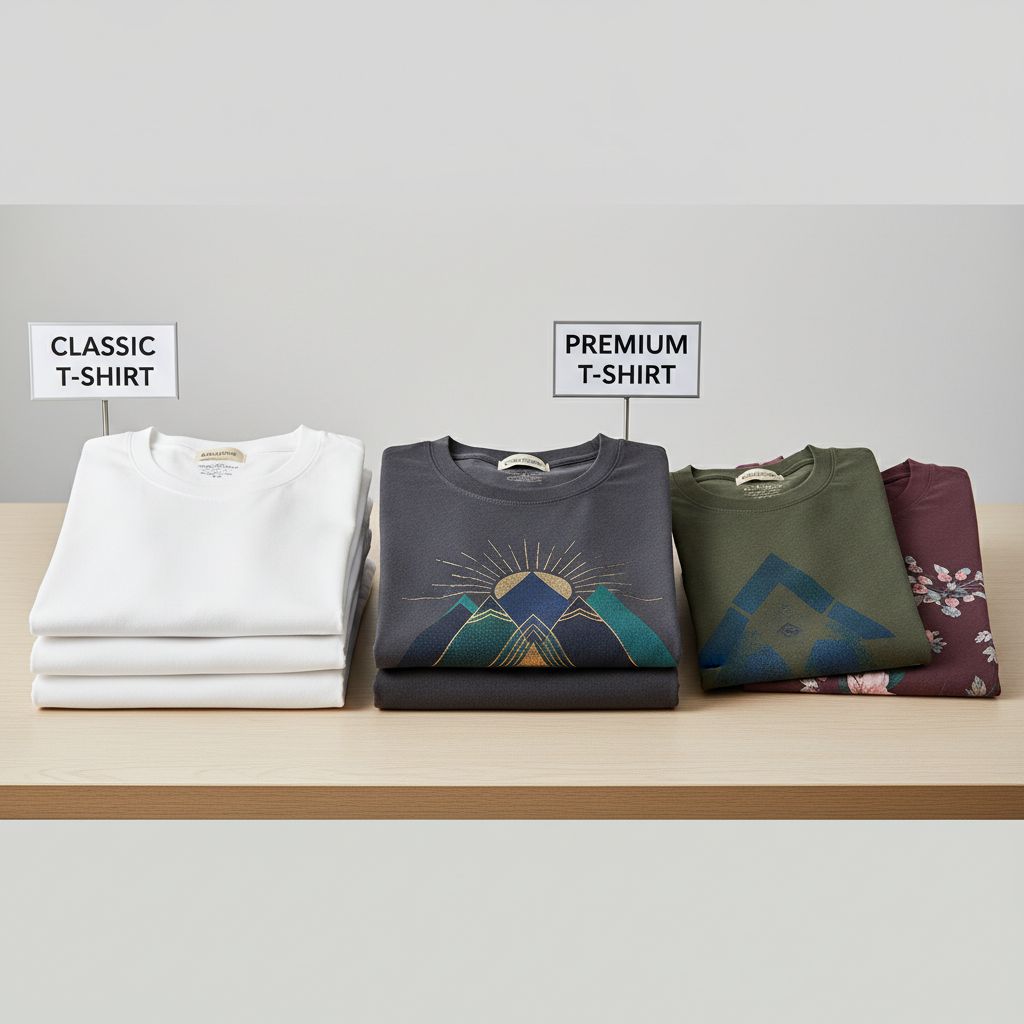
At first glance, classic and premium t-shirts can look similar. Both can be printed, both come in many colors, and both serve as a base for custom designs. But once you look closer, at the fabric, fit, feel, and long-term performance, the differences become clear. These differences matter more than many people expect. They affect how your print looks, how the shirt feels after washing, how often someone chooses to wear it, and even how your brand is perceived. Understanding these key distinctions helps you move beyond price alone and make a decision that truly fits your project’s goals.

Factor Classic T-Shirts Premium T-Shirts What This Actually Means for You
Fabric Weight Heavier (5.3–6.1 oz typical) Lighter to midweight (4–5 oz typical) Heavier feels durable; lighter feels softer and more modern.
Yarn Type Often open-end cotton Usually ring-spun or combed ring-spun Ring-spun = smoother surface, softer hand feel, cleaner print detail.
Hand Feel (Touch) Structured, sometimes slightly rough Soft, smooth, comfortable Premium is more likely to become someone’s “favorite shirt.”
Fit Style Boxy, relaxed, traditional Modern, tailored, retail fit Premium looks more flattering on average consumers.
Durability Strong for heavy daily use Durable but often softer and lighter Classic wins for workwear or rugged environments.
Shrinkage Behavior Can shrink more unpredictably Usually more controlled, pre-shrunk Premium often holds shape better over time.
Print Compatibility Excellent for bold plastisol prints Excellent for fine detail & soft-hand prints Heavy ink works better on classic; soft inks shine on premium.
Detail Reproduction Good for large graphics Better for intricate designs Fine lines and small text look sharper on premium fabric.
Breathability Moderate Often more breathable Premium feels lighter in hot climates.
Perceived Value Basic, practical Elevated, fashion-forward Premium supports higher retail pricing.
Best Use Cases Events, uniforms, giveaways Retail merch, brand drops, lifestyle apparel Your goal determines the smarter option.
Cost per Unit Lower (bulk-friendly) Higher (retail-focused) Premium increases cost but may justify higher selling price.
Audience Fit Broad mass audience Style-conscious or brand-focused buyers Know your market before choosing.
Brand Positioning Impact Functional and practical Premium and curated Shirt choice affects brand perception more than most people think.

Which One Should You Choose?

Now comes the real question: which option actually fits your project? The answer isn’t about picking the “higher quality” shirt. It’s about aligning your choice with your purpose. Are you printing for mass distribution, or are you building a brand people will pay for? Is durability your top priority, or is comfort and style more important? When you step back and look at your audience, budget, and long-term goals, the decision becomes clearer. The right choice is the one that supports your strategy—not just your design. Instead of choosing by “quality,” choose by goal.

Choose Classic T-Shirts If You Need:

  • Large quantities
  • Low cost per piece
  • Uniform durability
  • Broad sizing comfort
  • Shirts for workwear or heavy use
  • High-volume giveaways or promotions

Classic is the practical, dependable choice.

Choose Premium T-Shirts If You Need:

  • Retail-ready merch
  • Better fit and softer feel
  • Higher perceived value
  • More repeat wear from customers
  • Stronger brand image
  • Higher selling price potential

Premium is the brand-building choice.

The “Third Option” People Forget: Mid-Tier Blanks

Not every project needs the extreme ends. – A smart approach is often:

  • Midweight ring-spun (around 5 oz)
  • Softer than classic, sturdier than lightweight premium
  • Great for brands that want comfort + durability

This is often the best value play when you want higher quality without going fully premium.

Final Answer: Classic or Premium?

There’s no universal “best” choice, only the best fit for your goals. If you need affordability, durability, and high-volume printing, classic t-shirts are a smart and dependable option. If you’re focused on brand image, comfort, and retail appeal, premium t-shirts can elevate the entire project. In the end, success comes from matching the shirt to your audience, budget, and printing method. Choose with intention, and either option can deliver strong results.

Here’s the truth:

The best choice depends on:

  • Your audience
  • Your budget
  • Your printing method
  • Your goals (promotion vs profit)

Related posts