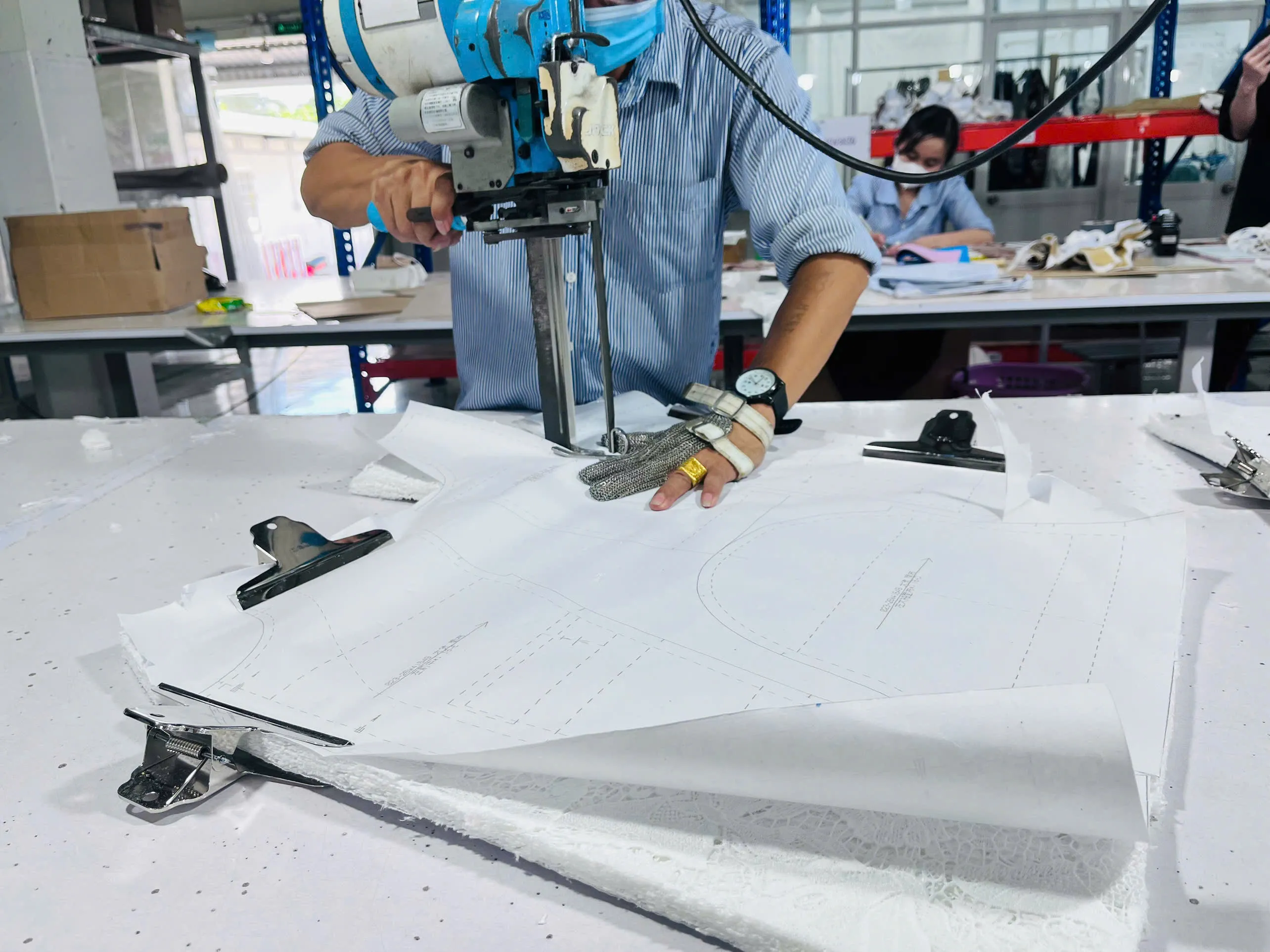
How to Reduce Waste in the Fashion Manufacturing Process

A practical, factory-friendly guide for brand owners, product developers, and production teams. Waste in fashion is not just “fabric scraps.” It’s also rework, delays, extra samples, rushed shipping, deadstock, and returns. Most of that waste is created before the first bulk cut. Below is a full, step-by-step playbook to reduce waste in real manufacturing.
=> Read More: T Shirts Manufacturing Vietnam | Mekong Garment Factory
What “Waste” Really Means in a Garment Factory
When people hear “waste,” they think of fabric offcuts. That’s only the visible part. In a factory, waste also shows up as extra sample rounds, rework, waiting time, rejected pieces, and rushed shipping. Every time a team has to redo or recut, the factory burns labor, time, and money.

- Fabric waste: Offcuts, bad markers, or shrinkage surprises.
- Sample waste: Too many rounds due to late design changes.
- Defect waste: Repairs, re-cuts, and rejects.
- Time waste: Waiting for trims or unclear approvals.
- Process waste: Over-processing (extra topstitching that adds no value).
- Packaging & Logistics waste: Carton damage or expensive air freight.
The Core Rule: Most Waste Is a Planning Problem
Waste rarely happens because people don’t try; it happens because the plan is weak. Tech packs missing details force the factory to guess, triggering extra samples and rework. Strong planning removes surprises and locks decisions at the right time.
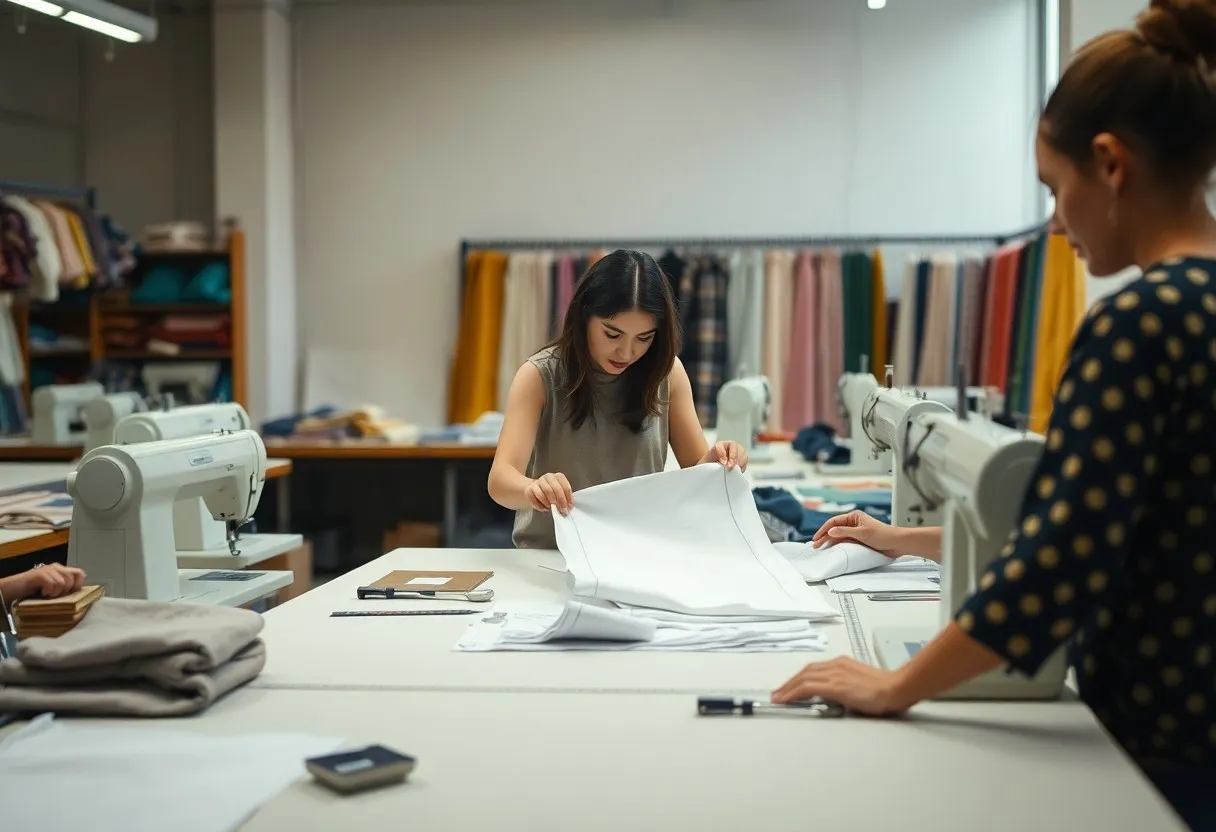
The 10-Step System to Reduce Manufacturing Waste
Reducing waste isn’t about one magic fix. It’s a 10-step method built around how real factories run—focusing on preventing surprises and tightening communication.
| KPI | Why It Matters | Target Idea |
|---|---|---|
| Marker Efficiency (%) | Direct fabric consumption | Improve +3–8% |
| Rework Rate (%) | Hidden costs and delays | Cut by 20–40% |
| Sample Rounds | Time and fabric waste | Aim for 2–3 rounds |
| Air Shipments | Logistics waste signal | Aim for zero |
Step 1) Set Clear Goals and a Baseline
You can’t manage what you don’t measure. Pick 4–6 targets like reducing sample rounds or improving marker efficiency. Without a baseline, you can’t prove improvement.


Step 2) Align Early: DFM Meeting
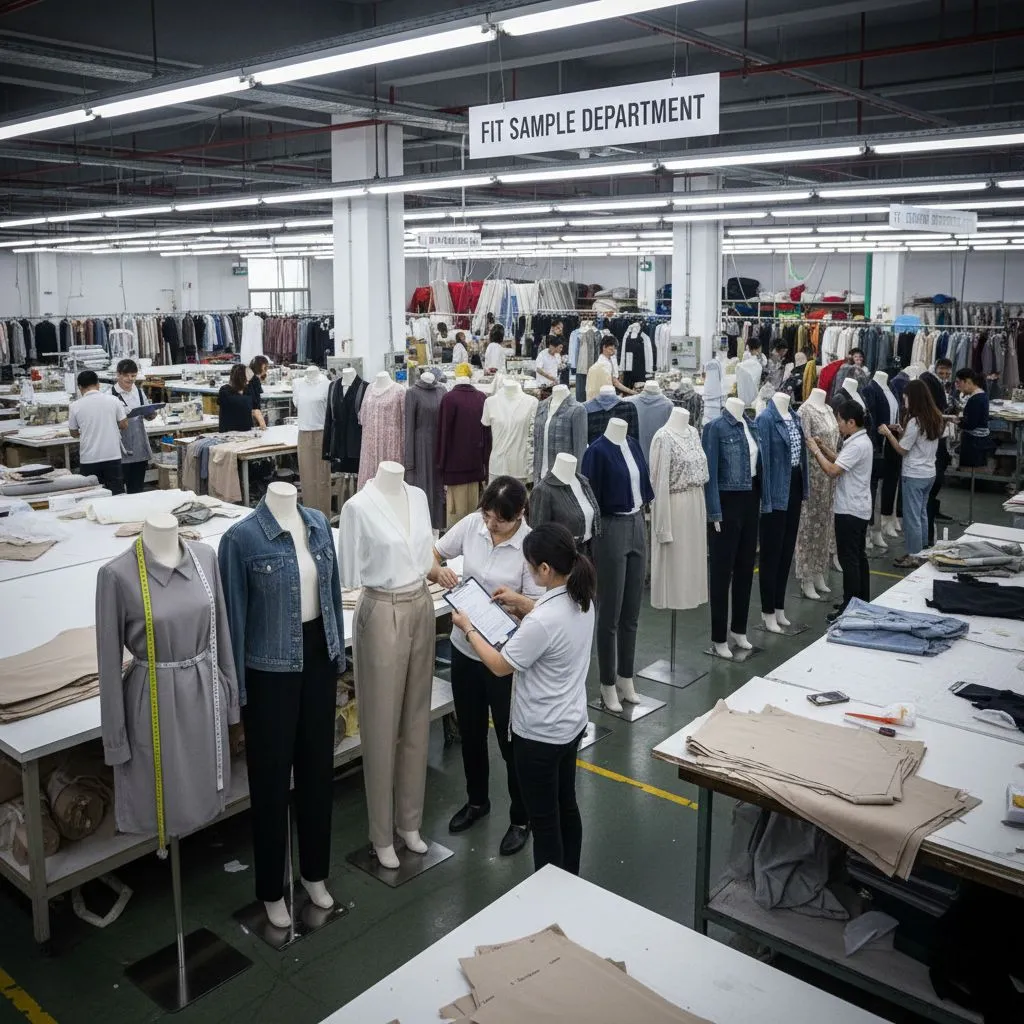
Conduct a Design for Manufacturability (DFM) meeting before sampling. Ask the factory: Which operations are risky? Where can we simplify without losing the look? This prevents late-stage redesigns.
Step 3) Build a Tech Pack That Prevents Guessing
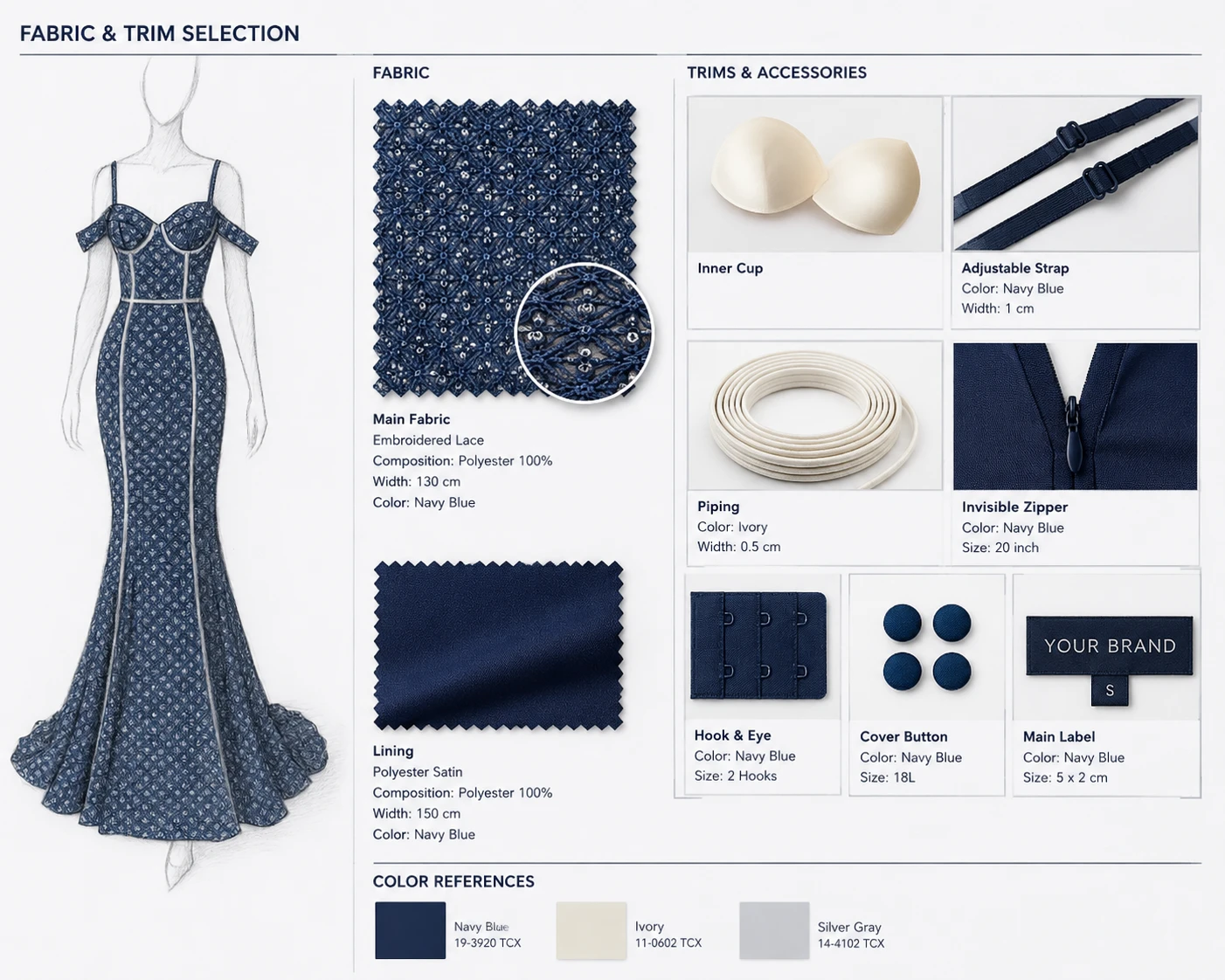
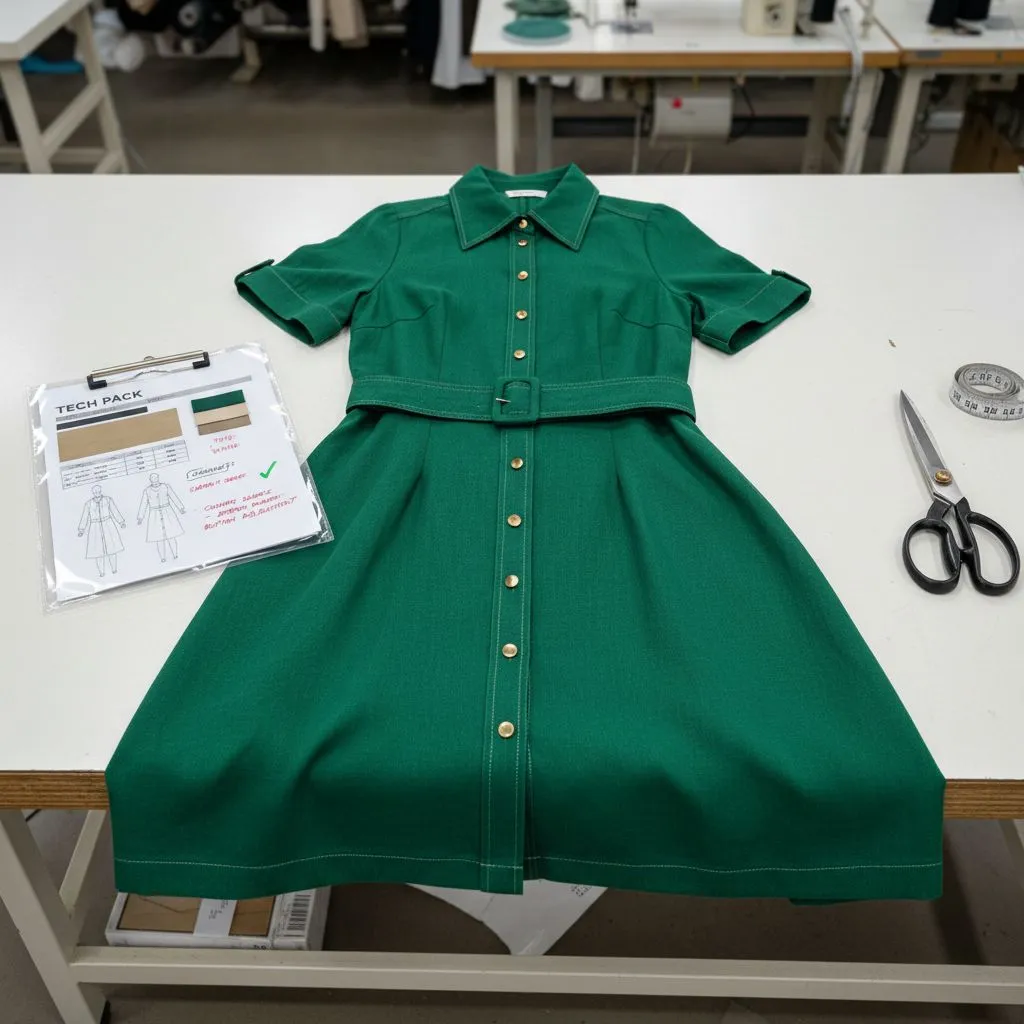
A weak tech pack forces the factory to interpret instructions, leading to drifted measurements or failed seams. Your tech pack should include a full Bill of Materials (BOM) and clear spec sheets.
Step 4) Reduce Sample Rounds
Every extra sample round burns fabric and energy. Use a structured 3-layer approach: Digital review, 1st physical proto, and one improvement round. Lock the design before perfecting the fit.
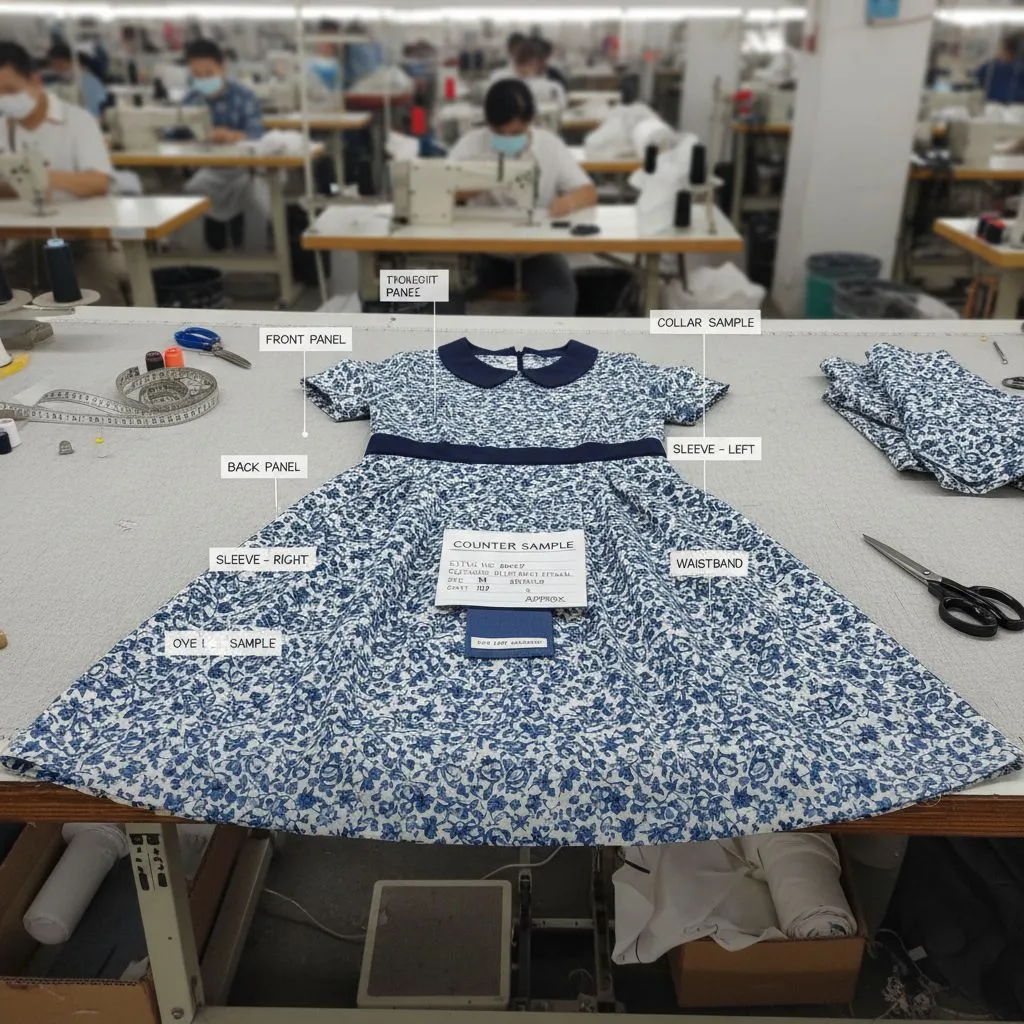
Step 5) Design to Cut Waste (Patterns)
Fabric waste starts with pattern shapes. Avoid tiny decorative panels that create unusable offcuts and standardize parts (like pocket shapes) across styles to improve yield.
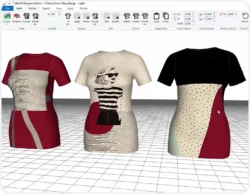
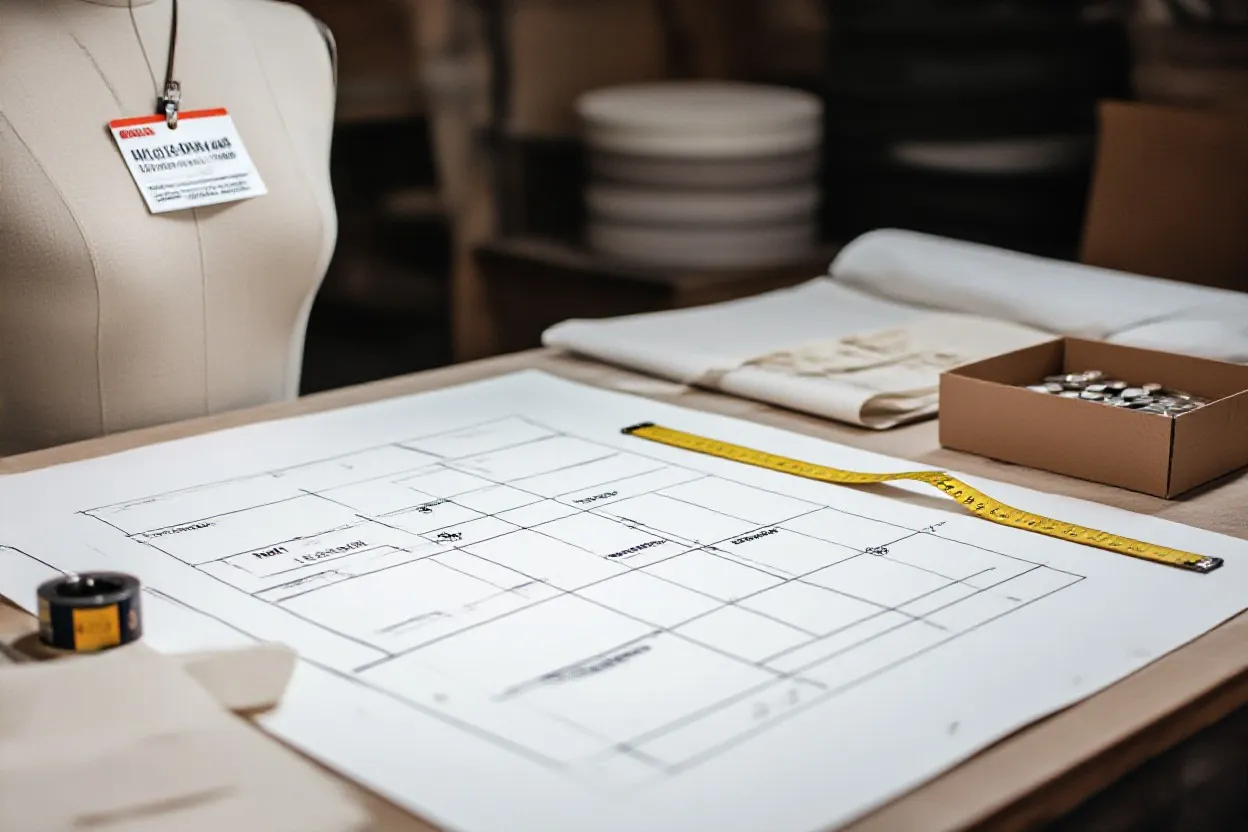
Step 6) Upgrade the Cutting Room
Control fabric savings through precise fabric inspection, lay planning, and remnant management. Cutting is a major profit lever.
Step 7) Cut Defect Waste: “Stop-the-line”
Identify “killer defects” early. Use a root-cause loop (What happened? Why? How to prevent?) instead of relying solely on final QC when it’s already too late and expensive to fix.
Step 8) Choose Stable Materials
“Sustainable fabric” can still create waste if it has high shrinkage or shade issues. Pick fabrics that are available, stable, and repeatable first to avoid production surprises.

Step 9) Attack Overproduction
The cleanest way to reduce waste is to make less wrong product. Use small runs for demand testing before full bulk production.
Step 10) Reduce Finishing and Packaging Waste
Standardize folding, tagging, and packing early. Last-minute changes create rework and often lead to air freight—the most expensive form of waste.
Conclusion
Reducing waste in fashion manufacturing is a system of clear specs, early alignment, and tight production control. When these parts are tight, you save money while reducing environmental harm. Build a system that prevents problems before they happen.