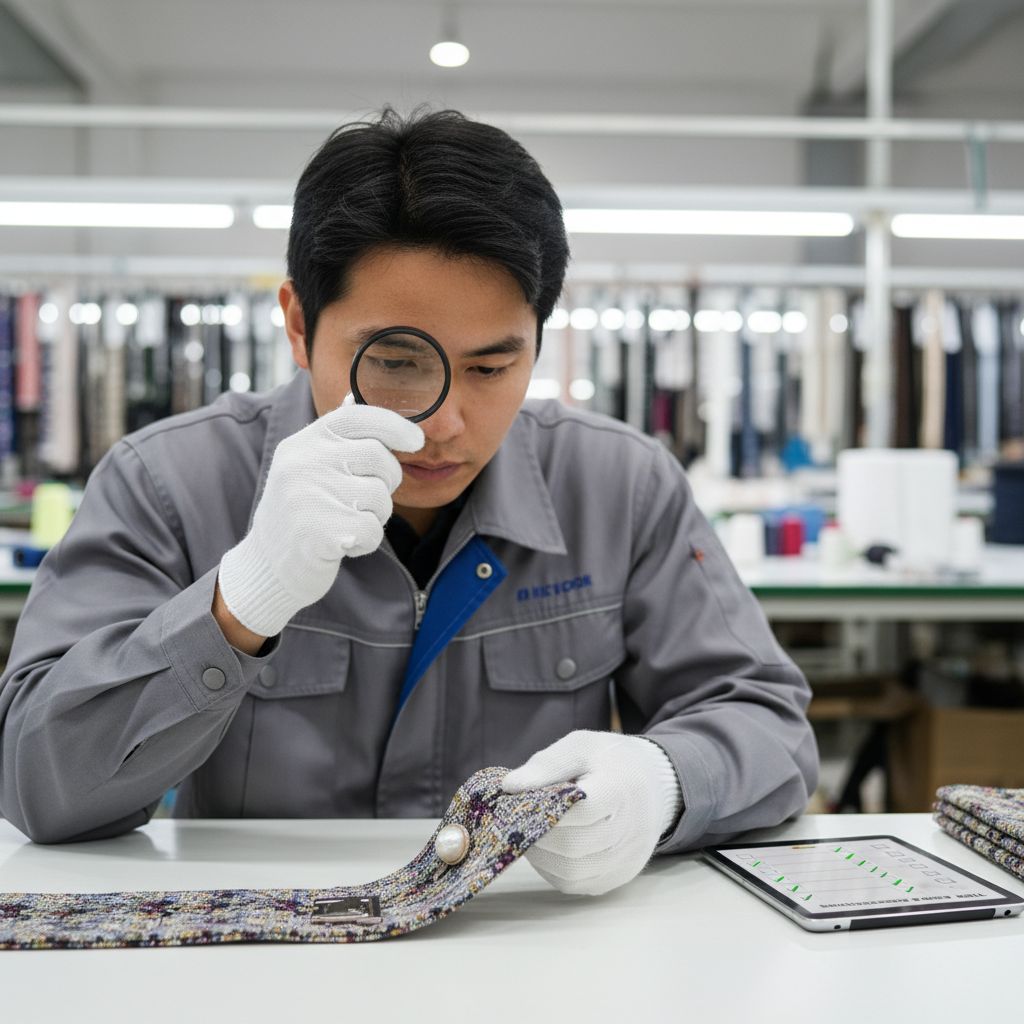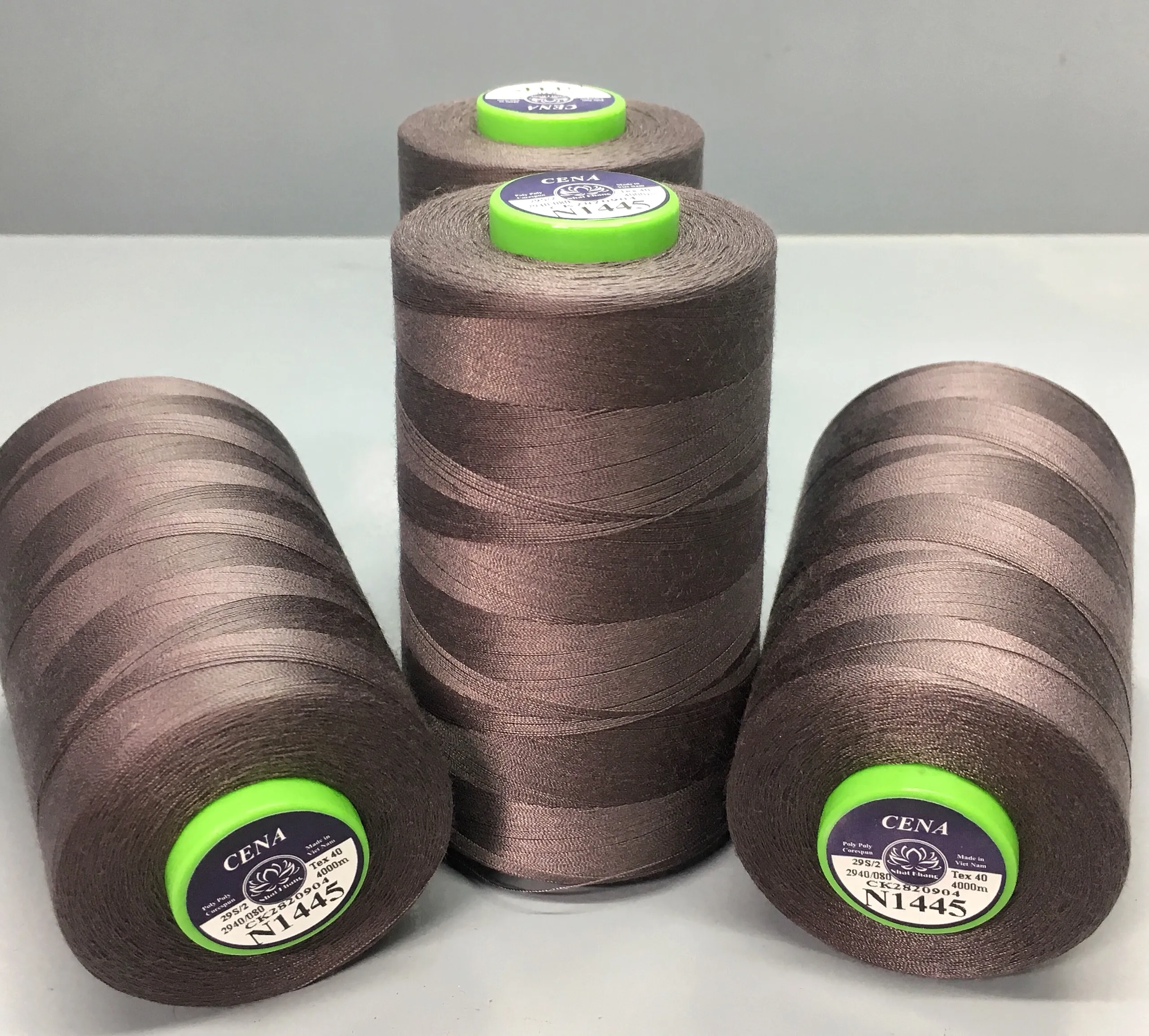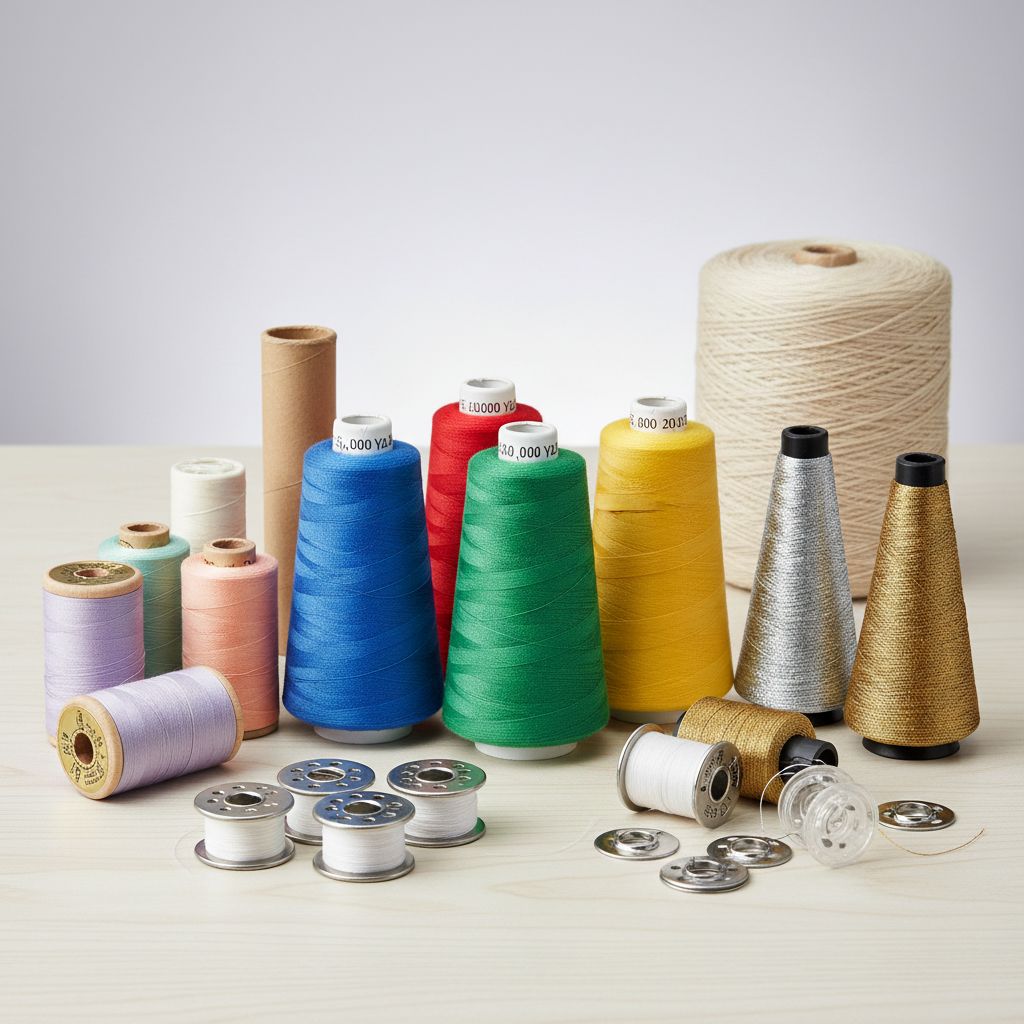



In garment manufacturing, stitches do much more than join two pieces of fabric. The right stitch affects seam strength, stretch, appearance, comfort, durability, and production efficiency. That is why understanding the types of stitch used in garments is important for apparel brands, merchandisers, production teams, and sewing technicians alike. Common industrial stitch classes include chain stitches, hand stitches, lockstitches, multi-thread chain stitches, overedge stitches, and covering chain stitches.
Whether you are making T-shirts, jeans, lingerie, sportswear, uniforms, or tailored garments, choosing the correct stitch type helps improve product quality and reduce sewing problems. In this guide, we explain the main garment stitch types, their features, advantages, limitations, and typical uses in apparel manufacturing. The stitch class framework below follows the widely used ISO terminology for stitch classification.
What Is a Stitch in Garment Manufacturing?
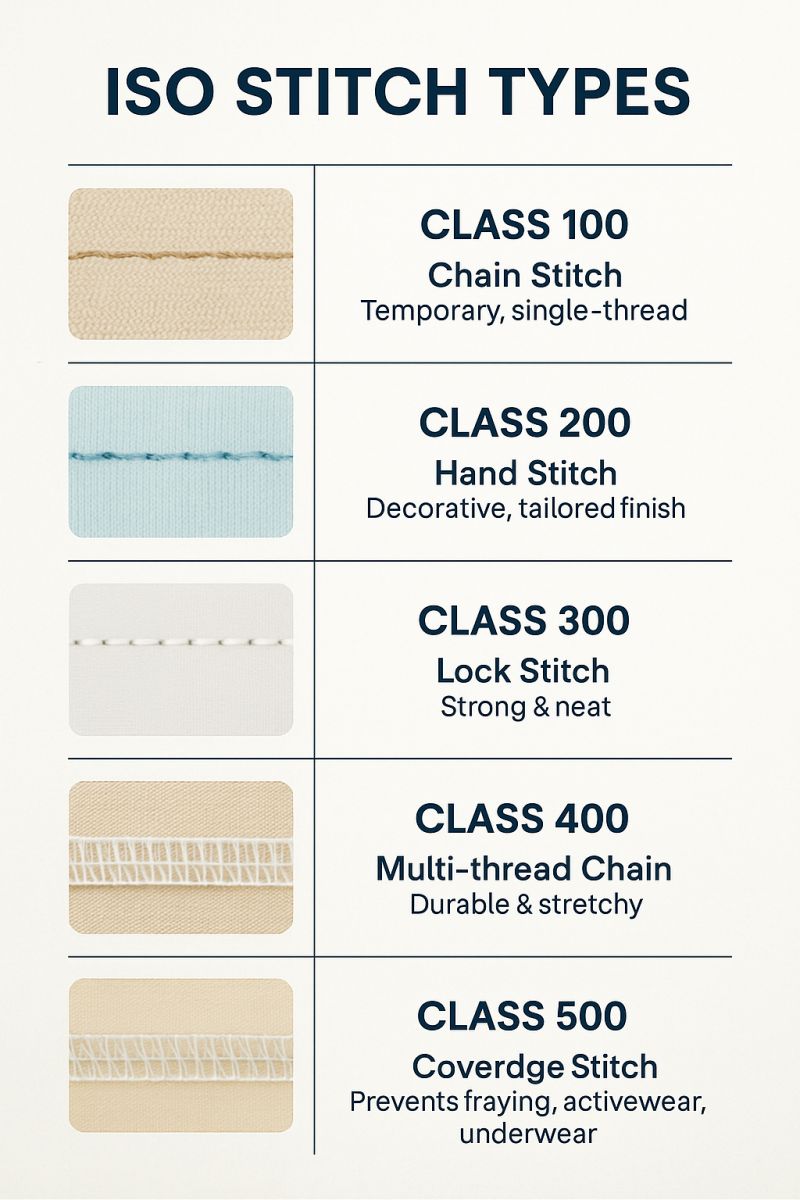
A stitch is the smallest unit formed during sewing by one or more threads through interlacing, interlooping, or intralooping. In simple terms, a stitch is the repeated thread formation that holds fabric layers together. In industrial sewing, stitch selection is not only about joining fabric but also about seam behavior in wear, washing, and production handling. ISO classifies stitch types into six main classes: 100, 200, 300, 400, 500, and 600.
Stitch quality in garments is often judged by factors such as:
- stitch length and stitch density
- thread tension
- seam elasticity
- seam security
- fabric puckering or distortion
- abrasion resistance
- appearance on the face and back of the garment
This matters because even a good fabric can look poor if the sewing stitches in apparel manufacturing are not suitable for the product.
Why Stitch Type Matters in Apparel Manufacturing
Many people confuse stitch type with seam type, but they are not the same. A seam is the way fabric pieces are joined, while the stitch is the thread formation used to create that seam. The stitch directly affects how the garment performs. For example, lockstitch gives a clean and balanced look, chain stitch offers more flexibility, overedge stitch helps prevent fraying, and coverstitch works especially well on knit hems. Coats notes that 301 single needle lockstitch is the most common stitch type because it gives a strong, low-bulk seam with the same appearance on both sides, while cover stitches are widely used for knit hems and decorative effects.
In practice, factories choose industrial sewing stitches based on:
- fabric type: woven or knit
- required stretch
- seam strength
- garment category
- machine availability
- productivity target
- visual finish
- That means the “best” stitch is not universal. A stitch that works well for denim may be a poor choice for activewear or lingerie.
Main Types of Stitch Used in Garments
1. Class 100 – Chain Stitch
Class 100 is known as the chain stitch. It is formed from one or more needle threads by interlooping. In the common 101 version, one thread creates loops that are held by the next loop. This stitch class is relatively flexible, but it is also less secure than a lockstitch and can unravel if the thread end is pulled and not properly secured. ISO identifies Class 100 as chain stitches, and industrial references note that they are often used where flexibility or temporary holding is needed.
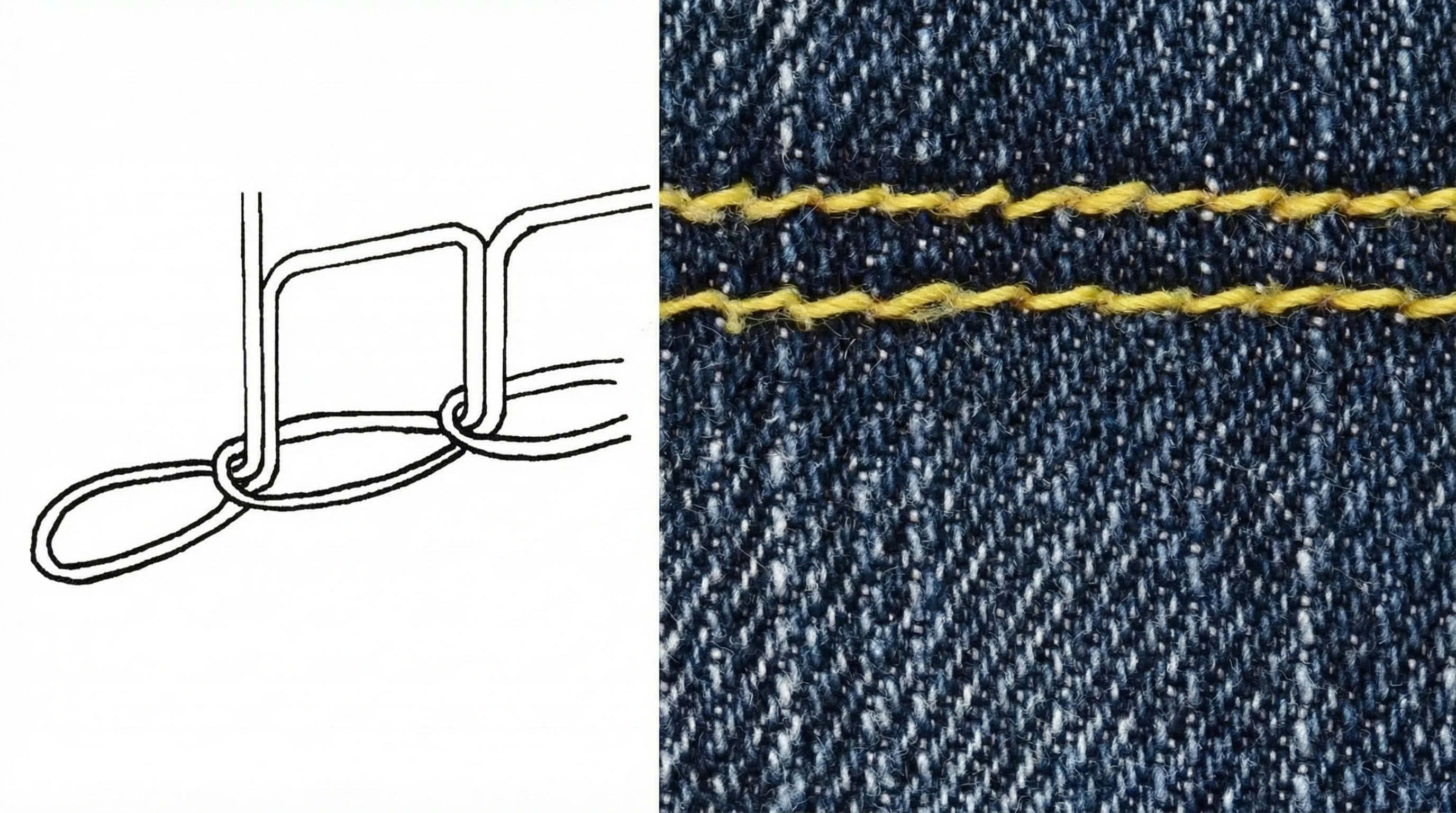
Common stitch types in this class:
- 101, 103, 104.
Advantages of chain stitch:
- good flexibility
- relatively fast sewing
- suitable for some hemming and temporary operations
Limitations of chain stitch:
- lower seam security than lockstitch
- can unravel more easily if not secured properly
Typical garment applications:
- hemming
- blind stitching
- belt loops
- felling operations
- temporary positioning in some sewing processes
For apparel factories, chain stitch is useful when stretch or speed matters, but it is not always the safest choice for seams that must stay fully secure after repeated washing.
2. Class 200 – Hand Stitch
Class 200 is called hand stitch. Although it belongs to industrial stitch classification, it originates from hand-sewn effects and is produced from a single thread. This class is much less common in mass apparel production because it is slower and more expensive than other machine-made stitch classes. Textile references describe this class as being used more for premium garments, tailored products, and selected decorative or specialty operations rather than high-volume ready-made garments.
Typical forms associated with hand stitch effects include:
- running stitch
- backstitch
- diagonal basting
- buttonhole stitch
Common uses in garments:
- tailored jackets
- luxury garments
- sample development
- decorative hand-finished areas
This stitch class makes sense when appearance, craftsmanship, or traditional construction matters more than speed. For bulk production, though, it is often too costly. That is the trade-off many beginners miss.
3. Class 300 – Lockstitch
Class 300 is the lockstitch, one of the most important sewing stitches in apparel manufacturing. It is formed by interlacing at least two thread groups, usually a needle thread and a bobbin thread. The best-known stitch in this family is 301 lockstitch, which Coats identifies as the most common stitch type in sewing because it looks the same on both sides and creates a tight, strong, low-bulk seam.
Common stitch types in this class:
- 301, 304, 308, 309.
Advantages of lockstitch:
- balanced appearance on top and bottom
- strong seam structure
- neat and clean finish
- widely available in factories
Limitations of lockstitch:
- lower elasticity than chain stitch
- bobbin changes can reduce productivity
Typical garment applications:
- shirts
- trousers
- dresses
- underwear
- woven garments
- topstitching and decorative stitching
If you are working with woven garments, lockstitch is often the default choice. But for highly stretchable fabrics, it may not be enough on its own.
4. Class 400 – Multi-Thread Chain Stitch
Class 400 is called the multi-thread chain stitch. It is formed with two or more groups of threads. One group forms needle loops through the fabric, while another group, usually the looper thread, secures them through interlooping and interlacing. This class often looks similar to a lockstitch on the top side but shows a chain effect underneath. Textile references note that stitch class 400 can be stronger than class 300 in some applications and is often used where better extensibility is needed.
Common stitch types in this class:
- 401, 404, 406.
Advantages of multi-thread chain stitch:
- better extensibility than basic lockstitch
- good for stress areas
- suitable for longer seams and some heavy-duty operations
Typical garment applications:
- side seams
- waistband elastic attachment
- trouser construction
- decorative belt stitching
- heavy fabric joining
This is a smart stitch class for garments that need both strength and flexibility. Still, it uses more thread than lockstitch. Coats’ thread consumption guide shows higher thread ratios for 401 chainstitch than for 301 lockstitch, which matters in cost planning.
5. Class 500 – Overedge Stitch
Class 500 is the overedge stitch, sometimes called edge neatening stitch. This class is formed with one or more thread groups that wrap around the edge of the fabric. Its main purpose is to prevent edge fraying and give a clean inside finish. This makes it one of the most useful stitch classes in knitwear and many modern garments. Common industrial examples include 503, 504, and 512, and thread usage for overedge stitches is significantly higher than for lockstitch because loopers create a wider thread path around the fabric edge.
Common stitch types in this class:
- 503, 504, 512.
Advantages of overedge stitch:
- prevents raw edge fraying
- good stretch performance
- ideal for knitted fabrics
- efficient for seam finishing and joining
Typical garment applications:
- knit tops
- sportswear
- dancewear
- underwear
- seam edge finishing
- T-shirt side seams and shoulder seams
For anyone working with knit products, overedge stitch is not optional decoration. It is often a functional requirement.
6. Class 600 – Covering Chain Stitch

Class 600 is the covering chain stitch, often linked to what many apparel people casually call coverstitch in knitwear production. It is formed with three thread groups: needle thread, top cover thread, and bottom cover thread. ISO lists Class 600 as covering chain stitches, and industrial sewing references connect this family with knit hems, binding, and decorative effects because threads can be seen from one or both sides. Coverstitch machines are commonly used for hemming knit garments and adding neat, elastic finishes.
Common stitch types in this class:
- 602, 605, 607.
Advantages of covering chain stitch:
- high stretch and recovery
- comfortable on knitwear
- attractive professional finish
- ideal for hemming and binding
Typical garment applications:
- knit hems
- lingerie
- activewear
- elastic binding
- neckline finishing
- decorative cover seams
Factories use this stitch heavily for T-shirts, leggings, and intimate apparel because it combines appearance, comfort, and elasticity very well.
Comparison of Stitch Classes Used in Garments
Here is a simple way to understand the different stitch classes in garments:
- Class 100 chain stitch: flexible but less secure
- Class 200 hand stitch: premium look but expensive
- Class 300 lockstitch: clean, strong, and common for woven apparel
- Class 400 multi-thread chain stitch: stronger stretch-friendly option for many seams
- Class 500 overedge stitch: best for edge finishing and knit seam joining
- Class 600 covering chain stitch: ideal for knit hems, elastic seams, and decorative finishing
A weak article would stop there. A better question is: Which stitch should a factory choose first? The answer depends on the garment. Woven shirts often rely heavily on lockstitch. Knit T-shirts usually combine overedge and coverstitch. Jeans and workwear may use chain stitch or multi-thread chain stitch in selected areas for strength or appearance.
How to Choose the Right Stitch for a Garment
Choosing the right stitch type should be based on product function, not habit. Many sewing problems happen because factories use the machine they already have, not the stitch the garment really needs.
- Consider the Fabric Type: Knit fabrics usually need more extensible stitches such as overedge or covering chain stitch. Woven fabrics often work well with lockstitch because the seam does not need as much stretch.
- Consider the Stress on the Seam: Waistbands, crotch seams, and side seams of fitted garments may need stronger or more extensible stitch structures, such as Class 400 or reinforced combinations.
- Consider the Desired Appearance: For a neat top and bottom appearance, lockstitch is a strong choice. For sporty knit hems, coverstitch gives a more commercial finish.
- Consider Cost and Productivity: Thread consumption and machine speed matter in bulk production. Coats’ guide shows that stitches like 504 overedge and 401 chainstitch consume much more thread per centimeter than 301 lockstitch, so stitch selection also affects costing.
Common Stitch Problems in Garments
Even the correct stitch class can fail if sewing settings are poor. Some common issues include:
- skipped stitches
- seam puckering
- thread breakage
- seam grin
- poor stretch recovery
- fabric damage
- seam slippage or unraveling
These problems are often related to wrong needle selection, incorrect thread tension, unsuitable stitch density, or using the wrong stitch type for the fabric. So stitch knowledge should always be tied to sewing quality control, not just terminology.
Why Buyers and Apparel Brands Should Understand Stitch Types
Understanding the types of stitch used in garments is not just for sewing operators. Buyers, merchandisers, and quality teams also benefit from knowing stitch classes because stitch choice affects:
- garment durability
- wash performance
- seam appearance
- comfort for the end user
- production cost
- claim risk after shipment
For example, a buyer sourcing knitwear should expect proper use of overedge and coverstitch constructions, while a buyer of structured woven garments may focus more on clean lockstitch quality and seam balance.
Conclusion / Final Words
The main types of stitch used in garments are Class 100 chain stitch, Class 200 hand stitch, Class 300 lockstitch, Class 400 multi-thread chain stitch, Class 500 overedge stitch, and Class 600 covering chain stitch. Each stitch class has its own structure, strengths, limitations, and ideal applications. ISO recognizes these six stitch classes as the core framework for stitch terminology in textiles, while industrial references show that 301 lockstitch remains the most common general-purpose stitch, and overedge and coverstitch are essential for knit apparel. For apparel manufacturing, the best stitch is not the most popular one. It is the one that matches the fabric, function, stretch requirement, appearance, and production target of the garment. That is the practical view factories should keep in mind.